
Review · LONDON
London: Official Natural History Museum Tour – Architecture
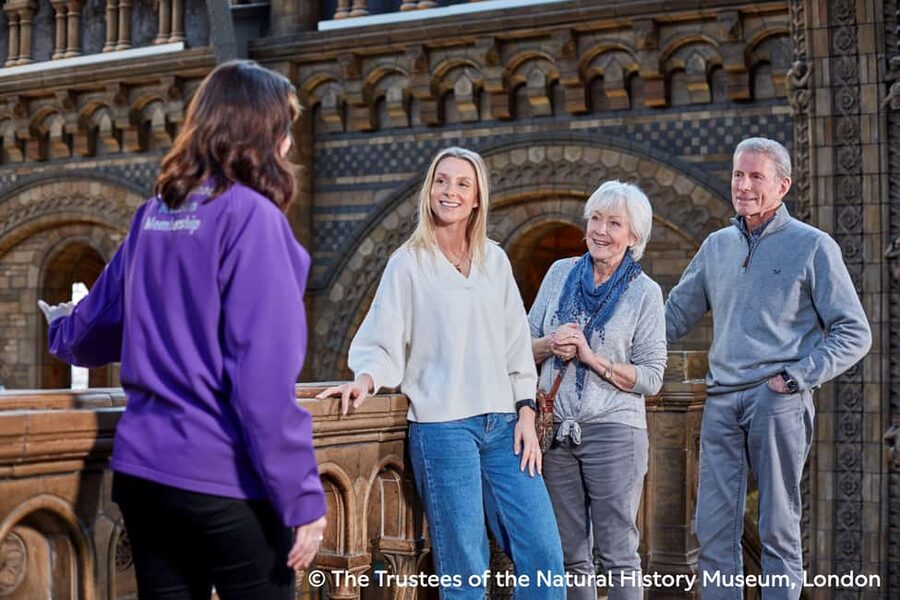
The Natural History Museum is more than a grand container for dinosaurs and fossils. Its walls, ceilings, gargoyles, and terracotta animals tell their own story, and this one-hour tour helps you read the building as carefully as its collections. I especially like the chance to see copies of the original sketches and plans, then follow the museum’s design into the modern Darwin Centre.
I also like the small-group format and the guide-led focus. Guides such as Glenn Harper have a clear passion for the building, while the tour’s English commentary makes small details easier to spot, even with background noise. The main thing to consider is time: one hour gives you a sharp architectural introduction, not a full museum visit or a tour of its paid exhibitions.
Key points to know
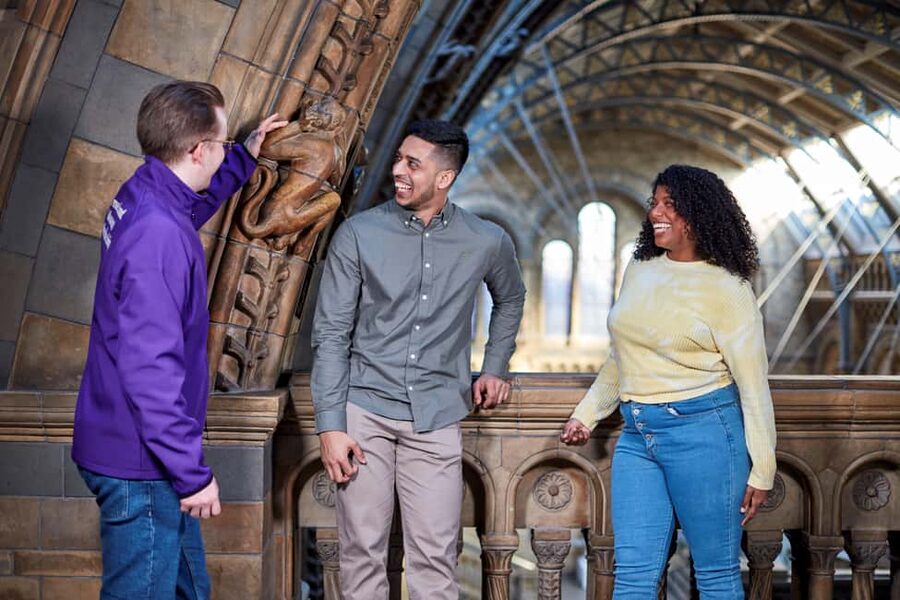
- Romanesque architecture with a natural theme: Carved monkeys, animals, gargoyles, and plant-inspired details turn the building into part of the collection.
- Original design material included: You see digital copies of early sketches, drawings, and plans from the museum’s creation in the late 1800s.
- A small group helps: The activity details list a maximum of seven people, although the highlights refer to groups of up to ten, so confirm the final size when booking.
- The route ends in the Darwin Centre: You finish in the museum’s newest section after exploring its Victorian beginnings.
- General entry is included: The tour includes museum admission and queue skipping, but not paid temporary exhibitions or an audio guide.
- Best for repeat visitors and architecture fans: The guide points out details you may have walked past before, making this more than a standard museum orientation.
Why the building deserves its own tour
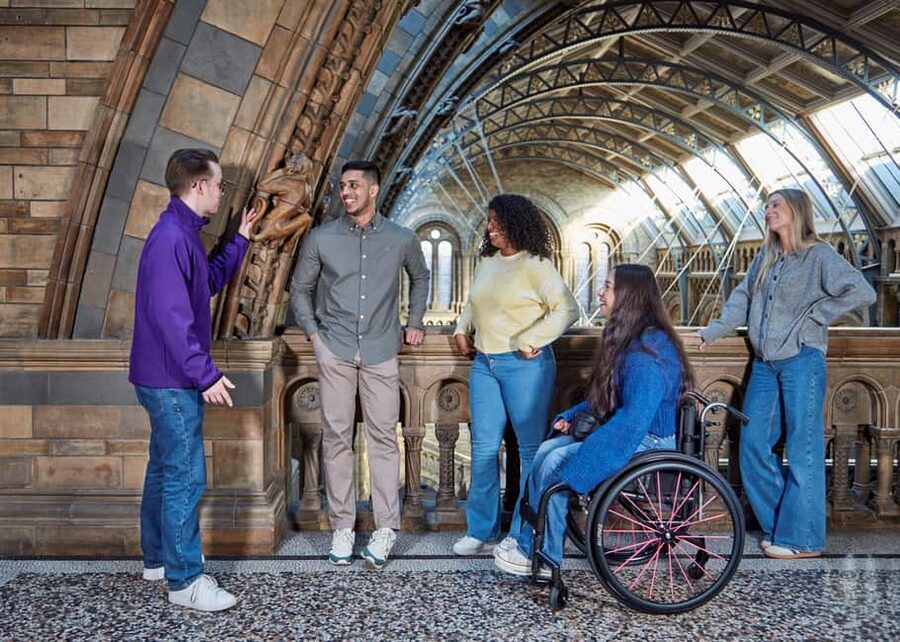
The Natural History Museum’s collections usually steal the spotlight. You may arrive thinking about dinosaurs, blue whales, or precious stones, then find that the building itself is the first great exhibit.
This tour shifts your attention from the objects inside the cases to the stonework around them. Built in the late 1800s, the museum is one of Britain’s most striking Romanesque buildings. Its design uses nature as a constant theme, so the decoration fits the institution rather than feeling like pasted-on ornament.
That matters because the building is easy to admire without understanding. You can see the grand entrance, look up at the high ceilings, and take a few photographs. A guide gives those details a purpose. You learn why animals appear in the decoration, how the building was planned, and how its original design connects with later additions.
The tour is also useful if you have already visited the museum. The collections change your direction of travel. You follow the specimens. An architecture tour makes you pause above eye level and inspect the carvings along the walls, arches, and ceilings.
More Museum Visits around the world:
- Barcelona: Park Güell and Gaudí House Museum Entry Ticket
★ 4.5 · 6,326 reviews - Private Edo-Tokyo Open Air Architectural Museum Tour
★ 4.8 · 15 reviews - Chelsea Galleries and High Line; Art, Architecture and History
★ 5.0 · 14 reviews
Meeting on Exhibition Road
The tour begins outside the museum’s staff and Flett Theatre entrance on Exhibition Road. This entrance is opposite the Victoria and Albert Museum and next to the public entrance on Exhibition Road.
Do not head to the main Cromwell Road entrance through the gardens. That is the most important practical detail before you set off. The meeting point is identified by the what3words location ///bunny.moment.seated, which can help if you are standing near several entrances and want to check your position.
Arrive with enough time to orient yourself. Exhibition Road has several major cultural attractions close together, and the Natural History Museum has more than one entrance. The staff entrance may not look like the grand front door you expect, so compare the location carefully before joining the group.
The tour includes skip-the-queue entry and general museum admission. That adds useful value, especially when the museum is busy. You are not simply paying for a talk outside the building, then arranging your own museum ticket afterward.
The Victorian design story
The opening part of the tour takes you back to the museum’s beginnings in the late 1800s. You see digital copies of original sketches, detailed drawings, and plans for the building.
These materials are valuable because they show intention before stone became decoration. A finished building can look inevitable. Early plans reveal choices, changes, and the thinking behind the spaces you are about to see.
The guide uses this material to set up the museum’s larger design idea. Nature is not confined to the collections. It appears in the building’s decorative program, from carved animals to the shapes and details worked into the structure.
You should listen closely here if you enjoy architecture, design, or museum planning. The tour is not just a list of dates and names. It asks you to connect the original drawings with the actual carvings and rooms around you.
Gargoyles, carvings, and the animal details
The best part of the tour is likely the close look at the decoration. The building is covered with imposing gargoyles, intricate carvings, and terracotta animals. These features can disappear into the background when you are moving toward a famous specimen.
A guide helps you slow down and look at what is above and beside you. You may find a whole menagerie worked into the stone and terracotta, not just one or two obvious animals placed for effect.
The unusual carved monkey deserves special attention. It has a human face and bears a striking resemblance to Charles Darwin. That detail links the building’s natural theme with one of the key figures connected to the study of evolution.
I like this kind of discovery because it rewards careful looking without requiring specialist knowledge. You do not need to know Romanesque architecture in advance. You simply need to pay attention when the guide directs your eyes toward a detail most people miss.
The decoration also gives the museum a sense of humor. Alongside the solemn arches and grand scale, you find creatures that make the building feel lively and slightly playful. That mix helps explain why the architecture remains memorable after you leave the main galleries.
More History Walks around the world:
- Chicago in a Day: Food, History & Architecture Walking Tour
★ 5.0 · 1,153 reviews - Charleston’s Best Highlights: History, Culture & Architecture
★ 5.0 · 422 reviews - Palm Springs Modernism Architecture & History Bike Tour
★ 5.0 · 359 reviews - Charleston: History and Architecture Guided Walking Tour
★ 4.8 · 349 reviews
From original plans to modern additions
The tour does not stop with the Victorian building. After explaining the original design, the guide takes you toward the museum’s twenty-first-century additions.
This shift gives the experience a useful second half. You are not being asked to admire the old building as if the museum froze in time. Instead, you see how a working institution has added new spaces while remaining connected to its original purpose.
The route finishes inside the Darwin Centre, the newest part of the museum building. That ending creates a clear contrast between the late nineteenth-century architecture and the museum’s modern expansion.
The Darwin Centre is also a fitting place to finish. The tour has already drawn attention to Darwin through the carved monkey, and the final stop brings that connection back into the museum’s present-day setting.
The supplied details do not promise access to every collection area or a tour of every gallery. Think of the Darwin Centre as the endpoint of an architectural story, not as a replacement for a full museum visit.
What the one-hour format gives you
One hour is a sensible length for this subject. You get a focused look at the building without committing half a day to a specialist tour.
The short format also works well if you want to combine the experience with other plans in South Kensington. You can use the tour as an introduction, then explore the museum independently afterward. Since general museum entry is included, the architecture tour can serve as a smart way to begin your visit.
There is a tradeoff. A one-hour route cannot cover every decorated surface, historic figure, or modern addition. If you want a slow architectural study, you may wish the tour lasted longer.
I would treat the hour as a guided framework. The guide points out what matters most, gives you the story behind it, and leaves you with a better eye for the rest of the building. You can then continue on your own if time allows.
Why the small group matters
The activity details list a small group limited to seven participants. The highlights describe a group of up to ten, so the exact maximum is worth confirming at booking. Either way, this is designed to be a compact group rather than a large crowd.
That matters inside a busy museum. A smaller group makes it easier to gather around a carving, hear the guide, and ask a question without competing with dozens of people.
Clear speech is especially important in this setting. The museum can have background noise, and the route includes spaces where sound may carry unevenly. One guide praised for the experience is Glenn Harper, whose enthusiasm and attention to small details make the building easier to read.
During peak visitor hours, headsets are provided. This is a practical touch, not a luxury. You can keep your eyes on the ceiling or stonework instead of leaning toward the guide to catch every word.
The tour is conducted in English. If you are comfortable following an English-speaking guide, the focused format should make the commentary manageable. If you need another language, this experience does not list one.
Price and what you receive for $20
At $20 per person, the price is reasonable if you value interpretation rather than simply entering the museum. You receive a live, guide-led tour, general museum entry, and queue skipping.
The value is strongest for first-time visitors who want a clear introduction, and for repeat visitors who have already seen the major collections. The guide turns details that might otherwise pass unnoticed into part of the visit.
It is less useful if your only goal is to reach the museum’s famous specimens as quickly as possible. You will spend the hour on architecture, design, and the building’s story rather than touring the major collection galleries.
Remember that a paid temporary exhibition is not included. An audio guide is also not included, though this experience uses a live English-speaking guide instead. If you plan to see a temporary show, budget for that separately.
Who should book this experience
I would recommend this tour to anyone who enjoys historic buildings, decorative arts, museum design, or small details. It is also a good choice if you have visited the Natural History Museum before and want a different way to see it.
Families with children may find the carved animals appealing, but children under four are not suitable for the tour. The one-hour length is easier for older children than a long specialist walk, though the subject still depends on listening.
It also suits visitors who want a structured first hour in the museum. The guide gives you context before you explore independently, which can make the rest of the visit feel less random.
The tour is wheelchair accessible. The supplied information does not list specific route limitations, so if you need detailed access information, confirm the arrangements before booking.
You may want to skip it if architecture does not interest you or if your London schedule is already packed. A general museum visit offers plenty to see without this extra focus. At the same time, you should not assume you know the building just because you have been inside it before.
Practical booking details
You can cancel up to 24 hours before the tour for a full refund. The reserve-now, pay-later option lets you hold a place without paying immediately, which is useful when your London schedule is still changing.
The experience lasts one hour, but starting times depend on availability. Check the time before you commit to other museum visits or timed attractions nearby.
Meet at the Exhibition Road staff and Flett Theatre entrance, opposite the Victoria and Albert Museum. Do not go to the main Cromwell Road entrance through the gardens.
The guide speaks English, and headsets are supplied during peak hours. Paid temporary exhibitions and an audio guide are not part of the price.
Should you book the architecture tour?
Book it if you want the Natural History Museum to be more than a backdrop for famous specimens. The carved monkey linked to Darwin, the terracotta animals, the original plans, and the move into the Darwin Centre give the building a story that is easy to miss alone.
At $20, the tour offers solid value because entry and queue skipping are included. Its strongest feature is the guide’s eye for details, with Glenn Harper receiving particular praise for his passion and ability to show things you might otherwise never notice.
Skip it if you want a fast, self-guided visit focused only on the collections. For most architecture fans, repeat visitors, and curious first-time guests, though, this one-hour introduction is a smart way to see the museum from a fresh angle.
FAQ
How long is the Natural History Museum architecture tour?
The tour lasts one hour.
Where does the tour begin?
It begins outside the Natural History Museum staff and Flett Theatre entrance on Exhibition Road, opposite the Victoria and Albert Museum.
Is the Exhibition Road entrance the main museum entrance?
No. The meeting point is next to the public entrance on Exhibition Road. It is not the main entrance on Cromwell Road, which is accessed through the gardens.
Where does the tour finish?
The tour finishes inside the Darwin Centre, the newest part of the museum building.
What language is the tour conducted in?
The live tour is conducted in English.
Is general museum entry included?
Yes. General museum entry is included with the tour.
Are paid temporary exhibitions included?
No. Entry to paid temporary exhibitions is not included.
Is an audio guide included?
No. The experience includes a live English-speaking guide, not an audio guide.
Are headsets provided?
Headsets are provided during peak visitor hours.
Is the tour wheelchair accessible?
Yes. The activity is listed as wheelchair accessible.
Can children under four join?
No. Children under four are not suitable for this tour.
How large is the group?
The activity details list a small group limited to seven participants. The highlights refer to groups of up to ten, so confirm the final group limit when booking.
Can I cancel for a refund?
Yes. You can cancel up to 24 hours in advance for a full refund.
Do I have to pay when I reserve?
No. A reserve-now, pay-later option is available, allowing you to reserve a place and pay later.
New to the itinerary around the world
- Washington, DC: Georgetown Architecture Walking Tour★ 5.0 · 8 reviews
- Wilmington History and Architecture Tour★ 4.8 · 18 reviews
- Walk & Discover KL’s Architectural and Heritage Gems★ 5.0 · 7 reviews
- Washington DC: Dupont Circle & Embassy Row Architecture Tour★ 5.0 · 6 reviews
- New Orleans : Garden District Architecture Walking tour★ 4.8 · 5 reviews
- Unveiling Brno: History, Culture & Architectural Delights★ 5.0 · 2 reviews
- Vicenza: Palladian Architecture Private Walking Tour★ 3.3 · 3 reviews
- Tulsa: Art Deco Walking Tour of Tulsa★ 5.0 · 8 reviews
London Architecture Tours, compared.
Private Tour of Hampton Court Palace with Award-Winning Architectural Historian
Read our review →
Modern Architecture & Building Guided Walking Tour
Read our review →
Other lists with this tour