
Review · LONDON
London: Architecture Tour of Benjamin Franklin House
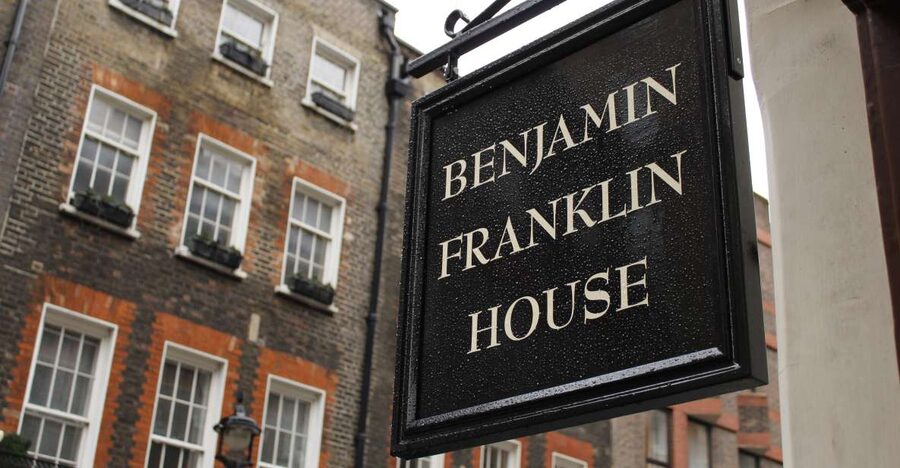
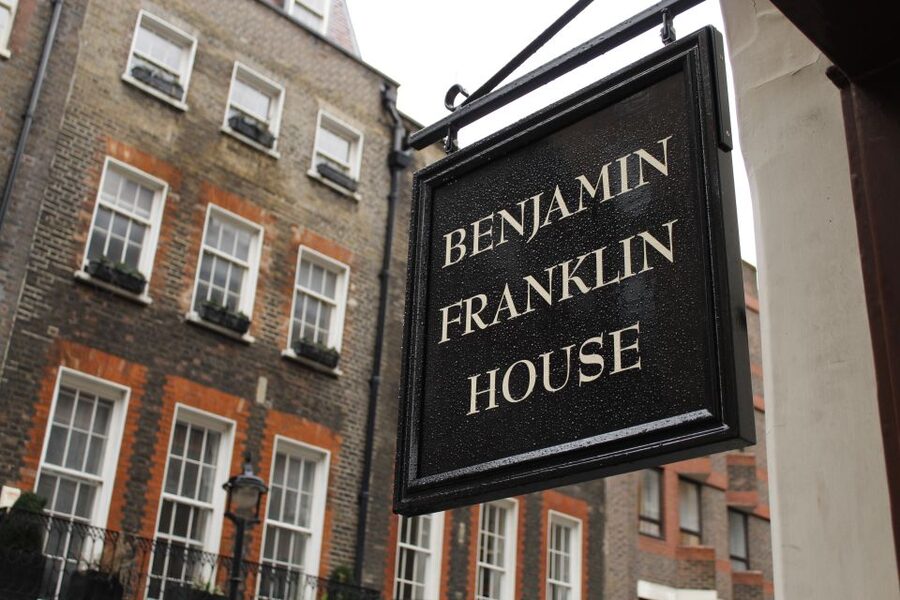
Benjamin Franklin’s only surviving home is a slim, five-storey townhouse tucked on Craven Street, just below the Benjamin Franklin House sign. The building itself is the star, with original Georgian and Victorian features and a story that reaches from the 1730s to its conservation and reopening in 2006. I like the way the tour links rooms to Franklin’s daily life, rather than treating him as only a name on an American history timeline.
I also like the Craven Street Bones, a strange and fascinating reminder that surgeon William Hewson ran an anatomy school here. The chance to try Franklin’s glass armonica gives the hour a hands-on finish. The main drawback is practical: there are stairs between every floor, sloping floors, and no wheelchair access. A better system for admitting people through the front door would also help, since entry can briefly interrupt the tour.
Key points before you book
- Franklin lived here for 16 years: This was his London base before he returned to America in 1776.
- The house is Grade I listed: Its uneven floors, historic staircases, and original features are part of the appeal, but they limit access.
- The Craven Street Bones add a darker layer: You’ll hear how surgeon Hewson used part of the building for anatomy teaching.
- The route covers five floors: Handrails and seating are available, but you need to manage several staircases.
- The glass armonica ends the tour on a playful note: You can try to produce a tune on Franklin’s unusual instrument.
- Ron and Brian have led especially strong tours: If one of them is guiding your visit, expect extra detail about Franklin and the house.
Why Franklin’s London home matters
It is easy to think of Franklin as an American statesman, printer, inventor, and signer of the Declaration of Independence. This house gives you a fuller picture. He lived in London for 16 years, during a period when he worked, argued, experimented, entertained, and followed political affairs from a rented home on Craven Street.
Franklin left in 1776 to return to America and sign the Declaration of Independence. He never came back to London. That makes the house more than a preserved address. It is the place where much of his adult London life unfolded, before the final break with Britain.
I find the setting useful because it places Franklin in an everyday domestic world. You move through rooms connected with food, family, conversation, science, and politics. The tour does not ask you to admire a distant monument. Instead, it shows how a major public figure lived inside a real townhouse, with all the ordinary limits and odd corners that come with one.
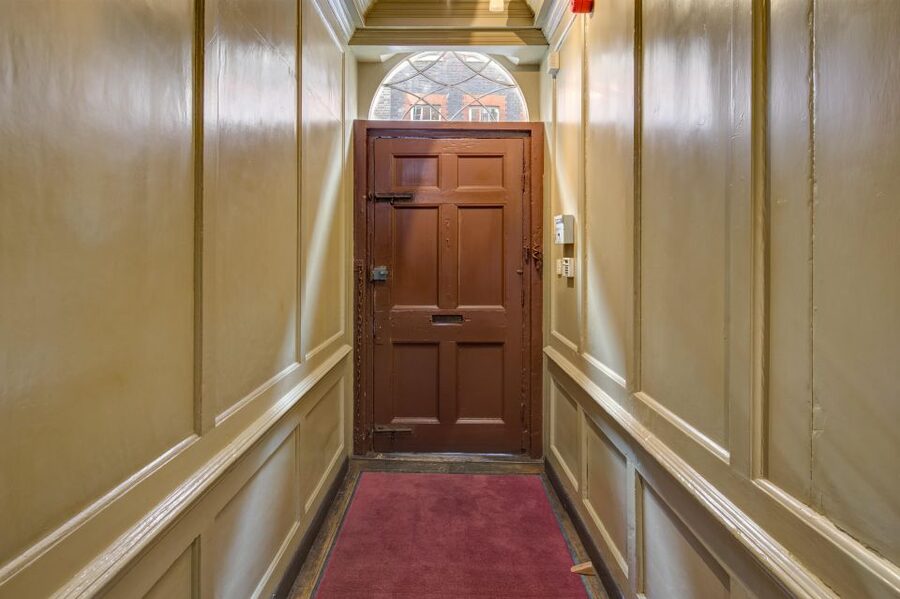
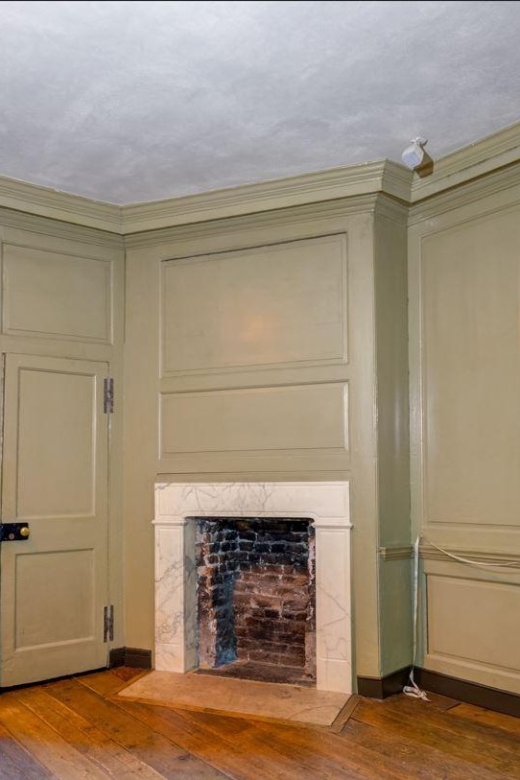
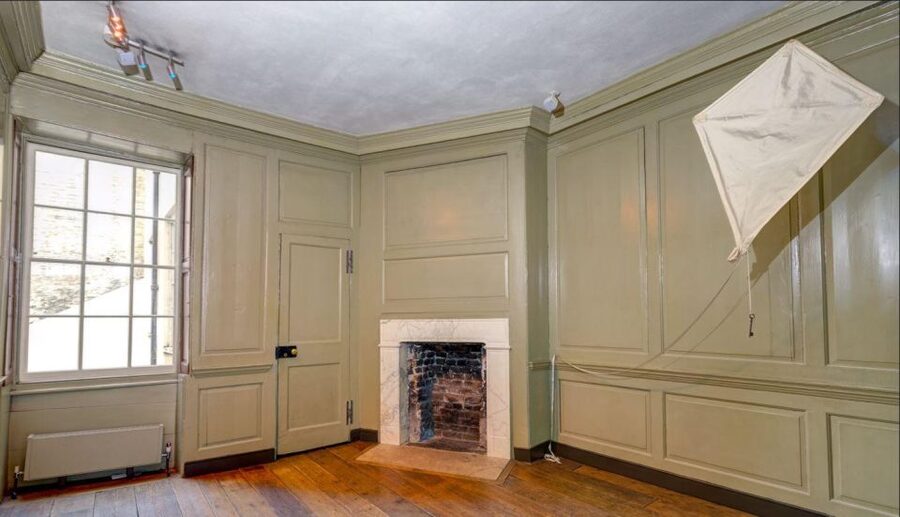
The house is Grade I listed, so conservation matters here. You are seeing a building with original Georgian and Victorian elements, not a modern museum shell dressed up for effect. The floors and stairs slope. Some surfaces feel uneven. That can be inconvenient, but it also helps you understand the age and construction of the place.
More Architecture Tours around the world:
- Chicago Architecture River Cruise
★ 5.0 · 15,756 reviews - Chicago River 90-Minute Architecture Tour
★ 4.5 · 9,629 reviews - Chicago River: 1.5-Hour Guided Architecture Cruise
★ 4.8 · 8,046 reviews
Starting at 36 Craven Street
You begin by knocking on the door at 36 Craven Street, below the Benjamin Franklin House sign. The entrance is easy enough to identify, but do not expect a broad museum doorway or a large lobby. One past visitor noted that getting people into the house could interrupt the tour, so allow a little patience at the start.
The activity lasts about an hour. That is a good length for this sort of townhouse. You have enough time to follow the story across several rooms without turning the visit into a long march through a period house. The guide speaks English and leaves room for questions at the end. You can also ask questions as the tour moves along.
Ron and Brian are among the guides who have led this experience. Ron has been praised for his enthusiasm and for adding detail about both Franklin and the house. Brian has also been noted for supplying extra information about Franklin. Guide quality matters in a small historic building, and here the person leading the tour shapes how much you take away.
The kitchen and London food
The first part of the tour brings Franklin’s London life down to the kitchen. This is a smart choice because food gives you a direct way into the period. Instead of beginning with a list of dates, you hear about Georgian cooking and Franklin’s thoughts on the London diet.
The kitchen also helps keep Franklin human. His opinions about food tell you something about his habits and his response to life in London. You may already know about his experiments and political work, but the discussion of meals provides a more domestic entry point.
I like this part because it connects the architecture to use. A kitchen is not simply a room with old surfaces. It shows how the house functioned and how daily life shaped the people who lived there. The guide weaves the details of the room into Franklin’s story, so you are not just looking at fittings without context.
The kitchen is also a good reminder that the tour is about the house as much as the man. The building’s story begins in the 1730s and continues through the later conservation work. Franklin’s 16 years here are central, but they are one chapter in a longer life for the townhouse.
Margaret Stevenson’s parlour
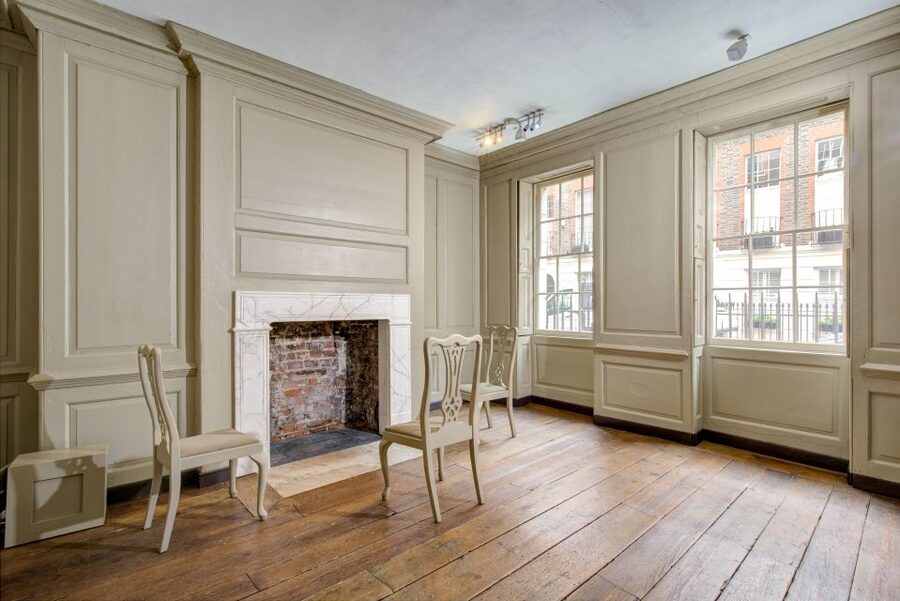
Upstairs, the tour moves into the parlour of Margaret Stevenson, the wealthy widow from whom Franklin rented. This room opens up the social side of his London years.
Franklin met influential people here and discussed current affairs. That detail matters because it shows his London home as a place of exchange, not just a private retreat. You hear about political conversation, the Stevenson family, and Franklin’s relationship with his own family.
The parlour gives you a useful contrast with the public image of Franklin. His work involved major political questions, but his London life also depended on a household, a landlady, and family ties. The Stevenson connection adds a personal thread that could easily be lost in a standard account of his career.
For me, this is one of the strongest sections of the hour. The room helps you see how Franklin’s network worked. He was not isolated in a study, waiting for history to happen. He was part of a household and a wider circle of people who discussed the issues of the day.
The space is historic and seating is available, which helps if you need a short rest during the route. Still, remember that the building has a staircase between each floor. The visit is not difficult for everyone, but it is not a level walk.
Same streets, read through a different style:
- Barcelona: Park Güell and Gaudí House Museum Entry Ticket
★ 4.5 · 6,326 reviews - Chicago Architecture Center River Cruise aboard First Lady
★ 5.0 · 5,536 reviews - Barcelona: Gaudi’s Casa Vicens Skip-the-Line Entrance Ticket
★ 4.7 · 4,541 reviews - Barcelona: Gaudí’s Park Güell Tour with Fast-Track Ticket
★ 4.8 · 4,512 reviews
Franklin’s parlour and 16 years on Craven Street
The tour then reaches Franklin’s parlour, the floor he rented for 16 years. This is the central room for understanding his London life.
Here, the guide covers Franklin’s experiments, political beliefs, and actions. You also hear about his eccentric personality. The mix is important. A tour that focused only on science or only on politics would leave out the qualities that made Franklin such an unusual figure.
The room gives his experiments a physical setting. His ideas were not produced in an abstract biography. They took shape in a rented floor inside a busy city, alongside domestic life and political debate.
You also learn about Franklin’s decision to leave London in 1776. He returned to America to sign the Declaration of Independence and never returned to the city. The departure gives the house a clear ending point, even though the building itself continued for centuries afterward.
I like the sense of pause here. Franklin’s time in London was long enough to form deep connections, yet it ended with a permanent break. The room links the personal and political sides of that decision. You are not simply told that he lived in London. You are shown the place he left behind.
The parlour is also where the architecture has real force. The sloping floors and old proportions remind you that this is a townhouse, not a purpose-built museum. You should take care on the stairs and avoid rushing from one room to the next.
The Craven Street Bones and surgeon Hewson
One of the most unusual parts of the experience is the story of the Craven Street Bones. The tour explains that surgeon Hewson ran an anatomy school connected with the house.
This gives the building a second identity. Franklin’s home was also linked to medical study, and the evidence is far less polished than the usual furniture and portraits found in historic houses. The bones add a macabre edge, but they also help explain how the building was used by people beyond Franklin and the Stevenson household.
I value this section because it prevents the tour from becoming a simple celebration of a famous man. The house had complicated uses and several layers of history. The anatomy school story can feel surprising, especially after the domestic sections about food and family.
You should not expect a full medical museum. The Craven Street Bones are one part of the tour, placed within the wider story of the building. Their role is to show what happened here and how the house changed over time.
The topic may not suit very young children or anyone uncomfortable with anatomical remains. Children under 12 enter free, but parents should decide if this part of the tour is right for them.
Trying the glass armonica
The final stop is the Glass Armonica Room, where you can try to play a tune on Franklin’s instrument. This hands-on finish gives the visit a lighter ending after the political material and the story of the anatomy school.
Franklin’s instrument is an especially good reminder of his broad interests. He was not only a politician or a printer. He also experimented with sound and machines, and the glass armonica reflects that inventive side.
The chance to try it yourself makes the room memorable. You do not just look at an object behind a barrier. You get a brief sense of how it works by attempting a tune. I would not book this tour only for the instrument, but it is a useful final piece in the portrait of Franklin.
Photography is allowed, so you can take pictures during the visit, but flash photography is not permitted. Audio recording is also prohibited. Drinks, smoking, vaping, alcohol, and drugs are not allowed inside, and assistance dogs are permitted under the stated conditions.
What the $16 price gets you
At $16 per person, the tour is a sensible buy if you want a focused London history stop rather than a large museum visit. The price includes entry to the house and an hour-long guided tour, with time for questions at the end.
The value comes from access to the building and the guide’s interpretation. You are not paying simply to enter a room with Franklin’s name on it. You follow a connected route through the kitchen, Margaret Stevenson’s parlour, Franklin’s parlour, the Craven Street Bones story, and the Glass Armonica Room.
The short duration also works in its favor. You can fit the visit into a day of sightseeing without giving up half a day. At the same time, an hour means the guide must keep the route moving. If you want a long, academic treatment of Franklin, this will feel brief.
Children under 12 enter free, which improves the value for families. The subject matter is best for children who can manage stairs and stay interested in a guided historical discussion. The anatomy section may call for a quick explanation from a parent.
You can cancel up to 24 hours in advance for a full refund, and you can reserve without paying immediately. Those terms are useful if your London schedule is still shifting.
Stairs, seating, and access
You should plan this visit around the building’s limits. Benjamin Franklin House is a five-storey townhouse, with a staircase between each floor. The floors and stairs are uneven and sloping, although handrails are provided on all staircases.
There is seating in each historic room, so you can rest during the tour. Restrooms are downstairs in the basement. There is no accessible restroom, and the house has no wheelchair access because of its listed status and different floor levels.
Carers are admitted free, and visitors with disabilities qualify for concessionary tickets. Guide dogs and hearing dogs are allowed in all areas of the house. Pets are not permitted.
This is the kind of information I would check before booking, not after arriving at the door. If you are comfortable with several staircases and old floors, the limitations are manageable. If you need step-free access, this is not the right historic house visit.
Who will enjoy this tour most
I would choose this experience if you like small museums, political history, historic homes, or unusual stories attached to old buildings. It works especially well for anyone who knows Franklin mainly as a founding figure and wants to understand his years in London.
It also suits you if you prefer a guide-led visit with time for questions. Ron and Brian have both been praised for adding detail, and that kind of personal explanation is valuable in a compact house where a label cannot tell the whole story.
You may want to skip it if you dislike stairs, need an accessible restroom, or prefer to explore at your own pace. The tour is in English only, and audio recording is not allowed. You can take photographs without flash, but you will need to listen rather than record the guide.
Should you book Benjamin Franklin House?
I would book this tour if you want an hour of focused history in an original townhouse, especially if Franklin’s London years are new to you. The strongest reasons are the house itself, the connection to Margaret Stevenson, the Craven Street Bones, and the chance to play the glass armonica.
At $16, the visit offers good value for a compact, guided experience. Book it when you can manage the stairs, and arrive ready to pay attention to the building as much as to Franklin. If you want a polished, spacious museum with step-free access, choose another stop. If you want a personal look at how a famous political figure lived before returning to America, this small house earns its place in your London plans.
FAQ
Where does the Benjamin Franklin House tour begin?
Meet at 36 Craven Street. Knock on the door below the Benjamin Franklin House sign.
How long does the architecture tour last?
The guided tour lasts about one hour.
What language is the tour conducted in?
The live tour guide speaks English.
What is included in the $16 price?
The price includes entry to Benjamin Franklin House and the one-hour guided tour, with an opportunity to ask questions at the end.
Can children join the tour?
Yes. Children under 12 enter free.
Can I take photographs inside?
Yes, photography is allowed, but flash photography is not permitted.
Can I record the tour?
No. Audio recording is not allowed.
Is the house wheelchair accessible?
No. The five-storey townhouse has stairs between each floor, uneven and sloping floors, and no wheelchair access.
Are restrooms available?
Yes. Restrooms are located downstairs in the basement, but there is no accessible restroom.
Can I cancel my booking?
Yes. You can cancel up to 24 hours in advance for a full refund. You can also reserve now and pay later.
New to the itinerary around the world
- Washington, DC: Georgetown Architecture Walking Tour★ 5.0 · 8 reviews
- Wilmington History and Architecture Tour★ 4.8 · 18 reviews
- Walk & Discover KL’s Architectural and Heritage Gems★ 5.0 · 7 reviews
- Washington DC: Dupont Circle & Embassy Row Architecture Tour★ 5.0 · 6 reviews
- New Orleans : Garden District Architecture Walking tour★ 4.8 · 5 reviews
- Unveiling Brno: History, Culture & Architectural Delights★ 5.0 · 2 reviews
- Vicenza: Palladian Architecture Private Walking Tour★ 3.3 · 3 reviews
- Private Colonial Williamsburg Architectural Tour★ 5.0 · 5 reviews
London Architecture Tours, compared.
Private Tour of Hampton Court Palace with Award-Winning Architectural Historian
Read our review →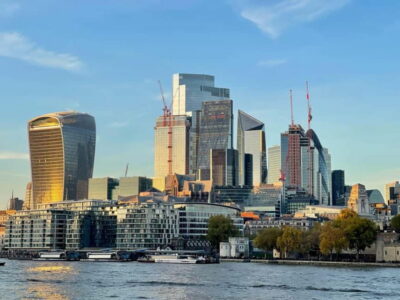
Modern Architecture & Building Guided Walking Tour
Read our review →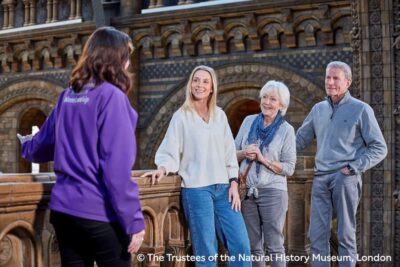
Official Natural History Museum Tour – Architecture
Read our review →Other lists with this tour