
Review · LONDON
London: Brutalist & High-tech Architecture Walking Tour
London’s modern city center makes more sense when you stop treating its bold towers as isolated oddities. This three-hour architectural walk links the Barbican’s concrete terraces with Lloyd’s exposed services, the Gherkin’s curved shell, and the City’s newer office towers. The result is a clear story about politics, money, technology, and the way London rebuilt itself.
I like the way the tour connects buildings to major events rather than simply naming architects and dates. I also like that guide Poi is a working architect who explains what you are looking at in plain language, with English and Chinese tours available. The main drawback is practical: this is a substantial walk, with no building interiors, food, or drinks included.
- The Barbican sets the political stage: See how post-war reconstruction and the Welfare State shaped one of London’s most debated housing projects.
- Lloyd’s makes technology visible: Pipes, lifts, stairways, and services become part of the building’s public face.
- The City tells an economic story: The Gherkin, 22 Bishopsgate, and the Walkie Talkie reflect London’s growth as a global financial center.
- A professional guide changes the view: Poi explains details you could easily miss when walking alone.
- The route ends with the Great Fire: The Monument connects modern planning decisions with London’s older urban story.
- Comfortable shoes matter: You walk from St Giles Cripplegate to the City and cover significant ground in three hours.
Why this walk works better than a skyline photo stop
You can see most of these buildings from a sightseeing bus or spot them while shopping in the City. What you usually miss is the argument each building makes about its own time.
The Barbican is not just a collection of concrete towers and walkways. It reflects post-war Britain, public housing ambitions, and the belief that good planning could improve daily life. Lloyd’s is not simply a strange metal building. It turns its mechanical systems into an architectural display.
That shift in viewpoint is the main value here. I like tours that give you a set of questions to carry through a city. Who paid for this building? What technology made it possible? What political or economic climate encouraged it? Who was the building meant to serve?
Poi’s architectural training is important because the tour needs more than a list of dates. You are asked to notice structure, materials, circulation, services, public space, and environmental systems. The explanations are intended to be clear rather than academic, which makes the subject easier to follow even if you do not usually seek out architecture.
The price is $47 per person. For three hours with an architect guide and a route covering several major buildings, that is a fair price if modern architecture is a serious interest. It is less attractive if you only want quick exterior photographs, since you will not enter the buildings and the walk occupies a good part of an afternoon.
Starting at St Giles Cripplegate and entering the Barbican
The meeting point is outside St Giles Cripplegate church. From there, the tour moves into the Barbican Estate for about 50 minutes, making it the longest single stop on the route.
This is a smart place to begin. The Barbican introduces Brutalism through its original social purpose, not just its concrete appearance. You discuss the damage and disruption of the post-war period, the rise of the Welfare State, and the belief that large-scale urban planning could create a better form of city life.
Expect the guide to focus on how the estate works as a planned environment. Elevated walkways, towers, terraces, public spaces, and cultural buildings form part of one broad idea. You are not simply looking at surfaces. You are considering how people were expected to move, live, and meet within the development.
The Barbican can divide opinion, and that is part of its interest. Concrete, large forms, and separated pedestrian routes may seem severe at first. With the right explanation, those same features become evidence of a very specific period in British planning.
I would give this opening your full attention. The Barbican supplies the political and social background needed for the rest of the walk. Without it, later office towers could seem like unrelated design experiments.
The stop lasts about 50 minutes, so there is time for a proper explanation rather than a quick glance. Still, remember that this is a walking tour, not a complete guided visit to every part of the estate. The activity includes the Barbican Estate, but it does not promise entry to private or interior areas.
More Bauhaus and Brutalist Architecture Tours in the world:
- Brutalist Tbilisi: Urban exploration and untold stories
★ 5.0 · 82 reviews - London: Brutalist Architecture & History Walking Tour
★ 4.8 · 42 reviews - Le Corbusier’s Chandigarh : A Complete Architecture Tour
★ 4.7 · 25 reviews
The fifteen-minute walk into the City
After the Barbican, you walk for around 15 minutes toward the City of London. This transition matters because the tour moves from a publicly planned residential complex to a commercial district shaped by finance and global business.
You will want sensible shoes here. The total route includes several stops and ordinary city walking, and the tour specifically warns that it covers significant distances. The pace may suit people who enjoy stopping to look upward and discuss details, but it will not suit anyone hoping for a seated architecture talk.
This part of the route also lets the story change gradually. Post-war reconstruction gives way to economic deregulation, expanding financial markets, and a demand for new office space. The buildings ahead reflect a different set of priorities from those behind you.
22 Bishopsgate and the scale of new offices
The first City stop is 22 Bishopsgate, with about 10 minutes of guided discussion. It represents a newer phase of London’s commercial growth and gives you a useful comparison with the earlier buildings on the route.
The short stop means you should expect a focused exterior reading, not a full case study. The guide may help you consider scale, density, and how a large office tower fits into an already crowded financial district. The building is useful in the sequence because it shows how much the City has changed since the post-war period.
I find this type of comparison more useful than judging a tower in isolation. A building can look impressive from a distance, but its real story includes the pressure for office space, the changing needs of employers, and the rules that shape the skyline around it.
There is no entry into 22 Bishopsgate. If you want interior access or a visit to a viewing area, this tour will not provide it.
Lloyd’s Building and the logic of High-tech architecture
The Lloyd’s Building receives about 25 minutes, one of the most substantial stops after the Barbican. This is where the High-tech movement becomes particularly easy to understand.
Lloyd’s places many of its services on the outside. Lifts, pipes, stairs, and other working parts are not hidden behind a conventional facade. Instead, the building presents its systems as part of its visual identity.
That approach changes the question you ask. Rather than seeing technology as something that should disappear, you begin to see how structure and building services can become design language. The building’s appearance reflects confidence in engineering and a willingness to show how a complex office machine operates.
The historical setting matters too. The High-tech style developed during a period when technology, industrial production, and modern engineering carried strong cultural weight. The tour connects this architectural attitude with London’s late twentieth-century commercial expansion.
A 25-minute stop gives Poi room to explain details that a casual passerby would likely miss. This is one of the places where an architect’s perspective has real practical value. You can look at the building and understand not just what it resembles, but why its parts are arranged and displayed in this way.
Again, you see the exterior only. The attraction is the explanation, the view, and the chance to read the building from the street.
More Walking Tours in the world:
- The Official Art Deco Walking Tour by The Miami Design Preservation League
★ 5.0 · 1,580 reviews - Lecce: Baroque Architecture and Underground Walking Tour
★ 4.6 · 1,248 reviews - Chicago in a Day: Food, History & Architecture Walking Tour
★ 5.0 · 1,153 reviews - Miami South Beach Art Deco Walking Tour
★ 5.0 · 1,039 reviews
The Leadenhall Building and the exposed structure
The Leadenhall Building follows with around 10 minutes of guided commentary. Its angled form gives you another way to think about structure, office space, and the demands placed on a modern City tower.
The stop is brief, but it works as part of a chain. Lloyd’s makes services visible, while the Leadenhall Building helps you consider how the frame, shape, and external profile respond to the city around them.
You may notice how these towers compete for attention, yet each one speaks a different architectural language. The tour encourages you to compare them rather than place them in a simple ranking of attractive or unattractive buildings.
That is useful if you have already walked through the City and felt that its newer towers blur together. A guided comparison gives each one a role in the larger development of London’s commercial center.
The Gherkin and digital design
At 30 St Mary Axe, commonly called the Gherkin, the tour spends about 15 minutes. This is one of London’s best-known modern buildings, but fame can make a building harder to see clearly. You may already know its outline, yet still have little idea how environmental engineering and digital design helped shape it.
The Gherkin allows the guide to discuss how newer design tools changed what architects could plan and build. Its curved form is not simply a visual trick. The building provides a chance to consider energy, airflow, glazing, structure, and the relationship between environmental performance and appearance.
The tour also places the Gherkin within the City’s economic story. It belongs to the period when London was strengthening its role as an international financial center, and when distinctive towers became part of the competition for tenants, investment, and attention.
This stop is especially good for anyone who tends to think that sustainable design must look modest or invisible. The discussion shows how environmental engineering can affect a building’s entire form.
Leadenhall Market and the Walkie Talkie
The route then visits Leadenhall Market for about 10 minutes. This is a useful change of scale and mood. After several major office towers, the market gives you a more enclosed urban setting and a chance to consider how old and new forms occupy the same part of London.
The market is not presented as a separate food stop, and food and drinks are not included. Think of it as a place to walk through and observe, not a scheduled break. If you want coffee or lunch, plan that for before or after the tour.
From there, you pass the Fenchurch Building, better known as the Walkie Talkie, for about five minutes. The guide points out views along the way, while the building provides another example of how digital tools, engineering, and commercial demands have influenced London’s recent skyline.
The short timing tells you how to treat this section. You will get context and a useful exterior view, but not a long technical lecture. It helps keep the route moving toward the final historical stop.
The Great Fire Monument and London’s long memory
The walk finishes at the Monument to the Great Fire of London, with about 15 minutes of guided discussion. Ending here is one of the strongest choices in the route because it brings the story back to London’s older planning legacy.
The Great Fire affected how the city thought about rebuilding, streets, materials, and urban organization. By placing the Monument at the end, the tour shows that London’s modern form did not begin with post-war concrete or twenty-first-century glass. Earlier disasters and planning decisions still influence how the City is arranged.
This final stop also helps connect the main themes. The Barbican represents reconstruction and public ambition. The City towers represent finance, technology, and commercial growth. The Monument reminds you that every phase of London’s development responds to earlier conditions.
You finish at the Monument rather than returning to the starting point. That makes the tour useful as part of a day in the City, since you can continue sightseeing from there. It also means you should plan your transport onward instead of assuming a loop back to St Giles Cripplegate.
What the guide adds to the experience
Poi is identified as the architect leading the tour, and the strongest praise centers on the clarity, warmth, and depth of the explanations. The guide’s professional background matters most when the group moves beyond broad labels such as Brutalist or High-tech.
You can expect discussion of design details, historical context, urban planning, and the political forces behind the buildings. The tour also encourages questions, which is helpful because architecture can quickly become technical or abstract.
Tours are offered in English and Chinese. If you choose English, you should still expect specialist ideas to be explained for a general audience rather than for architects alone. If you choose Chinese, the language option may make the technical and historical material easier to follow.
The small-group format is another advantage. It allows more direct explanation and makes it easier to ask about a detail you have noticed. The exact group size is not specified, so I would not book expecting an entirely private tour.
Audio and video recording are not allowed. You will need to listen and take in the buildings directly, rather than relying on a recording later.
Who should book this walk?
I would recommend it most strongly if you enjoy cities as working places, not just as collections of famous sights. It suits architecture students, design professionals, urban planning enthusiasts, photographers who want better context, and curious visitors who have already seen the City but never understood its buildings.
It also works well for a visitor with half a day to spare in central London. The route gives you a focused subject and a clear finish point, rather than scattering you across distant parts of the city.
You should think twice if you have limited walking ability. The activity is not suitable for wheelchair users, people with mobility impairments, people over 80 years of age, or people with hearing impairments. Comfortable shoes are essential, and the tour does not provide a rest-focused format.
Families with young children may also find three hours of architectural explanation demanding, though the data does not specify a minimum age. The best match is someone willing to listen, walk, and look closely.
Is $47 good value for three hours?
At $47, the tour costs about $16 per hour. That is reasonable for a small-group walking experience led by an architect, particularly because the route covers several major buildings and supplies a connected explanation rather than isolated facts.
The value depends on what you want. You are paying for interpretation, not admission tickets. There is no access inside the buildings, and food and drinks are extra. If interior architecture is your priority, you may prefer a separate building visit.
For me, the strongest value comes from the route design. The Barbican, Lloyd’s, the Leadenhall Building, the Gherkin, 22 Bishopsgate, the Walkie Talkie, Leadenhall Market, and the Great Fire Monument create a useful timeline of London’s changing ambitions.
Free cancellation up to 24 hours before the start and the option to reserve now and pay later also reduce the risk of fitting this into a changing schedule. Check the available starting time before booking, since the tour lasts three hours and finishes at a different place from where it begins.
Should you book the Brutalist and High-tech Architecture Walking Tour?
Book it if you want to understand why London looks the way it does, especially if concrete housing, exposed engineering, office towers, and city planning appeal to you. The strongest parts are the Barbican, Lloyd’s Building, and the way Poi links architecture to the Welfare State, deregulation, finance, and environmental design.
Skip it if you want building interiors, a short stroll, or a relaxed sightseeing outing with little commentary. For everyone else, $47 buys a focused route, a professional guide, and a far more useful way to read the City than simply pointing a camera at its skyline.
FAQ
Where does the tour start?
The tour starts outside St Giles Cripplegate church.
Where does the tour finish?
It finishes at the Monument to the Great Fire of London.
How long is the walking tour?
The tour lasts three hours.
Is the tour available in languages other than English?
Yes. Live guiding is available in English and Chinese.
Do I enter any of the buildings?
No. The tour includes guided exterior visits and discussion, but entry into the buildings is not included.
What should I bring or wear?
Wear comfortable shoes because the route covers significant walking distances. Food and beverages are not included, and video or audio recording is not allowed.
New to the itinerary around the world
- Washington, DC: Georgetown Architecture Walking Tour★ 5.0 · 8 reviews
- Wilmington History and Architecture Tour★ 4.8 · 18 reviews
- Walk & Discover KL’s Architectural and Heritage Gems★ 5.0 · 7 reviews
- Washington DC: Dupont Circle & Embassy Row Architecture Tour★ 5.0 · 6 reviews
- New Orleans : Garden District Architecture Walking tour★ 4.8 · 5 reviews
- Unveiling Brno: History, Culture & Architectural Delights★ 5.0 · 2 reviews
- Vicenza: Palladian Architecture Private Walking Tour★ 3.3 · 3 reviews
- Private Colonial Williamsburg Architectural Tour★ 5.0 · 5 reviews
Bauhaus and Brutalist Architecture Tours, compared.
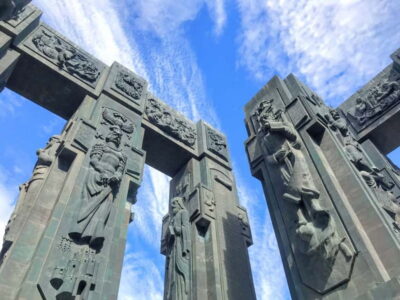
Brutalist Tbilisi: Urban exploration and untold stories
Read our review →
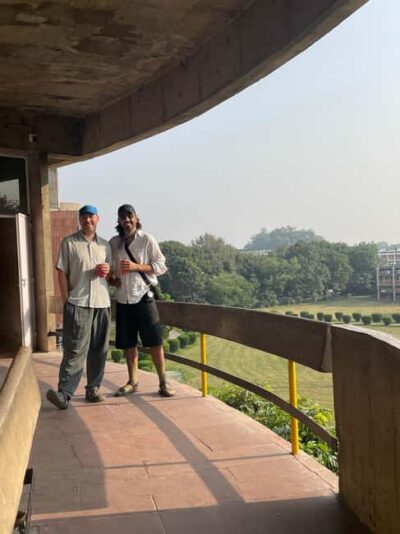
Le Corbusier’s Chandigarh : A Complete Architecture Tour
Read our review →
Architecture of New Belgrade – Brutalism Decoded
Read our review →
Secret Split: Socialist Architecture & brutalism – Urban Utopia
Read our review →
Tashkent Soviet Architecture (Modernism) and Subway station tour.
Read our review →
Belgrade: Space architecture tour – brutalist architecture
Read our review →
USSR History, Soviet Architects ,Statues & Mosaics
Read our review →Other lists with this tour