
Review · INDIA
Le Corbusier’s Chandigarh : A Complete Architecture Tour
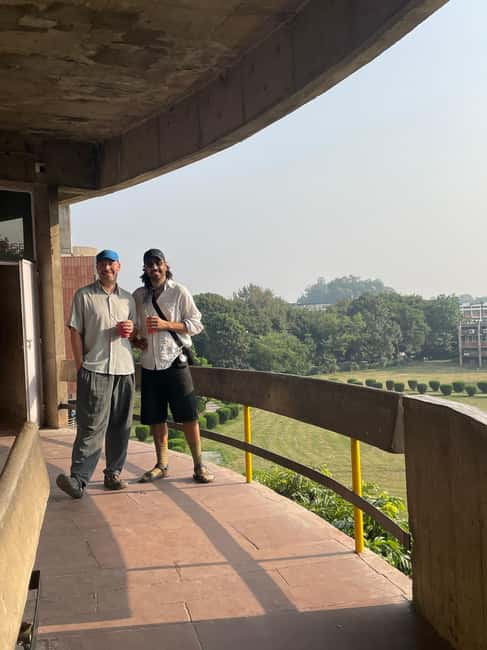
Chandigarh is one of the few cities where modern architecture is not confined to a museum or a single famous building. It is the city itself. This 5.5-hour tour follows Le Corbusier’s plan through the Capitol Complex, Punjab University, Pierre Jeanneret’s homes, and the offices where Chandigarh took shape. The best part is the access: you may enter places that are difficult to understand from the street alone.
I like the mix of major civic buildings and ordinary housing. You see the grand Palace of Assembly, then learn how Pierre Jeanneret worked on homes and public buildings for daily life. I also like Rusty’s approach. As a third-generation Chandigarh resident and former journalist, he brings local memory, sharp facts, and a sense of humor instead of giving you a stiff lecture.
The main drawback is that access depends on local political conditions, holidays, and permissions. The Capitol Complex and some university buildings may not be available on every date. The tour also covers a lot of ground, so it is not ideal if you need a slow, fully accessible outing.
Key things to know before booking
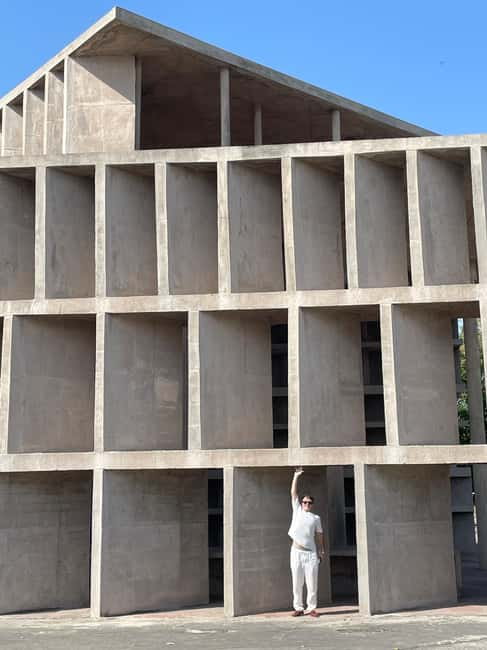
- You enter more than you photograph: The plan includes guided access to civic buildings, university spaces, museums, and former offices.
- The Capitol Complex is the centerpiece: Expect the Palace of Assembly, Secretariat, High Court, Open Hand Monument, Geometric Hill, Tower of Shadows, and Martyrs Monument when conditions allow.
- Rusty adds local context: His stories connect Le Corbusier’s ideals with the city’s present-day life and changing identity.
- The tour is built for architecture fans: Original drawings, floor plans, letters, models, concrete forms, and planning ideas all receive attention.
- Transport and fees are covered: Pickup, drop-off, fuel, parking, entry tickets, and permissions are included in the $75 price.
- Plan for sun and walking: Comfortable shoes, a hat, sunscreen, and an ID or passport are sensible choices.
Why Chandigarh deserves an architecture tour
Chandigarh was planned as a new capital after the partition of India. Le Corbusier worked with Pierre Jeanneret, Maxwell Fry, Jane Drew, and Indian architects to create a city based on order, open space, separate traffic movement, and self-contained sectors.
You can read about those ideas, but Chandigarh makes more sense when you move through the city. A guide can point out how the grid works, how civic buildings were grouped, and how concrete was used not just as a building material but as a visual language. You also see where the original plan has been adapted, protected, or challenged by modern life.
That balance matters. This is not a tour that treats Le Corbusier as an untouchable genius. Rusty’s storytelling is described as factual, funny, and free of patriotic speeches. You get the ideals, but also the city that had to live with them.
The experience is especially useful for architects, students, photographers, urban planners, and anyone curious about twentieth-century modernism. You do not need a technical background, though. The guide’s job is to explain why a building looks and works as it does, not to test you on architectural terms.
More Bauhaus and Brutalist Architecture Tours in India:
- Brutalist Tbilisi: Urban exploration and untold stories
★ 5.0 · 82 reviews - London: Brutalist Architecture & History Walking Tour
★ 4.8 · 42 reviews - Architecture of New Belgrade – Brutalism Decoded
★ 4.5 · 24 reviews
Punjab University: a working campus with modernist purpose
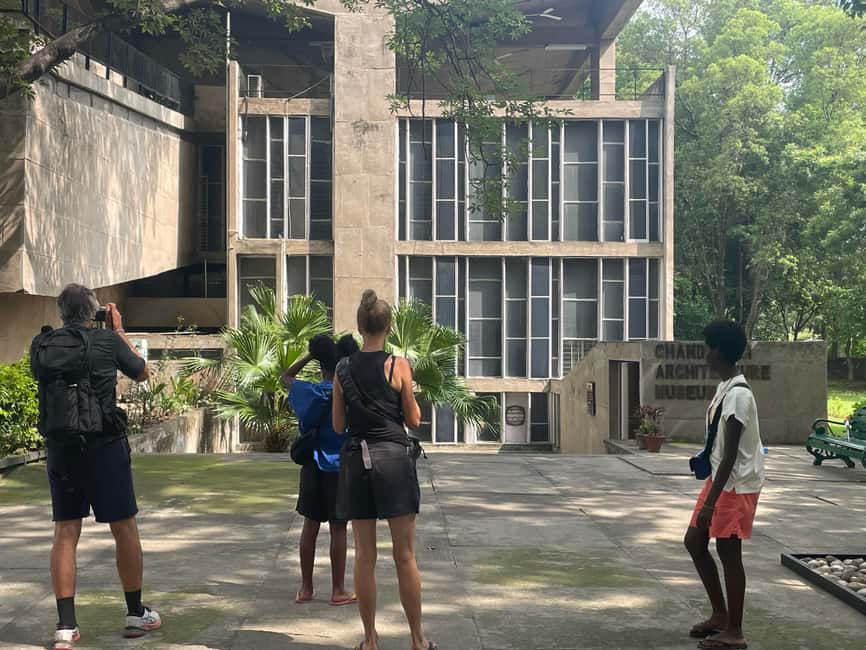
The tour begins, or includes, a detailed walk through Punjab University. Depending on local access, you may enter Gandhi Bhawan, the AC Joshi Library, departments, and lecture halls.
This is one of the most useful parts of the day because the university is not simply a monument. It remains a place of study and work. That gives you a chance to see how modernist ideas were applied to an active campus rather than a ceremonial building alone.
Gandhi Bhawan is particularly important to the Chandigarh story. Its design uses strong geometric forms and water in a way that feels different from the heavy civic architecture of the Capitol Complex. The AC Joshi Library and university buildings help show the wider team effort behind Chandigarh. Le Corbusier’s name gets the attention, but Jeanneret, Fry, Drew, and Indian colleagues shaped much of the city’s daily setting.
Access is not guaranteed. University rules, holidays, or local conditions can change what you enter. If you care most about interiors, contact Rusty through WhatsApp after booking and confirm the expected plan.
Maison Jeanneret and the human side of the city
Maison Jeanneret is one of the tour’s most appealing stops. It was the first house built in Chandigarh by Pierre Jeanneret, and Le Corbusier also stayed there. The house is now a museum.
Here, the scale shifts from government to domestic life. You can think about how modernist ideas worked in a home, where shade, airflow, movement, and practical use matter as much as appearance. The house offers a more personal way to understand Jeanneret, whose contribution can be overlooked when the tour conversation focuses only on Le Corbusier.
The museum setting also helps you see the architects as working people with routines, choices, and compromises. For many visitors, this is where Chandigarh becomes less like a set of monumental concrete forms and more like a place designed for human use.
The Capitol Complex: Chandigarh’s boldest statement
The Capitol Complex is the heart of Le Corbusier’s civic vision. When political conditions permit, the tour includes the Palace of Assembly, Secretariat Building, High Court, Open Hand Monument, Geometric Hill, Tower of Shadows, and Martyrs Monument.
Give this section your full attention. The buildings are large, spare, and often severe. Their surfaces change as the sun moves, and their openings control how you see the sky, courts, and surrounding structures. The concrete can feel imposing, but the guide helps you read the details rather than simply admire the scale.
The Palace of Assembly shows Le Corbusier’s interest in sculptural form and function. The High Court, also called the Palace of Justice, has a strong relationship between shade, color, structure, and public movement. The Secretariat is more repetitive and immense, showing the practical side of administration within the larger plan.
The Open Hand Monument is the city’s best-known symbol. Its message of giving and receiving connects to Chandigarh’s intended public identity. The Tower of Shadows demonstrates how design can manage sunlight without relying only on decorative treatment. Geometric Hill and the Martyrs Monument add symbolic and spatial elements to the complex.
Do not expect every listed building to be open for interior access. The tour description is clear that local political conditions can affect the Capitol Complex. That is a real consideration, not a minor footnote. The alternatives are still meaningful, but you should book with some flexibility.
More Architecture Tours around India:
- British Architecture Walk, an immersive walking tour in Chennai
★ 5.0 · 60 reviews - The Hipster Chandigarh Architecture History Tour
★ 5.0 · 54 reviews - Mumbai heritage walk- Story of Gothic and Art Deco buildings
★ 5.0 · 33 reviews - Jaipur City Heritage and Architecture Tour
★ 5.0 · 32 reviews
The old architect’s office and Chandigarh’s working beginnings
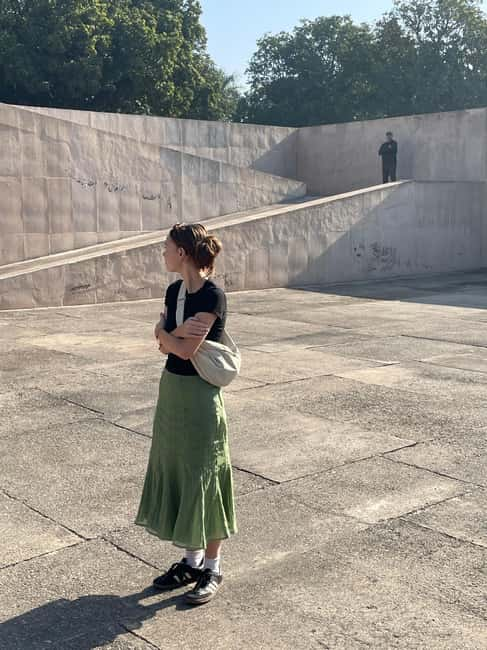
The former architect’s office is now the Le Corbusier Centre. This is where the Chandigarh project began to take practical shape.
The value here is not just the building itself. You learn how plans, meetings, drawings, and decisions turned a vision into a city. The focus on sustainability and green architecture is also significant. Chandigarh was planned decades before environmental design became a common public phrase, yet shade, open areas, planting, ventilation, and the relationship between buildings and climate were part of the discussion.
That does not mean every original idea survives unchanged. Cities grow, and residents adapt them. The centre helps you compare the original intentions with Chandigarh as it exists now.
The architecture museum: paper plans behind concrete walls
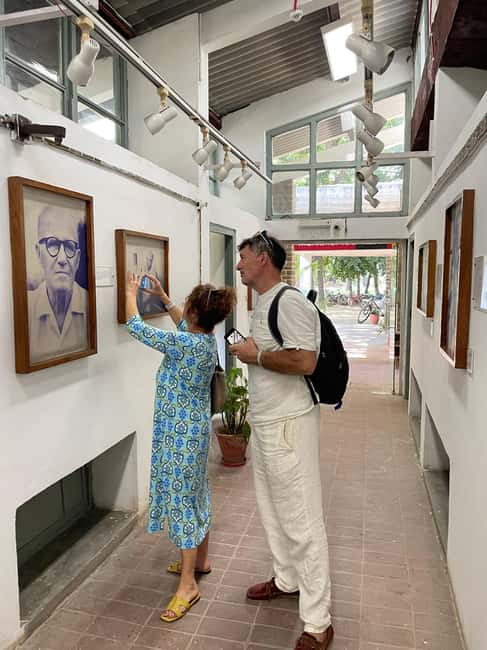
The architecture museum brings the city’s story down to the level of documents. You may see original letters, floor plans, sketches, and rare drawings connected with Corbusier and the creation of Chandigarh.
This stop is especially valuable if you want to understand process. Finished buildings can look inevitable. Drawings show that they were not. They reveal revisions, competing ideas, and the amount of thought behind roads, sectors, civic zones, and public spaces.
You should also allow time to look closely. A quick photograph of a drawing will not tell you much. Rusty’s explanations help place the documents in context, so ask questions if you want to know how a plan changed or how a particular architect contributed.
How Rusty’s guiding style shapes the day
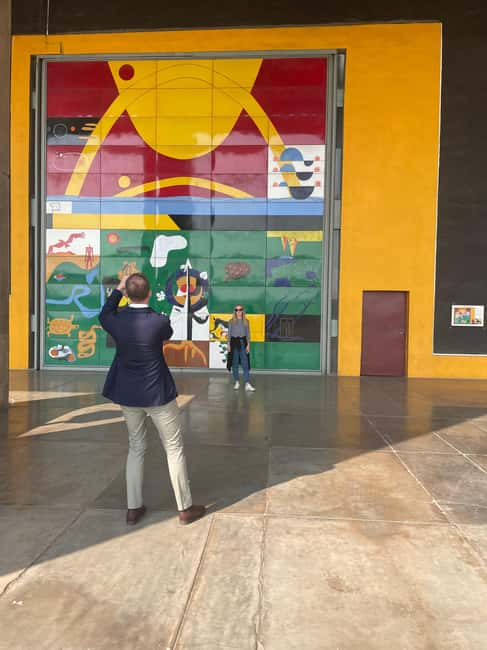
Rusty is presented as a third-generation Chandigarh resident with more than 11 years of journalism experience. That background matters because the tour depends on more than naming buildings. You need someone who can explain how the city’s ideals have changed over time.
His style is informal and humorous, but the substance remains factual. He can discuss Le Corbusier’s grid and self-sufficient sectors, then move into food suggestions, local habits, or the practical reasons a building may be closed. Several Japanese-speaking visitors found his English easy to follow, and he used a translation app when needed.
That flexibility is useful. The tour is in English, so you should be comfortable with spoken English or ready to use translation support. Rusty also leaves space for questions and observation rather than filling every quiet moment with speech. If you like a guide who lets you look, think, and then ask, this is a good match.
His local connection also helps with food after the tour. Meals and drinks are not included, but he can suggest options ranging from vegan dishes and snacks to meat, kebabs, and local specialties. You choose and pay for your own food. There are no forced restaurant stops.
What the $75 price includes
At $75 per person, this is not the cheapest way to spend half a day in Chandigarh. It is also not simply a drive past famous buildings.
The price includes pickup and drop-off within a reasonable distance in Chandigarh, transport between sites, fuel, parking, entry tickets, and permissions. You also receive bottled water. If the guide secures extended viewing hours, those may be included as well.
The value comes from access and coordination. Chandigarh’s important sites are spread out, and entry into public offices, university buildings, and the Capitol Complex can require arrangements. Trying to organize all of that yourself could save money, but it may also mean missing interiors or spending time sorting out permission and transport.
I would consider the price fair if you have only one or two days in Chandigarh and architecture is a main reason for your visit. If you only want a quick city overview, the tour may feel too specialized.
Timing, walking, and practical comfort
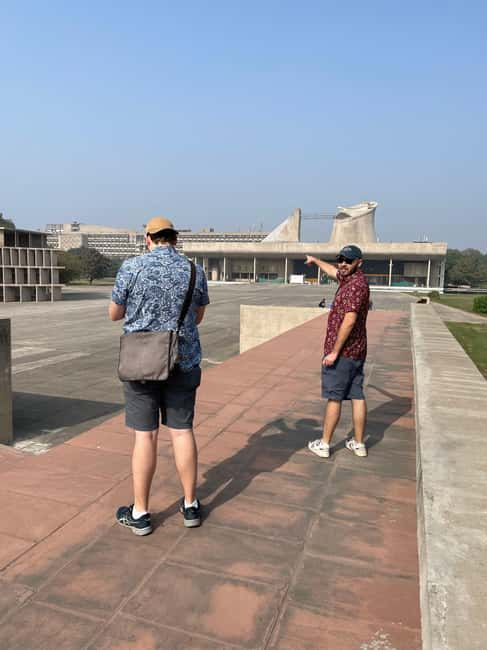
The tour lasts about 5.5 hours. That is long enough to cover several districts and collections without turning the day into a rushed checklist, but you should still expect movement between sites and time on foot.
Wear comfortable shoes. Bring a hat and sunscreen, since Chandigarh’s open spaces and concrete surfaces can make sun exposure noticeable. Carry your passport or another ID card because access to some buildings may require identification.
Pickup is available from a hotel, railway station, bus stand, Airbnb, or airport within a reasonable distance. The exact meeting area should be confirmed after booking. The guide asks you to contact him on WhatsApp using the number on your voucher, which is important because daily group tours can change with holidays and local political conditions.
There is conflicting information about mobility. The activity details describe the tour as wheelchair accessible, but the same information says it is not suitable for people with mobility impairments or wheelchair users. If you need step-free access, ask for a current site-by-site accessibility check before paying.
Who will get the most from this tour
I would choose this tour if you want to understand how Chandigarh works, not just collect photos of concrete buildings. It suits:
- Architecture students and professionals
- People interested in modernism, urban planning, or public design
- Visitors who want interior access and original documents
- First-time visitors with limited time in Chandigarh
- Anyone who prefers local stories over formal speeches
- People happy to adjust the plan if a building closes
You may want a different outing if you dislike walking, need guaranteed access to every stop, or want a relaxed food-focused day. This is an information-heavy tour with a clear architectural purpose.
Should you book Le Corbusier’s Chandigarh tour?
Book it if the work of Le Corbusier, Pierre Jeanneret, Maxwell Fry, and Jane Drew is central to your visit. The combination of the Capitol Complex, Maison Jeanneret, Punjab University, the Le Corbusier Centre, and the architecture museum gives you several ways to understand the city.
The strongest reasons to go are Rusty’s local perspective, the chance to enter places that may be difficult to arrange alone, and the link between grand civic design and everyday housing. The main caution is access. Some buildings may close because of holidays or political conditions, and the tour cannot promise every interior on every date.
Contact Rusty after booking, confirm the likely access for your day, and arrive ready for sun, walking, and a few changes of plan. If that sounds manageable, $75 buys a focused and unusually personal introduction to Chandigarh’s modernist experiment.
FAQ
How long does the architecture tour last?
The tour lasts approximately 5.5 hours.
What language is the tour conducted in?
The live tour is conducted in English.
Is hotel pickup included?
Yes. Pickup and drop-off are included within a reasonable distance in Chandigarh. Possible pickup points include hotels, the railway station, bus stand, Airbnb accommodation, and the airport.
What does the $75 price include?
The price includes transport between sites, fuel, parking, entry tickets, permissions, bottled water, and pickup and drop-off within the stated area.
Is food included?
No. Food and drinks are paid for separately. Rusty can provide a list of local food choices, including vegan options, meat, kebabs, snacks, and local specialties.
Can I visit the Capitol Complex buildings?
The itinerary includes the Palace of Assembly, Secretariat, High Court, Open Hand Monument, Geometric Hill, Tower of Shadows, and Martyrs Monument when local political conditions permit. Access to some buildings is not guaranteed.
What should I bring?
Bring a passport or ID card, comfortable shoes, a hat, and sunscreen.
Is the tour wheelchair accessible?
The activity information gives conflicting guidance. It describes the tour as wheelchair accessible but also says it is not suitable for wheelchair users or people with mobility impairments. Contact the provider before booking to confirm current access conditions.
Can I cancel the booking?
You can cancel up to 24 hours in advance for a full refund. The reserve-now, pay-later option is also available.
New to the itinerary around India
- New Delhi: Mughal’s architecture tour with transfers★ 4.0 · 7 reviews
- 2 day tour from Mumbai to architectural wonder of Mandu★ 5.0 · 2 reviews
- Goa Walking tour: History, Culture, Art and architecture★ 4.5 · 2 reviews
- South India Tour- Temple Architecture and Backwaters★ 5.0 · 7 reviews
- British Architecture Walk in Chennai by Wonder tours★ 5.0 · 10 reviews
- Day trip from Bangalore to Lepakshi for Temple architecture & paintings★ 5.0 · 15 reviews
- Old & New Delhi Culture & Architecture City Private Tour★ 4.9 · 9 reviews
- Kanchipuram: Temple Architecture & Silk Weaving from Chennai★ 4.8 · 3 reviews
Bauhaus and Brutalist Architecture Tours, compared.
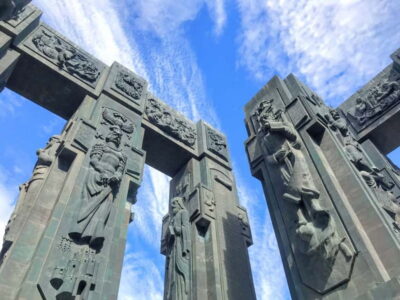
Brutalist Tbilisi: Urban exploration and untold stories
Read our review →
Architecture of New Belgrade – Brutalism Decoded
Read our review →
Secret Split: Socialist Architecture & brutalism – Urban Utopia
Read our review →
Tashkent Soviet Architecture (Modernism) and Subway station tour.
Read our review →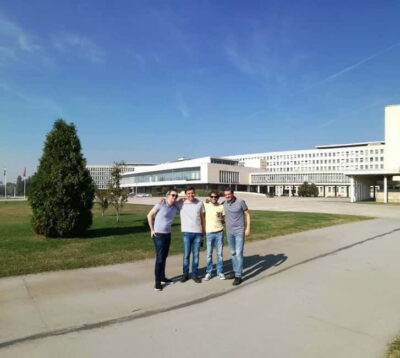
Belgrade: Space architecture tour – brutalist architecture
Read our review →
USSR History, Soviet Architects ,Statues & Mosaics
Read our review →
Brutal Tbilisi — Night Edition: Dark Side of Soviet Architecture
Read our review →Other lists with this tour