
Review · INDIA
British Architecture Walk in Chennai by Wonder tours
Chennai’s British-era buildings tell a more interesting story than a simple parade of grand facades. This walk connects railway stations, war memorials, Fort St George, Napier Bridge, and Madras University, showing how British designs were reshaped with Indian forms. I especially like the mix of Gothic Revival and Indo-Saracenic architecture, and the way the route links major civic buildings rather than isolated sights. Guides Rajesh and Nanda are repeatedly praised for clear history lessons and friendly company.
The price is $49 per person, which is fair if you want context instead of just photographs. You get a private guide, tea or coffee, a snack, and admission charges, but three hours on Chennai streets can be hot and tiring. The route information also gives two slightly different impressions of the ending, so confirm the meeting and return details before setting out.
Key details of the Chennai architecture walk
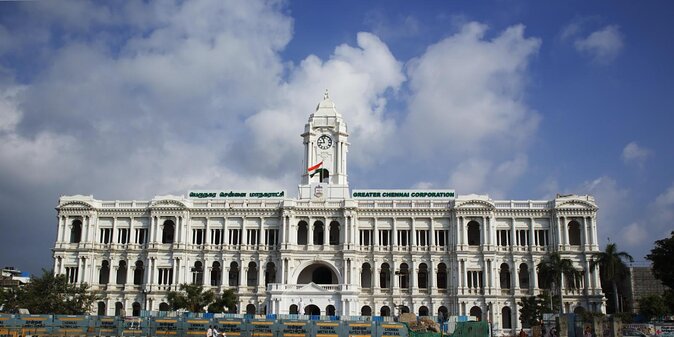
- See seven major sites, including Ripon Building, Central Railway Station, Fort St George, Napier Bridge, and the University of Madras.
- Compare several styles, from Gothic Revival at Chennai Central to Indo-Saracenic work at Southern Railway Headquarters.
- Hear the story from a local guide, with Rajesh and Nanda named as guides who explain the buildings and colonial past well.
- Enjoy a local snack and tea or coffee, included in the tour price.
- Tour privately, so only your own group participates.
- Plan for a real walking outing, with no hotel pickup or drop-off included.
Why these buildings matter in Chennai
Chennai, once called Madras, served as the capital of Southern British India. Its colonial center is not just a collection of old government buildings. Railways, courts, military offices, memorials, bridges, and universities all helped shape the city’s role in southern India.
This walk gives you a useful way to read that past. The buildings were designed for British administration, yet many use Indian arches, domes, decorative details, and local building traditions. That blend is often called Indo-Saracenic architecture. You will also see Gothic Revival design, a style linked with pointed arches, strong vertical lines, and the grand railway stations built across the British Empire.
I like this approach because you are not asked to admire architecture without context. At each stop, the guide can connect the building to transportation, government, war, education, or public life. Rajesh and Nanda are the named guides associated with this experience, and the feedback about both points to friendly explanations and strong historical detail.
The tour is private, which makes the $49 cost easier to assess. You are not paying for a large coach or a long list of extras. You are paying for a local guide, a focused route, included entry charges, and the convenience of seeing several important buildings in one outing.
More Walking Tours in India:
- British Architecture Walk, an immersive walking tour in Chennai
★ 5.0 · 60 reviews - Mumbai heritage walk- Story of Gothic and Art Deco buildings
★ 5.0 · 33 reviews - Victorian Gothic Heritage Quarter and Art Deco Walking Tour
★ 4.9 · 14 reviews
Starting near Chennai Central
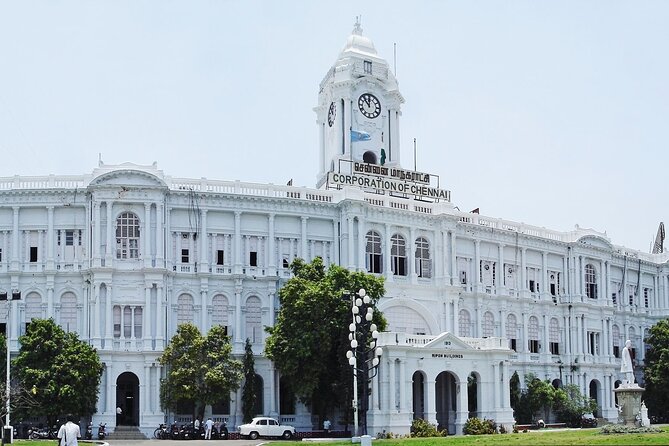
The stated meeting point is the Greater Chennai Corporation Office at 53 Raja Muthiah Road in Periamet, near Kannappar Thidal and Poongavanapuram. The location is near public transportation, but hotel pickup and drop-off are not included. I would allow extra time to find the exact office and arrive ready to walk.
The route information places Ripon Building and Chennai Central at the beginning, though the summary describes the Central Railway Station as the starting point. That is worth checking with Wonder Tours before the day of the walk. The difference is not minor if you are arranging transport or meeting your guide at a specific entrance.
Chennai Central Railway Station is a fitting first major sight. Built in 1873 in Gothic Revival style by British architect George Harding, it was later modified by Robert Chisholm. The building remains one of the city’s best-known colonial-era landmarks, but it is also a working transport hub.
The station handles more than 350,000 passengers each day. That figure changes how you see the architecture. This is not a quiet museum piece. You are looking at a historic building still tied to the daily movement of a huge city.
The scheduled stop lasts about 30 minutes. You should have enough time to take in the exterior and hear the station’s story, but not enough for a slow architectural study of every detail. Keep your belongings close in a busy public place and follow the guide’s instructions.
Ripon Building and the civic face of Madras
Ripon Building is named for Lord Ripon, a Governor-General of British India associated with local self-government. It was designed by G. S. T. Harris and built by Loganatha Mudaliar.
The building gives the walk a civic starting point. Unlike a railway station, which points to trade and movement, Ripon Building represents municipal administration. Its design belongs to the period when British rule relied on public offices to organize the expanding city.
The stop is listed as about 15 minutes, so expect a short explanation and time for photographs rather than a long indoor visit. That brief pause can still be useful because it gives you a clear example of how colonial architecture was used to project authority through government buildings.
I would pay attention to the contrast between Ripon Building and Chennai Central. One served city administration, the other served the rail network. Together they show how the British-era city operated through offices and infrastructure.
Southern Railway Headquarters and Indo-Saracenic design
The Southern Railway Headquarters takes you from Gothic Revival to Indo-Saracenic architecture. Designed by N. Grayson and built by Samynada Pillai, it was completed in 1921.
This is one of the more useful stops for understanding the blend of British and Indian forms that defines much of Chennai’s colonial architecture. The building was created for a major railway administration, but its style did not simply copy a building in Britain. Its design used Indian references within a British institutional setting.
The scheduled visit lasts about 15 minutes. That is short, but the contrast with Chennai Central gives the guide an easy visual comparison. You can see how architecture changed over time and how colonial buildings began to use local forms more openly.
The building is still associated with railway administration, so this is another working place rather than a silent monument. Expect an exterior-focused visit unless the guide confirms that interior access is available.
More Architecture Tours around India:
- The Hipster Chandigarh Architecture History Tour
★ 5.0 · 54 reviews - Jaipur City Heritage and Architecture Tour
★ 5.0 · 32 reviews - Le Corbusier’s Chandigarh : A Complete Architecture Tour
★ 4.7 · 25 reviews - Day trip from Bangalore to Lepakshi for Temple architecture & paintings
★ 5.0 · 15 reviews
The Victory War Memorial and a changing name
The Victory War Memorial was first known as the Cupid’s Bow. It commemorates the Allied victory in World War I from 1914 to 1918 and later became known as the Victory War Memorial.
This stop adds a military and political layer to the walk. Buildings tell you how a city functioned, while memorials show what its rulers chose to honor in public space. The changing name also hints at how public meaning can shift over time.
The visit is scheduled for about 30 minutes. That gives you space to look at the memorial, hear about its original purpose, and place it within the wider colonial story. The stop is not simply about the structure itself. It helps you consider how global conflicts reached Madras and how imperial victories were represented locally.
I appreciate that this tour includes a memorial rather than limiting itself to handsome buildings. It prevents the experience from becoming a design-only walk and gives the guide room to discuss the political world behind the architecture.
Fort St George, St Mary’s Church, and the colonial museum
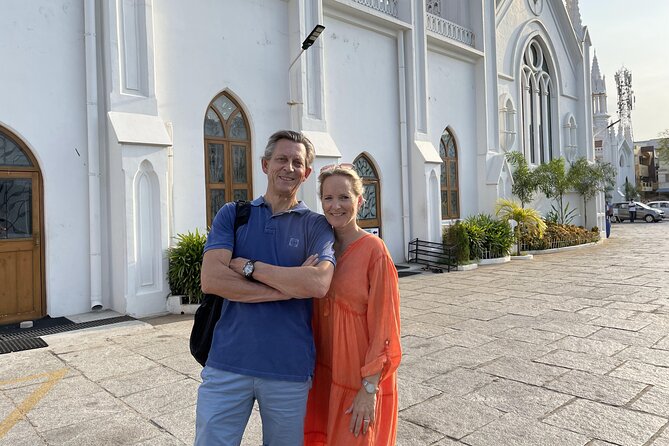
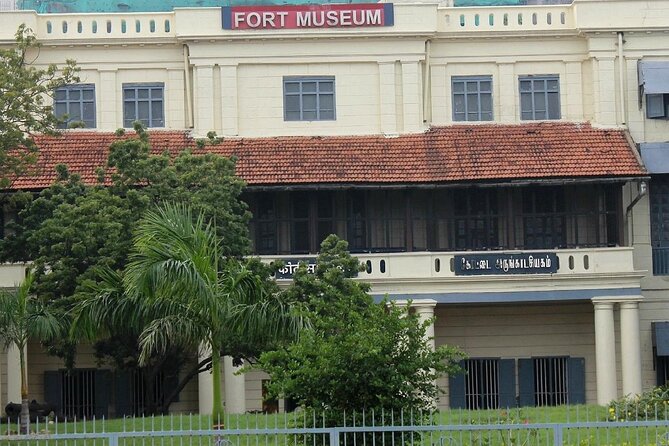
Fort St George is the largest historical stop on the route. Here you visit St Mary’s Church, described as the oldest Anglican church in India, along with a museum containing colonial-era objects.
This is where the walk moves from individual buildings to the center of British power in Madras. The fort connects military control, administration, religion, and the growth of the city. St Mary’s Church gives you a place of worship within that setting, while the museum adds objects and relics to the story.
The visit is listed at about 30 minutes. That is enough for a focused introduction, though it will not allow you to examine every display at length. If you enjoy museums, you may wish the schedule allowed more time. Still, including both the church and museum makes Fort St George more than a quick photo stop.
Camera and video camera fees are not included. Since this is a historic site with several different areas, ask the guide where photography is allowed before taking pictures. Admission charges are included in the tour price, but incidental fees may still apply.
Napier Bridge and Chennai’s familiar city symbol
Napier Bridge crosses the Cooum River and is one of the city’s recognizable public images. The earlier narrow bridge was widened and converted into a concrete structure, opening to the public in July 1943.
The scheduled stop is about 15 minutes. You will not spend a long time here, but the bridge gives the tour a change of pace after the fort. It also shows how public infrastructure continued to be modified as Chennai grew.
The bridge is often used by the media to represent Chennai. That makes it a useful place for photographs, but the practical setting matters too. You are near an active road, so stay with the guide and take care around traffic.
I like the inclusion of Napier Bridge because it keeps the route grounded in the living city. Not every stop is a ceremonial government building. Some are pieces of transport infrastructure that remain part of daily movement.
Madras University and the Senate House
The final major architectural stop is the University of Madras, especially the Senate House. The masterpiece was built between April 1874 and 1879 and includes a convocation hall, porticos, a parapet, meeting halls, and a library.
This is a fitting ending because universities helped shape the educated administrative and civic life of colonial India. The Senate House is also a strong example of the grand public design used for institutions meant to carry authority across generations.
The stop is scheduled for about 30 minutes. You should have time to look at the exterior and hear about the building’s functions. Access to every interior space is not specified, so do not assume the entire building will be open during your visit.
The information supplied for the activity says the walk ends back at the meeting point, while the route itself finishes at Madras University. I would ask the operator to clarify this before booking transport afterward. It may mean a return to the original point, or it may simply describe the final sightseeing stop.
What the $49 price includes
At $49 per person, this is not the cheapest way to look at Chennai’s public buildings. It can still be good value if you want a private guide and a connected explanation of the city.
The price includes:
- A local guide
- Admission charges
- A local snack
- Tea or coffee
- Taxes, fees, and handling charges
The private format matters. Only your group participates, so you can ask questions about a building, pause for clarification, or keep the pace suited to your party. The published details also note group discounts, though no discount amount is given.
You pay extra for tips, porterage, camera fees, video camera fees, and other incidental charges. There is no hotel pickup or drop-off. Add local transport costs when comparing this tour with a longer city sightseeing option.
The strongest value comes from the guide’s role. Rajesh and Nanda are specifically associated with this walk, and the comments about them consistently focus on friendly service, clear explanations, and strong command of Chennai’s colonial past. Those qualities matter more here than fancy transport because the experience depends on walking, looking, and listening.
Who should book this walk
I would choose this experience if you like architecture, city history, railways, public institutions, or colonial-era design. It also suits someone with only a short time in Chennai who wants several central sights tied together in one outing.
The tour works best for people comfortable with three hours on foot. The details say most participants can take part, but they do not provide a specific accessibility plan. Ask Wonder Tours about walking distances, surfaces, seating, and building access if those issues matter to you.
You should also be ready for an active city setting. Chennai Central and the roads around Napier Bridge are working urban places, not quiet heritage parks. That is part of the appeal, but it can bring noise, traffic, and heat.
The route is less suitable if you want a slow museum day or detailed interior access at every stop. Several visits are scheduled for only 15 minutes. You will get an efficient overview, not a long study of each building.
Should you book the British Architecture Walk?
Book it if you want a focused introduction to Chennai’s colonial architecture with a private guide, included refreshments, and a route that covers more than the usual single landmark. The variety is the main strength: railway stations, civic offices, a memorial, a fort, a bridge, and a university all appear within three hours.
I would confirm two points before paying. Ask where the guide will meet you, since the details refer both to the Corporation Office and Chennai Central, and verify whether the group returns to the meeting point after Madras University. Also ask about current camera fees and interior access.
The experience is non-refundable and cannot be changed after booking. That makes confirming the timing, meeting point, and walking needs especially important. If those details suit you, the tour offers a practical and informative way to see Chennai’s British-era center without arranging each stop yourself.
FAQ
How long does the British Architecture Walk in Chennai last?
The walk lasts approximately three hours.
What is the price of the tour?
The listed price is $49 per person. Group discounts are available, but the discount amount is not specified.
Which landmarks are included?
The route includes Ripon Building, Chennai Central Railway Station, Southern Railway Headquarters, Victory War Memorial, Fort St George, Napier Bridge, and the University of Madras.
Is Fort St George part of the tour?
Yes. The Fort St George visit includes St Mary’s Church and a museum with colonial-era relics.
Are food and drinks included?
Yes. A local snack and tea or coffee are included in the tour price.
Is this a private tour?
Yes. Only your group participates in the activity.
Does the tour include hotel pickup and drop-off?
No. Hotel pickup and drop-off are not included. The listed meeting point is the Greater Chennai Corporation Office on Raja Muthiah Road, and the activity details say the tour ends back at the meeting point.
New to the itinerary around India
- New Delhi: Mughal’s architecture tour with transfers★ 4.0 · 7 reviews
- 2 day tour from Mumbai to architectural wonder of Mandu★ 5.0 · 2 reviews
- Goa Walking tour: History, Culture, Art and architecture★ 4.5 · 2 reviews
- South India Tour- Temple Architecture and Backwaters★ 5.0 · 7 reviews
- Day trip from Bangalore to Lepakshi for Temple architecture & paintings★ 5.0 · 15 reviews
- Old & New Delhi Culture & Architecture City Private Tour★ 4.9 · 9 reviews
- Kanchipuram: Temple Architecture & Silk Weaving from Chennai★ 4.8 · 3 reviews
- Victorian Gothic Heritage Quarter and Art Deco Walking Tour★ 4.9 · 14 reviews
India Architecture Tours, compared.

Delhi Hidden Gems: Mehrauli, Lodhi Art & Sunder Nursery
Read our review →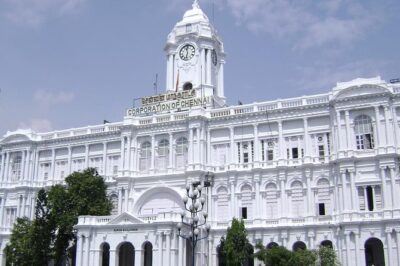
British Architecture Walk, an immersive walking tour in Chennai
Read our review →
The Hipster Chandigarh Architecture History Tour
Read our review →
Mumbai heritage walk- Story of Gothic and Art Deco buildings
Read our review →
Le Corbusier’s Chandigarh : A Complete Architecture Tour
Read our review →
Day trip from Bangalore to Lepakshi for Temple architecture & paintings
Read our review →
Victorian Gothic Heritage Quarter and Art Deco Walking Tour
Read our review →Other lists with this tour