
Review · BISHKEK
Bishkek : USSR History, Soviet Architects ,Statues & Mosaics
Bishkek’s Soviet past is written across its broad avenues, public squares, mosaics, and statues. This walking tour helps you read that old city, once called Frunze, as more than a collection of big buildings. You’ll see how Soviet Kyrgyzstan used art and architecture to shape daily life, from apartment blocks to civic monuments.
I like two things here. First, the tour connects the city’s physical design to its political story, rather than treating Lenin statues and concrete buildings as isolated sights. Second, it gives you useful local guidance, including food suggestions and ideas for other places to visit. The main consideration is simple: you’ll walk for several hours, so comfortable shoes matter.
Key points at a glance
- Soviet-era Bishkek: Follow the story of Frunze, the city’s former Soviet name, and see how its central districts changed under Soviet rule.
- Public art from the 1960s to 1980s: Look for mosaics made for public buildings, apartment blocks, workplaces, and shared spaces.
- Major symbolic squares: Visit Lenin Square and Victory Square, including the Eternal Flame and soldier monuments.
- Socialist Modernist design: Study the wide avenues, civic buildings, residential blocks, and large open spaces created during the Soviet period.
- Several guide language choices: Tours may be led in English, Russian, Hindi, Pashto, Pushto, Urdu, or Punjabi.
- Useful first-day orientation: The walk can help you get your bearings and offers recommendations for local food and additional sights.
Reading Bishkek through its Soviet design
The most useful way to approach this tour is to think of Bishkek as a city built in layers. Its story includes the Russian imperial period, the Soviet decades, and independent Kyrgyzstan. The walk focuses on the Soviet layer, when the city was known as Frunze for more than sixty years.
Mikhail Frunze was a Bolshevik figure born in Bishkek, and his name became part of the city’s official identity during the Soviet period. That name change was only one part of a much larger transformation. Streets were widened, civic spaces were planned on a grand scale, public buildings took on a new visual language, and parks and green areas were added to the urban plan.
I find this kind of tour useful because it explains why Bishkek often feels spacious and ordered in its central districts. The avenues and squares were not accidental. They served practical purposes, but they also helped express the power and ideals of the Soviet state.
Your guide should help you connect the buildings to that wider story. Guides listed for this experience include Anna, Alex, Sophia, and Axel, though your guide depends on the date and language you book. English is available, along with Russian, Hindi, Pashto, Pushto, Urdu, and Punjabi.
More Bauhaus and Brutalist Architecture Tours in the world:
- Brutalist Tbilisi: Urban exploration and untold stories
★ 5.0 · 82 reviews - London: Brutalist Architecture & History Walking Tour
★ 4.8 · 42 reviews - Le Corbusier’s Chandigarh : A Complete Architecture Tour
★ 4.7 · 25 reviews
Starting beneath the Kyrgyz flag
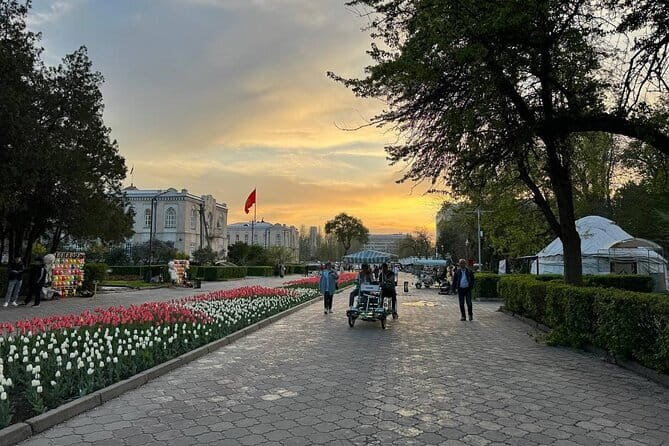
The meeting point is the Paramount Kyrgyz Republic Flag. You arrange the exact meeting details through WhatsApp, which is useful in a city where a precise contact point can make the start less stressful.
From here, the tour becomes a walking circuit through central Bishkek. The route returns to the same flag at the end. The advertised duration is 4.5 hours, while the central guided walking portion is described as about 3.75 hours. Allow the full half-day, especially if you stop for explanations, photographs, or questions.
There is no bus transfer built into the experience. That is both its strength and its limitation. Walking lets you notice small mosaics and architectural details that would disappear from a vehicle, but it also means you need to pace yourself.
Wear comfortable shoes and outdoor clothing. Sunglasses can help on bright days, and the tour information also suggests binoculars and goggles, though these are not essential for the basic city walk. Pets are not allowed, except for assistance dogs.
Lenin Square and the language of power
Lenin Square is one of the key stops. It gives you a clear example of how Soviet city planning used open space, monuments, and government buildings together.
Large squares were designed for public gatherings, ceremonies, and official displays. Their scale could make the state feel larger than ordinary life. Your guide can put the square into context by explaining Lenin’s place in the Soviet system and how the surrounding civic area functioned during the years of the Kyrgyz Soviet Socialist Republic.
The tour also includes the Lenin statue and a Lenin-associated museum and literary site. These stops add a more personal and cultural angle to the political story. Lenin was not only represented through statues. His name and ideas appeared in museums, schools, books, public art, and the language of official life.
This section will suit you if you enjoy political history and urban design. If you prefer only scenic sights, the focus on ideology may feel heavy at times. That is part of the point, though. Soviet Bishkek was designed to communicate, and the tour gives you the tools to notice how.
Mosaics that turned public walls into storyboards
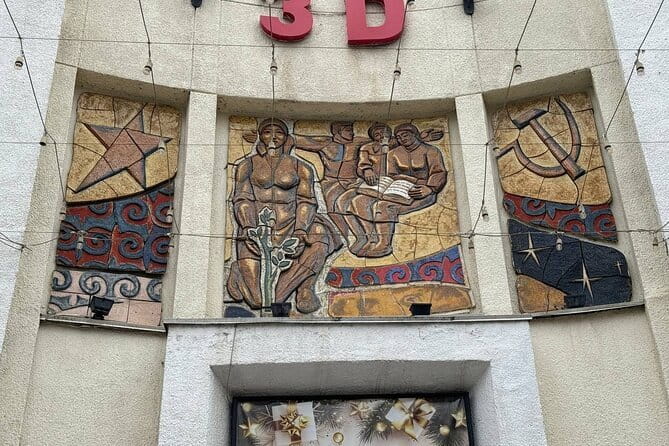
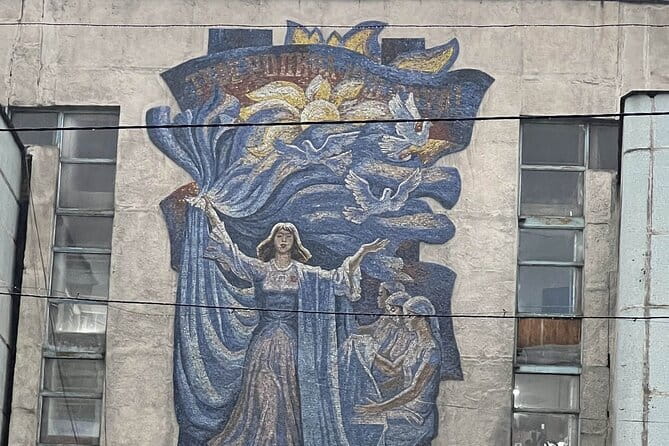
The mosaics are among the most distinctive parts of the experience. Created mainly during the 1960s through the 1980s, they appeared on public buildings, apartment blocks, workplaces, and other shared spaces.
Some Soviet mosaics served clear political purposes. They could celebrate labor, progress, education, science, collective life, or the achievements of the Soviet system. But they were not only signs of propaganda. They also brought color and visual interest to ordinary parts of the city.
I like this detail because it shifts the discussion away from simple praise or criticism. A mosaic could support official ideas and still be a carefully made work of public art. Your guide will point out different examples around the city and explain how they fit into everyday Soviet life.
Look closely as you walk. The larger monuments are easy to find, but mosaics can be missed if you only look ahead at street level. Their condition may vary, and the tour description does not promise a set list of individual mosaics. What you can expect is a close look at several parts of Bishkek’s mosaic tradition.
For photographers, this is a rewarding part of the route. For anyone interested in architecture, it shows how art was brought out of galleries and placed where ordinary residents would see it each day.
More History Walks around the world:
- Chicago in a Day: Food, History & Architecture Walking Tour
★ 5.0 · 1,153 reviews - Charleston’s Best Highlights: History, Culture & Architecture
★ 5.0 · 422 reviews - Palm Springs Modernism Architecture & History Bike Tour
★ 5.0 · 359 reviews - Charleston: History and Architecture Guided Walking Tour
★ 4.8 · 349 reviews
Socialist Modernism along Bishkek’s avenues
The architecture is not presented as a parade of famous buildings. Instead, you walk through the main avenues and central districts to see how Soviet design shaped the city as a whole.
Socialist Modernist buildings often favor strong geometry, large public entrances, repeated forms, and an imposing civic scale. Residential buildings from the period still serve practical purposes under the Kyrgyz government and remain part of daily city life.
That continued use is important. You are not looking at a dead museum district. You are seeing working buildings and residential areas that have outlasted the political system that created them. Their original message may have changed, but their physical presence remains.
The route also includes references to Karl Marx and other major figures associated with the creation and spread of communism. Statues helped turn political theory into something visible and familiar. They marked important spaces and gave the city a cast of official heroes.
I would not book this tour expecting grand interiors or a series of formal museum visits. The emphasis is on what you can see outdoors: façades, avenues, squares, statues, mosaics, and the way these parts fit together.
Victory Square and the Eternal Flame
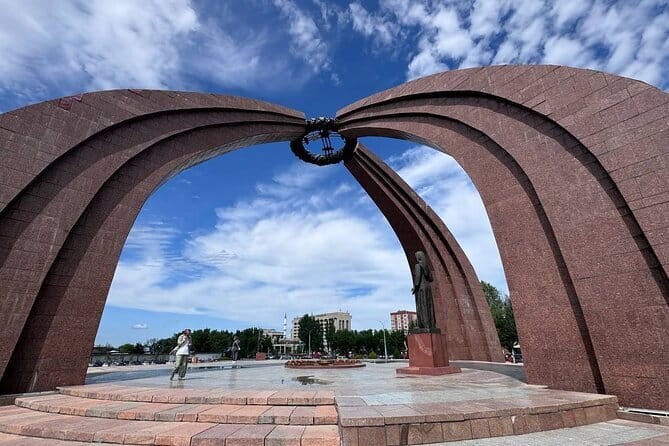
Victory Square brings the tour to a different emotional register. Here, the focus shifts from revolutionary politics and Soviet urban planning to the memory of wartime sacrifice.
The Eternal Flame and soldier statues are the central features. Such memorials were designed to keep the cost of victory visible in public life. The square is not simply another open space. It asks you to pause and consider the people represented by the monument and the role of wartime memory in Soviet society.
Your guide can help explain the symbolism of the statues and the place of the square in Bishkek. This makes the stop more meaningful than a quick photograph. It also adds balance to the tour, which might otherwise focus too narrowly on Lenin, Marx, and official ideology.
Victory Square is likely to appeal to anyone interested in twentieth-century history. It can also be a quieter moment during a route filled with political symbols and architectural detail.
What the four-and-a-half-hour pace feels like
This is a half-day activity, not a quick introduction lasting an hour or two. The total time gives your guide room to explain the background, answer questions, and point out details you would probably pass without noticing.
A recent early start was possible for one visitor arriving in Bishkek at 5 a.m., with a tour beginning at 8 a.m. That makes the experience practical for some arrival days, although you should confirm the available start time before booking. A morning walk can also help you get oriented before exploring other parts of Kyrgyzstan.
The length does require some stamina. The tour information says it is not suitable for people with altitude sickness or people over 95 years old. Bishkek itself is not presented here as a high-altitude excursion, but the operator still lists altitude sickness among the restrictions, so take that guidance seriously.
The tour is described as wheelchair accessible, but it remains a walking experience. If you use a wheelchair or have limited mobility, confirm the route and walking conditions with the provider before you reserve. The exact surface, rest opportunities, and group size are not specified.
Guide quality and the value of local explanation
The guide makes a major difference on a tour like this. A mosaic or concrete façade can seem ordinary until someone explains when it was made, what it was meant to communicate, and how it relates to the city around it.
Anna has led this experience, as have Alex, Sophia, and Axel. The strongest descriptions of the tour point to friendly explanations, clear answers, and a relaxed manner. One guide was especially appreciated for being highly informed, interesting, and easygoing. That combination matters because Soviet history can become dry if it is delivered as a list of dates and political names.
You should also use the question time well. Ask about the city’s former name, the role of public art, the continued use of Soviet buildings, and how Kyrgyzstan’s identity changed after independence. The tour includes recommendations for other special places in Kyrgyzstan and local food, so keep a small list ready.
The language range is unusually broad for a city walking tour. English, Hindi, Pashto, Pushto, Urdu, Punjabi, and Russian are offered. Since the available language and guide can vary, check those details when booking.
Is $45 a fair price?
At $45 per person, this is not the cheapest way to walk around Bishkek. You can see some monuments and squares independently for little or no cost.
The value comes from the interpretation. You are paying for about half a day with a live guide, a connected story about Soviet Bishkek, help finding mosaics, and practical suggestions for food and further sightseeing. If you would otherwise walk past the buildings without understanding them, that added context can justify the price.
The tour is especially good value early in your stay. It gives you a central orientation and helps you decide which places deserve a second look. It may be less useful if you already know Soviet architectural history or prefer to explore at your own pace without a guide.
Food and drinks are not included. Plan to eat separately, and remember that the food recommendations are advice rather than part of a tasting session.
Who should book this Bishkek walk?
I would recommend it to you if you like urban history, public art, monuments, political change, or twentieth-century architecture. It is also a smart choice for a first morning or first afternoon in Bishkek, especially if you want an overview before traveling elsewhere in Kyrgyzstan.
It suits curious walkers who enjoy asking questions. The tour is less suitable if your main goal is mountain scenery, traditional village life, or indoor museum collections. Those subjects are outside the stated focus.
Bring comfortable shoes, water, sunglasses, and clothing suited to the weather. The route is outdoors, and four-plus hours is long enough for poor footwear to become a real problem.
Cancellation is free up to 24 hours before the activity, and you can reserve now and pay later. Those terms make the tour easier to fit into a changing itinerary, but confirm the start time and language before you commit.
Should you book it?
Book this tour if you want Bishkek’s Soviet remains explained rather than simply photographed. The combination of Lenin Square, Victory Square, Socialist Modernist buildings, public mosaics, statues, and local advice gives you a useful framework for the city.
Skip it if you dislike long walks or have little interest in Soviet history. For most first-time visitors who want a thoughtful introduction to central Bishkek, $45 is a reasonable price for the time and interpretation, especially with guides such as Anna, Alex, Sophia, or Axel leading the walk.
FAQ
How long does the Bishkek Soviet history tour last?
The advertised duration is 4.5 hours. The guided city walking portion is described as about 3.75 hours, and the full activity returns to the Paramount Kyrgyz Republic Flag.
Where does the tour begin and end?
It starts at the Paramount Kyrgyz Republic Flag and returns to the same location.
What places are included on the walking route?
The route includes central Bishkek, Lenin Square, the Lenin statue, a Lenin-associated museum and literary site, Victory Square, the Eternal Flame, soldier statues, Soviet architectural buildings, major avenues, and city mosaics.
What languages are available?
Live guides may conduct the tour in English, Hindi, Pashto, Pushto, Urdu, Punjabi, or Russian.
Is the tour wheelchair accessible?
The activity is listed as wheelchair accessible. Since it is also a walking tour, contact the provider to confirm the route details and conditions for your needs.
What should I bring?
Wear comfortable shoes and outdoor clothing. Sunglasses are recommended, and the activity information also lists binoculars and goggles as items to bring.
Are food and drinks included?
No. Food and drinks are not included, but the experience includes recommendations for local food.
Can I cancel the booking?
Yes. You can cancel up to 24 hours in advance for a full refund. Reserve-now, pay-later booking is also available.
New to the itinerary around the world
- Washington, DC: Georgetown Architecture Walking Tour★ 5.0 · 8 reviews
- Wilmington History and Architecture Tour★ 4.8 · 18 reviews
- Walk & Discover KL’s Architectural and Heritage Gems★ 5.0 · 7 reviews
- Washington DC: Dupont Circle & Embassy Row Architecture Tour★ 5.0 · 6 reviews
- New Orleans : Garden District Architecture Walking tour★ 4.8 · 5 reviews
- Unveiling Brno: History, Culture & Architectural Delights★ 5.0 · 2 reviews
- Vicenza: Palladian Architecture Private Walking Tour★ 3.3 · 3 reviews
- Private Colonial Williamsburg Architectural Tour★ 5.0 · 5 reviews
Bauhaus and Brutalist Architecture Tours, compared.
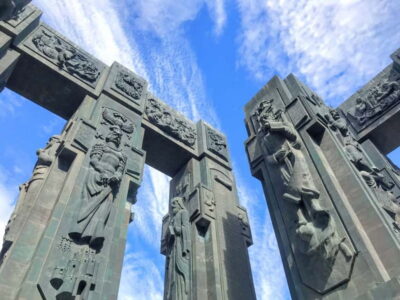
Brutalist Tbilisi: Urban exploration and untold stories
Read our review →
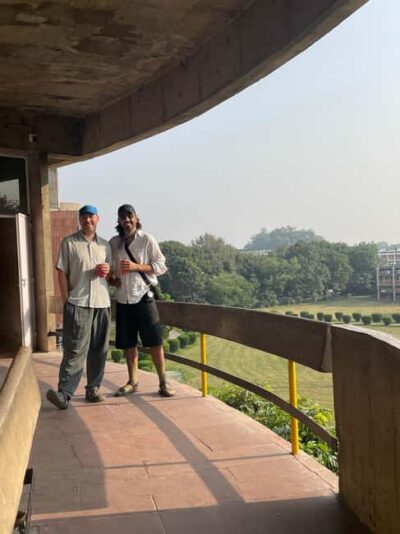
Le Corbusier’s Chandigarh : A Complete Architecture Tour
Read our review →
Architecture of New Belgrade – Brutalism Decoded
Read our review →
Secret Split: Socialist Architecture & brutalism – Urban Utopia
Read our review →
Tashkent Soviet Architecture (Modernism) and Subway station tour.
Read our review →
Belgrade: Space architecture tour – brutalist architecture
Read our review →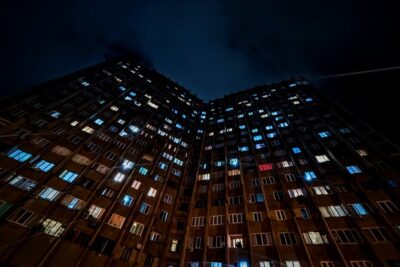
Brutal Tbilisi — Night Edition: Dark Side of Soviet Architecture
Read our review →Other lists with this tour