
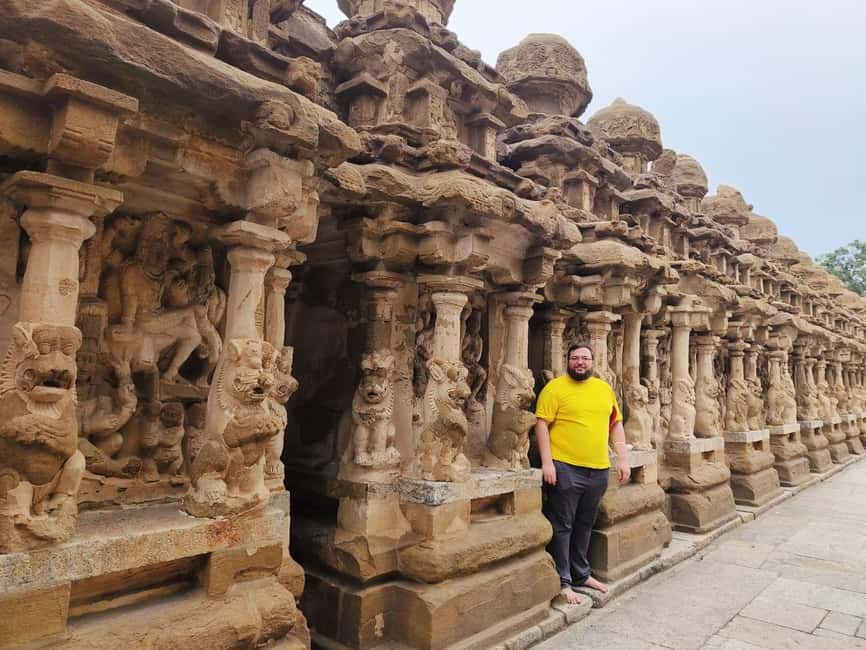
Review · INDIA
Kanchipuram: Temple Architecture & Silk Weaving from Chennai
Kanchipuram gives you two very different windows into Tamil Nadu in one day: Pallava temple architecture carved in stone and the patient handwork behind its famous silk sarees. The temples date to around 600 AD, while the weaving visit brings you into a living trade that still supports thousands of local families.
I like the private format, which lets you move at your own pace, and I like that the day includes a real meeting with a weaver rather than only a stop at a silk shop. Guide Kannan has been singled out for making the temples easier to understand. The main drawback is the long road day from Chennai, with temple floors, bare feet, and no wheelchair access to consider.
Key points to know before booking
- Two Pallava-era temples: Visit Ekambareswarar and Kailasanathar in Kanchipuram, with history and architectural explanation from an English-speaking guide.
- A working silk tradition: Meet a Kanchipuram weaver and learn how pure mulberry silk becomes a six to nine-yard saree.
- Private transport from Chennai: Hotel pickup and drop-off come in an air-conditioned car, making this easier than arranging several connections yourself.
- Lunch is included: A South Indian vegetarian meal is part of the day, while extra food and drinks cost more.
- Temple rules matter: You must remove your shoes and cover your knees and shoulders before entering.
- Best for mobile culture lovers: The tour suits people interested in temples, craft, and local livelihoods, but not wheelchair users or people with back problems.
Why Kanchipuram makes a strong day trip from Chennai
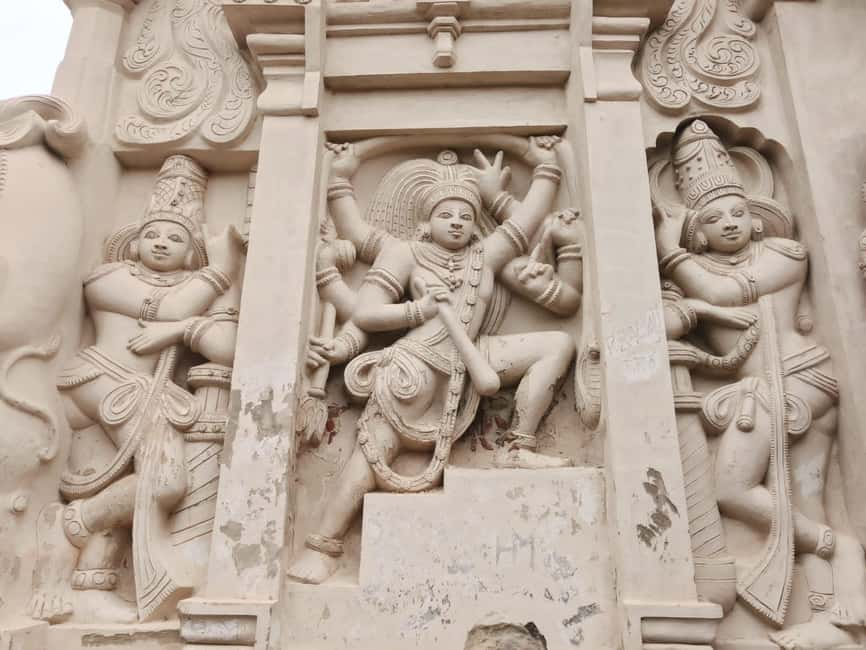
Kanchipuram was the medieval capital of the Pallavas, a South Indian dynasty that helped shift temple building from rock-cut forms toward large stone structures. That change is easier to grasp when you are looking at the actual buildings rather than reading a paragraph in a guidebook.
You leave Chennai by private, air-conditioned car and head toward Kanchipuram. The total experience lasts about eight hours, including transport, a three-hour guided visit in town, and a one-hour lunch. The exact departure time depends on availability, so check it before booking.
I see the private car as a major part of the value. You do not have to find your way to a bus station, manage local connections, or coordinate temple visits on your own. You also have a guide with you for the central part of the day, which matters in Kanchipuram because the stones tell only part of the story.
The tradeoff is simple: this is not a quick outing. You spend a good part of the day on the road between Chennai and Kanchipuram. If you want a slow, unhurried look at one temple complex, a shorter local tour may suit you better. If you want to combine two major interests in one outing, the distance is reasonable.
More Architecture Tours around India:
- British Architecture Walk, an immersive walking tour in Chennai
★ 5.0 · 60 reviews - The Hipster Chandigarh Architecture History Tour
★ 5.0 · 54 reviews - Mumbai heritage walk- Story of Gothic and Art Deco buildings
★ 5.0 · 33 reviews
Inside Ekambareswarar Temple
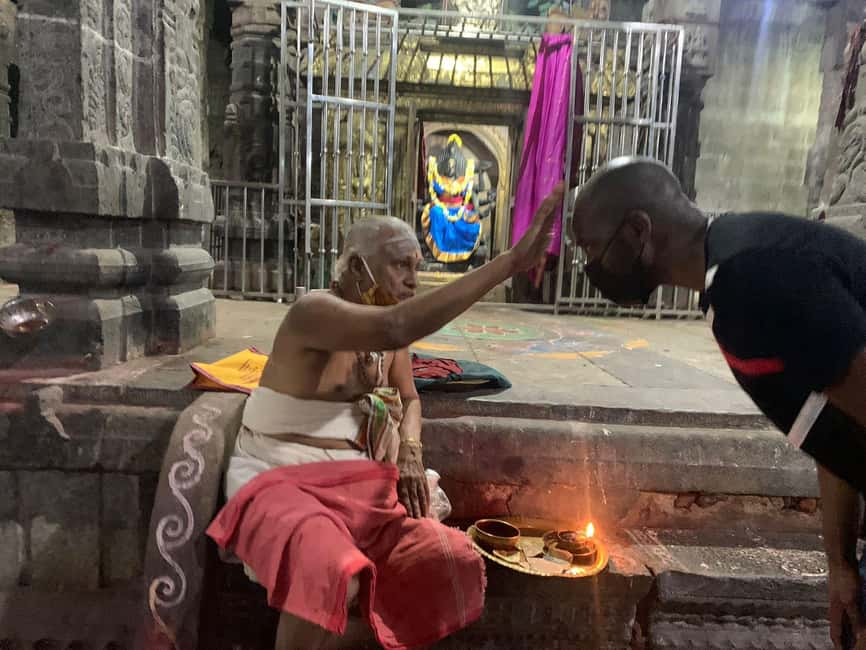
Ekambareswarar is one of the main architectural stops. The tour presents it as part of the Pallava story and uses the temple to explain how South Indian stone architecture developed around 600 AD.
You should expect a working place of worship, not a silent museum. Local people use the temple as part of daily religious life, and the area around it supports small shops and stalls selling prayer-related goods. That living setting gives the visit more meaning than simply photographing old stone.
Your guide’s role is important here. Good temple interpretation helps you notice construction methods, carved details, and the way religious activity shapes the building. Alexis from the United States gave particular credit to guide Kannan for turning the temples into a learning experience and helping build a better understanding of the sites.
You will need to remove your footwear before entering. Wear shoes that are easy to take off and put back on, and expect bare feet on temple surfaces. Knees and shoulders must be covered, so choose modest clothing before leaving Chennai rather than trying to solve the problem at the temple entrance.
Photography is part of the appeal, but flash photography is not allowed. Bring a camera if you wish, while respecting the restrictions and the fact that this remains an active religious site.
Reading the stonework at Kailasanathar Temple
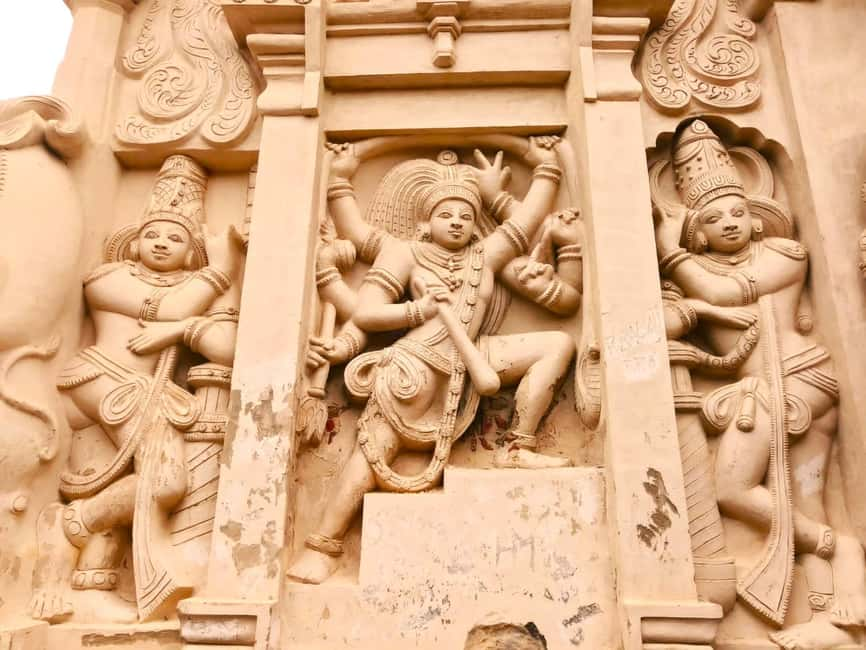
Kailasanathar is the second major temple visit and another chance to see Pallava design up close. The tour connects both temples to the dynasty’s role in the move toward stone temple construction, giving you a useful comparison within the same day.
I like the pairing because one temple alone can leave you with a general impression of carved pillars and old walls. Seeing two sites lets you compare forms and ask better questions. Your guide can explain the Pallava style as you move through the spaces, rather than leaving you to guess which details matter.
The supplied schedule allows about three hours for the guided Kanchipuram visit overall. That time includes the temple stops and the weaving experience, so this is not a full-day archaeological survey. You will get an introduction to the architecture, its historical setting, and the religious life around it, but you should not expect every corner of both temples to receive a long lecture.
That limit is useful for many people. The day remains varied, and you are less likely to spend all eight hours on temple walls when you also want to understand Kanchipuram’s silk trade. For serious architecture students, the visit may feel like a starting point rather than a final word.
Meeting a Kanchipuram silk weaver
The weaving visit gives the day its most human element. Kanchipuram silk sarees are a cultural marker in South India, worn by women for auspicious events such as weddings and birthdays. They are typically six to nine yards long and made from pure mulberry silk thread.
You meet a local weaver and learn how the sarees are made. The supplied details do not promise a hands-on weaving lesson, a purchase, or a particular loom demonstration, so treat this as a chance to see and discuss the craft rather than a guaranteed workshop.
Kanchipuram has more than 5,000 families involved in silk weaving. Most weavers use handlooms, and the work remains an important source of local income. That context helps you see a saree as more than a costly souvenir. It is the finished product of a household trade with a long place in the community.
I especially like that the weaving stop is presented as a meeting with a weaver, not just a retail visit. You can ask how the thread becomes fabric, why the sarees are valued for ceremonies, and what handloom work means for local families. The visit may also help you judge silk goods with a more informed eye if you plan to shop later.
The tour company says it supports the local community by training and employing local guides and procuring local wares. You should still make your own buying decisions. There is no need to purchase anything for the stop to be worthwhile.
Same streets, read through a different style:
- Delhi Hidden Gems: Mehrauli, Lodhi Art & Sunder Nursery
★ 5.0 · 108 reviews - Jaipur City Heritage and Architecture Tour
★ 5.0 · 32 reviews - Le Corbusier’s Chandigarh : A Complete Architecture Tour
★ 4.7 · 25 reviews - Day trip from Bangalore to Lepakshi for Temple architecture & paintings
★ 5.0 · 15 reviews
Lunch and the rhythm of the day
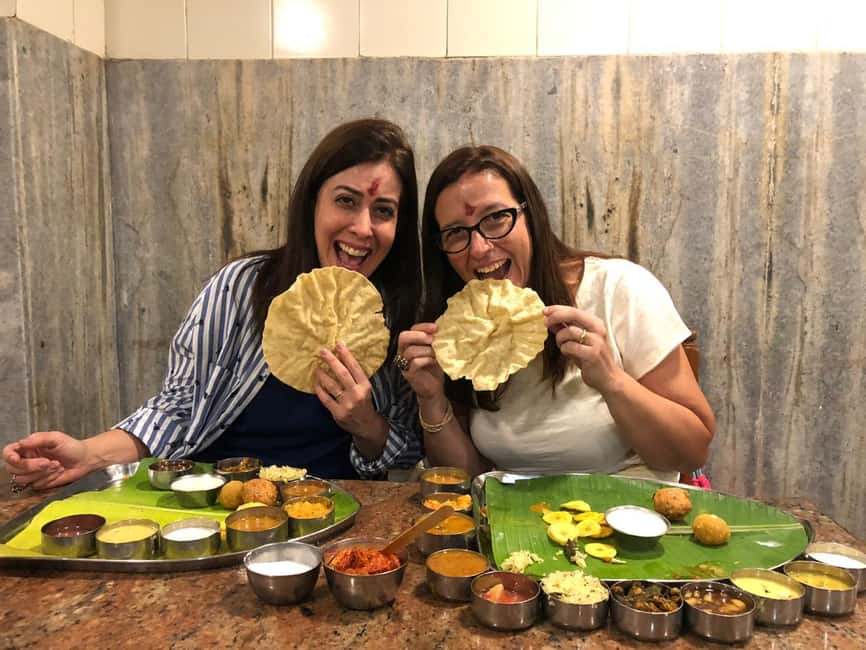
A one-hour South Indian vegetarian lunch is included. This is practical after a morning of driving and temple walking, and it keeps the day from turning into a search for a restaurant in an unfamiliar town.
The meal is vegetarian, so it suits people who want that style of food or prefer to keep the day simple. Any food ordered beyond the included meal is not covered, so budget separately for extra drinks, snacks, or additional dishes.
The schedule has a sensible rhythm: pickup in Chennai, the Kanchipuram visit, lunch, and the return drive. Still, you should think of this as a full day. Comfortable shoes matter, and water is worth carrying, especially since temple visits involve walking and removing footwear.
The information provided does not specify the restaurant, menu, or exact meal time. If food is a major part of your trip, ask for current details before booking. The strength of this tour is the temples and weaving, with lunch serving as a useful included break.
What the private car and guide add
The tour includes hotel pickup and drop-off in Chennai, an air-conditioned car, an English-speaking live guide, entrance charges, and lunch. It is a private group experience, so you are not placed with strangers or tied to another group’s interests.
That privacy can change the feel of a temple visit. You can ask Kannan to explain a feature again, spend more time on the architecture that interests you, or move along when you have seen enough. The available feedback gives Kannan specific credit for his explanations, which makes the guide more than a driver who points out the entrance.
A private car also helps in the hot conditions that can make Indian day trips tiring. Air conditioning gives you a cool place between stops, though it does not shorten the road distance. Hotel pickup removes another small but real complication, particularly if you are staying somewhere in Chennai without easy access to public transport.
The group is private, but the experience is not described as wheelchair accessible. It is also marked unsuitable for people with back problems. Temple floors, getting in and out of the car, walking, and the need to remove footwear all make mobility worth considering before you reserve.
Is $109 a fair price?
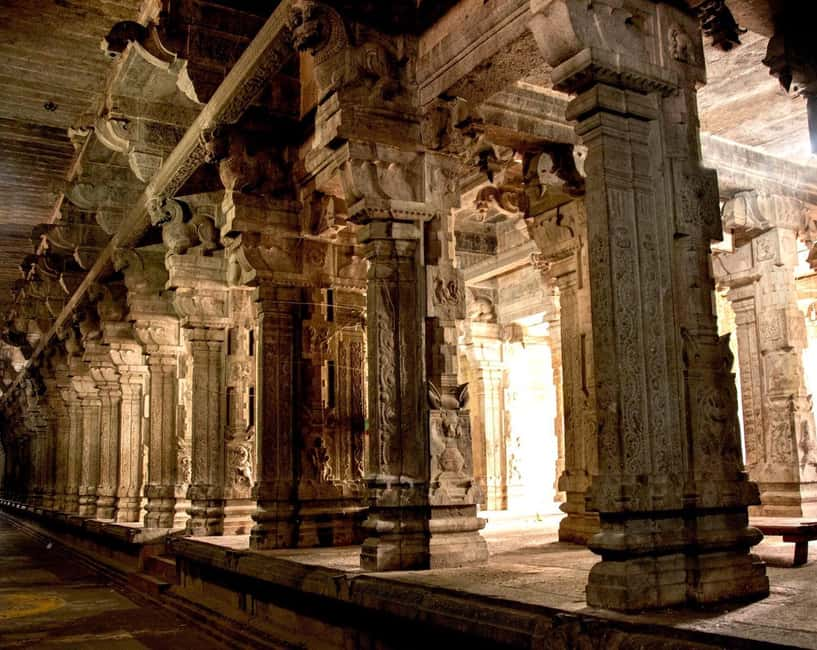
At $109 per person, this is not the cheapest way to reach Kanchipuram. You are paying for private transport from Chennai, an air-conditioned car, a guide, entrance charges, and a vegetarian lunch, not simply for admission to two temples.
I think the price can make sense if you value time and explanation. Independent transport may cost less, but you would need to arrange the road journey, find the temples, manage entrance fees, and locate a reliable guide. The included weaving visit also adds something that a simple temple transfer would not provide.
The value is strongest for first-time visitors who want the day organized from hotel door to hotel door. It is also good for people who prefer a private setting and want historical context instead of simply walking through the buildings.
The value is weaker if you already have a car, speak with local guides easily, or plan to spend several days in Kanchipuram. In that case, a one-day packaged visit may feel restrictive, especially since the sightseeing time is limited to about three hours.
Simple preparations that make the day better
Wear clothing that covers your shoulders and knees from the start. You can avoid an awkward temple entrance problem and stay properly dressed for both religious sites.
Choose comfortable footwear that comes off quickly. You will need to remove it before entering the temples, so complicated laces are a small nuisance. Bring water and a camera, but do not use flash photography.
Keep some flexibility around the schedule. The total duration is eight hours, but road conditions and the pace of a private visit can affect how the day feels. Since the exact starting time depends on availability, confirm it when you check the date.
The activity offers free cancellation up to 24 hours before departure for a full refund. You can also reserve now and pay later, which helps if your Chennai plans are still shifting.
Who should book this Kanchipuram tour?
I would recommend it to you if you want three things in one day: temple architecture, local craft, and straightforward transport from Chennai. It suits first-time visitors who want a guide to explain the Pallava connection and people who would rather not build the day around public transport.
It is also a good fit if you enjoy seeing how a place earns its living. The temple economy supports small shops and prayer stalls, while silk weaving supports thousands of families. That local connection gives the visit more substance than a quick photograph outside an old building.
I would hesitate if you dislike long day trips, have back problems, or use a wheelchair. I would also look elsewhere if your main goal is shopping, since a weaving visit is not the same as a dedicated silk-buying tour.
The strongest part of the experience is the combination of Kannan’s temple explanations, the two Pallava sites, and the meeting with a working weaver. You get history in stone and livelihood in silk, with the practical ease of private transport.
Should you book it?
Book this tour if you want an organized, culture-focused day from Chennai and prefer a private car with an English-speaking guide. The price is reasonable when you count transport, admissions, lunch, and local interpretation, especially for a first visit.
Skip it if you need wheelchair access, cannot manage temple walking and bare feet, or want a slow and highly detailed study of each temple. For most mobile visitors interested in architecture and handloom craft, this offers a useful and well-balanced look at Kanchipuram without requiring you to arrange the pieces yourself.
FAQ
How long does the Kanchipuram tour last?
The experience lasts eight hours, including pickup from Chennai, the Kanchipuram visit, lunch, and the return to Chennai.
Does the tour include hotel pickup and drop-off?
Yes. Pickup and drop-off at your Chennai hotel are included, with pickup taking place in the hotel lobby.
Which temples will I visit?
You will visit Ekambareswarar Temple and Kailasanathar Temple in Kanchipuram. The tour explains their connection to Pallava architecture and the development of stone temples.
Is lunch included?
Yes. A South Indian vegetarian lunch is included. Food ordered beyond the included meal is not covered.
What should I wear to the temples?
Your clothing must cover your knees and shoulders. You also need to remove your footwear before entering the temples.
Is the tour wheelchair accessible?
No. The experience is not suitable for wheelchair users or people with back problems.
New to the itinerary around India
- New Delhi: Mughal’s architecture tour with transfers★ 4.0 · 7 reviews
- 2 day tour from Mumbai to architectural wonder of Mandu★ 5.0 · 2 reviews
- Goa Walking tour: History, Culture, Art and architecture★ 4.5 · 2 reviews
- South India Tour- Temple Architecture and Backwaters★ 5.0 · 7 reviews
- British Architecture Walk in Chennai by Wonder tours★ 5.0 · 10 reviews
- Day trip from Bangalore to Lepakshi for Temple architecture & paintings★ 5.0 · 15 reviews
- Old & New Delhi Culture & Architecture City Private Tour★ 4.9 · 9 reviews
- Victorian Gothic Heritage Quarter and Art Deco Walking Tour★ 4.9 · 14 reviews
India Architecture Tours, compared.
Delhi Hidden Gems: Mehrauli, Lodhi Art & Sunder Nursery
Read our review →
British Architecture Walk, an immersive walking tour in Chennai
Read our review →
The Hipster Chandigarh Architecture History Tour
Read our review →
Mumbai heritage walk- Story of Gothic and Art Deco buildings
Read our review →
Le Corbusier’s Chandigarh : A Complete Architecture Tour
Read our review →
Day trip from Bangalore to Lepakshi for Temple architecture & paintings
Read our review →
Victorian Gothic Heritage Quarter and Art Deco Walking Tour
Read our review →Other lists with this tour