
Review · ITALY
Naples: San Gaudioso Catacombs Guided Tour
Beneath Naples’ Sanità district, the Catacombs of San Gaudioso mix early Christian art with the unsettling burial customs of 17th-century Naples. You’ll see old frescoes and mosaics, then skulls displayed in the walls and tombs made for wealthy families. I like the way the tour connects ancient faith with the later history of the neighborhood, and I like that your ticket also covers San Gennaro. The main drawback is the short 45-minute visit, which can feel tight if the group is large or the guide is hard to hear.
I also like that the money supports local cultural work in Sanità, including projects linked with Don Antonio Loffredo and La Paranza. Guides such as Nello, Antonella, Claudia, Flavia, and Emanuele have been praised for making the story clear and lively. Arrive 15 minutes early, though, because late arrivals cannot join another departure or receive a refund.
Key points to know before you book
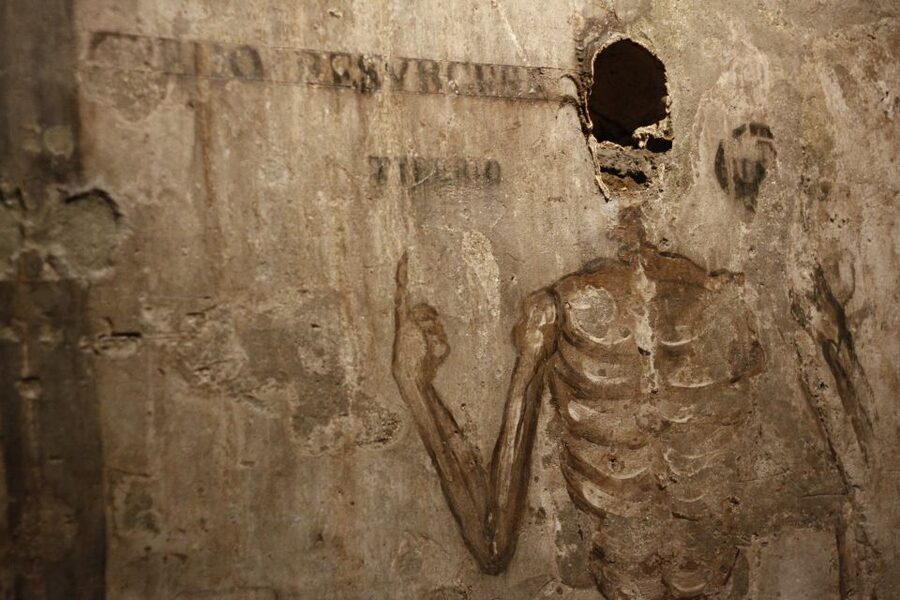
- A 45-minute underground history lesson: See the cemetery’s early Christian remains, later aristocratic tombs, frescoes, mosaics, and skull displays.
- The church is part of the experience: Your guided visit includes Basilica di Santa Maria della Sanità above the catacombs.
- One ticket gives you a second site: San Gennaro is included at no extra charge, with entry valid for 12 months.
- The guide makes the difference: English and Italian tours are led by local guides, with Nello, Antonella, Claudia, Flavia, and Emanuele receiving special praise.
- Expect eerie details: The skull-lined walls and macabre burial practices are fascinating, but this may not suit you if you are very squeamish or claustrophobic.
- The entrance can be confusing: The ticket office is the meeting point, and you may need to take an elevator down from street level rather than follow signs to the exit.
Why San Gaudioso is more than an underground cemetery
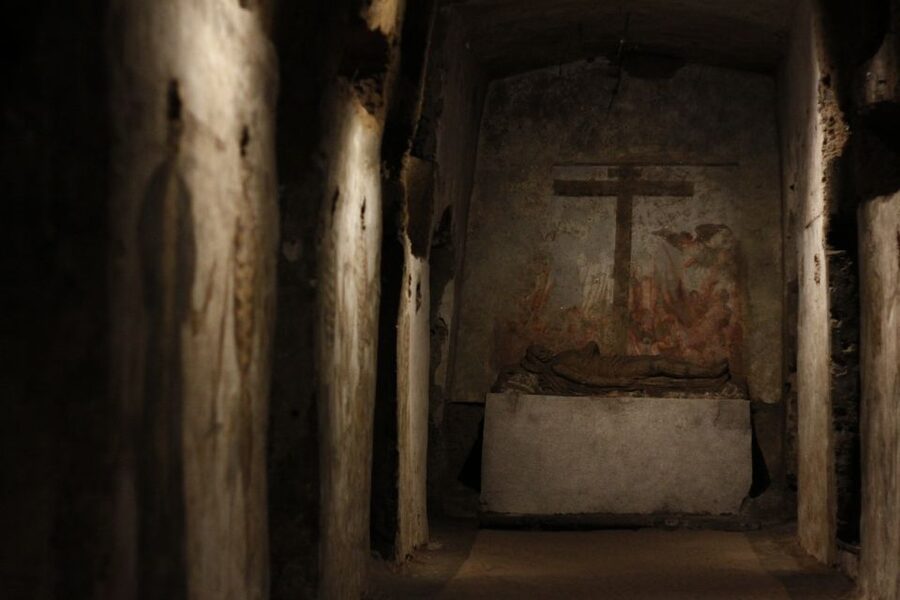
The Catacombs of San Gaudioso are the second most important early Christian cemetery in Naples. Their story begins with St. Gaudiosus, a North African bishop who was buried here between 451 and 453 AD. His burial helped turn the site into a place of Christian worship and remembrance.
That early layer is what gives the visit its sense of age. You are not simply walking through a set of empty tunnels. The guide points out Christian symbols, old burial spaces, frescoes, and mosaics dating from the fifth and sixth centuries. These details can be easy to miss on your own, so the live explanation matters.
The catacombs later took on a different role. In the 17th century, the underground cemetery was used again, this time for noble families and members of the upper classes. The result is a strange meeting of old Christian burial traditions and later aristocratic funerary customs.
That change is central to the tour. You learn how burial practices shifted, who could afford elaborate tombs, and how the underground spaces were altered for display. It is a compact lesson in Naples’ social and religious past, not just a spooky stop.
More Guided Tours around Italy:
- Basilica San Marco and the Pala d’Oro with Architect Guide
★ 4.5 · 19 reviews - Noto: Sicilian Baroque Architecture Guided Walking Tour
★ 4.3 · 6 reviews - Bologna: Guided Architecture Walking Tour
★ 4.5 · 2 reviews
Beginning at Santa Maria della Sanità
The tour starts at the ticket office for the Catacombs of San Gaudioso. The basilica above is included in the 45-minute guided visit, so do not treat it as a separate building to glance at on your way underground.
Santa Maria della Sanità gives the experience a proper setting. The church is described as breathtaking, beautiful, and worth time in its own right. You may also see the local presepe, or nativity display, which adds another layer of Neapolitan art and tradition.
The church helps you understand the site before you go below. Above ground, you see a functioning place of worship with strong artistic decoration. Below ground, you find burial chambers shaped by centuries of religious practice, family status, and changing ideas about death.
I recommend arriving early enough to look around the church before the departure. The official arrival rule is 15 minutes before your booked time, and you should take it seriously. The ticket office opens at 9:30 AM, and the entrance is not always obvious. Some people have gone to the exit by mistake or missed the elevator down from street level.
What you see underground in 45 minutes
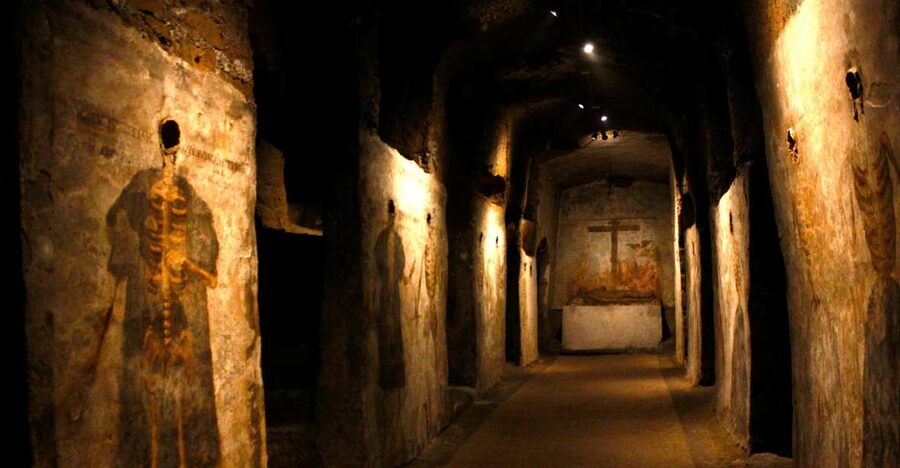
Once the tour begins, the guide leads you through the catacomb spaces and explains how the cemetery grew after St. Gaudiosus was buried here. The route focuses on the early Christian remains first, including the saint’s tomb and the fifth and sixth-century artwork.
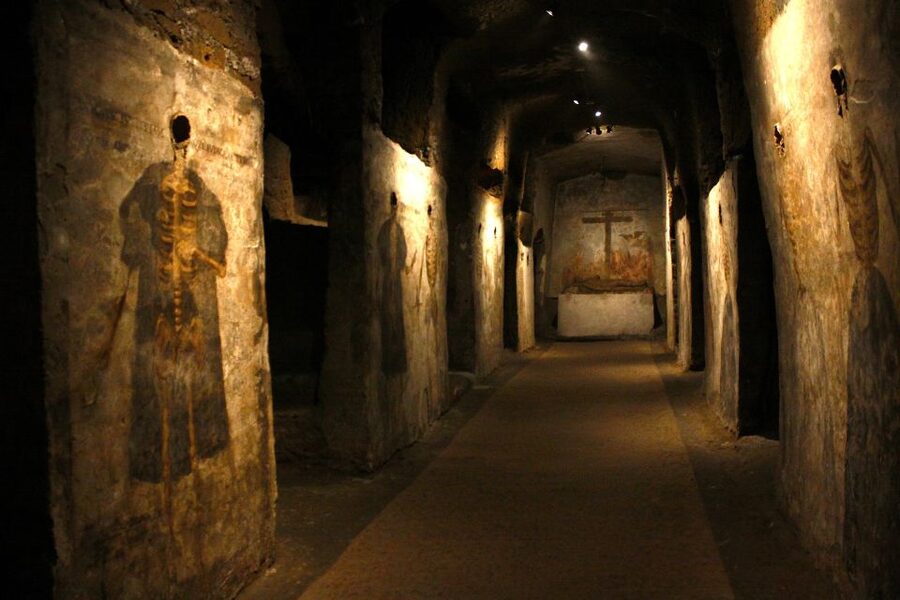
The frescoes and mosaics are the visual highlight. Their Christian motifs give the underground rooms a quiet, devotional feel, even as the later burial customs become more disturbing. Look closely when the guide pauses. The finer details are part of the reason to take a guided tour rather than simply enter and wander.
The later noble tombs change the mood. These spaces date from the 17th century, when the catacombs resumed use as a burial place. The guide explains how the Dominicans organized areas for people from the higher social classes, giving you a glimpse of how status continued even after death.
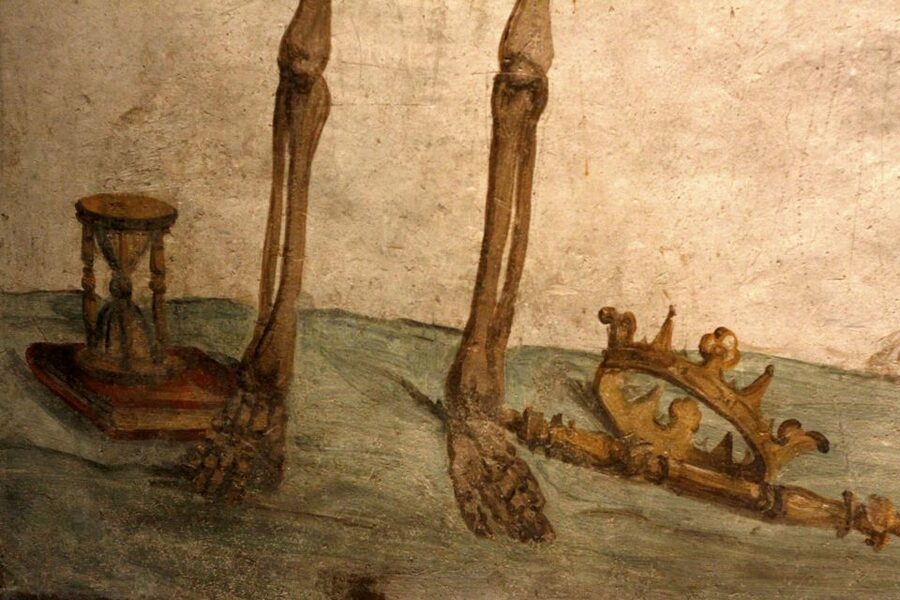
Then come the skulls. In the 17th century, skulls were placed on display in the walls of the ambulatory. This is the part many people find both fascinating and uncomfortable. The custom is not presented as a cheap scare tactic. It is tied to the way people in that period viewed death, memory, and the body.
You may get several wow and ew moments in quick succession. The atmosphere is beautiful and eerie at the same time. If you are sensitive to human remains, you should know this before booking. The site can also be difficult for anyone who dislikes enclosed spaces or has mobility concerns, although the supplied information does not provide a detailed accessibility description.
Giovanni Balducci and the price of a noble burial
One of the most striking stories involves Giovanni Balducci, the artist who painted some of the frescoes. According to the tour information, Balducci refused payment for his work in exchange for the chance to be buried among Naples’ aristocrats.
That small detail opens up the larger social story. Burial in a respected place could carry real status, and artists, clergy, nobles, and religious communities were tied together through patronage. The guide uses the artwork to explain those connections rather than treating the frescoes as decoration alone.
This is also where a strong guide earns the price of admission. The artwork itself is worth seeing, but its meaning can be hard to grasp without context. Several guides, including Nello, Antonella, and Claudia, are praised for clear explanations, humor, and a strong sense of local history. Names and personalities can change with the departure, but the tour is offered in English or Italian.
Same streets, read through a different style:
- Lecce: Baroque Architecture and Underground Walking Tour
★ 4.6 · 1,248 reviews - Experience Florence’s Art and Architecture on a Walking Tour
★ 5.0 · 318 reviews - Palermo: Art and Architecture Walking Tour
★ 4.7 · 136 reviews - Caprarola: Villa Farnese, masterpiece of Renaissance architecture
★ 4.5 · 28 reviews
Local stories and the renewal of Sanità
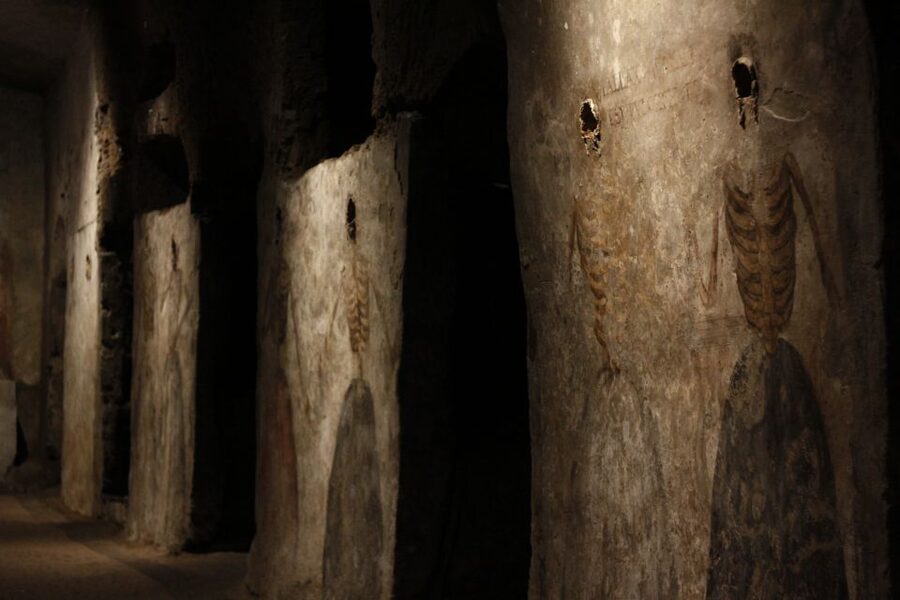
The best part of the experience may be the way it links the catacombs to modern Naples. Guides have explained the work of Don Antonio Loffredo and the local organization La Paranza, including efforts to support young people and bring cultural activity back to Sanità.
That context matters. You are not visiting a sealed historical relic with no connection to daily life. The ticket helps support cultural and community work in the neighborhood, and the guide may explain how local people have helped turn historic sites into places of education and employment.
I appreciate this because it gives the visit more weight without changing what the tour is. You still spend most of the time learning about the catacombs, frescoes, tombs, and burial rituals. But you also see how heritage can support a neighborhood that has faced serious problems, including the influence of the Camorra in the area’s past.
Guides from Sanità can add a personal edge to the story. Flavia, Antonella, Nello, and others have been singled out for their energy and ability to make the past feel connected to the present. A local guide cannot solve every problem for you, but a good one can help you see Naples beyond its postcard sights.
Is 15 dollars good value?
At about $15 per person, this is a strong-value activity, especially because the ticket includes the basilica and free entry to the Catacombs of San Gennaro. The San Gaudioso visit itself lasts only 45 minutes, so it is not a full morning excursion. Think of it as a focused cultural stop that fits neatly into a day in Naples.
The second-catacomb benefit changes the calculation. San Gennaro is a separate site, and the free entry remains valid for 12 months. You can visit it later during the same trip or return another time, depending on your plans. Several people have found the two sites different enough to justify visiting both.
You should not assume that one short underground tour covers all of Naples’ catacomb history. San Gaudioso is smaller, and the visit is tightly scheduled. Still, the combination of early Christian art, aristocratic tombs, skull displays, and the free San Gennaro ticket gives you plenty for the price.
The community purpose also adds value. Your admission supports the cultural work connected with the Sanità district, so the money does more than pay for access to an old cemetery. If you care about local projects and responsible tourism, that is a meaningful part of the decision.
Guide quality and group atmosphere
The guide is the main variable. Many departures are praised for friendly, clear, engaging explanations, and some groups are small enough to allow plenty of questions. Nello is known for storytelling and humor, while Antonella, Claudia, Flavia, Emanuele, and others have been praised for enthusiasm and clear English.
A larger group can make the commentary harder to follow, especially in the underground spaces. One practical criticism was that there were not enough signs to read when several tours were nearby. If you have trouble hearing, stay close to the guide and ask questions when the group stops.
The tour works best if you treat it as an active history lesson. Listen for the changes in burial customs, ask about the Christian symbols, and pay attention to the explanation of the skulls. The guide’s personal connection to Sanità often gives the visit more warmth than a simple audio guide would.
English is available, as is Italian. The quality of spoken English is repeatedly praised, but accents and acoustics can vary. Arriving early helps you get settled before the group moves underground.
Planning your visit in Naples
Book a specific day and time, then arrive at the ticket office 15 minutes early. The ticket is valid only for the day and time purchased, and arriving after departure means you cannot simply join a later tour or claim a refund.
The ticket office opens at 9:30 AM. Check the exact starting time when you book, because availability changes. The meeting point is the San Gaudioso ticket office, not the catacomb exit.
Give yourself extra time to find the entrance. The route can involve an elevator down from street level, and the signage may not make the correct entrance obvious. If you are using a map, confirm that you are heading to the ticket office rather than the exit.
The tour is short enough to fit into a wider visit to Sanità. You can pair it with the basilica, then use the rest of your time to explore the district. The activity is also useful on a rainy day, when an atmospheric underground visit makes a welcome change from outdoor sightseeing.
Cancellation is flexible up to 24 hours before the booked time, with a full refund. You can also reserve now and pay later, which helps if your Naples schedule is still shifting.
Who should book the San Gaudioso tour?
I recommend this tour if you like unusual history, religious art, old burial customs, and places that show a less polished side of Naples. It suits first-time visitors who want something beyond churches, pizza, and major archaeological sites.
It is also a good choice for families with older children who can handle the subject matter. The skulls and burial practices are real, not theatrical, so parents should decide if the tone fits their group.
You may want to skip it if you are strongly claustrophobic, very uncomfortable around human remains, or concerned about mobility in an underground setting. The available information does not give a full access guide, so contact the operator before booking if you need specific assistance.
Should you book it?
Yes, if you want a short, affordable visit with real historical substance. The best reasons are the early Christian frescoes, the unusual 17th-century skull displays, the beautiful basilica above, and the free San Gennaro admission.
Book with realistic expectations. This is a 45-minute guided tour, not a slow independent exploration, and the experience depends heavily on where you stand and how clearly you can hear the guide. Arrive early, find the correct elevator and ticket office, and stay near the guide.
For about $15, San Gaudioso gives you an eerie look at Naples’ burial traditions and a direct connection to the renewal of Sanità. Add San Gennaro to your plans, and the value becomes even better.
FAQ
How long does the San Gaudioso tour last?
The guided visit lasts 45 minutes and includes the Catacombs of San Gaudioso and Basilica di Santa Maria della Sanità.
What languages are available?
Live guided tours are available in English and Italian.
Where is the meeting point?
Meet at the ticket office of the Catacombs of San Gaudioso.
How early should I arrive?
You should arrive at the ticket office 15 minutes before your booked departure time.
What happens if I arrive late?
Late arrival does not allow you to join a later tour or receive a refund.
Is the ticket valid all day?
The San Gaudioso ticket is valid only for the day and time purchased.
Does the ticket include another catacomb?
Yes. It includes free entry to the Catacombs of San Gennaro, with validity for 12 months.
Is the basilica included?
Yes. The 45-minute guided visit includes Basilica di Santa Maria della Sanità.
Can I cancel the booking?
Yes. You can cancel up to 24 hours in advance for a full refund. You can also reserve now and pay later.
New to the itinerary around Italy
- Vicenza: Palladian Architecture Private Walking Tour★ 3.3 · 3 reviews
- Architectural Milan: Private Tour with a Local Expert★ 4.5 · 2 reviews
- The Architect’s Water★ 4.5 · 11 reviews
- Architectural Florence: Private Tour with a Local Expert★ 5.0 · 3 reviews
- Rione Sanità: tour among street art, architecture, folklore★ 4.5 · 2 reviews
- Palermo Tour: Magnificent Mixture Of Architectural Styles★ 4.2 · 6 reviews
- Discover Coppedè in Rome: Liberty architecture, symbols, and jewels★ 5.0 · 2 reviews
- Bologna: Guided Architecture Walking Tour★ 4.5 · 2 reviews
Italy Architecture Tours, compared.
Lecce: Baroque Architecture and Underground Walking Tour
Read our review →
Experience Florence’s Art and Architecture on a Walking Tour
Read our review →
Caprarola: Villa Farnese, masterpiece of Renaissance architecture
Read our review →
Best of Bologna in one day : Food, architecture, art and history
Read our review →
City Walk with Architect: Private walking tour of Rome
Read our review →
Private Tour: Venice Art and Architecture Walking Tour
Read our review →
Basilica San Marco and the Pala d’Oro with Architect Guide
Read our review →Other lists with this tour