
Review · ITALY
Noto: Sicilian Baroque Architecture Guided Walking Tour
Noto’s Baroque center is a grand outdoor stage of honey-colored stone, carved balconies, sweeping stairways, and churches packed into a walkable old town. This private tour gives you the useful context behind the prettiest sights, beginning at Porta Reale and moving through the city’s finest streets and buildings.
I like the route for two reasons: you see major interiors, not just handsome facades, and the private format lets the guide adjust the pace. Guides such as Elia have tailored the time to guests and helped them find shade on warm days. The main consideration is price: $346.65 per group, even for a small party, makes the tour far better value for a larger group than for one or two people.
Key points to know before you book
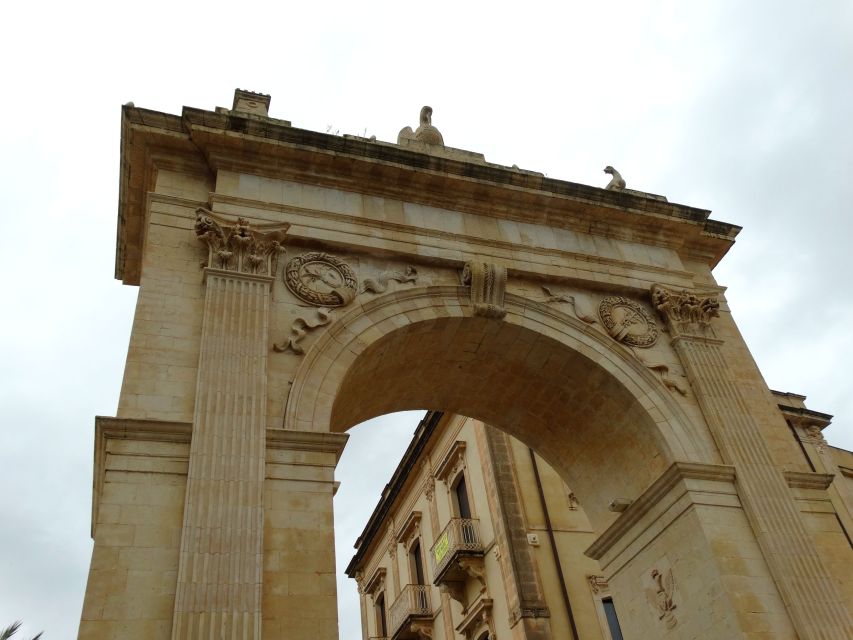
- Porta Reale sets the scene: Start at Noto’s grand historic gateway, close to the Church of St. Francis and the former convent.
- Santa Chiara includes a stair climb: You go up a beautiful staircase to see frescoes, stucco, statues of apostles, and putti.
- Palazzo Ducezio adds visual tricks: Noto’s Town Hall has a frescoed ceiling and mirrored rooms that make the spaces seem larger.
- The cathedral has a complicated past: San Nicolò has collapsed three times and been rebuilt, with some original frescoes lost.
- Via Nicolaci is Noto’s flower street: The famous Infiorata turns the road into a temporary carpet of flowers, though the display is seasonal.
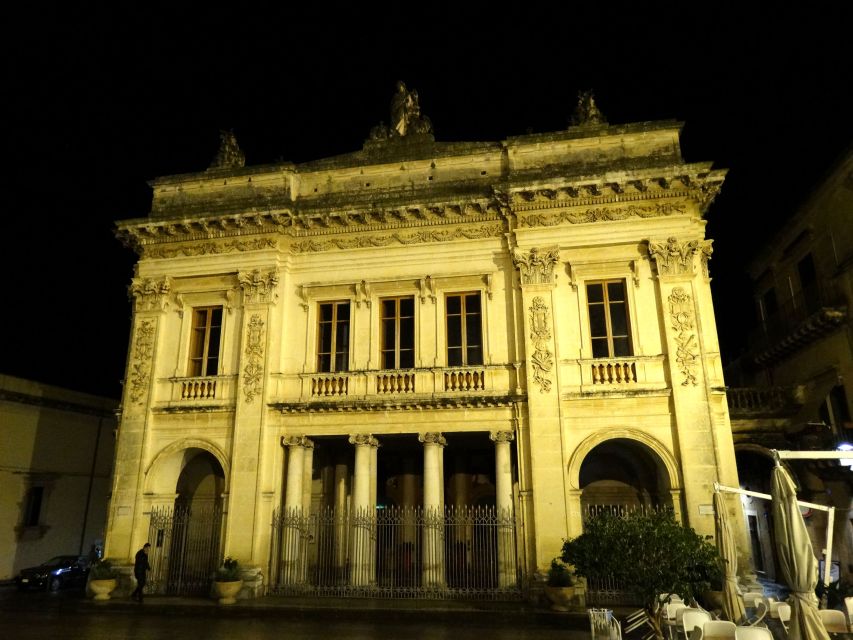
- The tour finishes with civic Noto: You see the Loggia del Mercato, Tina di Lorenzo Theater, and the marble Fountain of Hercules before returning to Porta Reale.
Why Noto works so well on foot
Noto is one of those towns where the street itself becomes part of the sightseeing. The main road leads from the entrance gate toward the cathedral, and important buildings appear one after another rather than being scattered across a large city.
That makes a two-hour guided walk a sensible introduction. You can cover the main Baroque core without spending the day on transport or trying to match names to facades on your own. The guide points out the details that are easy to miss, such as the expressive stone figures under balconies and the way churches use stairs to create a sense of ceremony.
Noto’s Baroque style is easy to recognize once you know what to look for. Expect pale limestone, theatrical stairways, twisted decoration, carved masks, animals, saints, and cherubs. The stone takes on a warm golden color in the late light, which helps explain why the city can look especially striking near sunset.
The route also gives you a useful balance of religious and civic architecture. Churches show the decorative side of the period, while Palazzo Ducezio, the theater, the market loggia, and the fountains show how public life was shaped by the same taste for display.
More Walking Tours in Italy
- Lecce: Baroque Architecture and Underground Walking Tour
★ 4.6 · 1,248 reviews - Experience Florence’s Art and Architecture on a Walking Tour
★ 5.0 · 318 reviews - Palermo: Art and Architecture Walking Tour
★ 4.7 · 136 reviews
Beginning at Porta Reale and San Francesco
Meet your guide under Porta Reale, also called Porta Ferdinandea. The local guide should wear a clearly visible license badge, which makes the meeting point easier to identify.
The gate marks the entrance to the historic center and provides a natural beginning for the walk. Near it are the Church of St. Francis of Assisi and the former Convent of the Holy Savior. Rather than starting with an isolated monument, you begin with the old town opening in front of you.
The Church of St. Francis is reached by a striking staircase. You should be prepared for steps from the start, especially if the weather is warm. Comfortable shoes are not just a polite suggestion here. They will make the climb and the rest of the stone-paved route much easier.
Inside, the church offers the kind of details that can disappear when you only photograph the exterior. Frescoes and decorative work fill the interior, and the guide helps you read the room as a designed whole rather than a collection of ornaments.
The former convent nearby adds context to the area. It helps you see that Noto’s monumental streets were not built only for passing views. Religious buildings, convents, civic spaces, and private palaces were arranged together to create a powerful urban setting.
Santa Chiara and its decorated interior
A short walk brings you to the Church of Santa Chiara, next to a former Benedictine monastery. The church is another good reason to choose a guided walk rather than simply stroll past the outside.
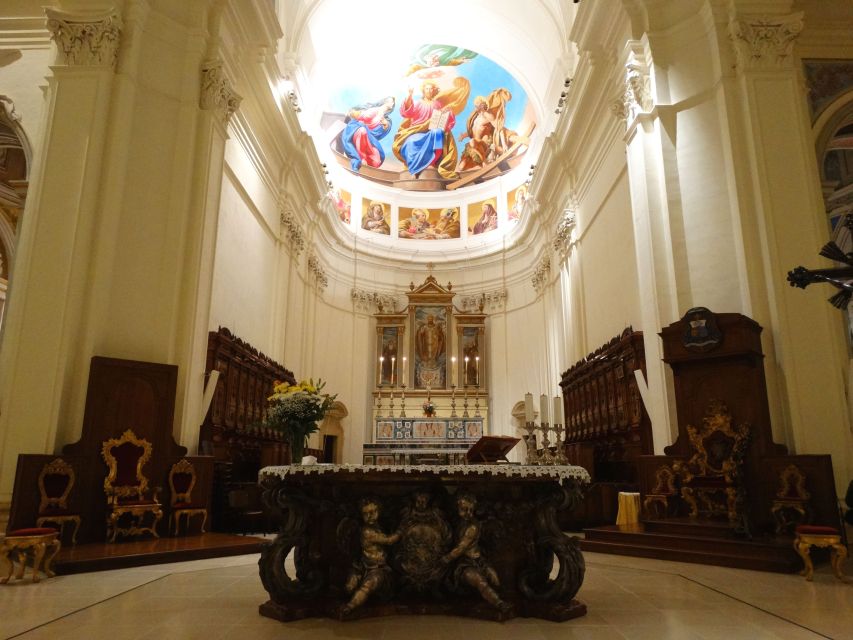
The interior is especially decorative, with columns covered in stucco and statues of apostles and putti. These details can feel busy if you do not know where to look. A guide can direct your attention to the way the decoration climbs upward and turns the interior into a carefully controlled visual show.
I would pay attention to the contrast between the plain, warm stone outside and the lighter, more elaborate interior. Noto’s churches often reveal their full effect only after you cross the threshold.
Santa Chiara also keeps the route moving at a manageable pace. You are not spending the whole two hours in one large cathedral. Instead, the tour gives you several smaller architectural experiences, each with a different mood.
Piazza del Duomo and Palazzo Ducezio
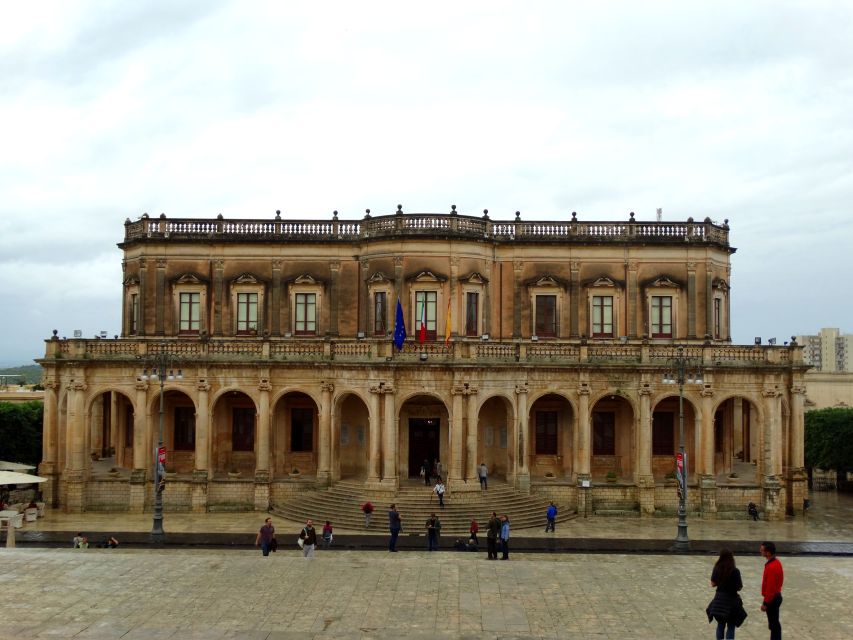
The route continues to Piazza del Duomo, the city’s grand central square. Here, Palazzo Ducezio faces the monumental staircase leading to San Nicolò Cathedral.
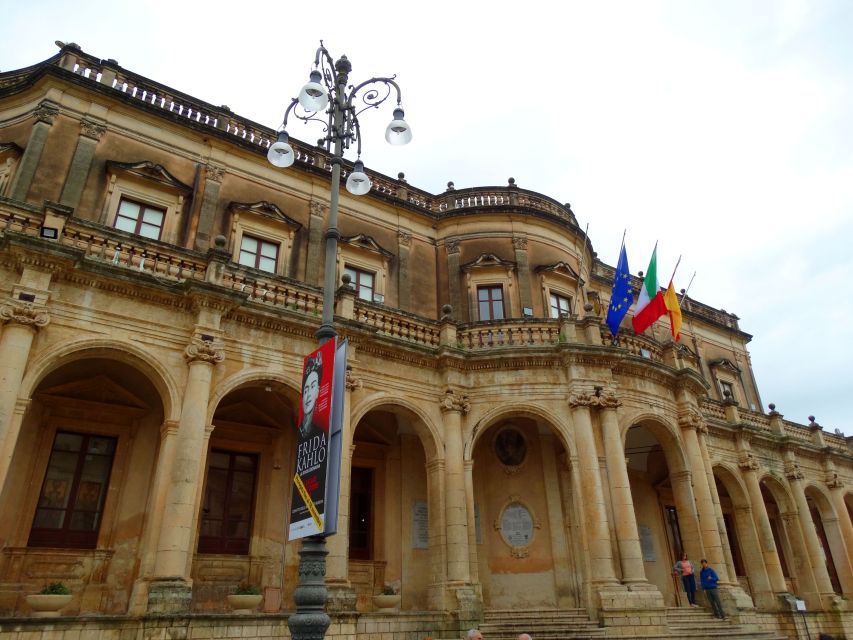
Palazzo Ducezio houses Noto’s Town Hall and was built between the eighteenth and nineteenth centuries. Its role matters because it shows the city’s Baroque style in a civic setting, not just inside a church.
Inside, look for the frescoed roof and the rooms lined with mirrors. The mirrors create visual effects that make the rooms seem larger than they are. This is a small but memorable feature, and it gives the building a playful quality beneath its formal public role.
I like this stop because it changes the rhythm of the tour. After churches filled with religious decoration, you get a palace where authority, ceremony, and illusion shape the visitor’s experience. You can also compare the building with the cathedral directly opposite, seeing how both use scale and symmetry to frame the square.
The private format helps here. If your group wants more time for the palace, or prefers to move on quickly to the cathedral, the guide can shape the pace around your interests. The experience is not described as a fixed large-group departure, so you do not have to keep up with a crowd of strangers.
More Baroque Architecture Tours around Italy:
- Martina Franca: Baroque and Rococo Architecture Walking Tour
★ 5.0 · 4 reviews - LECCE: AMONG ARCHITECTURAL TREASURES IN THE LECCE BAROQUE
★ 4.7 · 3 reviews
San Nicolò Cathedral and its difficult past
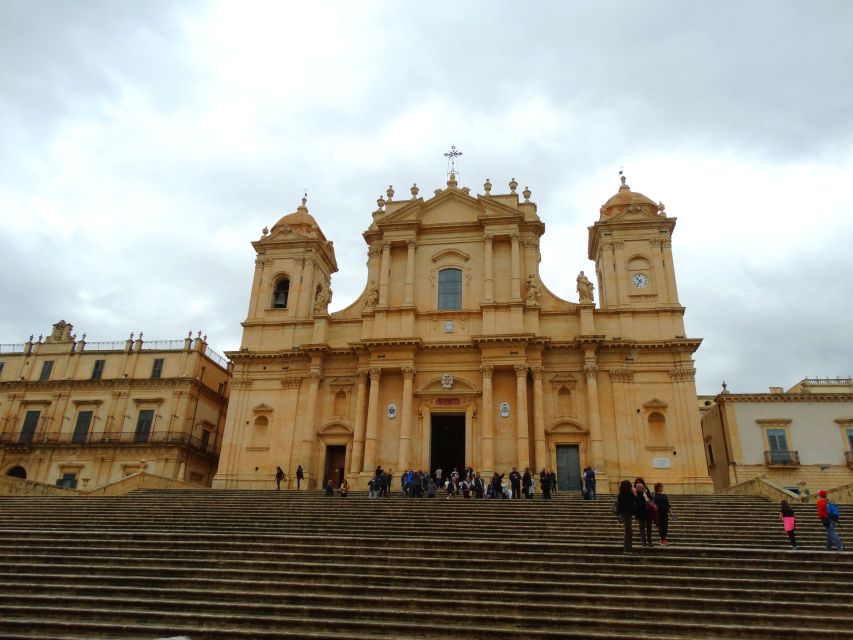
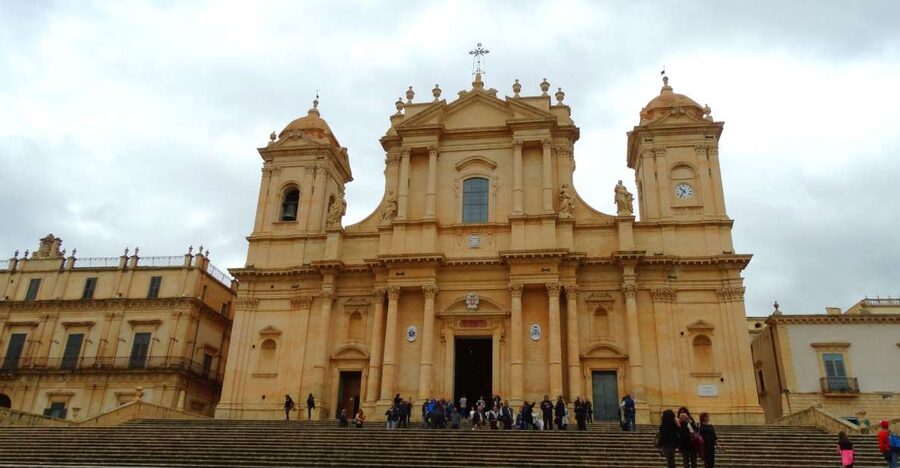
The Cathedral of San Nicolò is Noto’s best-known building and the visual anchor of the tour. Its honey-colored facade rises above the broad staircase, creating one of the city’s most recognizable views.
You visit the cathedral inside as well as seeing its exterior. The building dates from the eighteenth century, but its story is far from simple. It has collapsed three times and been rebuilt, and many of its frescoes were lost along the way.
That history changes how you look at the interior. You are not seeing a perfectly preserved Baroque church. You are seeing a building that has repeatedly been repaired and brought back into use. The surviving decorations become more meaningful because they form part of a continuing effort to maintain the city’s central church.
The facade has two bell towers. One holds a bell and the other has a clock, a detail worth noticing from the square. The broad staircase also matters. It gives the cathedral a theatrical approach, turning the act of walking toward the entrance into part of the architecture.
The cathedral can be particularly attractive when the limestone catches the late-day light. The tour does not promise a sunset departure, so you should check the available starting time if the color of the stone is important to you.
Via Nicolaci and Palazzo Nicolaci
From the cathedral, the route reaches Via Nicolaci, one of Noto’s most famous streets. This is where the annual Infiorata is arranged, covering the road with a temporary carpet made from flowers.
The flower display is seasonal, so do not assume it will be in place for every departure. Even without the Infiorata, the street is important for its Baroque buildings and its connection to Palazzo Nicolaci.
Palazzo Nicolaci is known for its balconies, especially the carved figures beneath them. Look for masks, animals, statues, and other forms cut into the limestone. The expressions can be comic, strange, or severe, and they give the palace a more playful personality than its formal name might suggest.
The palace is visited externally on this route. That is worth knowing if you are hoping to see private rooms or interiors. The reward is the street view, where the balconies can be studied from below and compared with the surrounding facades.
This is one of the places where a guide adds real value. From ground level, it is easy to see only the balcony railings. You need to look upward at the supports and carved figures to understand why Palazzo Nicolaci is one of Noto’s signature buildings.
Bring clothing that is comfortable for walking in the sun. The route includes open streets and paved areas, and the guide has adjusted the walk to provide shade when possible on warm days.
The market loggia, theater, and Fountain of Hercules
The final part of the route moves through the smaller streets of the historic center. This section is useful because it gives you more than the headline sights around the cathedral.
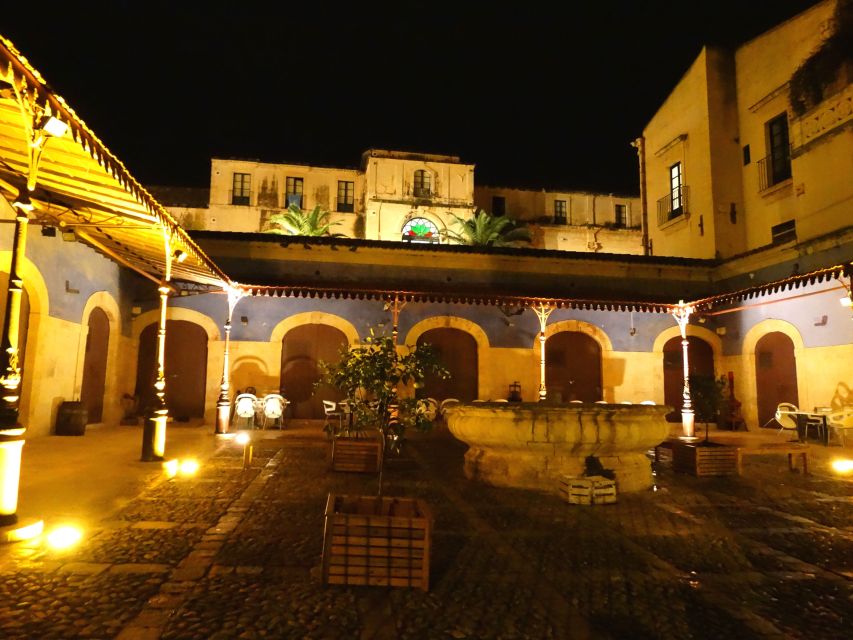
The Loggia del Mercato was once Noto’s market. Its wrought-iron loggia remains an attractive reminder of everyday commerce, even though the space is now used for cultural events. This stop helps balance the grand churches and palaces with a place designed for ordinary public life.
Next comes the Tina di Lorenzo Theater, an elegant Neoclassical building. Its style differs from the Baroque buildings seen earlier, giving you a quick lesson in how Noto’s appearance changed over time.
The tour finishes at the marble Fountain of Hercules, built in the eighteenth century. It is a modest endpoint compared with the cathedral, but a good one for a walk that has moved from gate to church, palace, square, market, theater, and fountain.
The activity ends back at Porta Reale, so you return to the place where you began. That is practical if you want to continue exploring Noto on your own afterward. You can also use the end of the tour to revisit a facade or square that caught your attention.
What the two-hour format really gives you
Two hours is enough for a strong first look at the historic center, but it is not a full-day study of Noto. You will see a broad selection of major buildings and hear the story of the city’s Baroque design, but some stops will be relatively brief.
That short format is useful if Noto is one stop in a larger Sicilian trip. You get orientation without giving up an entire morning or afternoon. It also leaves time for your own meal, coffee, shopping, or unhurried photographs.
The private group format changes the value calculation. The price is $346.65 for up to 25 people, not a per-person rate. A group of 10 or 20 can split the cost and receive a private experience at a reasonable individual price. For a couple, the same total is a much larger commitment, so I would choose it mainly if having a dedicated guide matters to you.
The tour is offered in English or Italian. If you want explanations in English, select that option when checking availability. Starting times vary, so you need to confirm the schedule rather than assume a particular departure.
Guide style, comfort, and practical details
The strongest personal touch in this experience is the guide’s ability to adjust the walk. Elia has led the tour, and the route can be shaped around the amount of time you want to spend at each stop. A guide also took care to find shade as often as possible on a hot day, which is a small service with real value in Sicily.
You should wear comfortable shoes and comfortable clothing. The route includes stairways, outdoor walking, and historic streets. There is no need to dress formally for the churches unless you have separate plans that call for it, but practical clothing will make the walk more pleasant.
The meeting point is specific: under Porta Reale or Porta Ferdinandea. Look for the guide’s visible license badge. Since the tour returns to that same gate, the beginning and end are easy to plan around.
Cancellation is free up to 24 hours before the activity for a full refund. You can also reserve now and pay later, which helps if your Sicilian route is still changing.
The experience has an overall rating of 4.3 from six reviews. The most consistent strengths are the guide’s kindness, useful local insight, flexible pacing, and attention to comfort. That is especially helpful in Noto, where a good explanation can turn decorative stone into something you can actually read.
Who should book this Noto walk
I would recommend the tour to anyone visiting Noto for the first time who wants the main architecture explained in a short, organized walk. It suits people who care about churches, palaces, public squares, and the visual details of Baroque design.
It is also a good match for families or friends traveling together, because the private group price can make sense when divided among several people. The flexible pace may help if different members of your group have different interests.
You may want to skip it if you prefer to wander entirely alone, plan to spend many hours inside each building, or are traveling as only one or two people and find the fixed group price too high. The tour also does not guarantee that the Infiorata will be in bloom, so treat the flower street as a bonus unless your date matches the display.
Should you book it?
Book this tour if you want a clear introduction to Noto’s Baroque center, value a private guide, and can share the cost with a group. The best parts are the combination of interiors and street views, the cathedral’s unusual rebuilding story, Palazzo Nicolaci’s carved balconies, and the guide’s ability to adjust the pace and seek shade.
For a small group on a tight budget, the price is the main obstacle. For a larger party, it becomes a practical way to see Noto’s major sights without guessing what each building means. I would choose an earlier or later starting time if you want softer light and less heat, then keep the rest of the day free for your own look at the streets and squares.
FAQ
Where does the Noto walking tour start?
The tour starts under the Porta Reale or Porta Ferdinandea gate, near the Church of St. Francis of Assisi and the former Convent of the Holy Savior.
Where does the tour finish?
The activity ends back at the meeting point under Porta Reale.
How long does the walking tour last?
The guided walk lasts two hours. Starting times vary, so you need to check availability for the date you want.
What languages are available?
The live guide speaks Italian or English.
Is this a private tour?
Yes. The booking is for a private group of up to 25 people.
What should I bring?
Bring comfortable shoes and comfortable clothes. The route includes walking and stairways through Noto’s historic center.
New to the itinerary around Italy
- Vicenza: Palladian Architecture Private Walking Tour★ 3.3 · 3 reviews
- Architectural Milan: Private Tour with a Local Expert★ 4.5 · 2 reviews
- The Architect’s Water★ 4.5 · 11 reviews
- Architectural Florence: Private Tour with a Local Expert★ 5.0 · 3 reviews
- Rione Sanità: tour among street art, architecture, folklore★ 4.5 · 2 reviews
- Palermo Tour: Magnificent Mixture Of Architectural Styles★ 4.2 · 6 reviews
- Discover Coppedè in Rome: Liberty architecture, symbols, and jewels★ 5.0 · 2 reviews
- Bologna: Guided Architecture Walking Tour★ 4.5 · 2 reviews
Baroque Architecture Tours, compared.
Lecce: Baroque Architecture and Underground Walking Tour
Read our review →
Martina Franca: Baroque and Rococo Architecture Walking Tour
Read our review →
Other lists with this tour