
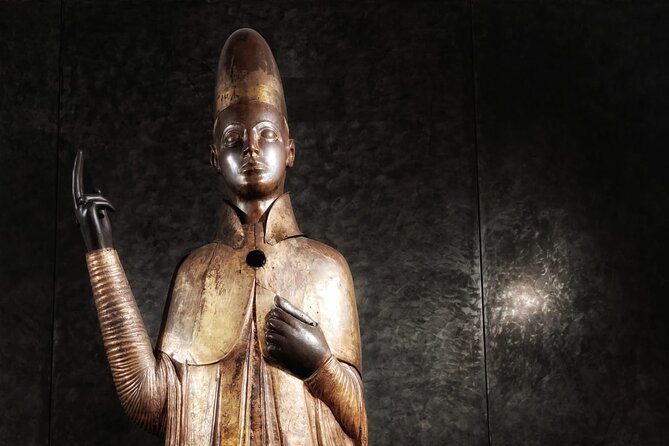
Review · ITALY
Best of Bologna in one day : Food, architecture, art and history
Bologna reveals itself through layers: Romanesque churches, medieval towers, Europe’s oldest university, Renaissance art, covered walkways, and a food culture that needs no introduction. This private seven-hour tour with Riccardo Bacchi brings those pieces together, ending with a generous tasting and a short pasta-making lesson.
I especially like the range of stops, from Michelangelo’s work and the anatomical theatre to the old market and canals. I also like the personal format: only your group takes part, so Riccardo can adjust his explanations to your interests. The main drawback is the pace. You cover a lot of ground, and the subject matter comes quickly, so comfortable shoes and active attention are essential.
Key points to know before booking
- Seven hours on foot: This is a full city day with many stops and a brisk pace.
- Private guide Riccardo Bacchi: His strengths are art, architecture, religion, medieval history, and food.
- Major sights plus lesser-seen details: You visit Piazza Maggiore, the Archiginnasio, San Domenico, Santo Stefano, and more.
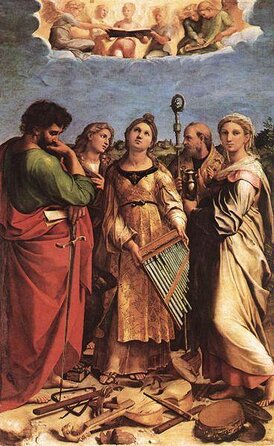
- Serious art content: Expect works linked to Michelangelo, Nicolò dell’Arca, Raphael, Titian, Carracci, and Guercino.
- Food is part of the history: The tasting includes mortadella, culatello, tagliatelle with ragù, lasagna, aged Parmigiano, and balsamic vinegar.
- A practical choice for a short stay: It gives you a strong first look at Bologna when you have only a day or two.
Why this Bologna tour covers more than the usual highlights
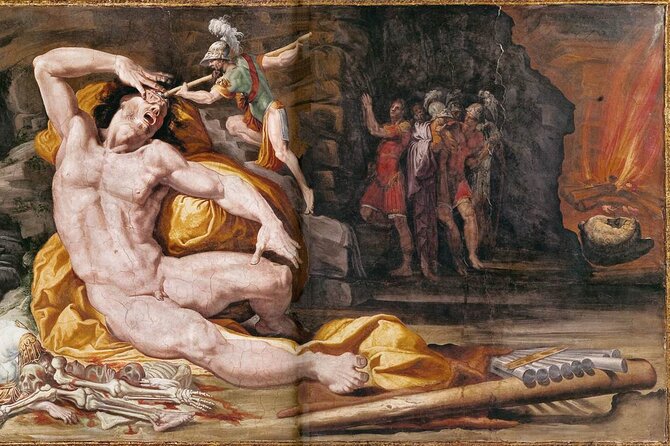
Many city walks give you a quick look at the main square, a church, and a market. This one tries to explain how Bologna fits together. Art connects to religion. The university connects to science. The market connects to local cooking. Medieval buildings sit beside Renaissance palaces, and covered arcades lead you from one chapter to the next.
Riccardo’s background as a college professor shapes the day. You should expect extended explanations rather than a string of short facts. He has a strong command of art, architecture, religion, science, and medieval history, and he likes to point out small details that are easy to miss.
That approach suits you if you enjoy learning while you walk. It may feel like a lot if you prefer a light introduction with plenty of unplanned time. One person who took the tour described the amount of information as a lot to digest, which is fair. This is closer to a private field class than a casual stroll.
The private format helps. Only your group takes part, and Riccardo can respond to your interests. If you care about medical history, photography, religion, painting, or food, tell him early. He has adapted the route and explanations to individual interests before, including science and medicine.
More History Walks around Italy:
- Chicago in a Day: Food, History & Architecture Walking Tour
★ 5.0 · 1,153 reviews - Charleston’s Best Highlights: History, Culture & Architecture
★ 5.0 · 422 reviews - Palm Springs Modernism Architecture & History Bike Tour
★ 5.0 · 359 reviews
Piazza Maggiore and Bologna’s civic heart
Begin at Bar Vittorio Emanuele on Piazza Maggiore, one of the easiest places in Bologna to find. This opening stop sets up the city’s public, religious, and artistic story.
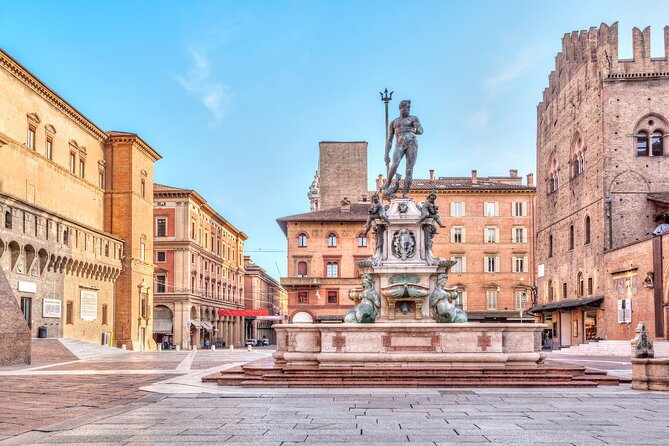
You’ll examine the Fountain of Neptune, the terracotta sculptures of Nicolò dell’Arca, Palazzo Comunale, and the great Basilica of San Petronio. These are not simply postcard stops. Together they show the ambitions of medieval and Renaissance Bologna, where civic power, church authority, sculpture, and public space shared the same stage.
The Palazzo Comunale visit adds real value. You enter frescoed rooms and see Bramante’s grand staircase, including its unusual horse imagery. The plan allows about 40 minutes here, enough for Riccardo to explain the building’s details without reducing the visit to a quick photo stop.
San Petronio gives the square its scale, while the nearby sculptures bring the human side of the period into focus. Pay attention when Riccardo discusses the materials and expressions in the terracotta work. Bologna is especially strong in this art form, and the city’s sculptures can be just as affecting as its paintings.
Santo Stefano, visited from two angles
Piazza Santo Stefano contains a remarkable group of early medieval and Romanesque buildings. The complex includes medieval interiors, Gothic palaces, frescoes, porticoes, spiral staircases, and an art museum. There is also a terrace with a view toward Bologna’s towers and rooftops.
The first scheduled visit lasts about 20 minutes, while a later stop at the Basilica Santuario di Santo Stefano allows roughly 40 minutes. The two entries give the complex more attention than a single quick pass. You can first understand the square as an architectural group, then return to its religious and early medieval significance.
The church complex was built in the image of Jerusalem’s Holy Sepulcher. That idea gives the visit a clear purpose: you are not just looking at old walls, but at a carefully shaped religious setting with a specific connection to the sacred places of Jerusalem.
The short first stop means you should listen closely. Santo Stefano contains many parts, and a short explanation can help you see how they relate. The later visit gives more room for the interiors and the story behind the complex.
Terracotta emotion at Santa Maria della Vita
At Santa Maria della Vita, the focus is a Baroque church and Nicolò dell’Arca’s Lamentation. The work is a Renaissance terracotta group and one of the artistic high points of the day.
This is a good example of why an art-focused guide helps. Terracotta can sound less grand than marble or bronze, but the material allows an unusual sense of immediacy. The figures have force, movement, and grief. Riccardo’s attention to sculpture gives this brief 20-minute stop more weight than its length suggests.
If you are interested in religious art, this is one of the places to slow your eyes down. Look at faces, gestures, and the way the figures occupy space. The work is not included simply as another church visit. It is a central piece in the story of Bologna’s sculptural tradition.
More One-Day Tours around Italy:
- Private Montserrat, Gaudi and Modernism Day Trip from Barcelona
★ 4.5 · 20 reviews - Barcelona in One Day: Gaudí, Gothic Quarter &Tapas (Private Tour)
★ 5.0 · 18 reviews - Day trip from Bangalore to Lepakshi for Temple architecture & paintings
★ 5.0 · 15 reviews
The Archiginnasio and Bologna’s teaching tradition
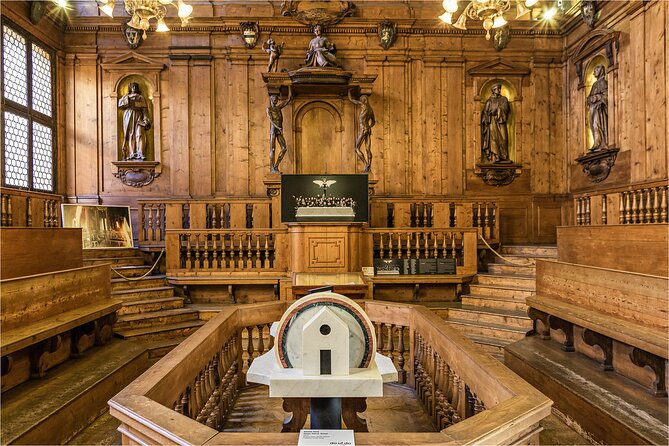
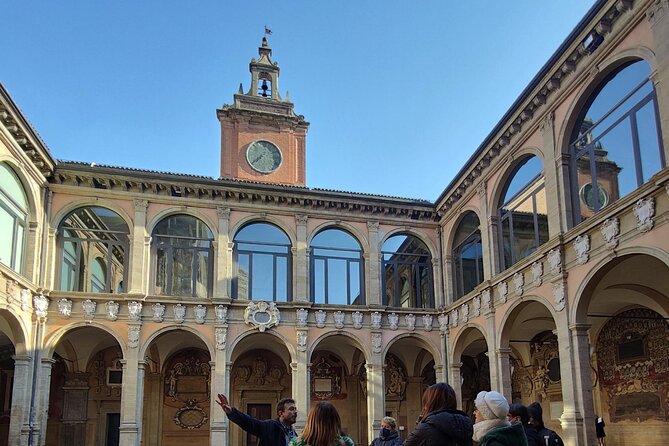
The Archiginnasio is the old Renaissance and Baroque palace of the University of Bologna. Inside, you’ll see frescoes, historic books, the library, and the wooden anatomical theatre.
For many people, the anatomical theatre becomes one of the day’s most memorable stops. It links Bologna’s university story to the study of medicine and the human body. The room’s woodwork and teaching purpose offer a different experience from the churches and galleries around it.
The Archiginnasio also explains why Bologna feels like a university city even when you are looking at medieval architecture. The building holds intellectual history in a physical form. You see where learning was organized, displayed, and passed on.
The visit is scheduled for about 20 minutes, so this is not a long museum session. Instead, it gives you a focused look at a powerful building. If science or medical history interests you, tell Riccardo. He has shaped parts of the tour around those subjects for past participants.
Paintings from Giotto to Guercino
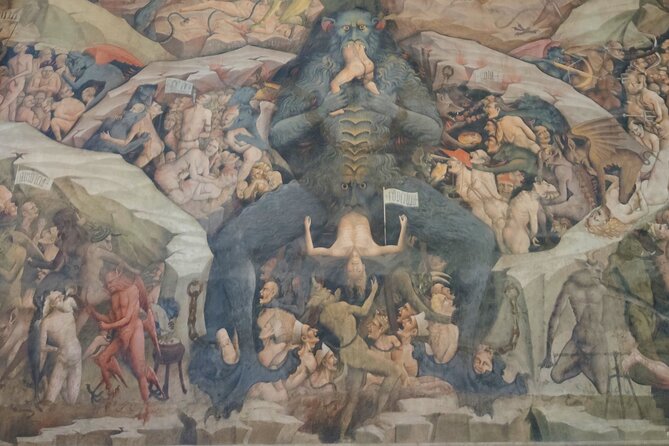
The Pinacoteca Nazionale di Bologna brings a major collection of Italian painting into the day. The artists named for the visit include Giotto, Raphael, Titian, Guido Reni, Ercole de’ Roberti, the Carracci family, Guercino, Vitale da Bologna, and Parmigianino.
The planned 40 minutes will not let you see every work at length. That is both the strength and limit of including the museum in a one-day route. You gain a guided introduction to important paintings, but you should not expect a leisurely, room-by-room museum morning.
Riccardo’s role is useful here because he can select the works that best explain Bologna’s place in Italian art. The city is sometimes overshadowed by Florence, Venice, or Rome. This gallery makes the case for Bologna through its painters, regional styles, and links to wider Italian movements.
If you already know the museum well, this stop may feel brief. If you are new to Bologna, it gives you a map of the collection and helps you decide if you want to return on your own.
The Quadrilatero, where history becomes lunch
The Quadrilatero is Bologna’s old market area, filled with historic stalls, taverns, and traditional shops. It is the point where the day’s art and architecture meet daily life.
This is not just a food break inserted between churches. The market helps explain why Bologna’s name is so closely tied to cooking. Emilia-Romagna’s food traditions are built around careful ingredients, fresh pasta, cured meats, aged cheese, and long-used methods.
The route continues to Bruno e Franco, La Salumeria, for a one-hour tasting. The selection is substantial. Expect figs with Parma ham, culatello, salami, mortadella, pasta, Bologna-style meatballs with peas, tagliatelle with ragù, three- or four-year-aged Parmigiano Reggiano, traditional green lasagna, and Modena balsamic vinegar aged as long as 24 years. The menu also includes other local items.
This is one reason the $174.69 price can make sense, especially if you have only a short time in Bologna. You are paying for a private guide, a full day of visits, and a broad introduction to local food rather than a simple snack tasting.
The tasting is also filling. If you plan a large dinner afterward, keep the evening meal modest. The food portion is not an afterthought.
San Giacomo Maggiore and the Oratory of Santa Cecilia
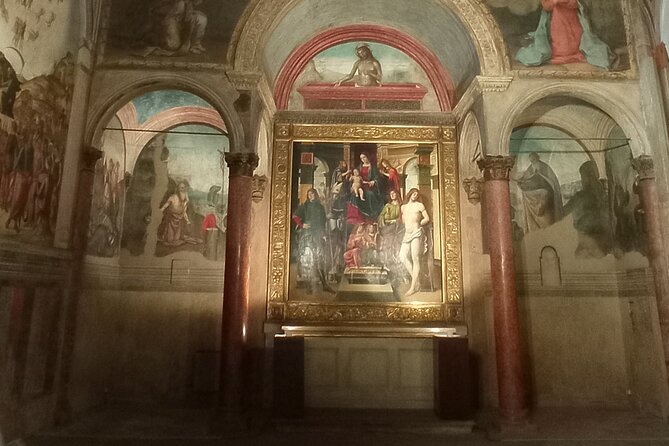
At San Giacomo Maggiore, the emphasis shifts back to Renaissance art. You’ll see the Bentivoglio Chapel, described as a major example of the Emilian Renaissance, along with the Oratory of Santa Cecilia.
The oratory contains frescoes and musical spaces, giving the visit a different mood from the larger basilicas. This stop rewards you for looking upward and into side rooms. Bologna’s art is often spread across churches rather than gathered in one famous building, and Riccardo is especially good at directing attention to those details.
The visit lasts about 40 minutes. That gives enough time for the church and oratory to function as more than a passing exterior stop. It is also another place where the private format helps, since questions about religious images, musical history, or architectural details can shape the explanation.
The Canale delle Moline in five minutes
The Canale delle Moline stop is listed at only five minutes, but it offers a quick change of scenery. You’ll see towers, arcades, medieval houses, palaces, canals, grand staircases, frescoed rooms, oratories, and sites linked to Bologna’s old university life.
Do not expect a long canal walk here. Think of it as a compact orientation point and a chance to see a less obvious side of the city. Bologna’s canals are easy to miss, especially when arcades and busy streets draw your attention elsewhere.
This brief pause also shows how much the tour tries to fit into seven hours. You gain breadth, but some places receive only a short introduction.
San Domenico, sculpture and Mozart’s organ
The Basilica of San Domenico is another art-heavy stop, with the tomb of Saint Dominic as its centerpiece. The complex includes work by Nicola Pisano, Nicolò dell’Arca, and Michelangelo, along with a wooden choir described as alchemical, a Renaissance cloister, and an organ associated with Mozart’s visits and preferences.
The combination is unusually broad. You can move from medieval sculpture to Renaissance work, then to music and the symbolism of the choir. A 40-minute visit lets Riccardo build connections instead of handing you a single fact and moving on.
This is one of the places where his art and history training matters most. The church contains several layers of meaning, and a quick solo visit might leave you noticing only the largest monument. With guidance, you can look at the smaller works and understand why the basilica matters.
Making pasta at Bruno e Franco
The food program finishes with a 30-minute pasta class at Bruno e Franco. You’ll learn about pasta made with egg, including tagliatelle, tortellini, lasagna, balanzoni, tortelloni, and passatelli.
The class gives the tasting a practical finish. Instead of only sampling finished dishes, you get a short look at how the food tradition begins. It is not presented as a full cooking course, so keep your expectations realistic. The value is the hands-on introduction and the chance to connect Bologna’s famous dishes with their basic ingredients and shapes.
Because this is a private tour, you can ask questions about the dishes you have just tasted. That makes the food portion feel more connected to the city walk, not like a separate activity added at the end.
Pace, price, and practical details
The tour costs $174.69 per person and lasts about seven hours. For a private experience with only your group, multiple admissions, a museum visit, a large tasting, and a pasta lesson, that is a serious but defensible price.
The value is strongest when you have one full day in Bologna or want a clear introduction before exploring on your own. You get context, access to many major sites, and help finding details you might otherwise pass. It is less appealing if you prefer to spend half a day in one museum or wander slowly without a schedule.
The walking pace is fairly fast. Wear trainers or other comfortable walking shoes. The route includes churches, porticoes, squares, museum rooms, and food stops, and you will need to stay engaged to absorb Riccardo’s explanations.
The meeting point is Bar Vittorio Emanuele at Piazza Maggiore 1, and the tour returns there. It is near public transportation, mobile tickets are available, and service animals are allowed. Most people can participate, but the long duration and brisk walking pace are worth considering before you book.
You receive confirmation at booking. Free cancellation is available if you cancel at least 24 hours before the start time. Changes or cancellations made later are not accepted for a refund.
Who should book this Bologna experience?
Book it if you want one strong overview of Bologna rather than a loose list of sights. It is especially well suited to first-time visitors, short-stay visitors, art lovers, history fans, and people who want food explained in its local setting.
It also works well for a private family or small group that wants the guide’s attention. Riccardo can respond to your interests, and the tour has enough variety to keep the day moving.
Think twice if you dislike long explanations, need a slow pace, or want a relaxed food tour with only a few historical stops. This experience asks you to listen, walk, and keep changing subjects. For the right person, that is its strength. You leave with a practical map of Bologna and a much clearer sense of why its art, university, buildings, canals, and cooking belong in the same story.
FAQ
Where does the tour begin?
It begins at Bar Vittorio Emanuele, Piazza Maggiore 1, 40124 Bologna, Italy.
Where does the tour end?
The activity ends back at the meeting point in Piazza Maggiore.
How long does the tour last?
The tour lasts approximately seven hours.
Is this a private tour?
Yes. Only your group participates in the activity.
What language is offered?
The tour is offered in English.
Who guides the experience?
The guide is Riccardo Bacchi.
Is food included?
The experience includes a tasting at Bruno e Franco, La Salumeria, with local cured meats, pasta dishes, cheese, lasagna, balsamic vinegar, and other specialties.
Is a cooking activity included?
Yes. A 30-minute pasta class covers egg pasta used for dishes such as tagliatelle, tortellini, lasagna, tortelloni, balanzoni, and passatelli.
Is the tour suitable for most people?
Most people can participate, and service animals are allowed. The tour involves a fairly fast walking pace over a full seven-hour day.
Can I cancel for a refund?
Yes, if you cancel at least 24 hours before the experience starts. Cancellations made less than 24 hours before the start time are not refunded.
New to the itinerary around Italy
- Vicenza: Palladian Architecture Private Walking Tour★ 3.3 · 3 reviews
- Architectural Milan: Private Tour with a Local Expert★ 4.5 · 2 reviews
- The Architect’s Water★ 4.5 · 11 reviews
- Architectural Florence: Private Tour with a Local Expert★ 5.0 · 3 reviews
- Rione Sanità: tour among street art, architecture, folklore★ 4.5 · 2 reviews
- Palermo Tour: Magnificent Mixture Of Architectural Styles★ 4.2 · 6 reviews
- Discover Coppedè in Rome: Liberty architecture, symbols, and jewels★ 5.0 · 2 reviews
- Bologna: Guided Architecture Walking Tour★ 4.5 · 2 reviews
Italy Architecture Tours, compared.
Lecce: Baroque Architecture and Underground Walking Tour
Read our review →
Experience Florence’s Art and Architecture on a Walking Tour
Read our review →
Caprarola: Villa Farnese, masterpiece of Renaissance architecture
Read our review →
City Walk with Architect: Private walking tour of Rome
Read our review →
Private Tour: Venice Art and Architecture Walking Tour
Read our review →
Basilica San Marco and the Pala d’Oro with Architect Guide
Read our review →Other lists with this tour