
Review · ITALY
Bologna: Guided Architecture Walking Tour
Bologna’s historic center gives you a compact lesson in Italian architecture, from the Gothic bulk of San Petronio to the leaning Garisenda Tower and the orderly arcades around its main squares. This two-hour walk links the city’s university, civic, religious, and market quarters without wasting time on transport.
I like the way the route brings together several periods in one short outing, and I like the private-group format, which gives you room to ask questions. Guide Roberta is specifically praised for making the tour informative and for responding well to individual requests. The main drawback is the price: at $186.92 per person, it is a serious spend for two hours, especially since entrance fees are not included.
Key points at a glance
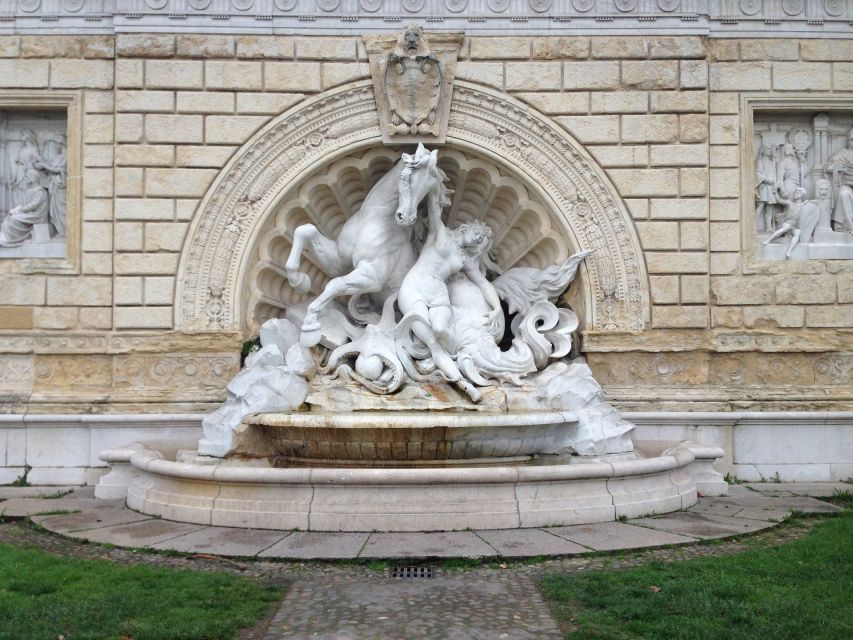
- Start at Europe’s oldest university: The Archiginnasio sets the tone with Bologna’s academic history and grand civic architecture.
- Compare major city squares: Piazza Maggiore and Piazza del Nettuno reveal how religious and administrative power shaped Bologna.
- See the Two Towers from ground level: You visit the base of Asinelli and Garisenda, rather than climbing them.
- Cover several architectural styles: Gothic, Renaissance, Baroque, and Classical details appear along the route.
- Finish near Bologna’s food quarter: The path takes in Corte Isolani, Santa Cecilia, San Giacomo Maggiore, and the Quadrilatero area.
- Use the guide interaction well: The private format and multilingual service are useful if you have specific questions or interests.
Starting at the Archiginnasio and Piazza Galvani
Meet your guide in front of the Palace Archiginnasio at Piazza Galvani 1. The nearby Biblioteca Comunale dell’Archiginnasio is listed as the starting location, so arrive with the entrance of the palace as your reference point.
This is a smart place to begin. The Archiginnasio served as the main office building for the University of Bologna, described here as the oldest university in the world. That makes the first stop more than a pretty façade. It introduces Bologna as a university city, a role that shaped its buildings, public life, and reputation.
The tour includes Piazza Galvani before moving through the Archiginnasio area. You will receive a guided look at the exterior and setting, but entrance into buildings is not included. If you hope to see the interior of the Archiginnasio, plan to ask your guide about the possibility and any separate admission arrangements. Do not assume the tour price covers it.
I like this opening because it gives the architecture a purpose. Instead of seeing one grand building after another with no connection, you begin with the institution that helped make Bologna important. Roberta’s ability to handle individual questions would be especially useful here if you want more attention on university history, building details, or the city’s urban design.
More Walking Tours in Italy
- Lecce: Baroque Architecture and Underground Walking Tour
★ 4.6 · 1,248 reviews - Experience Florence’s Art and Architecture on a Walking Tour
★ 5.0 · 318 reviews - Palermo: Art and Architecture Walking Tour
★ 4.7 · 136 reviews
Piazza Maggiore and San Petronio’s unfinished-looking façade
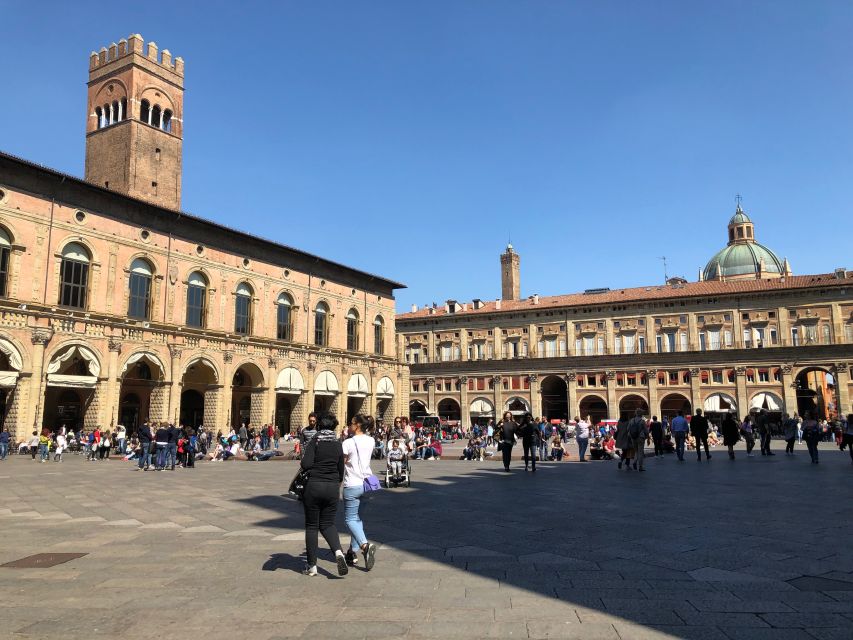
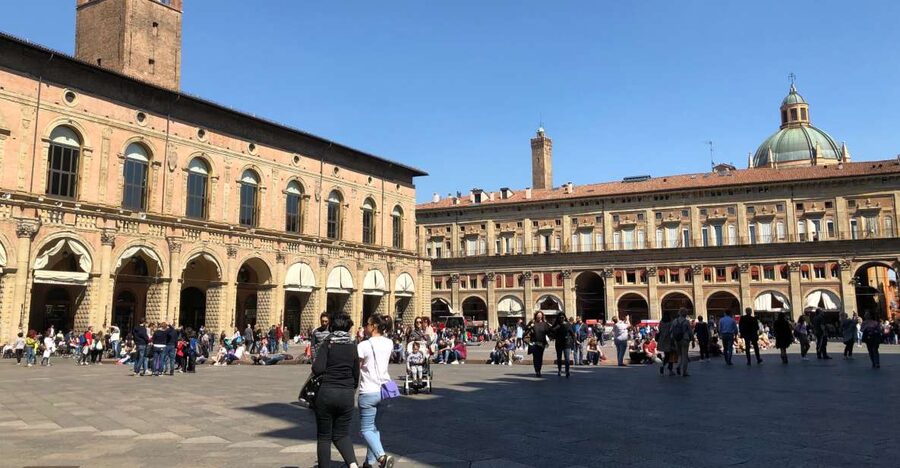
From the Archiginnasio, the walk continues to Piazza Maggiore, Bologna’s main civic square. This is the point where the route shifts from university architecture to the broad public stage of the city.
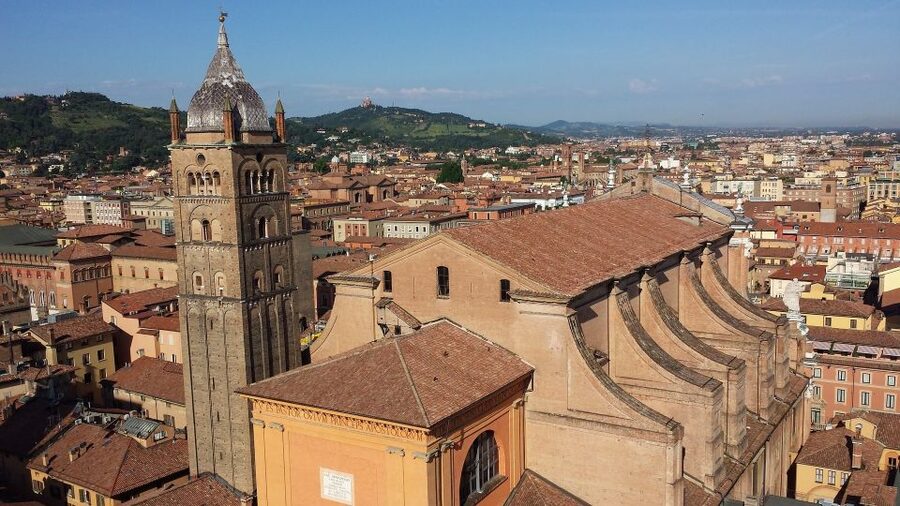
The Basilica of San Petronio is the square’s major visual anchor. Its façade is known for its imposing appearance and unusual character. You can expect the guide to explain its place in the square and the way its exterior fits into Bologna’s mix of Gothic and later architectural influences.
The basilica is also a good reminder that large Italian churches are not always neat, finished packages. The façade’s contrasting treatment makes it more interesting than a simple wall of one style. You will get the most from this stop by looking closely at the lower and upper sections instead of taking only a wide photo.
The tour focuses on walking and sightseeing, not on entering the basilica. Since admissions are excluded, this experience works best if you want an architectural introduction and a reliable orientation before deciding which interiors to visit later on your own.
Piazza Maggiore can also be a busy place, and a two-hour route has to keep moving. If you enjoy long stops for photographs or detailed church interiors, you may find the pace brisk. If you prefer a clear overview with several landmarks, the timing is more useful.
Piazza del Nettuno and Bologna’s civic power
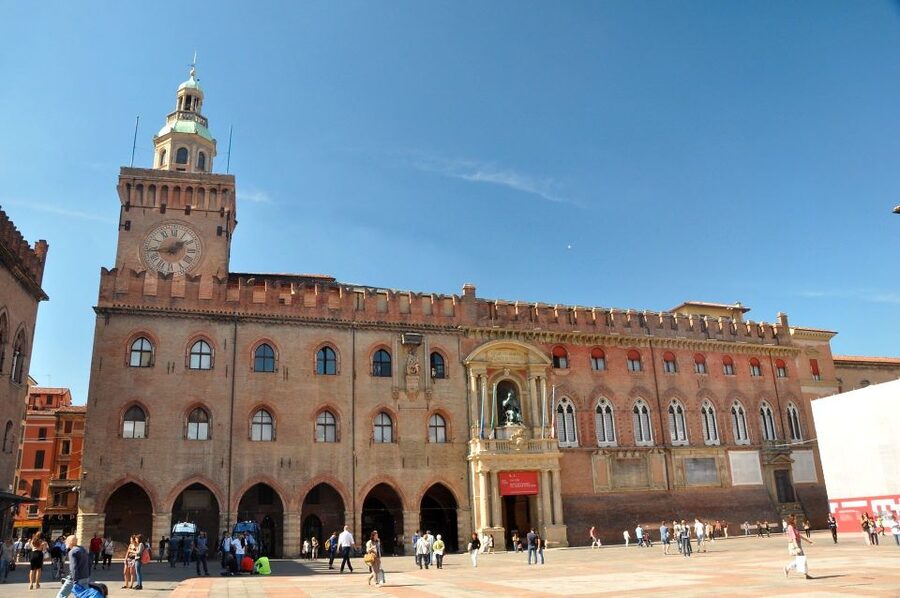
Next comes Piazza del Nettuno, a square surrounded by three important administrative buildings: Palazzo d’Accursio, Palazzo del Podestà, and Palazzo del Capitano del Popolo. This is one of the strongest parts of the walk for understanding how Bologna was governed.
Palazzo d’Accursio is associated with the city administration. Palazzo del Podestà and Palazzo del Capitano del Popolo add to the sense that this was a working center of political authority, not merely an attractive public space. The guide helps connect the façades to their civic roles, giving you a reason to notice the buildings beyond their decorative details.
I particularly like this section because it broadens the tour. You are not looking only at churches and palaces built for display. The route shows the practical side of the city, where government offices and public squares shaped daily life.
The guide also takes you through the area with stops for sightseeing and walking rather than promising extended interior visits. That distinction matters. The value here comes from explanation, comparison, and seeing how the buildings relate to one another.
The Two Towers at Piazza di Porta Ravegnana
The walk then reaches Piazza di Porta Ravegnana and the base of Bologna’s two famous towers, Asinelli and Garisenda. These are among the city’s most recognizable structures, and their dramatic vertical shape gives this part of the route a different mood from the broad squares.
You will learn about the towers’ history and physical features from ground level. The experience does not include a climb, and nothing in the tour information promises interior access. That makes this a good stop for architecture fans who want context and photographs, but not for someone choosing the tour mainly to reach a high viewpoint.
The Garisenda is particularly striking because of its lean, while the Asinelli is the taller partner in the pair. The tour lets you study how these structures dominate the street-level view and how much effort medieval builders put into showing power through height.
The short walk between the major squares and the towers also gives you a useful sense of Bologna’s compact center. You are not being driven from one isolated sight to another. The buildings are encountered in the same urban fabric where they have shaped movement for centuries.
Same streets, read through a different style:
- Naples: San Gaudioso Catacombs Guided Tour
★ 4.7 · 1,105 reviews - Caprarola: Villa Farnese, masterpiece of Renaissance architecture
★ 4.5 · 28 reviews - Best of Bologna in one day : Food, architecture, art and history
★ 5.0 · 27 reviews - City Walk with Architect: Private walking tour of Rome
★ 5.0 · 22 reviews
Corte Isolani, Santa Cecilia, and San Giacomo Maggiore
After the towers, the route continues toward the wooden arch of Corte Isolani. This is a smaller architectural detail, but it adds variety after the monumental squares and towers. I like that the walk does not stop once the headline sights are covered.
Corte Isolani gives the guide a chance to point out a more intimate part of Bologna’s built environment. The wooden arch is specifically included as a sight, so pay attention to the transition from grand civic structures to smaller passages and architectural features.
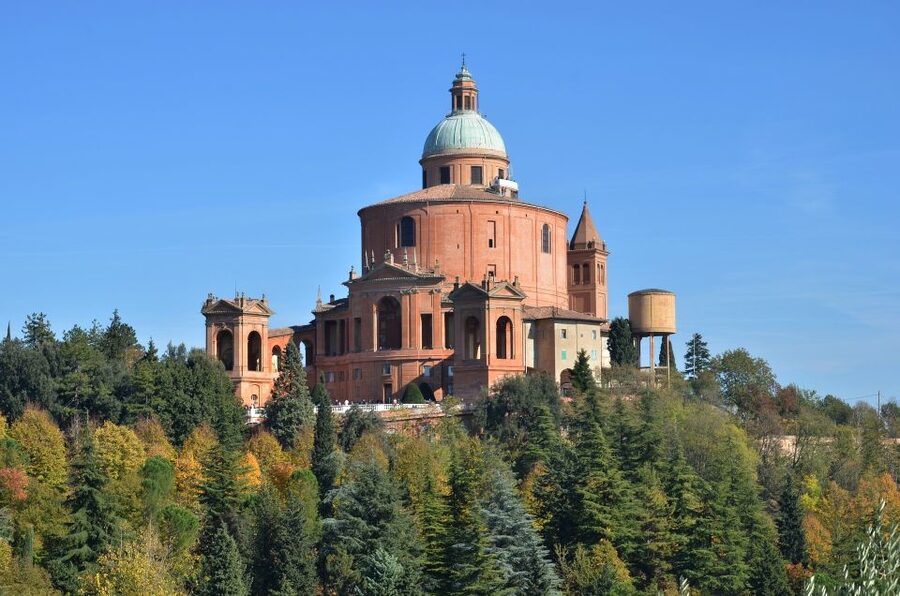
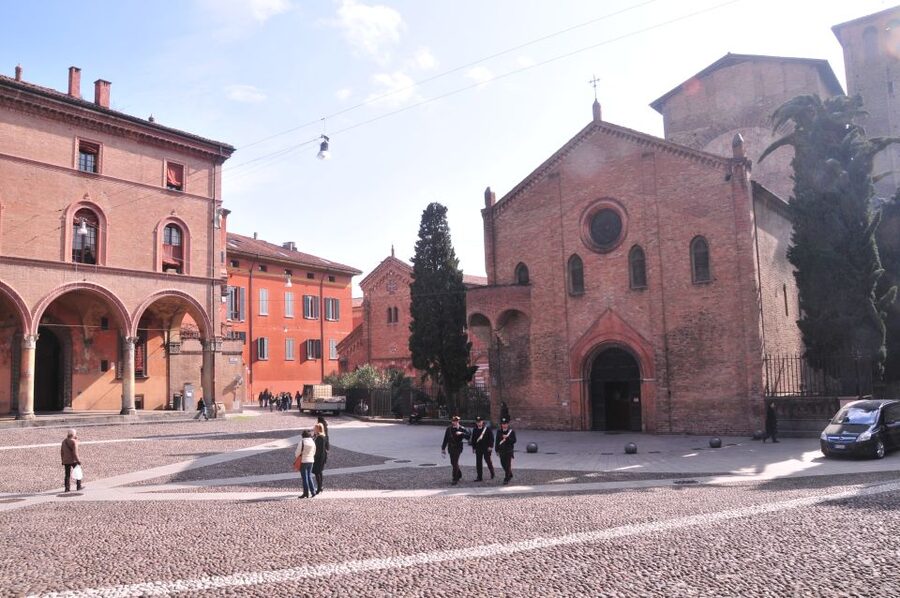
The tour also visits the Oratory of Santa Cecilia and takes in the exterior of San Giacomo Maggiore. Again, the focus is on the outside of the church and the surrounding setting. You should not expect admission to either building to be included in the $186.92 price.
This stretch may appeal most to you if you like seeing how a city changes from major public spaces to quieter architectural corners. It is less about collecting famous names and more about following the route through connected streets, arches, churches, and market lanes.
Because the tour lasts only two hours, the guide cannot provide a long lecture at every stop. A private group helps here. You can ask for more detail on the buildings that interest you and accept a quicker explanation at places that matter less to you.
Ending in the Quadrilatero market area
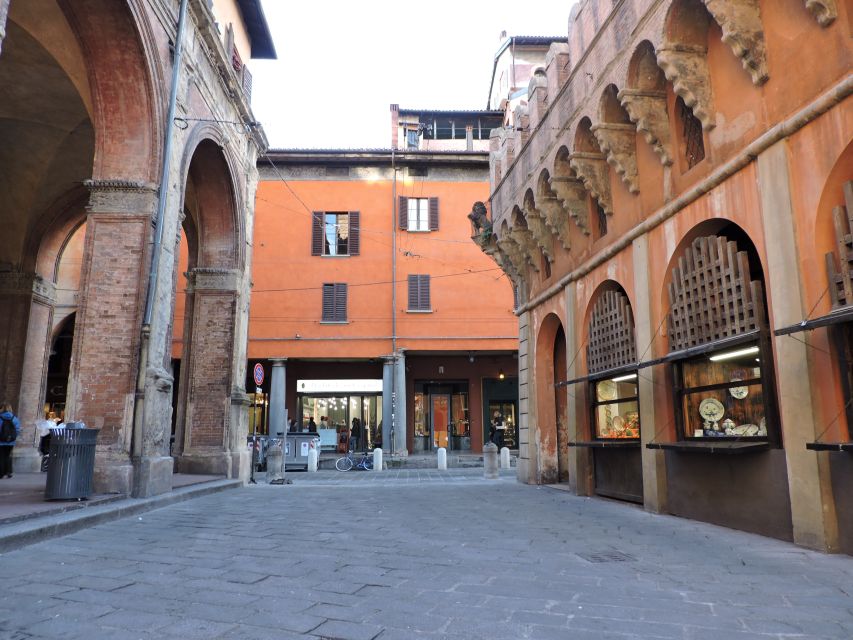
The stated route concludes in the Quadrilatero, Bologna’s area of markets and shops. This is a practical finish because the neighborhood gives you an immediate next step after the architecture walk.
The Quadrilatero is not presented as a separate food tour, so do not book this experience expecting tastings or meal stops. Its value is location and atmosphere. After two hours of looking at palaces, churches, and towers, you can continue exploring the market streets on your own.
There is one logistical point to check before booking. The detailed stop information names the Archiginnasio as both the starting and ending point, while the route description says the walk concludes in the Quadrilatero. Since those areas are connected but the exact finish matters, confirm the end point when you reserve or meet the guide.
That small inconsistency does not change the main experience, but it could affect your next plan. If you have a restaurant reservation, train departure, or museum booking immediately afterward, allow a little flexibility.
What the two-hour format means for you
Two hours is enough to connect Bologna’s main architectural themes, but it is not enough for long interior visits or leisurely time at every monument. You will spend much of the experience walking between stops, listening to explanations, and viewing façades and public spaces.
That short format is useful on a first day in Bologna. It gives you a map of the center and shows you which buildings deserve a later, slower visit. It also suits a packed schedule better than a half-day excursion.
The tradeoff is depth. You may get a clear explanation of many sites, but you will not have time for a detailed examination of every Gothic, Renaissance, Baroque, or Classical element. I would treat this as a focused orientation walk rather than a full architectural seminar.
The meeting point is central, and the tour ends in the same general central area. No transportation is required. The activity is listed as wheelchair accessible, which is important if mobility affects your planning, though you should still confirm the exact route and surface conditions before booking if you need specific assistance.
Languages, private groups, and guide quality
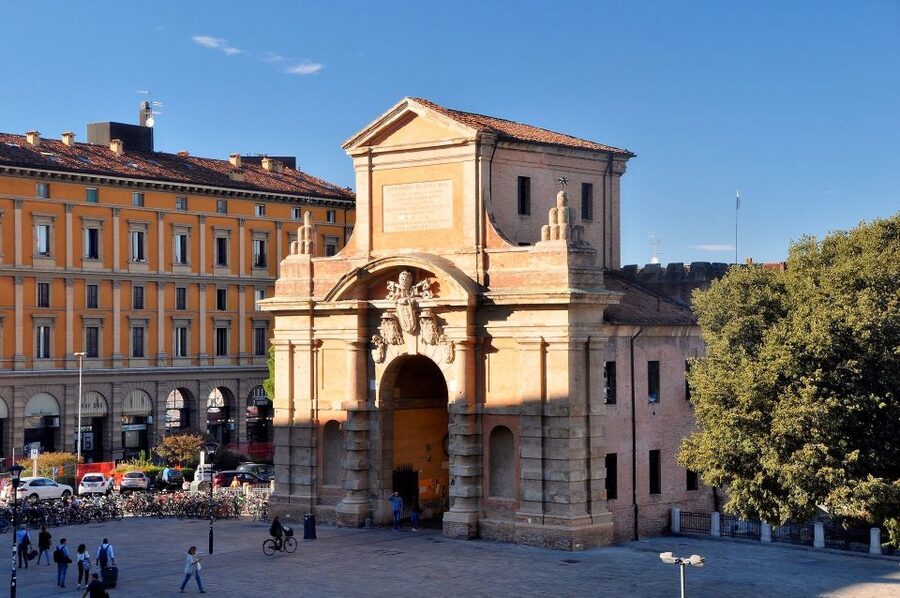
Live guiding is available in Italian, English, French, German, and Spanish. That range makes the tour workable for many visitors, but select your preferred language carefully when checking availability.
The activity is offered as a private group. This is the biggest factor in judging the price. At $186.92 per person, the cost is high for a simple two-hour walk, but private guiding can make more sense if you value personal attention, have a particular architectural interest, or are traveling with a group that wants to ask questions and set the focus.
The available feedback specifically praises Roberta’s informative and engaging approach, along with her willingness to respond to individual requests and questions. That is exactly the quality I would want from this kind of tour. Architecture walks can become a string of dates and names unless the guide connects them to the people and institutions that used the buildings.
The rating is 4.5 from two reviews, which is encouraging but based on a small sample. I would give more weight to the specific praise for Roberta than to the number itself. The service is best suited to you if interaction matters more than simply checking off landmarks.
Price, admissions, and practical value
The listed price is $186.92 per person. That is not a bargain for two hours, especially because no building admissions are included.
The value improves if you want a private experience with a live guide in your language and plan to use the walk to shape the rest of your visit. You are paying for the route, interpretation, and ability to ask questions across several important sites, not for access to monuments.
The value is weaker if you only want to see the outside of the major landmarks and are comfortable reading a guidebook or exploring independently. Bologna’s center is walkable, and the tour does not include a special entry, tasting, transport service, or tower climb.
I would compare the cost with your group size, interests, and schedule. For an architecture-focused visit, a private guide can save you from wandering past significant buildings without understanding them. For a budget trip, the same money may be better spent on separate admissions or food experiences, depending on what matters most to you.
You can reserve now and pay later, and cancellation is free up to 24 hours before the activity for a full refund. Those terms help if your schedule is still changing, but they do not alter the basic price calculation.
Who should book this Bologna architecture walk?
I would recommend it to you if you want a compact introduction to Bologna’s historic center, prefer a private group, and enjoy asking questions rather than following a large crowd. It is also a good match for travelers who want to compare Gothic, Baroque, Renaissance, and Classical elements in one continuous route.
It suits first-time visitors who need orientation before exploring the city independently. The finish near the Quadrilatero also makes it easy to continue with markets and shops, though confirm the precise ending point if timing matters.
I would hesitate if you mainly want interior access, a tower climb, or a food-focused experience. Those are not included. The high per-person price also deserves careful thought if you are traveling alone or watching your budget.
Should you book it?
Book this tour if personal guiding, architecture, and a compact route through Bologna’s main center are worth the cost to you. The strongest reasons are the varied stops, the private format, and the chance to ask a guide such as Roberta for explanations tailored to your interests.
Skip it if you only need a quick list of sights or want included admissions. You can still use the route as a self-guided outline, then choose the buildings and neighborhoods where you want to spend more time.
FAQ
How long does the Bologna architecture walking tour last?
The tour lasts two hours.
Where does the tour begin?
It begins in front of the entrance of the Palace Archiginnasio at Piazza Galvani 1, Bologna BO.
Where does the tour end?
The activity information states that it ends back at the meeting point. The route description also says it concludes in the Quadrilatero area, so confirm the exact end point when booking.
What languages are available?
The live guide can provide the tour in Italian, English, French, German, or Spanish.
Is the tour private?
Yes. The activity is offered for a private group.
Is the tour wheelchair accessible?
Yes, it is listed as wheelchair accessible.
Are building entrance fees included?
No. Entrance to the buildings mentioned is not included.
Does the tour include a climb up the Two Towers?
No tower climb is listed. The route visits the base of the Asinelli and Garisenda Towers.
What is the price?
The listed price is $186.92 per person.
Can I cancel for a full refund?
Yes. You can cancel up to 24 hours in advance for a full refund.
New to the itinerary around Italy
- Vicenza: Palladian Architecture Private Walking Tour★ 3.3 · 3 reviews
- Architectural Milan: Private Tour with a Local Expert★ 4.5 · 2 reviews
- The Architect’s Water★ 4.5 · 11 reviews
- Architectural Florence: Private Tour with a Local Expert★ 5.0 · 3 reviews
- Rione Sanità: tour among street art, architecture, folklore★ 4.5 · 2 reviews
- Palermo Tour: Magnificent Mixture Of Architectural Styles★ 4.2 · 6 reviews
- Discover Coppedè in Rome: Liberty architecture, symbols, and jewels★ 5.0 · 2 reviews
- Borgo Parrini Gaudí-style: a walking tour in a colorful art village★ 4.8 · 9 reviews
Italy Architecture Tours, compared.
Lecce: Baroque Architecture and Underground Walking Tour
Read our review →
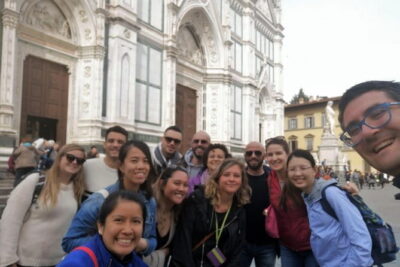
Experience Florence’s Art and Architecture on a Walking Tour
Read our review →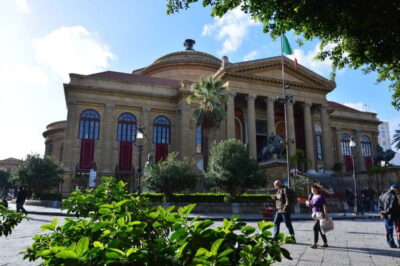
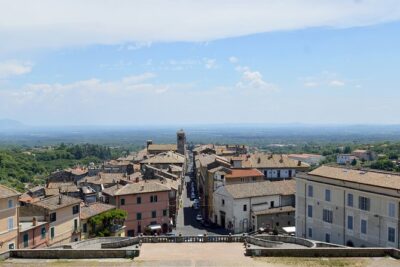
Caprarola: Villa Farnese, masterpiece of Renaissance architecture
Read our review →
Best of Bologna in one day : Food, architecture, art and history
Read our review →
City Walk with Architect: Private walking tour of Rome
Read our review →
Private Tour: Venice Art and Architecture Walking Tour
Read our review →Other lists with this tour