
Review · TOKYO
Private Ueno Park Architecture Walking Tour
Ueno Park is more than cherry trees and museums. This private walk reveals a remarkable architectural conversation between Le Corbusier, Kunio Maekawa, Tadao Ando, and other major designers, with a guide explaining why each building matters. The best moment is seeing Le Corbusier’s museum face Maekawa’s Tokyo Bunka Kaikan, almost as if the two buildings are exchanging ideas.
I like the private format, since you can ask questions and keep the discussion focused on your interests. I also like the mix of major modern buildings and older structures, especially the carefully renewed 1906 children’s library. The guide’s excellent English and careful preparation received strong praise, and Aki is the guide named in the tour provider’s response.
The main point to check before booking is museum admission. Tokyo National Museum’s 1,000-yen entry is included, while the National Museum of Western Art is described as included in the tour overview but marked as not included in the detailed stop information. Ask for confirmation before you pay.
Key points about the Ueno Park architecture walk
- Le Corbusier’s UNESCO-listed museum: Study one of Tokyo’s most important modern buildings, then consider its Western art collection if you have time afterward.
- A private route for your party: You are not sharing the guide with strangers, and morning or afternoon departures let you fit the walk around your Tokyo plans.
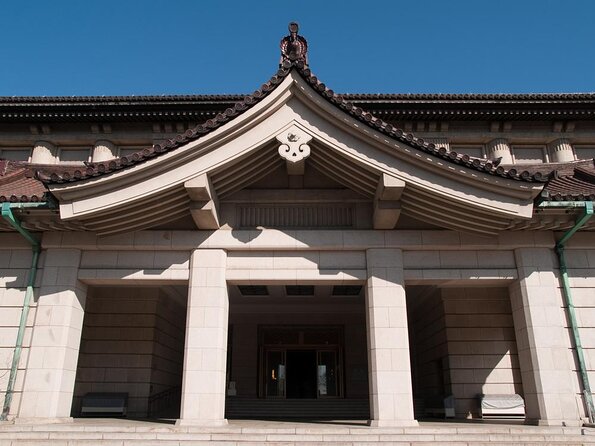
- Four Tokyo National Museum buildings: See Hyokei-kan, Hon-kan, Toyo-kan, and the Gallery of Horyuji Treasure, each tied to a different period between 1908 and 1999.
- A useful architectural comparison: Tokyo Bunka Kaikan sits directly opposite Le Corbusier’s museum, making the relationship between teacher and local student easy to understand.
- A historic library with modern renovation work: The International Library of Children’s Literature combines a 1906 building with newer architectural additions.
- A moderate walking commitment: The tour lasts about three and a half hours and requires enough fitness for a walking route through the park.
Why Ueno Park deserves an architecture tour
Ueno Park is famous for spring blossoms, but its buildings give you another reason to spend time here. The park gathers works from several periods and design traditions in a fairly compact area. That makes it a good place to see how Japan absorbed, adapted, and reworked modern architectural ideas.
I like this approach because you are not simply looking at attractive façades. The guide places each building in relation to the others. Le Corbusier’s design, Maekawa’s work, the preserved library, and the museum buildings create a clear visual lesson in changing styles.
This is not primarily an art or artifact tour. One detailed assessment praised the guide’s English and preparation but made the important distinction that the focus stays on architecture, not on the collections inside the museums. If you want a detailed explanation of paintings, sculptures, or Japanese artifacts, you will need separate time for that.
The private setting matters here. Architecture questions can be specific, and a private guide can spend more time on the features that catch your eye. You can ask about materials, renovation, layout, or the connection between two buildings without waiting for a large group to move on.
More Private Architecture Tours in Japan:
- Private Harajuku Omotesando Architecture Walking Tour
★ 5.0 · 67 reviews - Private Ginza Architecture Walking Tour
★ 5.0 · 50 reviews - Private Harajuku Omotesando Architecture Tour
★ 4.9 · 18 reviews
Starting with Le Corbusier at the National Museum of Western Art
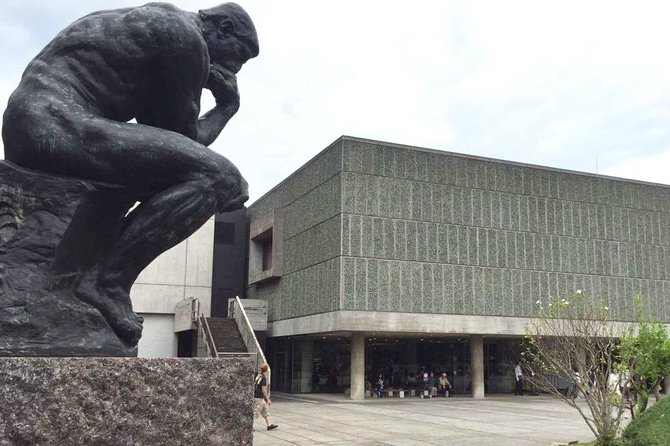
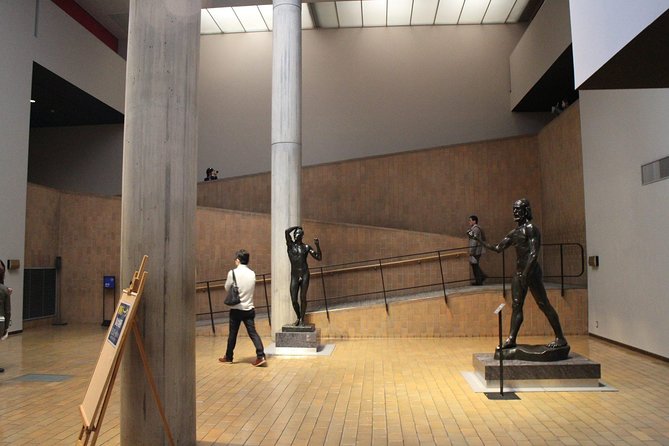
The first major stop is the National Museum of Western Art, designed by Le Corbusier. Its modern architectural value earned it UNESCO World Cultural Heritage status in 2016, giving the building importance beyond its art collection.
You have about 40 minutes here. That is enough time to examine the building with guidance, but it is not a full museum visit. The collection includes Western paintings and sculptures from before the 18th century through the 20th century, yet the tour’s emphasis is on the structure itself.
I would pay close attention to the building’s relationship with the open space around it and to the way the guide explains its modern design. The building is especially useful as an introduction because the next stop, Tokyo Bunka Kaikan, sits directly opposite it.
There is a confusing admission detail. The general tour information says entrance to the National Museum of Western Art is included, but the detailed stop information marks its admission ticket as not included. Since the price is $146.59 per person, confirm this point before booking. The difference may affect your sense of value.
The museum is also worth returning to after the walk if you want to see the collection properly. Do not expect 40 minutes to cover both the architecture and the art in depth.
Reading the conversation between two buildings
Tokyo Bunka Kaikan receives about 15 minutes, so this is a short but useful stop. Kunio Maekawa designed the building, and he was one of three local apprentices of Le Corbusier.
The pairing gives the tour one of its clearest ideas. You can look from Maekawa’s building toward Le Corbusier’s and see how a Japanese architect developed his own response to modern design. The buildings are not treated as isolated objects. Their position opposite each other helps your guide explain influence, adaptation, and contrast.
Because there is no admission fee for this stop, the time is spent outside examining the building and its setting. That also makes it a good place for questions. If you enjoy comparing buildings rather than simply collecting facts, this brief stop may be one of the most rewarding parts of the route.
The short visit can also feel rushed if you want extensive discussion. Fifteen minutes is enough for a focused explanation, but not for a long architectural lecture.
Seeing old and new at the children’s library
The International Library of Children’s Literature offers a change of pace. Built in 1906, it is described as the oldest building in Ueno Park. Its appeal comes from the combination of preservation, renovation, and a newer architectural addition.
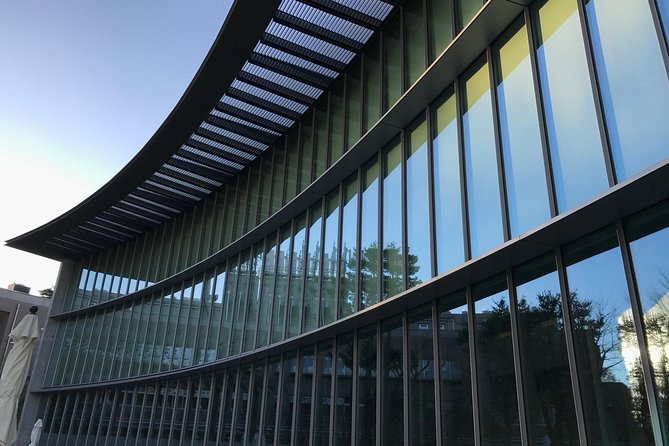
You have about 40 minutes here. That gives your guide time to explain how an older building can be kept in use while receiving careful updates. The newer arc-shaped addition is a key feature, and the contrast between the original structure and later work helps you see renovation as an architectural decision rather than simple maintenance.
I like this stop because it broadens the tour beyond famous modern designers. You see how Tokyo handles an older public building and how new construction can sit beside it without erasing what came first.
The library is free to enter according to the tour details. Still, the tour’s main subject remains architecture. Do not book this expecting a full account of the library’s collections or children’s literature.
More Walking Tours in Japan:
- Tokyo: Shibuya Highlights Walking Tour & Secret View Spot
★ 5.0 · 287 reviews - Tokyo Architecture and Contemporary Art Walking Tour with a local guide
★ 5.0 · 15 reviews - The Official Art Deco Walking Tour by The Miami Design Preservation League
★ 5.0 · 1,580 reviews - Lecce: Baroque Architecture and Underground Walking Tour
★ 4.6 · 1,248 reviews
Four eras at Tokyo National Museum
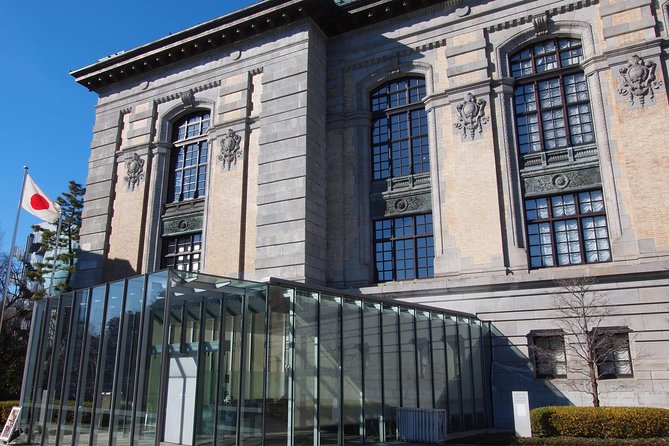
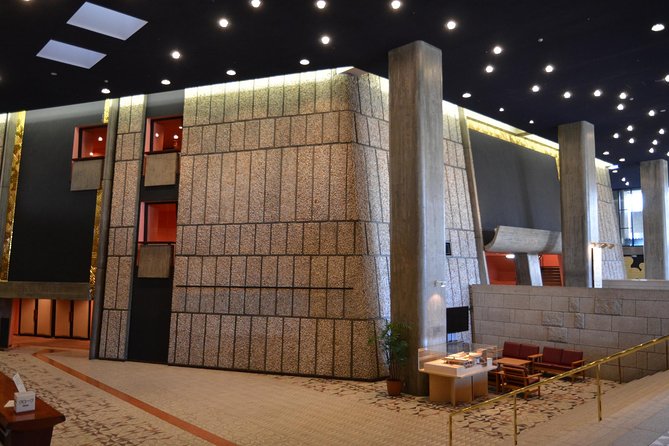
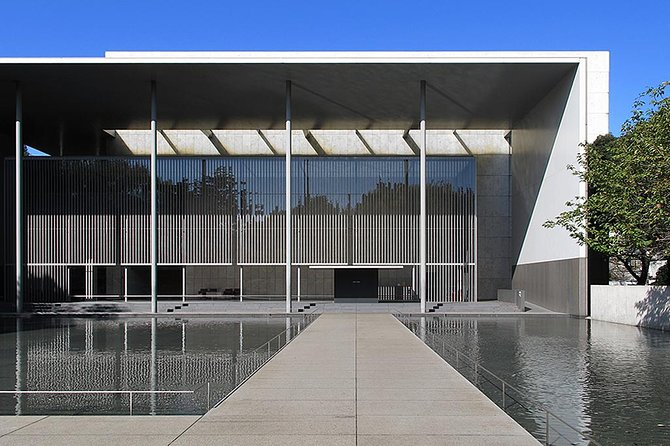
The final major stop is Tokyo National Museum, where the tour examines four important buildings: Hyokei-kan, Hon-kan, Toyo-kan, and the Gallery of Horyuji Treasure. Together they reflect architectural changes from 1908 to 1999.
You have about 30 minutes here. That is a compact visit, but the range of buildings makes it a strong closing section. Instead of studying one design in isolation, you can compare several approaches across almost a century.
The four structures also give the guide a chance to connect architecture with changing historical periods. You will look at the buildings themselves and consider how their forms, purpose, and design language differ.
The 1,000-yen entrance fee is included. That improves the value of the tour, especially if you already plan to visit the museum. Yet 30 minutes is not enough for a serious visit to the museum’s collections. Think of this as an architectural introduction, then return later if you want to see the art and artifacts.
The route ends near JR Ueno Station, beside the ticket machines at the park exit. That is practical for continuing your day, catching a train, or finding food nearby.
What $146.59 per person really buys you
At $146.59 per person, this is not a low-cost sightseeing walk. The value depends on how much you want personal instruction and how strongly you care about buildings.
You are paying for a private professional guide, a three-and-a-half-hour route, admission to Tokyo National Museum, and a drink pause along the way. You also receive a schedule choice, with morning or afternoon departure, and your own group rather than a mixed crowd.
For a solo visitor, the price is harder to justify. For a couple or small group, the private format may make more sense, especially if the cost is shared among several people. Group discounts are available, though the exact reduction is not stated, so check the final booking price.
The price also buys context that is difficult to get from a quick walk through the park. The buildings are not all marked with enough information to explain their connections, and the guide’s role is to make those links clear.
I would book this for an architecture-focused day, not as a general Ueno Park introduction. If your main goal is cherry blossoms, museum collections, or a broad Tokyo sightseeing route, you can probably spend your money elsewhere.
The tour is booked an average of 44 days ahead, which suggests that planning early is sensible, especially if you need a particular morning or afternoon. Free cancellation is available up to 24 hours before the start time.
Timing, meeting points, and walking needs
The tour begins at 7-chōme-7-7 Uenokōen in Taito City and ends beside the ticket machines at JR Ueno Station. The start and finish are in the Ueno area, and the tour is near public transportation.
You should allow about three and a half hours. The stated stop times add up to roughly two hours, leaving time for walking, explanations, and the drink pause. Wear comfortable shoes and expect a moderate level of physical activity.
Morning departure may suit you if you want to continue through Ueno’s museums afterward. Afternoon departure may work better if you prefer a slower start or want to visit another Tokyo sight first. Since both options are offered, choose based on your wider day rather than assuming one is always better.
Hotel pickup and drop-off are not included. You need to reach the starting point yourself, so check the exact meeting location before leaving your hotel.
The mobile ticket is convenient, and confirmation is provided when you book. The private format means only your own party participates, which is useful if you want to ask questions freely or avoid the pace of a large group.
Who will get the most from this tour
I would recommend this experience to anyone who notices buildings while walking through a city and wants more than a quick photograph. It is especially suitable if you have an interest in modern architecture, Japanese design, museum buildings, preservation, or the influence of Le Corbusier.
It also works well for a small group with different levels of knowledge. A good guide can explain the basics without making the discussion feel like a classroom, while still answering more detailed questions.
You should be comfortable walking for several hours and standing during outdoor explanations. The tour is not presented as a strenuous hike, but it does require moderate physical fitness.
I would be more cautious if you want a full museum experience. The National Museum of Western Art and Tokyo National Museum contain substantial collections, but the tour gives you only limited time inside each. The guide’s attention stays on architecture, which is a strength for one audience and a limitation for another.
The high overall rating of 4.9 from eight ratings supports the tour’s strongest points: a well-planned route, clear English guidance, and a focused architectural theme. The single detailed assessment rated it four out of five and confirmed the key tradeoff: it is informative and well prepared, but it is not an art or artifact tour.
Should you book the Ueno Park architecture walk?
Book this private tour if you want to understand why Ueno Park’s buildings matter, prefer personal guidance, and are willing to pay for a focused experience. The comparison between Le Corbusier’s museum and Maekawa’s Tokyo Bunka Kaikan, along with the old children’s library and four Tokyo National Museum buildings, gives the walk a strong arc.
Skip it if your priority is seeing as many museum collections as possible, or if $146.59 per person feels too high for a guided walk. You will also want to confirm the National Museum of Western Art admission detail before booking.
For the right visitor, this is a thoughtful way to see Ueno Park. You leave with a better eye for the buildings around you, not just a list of museum names.
FAQ
How long does the Ueno Park architecture tour last?
The tour lasts approximately 3 hours and 30 minutes.
Is this a private tour?
Yes. Only your party participates, with a private professional guide.
What departure times are available?
You can choose a morning or afternoon departure.
What buildings are included on the route?
The route includes the National Museum of Western Art, Tokyo Bunka Kaikan, the International Library of Children’s Literature, and Tokyo National Museum.
Is Tokyo National Museum admission included?
Yes. The 1,000-yen entrance fee to Tokyo National Museum is included.
Is admission to the National Museum of Western Art included?
The tour information gives conflicting details. The overview says admission is included, while the detailed stop information marks the admission ticket as not included. Confirm this before booking.
Where does the tour start and finish?
It starts at 7-chōme-7-7 Uenokōen in Taito City and ends beside the ticket machines at the park exit of JR Ueno Station.
Can I cancel for a full refund?
Yes. You can cancel at least 24 hours before the start time for a full refund. Cancellations or changes made less than 24 hours before the start time are not accepted for a refund.
New to the itinerary around Japan
- Tokyo Architecture and Contemporary Art Walking Tour with a local guide★ 5.0 · 15 reviews
- Small-Group Architecture Tour in Ginza, Tokyo★ 5.0 · 6 reviews
- Japanese Garden & Western Architecture: Akasaka exploration tour★ 5.0 · 9 reviews
- [Aomori Prefecture] Tour the history and architecture in Towada City, the art city★ 5.0 · 6 reviews
- Private Ueno Park Architecture Tour★ 5.0 · 5 reviews
- Private Ginza Architecture Tour★ 5.0 · 3 reviews
- Kyoto: Nijo Castle & Gardens 2-Hour Guided Tour★ 4.5 · 2 reviews
- Private Edo-Tokyo Open Air Architectural Museum Tour★ 4.8 · 15 reviews
Private Architecture Tours, compared.
Sagrada Familia & Gaudi Tour Private or Small Group with Tickets
Read our review →
Barcelona 1.5h Private Old Town, Gothic & Ramblas Walking Tour
Read our review →
Treasures of Barcelona: Private Gaudi Walking Tour
Read our review →
Sagrada Familia & Gaudi Guided Tour Private or Small Groups
Read our review →
Best of Chicago: Architecture & Highlights City Private Tour
Read our review →
Private Harajuku Omotesando Architecture Walking Tour
Read our review →
Private Santa Barbara History and Architecture Walking Tour
Read our review →
Private Barcelona Modernism and Gaudí Walking Tour
Read our review →Other lists with this tour