
Review · TOKYO
Japanese Garden & Western Architecture: Akasaka exploration tour
A 400-year-old garden, a palace used for visiting presidents and kings, a Meiji-era picture gallery, and one of Tokyo’s grandest tree-lined avenues make this a fine way to see a quieter side of the capital. The tour moves through Akasaka’s gardens and formal landmarks, rather than the usual scramble of Shibuya crossings and department stores.
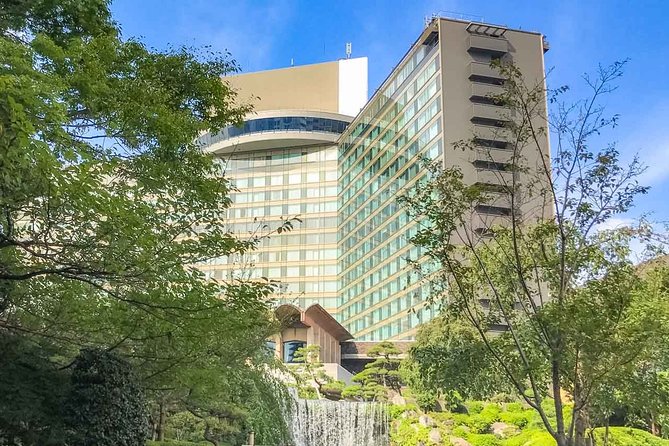
I like the private format, which gives you room to ask questions and adjust the pace. I also like the mix of nature and history: Hotel New Otani’s garden offers waterfalls and seasonal plants, while Akasaka Palace gives the day a grand architectural centerpiece. The main consideration is cost. The advertised price is $82.42 per person, but Akasaka Palace adds ¥2,000, and you should be ready for plenty of walking.
Key Points
- A 400-year-old Japanese garden: See waterfalls, seasonal plants, and a pond beside Hotel New Otani.
- Akasaka Palace admission costs extra: Allow ¥2,000 per person for the state guesthouse.
- A private guide for your group: Ask questions freely and request a different finishing point if needed.
- A useful history lesson: The route connects the Tokugawa shogunate, the Edo period, the Meiji era, and present-day Tokyo.
- A polished finish in Aoyama: Walk beneath the ginkgo trees of Jingu Gaien near Gaiemmae Station.
- Bring some cash: Not every stop accepts credit cards.
Why Akasaka Makes a Good Half-Day Walk
Akasaka is a useful middle ground between Tokyo’s high-rise business districts and its older garden and shrine traditions. You get polished state buildings and broad avenues, but also quiet paths, ponds, seasonal color, and small historical details that are easy to miss on your own.
The route takes about three to four hours. The listed stop times add up to roughly two and a half hours, leaving time for walking, explanations, photographs, and changes between locations. This is not a bus tour. You will be on your feet, so wear comfortable shoes and clothing.
The private setup matters here. A guide can slow down at the garden, explain a feature that catches your eye, or spend more time on the parts of Japanese history you care about. Guides who have led this experience include Mutsuko Takano, Sayaka, Ume, and Ayako. Guide assignments can change, but the tour is built around personal explanation rather than a fixed audio script.
The history thread is one of the tour’s best features. You begin with a garden linked to the long Tokugawa period, move to an official palace used by the modern Japanese state, then visit a museum focused on the Meiji era. The final stop brings you into a public avenue that represents modern Tokyo at its most graceful.
More Architecture Tours around Japan:
- Private Harajuku Omotesando Architecture Walking Tour
★ 5.0 · 67 reviews - Private Ginza Architecture Walking Tour
★ 5.0 · 50 reviews - Private Harajuku Omotesando Architecture Tour
★ 4.9 · 18 reviews
Hotel New Otani Garden and Its Four Centuries
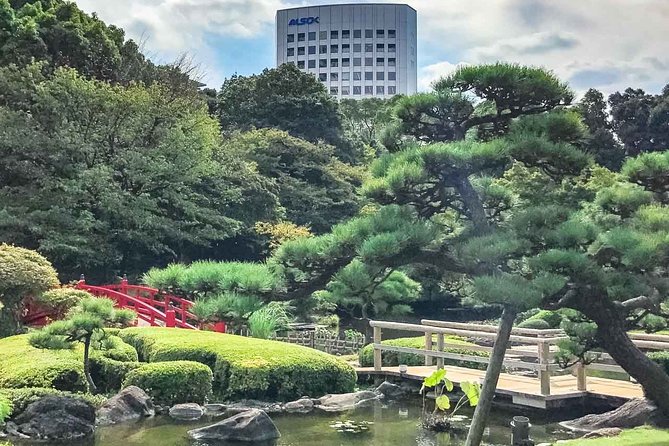
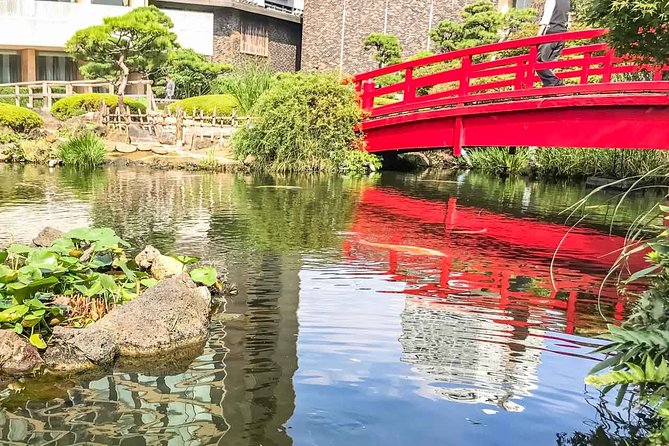
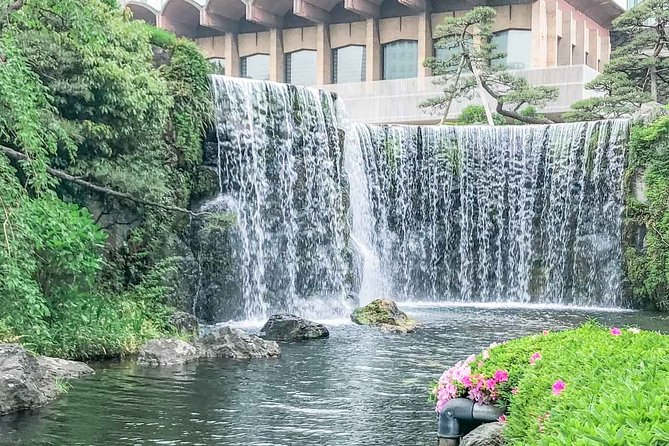
The first stop is the Japanese garden at Hotel New Otani, where you spend about 40 minutes. Its history reaches back 400 years, giving you an immediate connection to the older landholding and samurai world that shaped Tokyo before the city became a forest of towers.
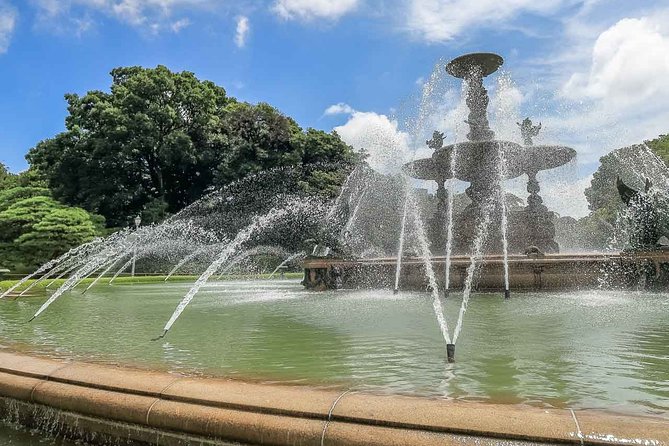
The garden includes waterfalls, a pond, and seasonal plants. The setting works especially well for travelers who want a calm start to the day. You can pause beside the water while your guide explains the garden’s place in Japanese culture, or simply enjoy a few quiet minutes away from traffic.
Timing affects what you see. Spring may bring cherry blossoms, summer offers thick green growth, and autumn brings changing color. Seasonal illumination is also part of the garden’s appeal, though the exact appearance depends on the date and time of your visit.
The garden is listed with free admission, but do not confuse that with a completely free tour. You are paying for the guide and private organization, while the garden itself does not add an entrance fee. This distinction helps when comparing the price with a self-guided walk.
The garden is also a good place to ask about tea, gardens, and Japanese customs. One guide helped arrange a reservation at an authentic tea shop for a visitor, though tea is not included in this experience. If that interests you, ask early rather than assuming a tea stop is built into the route.
Akasaka Palace: The Day’s Main Architectural Prize
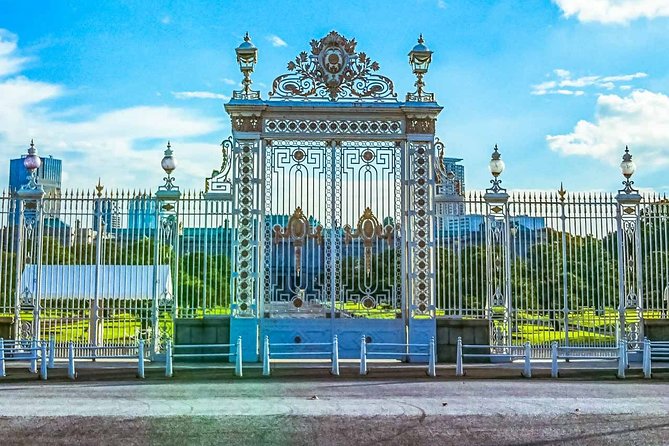
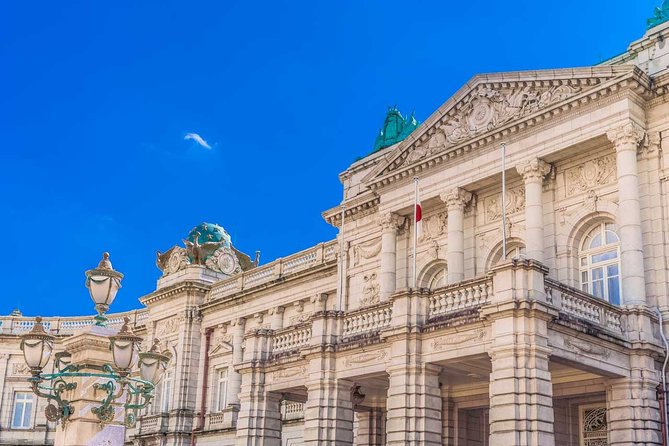
Akasaka Palace takes about 50 minutes and is the most important paid stop. The palace welcomes foreign dignitaries, including kings and presidents, and its exterior has the formal scale of a European-style castle.
The building offers a sharp contrast with the Japanese garden. At the garden, the experience is shaped by water, plants, rocks, and quiet movement. At Akasaka Palace, the mood is ceremonial and grand. You get a look at the setting used when Japan receives important international visitors, which gives the architecture a clear purpose beyond decoration.
The entrance fee is ¥2,000 per person and is not included in the tour price. That additional cost is listed clearly as the main expense, so budget for it before booking. The tour price and admission together make more sense for a private experience than for a basic sightseeing walk, but a solo visitor should consider the total carefully.
Akasaka Palace opened to the public in 2016, making it a relatively recent addition to Tokyo sightseeing. Access can depend on temporary closures or official arrangements. If the palace cannot receive visitors on your date, the route may change to an alternative location.
This is the stop where a guide’s historical context is most useful. Without explanation, you see an impressive facade and formal grounds. With a guide, you can place the building within Japan’s shift from the Tokugawa shogunate to the modern state and understand why it remains important for diplomacy.
Meiji Memorial Picture Gallery and the Era of Change
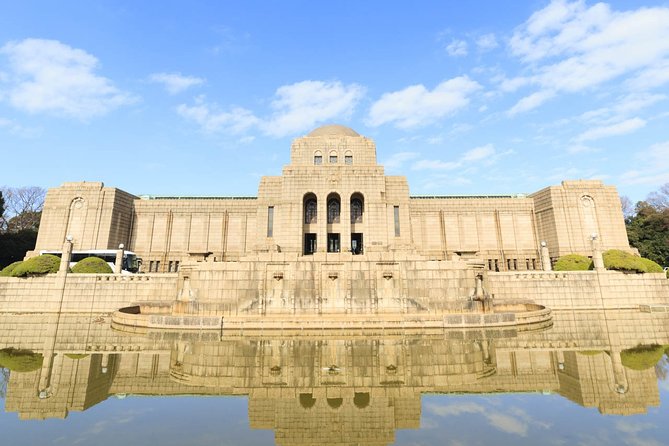
The Meiji Memorial Picture Gallery takes about 40 minutes. Its dome-shaped building focuses on the Meiji era, a period when Japan changed rapidly in government, industry, military organization, and international relations.
Inside, paintings and murals present scenes connected with the era. The building itself is part of the experience, and the view from the entrance toward the outer garden and Aoyama Street helps connect the museum with the wider district.
This stop gives the tour a useful change of pace. The Japanese garden reflects older traditions, and Akasaka Palace shows official ceremony. The gallery asks you to look at how Japan presented its own transformation through art and public memory.
The admission fee is not included in the supplied cost details, so confirm the amount with your guide or at the entrance. The tour notes an estimated total of ¥2,000 per person for admission, specifically listing that amount for Akasaka Palace. Since visited sites can change, it is sensible to carry extra yen rather than rely on a card.
If you have a strong interest in Japanese history, this is likely to be one of the most rewarding stops. The guide can explain the background behind the images, which is more useful than simply walking through a room of historical scenes without context.
Same streets, read through a different style:
- Tokyo: Shibuya Highlights Walking Tour & Secret View Spot
★ 5.0 · 287 reviews - Tokyo Architecture and Contemporary Art Walking Tour with a local guide
★ 5.0 · 15 reviews - Private Edo-Tokyo Open Air Architectural Museum Tour
★ 4.8 · 15 reviews - Private Ueno Park Architecture Walking Tour
★ 5.0 · 8 reviews
Ginkgo Trees Along Jingu Gaien
The final stop is the Jingu Gaien ginkgo tree-lined street, with about 20 minutes set aside for the walk. It is one of the classic Tokyo views: a broad avenue framed by rows of ginkgo trees.
The avenue changes with the seasons. Spring and summer bring greenery, while autumn is known for the golden color associated with ginkgo leaves. The route ends near Gaiemmae Station, putting you in Aoyama rather than returning you to Akasaka-Mitsuke.
That one-way design is practical if you plan to continue sightseeing in Aoyama. It is less convenient if you need to return to your hotel near the starting station, so plan your next move before the tour begins. The finishing point can be changed if you discuss it with the guide.
The short stop works well as a final photo opportunity, but it is not a long park visit. If you want a slow walk beneath the trees, ask whether the schedule allows more time. The private format gives you a better chance of making that request than a large scheduled group would.
The History Thread: From Tokugawa Rule to Modern Tokyo
The tour’s strongest teaching point is the way several periods appear within a small part of the city. The Tokugawa shogunate shaped the Edo period, when Tokyo was known as Edo and political power was concentrated under the shogun. A garden connected to that older world gives you a physical sense of the city before modernization.
Akasaka Palace then shifts the focus to the modern Japanese state. It is not an Edo-period residence, but its official role shows how Japan presents itself to the outside world today. The palace links architecture with diplomacy and national ceremony.
The Meiji Memorial Picture Gallery adds the era of rapid change. By the time you reach Jingu Gaien, you are looking at a public Tokyo that combines planned boulevards, formal trees, cultural institutions, and modern transport.
You do not need a background in Japanese history to enjoy this progression. The guide’s job is to connect the places in plain language. Past guides have included Ayako, who was described as calm and flexible despite being new to guiding, and Mutsuko Takano, who led the tour in English. Sayaka has also led the route and helped explain Japanese culture to people with many questions.
What the $82.42 Price Really Buys
At $82.42 per person, this is not the cheapest way to see the four locations. The value comes from the private guide, historical explanation, and the convenience of having the stops arranged into one route.
The advertised price does not cover all expenses. The tour data lists an estimated ¥2,000 per person for admission, with Akasaka Palace specifically priced at ¥2,000. Food is not included, and this is not a dining experience. Transportation costs for the guide are covered, but the general instructions say customers are responsible for transportation and other costs incurred at visited spots.
For a solo visitor, the price may feel high compared with visiting the garden and ginkgo avenue independently. For a couple, family, or small group, the private format becomes easier to justify because the guide’s attention is shared only with your party. Group discounts are available, so larger parties should check the final per-person rate.
The tour is booked an average of 164 days ahead, which suggests planning matters. I would reserve early if your dates are fixed, especially during seasonal garden displays or popular travel periods.
Free cancellation is available up to 24 hours before the local start time. Changes or cancellations inside that window are not accepted for a refund.
Walking, Weather, and Practical Details
You meet at Akasaka-Mitsuke Station, at 3-chome-1-6 Akasaka in Minato City. The tour ends near Gaiemmae Station, at 2-chome-7-16 Kitaaoyama. Since the start and finish are different, this works best when you are happy to continue exploring from Aoyama.
The route is near public transportation, and most people can participate. Still, expect substantial walking and time outdoors. Comfortable shoes matter more than fashionable ones, especially if you want to enjoy the garden rather than rush through it.
Carry cash. Some places on the route do not accept credit cards, and the palace admission is an extra expense. The tour does not include lunch, drinks, or a scheduled tea experience.
Bad weather can affect transportation, destinations, and the walking route. Temporary closures can also lead to substitute stops. Ask your guide at the start of the day if any changes are expected, and keep your schedule flexible.
A mobile ticket is provided, and confirmation arrives when you book. These details make the tour easy to organize, but they do not remove the need to check the meeting point carefully. Akasaka-Mitsuke and Gaiemmae are different stations, and the tour does not loop back to the start by default.
Who Will Enjoy This Akasaka Tour
I would choose this experience if you want Tokyo history explained as you walk, rather than simply collecting photographs. It suits first-time visitors who want a gentle introduction to Japanese gardens, official architecture, and the Meiji era without spending a full day in museums.
It is also a good match for repeat visitors who have already seen the major central sights. Akasaka offers a different rhythm, with more formal spaces and quieter paths than the busiest parts of Tokyo.
Families and small groups may appreciate the private arrangement, since you can ask questions without worrying about a large group’s pace. History-minded visitors will get the most from the palace and picture gallery, while garden lovers may value the Hotel New Otani stop most.
I would think twice if you dislike walking, want a food-focused tour, or prefer a fully independent day. The tour includes no meal, admission costs extra, and the schedule may change with weather or temporary closures.
Should You Book It?
Book this tour if you want a personal guide to connect Tokyo’s garden traditions, diplomatic architecture, and Meiji-era culture in one manageable outing. The combination of the Hotel New Otani garden and Akasaka Palace is the main draw, while the picture gallery and ginkgo avenue round out the historical arc.
The best value comes when two or more people share the private experience and actively ask questions. Solo visitors should compare the total price, including the ¥2,000 palace fee, with the cost of visiting the free sites independently.
Choose it for history, gardens, and a calm walking pace. Skip it if you want nightlife, shopping, or a food tour. For the right visitor, this is a thoughtful way to see a more formal and less frantic side of Tokyo.
FAQ
How long does the Akasaka exploration tour last?
The tour lasts approximately three to four hours.
Where does the tour begin?
It begins at Akasaka-Mitsuke Station, at 3-chome-1-6 Akasaka, Minato City, Tokyo 107-0052.
Where does the tour finish?
It finishes near Gaiemmae Station, at 2-chome-7-16 Kitaaoyama, Minato City, Tokyo 107-0061. You can ask the guide about changing the finishing point.
Is the tour private?
Yes. Only your group participates in the private tour.
Is Akasaka Palace admission included?
No. Akasaka Palace admission costs ¥2,000 per person and is paid separately.
Is food included?
No. The tour does not include a dining stop, meals, or drinks.
Should I bring cash?
Yes. Some places visited during the tour do not accept credit cards.
What happens if the weather is bad?
Transportation, destinations, and routes may change if weather conditions are poor.
Can I cancel for a full refund?
Yes, if you cancel at least 24 hours before the experience start time. Cancellations or changes made less than 24 hours beforehand are not refunded or accepted.
New to the itinerary around Japan
- Tokyo Architecture and Contemporary Art Walking Tour with a local guide★ 5.0 · 15 reviews
- Small-Group Architecture Tour in Ginza, Tokyo★ 5.0 · 6 reviews
- Private Ueno Park Architecture Walking Tour★ 5.0 · 8 reviews
- [Aomori Prefecture] Tour the history and architecture in Towada City, the art city★ 5.0 · 6 reviews
- Private Ueno Park Architecture Tour★ 5.0 · 5 reviews
- Private Ginza Architecture Tour★ 5.0 · 3 reviews
- Kyoto: Nijo Castle & Gardens 2-Hour Guided Tour★ 4.5 · 2 reviews
- Private Edo-Tokyo Open Air Architectural Museum Tour★ 4.8 · 15 reviews
Japan Architecture Tours, compared.
Shibuya Highlights Walking Tour & Secret View Spot
Read our review →
Private Harajuku Omotesando Architecture Walking Tour
Read our review →
Private Edo-Tokyo Open Air Architectural Museum Tour
Read our review →
Tokyo Architecture and Contemporary Art Walking Tour with a local guide
Read our review →
[Aomori Prefecture] Tour the history and architecture in Towada City, the art city
Read our review →
Other lists with this tour