
Review · TOKYO
Tokyo Architecture and Contemporary Art Walking Tour with a local guide
Tokyo is easiest to understand when you look up. This private tour links Tokyo’s boldest buildings with its art districts, fashion streets, and famous public spaces, from Ginza and the Tokyo International Forum to Omotesando, Shibuya, and Daikanyama. It gives you a useful shortcut through a city that can otherwise feel scattered.
I like the private format, which lets your guide adjust the pace and respond to your interests. I also like the mix of famous places and quieter design districts, plus guides such as Tomoya, Richie, Riley, and Masa, who have led guests through the city in English. The main drawback is physical: expect a long day, frequent train rides, and roughly 13,000 to 20,000 steps for some groups.
Key points to know before booking
- Seven very different Tokyo districts: You move from luxury Ginza and art-filled Roppongi to youth-oriented Harajuku and laid-back Daikanyama.
- A private day with a local guide: Only your group participates, with space to request shops, buildings, food, or extra time at a favorite stop.
- Public transport is part of the experience: Trains and subway rides connect the districts, though some of your day will be spent underground.
- Architecture is the main lens: The tour focuses on striking modern buildings, design details, galleries, museums, and the way each neighborhood uses space.
- Plan for a serious walk: The full route can reach 13,000 to 20,000 steps, especially in warm weather.
- A useful group value: The price is $424.58 for up to nine people, not per person.
Tokyo architecture, seen one neighborhood at a time
This is not a tour built around a single museum or one famous building. It is a full-day city walk that uses architecture to connect several sides of Tokyo.
You begin in Tokyo, with pickup offered and the meeting arrangement handled with your guide. The information describes meeting outside your hotel or at a convenient central point, so confirm the exact location when your booking is accepted. Confirmation is sent within 48 hours, subject to availability.
The day lasts about six to eight hours and generally runs between 8:30 a.m. and 3:00 p.m. The schedule is ambitious. You will use local trains and subway lines to move between districts, then walk through each area. Your guide can explain what you are seeing as you go, rather than saving all the commentary for one formal stop.
That matters in Tokyo. A building may look like a polished shop, office, or department store at first glance, but the architect, materials, shape, and use of a tight urban site often tell a better story. This tour gives you a trained set of eyes while still leaving room for ordinary city life around the buildings.
More Walking Tours in Japan:
- Tokyo: Shibuya Highlights Walking Tour & Secret View Spot
★ 5.0 · 287 reviews - Private Harajuku Omotesando Architecture Walking Tour
★ 5.0 · 67 reviews - Private Ginza Architecture Walking Tour
★ 5.0 · 50 reviews
Ginza: luxury shops and sharp modern design
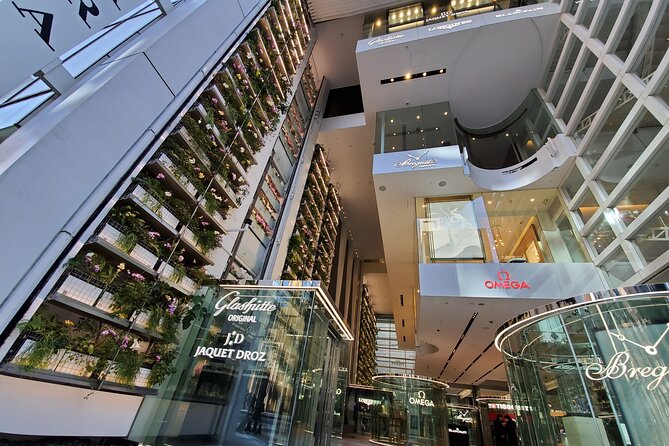
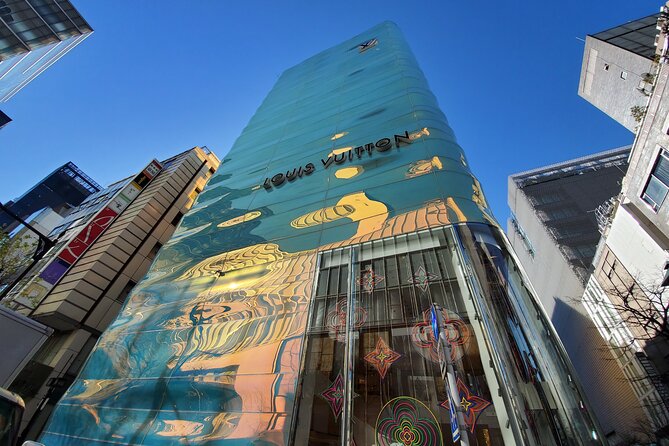
Ginza is the natural opening act. It is one of Tokyo’s best-known districts, packed with boutiques, Japanese stores, small galleries, and architecture by leading designers.
You should expect this part to focus on the relationship between retail and design. In Ginza, the storefront is often the building. A narrow facade, unusual glasswork, or carefully framed entrance can be as important as what is sold inside.
The scheduled time is about one hour, and there is no separate admission charge listed. That makes it a flexible start. You can walk, look closely at facades, and ask your guide about buildings that catch your eye without needing to rush through a ticketed attraction.
Ginza can also feel polished and commercial. If your main interest is old Tokyo, this section may not be your favorite. Its value is in seeing how Japan’s luxury brands use architecture to create identity on a crowded city block.
Tokyo International Forum: a short stop with a big structure
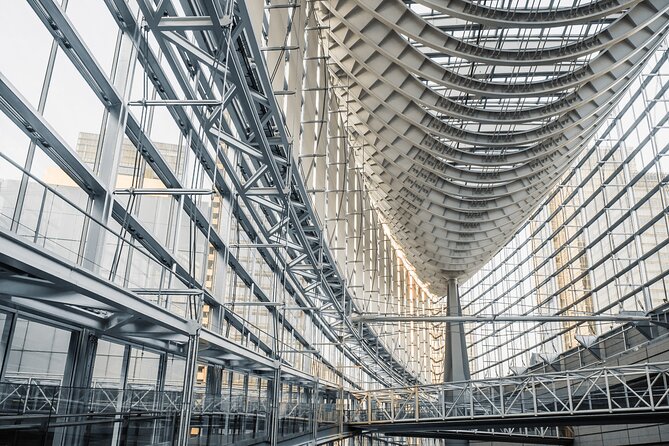
The Tokyo International Forum receives only about 15 minutes, but it is one of the day’s most memorable architectural sights. Designed by Rafael Viñoly, the Uruguay-born American architect, this postmodern convention and art center is known for its large, dramatic form.
The short timing suggests that this is an exterior-focused stop or a quick architectural look, rather than a long visit inside. You will have time to take in the scale, shape, and setting, then move on to the next district.
I like this kind of stop because it breaks up the retail-heavy feel of Ginza. It also shows how Tokyo can fit a major public building into a dense central area. Do not expect a full museum visit here. Think of it as a concentrated architecture lesson.
Roppongi: Tokyo’s art triangle
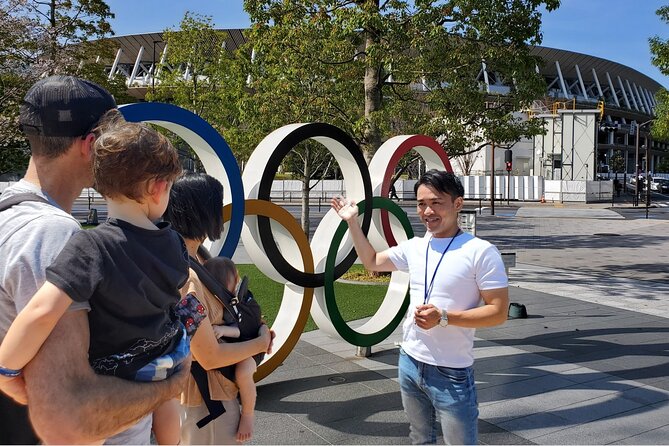
Roppongi shifts the day from shopping and city structure toward contemporary art. The district contains three major art institutions known as the Art Triangle: the National Art Center, Mori Art Museum, and Suntory Museum of Art.
The route also includes galleries and the Fuji Film area. Your guide can help you understand how these cultural venues fit into a neighborhood that is known for major towers, international businesses, restaurants, and nightlife.
The listed time is about one hour. No museum admission is included in the tour information, and the schedule does not promise entry into any particular museum. That is important. You are visiting Roppongi as an art district, not buying a museum pass with guaranteed time inside each institution.
If one of the museums has an exhibition you especially want to see, ask your guide about the timing before the day begins. The private format may allow some adjustment, but the tour also has several other districts to cover.
More Guided Tours around Japan:
- Kyoto: Nijo Castle & Gardens 2-Hour Guided Tour
★ 4.5 · 2 reviews - Chicago River: 1.5-Hour Guided Architecture Cruise
★ 4.8 · 8,046 reviews - Naples: San Gaudioso Catacombs Guided Tour
★ 4.7 · 1,105 reviews - Park Güell: Guided Tour with Optional Gaudí Experience Entry
★ 4.1 · 832 reviews
Omotesando: where fashion meets architecture
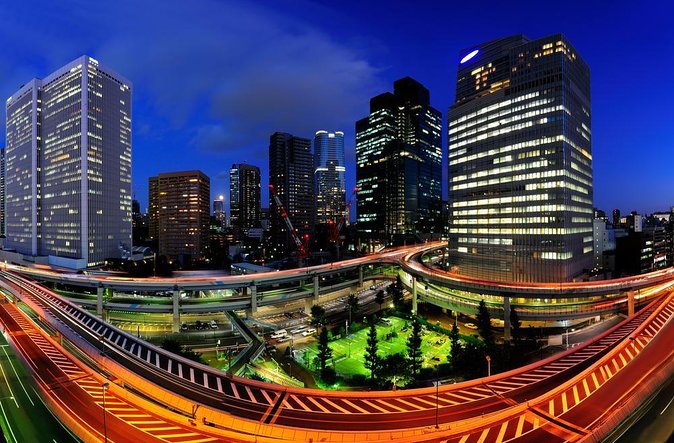
Omotesando is one of the strongest parts of the tour for people who like buildings as much as art. The broad shopping area is lined with fashion and jewelry stores, and many of the stores occupy buildings designed to attract attention from the street.
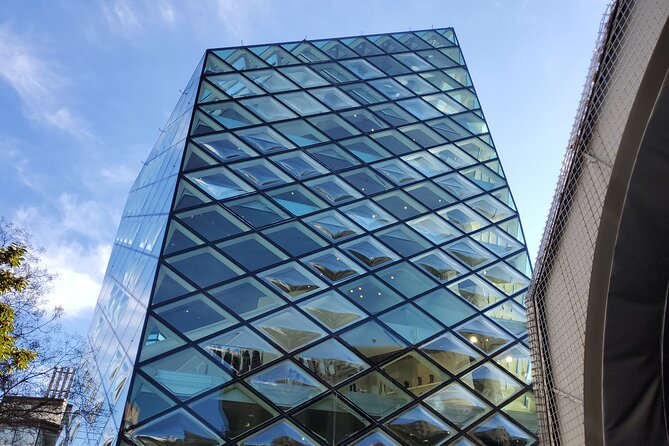
The route begins at the Prada flagship store, designed by Swiss architects Herzog and de Meuron. That gives you a clear example of the tour’s approach: a familiar shopping destination becomes a lesson in structure, glass, angles, and branding.
You get about an hour here. That is enough to walk the main stretch and compare several buildings, though not enough to study every storefront in detail. Since the neighborhood is also a shopping area, you can combine architecture with browsing if that interests you.
This is a good place to pay attention to scale. Tokyo’s best-known fashion buildings are not simply boxes with signs attached. Their windows, surfaces, and unusual shapes are part of the shopping experience.
Takeshita Street: Tokyo’s youthful side
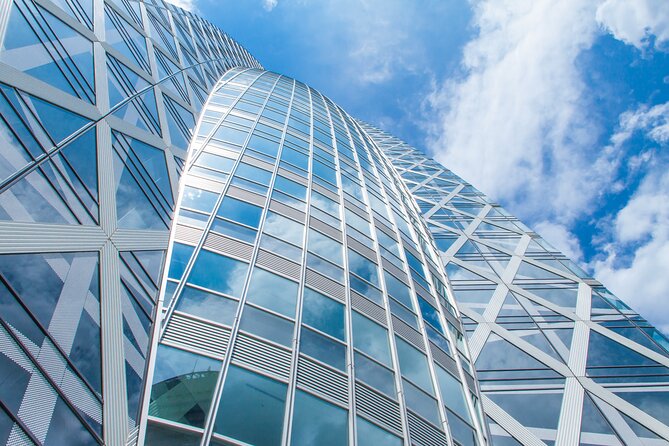
Takeshita Street in Harajuku changes the tone again. Here, the focus is youth culture, unusual fashion, and playful design in both clothing and buildings.
The scheduled time is about one hour. You will not get the same polished architectural feel found in Omotesando. That contrast is the point. Harajuku shows how style develops at street level, through small shops, bold displays, and youth-driven trends.
This is also one of the tour’s more crowded and energetic areas. If you prefer quiet streets, the stop may feel hectic. If you want to see a side of Tokyo that formal architecture tours often miss, it adds useful balance.
I would keep your expectations practical. This is not a museum-style art stop. It is a chance to observe fashion, storefront design, and the way young people shape a neighborhood’s public look.
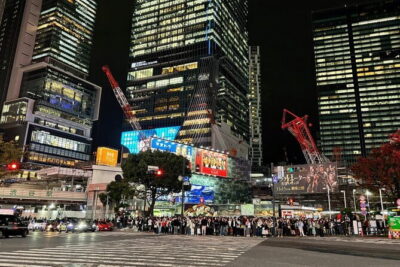
Shibuya Crossing: a brief look at Tokyo’s famous intersection
The Shibuya stop lasts about 30 minutes. That is enough to take in the crossing and its surrounding city scene, but not enough for a long exploration of the wider district.
Shibuya Crossing is famous for the coordinated movement of people across several directions. The appeal is not a single monument. It is the choreography of traffic, signs, buildings, lights, and crowds in one compact view.
Your guide can help you find the best angle and explain why the crossing became such a strong symbol of modern Tokyo. Still, keep this stop in proportion. It is a short urban observation point within a much longer architecture route.
The contrast with Daikanyama later in the day is especially useful. Shibuya is loud and highly recognizable. Daikanyama offers a slower, more local-feeling pace.
Daikanyama and Nakameguro: a calmer finish
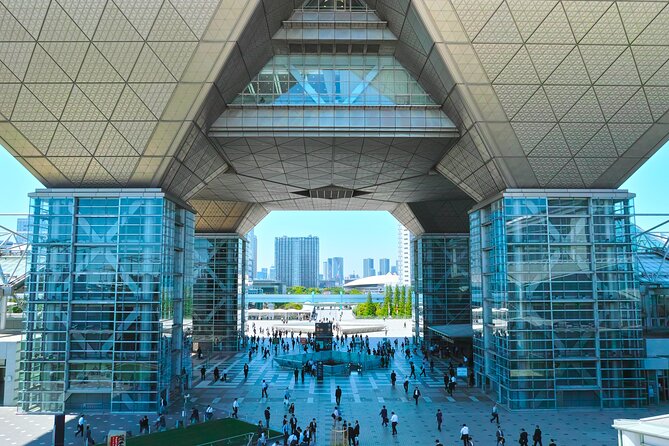
Daikanyama and nearby Nakameguro close the route with boutiques, cafes, and a more relaxed atmosphere. The neighborhoods feel less hectic than Ginza, Harajuku, or Shibuya, so the final hour can be a welcome change after a long day on foot.
The area is also home to the Tsutaya bookstore, a design-conscious destination that fits the tour’s interest in architecture, books, retail, and public space. The supplied details do not promise a specific length of time inside the bookstore, so treat it as part of the neighborhood rather than a guaranteed extended visit.
This section is valuable because it shows that Tokyo’s design culture is not limited to giant commercial buildings. Smaller shops and carefully planned retail spaces can shape a neighborhood just as strongly.
By this point, you may be tired. The quieter streets help, but the route is still a full-day outing. If you have already spent the morning walking, tell your guide early if you need longer breaks or a shorter version of the plan.
How the transport affects the day
Public transport is essential to this route. The districts are spread across Tokyo, so trains and subway lines make it possible to cover them in one day.
That also means part of the experience happens underground. One person found that a lot of time was spent traveling between sites, and that is a fair concern. You are not walking continuously through one connected architectural quarter. You are making jumps across the city, then exploring each area on foot.
A group that used local trains with IC cards covered about 13,000 to 20,000 steps and also stopped for ramen and shopping for chopsticks. Those extras are not guaranteed, but they show how the private format can accommodate ordinary Tokyo experiences when time allows.
A bus or taxi might make some transfers more scenic or less tiring, but the tour information specifically highlights public transport. Ask your guide about alternatives if subway travel is a concern. Bottled water is provided, which is useful on a long, warm day, but you should still dress for walking and plan for the weather.
The private guide makes the difference
The strongest reason to book this experience is the guide rather than the transport or the number of stops. The route covers a lot, and a local guide gives it structure.
Several guides are named in the available feedback. Tomoya led a full day of architecture and was praised for building a strong schedule. Richie guided a group through a hot day that included extensive walking, shops, and ramen. Riley was described as responsive to suggestions and comfortable guiding in English, including in rainy weather. Masa handled requests and showed both the outside and inside of buildings where possible.
Those details point to the tour’s main strength: it is not a fixed large-group march. You can ask about a building, slow down at a storefront, or request time for a shop or meal. The exact amount of flexibility depends on the day’s timing, but a private group of up to nine gives you far more room to speak up than a coach tour.
The tour has a rating of 4.9 from 15 ratings, with 100 percent recommending it. That is a small sample, so I would not treat the number as a guarantee. The repeated praise for guide quality and the planned route is more useful when deciding if it fits you.
Is $424.58 good value?
The price is $424.58 per group of up to nine people. For a full six to eight hours with a private guide, that can be good value for a family or group of friends. At nine people, the cost works out to about $47 per person. At two people, it becomes about $212 per person, so the economics change sharply.
There are no separate admission tickets listed, and the stops are mainly neighborhood walks and exterior architectural visits. You are paying for the guide’s time, planning, commentary, and ability to connect distant parts of Tokyo, not for a bundle of museum entries.
I would book it for a group that wants a guided day and prefers not to plan several Tokyo neighborhoods alone. I would think twice if you mainly want to enter museums, spend hours shopping, or move at a very slow pace.
The best value comes when you use the private format. Tell the guide what interests you before the day begins. If you care most about contemporary art, ask how Roppongi can receive more attention. If design shops and book culture appeal to you, ask for more time in Omotesando or Daikanyama.
Who should book this Tokyo architecture tour?
This tour suits you if you:
- Like modern buildings, design, fashion, galleries, and city planning
- Want to see several major districts in one day
- Prefer a private guide to a large group
- Are comfortable using trains and walking for hours
- Want the option to ask questions and adjust the day
- Are traveling with a group large enough to share the flat fee
It may not suit you if you need a low-walking outing, dislike subway transfers, or want guaranteed entry and extended time inside museums. The route is broad by design. You see many parts of Tokyo, but no single district receives a full day.
Most people can participate, and the stops are near public transportation. Still, the step count makes comfortable shoes important. Free cancellation is available up to 24 hours before the start time. Changes or cancellations inside that window are not accepted for a refund.
Should you book it?
Book this tour if you want Tokyo explained through its buildings, neighborhoods, and daily movement rather than through a list of famous landmarks. The mix of Ginza, Roppongi, Omotesando, Harajuku, Shibuya, and Daikanyama gives you a broad look at the city’s design culture.
I would especially recommend it to architecture fans, first-time visitors who want a fast orientation, and private groups willing to walk a lot. Ask for your preferred guide if possible, clarify the pickup point, and discuss museum interests before the day starts.
Skip it if you want a relaxed stroll or a museum-heavy schedule. This is an active city day, with real train transfers and plenty of pavement. For the right group, that effort is the price of seeing Tokyo as a connected, changing city rather than a collection of isolated sights.
FAQ
How long does the tour last?
The experience lasts approximately six to eight hours.
How much does the tour cost?
The price is $424.58 per group of up to nine people.
Is this a private tour?
Yes. Only your group participates in the activity.
Where does the tour start?
The start location is listed as Tokyo, Japan. Pickup is offered, and the tour information describes meeting outside your hotel or at a convenient central point. Confirm the exact meeting place after booking.
Where does the tour finish?
The activity ends back at the meeting point.
Which neighborhoods does the tour visit?
The route includes Ginza, Tokyo International Forum, Roppongi, Omotesando, Takeshita Street in Harajuku, Shibuya, and Daikanyama.
Is public transportation used?
Yes. The tour uses local public transportation to travel between the districts.
Is bottled water provided?
Yes. Bottled water is included.
Can most people participate?
The tour information states that most travelers can participate and that the stops are near public transportation.
Can I cancel for a full refund?
Yes. You can cancel at least 24 hours before the experience start time for a full refund. Cancellations or changes made less than 24 hours before the start time are not accepted for a refund.
New to the itinerary around Japan
- Small-Group Architecture Tour in Ginza, Tokyo★ 5.0 · 6 reviews
- Private Ueno Park Architecture Walking Tour★ 5.0 · 8 reviews
- Japanese Garden & Western Architecture: Akasaka exploration tour★ 5.0 · 9 reviews
- [Aomori Prefecture] Tour the history and architecture in Towada City, the art city★ 5.0 · 6 reviews
- Private Ueno Park Architecture Tour★ 5.0 · 5 reviews
- Private Ginza Architecture Tour★ 5.0 · 3 reviews
- Kyoto: Nijo Castle & Gardens 2-Hour Guided Tour★ 4.5 · 2 reviews
- Private Edo-Tokyo Open Air Architectural Museum Tour★ 4.8 · 15 reviews
Japan Architecture Tours, compared.
Shibuya Highlights Walking Tour & Secret View Spot
Read our review →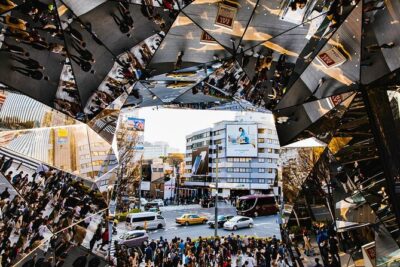
Private Harajuku Omotesando Architecture Walking Tour
Read our review →
Private Edo-Tokyo Open Air Architectural Museum Tour
Read our review →
Japanese Garden & Western Architecture: Akasaka exploration tour
Read our review →
[Aomori Prefecture] Tour the history and architecture in Towada City, the art city
Read our review →
Other lists with this tour