
Review · TOKYO
Tokyo: Shibuya Highlights Walking Tour & Secret View Spot
Shibuya is easiest to understand from street level, where one turn takes you from the famous Shibuya Crossing to old-fashioned drinking alleys, rooftop views, youth culture, and a railway station complex that feels like a city of its own. This 90-minute walk gives you that quick contrast without asking you to plan the route yourself.
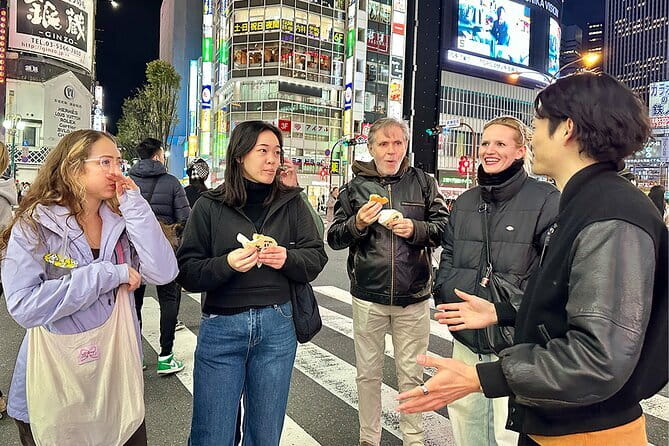
I like the small-group format, advertised at up to 10 people, and the fact that your guide takes photos during the walk. I also like the mix of major sights and less polished corners, especially Nonbei Yokocho and the basement passages of Shibuya Mark City.
The main point to check is the view stop. The route promises a panoramic outlook, but one account says the guide explained that it was not included. The tour information also refers to both Shibuya Scramble Square and Shibuya Fukuras, so confirm the exact lookout before booking if the view is your main reason for going.
Key points at a glance
- A fast Shibuya orientation: Cover the district’s major streets and several contrasting corners in about 90 minutes.
- A guide handles the route: You do not need to work out the maze around the station, Center-gai, and Mark City.
- Useful local personalities: Hannah is praised for thoughtful recommendations, while Mao is noted for good stories and taking photos at the crossing.
- Old and new Tokyo together: Nonbei Yokocho offers a nostalgic stop, while Miyashita Park and the large station towers show modern Shibuya.
- Good value for a short walk: At $25.20 per person, the price is reasonable if you want orientation, commentary, and photos rather than entry to a paid attraction.
- One detail needs clarification: The advertised group size and observation-deck details are not perfectly consistent, so ask before setting out.
Why this short Shibuya walk works
Shibuya can feel like several Tokyo districts stacked on top of one another. There is the famous crossing, the shopping core, narrow restaurant lanes, new public spaces, and huge transport buildings. The challenge is not finding one sight. It is knowing how the pieces fit together.
That is where this tour earns its keep. You follow an English-speaking local guide from the meeting point at SHIBU HACHI BOX near Dogen-zaka, then move through the area on foot. You get basic history and local context as you go, rather than spending your first hour in Shibuya staring at a map.
At $25.20, you are paying mainly for a guide’s time and route planning. There are no major admission charges to absorb, so the value depends on how much you want human explanation. If you already know Shibuya well and prefer wandering alone, you may find the walk unnecessary. If this is your first visit, the compact route can help you get your bearings quickly.
The tour is also useful early in a Tokyo visit. Afterward, you can return to the places that caught your eye, perhaps for shopping in Center-gai, a meal near Nonbei Yokocho, or another look at the crossing after dark.
More Hidden Gems Architecture Tours in Japan:
- Chicago’s Secret Interiors Architectural Walking Tour
★ 5.0 · 635 reviews - Chicago: Secret Interiors Architecture Walking Tour
★ 4.9 · 498 reviews - Delhi Hidden Gems: Mehrauli, Lodhi Art & Sunder Nursery
★ 5.0 · 108 reviews
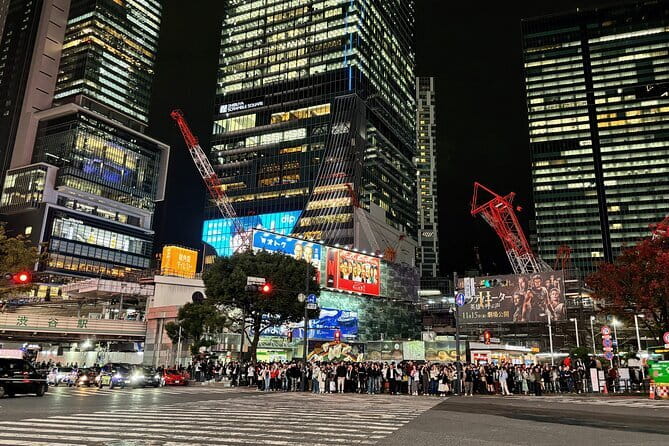
Starting at Shibuya Crossing
The walk begins with the district’s most recognizable scene: the broad intersection where several streams of pedestrians cross at once. You get about 10 minutes here, enough to see the movement from street level and take in the surrounding signs and towers.
A guide adds value even at a famous place like this. You already know the crossing from photographs, but a local can help you understand where to stand, how to cross, and how the intersection connects to the rest of Shibuya. Mao is specifically noted for leading the group through the crossing and taking photos, a helpful touch if you are traveling alone or want a picture with the crowd behind you.
Do not expect a long stop or a detailed lecture. This is an orientation visit. The crossing is the opening scene, not the whole tour.
The view question at Shibuya Scramble Square
The next stop is described as Shibuya Scramble Square, with about 10 minutes for a panoramic view. This is potentially the best photo stop on the walk because an elevated outlook can show you how tightly packed Shibuya is, with roads, railway lines, towers, and smaller streets all meeting around the station.
There is an important qualification. The tour description also mentions an observation deck at Shibuya Fukuras, and one account says the promised panoramic view did not happen because the guide said it was not included. That means you should not assume a guaranteed paid observation-deck visit.
The entrance and experience fee are included, but no separate paid attraction is clearly identified. If you want a high viewpoint above Shibuya more than anything else, ask the operator which building and deck the group will visit, and whether admission is included on your date.
If the stop is available as described, it adds a useful visual layer to the walk. If not, the tour still has several street-level stops, but the value changes slightly for anyone booking mainly for the secret view spot.
Nonbei Yokocho and a glimpse of older Tokyo
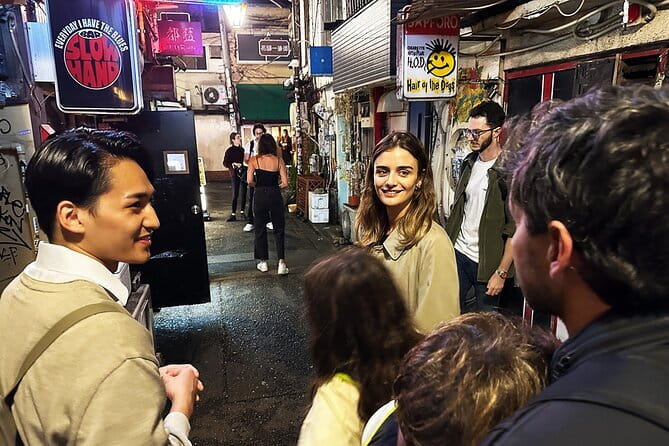
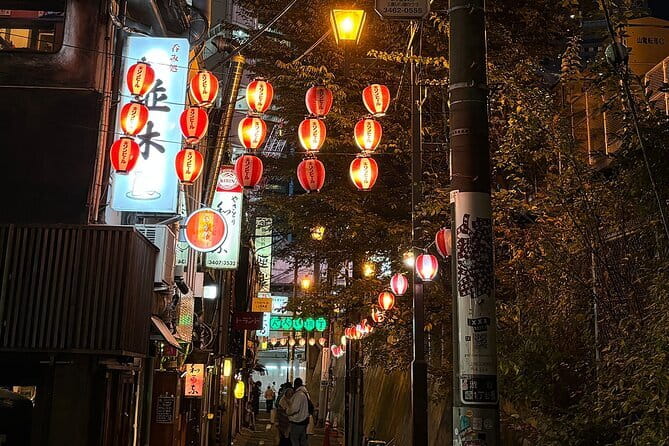
Nonbei Yokocho is a sharp change from the giant signs and wide roads. This narrow area is associated with small izakaya, the compact Japanese drinking places where food and drinks are served in a more intimate setting.
You get about 10 minutes here, so this is a look rather than a meal stop. The charm comes from the contrast. A few minutes earlier, you are surrounded by the scale of modern Shibuya. Here, the streets feel smaller and more personal.
A guide can explain why this corner matters without requiring you to research it first. You may not have enough time to choose a restaurant or settle in for dinner, but the stop gives you a better sense of Shibuya’s older side.
Keep your expectations in proportion. This is not an izakaya tasting tour, and food is not listed as included. Treat it as a short atmospheric pause and a chance to see a part of the district you might otherwise walk past.
More Walking Tours in Japan:
- Private Harajuku Omotesando Architecture Walking Tour
★ 5.0 · 67 reviews - Private Ginza Architecture Walking Tour
★ 5.0 · 50 reviews - Tokyo Architecture and Contemporary Art Walking Tour with a local guide
★ 5.0 · 15 reviews - Private Ueno Park Architecture Walking Tour
★ 5.0 · 8 reviews
Miyashita Park and the newer side of Shibuya
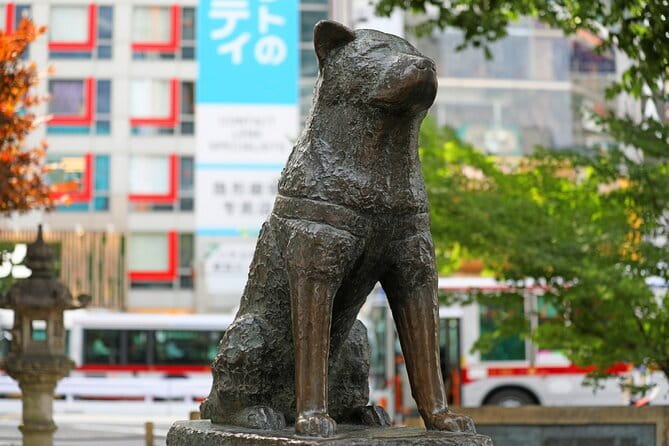
The tour then spends about 20 minutes at Miyashita Park. This is one of the longer stops, which makes sense because the park is more than a quick photo point. It reflects the newer, social side of Shibuya and is especially popular with younger people.
The planned visit may include the park’s illuminations, depending on the conditions and timing. That detail gives the stop more appeal after sunset, when lighting can change the feel of the space. Since the tour requires good weather, poor conditions may affect this portion or lead to cancellation.
Miyashita Park also helps break up the walking route. After the noise and visual overload around the crossing, an open public space gives you room to pause. You can listen to the guide, take photos, and watch how locals use the area.
The tour does not promise time for shopping, dining, or paid activities here. You get an introduction, not a full evening at the park. If the area interests you, note what you want to revisit after the group walk ends.
Center-gai, where Shibuya gets loud and young
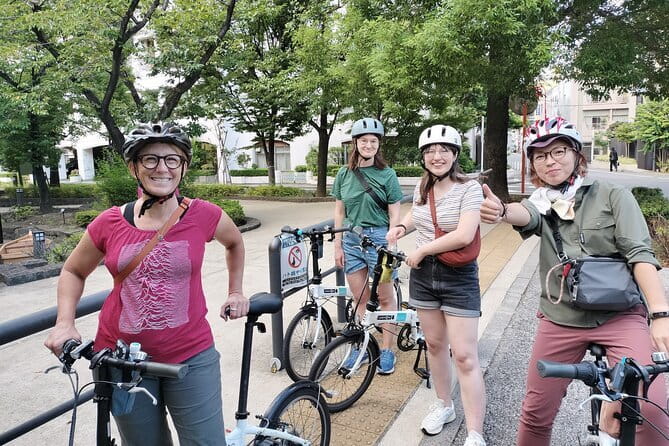
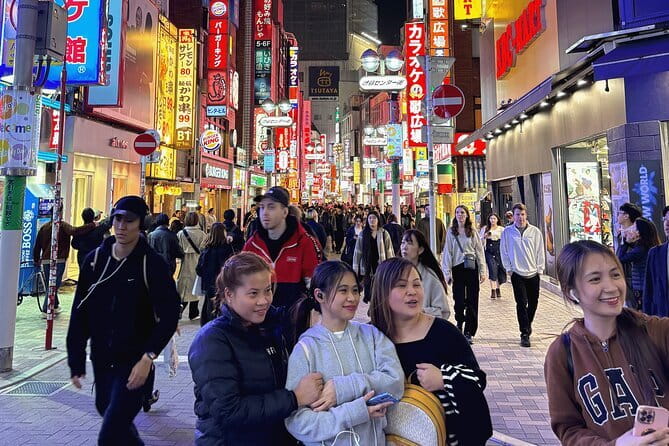
The route continues into Shibuya Center-gai for around 20 minutes. This is the district’s main pedestrian shopping and entertainment zone, and it gives you a closer look at the streets that most people picture when they hear Shibuya.
The benefit of having a guide here is simple: the area is easy to enter and easy to lose your sense of direction in. Streets branch off quickly, signs compete for attention, and the station area can make short distances feel confusing. A local guide can keep the group moving while pointing out the main corridors and explaining the character of the district.
This stop is less about one particular building and more about reading the city around you. You see how shops, restaurants, signs, and foot traffic fit together. The 20-minute allocation is enough for a first look, but not enough for serious shopping.
You should also expect city noise and plenty of people. If you prefer quiet lanes and small museums, Center-gai may be the least relaxing part of the walk. That is also why it belongs on a first-time Shibuya route: it shows the district as it really functions.
Shibuya Mark City and the station from below
The final listed stop is Shibuya Mark City, where the group explores the basement floor for about 20 minutes. This is a smart inclusion because many visitors see only Shibuya’s bright streets and miss the practical indoor network beneath them.
Basement spaces in major Japanese stations often connect transport, food, shopping, and everyday city life. Here, the point is not a grand sight. It is learning how Shibuya works when you are moving between train lines, shops, and surrounding streets.
This stop can be especially useful if you plan to return to Shibuya on your own. You get a clearer idea of how the station complex relates to the roads above it. The guide may also help you recognize routes that would be confusing on your first solo visit.
The tour ends back at the meeting point, so you do not need to arrange a separate pickup. That is convenient, though it also means you may want to plan your next activity nearby rather than rushing across Tokyo immediately after the walk.
Guides, photos, and the small-group feel

The strongest part of the tour is likely to be the guide you get. Hannah is praised for being attentive, helpful, and generous with local recommendations. Mao is noted for good stories, leading the group through the crossing, and taking photos. Those details matter because this is a short tour. A warm guide can make a compact route feel personal, while a flat delivery can make 90 minutes feel hurried.
The walk includes an expert English-speaking local guide and photos taken during the tour. You do not need to bring a separate photographer, although you should still carry your own phone for places or moments the guide does not capture.
The tour is described as a small-group activity with a limit of 10 people, but the booking information also gives a maximum of 20. That is a meaningful difference. A group of 10 can stay together more easily in crowded Shibuya, while 20 people may be harder to hear and keep track of. Ask which limit applies to your departure.
Most people can take part, and the meeting point is near public transportation. Still, this is a walking tour through crowded streets, so comfortable shoes and a willingness to keep moving will make the outing easier.
Is $25.20 fair for 90 minutes?
I consider $25.20 a fair price for a first look at Shibuya, especially if you value clear navigation and local commentary. The fee includes the guide, the walking experience, photos, and any included entrance or experience charges. You are not paying for a meal, private transport, or a long attraction visit.
The price is strongest for three types of visitors:
- You are new to Tokyo and want a quick introduction before exploring alone.
- You have limited time and want several Shibuya areas in one organized route.
- You enjoy local stories and practical advice more than a formal sightseeing lecture.
The value is weaker if you want a guaranteed rooftop admission, a food tour, or private attention. The route is short, and the view stop needs clarification. You should also remember that the tour finishes where it begins, so transportation to and from the meeting point is your responsibility.
A free cancellation option gives you some flexibility. You can cancel for a full refund up to 24 hours before the start time. Changes or cancellations inside 24 hours are not refunded, and poor weather can lead to a new date or a full refund. Since the activity requires good weather, check the forecast before your final day to cancel.
Who should book this Shibuya walk?
I would choose this tour for a first-time Tokyo visitor who wants a fast, human introduction to one of the city’s most confusing districts. It is also a good fit if you are traveling alone and would like someone to take photos at the crossing.
The route suits people who like contrasts: giant modern buildings beside old drinking lanes, a youth-focused park beside a complex station, and famous streets mixed with less obvious corners. Hannah’s recommendation-focused style or Mao’s storytelling approach may be particularly useful if you want ideas for what to do after the walk.
I would be more cautious if you are booking solely for the observation deck. The promised view is not described consistently, and one account says it was not provided. Confirm that point directly before paying.
Should you book it?
Book this Shibuya walk if you want route planning, local explanation, and a quick overview for $25.20. The best parts are the range of stops, the chance to see both modern and older Shibuya, and the personal help from guides such as Hannah and Mao.
Skip it if you already know Shibuya well, want a long stop at each place, or need a guaranteed panoramic observation deck. For everyone else, it is a practical first step into the district, provided you confirm the exact viewpoint and expected group size.
FAQ
How long does the Shibuya walking tour last?
The tour lasts approximately 1 hour and 30 minutes.
What price should I expect?
The listed price is $25.20 per person.
Where does the tour start?
The meeting point is SHIBU HACHI BOX, 2-chōme-1-1 Dōgenzaka, Shibuya, Tokyo 150-0043, Japan.
Where does the tour finish?
The activity ends back at the meeting point.
Is the tour conducted in English?
Yes. An expert English-speaking local guide leads the walk.
How many people can join?
The tour is described as a small-group activity limited to 10 people, while the additional booking information gives a maximum of 20 travelers. Confirm the expected group size before booking.
What places are visited?
The route includes Shibuya Crossing, Shibuya Scramble Square, Nonbei Yokocho, Miyashita Park, Shibuya Center-gai, and Shibuya Mark City.
Is transportation included?
No. Private transportation is not included. The activity takes place on foot and begins near public transportation.
Are photos included?
Yes. Photos taken during the tour are included.
Can I cancel for a full refund?
Yes, if you cancel at least 24 hours before the experience start time. Cancellations or changes made less than 24 hours in advance are not refunded. If poor weather causes the tour to be canceled, you will be offered another date or a full refund.
New to the itinerary around Japan
- Tokyo Architecture and Contemporary Art Walking Tour with a local guide★ 5.0 · 15 reviews
- Small-Group Architecture Tour in Ginza, Tokyo★ 5.0 · 6 reviews
- Private Ueno Park Architecture Walking Tour★ 5.0 · 8 reviews
- Japanese Garden & Western Architecture: Akasaka exploration tour★ 5.0 · 9 reviews
- [Aomori Prefecture] Tour the history and architecture in Towada City, the art city★ 5.0 · 6 reviews
- Private Ueno Park Architecture Tour★ 5.0 · 5 reviews
- Private Ginza Architecture Tour★ 5.0 · 3 reviews
- Kyoto: Nijo Castle & Gardens 2-Hour Guided Tour★ 4.5 · 2 reviews
Hidden Gems Architecture Tours, compared.

Chicago’s Secret Interiors Architectural Walking Tour
Read our review →

Delhi Hidden Gems: Mehrauli, Lodhi Art & Sunder Nursery
Read our review →
Miami Beach Art Deco & Hidden Gems Bike Tour with Local Historian
Read our review →

Detroit: Architectural Beauty and Hidden Gems Walking Tour
Read our review →
Secret Split: Socialist Architecture & brutalism – Urban Utopia
Read our review →
Barcelona Beyond Gaudí: Modernism, Rooftops, and Hidden Gems
Read our review →Other lists with this tour