
Review · NEW ORLEANS
New Orleans: History, Culture & Architecture Guided Tour
New Orleans reveals itself in layers, and this three-hour tour gives you a useful cross-section in one outing: Creole streets, African American heritage, grand homes, sculpture, museums, and above-ground tombs. The ride in an air-conditioned minibus matters, especially when the city is hot and you want to cover more ground than your feet can manage.
I like the mix of major sights and less obvious context. The stop at Metairie Cemetery explains why New Orleans burials look so different, while the route through Faubourg Treme and a hurricane Katrina site adds weight beyond the usual French Quarter and jazz story. The main drawback is time: three hours moves quickly, and some places are seen from the bus rather than explored at length.
Key points to know before booking
- Hotel pickup makes the morning easy, but only selected downtown New Orleans and French Quarter hotels are included.
- Joseph and Bob are two guides praised for clear, lively commentary, with strong coverage of local culture, architecture, and history.
- City Park gives you a choice, either the Besthoff Sculpture Garden or coffee and beignets at Morning Call Cafe.
- Faubourg Treme adds essential context, introducing one of the oldest African American neighborhoods in the United States.
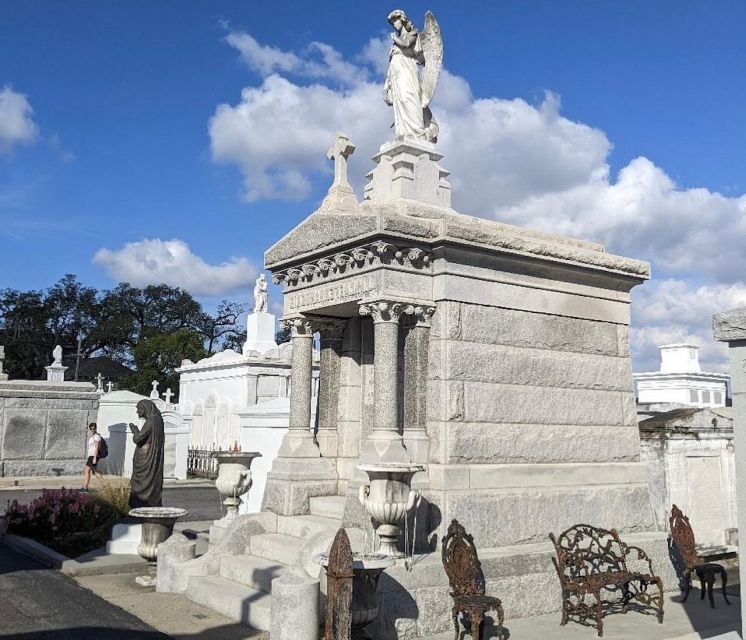
- Metairie Cemetery is a worthwhile short stop, showing New Orleans’ distinctive above-ground burial tradition.
- The $55 price is fair for a first look at a spread-out city, though you should not expect long visits at every landmark.
Why this citywide route works
New Orleans is not one compact sight. The French Quarter, Garden District, City Park, Treme, Warehouse District, and cemeteries each tell a different part of the city’s story. Seeing them in one organized circuit helps you understand how the city fits together.
This is not a walking tour with long pauses at one or two buildings. It is a broad introduction by minibus, with short stops and plenty of commentary as you move between neighborhoods. I would use it early in a New Orleans stay, when you want to get your bearings and decide where to return on your own.
The air conditioning is more than a small comfort. New Orleans can be hot, humid, and tiring, and a minibus lets you cover substantial ground without spending the whole afternoon wiping sweat from your face. You also avoid the work of arranging transport between districts.
The tradeoff is clear. You will see many places, but you will not have the time to study every one. If you want a long architectural walk through the Garden District or several hours in the World War II Museum, book those separately.
More History Walks around the USA:
- Chicago in a Day: Food, History & Architecture Walking Tour
★ 5.0 · 1,153 reviews - Charleston’s Best Highlights: History, Culture & Architecture
★ 5.0 · 422 reviews - Palm Springs Modernism Architecture & History Bike Tour
★ 5.0 · 359 reviews
Starting with hotel pickup in the French Quarter
The experience begins with pickup from selected hotels in downtown New Orleans and the French Quarter. Pickup times change according to the number and location of stops, so you need to be curbside 30 minutes before the scheduled departure.
That early waiting time is practical rather than glamorous, but it prevents a rushed start. Confirm that your hotel is within the pickup area, and do not assume every New Orleans address qualifies. Hotel drop-off is included at the end.
Once aboard, you meet an English-speaking local guide and settle into the air-conditioned minibus. The guide provides live commentary throughout the route. Joseph has been praised for explaining architecture, culture, and both past and present events, while Bob is described as funny and especially strong on local culture and history.
The individual guide can shape the feel of the outing. A good guide helps you connect an ordinary street, cemetery wall, or old building with the people and events behind it. This tour appears strongest when the commentary goes beyond a list of dates and names.
The French Quarter, where the city starts its conversation
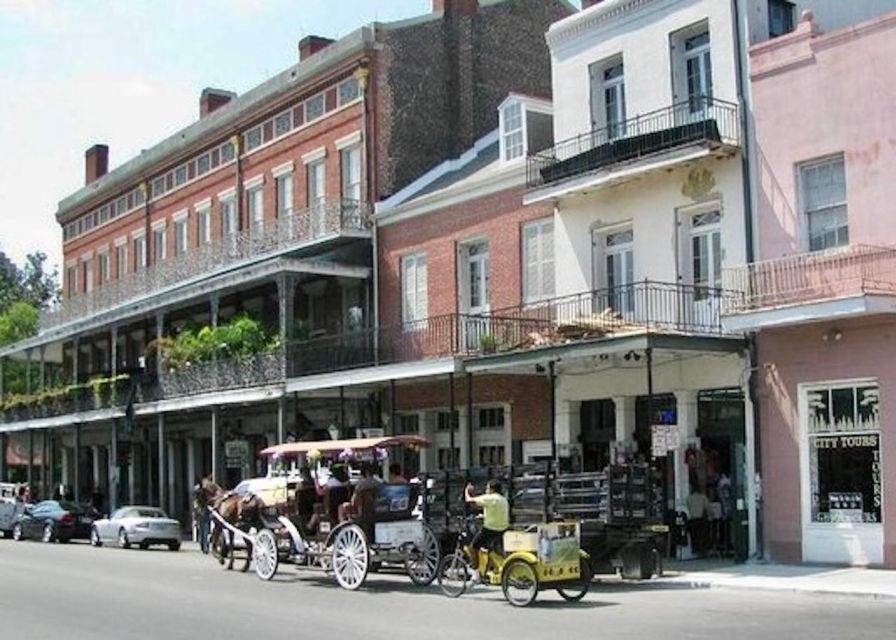
The French Quarter is the natural opening chapter. Its streets carry the city’s Spanish and French influences, along with the architecture and traditions that make New Orleans feel unlike other American cities.
You pass through the quarter rather than spending the entire three hours there. That matters if you are hoping for a slow look at balconies, courtyards, shops, and cafes. Still, beginning here gives you a visual reference point before the route moves into neighborhoods that many first-time visitors do not reach.
One key sight is St. Louis Cathedral, beside the Mississippi River. It is identified as North America’s oldest cathedral, with roots dating to 1720. Even a brief view helps explain the age of the city and the importance of the riverfront to its development.
If this is your first visit, I recommend returning to the French Quarter later on foot. Use the tour to learn what you are seeing, then give yourself time to wander at a slower pace. The minibus introduction and a later walking visit work well together.
Esplanade Avenue and the city’s grander side
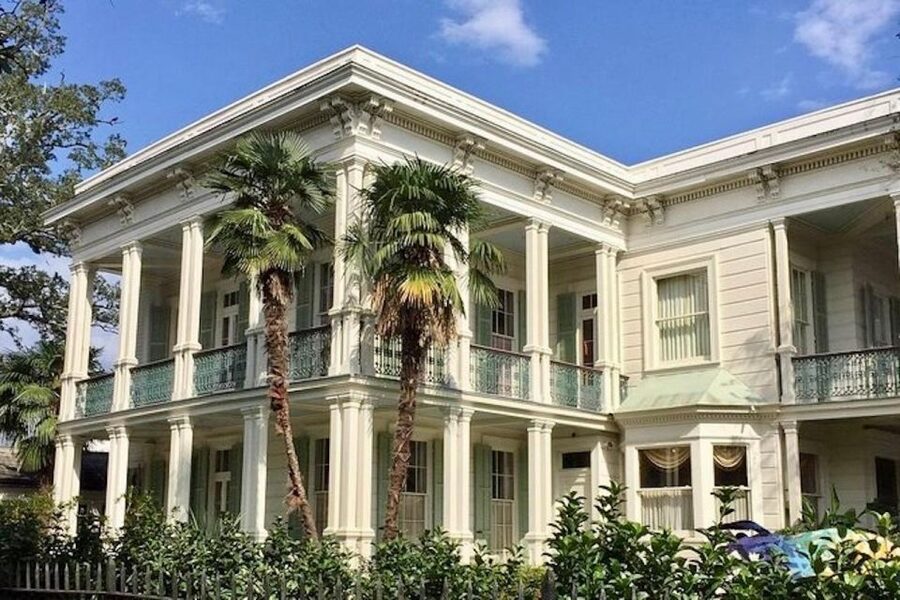
From the French Quarter, the route follows Esplanade, known for oak-lined streets and large homes. This stretch shows a different side of New Orleans, one defined by space, shade, and stately residential architecture.
Your guide points out mansions and architectural details as you ride. You may not have time to inspect individual houses closely, but the moving view helps you see how the city changes block by block. The contrast with the tighter streets of the French Quarter is part of the lesson.
I like this section because it gives architecture a social setting. Grand houses are not just pretty facades. They reflect wealth, changing neighborhoods, and the long mixture of cultural influences that shaped New Orleans.
Do not book this tour expecting a dedicated Garden District house tour. The route provides an overview of elegant avenues and homes, but the pace is designed to include several parts of the city.
More Guided Tours around the USA:
- Chicago River: 1.5-Hour Guided Architecture Cruise
★ 4.8 · 8,046 reviews - Charleston: History and Architecture Guided Walking Tour
★ 4.8 · 349 reviews - Charleston History, Homes, and Architecture Guided Walking Tour
★ 5.0 · 267 reviews - Chicago River: Guided Sunset Cocktail & Architecture Tour
★ 4.6 · 203 reviews
City Park, sculpture, coffee, or beignets
City Park offers the tour’s most flexible stop. You visit the Besthoff Sculpture Garden or have coffee and beignets at Morning Call Cafe. The choice gives you a small say in how you spend the break.
The Besthoff Sculpture Garden is a good fit if you want art, open space, and a quiet change from the streets. The collection gives the route a cultural dimension beyond old buildings and historic markers. It also provides a chance to stretch your legs.
Morning Call Cafe suits you better if you want a classic New Orleans snack. Coffee and beignets are not included in the $55 price, so bring money if you choose this option. Since food and drinks are excluded, do not count on refreshments being supplied during the tour.
This stop is also a reminder that the schedule has limits. You should check how much free time the guide provides on the day, since the overall outing lasts only three hours. If you are set on a leisurely cafe visit, the sculpture garden may offer a more predictable use of the stop.
Treme and the stories beyond the postcard
The route through Faubourg Treme is one of its most important parts. Treme is one of the oldest African American neighborhoods in the United States, dating back to the 1700s. Seeing it places New Orleans culture in a broader setting than the familiar French Quarter.
This is where a good guide can make the difference. The city’s music, food, festivals, and traditions did not appear from nowhere. They grew from communities with long, complicated stories, and Treme is central to understanding that development.
The route also includes a look at a site connected with Hurricane Katrina. That gives you a case study in how the storm affected New Orleans and how the city’s past continues to shape current life. The point is not simply to admire old buildings. It is to see how history remains present in neighborhoods and public memory.
I especially value this part for first-time visitors who might otherwise leave with a narrow image of New Orleans as only French, Spanish, and jazz-themed. The tour makes room for African American history and more recent events, which gives the city a fuller shape.
Warehouse District and the former American Sector
The Warehouse District brings a different mood, with art, culture, museums, and converted industrial spaces. You pass through an area associated with the city’s modern cultural life, a useful counterpoint to the older quarters.
The route also includes the area once called the American Sector. Here you see the World War II Museum and the Contemporary Arts Center, one of the country’s first art institutions.
You should treat these as exterior or passing sights rather than full museum visits. Three hours is not enough to tour the World War II Museum properly, and the museum deserves separate time if it interests you. The same is true of the Contemporary Arts Center.
Still, seeing where these institutions sit helps you plan. If the tour sparks your interest, you can return later with a ticket and several hours to spare. That is one of the practical benefits of a broad orientation outing: you find your priorities before spending a full day on them.
Metairie Cemetery and above-ground burial
The brief stop at Metairie Cemetery may be the most distinctive part of the route. New Orleans is famous for above-ground tombs, a response to local conditions and the city’s long burial traditions.
You get a direct look at how practical needs, local customs, and artistic design meet in a cemetery. The tombs are not merely unusual photo subjects. They tell you something about the challenges of building and burying in a low-lying city.
The stop is short, so you should not expect a long cemetery walk. But even a limited visit gives useful context that is hard to pick up from a casual drive around town. The explanation of burial methods can be a real highlight, especially if you have wondered why New Orleans cemeteries look so different from those in many other American cities.
Please approach this stop with respect. It is an active place of remembrance, not just a collection of unusual architecture.
A guide-led view of New Orleans culture

The tour’s value depends heavily on the person in the front seat. The strongest feedback points to guides who are personable, funny, and able to explain more than basic facts. Joseph and Bob are specifically praised for their command of local culture and history.
That does not mean the experience is a formal academic lecture. The tone appears more conversational, with stories, tips, and explanations tied to what you are seeing. You may hear about present-day New Orleans as well as older events, which keeps the tour from feeling stuck in the past.
A guide can also point out details you would miss while browsing on your own. A building, street corner, or neighborhood may look ordinary until someone explains its connection to the city. That sort of local interpretation is the main reason to pay for an organized tour instead of simply taking a sightseeing drive.
The English-only format is important to note. The live commentary is provided in English, and no other language is listed.
Is $55 a good value?
At $55 per person, this tour is reasonably priced for a three-hour outing that includes hotel pickup, hotel drop-off, transportation, and a guide. You are paying for access to several widely separated parts of New Orleans without arranging taxis, rideshares, or a rental car.
The value is strongest if you are visiting for the first time, staying in the pickup area, or traveling during hot weather. You can see the French Quarter, Treme, City Park, the Garden District area, the Warehouse District, and Metairie Cemetery in one morning or afternoon.
The value is weaker if you prefer to explore slowly. Food and drinks are not included, and the short schedule means some sights are viewed from the bus. You may also want to pay separately for the World War II Museum, a longer cemetery visit, or a dedicated Garden District walk.
I would think of the $55 as a city orientation fee rather than the price of a series of full attraction visits. It can save you time and help you choose where to spend the rest of your trip.
Who will enjoy this three-hour minibus tour?
This experience suits you if you want a broad first look at New Orleans without a long day on foot. It is also useful for visitors with limited time, since the route covers several districts in one organized outing.
You will likely appreciate it if you enjoy architecture, local stories, neighborhood history, and cultural context. The tour gives you more than the standard French Quarter circuit, especially with Treme, the Katrina-related stop, and Metairie Cemetery.
It is less suitable if you want:
- Long, independent visits inside museums
- A food-focused experience
- A dedicated walking tour of one neighborhood
- Commentary in a language other than English
- Total control over how long you spend at each stop
Weather can affect the outing. Good weather is required, and an adverse-weather cancellation gives you the choice of rescheduling or receiving a full refund. The tour also requires a minimum number of participants. If that number is not reached, you can choose another date or experience, or receive a full refund.
You can cancel up to 24 hours ahead for a full refund, and reserve now while paying later. Those terms are helpful if your New Orleans schedule is still shifting.
Should you book it?
Book this tour if you want to understand New Orleans as a collection of neighborhoods, not just a famous strip of bars and balconies. The combination of French Quarter landmarks, Treme, City Park, grand avenues, museums, and Metairie Cemetery gives you a useful first map of the city.
I would book it near the start of your stay and keep the rest of the day flexible. Pay attention to the guide’s suggestions, note the places you want to revisit, and plan separate time for any museum or neighborhood that catches your interest.
Skip it if you already know New Orleans well or prefer to spend three hours in one district on foot. For most first-time visitors, though, the $55 price buys an efficient introduction, comfortable transport, and context that is difficult to gain from sightseeing alone.
FAQ
How long does the New Orleans guided tour last?
The tour lasts three hours.
What is the price per person?
The price is $55 per person.
Is hotel pickup included?
Yes. Hotel pickup and drop-off are included from selected hotels in downtown New Orleans and the French Quarter.
Where does the tour go?
The route includes the French Quarter, Esplanade, City Park, the Garden District area, the Warehouse District, Faubourg Treme, the former American Sector, Metairie Cemetery, and St. Louis Cathedral.
What can you do at City Park?
You visit the Besthoff Sculpture Garden or have coffee and beignets at Morning Call Cafe.
Are food and drinks included?
No. Food and drinks are not included in the tour price.
Is transportation air-conditioned?
Yes. You travel in an air-conditioned minibus or mini-coach.
What language is the tour conducted in?
The live guided tour is conducted in English.
How early should you be ready for pickup?
You should be curbside and ready 30 minutes before the scheduled pickup time. Pickup times vary according to the number and location of stops.
What happens if the weather is bad or the tour is canceled?
Good weather is required. If poor weather causes cancellation, you can reschedule or receive a full refund. If the minimum number of participants is not reached, you can choose another date or experience, or receive a complete refund.
New to the itinerary around the USA
- Washington, DC: Georgetown Architecture Walking Tour★ 5.0 · 8 reviews
- Wilmington History and Architecture Tour★ 4.8 · 18 reviews
- Washington DC: Dupont Circle & Embassy Row Architecture Tour★ 5.0 · 6 reviews
- New Orleans : Garden District Architecture Walking tour★ 4.8 · 5 reviews
- Private Colonial Williamsburg Architectural Tour★ 5.0 · 5 reviews
- Tulsa: Art Deco Walking Tour of Tulsa★ 5.0 · 8 reviews
- Castle to Capitol: Museums of the National Mall Architecture Tour★ 4.5 · 9 reviews
- Monuments and Memorials Architectural Walking Tour★ 5.0 · 17 reviews
New Orleans Architecture Tours, compared.

New Orleans French Quarter Architecture Walking Tour
Read our review →
Other lists with this tour