
Review · WASHINGTON DC
Castle to Capitol: Museums of the National Mall Architecture Tour
The most interesting thing about this tour is its point of view: you are not simply ticking off Washington museums, you are learning to read their buildings as part of American history. The two-hour walk runs from the Smithsonian Castle to the west lawn of the US Capitol, with the National Mall serving as your outdoor classroom.
I like the architecture-first approach, which gives familiar sights a fresh purpose. I also like the small-group limit of 20 and the chance to enter the Smithsonian Castle, rather than passing it as just another photogenic building. The tour has earned strong praise for guides such as Carolyn, Sam, and Cathryn, who bring architectural training, historical images, humor, and plenty of preparation to the walk.
The main drawback is pace. You cover several major sites in two hours, and most stops are brief. If you want to go inside the Air and Space Museum, National Gallery of Art, or American Indian Museum, you will need to return on your own. Also, confirm the start time carefully when booking through a third-party site, since an incorrect time once caused a serious scheduling problem.
Key points to know before you book
- The route connects Castle to Capitol: You walk east along the National Mall and finish with a broad view of the US Capitol and Mall.
- Architecture is the main subject: Expect discussion of Neoclassical, Modern, sculptural, and historic design rather than a standard museum tour.
- The Smithsonian Castle gets the longest stop: About 30 minutes are devoted to the institution’s headquarters, garden, and role in shaping the Mall.
- The route includes quieter corners: Bartholdi Park and the United States Botanic Garden add welcome variety to the grand museum corridor.
- The group can reach 20 people: That is small enough for questions, though not the same as a private tour.
- The price is $48 per person: The value comes from the guide’s interpretation and efficient orientation, not from entry to a long list of museums.
Why this National Mall walk feels different

Washington’s National Mall can look simple on a map. The Capitol is at one end, the Washington Monument is farther west, and the museums line both sides. Yet the buildings are not a random collection of grand facades. They reflect changing ideas about public culture, national identity, science, art, and who gets represented in the nation’s symbolic center.
This tour focuses on that story. You begin at the Smithsonian Institution Building, better known as the Castle, then move past buildings from very different eras and design traditions. Along the way, your guide points out contrasts that are easy to miss when you are rushing toward an exhibit.
That makes this a good choice if you have already seen the Mall but feel you have not really understood it. It also works well on a first visit, since the route gives you a useful map of the eastern end of the Mall and Capitol Hill.
The tour is led by a local guide with a historian’s approach. Past guides have included Carolyn, Sam, and Cathryn. The available feedback describes Carolyn as engaging and well prepared, Sam as especially effective with architectural groups, and Cathryn as an architect by training who welcomed questions. Guides can vary, but the experience clearly depends on having someone who can connect design details with larger historical events.
More Shopping Trips around the USA:
- Guadalajara: Culture, Architecture, and Market Walking Tour
★ 5.0 · 81 reviews - Castries: Guided City Architecture and Castries Market Tour
★ 4.5 · 16 reviews
Starting at the Smithsonian Castle
The meeting point is outside the Smithsonian Castle at 1000 Jefferson Drive SW. This is a practical starting place because the Castle is easy to recognize and sits near public transportation. You begin with roughly 30 minutes devoted to the Smithsonian Institution, its headquarters, and its garden.
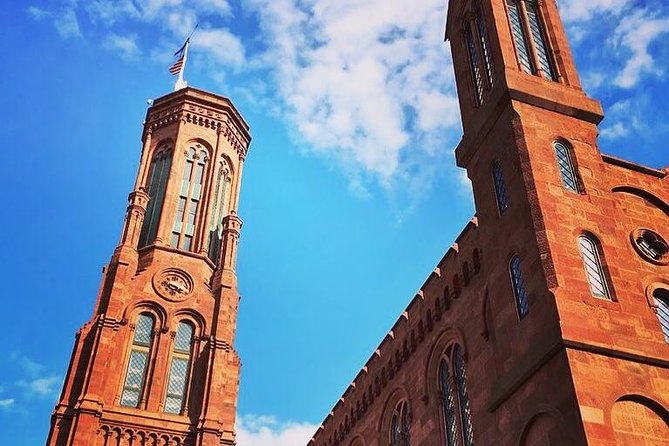
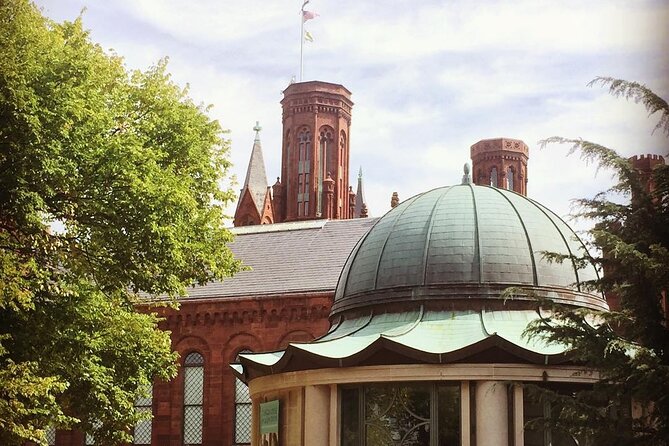
The Castle was designed as the first home of the Smithsonian Institution. Its red sandstone exterior gives it a more medieval and romantic appearance than the Neoclassical museums nearby. That contrast is one of the first useful lessons of the walk: Washington’s public buildings do not all speak in the same architectural language.
You will hear how the Smithsonian grew from its beginnings in 1847 into a vast museum organization with 19 museums and more than 140 million objects in its collections. The institution attracts about 30 million visitors each year, so the guide’s job is not to list every museum. It is to explain how the Smithsonian helped shape the Mall and why the Castle remains its symbolic center.
Admission to the Smithsonian Castle is included. The route description begins outside the building, so treat this as a guided visit focused on the Castle and its role rather than a full museum session. If you want a slower look inside, leave time to return later.
The Castle and garden are also a good place to get your bearings. From here, the route moves toward the Capitol, passing a series of buildings that feel remarkably different despite being close together.
Arts and Industries Building: an early Smithsonian home
The next stop is the Arts and Industries Building, where the guide spends about five minutes discussing its unusual design and its place in Smithsonian history.
This building served as a second home for the institution and reflects an earlier stage in the Mall’s development. Its design gives you a useful comparison with the Castle. Instead of treating the two buildings as isolated landmarks, the guide shows how the Smithsonian needed new spaces as its collections and public mission expanded.
Five minutes is enough for an exterior explanation, but it is not enough for a detailed architectural inspection. You will want to listen closely and ask focused questions. The short stop also signals the rhythm of the tour: this is a moving conversation, not a series of long building visits.
The Hirshhorn’s spaceship shape
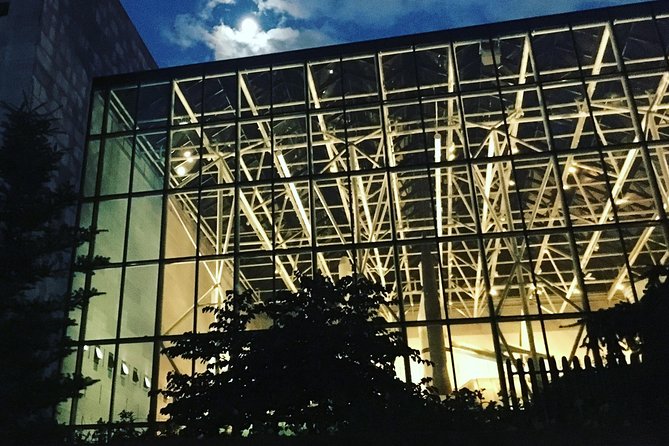
The Hirshhorn Museum and Sculpture Garden provides one of the route’s clearest changes in mood. Its round, concrete form looks almost like a spacecraft beside the more formal museums of the Mall. The guide gives this stop about five minutes.
The value here is comparison. After the Castle and Arts and Industries Building, the Hirshhorn makes Modern design impossible to ignore. Its form rejects the grand columns and balanced facades associated with older Washington institutions.
You may find this stop especially useful if you normally judge buildings by whether you like their appearance. The guide gives you another way to look: ask what the structure is trying to do, how it handles public space, and why a modern art museum might choose such a forceful shape.
Again, the stop is outside. You are not touring the Hirshhorn’s galleries or sculpture collection. Plan a separate visit if you want to see the art.
More Museum Visits around the USA:
- Chelsea Galleries and High Line; Art, Architecture and History
★ 5.0 · 14 reviews - South Beach Art Deco Highlights and The Wolfsonian Museum Tour
★ 5.0 · 5 reviews - Barcelona: Park Güell and Gaudí House Museum Entry Ticket
★ 4.5 · 6,326 reviews - Private Edo-Tokyo Open Air Architectural Museum Tour
★ 4.8 · 15 reviews
National Gallery of Art: two buildings, two ideas
The National Gallery of Art is discussed from a distance, with attention to the contrast between its Neoclassical West Building and Modern East Building.
This may be one of the most useful parts of the route because the comparison is immediate. The West Building presents the familiar language of symmetry, stone, columns, and formal proportion. The East Building takes a more geometric and modern approach, with angular forms that announce a different idea of what a national art museum can be.
From the Mall, you can understand the basic relationship between the two structures, but you will not get an interior visit. The guide’s role is to help you see the National Gallery as a conversation between two periods rather than one uniform institution.
If you care about art, add time before or after the tour for the galleries. The walking tour gives you a good architectural introduction, but it does not replace a museum visit.
The American Indian Museum and the meaning of form
The National Museum of the American Indian is one of the most visually distinctive buildings on the route. Its exterior is designed to look shaped by wind and water, with a softer, more organic form than the rectilinear museums nearby.
The guide also addresses the building’s troubled background. That matters because architecture here is not just decoration. The museum’s form and purpose raise questions about representation, cultural authority, and how Native histories are presented in a national setting.
The stop lasts about five minutes, so expect a concise explanation rather than a full discussion of the museum’s exhibitions or the building’s complete history. Still, it gives you a strong reason to return inside. The museum itself can occupy a large part of a day, while this tour only introduces its exterior and its place on the Mall.
For families, this stop can be particularly effective. The wind-and-water idea is easy to picture, and the contrast with the formal buildings around it keeps younger walkers interested.
The Botanic Garden adds a welcome change

The United States Botanic Garden receives about 10 minutes, making it one of the longer stops after the Castle. It offers a break from the stone and concrete of the museum corridor.
The Botanic Garden is easy to overlook because the grandest Mall landmarks tend to pull attention toward the Capitol and monuments. Here, the guide points out a less obvious part of Washington’s public landscape and explains why it belongs in a tour of the Mall’s institutions.
I like this section because it prevents the walk from becoming a parade of facades. You get a different kind of public space, one connected to plants, education, and the city’s civic life. The short visit will not give you time to explore every part of the garden, but it can help you decide if you want to return.
This is also a practical place to slow down for a moment. Two hours of walking and listening can feel brisk, and the change in setting helps reset your attention before the final stretch.
Bartholdi Park and an unexpected fountain
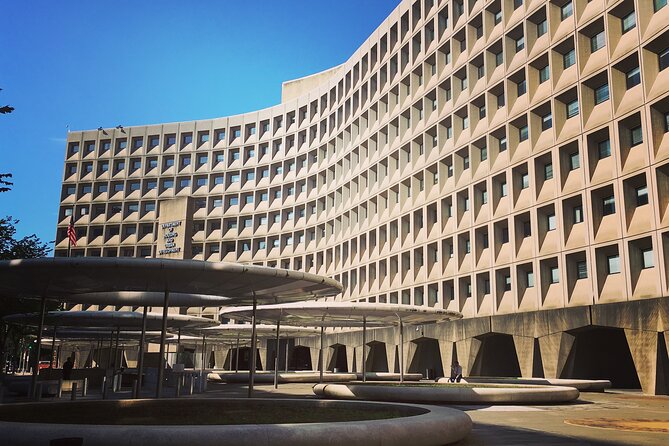
Bartholdi Park is a five-minute stop near the Botanic Garden. The park is known for its historic fountain, and the guide explains the surprising connection between the fountain’s sculptor and the better-known monuments of Washington.
The supplied tour information does not name the sculptor in advance, so you will need to hear that detail on site. That is part of the charm of this stop. It is not one of the Mall’s headline attractions, but it adds a smaller, more personal story to the route.
You might find the park especially appealing if you enjoy places that reward a closer look. It is a modest stop, not a major attraction with a long visit, but it gives the tour a sense of discovery without requiring a detour far from the main route.
Finishing at Capitol Hill
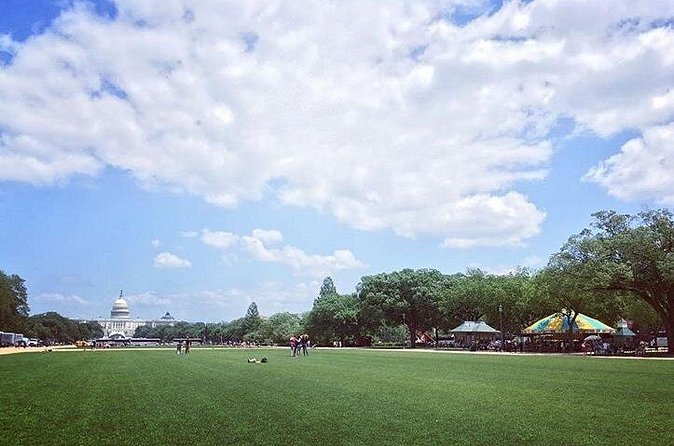
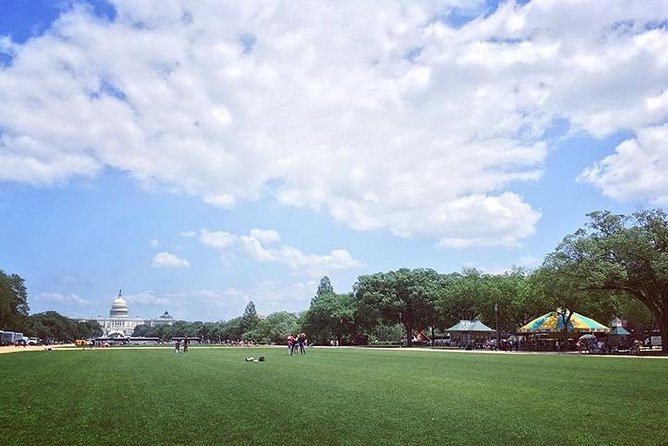
The walk ends at the foot of Capitol Hill, on the west lawn of the US Capitol. The final stop lasts about 10 minutes and gives you a broad view back across the Mall.
This ending makes practical sense. You have moved from the Smithsonian’s headquarters through museums and public institutions to the building that anchors the eastern end of the Mall. The route becomes a kind of architectural timeline, even though the guide is not simply marching you through dates.
The view is also a useful photo opportunity. You can see the Capitol and the long axis of the Mall, with the route you have just walked spread out behind you. The tour does not include a Capitol interior visit, so arrange a separate Capitol tour if that is a priority.
For me, the final view is most valuable after the guide has explained the buildings along the way. The Mall becomes easier to read as a planned civic space rather than a wide strip of grass lined with unrelated museums.
Is $48 a fair price?
At $48 per person, this is not a bargain in the same sense as a free museum entrance. The Smithsonian museums are generally free, and most of the buildings on this route are seen from outside. You are paying for the guide’s time, preparation, interpretation, and the efficiency of covering a large part of the eastern Mall in two hours.
That can be good value if you are curious about architecture or want a clear introduction before choosing which museums to visit. A strong guide can help you notice details you would otherwise walk past, and the route saves you from piecing the story together alone.
The value is less convincing if you want extensive interior access. The tour does not turn the Air and Space Museum, National Gallery, American Indian Museum, or Hirshhorn into guided museum visits. Think of it as an architectural orientation with Castle admission, not a museum pass.
The maximum group size is 20. That keeps the experience more personal than a large bus tour and gives you a reasonable chance to ask questions. It is still large enough that you may need to speak up, especially near traffic, crowds, or open Mall spaces.
Who should take this tour?
I would recommend it most strongly to:
- People who enjoy architecture, design, and city planning
- First-time Washington visitors who want a smart overview of the eastern Mall
- Repeat visitors who have seen the museums but ignored the buildings
- Families who want an educational walk with varied stops
- Visitors who prefer a small walking group to a bus-based sightseeing tour
- Anyone interested in how national institutions shape public space
It may not suit you if your main goal is to spend two hours inside museum galleries. It also requires a moderate level of walking and attention, with several short stops and a route that ends away from the starting point.
Wear comfortable shoes and check the weather before you go. The tour takes place outdoors for much of its length, and the Mall offers limited shelter. Since the stop times are short, bring questions to the guide rather than expecting long pauses at each building.
Confirmation is provided when you book. The tour requires a minimum number of participants, so it can be canceled if that number is not reached, with an alternative date or full refund offered. Free cancellation is available up to 24 hours before the start time. The activity is near public transportation, service animals are allowed, and most people can participate.
Should you book Castle to Capitol?
Book this tour if you want Washington’s museums to make more sense as buildings, symbols, and parts of one civic plan. The best moments come from the contrasts: Castle beside Arts and Industries, Hirshhorn beside older formal structures, and the American Indian Museum beside the orderly geometry of the Mall.
Skip it if you are looking for interior museum time or a Capitol tour. For the right audience, though, $48 buys a useful pair of eyes, a well-planned two-hour route, and a better understanding of why this part of Washington feels so carefully arranged.
FAQ
How long is the Castle to Capitol tour?
The tour lasts approximately two hours.
Where does the tour begin?
It begins outside the Smithsonian Castle and Garden at 1000 Jefferson Drive SW, Washington, DC 20560.
Where does the tour end?
The tour ends on the west lawn of the US Capitol, at the foot of Capitol Hill.
Is admission to the Smithsonian Castle included?
Yes. Admission to the Smithsonian Castle is included with the experience.
How large is the tour group?
The tour has a maximum of 20 participants.
Can I cancel for a full refund?
Yes. You can cancel at least 24 hours before the experience start time for a full refund. If the tour is canceled because the minimum number of participants is not reached, you will be offered another date or experience, or a full refund.
New to the itinerary around the USA
- Washington, DC: Georgetown Architecture Walking Tour★ 5.0 · 8 reviews
- Wilmington History and Architecture Tour★ 4.8 · 18 reviews
- Washington DC: Dupont Circle & Embassy Row Architecture Tour★ 5.0 · 6 reviews
- New Orleans : Garden District Architecture Walking tour★ 4.8 · 5 reviews
- Private Colonial Williamsburg Architectural Tour★ 5.0 · 5 reviews
- Tulsa: Art Deco Walking Tour of Tulsa★ 5.0 · 8 reviews
- Monuments and Memorials Architectural Walking Tour★ 5.0 · 17 reviews
- Saint Augustine Evening Architectural Photo Tour★ 5.0 · 15 reviews
USA Architecture Tours, compared.

Chicago River: 1.5-Hour Guided Architecture Cruise
Read our review →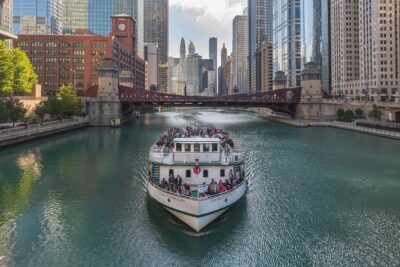
Chicago Architecture Center River Cruise aboard First Lady
Read our review →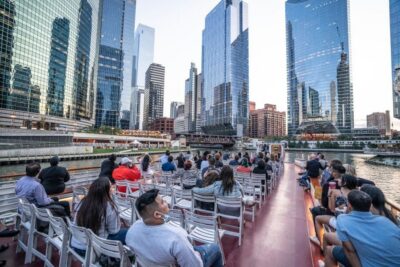
Architecture River Cruise Skip-the-Ticket Line
Read our review →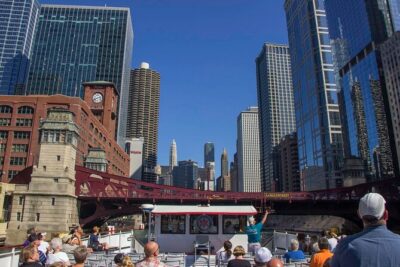
Chicago River 45-Minute Architecture Tour from Magnificent Mile
Read our review →
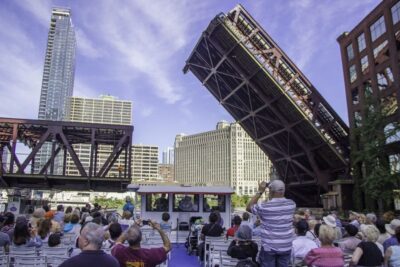
45-Minute Family-Friendly Architecture River Cruise
Read our review →Other lists with this tour