
Review · AMSTERDAM
Amsterdam Architecture Tour
Amsterdam’s canal houses reveal far more than pretty facades. On this private 2.5-hour walk, you’ll learn why buildings vary in width, how the Canal Ring developed, and how religious limits shaped unusual architecture. The visit to Huis Bartolotti adds something many city walks cannot: a look inside one of Amsterdam’s grandest homes and its garden.
I like the freedom of having your own guide, especially with guides such as Tijs and Edgar, who bring clear explanations, humor, and local stories. I also like the blend of big themes and small details, from canal fortifications and city expansion to the swan atop a Protestant domed church. The main drawback is price: at $384.63 per group, it makes the most sense when several people share the cost.
Key points to know before booking
- Private guide and flexible conversation: Your group alone takes part, so you can ask questions and discuss the buildings that catch your eye.
- Huis Bartolotti interior visit: A 15-minute included visit shows off the house’s design and the hidden garden tradition of Amsterdam’s canal homes.
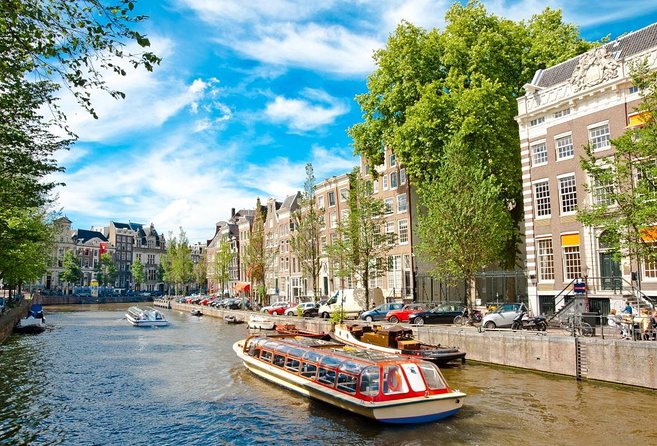
- Canal Ring explained clearly: You’ll connect the waterways, house shapes, fortifications, and rapid growth of Amsterdam.
- Strong guide reputation: Tijs and Edgar are named as guides who bring humor, clear explanations, and personal stories.
- A focused walking route: The tour lasts about two and a half hours, starts and ends at Brouwersgracht 64, and requires moderate physical fitness.
- Best for small groups: Eight people can share the fixed price, making the cost easier to justify for families or friends.
Why Amsterdam’s canals make a fine architecture lesson
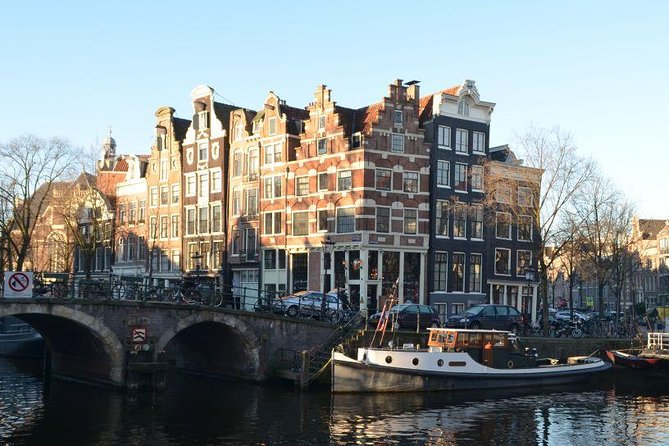
The Amsterdam Canal Ring can look simple at first: water, bridges, narrow houses, and a few grand churches. The pleasure of this tour is learning that the view is a record of practical problems and ambitious plans.
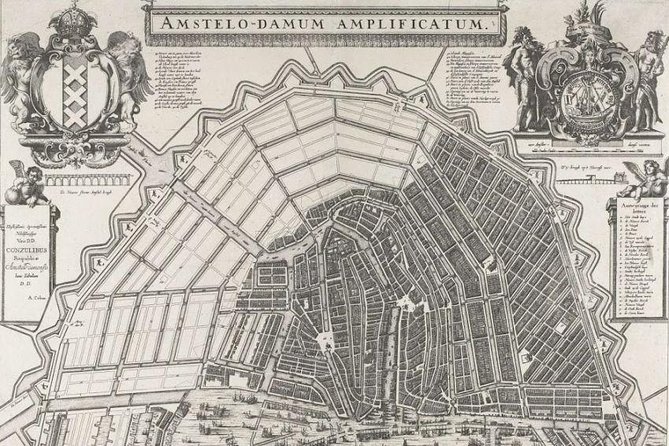
You’ll examine how the canal system was structured and how different kinds of architecture developed along the water. The guide connects the city’s rapid expansion from medieval Amsterdam onward with the growth of trade, the need for new land, and the strict limits placed on building plots.
That context matters. A narrow canal house is not simply a charming old building. Its shape reflects the cost and availability of land, while its gable and facade offer clues about the owner’s taste, status, and period. You’ll hear why Amsterdam’s skyline looks the way it does and why different houses have different widths and rooflines.
I especially like that the tour moves between broad city planning and small human details. You may be looking at a row of facades one moment, then hearing the story behind a statue, a bridge, or an old city defense feature. The result is a more useful way to look at Amsterdam for the rest of your visit.
More Architecture Tours around Netherlands:
- Rotterdam: Architectural Highlights Guided Walking Tour
★ 4.8 · 215 reviews - Rotterdam: Highlights, Gems, Architecture & History Walk
★ 5.0 · 191 reviews - Rotterdam Walk: Hilights, Gems, Architecture & WWII | 2 or 3hrs
★ 5.0 · 149 reviews
Starting at Design Amsterdam on Brouwersgracht
The tour begins at Design Amsterdam, Brouwersgracht 64, in postal area 1013 GX. It also ends there, which keeps the outing easy to fit into a day of sightseeing.
The starting point is on the canal, so you begin with the city’s most recognizable setting rather than spending the first part of the tour getting there. The meeting area is near public transportation, another practical advantage if you are arranging the walk around museum visits, meals, or an arrival from another part of Amsterdam.
You should plan for a real walking tour, not a quick photo stop. The activity notes call for moderate physical fitness, and the duration is about two hours and thirty minutes. Wear shoes you can walk in comfortably and leave enough room in your schedule for the guide’s explanations.
Start times are available across part of the day, which helps if you want to avoid the busiest hours or place the tour around other plans. Since this is a private activity, your group can ask questions as you go instead of waiting for a guide to finish a speech meant for a large crowd.
Reading the Canal Ring instead of just photographing it
The opening part focuses on the structure of the Amsterdam Canal Ring and the types of architecture built along the waterways. This is the foundation for everything that follows.
You’ll learn how Amsterdam expanded and how trade helped drive that growth. The guide also explains the need for canal fortifications and points out remnants of the old city walls. These details give you a better sense of the city as a working place, not just a postcard setting.
The canal system also helps explain the famous Amsterdam skyline. Buildings were shaped by their plots, their owners, and the demands of construction in a city where water and limited land played such large roles. The guide draws your attention to differences that are easy to miss when you are simply walking from one attraction to the next.
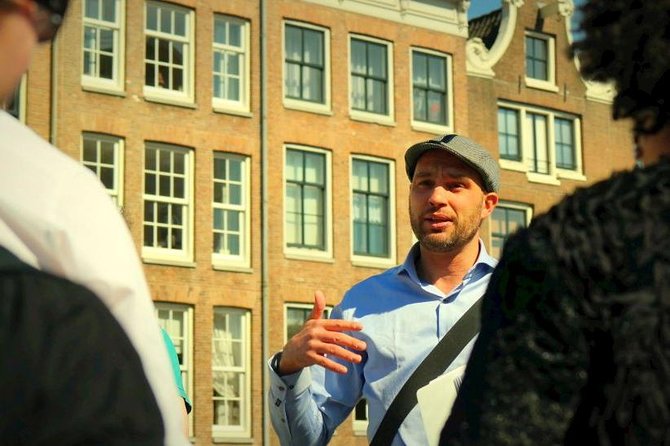
This is where a private tour has a clear advantage. If you are curious about house widths, gable ends, or an odd feature on a facade, you can stop and ask. A good guide can adjust the conversation to your interests, and Tijs is described as adding a personal touch and explaining complex details with enthusiasm and clarity.
The route also includes stories tied to Amsterdam’s social and commercial life. You might hear about the Multatuli statue on the oldest bridge, a prison beneath that bridge, and the origins of fair trade coffee. These are not separate museum lectures. They help show how everyday objects and city corners connect to larger events.
A late 17th-century answer to religious restrictions
One stop introduces a distinctive example of late 17th-century architecture created as an inventive response to restrictions placed on religious minorities. The building’s importance lies in the problem it solved.
Architecture often makes more sense once you know what was allowed and what was forbidden. Here, the guide explains how faith, law, and urban space affected the form of a building. You are not only looking at an old structure. You are seeing how a minority adapted to the rules of the city while maintaining its religious life.
The supplied details do not identify the building by name, so you should not book this portion expecting a specific famous interior unless the guide confirms it. Its value is the explanation of the architectural response and the way it fits into Amsterdam’s wider social story.
This stop should appeal to anyone who likes architecture with a human reason behind it. It also gives the tour some balance. The Canal Ring was shaped by commerce and civic planning, but it was also shaped by the needs of different communities.
Same streets, read through a different style:
- Rotterdam Architecture Highlights Walking Tour
★ 5.0 · 66 reviews - The rise of Haarlem: Culture, History, Art and Architecture Walking Tour
★ 5.0 · 59 reviews - Rotterdam Must Do Tour: Highlights, History, WW2 and Architecture
★ 5.0 · 20 reviews - Rotterdam: Architecture Highlights Tour including the Depot
★ 4.6 · 17 reviews
Inside Huis Bartolotti and Amsterdam’s private gardens
Huis Bartolotti is the clearest interior highlight. You’ll spend about 15 minutes inside this canal house, with admission included, and examine its elaborate interior design.
The house is presented as one of Amsterdam’s most beautiful canal homes. Even if you have seen grand facades from the street, going inside changes your understanding of the canal district. The interiors show that these buildings were not merely practical warehouses or narrow residences. Some were carefully designed statements of wealth and taste.
The visit also introduces one of Amsterdam’s best architectural surprises: the garden behind the canal house. From the street, the city can seem entirely made of brick, stone, water, and busy sidewalks. Behind certain facades, you may find quieter garden spaces. The tour uses Huis Bartolotti to explain this less visible part of Canal Ring design.
That is a useful reason to choose this experience over a standard outdoor walk. You get the city from two angles: the public canal facade and the private world behind it.
The visit is brief, so do not expect a long house tour or a full museum visit. Fifteen minutes is enough to see the interior and grasp the garden concept, but it will not satisfy someone seeking an extended study of decorative details. Still, as part of a larger route, it adds variety and gives the architecture a physical setting.
Westerkerk and the logic of early 17th-century design
Another section looks at early 17th-century architecture in general and Westerkerk in particular. The church provides a strong case study for how Amsterdam expressed its religious and civic identity through design.
The tour explains why Westerkerk matters within the city’s architecture. You’ll also hear about the curious swan on top of a Protestant domed church, a detail that can seem puzzling until someone explains its meaning and context.
This part of the walk is useful if you are not already familiar with Amsterdam’s religious buildings. Instead of treating Westerkerk as a single landmark, the guide places it within the development of early 17th-century architecture. That approach helps you compare the church with the surrounding canal houses and understand how different buildings served different roles.
The guide’s storytelling is important here. Tijs is described as explaining historical details in a clear way, while Edgar is praised for bringing city culture, architecture, and history together. Those qualities matter most at a church or civic landmark, where a list of dates would quickly become dull.
The House with the Heads and a library with status
The House with the Heads is an extravagant early 17th-century canal house in Dutch Renaissance style. Its name alone suggests that the facade deserves a careful look, but the building’s story goes beyond decoration.
The house once belonged to influential residents and now contains a special library listed by UNESCO. That combination gives the stop several layers: architectural style, social power, and the preservation of books and ideas.
You’ll learn how Dutch Renaissance design differs from the later canal-house styles seen elsewhere along the route. The building helps show that Amsterdam’s historic center is not one uniform block of old houses. Styles changed, owners changed, and the city’s wealth left marks in different forms.
The library adds a welcome link between architecture and scholarship. You may not spend a long time inside, and the supplied information does not promise a full library tour. Even so, knowing what the building contains makes the facade more meaningful.
What the guide adds to the walk
The strongest feature of this experience is the guide-led interpretation. The route includes many subjects that could feel disconnected on their own: city walls, canal defenses, religious minorities, house gardens, church design, statues, bridges, coffee, and library collections.
Tijs is specifically associated with clear historical explanations, enthusiasm, humor, and polite service. Edgar is praised for his pleasant manner and broad command of Amsterdam’s city life, culture, architecture, and past. If you are able to request a guide, those names may be useful, though the available information does not promise a particular guide for every booking.
A private format also changes the pace. You can ask why a house is unusually narrow, what a gable tells you, or how the canals supported Amsterdam’s expansion. If your group has children, first-time visitors, or one person especially interested in architecture, the guide can spend more time on the subjects that hold your attention.
The tradeoff is that a private guide’s quality is central to the experience. The route itself is attractive, but the value comes from the explanation. A person who wants only a quick orientation may find two and a half hours too long. Someone who likes context and questions will get much more from it.
Is $384.63 a fair price for a private group?
The price is $384.63 per group of up to eight people, not per person. For one or two people, that is a significant expense. For a family or group of friends, the cost divides more favorably, especially when you want a private experience rather than a large shared walk.
At eight people, the cost works out to roughly $48 per person. At four people, it is about $96 per person. The value depends on how much you care about personal attention, a flexible conversation, and the included visit to Huis Bartolotti.
You are paying for more than a route between landmarks. The guide connects the physical city with its social and architectural reasons, and the group can ask questions throughout. That is useful if you want to understand Amsterdam rather than simply collect photographs.
Still, compare it with your priorities. If you prefer inexpensive sightseeing and are happy to read plaques or explore at your own pace, the cost may be hard to justify. If your group has limited time and wants a focused introduction led in English, the fixed group price is easier to defend.
Practical details for planning your day
The tour is offered in English and includes a mobile ticket. Confirmation is received at booking, and the activity begins and ends at Brouwersgracht 64.
The tour is private, so only your group participates. That makes it a good choice for families, couples traveling with friends, or anyone who dislikes waiting for a large group to gather.
Moderate physical fitness is required. The walking portion, canals, bridges, and stops mean you should plan for steady movement over two and a half hours. No special accessibility details are provided, so you should ask the operator before booking if your group has mobility needs.
Free cancellation is available if you cancel at least 24 hours before the start time. Cancellations made less than 24 hours before the tour, along with late changes, are not refunded.
Who should book this Amsterdam architecture tour?
I would choose this experience if you want Amsterdam’s buildings explained rather than simply pointed out. It suits first-time visitors who want a strong city introduction, architecture fans who enjoy comparing styles, and families or friends who can share the private group price.
It is also a good fit if you like asking questions. The stories about canal gardens, religious restrictions, city walls, the Multatuli statue, and fair trade coffee give you plenty of openings for conversation.
I would be more cautious if your main goal is an extended interior visit. Huis Bartolotti is included, but the stated visit lasts only 15 minutes. The tour also requires moderate walking and costs far more for a small group than a standard shared outing.
Should you book it?
Book this tour if you want a personal guide, a clear explanation of the Canal Ring, and a glimpse inside Huis Bartolotti. The mix of public facades, hidden gardens, religious architecture, and small city stories gives you a fresh way to read Amsterdam.
Skip it if you prefer to wander alone, have a tight budget, or want to spend most of your time inside historic buildings. For a group of four to eight, though, the private format can be a sensible splurge, especially with a guide such as Tijs or Edgar leading the conversation.
FAQ
How long does the Amsterdam Architecture Tour last?
The tour lasts approximately two hours and thirty minutes.
How much does the private tour cost?
The price is $384.63 per group, with up to eight people included.
Is the tour offered in English?
Yes. The tour is offered in English.
Where does the tour begin and end?
It begins at Design Amsterdam, Brouwersgracht 64, 1013 GX Amsterdam, Netherlands, and ends back at the same meeting point.
Is admission to Huis Bartolotti included?
Yes. The visit to Huis Bartolotti includes admission and lasts about 15 minutes.
Can I cancel for a full refund?
Yes, if you cancel at least 24 hours before the experience starts. Cancellations or changes made less than 24 hours before the start time are not refunded.
New to the itinerary around Netherlands
- Escape Room – l’Architecte★ 4.5 · 13 reviews
- Private Rotterdam Walking Tour – guided by Architects★ 5.0 · 2 reviews
- Rotterdam Must Do Tour: Highlights, History, WW2 and Architecture★ 5.0 · 20 reviews
- Rotterdam Architecture and Highlights Walking Tour (TOP RATED)★ 4.5 · 14 reviews
- Maastricht Highlights, Architecture & Heritage Tour★ 5.0 · 7 reviews
- Gouda Private Walking Tour: History, Architecture & Cheese★ 4.5 · 8 reviews
- Amsterdam Walking Tour. All about History, Architecture, Traditions & Anecdotes.★ 5.0 · 2 reviews
- Rotterdam Architecture: Centre and South Bank with watertaxi★ 5.0 · 4 reviews
Amsterdam Architecture Tours, compared.
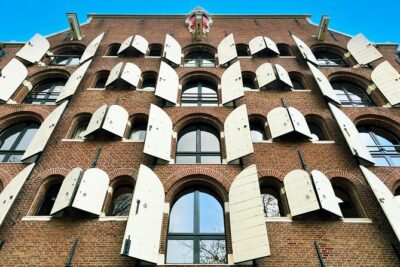
Walking Tour about Golden Age Architecture, private local guide
Read our review →
Architecture Museum Het Schip Entry Ticket & Tour
Read our review →
Other lists with this tour