
Review · AMSTERDAM
Amsterdam, Eastern Docklands Architecture: Private Tour
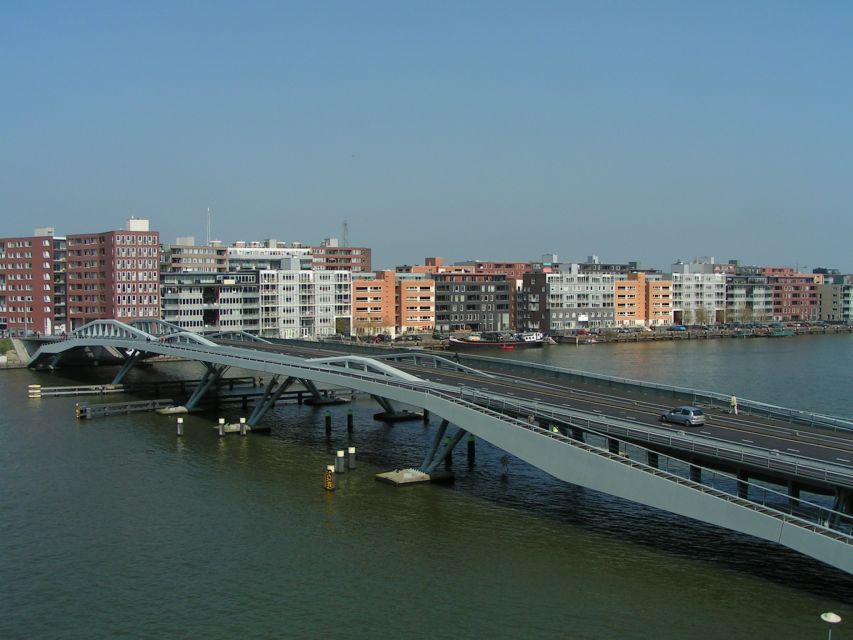
Amsterdam’s Eastern Docklands is where old harbor infrastructure meets some of the Netherlands’ boldest modern building ideas. On this private walk, you move through five districts and see how Amsterdam turned working docks into homes, parks, bridges, and public spaces without wiping away the industrial past.
I like the small private format, which lets the guide adjust the route and spend time on your questions. I also like the sharp contrast between Java and KNSM, and the clever way Borneo and Sporenburg fit low-rise houses into a very dense urban plan. The main drawback is simple: this is an architecture and city-planning tour, not a general sightseeing walk, so it may feel too specialized if you prefer museums, canals, or famous landmarks.
The guides have academic backgrounds in architecture, sociology, art history, and related fields. Some work as architecture and heritage journalists, and two helped write Ontdek het Oostelijk Havengebied, a book about Amsterdam’s Eastern Docklands. Expect clear explanations, a varied two-hour walk, and plenty of room to shape the conversation around your interests.
Key points at a glance
- Five distinct dockland districts: Visit Java, KNSM, Borneo, Sporenburg, and Riet Landen in one focused walk.
- A private group of up to 10: The guide can adapt the two or three-hour route to your pace and questions.
- Java and KNSM side by side: Compare two islands guided by a similar historical idea but expressed through very different architecture.
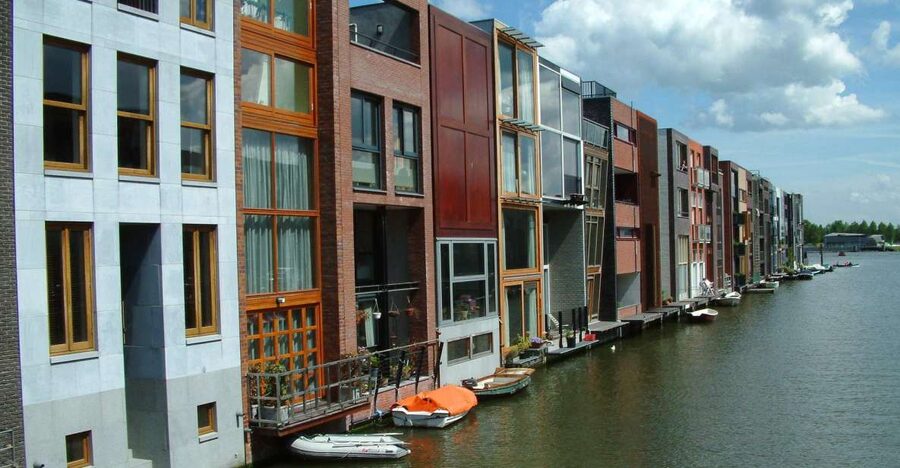
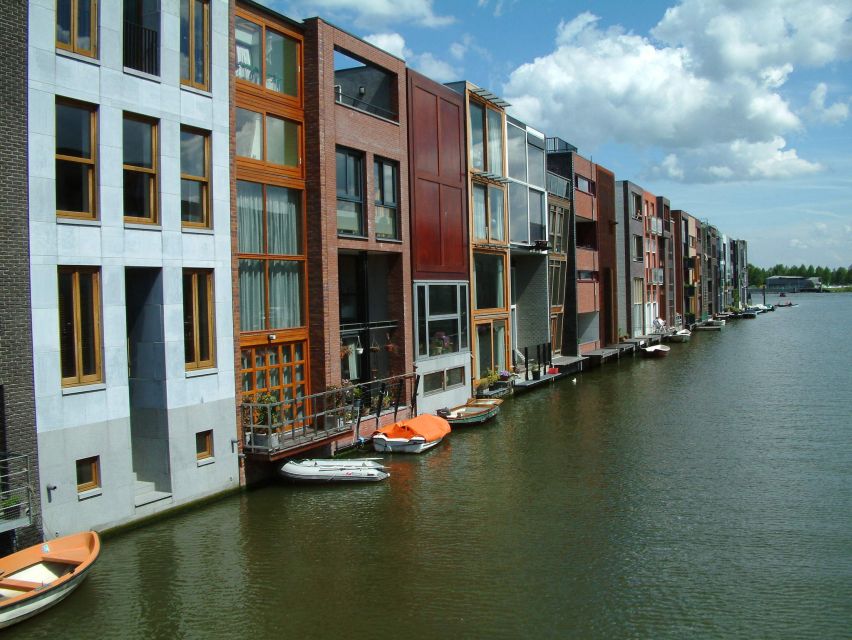
- Low-rise housing at high density: See how Borneo and Sporenburg fit single-family homes into a plan usually associated with apartment towers.
- Riet Landen’s unusual junction: Examine the mix of traffic, housing, and a large park around a busy central point.
- Useful expert context: Guides bring training in architecture, sociology, art history, and urban development.
Why Amsterdam’s Eastern Docklands matter
The Eastern Docklands once served as a working harbor. From the 1970s onward, Amsterdam began reshaping the area into a residential part of the city. The major design work gathered speed during the 1980s and 1990s, with new projects continuing into the next century.
That change gives this tour its real subject. You are not simply looking at unusual façades. You are examining a city trying to answer hard questions: How do you reuse former industrial land? How can new housing feel connected to Amsterdam’s past? How do you create dense neighborhoods without filling every corner with tall apartment blocks?
The guide helps you see those choices in physical form. A bridge, a row of homes, a broad park, or an old warehouse becomes part of a larger argument about how cities grow. I find that far more useful than a walk that simply points out photogenic buildings.
The setting also gives you a good break from central Amsterdam’s familiar canal streets. The Eastern Docklands has a different scale and mood, shaped by water, former shipping routes, large plots, and recent residential construction. You get a side of Amsterdam that many first-time visitors miss.
More Private Architecture Tours in Netherlands:
- Walking Tour about Golden Age Architecture, private local guide
★ 5.0 · 15 reviews - Gouda Private Walking Tour: History, Architecture & Cheese
★ 4.5 · 8 reviews - Private Rotterdam Walking Tour – guided by Architects
★ 5.0 · 2 reviews
Meeting at Pakhuis De Zwijger
The walk begins in front of Pakhuis De Zwijger, next to Jan Schaeferbrug. This is a practical meeting point because it places you right beside the former dockland zone and its network of bridges and waterways.
You should arrive ready to walk for two hours. Food and drinks are not included, and there is no transfer, so plan to reach the meeting point on your own. Large bags and luggage are not allowed, which is worth noting if you are coming directly from a train station or checking out of a hotel.
The route is wheelchair accessible. Still, because this is an outdoor walking tour through several districts, you may want to confirm any specific mobility needs when booking. The guide can adapt the two or three-hour walk to your needs, which is especially helpful for a private group.
Java Island: history translated into a new neighborhood
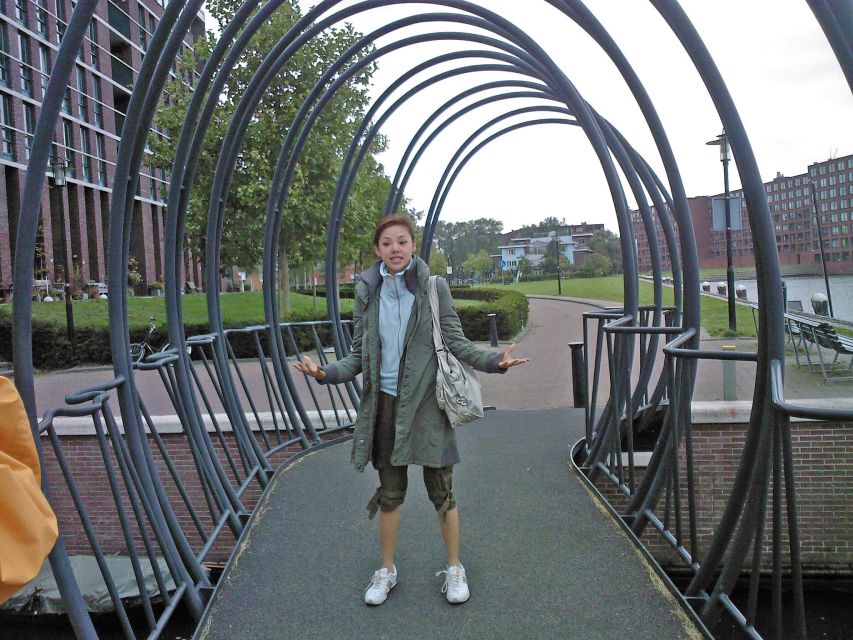
Java is one of the two islands used to explain the Eastern Docklands’ major redevelopment ideas. The island’s name points toward Amsterdam’s old trading connections, and the planning here draws on that sense of historical reference while creating a thoroughly modern residential district.
Your guide will help you look past the overall impression and notice how the area is organized. Water, housing, bridges, and public routes work together. The key point is not simply that Java has striking buildings. It is that the district uses a historical idea as a starting point for new city building.
Java is especially useful at the beginning of the tour because it gives you a clear example of how planners tried to connect the new residential area with Amsterdam’s identity. You can discuss why a former harbor might be designed as an island neighborhood rather than erased or filled in.
The district also prepares you for the comparison with KNSM. The two islands share a broad concept, but they produce very different results. That contrast is one of the most valuable parts of the walk.
KNSM Island: the same idea, a different answer
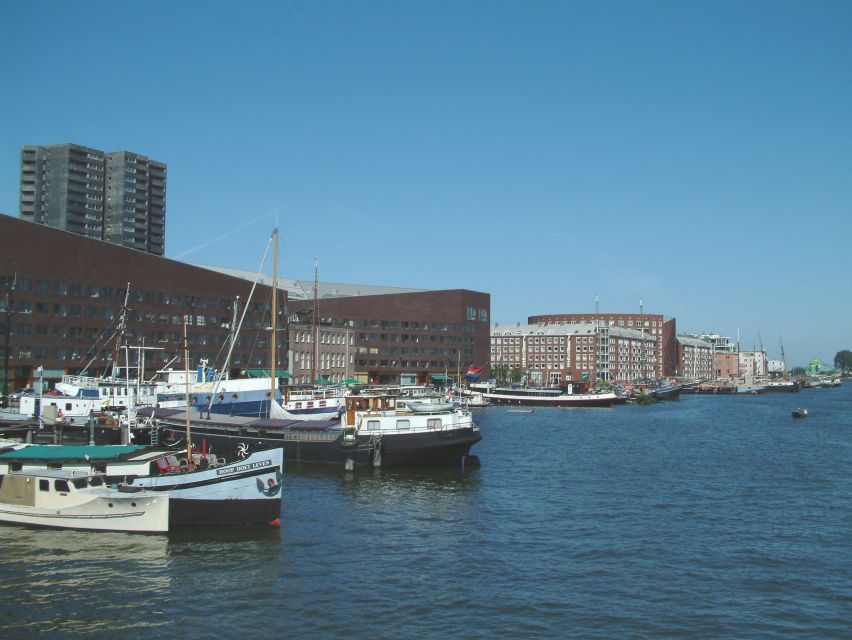
KNSM shows how one urban idea can lead to another architectural result. The island was part of the same wider effort to give the old harbor a new purpose, yet its buildings and spatial character differ sharply from Java.
This is where a guide with a background in architecture or urban sociology adds real value. Without context, you might simply decide that one island feels more dramatic or more comfortable. With an explanation of the planning goals, you can ask better questions: How much space should housing take? What makes a new district feel urban? How should large residential buildings relate to water and shared public areas?
I like this part because it turns comparison into a tool. You do not need technical training to follow it. You only need to look carefully at how the two districts handle scale, building form, open space, and the connection between private homes and public routes.
The guide can also tailor the depth of the discussion. A group interested in architectural form can spend more time on design choices. A group focused on Amsterdam’s development can place the islands within the city’s larger shift from harbor work to residential use.
More Architecture Tours around Netherlands:
- Rotterdam: Architectural Highlights Guided Walking Tour
★ 4.8 · 215 reviews - Rotterdam: Highlights, Gems, Architecture & History Walk
★ 5.0 · 191 reviews - Rotterdam Walk: Hilights, Gems, Architecture & WWII | 2 or 3hrs
★ 5.0 · 149 reviews - Rotterdam Architecture Highlights Walking Tour
★ 5.0 · 66 reviews
Borneo and Sporenburg: dense housing without apartment towers
Borneo and Sporenburg tackle one of the most interesting problems on the route. The designers wanted low-rise, single-family homes, yet they also needed to fit roughly 100 apartments per acre. In many cities, that level of density would mean blocks of multi-storey flats.
Here, the answer was a concentrated pattern of individual houses. You can study how a neighborhood can feel lower and more personal while still using land efficiently. That makes these districts useful for anyone interested in housing, not just architecture fans.
The design also raises practical questions. How much variety should individual homes have? How do rows of houses avoid becoming dull? How do private entrances and shared routes work together? Your guide can help you read those details as parts of a plan rather than as isolated design tricks.
I would give Borneo and Sporenburg extra attention if housing design interests you. They show that density is not only a question of building height. It is also about spacing, layout, repetition, and the way planners use the available ground.
There is a possible limitation here. If you want grand landmarks or a long list of famous architects, this section may feel restrained. Its interest comes from the planning solution and the close look at ordinary housing forms. The reward is subtle, not flashy.
Riet Landen: where park, homes, and traffic meet
Riet Landen offers a different lesson. Instead of focusing mainly on housing types, this area shows how a city can bring together a traffic junction, residential buildings, and a substantial park.
That mix is easy to overlook when you walk through it casually. A road junction can feel like a problem to hide. Here, the area’s design makes it part of the discussion. The park helps frame the housing and soften the infrastructure, while the traffic route remains an important part of the district’s function.
This is one of the tour’s strongest examples of urban planning as problem-solving. Cities need roads, movement, green space, and homes at the same time. Riet Landen shows what happens when those needs are planned together instead of handled one at a time.
I like that the tour does not present architecture as a collection of pretty objects. Riet Landen asks whether a residential area can remain pleasant when major movement routes pass through it. You can look at the junction, the park, and the homes as one connected piece of city design.
What the guide adds to the walk
The quality of this experience depends heavily on the guide. Here, the guide’s background is a real selling point. The team includes people who studied architecture, sociology, art history, and related subjects. Some also work as architecture and heritage journalists.
That mix should give you more than dates and building names. You can expect discussion of why the Eastern Docklands developed as it did, how the projects relate to Amsterdam’s earlier identity, and what the different districts were trying to achieve.
Two of the guides recently published a book about the Eastern Docklands, Ontdek het Oostelijk Havengebied, which is being translated into English. That detail suggests a close working knowledge of the area, though the tour itself remains accessible to people without a design background.
You can book the walk in English, Dutch, or German. The available language matters if you want to discuss technical or historical ideas comfortably. One especially positive feature of the experience is the guide’s willingness to respond to questions and preferences. Since the group is private, you are not locked into a fixed lecture.
How long the walk feels
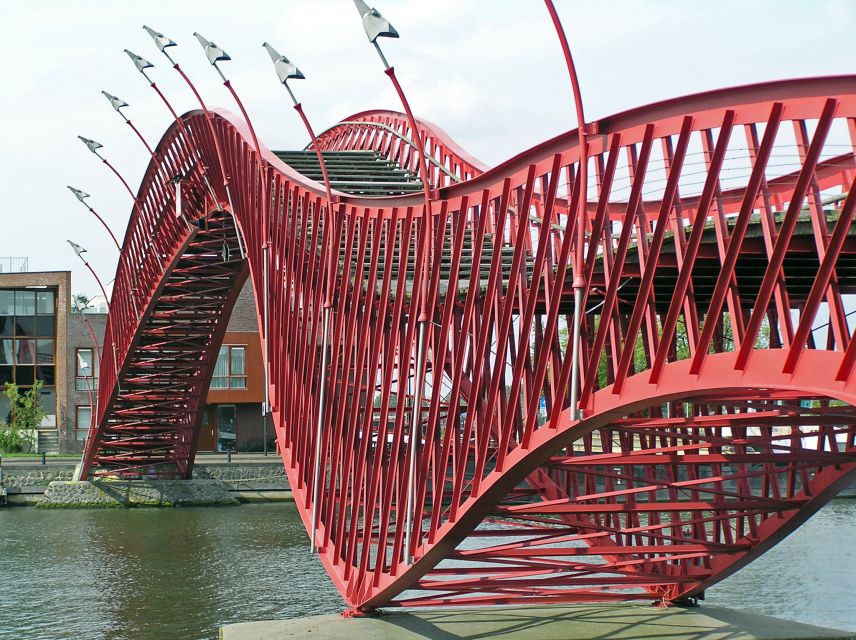
The stated duration is two hours, with the option of a two or three-hour walk adapted to your needs. Two hours gives you a focused introduction to the five districts. Three hours would suit you better if you like stopping for longer explanations or asking detailed questions about housing and planning.
Five districts in two hours means the pace will be purposeful. You should not expect a slow café-to-café stroll with long breaks. The walk is designed to connect several examples, so wear comfortable shoes and be prepared to stay engaged as the route moves from one area to the next.
A private group also changes the rhythm. You can ask the guide to explain a point again, spend more time on Java and KNSM, or move along more quickly through a section that interests you less. That flexibility is harder to get on a large public tour.
Because the tour is outdoors, your enjoyment will depend partly on the day’s conditions. The supplied information does not promise indoor stops, meals, or transport. Pack lightly and treat it as a serious walking tour rather than a short photo stop.
Is $235 good value for a private group?
The price is $235 for a group of up to 10 people. That makes the value easier to judge as a private outing rather than as an individual ticket. For a full group, the cost works out to $23.50 per person before any booking changes. For two people, it is a much more expensive experience per person.
I think the price makes the most sense for families, friends, professional groups, or architecture students who want the guide’s full attention. A couple with a strong interest in city design may also find it worthwhile, especially if they use the flexible format to shape the walk around specific questions.
The value comes from the subject and the guide, not from included extras. There is no food, drink, or transport. You are paying for a focused route through five districts and for interpretation from people with academic and journalistic experience in Amsterdam’s urban development.
If your main goal is to see central Amsterdam’s classic sights, spend the money elsewhere. If you want to understand how a former harbor became a modern residential area, the private format gives you a level of focus that a general city walk usually cannot.
Who should book this Eastern Docklands tour?
I would recommend it to you if you enjoy architecture, urban planning, social history, or thoughtful city walks. It is also a good choice if you have already seen central Amsterdam and want a different part of the city.
The tour suits visitors who like asking questions. The guide can respond to your interests, and the private setup makes it easier to pause over a building type or planning choice. It also works well for a small group with mixed knowledge because the explanation can be kept practical rather than overly technical.
You may want to skip it if you dislike walking, want a food-centered outing, or expect a tour built around famous monuments. The Eastern Docklands rewards attention. Its best details are found in the relationship between homes, bridges, roads, parks, water, and old harbor use.
Should you book it?
Book this walk if you want to understand how Amsterdam handled one of its biggest urban changes. Java, KNSM, Borneo, Sporenburg, and Riet Landen each offer a different answer to the same question: how can a city add housing while respecting its industrial past and public spaces?
The strongest reasons to book are the private format, the adaptable route, and the guides’ academic and publishing background. The main reason not to book is that the subject is specialized and the price is harder to justify for a small group.
For architecture-minded visitors, this is a smart way to spend two hours outside the usual Amsterdam circuit. For everyone else, choose it only if the idea of reading a city’s design sounds as appealing as taking in its views.
FAQ
Where does the tour meet?
The meeting point is in front of Pakhuis De Zwijger, next to Jan Schaeferbrug.
How long does the tour last?
The listed duration is two hours. The walk may also be arranged for three hours and adapted to your needs.
How many people can join the private tour?
The price covers a private group of up to 10 people.
Which neighborhoods does the tour visit?
The route examines Java, KNSM, Borneo, Sporenburg, and Riet Landen in Amsterdam’s Eastern Docklands.
What languages are available?
The live guide can conduct the tour in English, Dutch, or German.
Is the tour wheelchair accessible?
Yes, the activity is listed as wheelchair accessible.
Is food or drink included?
No. Food and drinks are not included in the tour price.
Is transportation provided?
No. Transfers are not included, so you need to reach the meeting point on your own.
Can I bring luggage or a large bag?
No. Luggage and large bags are not allowed on the tour.
New to the itinerary around Netherlands
- Escape Room – l’Architecte★ 4.5 · 13 reviews
- Private Rotterdam Walking Tour – guided by Architects★ 5.0 · 2 reviews
- Rotterdam Must Do Tour: Highlights, History, WW2 and Architecture★ 5.0 · 20 reviews
- Rotterdam Architecture and Highlights Walking Tour (TOP RATED)★ 4.5 · 14 reviews
- Maastricht Highlights, Architecture & Heritage Tour★ 5.0 · 7 reviews
- Gouda Private Walking Tour: History, Architecture & Cheese★ 4.5 · 8 reviews
- Amsterdam Walking Tour. All about History, Architecture, Traditions & Anecdotes.★ 5.0 · 2 reviews
- Rotterdam Architecture: Centre and South Bank with watertaxi★ 5.0 · 4 reviews
Private Architecture Tours, compared.

Sagrada Familia & Gaudi Tour Private or Small Group with Tickets
Read our review →
Barcelona 1.5h Private Old Town, Gothic & Ramblas Walking Tour
Read our review →
Treasures of Barcelona: Private Gaudi Walking Tour
Read our review →
Sagrada Familia & Gaudi Guided Tour Private or Small Groups
Read our review →
Best of Chicago: Architecture & Highlights City Private Tour
Read our review →
Private Harajuku Omotesando Architecture Walking Tour
Read our review →
Private Santa Barbara History and Architecture Walking Tour
Read our review →
Private Barcelona Modernism and Gaudí Walking Tour
Read our review →Other lists with this tour