
Review · ROTTERDAM
Rotterdam: Architectural Highlights Guided Walking Tour
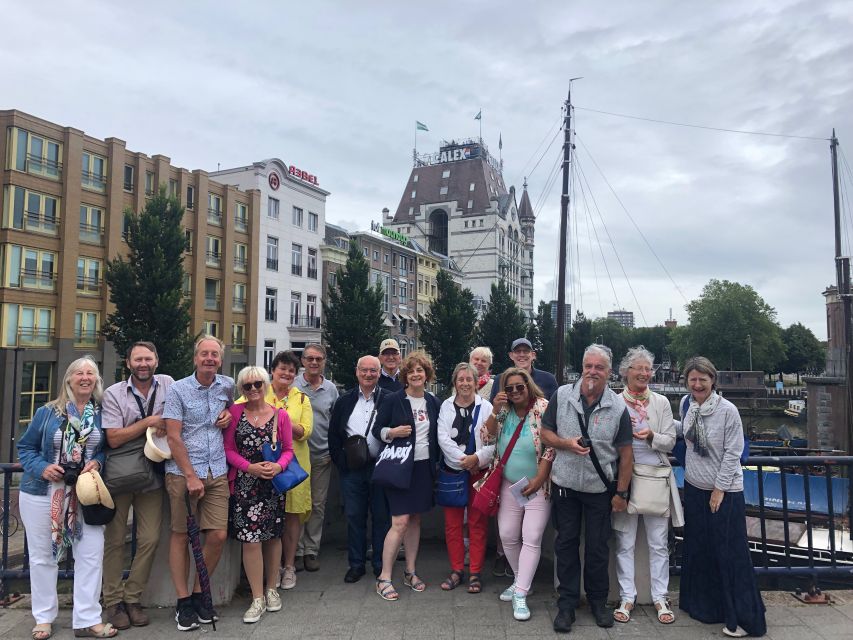
Rotterdam makes the most sense when you understand why it looks so different from other Dutch cities. This 2-hour walk with a local architect connects the rebuilt center to the Maas waterfront, turning bold buildings into chapters of the city’s story. I like the route’s clear progression from Rotterdam Centraal to the Erasmus Bridge, and I like that the guide explains daily life, industry, planning, and wartime destruction rather than simply naming buildings.
The tour is especially useful for first-time visitors who want context before exploring on their own. Guides including Tania, Tanya, Silvia, and Sylvie have been praised for their warmth, pacing, and command of Rotterdam’s architecture. The main drawback is time: you cover 3 to 4 kilometers in two hours, so the stops are selective and some people may want longer pauses or more time for questions.
Key points at a glance
- From Central Station to the Maas: Follow a logical route through Rotterdam’s modern center to the waterfront.
- An architect leads the walk: Expect explanations of design, city planning, rebuilding, and the social choices behind major projects.
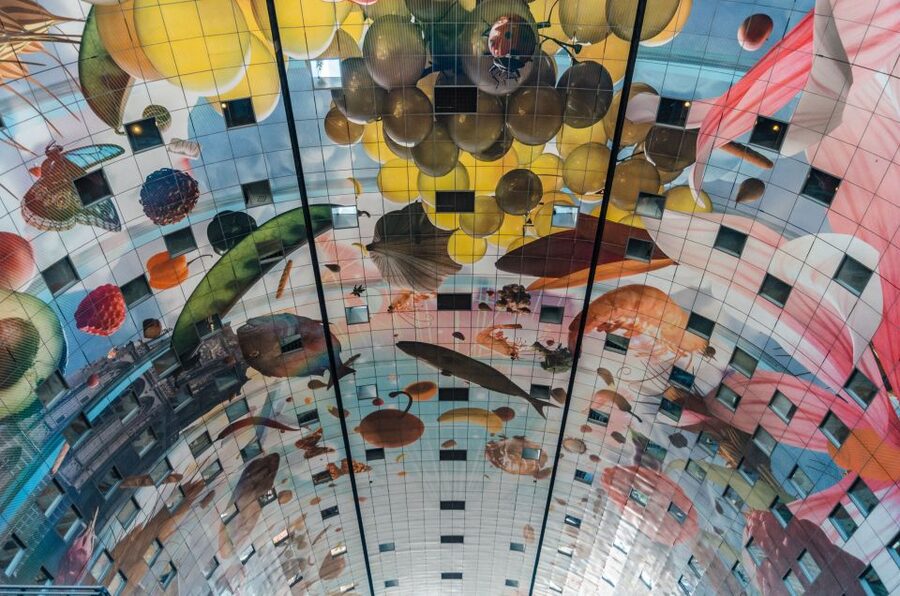
- Major sights in one compact route: See the Lijnbaan, City Hall, Timmerhuis, Sint Laurens church, Markthal, Cube Houses, and Erasmus Bridge.
- Useful postwar context: Learn how the 1940 bombing shaped Rotterdam’s open street plan and modern identity.
- A fast but rewarding pace: The 3 to 4 km walk covers a lot, but you will not linger at every stop.
- Good value for architecture fans: At $53 per person, the tour can cost less than a private architectural consultation while providing a guided introduction to the city.
Why Rotterdam needs an architectural guide
Rotterdam is not a city you fully understand by checking off landmarks. Its most important story is the connection between destruction, rebuilding, commerce, and experimentation. A local architect can point out why one street feels spacious, why a building turns its windows in a certain direction, or how a new tower fits into a much older plan.
That context matters because Rotterdam’s center can look like a jumble at first. You see postwar modernism beside historic fragments, large public buildings beside daring private projects, and practical commercial spaces beside buildings designed to make a statement. Without explanation, the city’s variety can feel random. With a guide, the mix becomes a record of changing ideas about work, housing, transport, and public space.
The tour also looks beyond appearance. You learn about Rotterdam’s industrial past and its ambitions for the future, along with the way residents use the city today. That wider view is a strong reason to choose this walk instead of a tour focused only on photograph-friendly buildings.
More Walking Tours in Netherlands:
- Rotterdam: Highlights, Gems, Architecture & History Walk
★ 5.0 · 191 reviews - Rotterdam Walk: Hilights, Gems, Architecture & WWII | 2 or 3hrs
★ 5.0 · 149 reviews - Rotterdam Architecture Highlights Walking Tour
★ 5.0 · 66 reviews
Meeting beneath the clock at Rotterdam Centraal
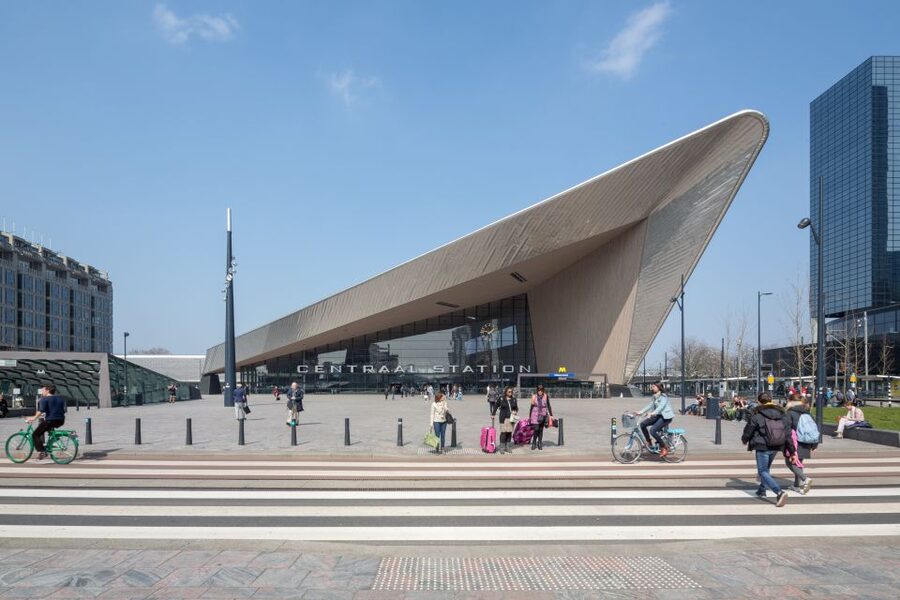
The tour begins at Rotterdam Centraal Station, underneath the clock. This is a sensible starting point because the station itself introduces the city’s modern character. You begin with a major transport hub, then move through central Rotterdam toward the river, watching the scale and style of the buildings change along the way.
The route is designed as a walk rather than a series of isolated stops. Your guide can place each building in relation to the streets around it, which is valuable in a city where planning decisions are often as interesting as the facades. You will hear about daily life, the city’s industrial roots, and the rebuilding that followed the destruction of 1940.
A guide may use historic images to show what stood in the center before the war and how the city changed afterward. That kind of visual comparison helps you grasp the scale of the loss and the boldness of the rebuilding effort. It also keeps the tour from becoming a simple parade of new buildings.
The Lijnbaan and the shape of postwar Rotterdam
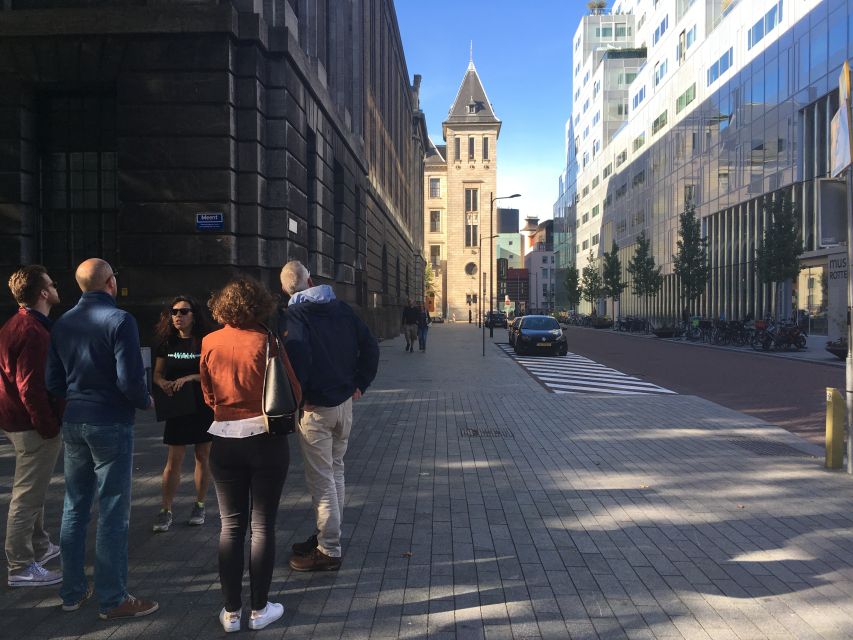
The Lijnbaan area is one of the key early stops. It represents a postwar approach to city shopping and pedestrian movement, and it helps explain how Rotterdam tried to create a new center after the war.
Here, pay attention to the relationship between retail space, open walkways, and the wider street plan. The point is not just to admire the buildings. You are looking at how planners imagined modern city life, including how people would shop, move around, and spend time in the center.
This is also where the tour’s historical side becomes useful. Rotterdam’s rebuilding was not simply a matter of replacing old buildings with new ones. It involved choices about what kind of city should rise in their place. I appreciate that the guide connects architecture to those decisions instead of treating design as decoration.
The drawback is that a two-hour route cannot explore every part of the Lijnbaan area in detail. If you want a close study of postwar housing or social housing projects, this may feel too narrow. One thoughtful criticism of the fixed route was the lack of social housing examples, so architecture students and repeat visitors may want an additional tour.
City Hall, Sint Laurens church, and layers of history
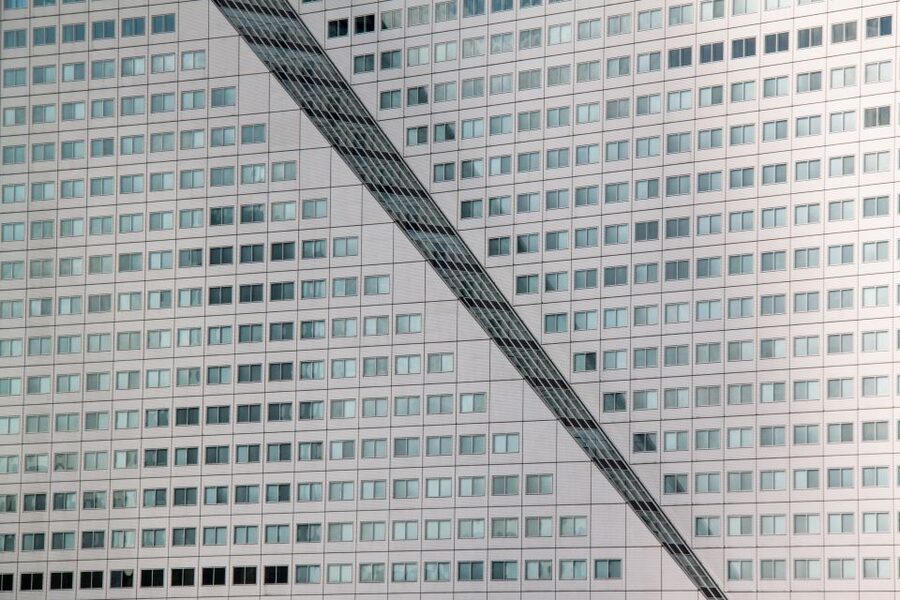
The walk continues to City Hall and the Sint Laurens church, giving you two useful contrasts. City Hall represents civic power and the city’s institutional life, while Sint Laurens provides a visible link to Rotterdam’s older past.
That contrast is important. Rotterdam is often described as a modern city, but the historic church helps you see that the modern center did not appear in a vacuum. The surviving and rebuilt elements around it provide a reference point for understanding what changed and what endured.
Your guide discusses architectural styles and the reasons behind different choices. You might hear how function, materials, planning rules, and the needs of a growing city affected the buildings you see. The strongest guides also answer questions and adjust their explanations for people with little architecture experience, so you do not need technical training to follow along.
This part of the walk rewards attention more than speed. Look up, but also look across the streets. The spaces between buildings can tell you as much about Rotterdam’s postwar thinking as the structures themselves.
More Guided Tours around Netherlands:
- Walking Tour about Golden Age Architecture, private local guide
★ 5.0 · 15 reviews - Private Rotterdam Walking Tour – guided by Architects
★ 5.0 · 2 reviews - Chicago River: 1.5-Hour Guided Architecture Cruise
★ 4.8 · 8,046 reviews - Naples: San Gaudioso Catacombs Guided Tour
★ 4.7 · 1,105 reviews
Timmerhuis and Rotterdam’s working city
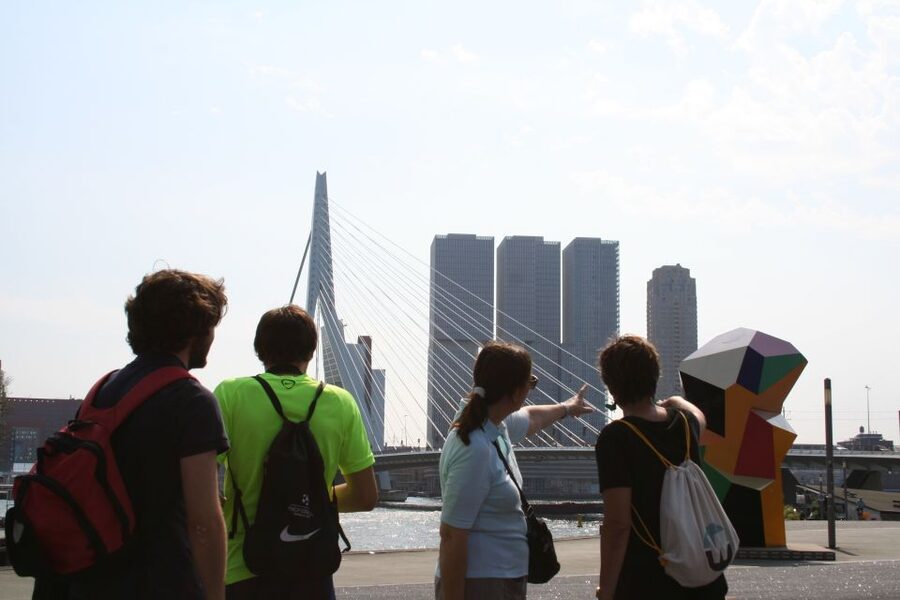
The Timmerhuis adds another chapter to the route. It is a useful stop for understanding newer ideas about offices, public services, and mixed city use. Your guide explains how contemporary design fits into Rotterdam’s ongoing effort to renew the center.
The wider lesson is that Rotterdam continues to build and rebuild. The city is not presented as a finished museum of architecture. Instead, you see a place still testing ideas about how people work, shop, live, and move through an urban center.
This is one of the tour’s most valuable features. You are not just given dates and building names. You are encouraged to think about why a city chooses one form over another, and what those choices mean for people using the spaces every day.
Some guides use a historical photo book, which can make the city’s changes easier to follow. The experience varies by guide, but names such as Silvia, Sylvie, Tania, and Tanya appear repeatedly among the tour’s strongest guides. Their shared advantage is the ability to explain architecture in plain language and connect it to Rotterdam’s past.
Markthal and the Cube Houses
The Markthal is one of the tour’s most recognizable stops. You walk through the building rather than viewing it only from outside, giving you a better feel for its scale and public function.
Inside, look at how food, housing, commerce, and spectacle are combined in one structure. The Markthal is not merely a market with apartments above it. It reflects Rotterdam’s fondness for ambitious projects that give ordinary urban activities a dramatic setting.
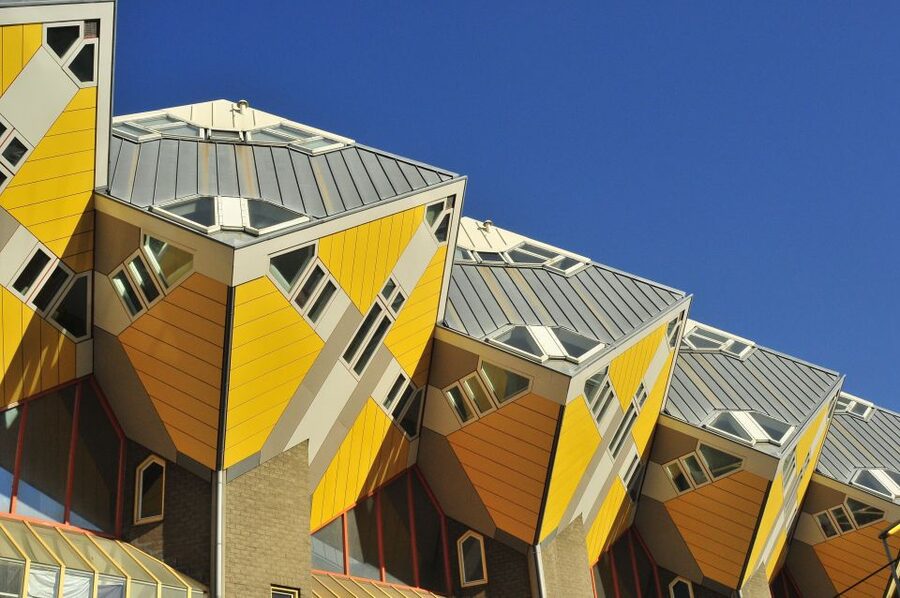
The nearby Cube Houses are another essential sight, and the route takes you past the iconic row. Their unusual angles make them easy to photograph, but the guide’s explanation gives you a more useful way to assess them. You learn about the concept behind the design and how the houses fit into the city’s larger attempt to experiment with urban living.
Not everyone will love the Cube Houses as homes. One participant felt that people should stop treating the design as an unquestioned success. That is a fair reminder that striking architecture can be clever without being perfect. The tour is at its best when it gives you room to consider both the idea and its practical limits.
Because the tour enters the Markthal, weather can briefly matter less at this point. Still, most of the experience takes place outdoors, and the full walk operates in rain or shine. Wear shoes you can comfortably use for 3 to 4 kilometers.
The riverfront and Erasmus Bridge
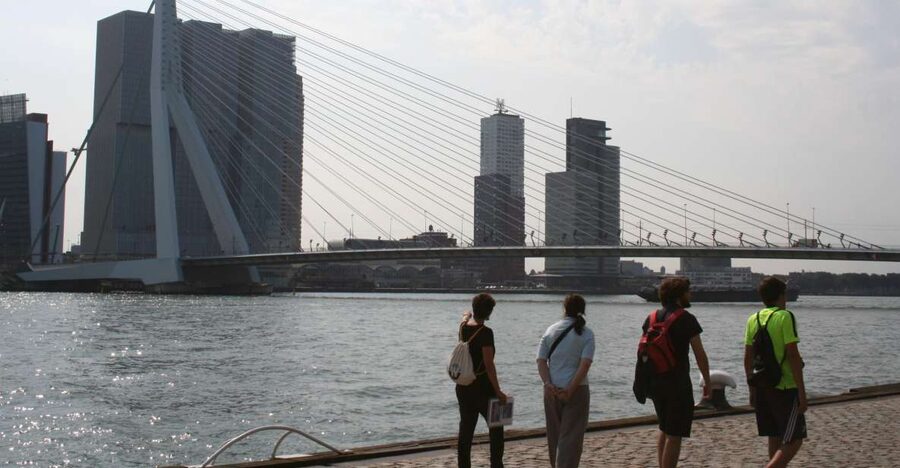
The final section leads toward the riverside and the new development on the South Bank. Here, Rotterdam’s skyline opens up, and the Erasmus Bridge becomes the visual climax of the walk.
The bridge is more than a postcard view. It represents Rotterdam’s links between the historic center, new waterfront districts, transport routes, and future development. From the river, you can see how the city uses height and large-scale projects to reshape its identity.
This is a good place to ask questions about urban growth. The guide can explain how the riverfront has changed and how new development relates to Rotterdam’s industrial past. You get a clearer sense of the city as a working port with an eye on the future, rather than as a collection of disconnected architectural landmarks.
The waterfront section also explains why the tour cannot cover everything in two hours. Rotterdam’s harbor area is extensive, and the route gives you an introduction rather than a full survey. If you want to explore the South Bank in depth, plan extra time after the walk.
How much ground do you cover?
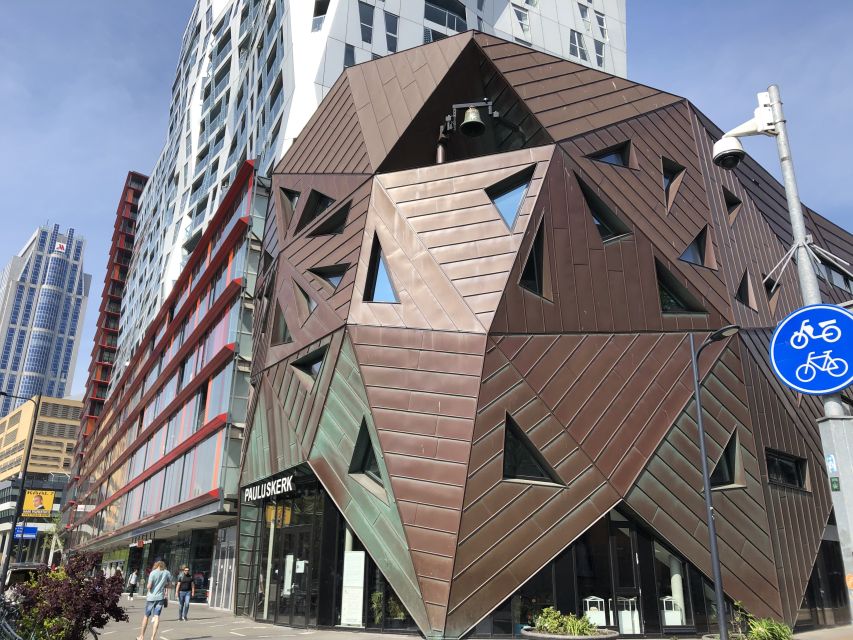
The distance is about 3 to 4 kilometers, with the route running from Rotterdam Centraal to the riverside. The pace is manageable for most people who are comfortable walking, but you are covering a lot of ground in a short period.
I would allow for a brisk rhythm between stops. Several people praised guides for pausing and keeping the group together, while one suggested adding more pauses for slower walkers. That is useful advice for families, older visitors, or anyone who prefers time to take photographs.
Children from 0 to 12 can join for free. Parents should think about the distance, the architecture-focused content, and the two-hour duration before booking. The tour is wheelchair accessible, and private groups are available, which can help if you want a more flexible pace or a discussion shaped around your interests.
The guide speaks English. Accents can vary, and one person found a strong Spanish accent occasionally difficult to follow. If listening clarity matters to you, keep this in mind, though the overall feedback on the guides’ communication is very positive.
Is $53 a fair price?
At $53 per person, I see this as a fair price if architecture, history, or city planning interests you. You are paying for a live guide with professional architectural training, not just a route between famous buildings.
The value is strongest early in your Rotterdam visit. After two hours, you should have a working map of the center, a basic understanding of the 1940 destruction and postwar rebuilding, and a better sense of where to spend your own time. The walk can prevent the common mistake of seeing Rotterdam’s bold buildings only as unusual photo stops.
The price includes the walking tour and architect guide. Food, drinks, and transport costs are not included, though the route begins at a central railway station and ends at the river. You should budget separately if you want refreshments or need transport afterward.
Private groups are available, but the standard tour may already provide a small enough setting for questions. If you are traveling as a couple, it is possible to find yourself in a very small group, depending on the booking. That can make the experience feel more personal without the full cost of a private tour.
Who will enjoy this walk most?
I would choose this tour for:
- First-time visitors who want a clear introduction to central Rotterdam
- People interested in architecture, city planning, or postwar rebuilding
- Visitors who prefer walking and conversation to a bus-based overview
- Students and design fans who want to understand why buildings look and function as they do
- Couples or small groups who value the option to ask questions
- Anyone arriving through Rotterdam Centraal and looking for a useful first activity
I would be more cautious if you want a slow photographic walk, a tour centered on interiors, or a full study of social housing and the harbor. The set route covers the main central highlights, but it does not attempt to represent every side of the city.
Book it near the start of your stay if possible. The guide’s advice about restaurants, attractions, and other things to do can help you plan the rest of your time, and the route gives you a practical sense of how the central districts fit together.
What to bring and how to prepare
Wear comfortable shoes and clothing suited to the weather. This is an outdoor walk in all conditions, so a rain jacket is sensible in Rotterdam even when the forecast looks friendly.
You do not need an architecture background. Guides such as Tania and Silvia have been praised for explaining complex ideas in accessible terms and adjusting to the group. Bring questions if you have them, especially about housing, public space, the port, or the rebuilding after 1940.
The cancellation policy is flexible: you can cancel up to 24 hours before the start for a full refund. You can also reserve and pay later, which is useful when your Dutch itinerary is still changing.
Should you book the Rotterdam Architectural Highlights tour?
Book it if you want Rotterdam to make sense, not just look unusual. The combination of Central Station, the Lijnbaan, City Hall, Timmerhuis, Sint Laurens church, Markthal, Cube Houses, and Erasmus Bridge gives you a strong overview in a manageable route.
The main tradeoff is speed. You will cover a lot in two hours, and architecture fans may wish the tour lasted four. Still, at $53, it offers solid value for a guide who can explain the city’s design choices, wartime loss, industrial roots, and future plans in one walk.
I would especially recommend it for your first day in Rotterdam. It gives you the background needed to appreciate the city afterward, including the buildings you might otherwise dismiss as strange, oversized, or purely modern.
FAQ
Where does the Rotterdam architecture tour begin?
The meeting point is beneath the clock at Rotterdam Centraal Station.
How long does the walking tour last?
The tour lasts two hours.
How far does the route cover?
The walk covers about 3 to 4 kilometers, from Rotterdam Centraal toward the riverside.
Which Rotterdam landmarks are included?
The route includes Rotterdam Central Station, the Lijnbaan area, City Hall, the Timmerhuis, Sint Laurens church, the Markthal, the Cube Houses, and the Erasmus Bridge area.
Is the tour led by an architect?
Yes. The tour is led by a local architect, with guides including Tania, Tanya, Silvia, and Sylvie.
Is the tour available in English?
Yes. The live tour guide language is English.
Can children and wheelchair users join?
Children from 0 to 12 can join free, though parents should consider the distance, content, and two-hour duration. The tour is wheelchair accessible.
New to the itinerary around Netherlands
- Escape Room – l’Architecte★ 4.5 · 13 reviews
- Private Rotterdam Walking Tour – guided by Architects★ 5.0 · 2 reviews
- Rotterdam Must Do Tour: Highlights, History, WW2 and Architecture★ 5.0 · 20 reviews
- Rotterdam Architecture and Highlights Walking Tour (TOP RATED)★ 4.5 · 14 reviews
- Maastricht Highlights, Architecture & Heritage Tour★ 5.0 · 7 reviews
- Gouda Private Walking Tour: History, Architecture & Cheese★ 4.5 · 8 reviews
- Amsterdam Walking Tour. All about History, Architecture, Traditions & Anecdotes.★ 5.0 · 2 reviews
- Rotterdam Architecture: Centre and South Bank with watertaxi★ 5.0 · 4 reviews
Netherlands Architecture Tours, compared.
Rotterdam Walk: Hilights, Gems, Architecture & WWII | 2 or 3hrs
Read our review →
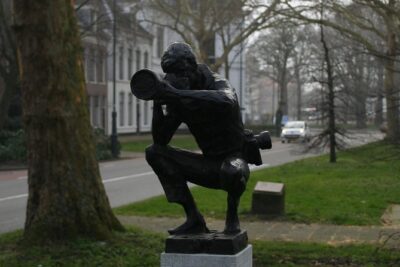
The rise of Haarlem: Culture, History, Art and Architecture Walking Tour
Read our review →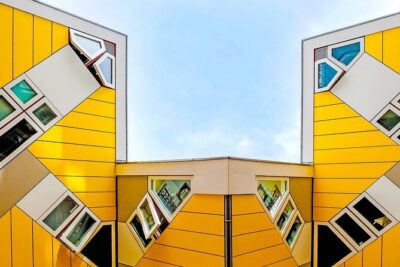
Rotterdam Must Do Tour: Highlights, History, WW2 and Architecture
Read our review →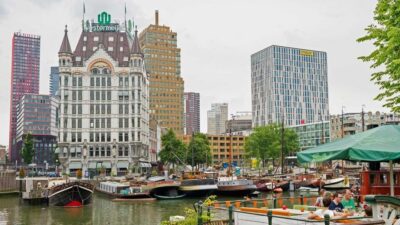
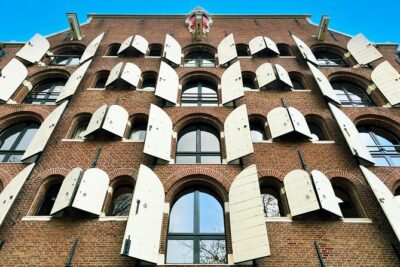
Walking Tour about Golden Age Architecture, private local guide
Read our review →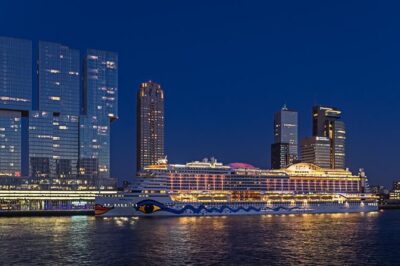
Rotterdam Architecture and Highlights Walking Tour (TOP RATED)
Read our review →Other lists with this tour