
Review · ROTTERDAM
Rotterdam: Highlights, Gems, Architecture & History Walk
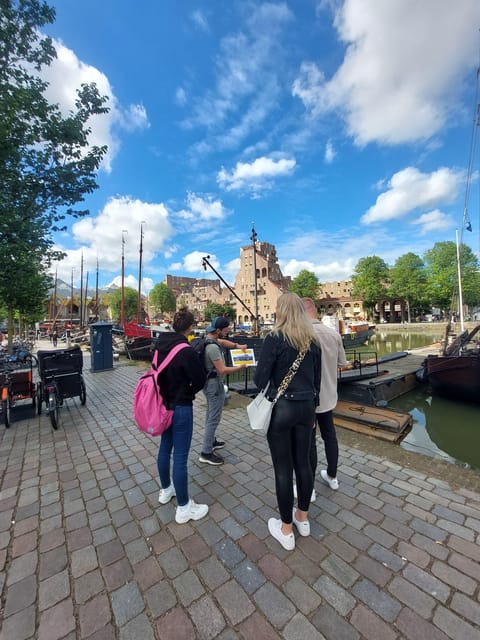
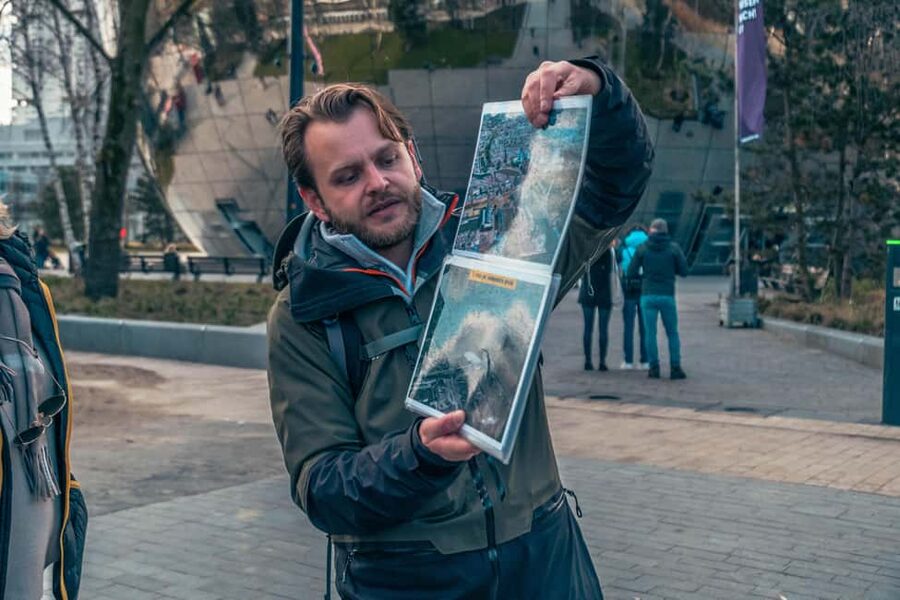
Rotterdam’s best story is how a city nearly erased by World War II rebuilt itself as an open-air experiment in modern design. This walking tour connects the medieval river settlement, the working harbor, the wartime ruins, and the bold buildings that followed. I especially like the old-to-future approach and the way local guide Yoreh uses large photo sheets to show what Rotterdam looked like before, during, and after its destruction. I also like ending inside the Markthal, where you can eat instead of hunting for lunch on your own.
The main consideration is physical: this is a brisk walk of about 5 kilometers and 11,000 steps, with periods of standing and some stairs. The three-hour option offers more context, but the two-hour version may suit you better if your feet, hips, back, or energy level are limiting factors.
The tour in a few useful points
- Rotterdam’s full story in one walk: Follow the city from its 13th-century beginnings through harbor growth, wartime destruction, and bold rebuilding.
- Architecture with a local lens: See the Cube Houses, Markthal, Depot Boijmans Van Beuningen, and major modern projects while learning why they look the way they do.
- A guide who brings visual proof: Yoreh carries A3 images, maps, and other material showing past buildings, present streets, and planned developments.
- Small-group flexibility: Yoreh and Elmer have led tours for groups and solo bookers, with room for questions and occasional photo stops.
- Useful finish at the Markthal: Get food suggestions, take a restroom break, and continue sightseeing from one of central Rotterdam’s best-known buildings.
- A practical first-day orientation: You leave with photo locations, restaurant ideas, museum suggestions, and a clearer sense of how the city fits together.
Why Rotterdam makes a good walking-tour subject
Rotterdam is not an old European city in the usual postcard sense. Its center is a mix of surviving fragments, rebuilt streets, experimental housing, port infrastructure, and projects aimed at the future. Without context, some of the architecture can feel random. With a good guide, it begins to look like a series of deliberate answers to difficult problems.
The tour starts with Rotterdam’s roots on the Rotte River in the 13th century. From there, the story moves toward trade, shipping, and the growth of one of Europe’s great ports. The World War II section matters because it explains so much of the city you see today. Destruction created a painful break with the past, but it also gave planners a rare chance to redraw the center.
Yoreh’s style, based on the information provided, is not simply to point at a building and name it. He connects the building to Rotterdam’s choices, failures, ambitions, and local character. Elmer also leads the walk, and the most useful feature is the emphasis on local explanation rather than a quick list of sights.
More Walking Tours in Netherlands:
- Rotterdam: Architectural Highlights Guided Walking Tour
★ 4.8 · 215 reviews - Rotterdam Walk: Hilights, Gems, Architecture & WWII | 2 or 3hrs
★ 5.0 · 149 reviews - Rotterdam Architecture Highlights Walking Tour
★ 5.0 · 66 reviews
Starting among old and new Rotterdam
The exact meeting point depends on the option you book. One listed starting point is the Vaimoo shared-bike station on Melkkoppad, so check your confirmation carefully rather than assuming the tour begins at the central station or Markthal.
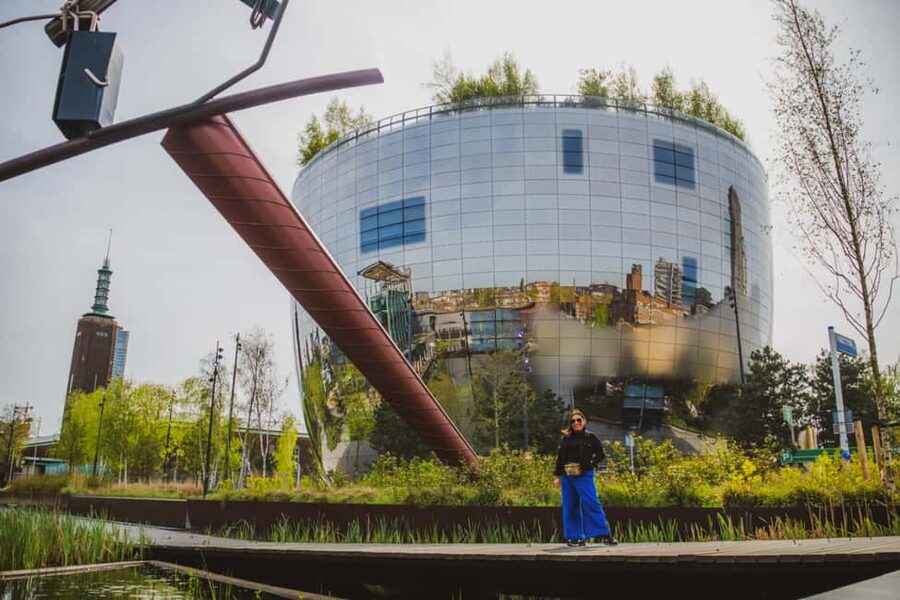
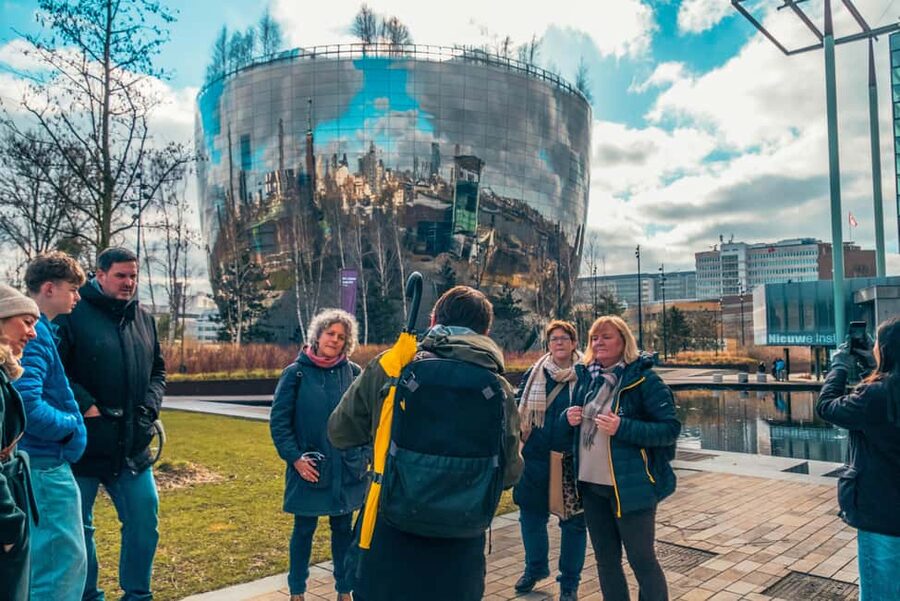
The route soon brings you past the Depot Boijmans Van Beuningen. Its mirrored, bowl-like exterior is one of Rotterdam’s most striking newer landmarks, and it makes a strong opening lesson in the city’s taste for buildings that do more than simply house their contents. The tour passes by rather than entering, so you will want a separate museum visit if you hope to see the collections inside.
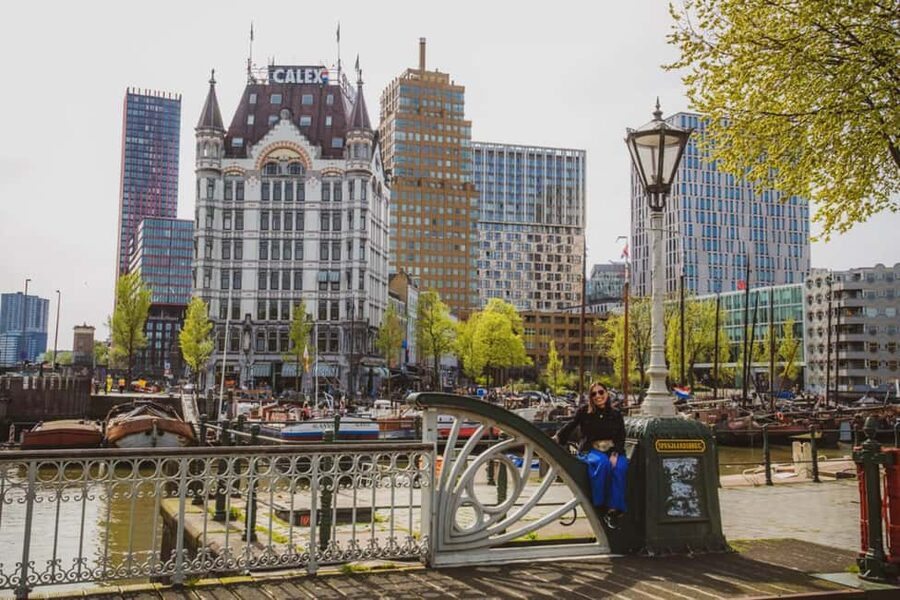
You then move toward Veerhaven, a pleasant contrast to the more forceful modern architecture elsewhere. The route uses this area to show another side of Rotterdam, with older buildings and the traces of the city before postwar redevelopment took over. This change of mood is valuable. Rotterdam makes more sense when you see that it is not entirely new, even if its center often feels that way.
Harbor views and the Erasmus Bridge
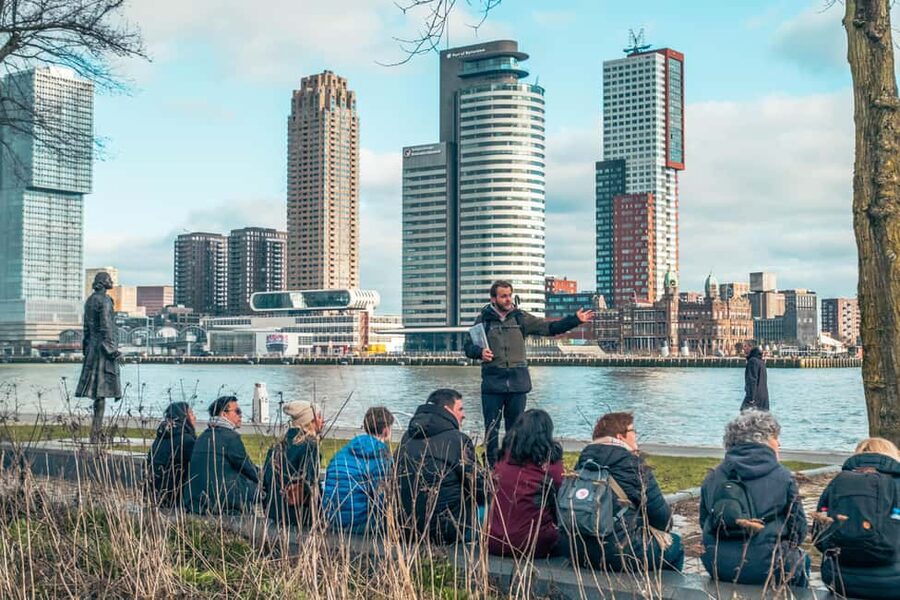
The walk continues toward the Erasmus Bridge, Rotterdam’s famous white suspension bridge and a strong symbol of the city’s postwar confidence. The route passes by it, giving you opportunities for skyline photographs and a useful view of how water, roads, towers, and public space meet.
Do not expect a long bridge-focused visit with time for every photo angle. This is a city tour, not a dedicated bridge walk. Still, the bridge helps explain Rotterdam’s identity: practical because it links parts of the city, but also highly visual and ambitious.
The harbor story continues at Leuvehaven, where the tour spends about ten minutes passing through the area. This is one of the places where the city’s maritime past becomes easier to picture. Rotterdam grew through water, ships, trade, and labor. The port is not just background scenery. It is the reason the city became wealthy and strategically important, and it shaped the people and neighborhoods that followed.
The route also includes the Maritime District and Shipping Quarter. These areas help connect the port’s working function with today’s city life. You may see modern construction, waterside streets, and older traces in close quarters. The guide’s explanation gives these places a purpose beyond being good photo stops.
WWII, rebuilding, and the meaning of modern Rotterdam
The wartime section is one of the strongest reasons to choose this walk over a simple architecture orientation. The bombing and German invasion caused enormous suffering, and the rebuilding that followed was not an easy blank slate. Residents had to live with loss while planners decided what kind of center should replace what had disappeared.
The tour uses visual material to help you compare past and present. That matters because Rotterdam’s modern streets can hide how radically the city changed. Large photo sheets make it easier to see vanished blocks, former street patterns, and the scale of the destruction.
I appreciate that the history is paired with present-day planning. Rotterdam is still changing, and the guide discusses future developments rather than treating the city as finished. That is useful if you notice cranes, large building sites, or new public spaces and wonder what you are looking at.
This part can be emotionally serious, especially because the route deals with civilian hardship and the city’s forced reinvention. The tour also includes lighter stories, local folklore, personal memories, and odd details, so the mood is not heavy for three straight hours.
More History Walks around Netherlands:
- The rise of Haarlem: Culture, History, Art and Architecture Walking Tour
★ 5.0 · 59 reviews - Rotterdam Must Do Tour: Highlights, History, WW2 and Architecture
★ 5.0 · 20 reviews - Gouda Private Walking Tour: History, Architecture & Cheese
★ 4.5 · 8 reviews - Maastricht Highlights, Architecture & Heritage Tour
★ 5.0 · 7 reviews
The Maritime District and Oude Haven

The Maritime District offers another look at how Rotterdam mixes water and architecture. The route does not promise an extended visit inside a maritime museum, but it does place the district within the larger story of shipping and urban change.
At Oude Haven, the city’s older harbor character comes forward. This is a particularly helpful stop for anyone who has trouble reconciling Rotterdam’s sleek towers with its earlier identity. The harbor is a reminder that the city was built around movement, commerce, and practical work long before modern architects made it famous.
The guide may point out details you would otherwise pass without noticing, including buildings, public art, and small stories tied to the surrounding streets. The information provided also highlights unexpected local curiosities, such as the quirky Santa sculpture discussed on one walk. Details like this keep the tour from becoming a formal lecture.
Walking through the Cube Houses
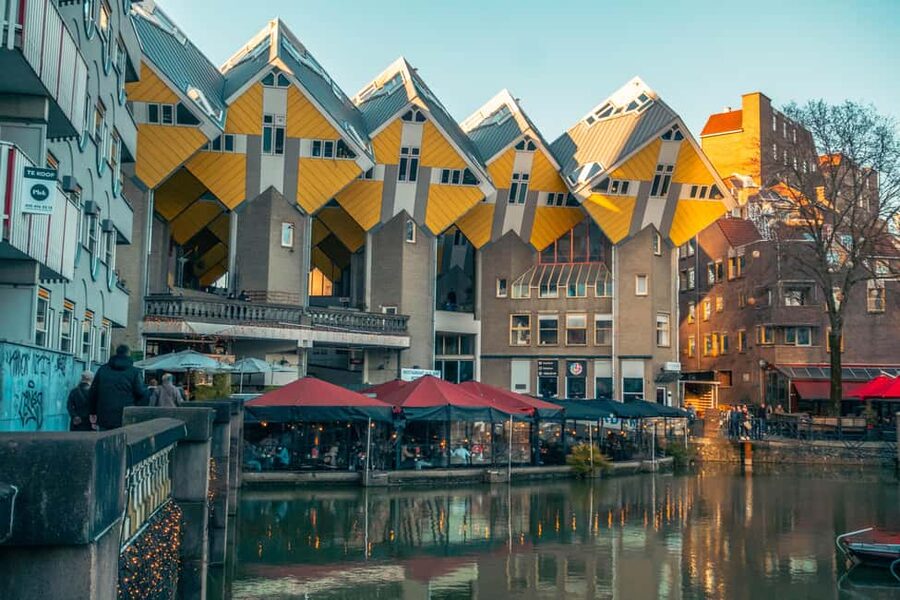
The Cube Houses at Overblaak are among Rotterdam’s most recognizable buildings. Their tilted yellow forms are fun to photograph, but they can be hard to understand from a quick look. The tour walks through the Cube Houses area and explains how this unusual housing idea fits into Rotterdam’s long habit of testing new ways to use limited urban space.
You do not enter a Cube House during the tour. The option to visit one is available afterward, about a one-minute walk away. That arrangement is sensible: the group keeps moving, while anyone who wants to see the inside can add it later.
The Cube Houses can be crowded and visually confusing, especially when you are trying to photograph the angles. This is one reason the guide’s explanation helps. You can focus less on collecting a picture and more on understanding what the architect was trying to achieve.
The area is also a useful navigation point. After the tour, you can return easily to the Cube Houses, Oude Haven, or Markthal. For a first day in Rotterdam, that orientation can save time.
Inside the Markthal
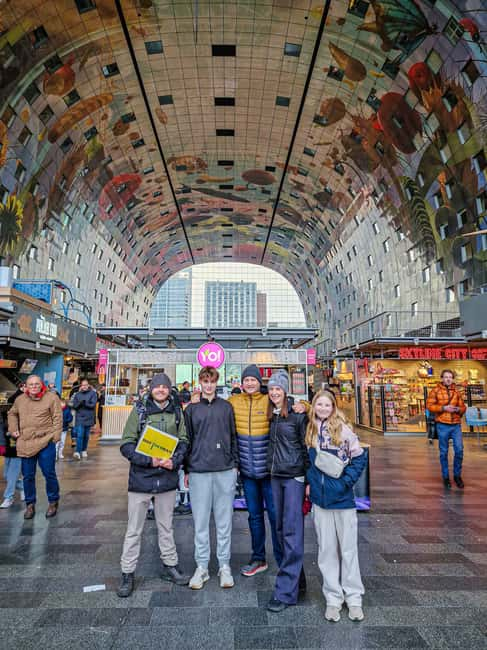
The final stop is the Markthal, and the tour visits the interior rather than merely passing by. The building is famous for its huge colorful ceiling artwork and its food stalls, which make it an easy place to finish a walking route.
The guide gives suggestions about where to eat inside. That is more useful than a generic restaurant list because you arrive at the exact place where the options are located, still hungry after several hours on foot. A stroopwafel halfway through the walk provides a small Dutch snack and a welcome energy boost. Some walks have also included an oliebol, depending on timing and circumstances.
The Markthal is popular, so do not expect a quiet final stop. It can be busy, and the many food choices may make you want more time than the tour schedule allows. Treat the end as an introduction. You can stay afterward for lunch or a snack without needing to find your way elsewhere.
Two hours or three hours?
The two-hour tour gives you a clear overview of Rotterdam’s main themes and central sights. It is the better choice if you have limited time, want a brisk introduction, or prefer not to spend most of a morning or afternoon on foot.
The three-hour version goes further into the core of the city. You get more historical explanation, more architecture, more visual comparisons, and more time for questions. If Rotterdam is new to you and you want to understand why the city looks so different from Amsterdam, I would choose three hours.
Neither option is a slow stroll. The route covers about 5 kilometers and roughly 11,000 steps. There are small sitting breaks at selected locations, plus a restroom break around the middle, but you should still wear supportive walking shoes and dress for changing weather.
The pace can be adjusted to some degree, and guides have allowed time for photos. Still, the group needs to keep moving to finish on schedule. If you stop often for long photography sessions, you may need to choose your shots.
How the guiding style adds value
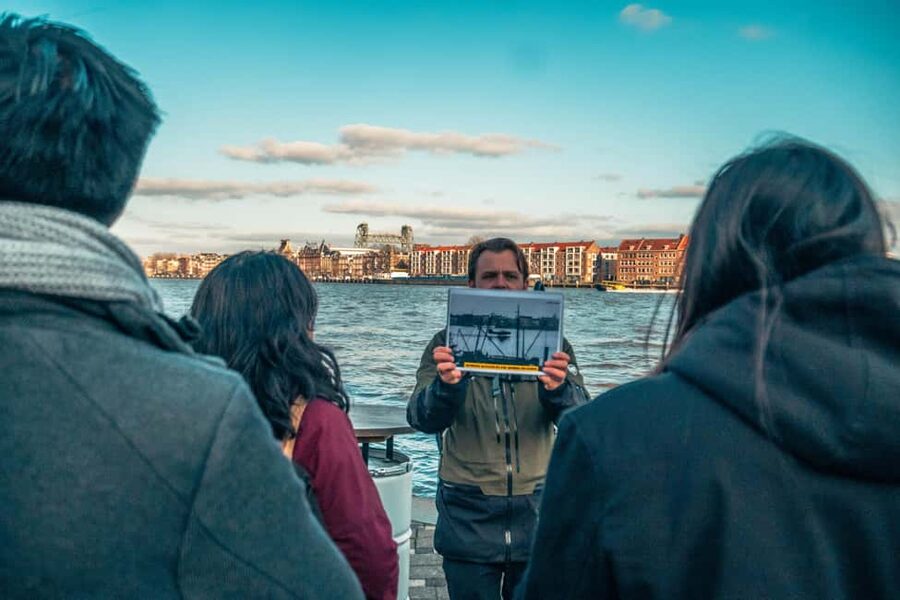
Yoreh is the name most closely associated with this experience, and his approach centers on Rotterdam as a hometown rather than a collection of tourist stops. He speaks Dutch and English, and the information provided describes clear English, personal stories, humor, and a strong grasp of history, architecture, and future development.
The A3 photo sheets are a real advantage. It is one thing to hear that a street was destroyed. It is another to hold a visual comparison beside the building that replaced it. The material also covers future plans, giving you a better sense of the city as an ongoing project.
Elmer also leads the tour and has been praised for answering questions and keeping the route friendly and informative. Solo bookers have been accepted even during quiet periods, and guides have sometimes continued with just one person. That is unusual for a shared walk and may matter if you are visiting outside the busiest months.
The experience is small-group, but the exact group size is not stated. You should expect a personal format rather than a large coach-style crowd. Guides may also take photos for you and point out good angles, a useful extra when you are walking alone or with children.
The $48 price and who gets good value
At $48 per person, this costs more than a basic free orientation walk, but it includes a local guide, a small-group format, visual material, a Dutch snack, restroom planning, and food advice at the finish. The value depends on how much explanation you want.
I think the price is easier to justify if you choose the three-hour version. You are paying for a connected account of Rotterdam, not just a checklist of the Cube Houses and Markthal. The WWII material, future planning, personal local stories, and restaurant suggestions add practical value for the rest of your stay.
If you only want quick photographs of the main sights, you can walk to many of these places on your own. If you want to understand why they matter and how they fit together, the guide earns the fee.
This tour suits first-time visitors, architecture fans, history-minded families, and anyone with just a day in Rotterdam. Several families have found that older children stayed engaged, but younger children may find 11,000 steps and long explanations tiring.
The route is wheelchair accessible, and stairs or steps can be avoided. The restroom is wheelchair accessible. Still, the tour includes extended standing and walking, so it is not recommended for people with back, hip, or foot problems or for highly pregnant participants.
Should you book the Rotterdam walk?
Book it if you want Rotterdam explained through history, architecture, and local life at once. The strongest reasons are the WWII context, the visual comparison sheets, the personal guidance from Yoreh or Elmer, and the practical finish at the Markthal.
Choose the two-hour option for a useful overview. Choose three hours if you want the city to make sense, not simply look unusual. Skip it if you are avoiding a brisk five-kilometer walk or prefer to explore each sight slowly and independently.
For most first visits, I would schedule it early in your stay. You will leave with a map in your head, better photo spots, ideas for museums and meals, and a clearer reason why Rotterdam looks the way it does.
FAQ
How long does the Rotterdam walking tour last?
You can choose a two-hour or three-hour version. The three-hour route offers more detailed stories, more central areas, and fuller explanations of the city’s past and future.
How far do you walk?
The walk covers approximately 5 kilometers and about 11,000 steps. You should expect a brisk pace, periods of standing, and some stairs.
Which languages are available?
The tour is offered in Dutch and English.
Who guides the tour?
The listed local guides are Yoreh and Elmer. Yoreh is a Rotterdam local who focuses on history, architecture, personal stories, and future city plans.
Does the tour enter a Cube House?
The walk goes through the Cube Houses area, but the interior of a Cube House is not included during the tour. You can visit inside afterward, about one minute away.
Where does the tour finish?
The tour finishes inside Rotterdam’s Markthal. The guide gives suggestions about where to eat there.
Is the tour wheelchair accessible?
Yes. Steps can be avoided along the route, and a wheelchair-accessible restroom is available. Some standing and walking are still involved.
Can I cancel or pay later?
You can cancel up to 24 hours in advance for a full refund. You can also reserve now and pay later, subject to the booking conditions.
New to the itinerary around Netherlands
- Private Rotterdam Walking Tour – guided by Architects★ 5.0 · 2 reviews
- Rotterdam Must Do Tour: Highlights, History, WW2 and Architecture★ 5.0 · 20 reviews
- Escape Room – l’Architecte★ 4.5 · 13 reviews
- Rotterdam Architecture and Highlights Walking Tour (TOP RATED)★ 4.5 · 14 reviews
- Maastricht Highlights, Architecture & Heritage Tour★ 5.0 · 7 reviews
- Gouda Private Walking Tour: History, Architecture & Cheese★ 4.5 · 8 reviews
- Amsterdam Walking Tour. All about History, Architecture, Traditions & Anecdotes.★ 5.0 · 2 reviews
- Rotterdam Architecture: Centre and South Bank with watertaxi★ 5.0 · 4 reviews
Netherlands Architecture Tours, compared.
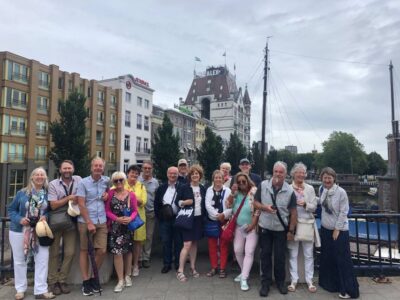
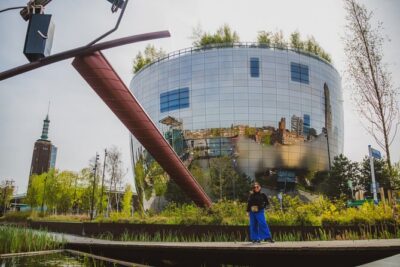
Rotterdam Walk: Hilights, Gems, Architecture & WWII | 2 or 3hrs
Read our review →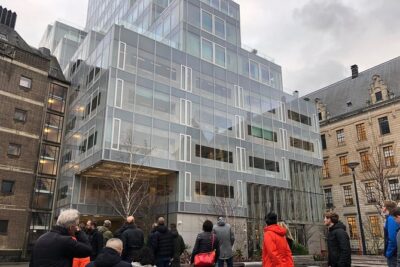
The rise of Haarlem: Culture, History, Art and Architecture Walking Tour
Read our review →
Rotterdam Must Do Tour: Highlights, History, WW2 and Architecture
Read our review →
Walking Tour about Golden Age Architecture, private local guide
Read our review →
Rotterdam Architecture and Highlights Walking Tour (TOP RATED)
Read our review →Other lists with this tour