
Review · ROTTERDAM
Rotterdam Must Do Tour: Highlights, History, WW2 and Architecture
Rotterdam’s story is written in its buildings. On this two-hour walk, you move from the rebuilt postwar center to the bold Cube Houses and the food-filled Markthal, with the bombing of 1940 and the city’s recovery tying it all together. The architecture is the star, but the human story gives the walk its meaning.
I like the small maximum group of 15, which should make it easier to hear your guide and ask questions. I also like the range of guides, including Susan, Edwin, Michel, Ed, John, and Stephan, who bring different stories and styles to the route. The main drawback is pace: two hours is short for this many stops, and one shortened tour had to move quickly after a cruise ship delay.
Key points
- Postwar Rotterdam in one walk: See how the city rebuilt after the Second World War.
- A strong architecture route: Visit the Luchtsingel, Markthal, Cube Houses, and Lijnbaan.
- Small group format: The tour accepts no more than 15 people.
- Central starting point: Meet at Rotterdam Centraal, at Stationsplein 10.
- Guide quality matters: Guides such as Susan, Edwin, Michel, and Ed have been praised for clear explanations and engaging stories.
- Good first-day choice: The route gives you a useful orientation before exploring Rotterdam on your own.
Why Rotterdam’s rebuilding story makes this walk worthwhile
Rotterdam does not look like a traditional Dutch city center. Much of the old center was destroyed during the bombing of the Second World War, and the city rebuilt itself with modern planning, wide streets, new shopping areas, and adventurous buildings.
This tour makes that change easier to understand. Instead of seeing a collection of unusual structures, you get a simple thread: the medieval city, the destruction of the old center, the first postwar buildings, and the modern city that followed.
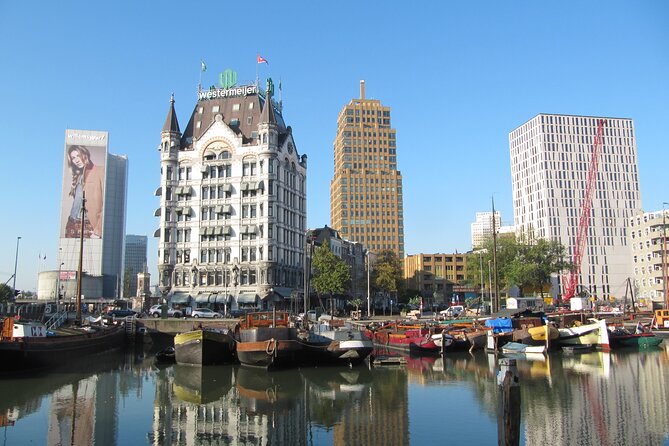
The Groot Handelsgebouw is an early stop with real historical weight. Completed in 1953, it was one of the first major buildings constructed after the bombing. Its place on the route helps you see how quickly Rotterdam began rebuilding, even while the damage was still part of living memory.
The walk also connects architecture with daily life. You pass shopping streets, a railway station, a wooden pedestrian bridge, a church, a market hall, and a harbor. That mix makes the experience more useful than a route made only of famous photo stops.
More History Walks around Netherlands:
- Rotterdam: Highlights, Gems, Architecture & History Walk
★ 5.0 · 191 reviews - The rise of Haarlem: Culture, History, Art and Architecture Walking Tour
★ 5.0 · 59 reviews - Gouda Private Walking Tour: History, Architecture & Cheese
★ 4.5 · 8 reviews
Meeting at Rotterdam Centraal Station
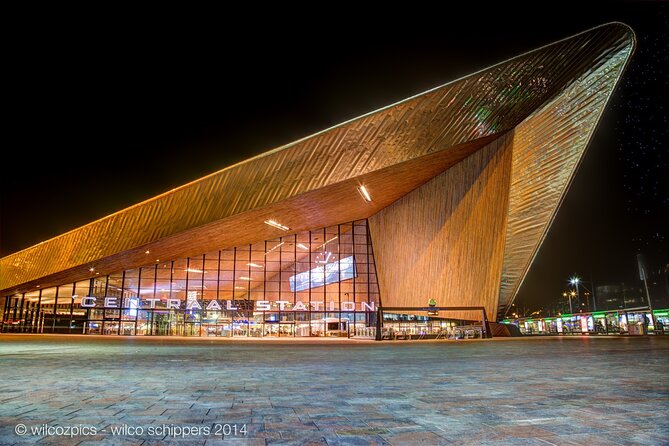
The tour begins at Stationsplein 10, outside Rotterdam Centraal Station. This is a practical starting point because the station is easy to reach by public transportation, and you do not need to make your way across the city before the tour begins.
Your guide introduces the city’s architecture here. Rotterdam Centraal itself is a fitting opening scene, since the station reflects the city’s modern identity and its focus on movement, trade, and rebuilding.
Allow enough time to find the meeting point. The station area can be busy, and the tour is built around a walking schedule. The end point is back at the meeting point, so you finish where you started rather than having to find your way back from another part of town.
The group limit of 15 is a real practical advantage. You are not guaranteed a private-feeling walk, but a small group should make it easier to stay close to the guide and hear explanations on city streets.
From the Groot Handelsgebouw to Rotterdam’s shopping streets
After the station, the route reaches the Groot Handelsgebouw. This building gives the Second World War story a physical place. It is not just an abstract date in a guidebook. It represents the first large phase of Rotterdam’s postwar reconstruction.
The next stops are West-Kruiskade and Kruiskade, well-known shopping streets in the city center. These streets add a more ordinary, lived-in side of Rotterdam. You are not only looking at landmark buildings. You are also seeing where people shop and move through the city.
The Lijnbaan follows. Opened in 1953, it was designed as the main pedestrian shopping street in the new district after the old shopping area had been destroyed. That makes it an important piece of planning history.
I find this part of the route useful because it shows that rebuilding was not only about replacing lost buildings. Rotterdam created a new kind of center, with pedestrian shopping areas and a modern street plan. The Lijnbaan helps explain why the city feels so different from older Dutch centers.
The limitation is that these stops are brief. You may hear the essential story, but you will not have much time to browse the shops or study every building. Treat this part as an introduction, not a shopping tour.
Crossing the Luchtsingel into a renewed district
The Luchtsingel is one of the more unusual stops. This wooden pedestrian bridge stretches 390 meters, connecting Rotterdam North with the city center. It also helped bring life to an area that had suffered from vacancy and neglect.
The bridge matters because it shows Rotterdam’s habit of trying new solutions. It is practical, eye-catching, and tied to the city’s effort to reconnect areas that had been left behind.
Your guide can give this structure a wider meaning. Rotterdam’s modern identity is not only about giant buildings and dramatic shapes. It is also about small urban projects that change how people move through the city.
You should expect only a short visit here, listed at about 10 minutes. That is enough to understand its purpose and take in the structure, but not enough for a long pause. If the group is moving at a brisk pace, keep your camera ready.
More Architecture Tours around Netherlands:
- Rotterdam: Architectural Highlights Guided Walking Tour
★ 4.8 · 215 reviews - Rotterdam Walk: Hilights, Gems, Architecture & WWII | 2 or 3hrs
★ 5.0 · 149 reviews - Rotterdam Architecture Highlights Walking Tour
★ 5.0 · 66 reviews - Rotterdam: Architecture Highlights Tour including the Depot
★ 4.6 · 17 reviews
Finding traces of the older city at Delftse Poort and Laurenskerk
The Nieuwe Delftse Poort offers a glimpse of Rotterdam’s earlier appearance. The original Delftse Poort was a city gate, with the last version built in 1764. A steel reconstruction by artist Cor Kraat was later placed close to the original site.
This is an interesting contrast with the modern buildings around it. The gate is not an untouched medieval survivor, but its reconstruction keeps an earlier piece of Rotterdam’s identity visible in a city known for new construction.
The Grote of Sint-Laurenskerk is even more important. It is the only remaining part of medieval Rotterdam. The church is Protestant, and you can go inside for free.
That free interior visit is a useful bonus, though the timing may depend on the group and the schedule. The tour allows about 10 minutes here, so you may have time for a quick look rather than a long church visit.
For me, these two stops give the walk balance. Without them, Rotterdam could seem entirely postwar. The gate and church remind you that the city had a much older center before the bombing changed its direction.
Reading the Markthal’s giant interior artwork
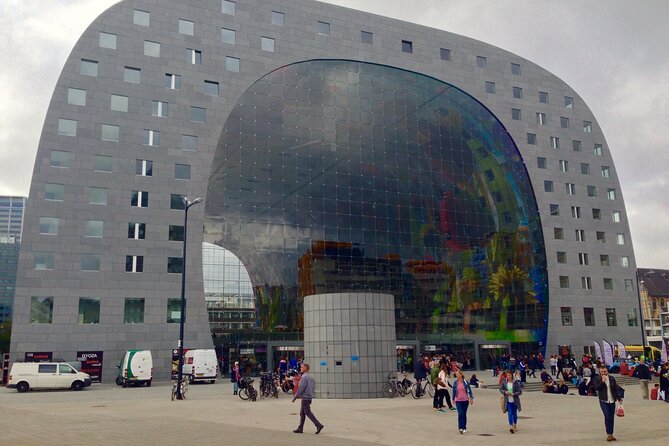
The Markthal is one of the route’s major visual stops. Designed by MVRDV, it has a large horseshoe form and a gray natural stone exterior. Inside, the ceiling carries an enormous artwork showing enlarged fruits, vegetables, seeds, fish, flowers, and insects.
The building works on two levels. It is a market and food hall, but it is also a bold piece of architecture. You can look at the structure from outside, then step inside to see how the arch shapes the interior.
The tour allows about 30 minutes here, longer than at most stops. That extra time matters. You can take in the artwork, look around the food stalls and restaurants, and get a better sense of how the building works.
Food and drinks are not included, so budget separately if you want to eat. The short tour format does not promise a meal break, but the Markthal gives you a natural place to return to afterward.
This is one point where the guide’s approach matters. A good explanation can help you notice the connection between the artwork, the building’s shape, and Rotterdam’s modern city image. The guide Susan was especially praised for bringing places and buildings to life, while Michel and Edwin were noted for clear explanations of the city and its history.
Ending at the Old Harbour and Cube Houses
The Oude Haven, or Old Harbour, is the final major area on the route. It is a historic harbor district north of the Maas River, now filled with city activity and closely linked to the famous Cube Houses.
The harbor gives you a change of mood after the wide postwar streets and large modern buildings. It is a place where Rotterdam’s port past remains visible, even as the surrounding center has changed.
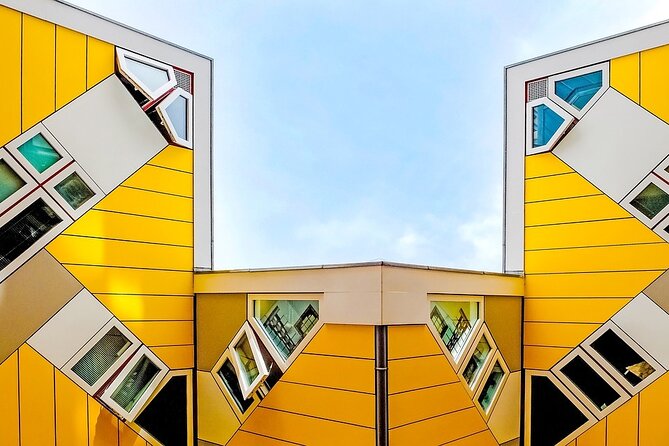
The Cube Houses are among the city’s best-known buildings. Their unusual design is easy to photograph, but the tour is more useful if you also hear how they fit into Rotterdam’s approach to experimental housing and urban design.
The route lists about 20 minutes at the Old Harbour. That is enough for an explanation and a look at the Cube Houses, but you may want to return later if you wish to explore the area at a slower speed.
Because the walk ends back at the central station meeting point, check the exact route details with your guide as you go. The stops include both the Old Harbour and the station area, and the printed timing is approximate.
What the guides add to the walk
The strongest part of this experience is the guide. Names associated with past tours include Ed, Michel, Susan, John, Edwin, Tony, and Stephan. You cannot select a particular guide from the information provided, so expect some variation in style.
Ed was praised for unusual facts about Rotterdam. Michel was described as clear and informative, especially on the city’s main points. Susan received warm praise for her personal manner, her understanding of the buildings, and her ability to help with gift-shopping ideas.
Edwin’s strength was explaining Rotterdam’s reconstruction after the Second World War, along with its sculptures and buildings. John was noted for his pride in the city and his enthusiasm for sharing its story.
One important practical example concerns a delayed cruise arrival. A guest contacted the local operator, and Tony helped arrange a faster way to reach the guide. Susan then adjusted the walk when the guest had to return to the ship early. The route had to move quickly, but the support helped preserve much of the experience.
That does not guarantee the same flexibility every time. It does show that contacting the operator promptly is sensible if transport problems threaten your start time.
Is $29.41 a fair price for two hours?
At $29.41 per person, this is a reasonable price for a small-group introduction to central Rotterdam. You are paying for a local guide, not admissions or food, and all listed stops are visited from the outside or through public areas.
The value is strongest if you are new to the city and want the basic story explained as you walk. You see several major sights in two hours, learn why the center looks the way it does, and finish with a better sense of which places deserve a second visit.
The value is weaker if you want long stops, a museum interior, a full meal, or detailed architectural analysis of every building. The route covers a lot, so some explanations will be short.
The 95 percent recommendation rate and 4.8 rating from 20 reviews point to a generally strong experience, but the one lower assessment is worth taking seriously. The guide on that walk gave less information than expected, and the starting point changed on the day. Confirm the meeting details and arrive ready for some variation in guiding style.
Who should book this Rotterdam walk?
I would choose this tour for a first visit, especially if you have only one day in Rotterdam or are arriving by cruise ship. It gives you a fast orientation and covers the city’s main architectural ideas without requiring public transportation between stops.
It also suits people who want history explained in plain terms. The Second World War and reconstruction are central to the route, but you also see the older church, reconstructed city gate, harbor, shopping streets, and modern projects.
Families and mixed-age groups may find the two-hour length manageable, though the pace can be brisk. The tour is listed as suitable for most people, allows service animals, and is near public transportation.
I would not book it as your only Rotterdam activity if you want a slow, highly detailed architecture tour. In that case, use it as an introduction, then return to the Markthal, Old Harbour, or Cube Houses on your own.
Should you book the Rotterdam Must Do Tour?
Book it if you want a compact, affordable introduction led by a local guide. The best reasons are the postwar story, the range of buildings, the small group limit, and the chance to connect famous sights that can otherwise feel scattered.
Go in with realistic expectations. This is a brisk overview, not a full-day cultural program. Food, drinks, and paid attractions are not included, and the quality of the explanation may depend on which guide leads your group.
For most first-time visitors, the combination of history, architecture, and central location makes the $29.41 price worthwhile. If your schedule is tight, arrive early, confirm the meeting point, and tell the operator at once if a delayed ship or train affects you.
FAQ
How long does the Rotterdam Must Do Tour last?
The walking tour lasts approximately two hours.
Where does the tour start?
It starts at Stationsplein 10, 3013 AJ Rotterdam, at Rotterdam Centraal Station.
Where does the tour end?
The activity ends back at the meeting point.
What language is the tour offered in?
The tour is offered in English.
What is included in the price?
A local guide is included.
Are food and drinks included?
No. Food and drinks are not included.
What landmarks does the tour visit?
The route includes Rotterdam Centraal Station, Groot Handelsgebouw, West-Kruiskade, Lijnbaan, Luchtsingel, Nieuwe Delftse Poort, Grote of Sint-Laurenskerk, Markthal, Oude Haven, and the Cube Houses.
How large is the group?
The tour has a maximum of 15 travelers.
Can I cancel for a full refund?
Yes. You can cancel at least 24 hours before the experience starts for a full refund. Changes or cancellations made less than 24 hours before the start time are not accepted for a refund.
New to the itinerary around Netherlands
- Escape Room – l’Architecte★ 4.5 · 13 reviews
- Private Rotterdam Walking Tour – guided by Architects★ 5.0 · 2 reviews
- Rotterdam Architecture and Highlights Walking Tour (TOP RATED)★ 4.5 · 14 reviews
- Maastricht Highlights, Architecture & Heritage Tour★ 5.0 · 7 reviews
- Gouda Private Walking Tour: History, Architecture & Cheese★ 4.5 · 8 reviews
- Amsterdam Walking Tour. All about History, Architecture, Traditions & Anecdotes.★ 5.0 · 2 reviews
- Rotterdam Architecture: Centre and South Bank with watertaxi★ 5.0 · 4 reviews
- Rotterdam: Art and Architecture Highlights Walking Tour★ 4.9 · 10 reviews
Netherlands Architecture Tours, compared.
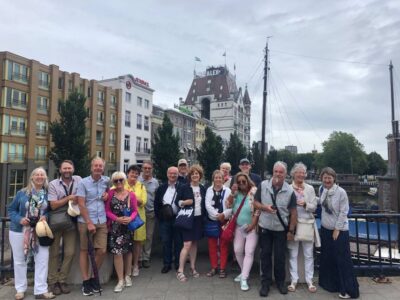
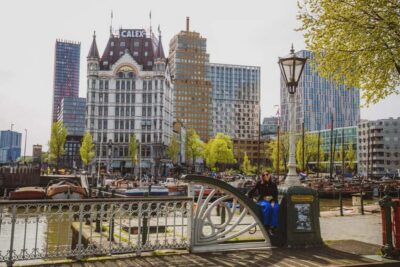
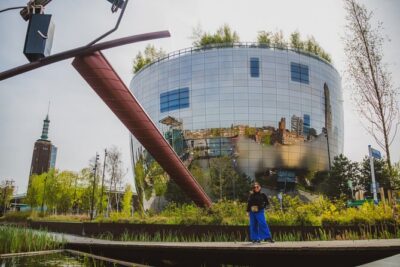
Rotterdam Walk: Hilights, Gems, Architecture & WWII | 2 or 3hrs
Read our review →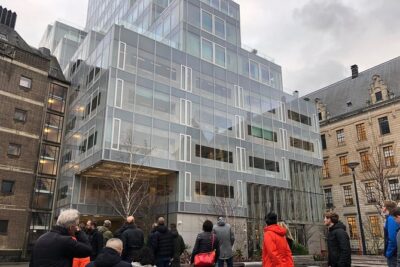
The rise of Haarlem: Culture, History, Art and Architecture Walking Tour
Read our review →
Walking Tour about Golden Age Architecture, private local guide
Read our review →
Rotterdam Architecture and Highlights Walking Tour (TOP RATED)
Read our review →Other lists with this tour