Review · VENICE
Venice Art and Architecture Private Walking Tour
Venice’s best architectural surprises often sit beyond St. Mark’s Square. This two-hour walk leads you from the Goldoni statue through Corte del Milion, Santa Maria dei Miracoli, and the grand church of Santi Giovanni e Paolo, with the focus firmly on places many first-time visitors miss.
I like the small size, limited to eight people, and the private-guide format, which lets you ask questions and adjust the emphasis. I also like the route’s clear architectural story, from Marco Polo’s legendary connection to a jewel-box Renaissance church and the great burial church of Venetian doges. The main drawback is important: you do not enter the churches unless you pay an extra fee on the spot.
Key points at a glance
- A quieter route through Venice: The walk avoids St. Mark’s Square and concentrates on less familiar streets and squares.
- Three strong architectural stops: See Corte del Milion, Santa Maria dei Miracoli, and Santi Giovanni e Paolo.
- Small-group attention: The group is limited to eight, with a private licensed guide.
- A flexible experience: Guide Gentiana adapted one tour to the group’s interests and starting point.
- Exterior-only by default: Church entry is not included, so budget extra if you want to go inside.
- A short, focused outing: Two hours works well as a morning or afternoon addition to a Venice stay.
Why this walk avoids Venice’s usual postcard circuit
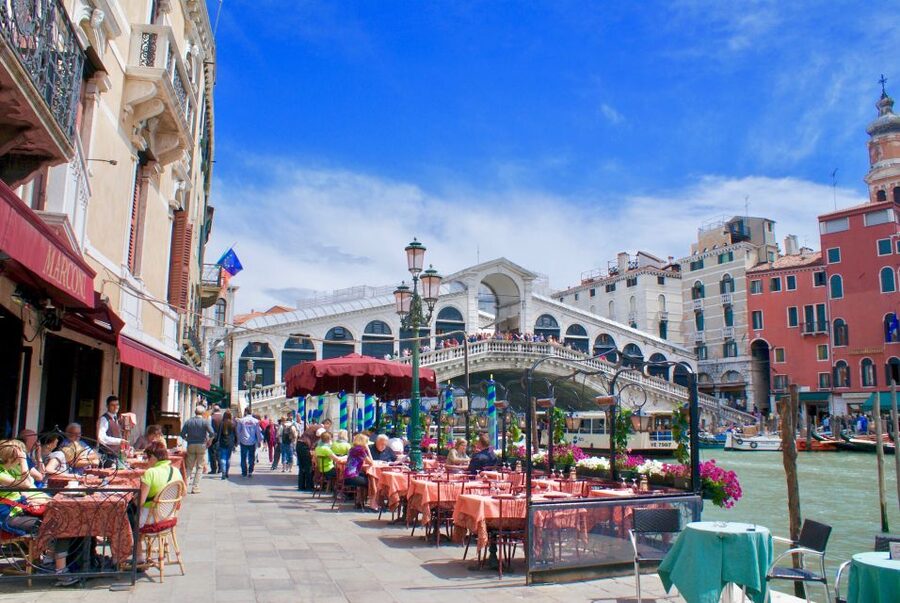
Most first visits to Venice follow the same line: Rialto Bridge, St. Mark’s Square, the Doge’s Palace, and the Grand Canal. Those sights deserve their fame, but they can leave you with a narrow idea of the city. Venice is also a city of quiet campi, narrow passages, elaborate church fronts, and buildings that reveal how trade and politics shaped daily life.
This tour takes that second look. You begin at Campo San Bartolomeo, near Rialto, then move away from the main tourist flow toward architectural details that are easy to pass without context. Your guide explains how Venice developed under La Serenissima, the old name for the Venetian Republic, while pointing out what makes each building distinctive.
I would choose this walk if you have already seen the central highlights or if you prefer buildings and local history to a long list of famous photo stops. It is not designed as a grand tour of every major monument. Instead, it gives you a compact lesson in how Venice’s art and architecture changed over time.
The price is $150.10 per person. That is a serious cost for two hours, but it can make sense for a couple, family, or small group that wants direct access to a guide’s attention. The value is strongest when you ask questions and use the walk to decide which churches or districts deserve more time later.
More Private Architecture Tours in Italy
- City Walk with Architect: Private walking tour of Rome
★ 5.0 · 22 reviews - Private Tour: Venice Art and Architecture Walking Tour
★ 4.0 · 22 reviews - Private Personalized Architecture Tour of Rome with an Architect
★ 5.0 · 5 reviews
Starting at Campo San Bartolomeo and the Goldoni statue
You meet at Campo San Bartolomeo, in front of the statue of Carlo Goldoni, at Rialto 5282. Arrive 15 minutes early and look for a guide holding a sign with your name. Hotel pickup can be arranged for hotels in the St. Mark’s area, which is useful if you do not want to navigate Venice’s twisting lanes at the beginning of your day.
Campo San Bartolomeo is a practical starting point because it sits close to Rialto and is easy to connect with other parts of central Venice. It is also a lively place to begin, but the route soon turns toward quieter corners.
The guide starts with a brief introduction before setting off. That matters on a short tour. You are not spending the first half hour on formalities, and you can get quickly to the buildings that form the heart of the experience.
The languages offered are English, French, German, Spanish, and Italian. If you have strong interests in Renaissance design, Venetian political history, or church art, say so early. One tour led by Gentiana was adjusted to match the group’s architectural and historical interests, and the route was changed to begin at a different point at the group’s request.
That flexibility is one of the better reasons to choose a small private-style tour instead of a large fixed group. It does depend on what the guide can accommodate, so treat it as a possibility rather than a promise.
Corte del Milion and the Marco Polo connection
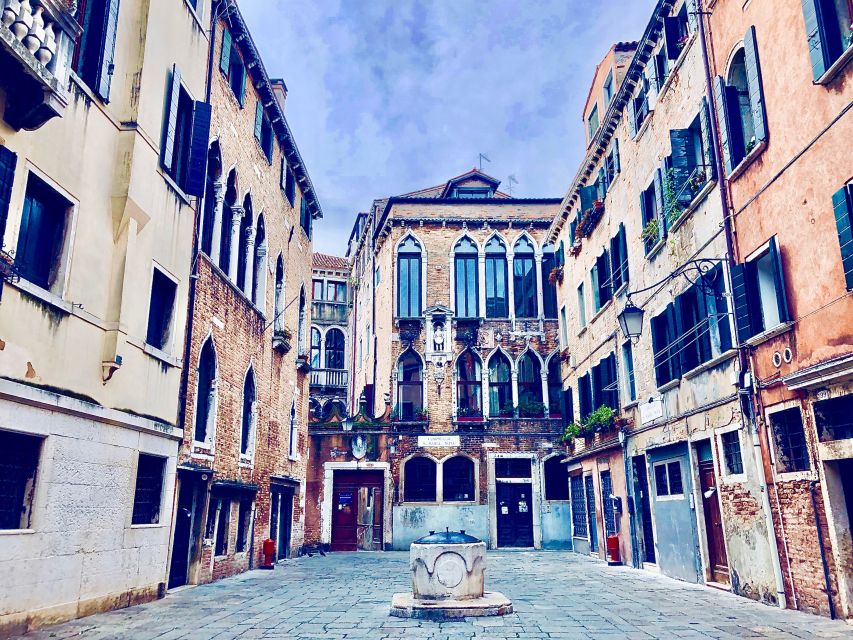
The first listed stop is Corte Seconda del Milion, usually associated with Marco Polo and his account of travels in the Far East. The name connects this small Venetian court with the Polo family and the enormous scale of the places described in Marco Polo’s travel story.
This is the sort of stop that can seem ordinary if you walk through alone. A guide gives it purpose by explaining the name and placing the court within Venice’s network of merchants, travelers, and wealthy families. The value is not a single monument. It is the way a modest passage opens a window onto the city’s far-reaching commercial world.
Do not expect a large exhibit or a formal museum visit here. The experience is about looking, listening, and understanding how Venice hides its history in place names and courtyards. Since the tour is on foot, you should be ready for uneven paving and narrow routes.
Corte del Milion also sets up the larger theme of the walk. Venice’s identity was built not only around grand churches and palaces, but also around the movement of people, goods, ideas, and stories. The route uses small architectural spaces to explain that bigger picture without turning the walk into a lecture.
Santa Maria dei Miracoli and Renaissance precision
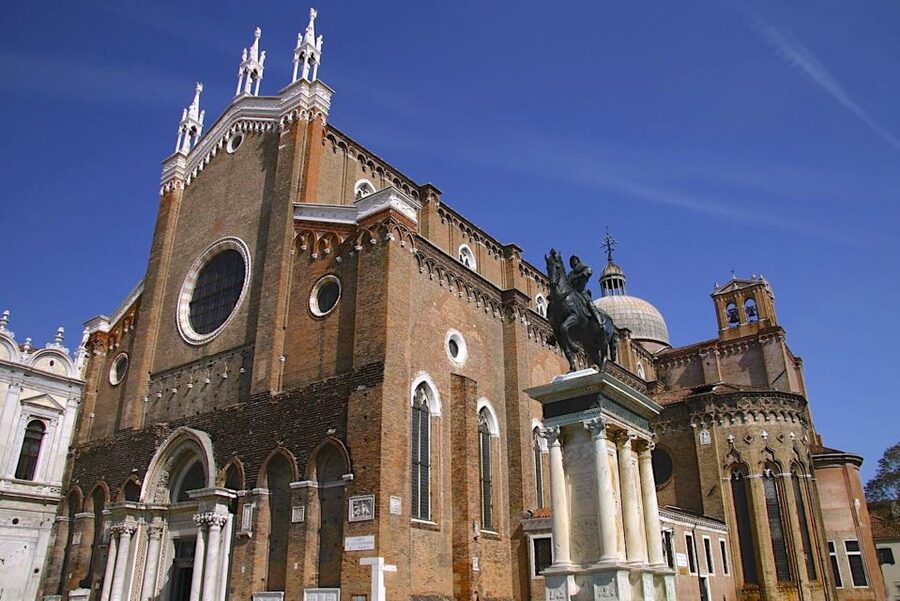
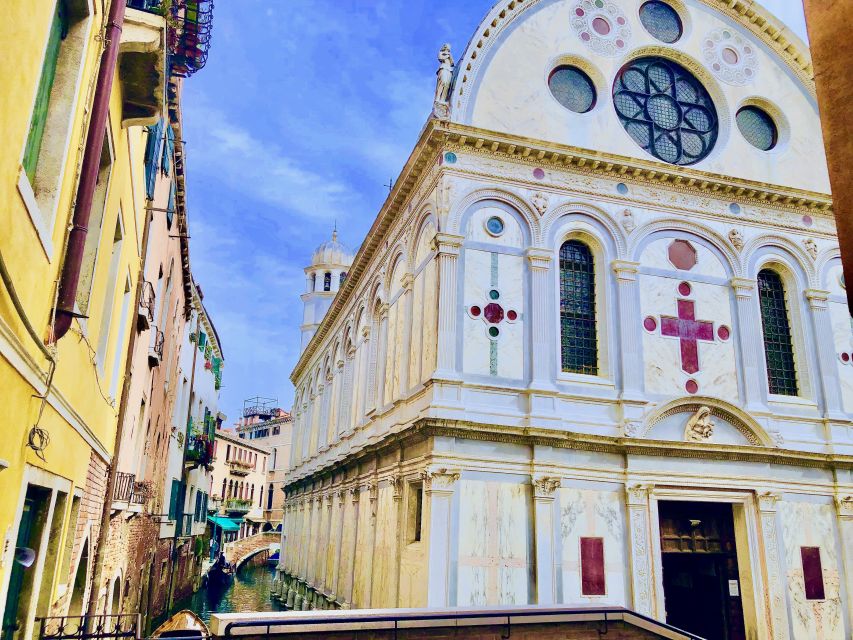
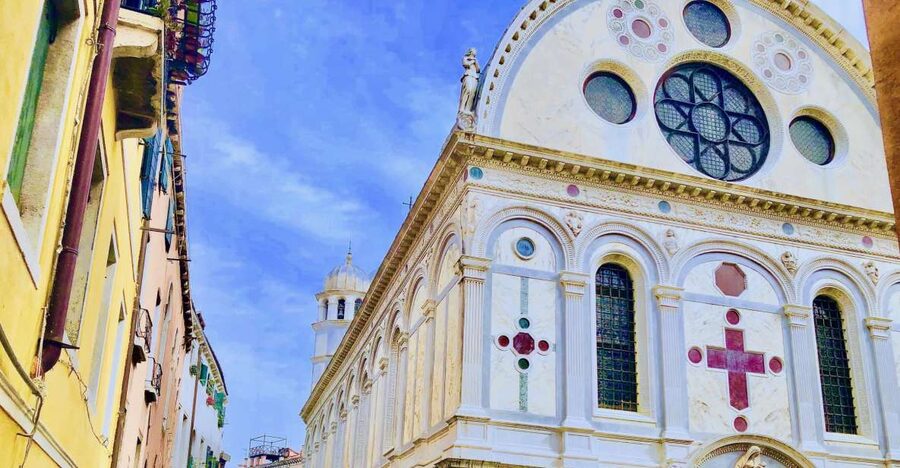
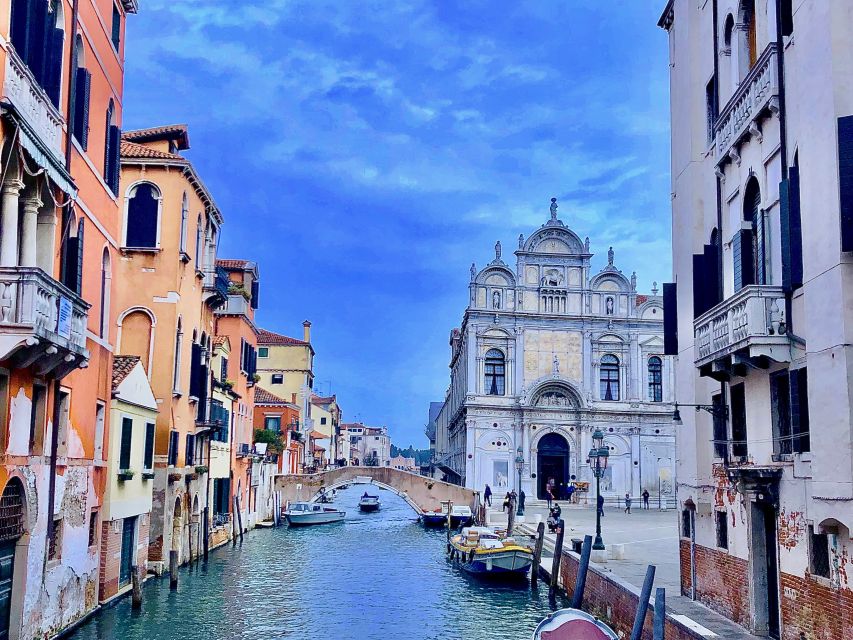
Santa Maria dei Miracoli is likely the most visually delicate stop on the route. The church is known for its Renaissance architecture, and its exterior is a strong contrast to the broader, more imposing buildings associated with Venice’s grandest landmarks.
Your guide points out the design and explains why the church matters within Venetian art and architecture. The building’s appeal comes from its careful proportions and decorative treatment. It is the kind of place where a guide helps you notice details that might otherwise blur into the city’s famously ornate background.
The church is especially useful for understanding that Venetian architecture was not one single style. The city contains layers of Gothic, Renaissance, and later work, often close together. Santa Maria dei Miracoli gives you a focused example of Renaissance design rather than a general tour of Venetian buildings.
Here the exterior-only rule matters most. You will not automatically go inside, and the entry fee is not included. If seeing the interior is a priority, ask the guide about the extra cost before the tour moves on. Otherwise, you can still learn why the church is considered one of Venice’s important Renaissance works, but you will miss the interior atmosphere and art.
I would not book this experience expecting a church-art tour in the usual sense. Book it to understand the exterior, the setting, and the architectural choices. If you want a full visit inside each church, plan separate entrance time and expenses.
More Walking Tours in Italy
- Lecce: Baroque Architecture and Underground Walking Tour
★ 4.6 · 1,248 reviews - Experience Florence’s Art and Architecture on a Walking Tour
★ 5.0 · 318 reviews - Palermo: Art and Architecture Walking Tour
★ 4.7 · 136 reviews - Walking tour in Venice with an architect
★ 5.0 · 16 reviews
Campo San Giovanni e Paolo, one of Venice’s finest squares
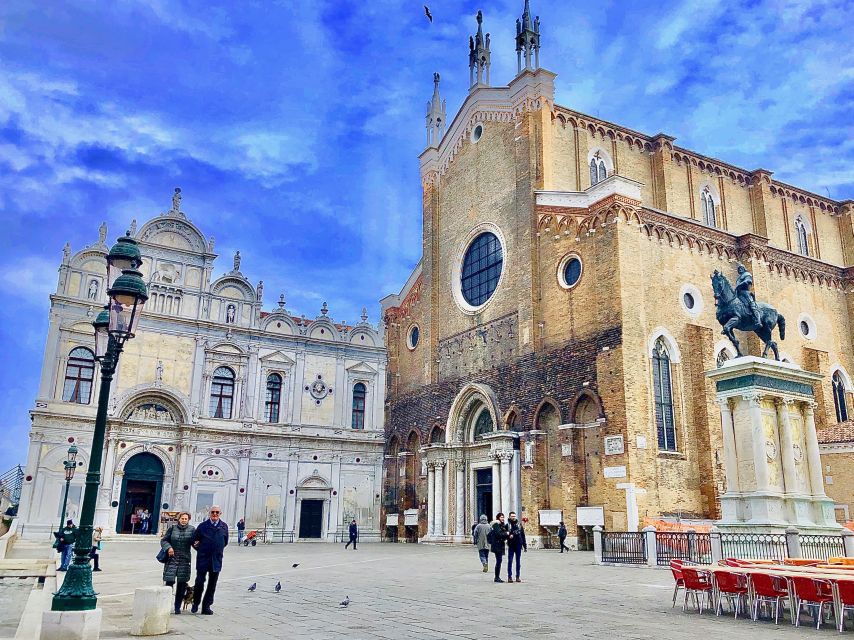
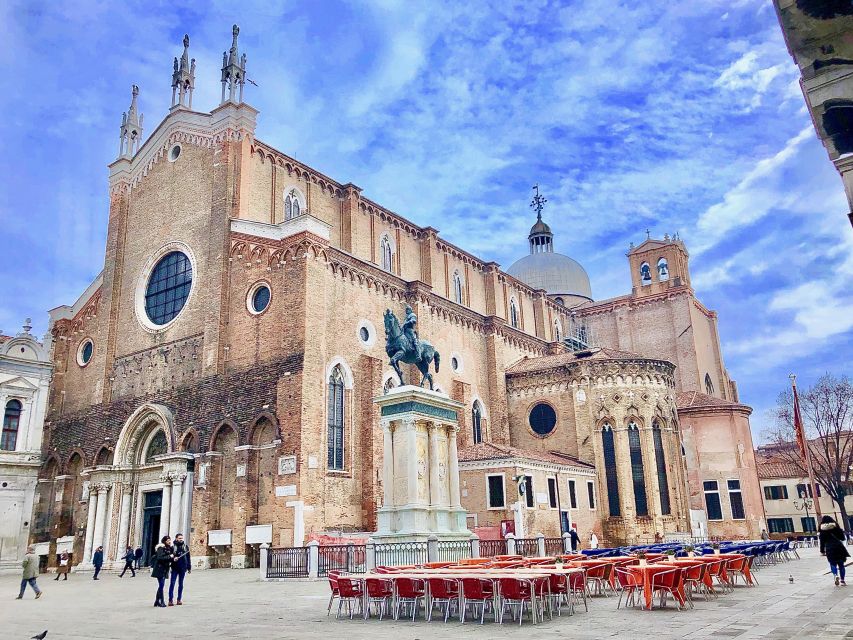
The route then reaches Campo San Giovanni e Paolo. This square is one of the most attractive open spaces in Venice, and it gives the walk room to breathe after the tight lanes and courtyards.
A Venetian campo is more than a plaza in front of a church. It is a social and architectural setting, with buildings, paving, sculpture, and daily movement all working together. In this square, the large church front provides a strong focal point, while the surrounding space lets you see the building at a proper distance.
This is where the tour’s focus on architecture becomes especially clear. You are not only looking at a facade. You are looking at how a major church shapes an entire urban space. Your guide can connect the square to the role of religious institutions, public life, and the Venetian state.
Give yourself time to look up and around. Venice encourages quick movement because the streets can feel like a maze, but squares such as this reward a slower pause. The guide’s explanations help you read the relationship between the church and the surrounding buildings rather than treating the church as an isolated object.
For photographers, the campo should be one of the more satisfying parts of the walk. The information provided does not promise a dedicated photography stop, so do not expect a long pause for repeated shots. Still, the setting offers a different view of Venice than the crowded approach to St. Mark’s.
Santi Giovanni e Paolo, the Pantheon of Venice
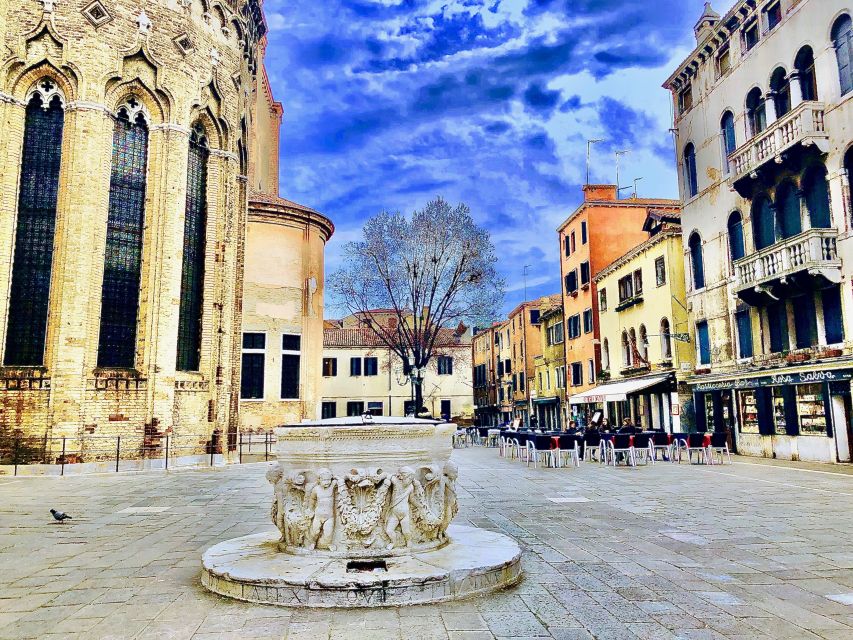
The final main sight is the church of Santi Giovanni e Paolo, often called the Pantheon of Venice. After the 15th century, it became the burial place of Venetian doges, giving the church a major place in the political and religious story of the republic.
That detail changes how you look at the building. This is not simply an old church with a grand facade. It is linked to the leaders who governed Venice during a long period of commercial and political power. Your guide explains those connections and answers questions about the church’s role.
The exterior tour lets you study the scale and position of the church without the pressure of a crowded interior. But again, you should know exactly what you are buying. The standard experience does not include entry, and the published information says you must pay the additional fee on the spot if you want to go inside with the guide.
The route is listed as finishing at the Basilica dei Santi Giovanni e Paolo. The meeting-point information also says the activity ends back at Campo San Bartolomeo, so confirm the final arrangement when you book or meet the guide. That small inconsistency is worth clearing up, especially if you have a restaurant reservation, museum entry, or water bus connection afterward.
What the guide adds to a two-hour route
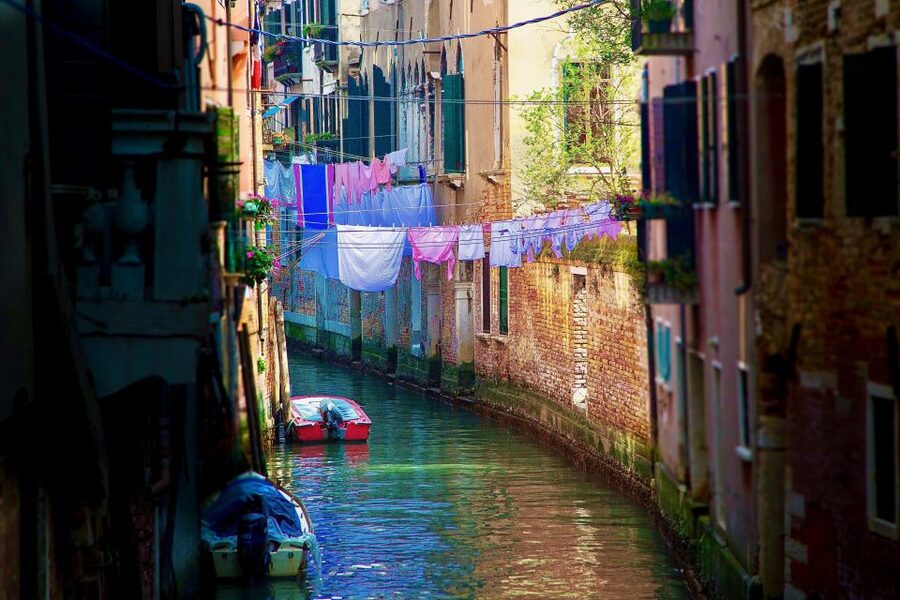
A two-hour walk can either feel rushed or pleasantly focused. This one works best when you treat it as a guided introduction, not a complete study of Venetian art.
The strongest element is the chance to ask questions. One very positive account describes Gentiana as flexible, responsive, and willing to adapt the route to the group’s interests. That is exactly the advantage of a small private-style experience. If you want more political history, ask for it. If you prefer decorative details and building styles, say so.
Another account describes the guide as informative and able to explain Venice’s past in an engaging way. That suggests the quality of the experience depends heavily on the individual guide, as it should on any walking tour. The available rating is 4.5 from 11 ratings, which is encouraging but based on a small sample.
There is also one serious warning in the feedback: a participant found the guide’s personal distance uncomfortable and ended the tour after about 30 minutes. That is an isolated but important concern. If you prefer more personal space, state that clearly at the start. A good guide should respect it.
The tour is offered in five languages, but you should select your preferred language when checking availability. The supplied details do not identify the guide assigned to every departure, so Gentiana’s name should not be taken as a guarantee for your booking.
Price, group size, and what you actually receive
At $150.10 per person, the experience costs more than a standard large-group walking tour. You are paying for a licensed guide, a small group limited to eight people, and a route that can respond to your interests.
The price is easier to justify if two or more people in your party are sharing the experience and plan to ask questions. It is less attractive if you only want quick exterior photographs, since you can walk past these places without a paid guide. The difference is context. The tour helps you understand what you are seeing, why it matters, and how the sites fit into Venice’s development.
The two-hour length is another practical advantage. You can fit it into a half day without giving up an entire morning or afternoon. It also makes the walk suitable for a first day in Venice, when you want orientation but may not yet have the energy for a longer excursion.
No food or drink is included, and no church entrance fees are included. Wear comfortable shoes and expect a walking route over Venice’s paved lanes and squares. The activity is not suitable for wheelchair users, and the information provided does not promise step-free access.
Free cancellation is available up to 24 hours before departure, and you can reserve now and pay later. Those terms are useful if your Venice schedule is still shifting, though the main decision should be whether the exterior-focused format suits you.
Who should book this Venice architecture walk
I would recommend it to you if you enjoy buildings, city history, and smaller sights more than a checklist of famous landmarks. It is particularly useful if you have already visited St. Mark’s Square or want to avoid spending your whole day in the busiest parts of Venice.
It also suits people who like to ask questions. A private guide can explain a detail at the pace you need, while a group capped at eight keeps the walk more personal than a large city tour.
Families and couples may appreciate the short duration and flexible tone. Art and architecture students, amateur photographers, and repeat visitors should also find more value here than someone seeing Venice for only a few hours.
I would hesitate if you need wheelchair access, want a full indoor church tour, or expect a broad tour of every major Venetian sight. The route is selective, and the churches are viewed from outside unless you arrange and pay for entry.
Should you book the Venice Art and Architecture Private Walking Tour?
Book this tour if you want a focused look at Venice beyond the standard route, especially Santa Maria dei Miracoli, Corte del Milion, and Santi Giovanni e Paolo. The strongest reasons are the small group, the chance to shape the conversation, and the guide’s ability to explain how architecture reflects Venice’s political and commercial past.
Before paying, confirm three things: the language, whether hotel pickup is possible for your address, and where the walk finally ends. Also decide if you want to enter the churches and ask about the extra fees at the start.
For a two-hour architectural introduction, this is a useful and fairly flexible choice. Just remember that its real subject is Venice from the street. If you want interiors, plan those separately.
FAQ
Where does the tour begin?
It begins at Campo San Bartolomeo, in front of the statue of Carlo Goldoni, at Rialto 5282, 30124. Arrive 15 minutes before departure and look for the guide holding a sign with your name.
Where does the tour finish?
The route information lists the Basilica dei Santi Giovanni e Paolo as the finish. The meeting details also say the activity ends back at the meeting point, so confirm the final arrangement with the provider.
Are church entrance fees included?
No. The standard tour is an exterior walking tour. If you want to enter the churches with the guide, you must pay the additional fee on the spot.
How long does the tour last?
The tour lasts two hours. Starting times vary, so check availability when booking.
How many people can join?
The group is limited to eight participants. A private licensed guide leads the walk.
Which languages are available?
The tour is offered in English, French, German, Spanish, and Italian.
Is the tour suitable for wheelchair users?
No. The activity is listed as not suitable for wheelchair users.
New to the itinerary around Italy
- Vicenza: Palladian Architecture Private Walking Tour★ 3.3 · 3 reviews
- Architectural Milan: Private Tour with a Local Expert★ 4.5 · 2 reviews
- The Architect’s Water★ 4.5 · 11 reviews
- Architectural Florence: Private Tour with a Local Expert★ 5.0 · 3 reviews
- Rione Sanità: tour among street art, architecture, folklore★ 4.5 · 2 reviews
- Palermo Tour: Magnificent Mixture Of Architectural Styles★ 4.2 · 6 reviews
- Discover Coppedè in Rome: Liberty architecture, symbols, and jewels★ 5.0 · 2 reviews
- Bologna: Guided Architecture Walking Tour★ 4.5 · 2 reviews
Private Architecture Tours, compared.
Sagrada Familia & Gaudi Tour Private or Small Group with Tickets
Read our review →
Barcelona 1.5h Private Old Town, Gothic & Ramblas Walking Tour
Read our review →
Treasures of Barcelona: Private Gaudi Walking Tour
Read our review →
Sagrada Familia & Gaudi Guided Tour Private or Small Groups
Read our review →
Best of Chicago: Architecture & Highlights City Private Tour
Read our review →
Private Harajuku Omotesando Architecture Walking Tour
Read our review →
Private Santa Barbara History and Architecture Walking Tour
Read our review →