
Review · MUMBAI
Mumbai: Story of Mumbai through its architecture
Mumbai’s best architectural story unfolds on foot, from the grand Gothic sweep of Chhatrapati Shivaji Maharaj Terminus to the Indo-Saracenic arch at the Gateway of India. In between, you’ll see how British planning, Indian traditions, Jewish philanthropy, Indian business wealth, and modern cinema shaped the city.
I like the mix of styles and the way the walk links buildings to people, power, and politics. I also like that guide Pankaj has a gift for turning façades into stories, especially at CST and around the Oval Maidan. The main drawback is that, apart from CST and the Gateway of India, the buildings are viewed from outside, so this is best for architecture rather than interior visits.
Key details before you book

- CST opens the story with Gothic grandeur: See one of India’s finest Victorian Gothic buildings, still serving more than 6 million daily commuters.
- The Oval Maidan shows two Mumbais at once: Gothic buildings line one side, while Art Deco architecture faces the other.
- Rajabai Tower carries a personal story: Your guide explains the maternal love linked to Mumbai’s Big Ben.
- Art Deco comes with a local twist: Empress Court and Eros Cinema show how Indian patrons adopted a modern style with social meaning.
- The walk ends at the Gateway of India: Its colonial purpose and the final departure of British troops give the tour a clear closing scene.
- The pace suits a short city introduction: Allow about 2.5 to 3 hours, with walking between stops and no hotel pickup included.
Why Mumbai’s architecture makes a useful city introduction
Mumbai can feel like several cities placed on top of one another. Victorian Gothic railway buildings, Art Deco apartment blocks, colonial institutions, Indian memorials, and crowded commercial streets all share the same central district.
That layering is what makes this walk worthwhile. You are not simply moving from one photogenic building to another. You are watching Mumbai change from a British imperial port into a major Indian city, with local merchants, professionals, students, and civic groups leaving their mark on the streets.
The route also gives you a helpful contrast between public and private architecture. CST, the High Court, the university buildings, and the Gateway of India were designed to project authority. Empress Court and the Art Deco cinemas reveal how residents and business owners wanted to live, socialize, and present themselves.
The guide matters here. A building can be impressive in a photograph, yet easy to ignore in person if you do not know what to look for. Pankaj is the named guide associated with this walk, and the two five-star ratings describe him as especially good at explaining design and making Mumbai’s colonial-era story feel immediate.
More Architecture Tours around India:
- British Architecture Walk, an immersive walking tour in Chennai
★ 5.0 · 60 reviews - The Hipster Chandigarh Architecture History Tour
★ 5.0 · 54 reviews - Mumbai heritage walk- Story of Gothic and Art Deco buildings
★ 5.0 · 33 reviews
CST, where railway Gothic meets Indian design
The tour begins at Chhatrapati Shivaji Maharaj Terminus, formerly Victoria Terminus. This is the grandest stop on the route and likely the one that will occupy your camera most often.
CST is a UNESCO heritage building and one of the strongest examples of Victorian Gothic Revival architecture in India. Its pointed arches, towers, domes, stonework, and decorative detail reflect the European style favored by the British administration.
Look closer, though, and the building is not simply imported Gothic. Indian architectural ideas appear alongside the Gothic forms, creating a hybrid design that feels specific to Mumbai. This blend is one reason the building has such force. It represents colonial power, yet it was built in a place with its own traditions and visual language.
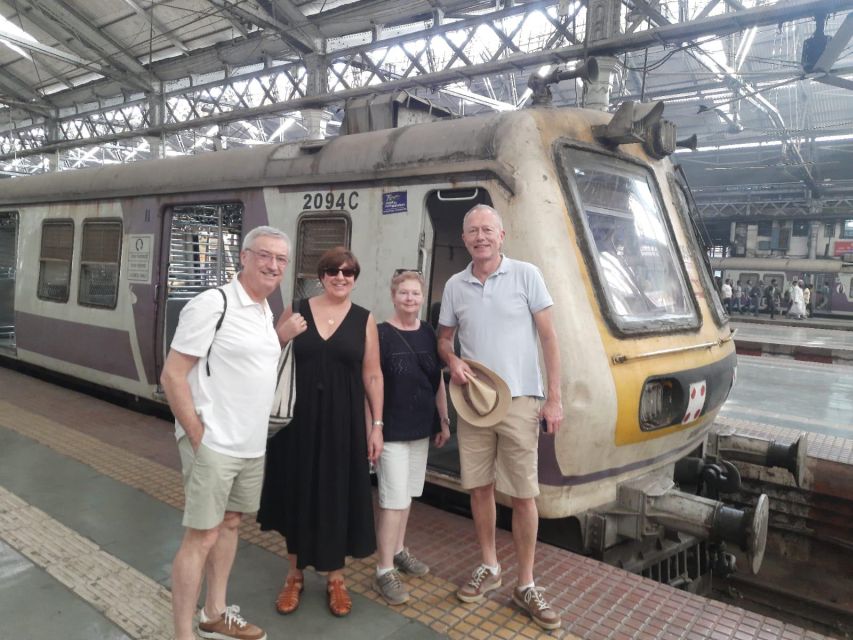
The station is not a quiet museum piece. More than 6 million daily commuters pass through it, making CST one of the busiest train stations in the world. That working purpose changes the experience. You are looking at a UNESCO site while trains, office workers, vendors, and daily commuters continue using it as part of ordinary city life.
You will see the building from outside on the walk, with entrance charges included for CST according to the tour details. Still, do not expect a long, private architectural inspection. The station is active, and the value comes from understanding its design and role in Mumbai rather than examining every interior corner.
From Sterling Cinema to Flora Fountain
From CST, the route moves through central Mumbai toward Flora Fountain. This walk helps connect the monumental station with the streets around it.
Sterling Cinema is one of the first recognizable landmarks along the way. It gives you a reminder that Mumbai’s architecture is not only about government offices, churches, courts, and railway stations. Cinema has long been part of the city’s public identity, and these theaters helped shape how people met, dressed, and spent their leisure time.
You also pass Azad Maidan, a large open ground known for memorable interschool cricket matches. It is a useful pause from the stone façades and formal institutions. Cricket is not an afterthought here. The maidan connects the colonial city to a very Indian public life, where open grounds remain important social and sporting spaces.
Flora Fountain is Mumbai’s best-known fountain. It was carved from Portland stone and includes a statue of Flora, the Roman goddess of flowers. The fountain was also dedicated to people who died fighting for an independent state of Maharashtra.
That combination gives the monument more weight than its decorative appearance suggests. It is European in its imagery, built during the colonial period, and tied to a later regional political struggle. This is a recurring theme on the walk: Mumbai’s buildings often carry more than one identity at the same time.
The Oval Maidan and Mumbai’s architectural divide
The Oval Maidan is one of the most useful places to understand Mumbai’s changing design tastes. One side is lined with Victorian Gothic buildings. The opposite side is known for Art Deco architecture.
From one open space, you can compare two very different ideas of modern city life. Gothic buildings use towers, stone ornament, pointed arches, and visual weight. Art Deco favors clean lines, curved corners, horizontal bands, geometric details, and a sense of speed and modernity.
This is more than an attractive contrast. It shows Mumbai moving beyond the formal British civic style and toward an architecture supported by Indian merchants and residents. Art Deco was not just a decoration choice. In Mumbai, it became a way for Indian patrons to embrace a modern urban identity and, in part, push back against the British establishment.
You will probably get more from this stop if you look across the maidan rather than stare at a single building. The broad view makes the contrast clear. It also gives you one of the best visual explanations of the city’s architectural transition.
Same streets, read through a different style:
- Delhi Hidden Gems: Mehrauli, Lodhi Art & Sunder Nursery
★ 5.0 · 108 reviews - Jaipur City Heritage and Architecture Tour
★ 5.0 · 32 reviews - Le Corbusier’s Chandigarh : A Complete Architecture Tour
★ 4.7 · 25 reviews - Day trip from Bangalore to Lepakshi for Temple architecture & paintings
★ 5.0 · 15 reviews
Eros Cinema and Empress Court
Eros Cinema was built in 1938 in the Art Deco style by architect Sorabji Keikhushru Bhedwar. Fritz von Dreiberg handled the interior decoration.
The exterior rises in tiers and finishes with a semi-circular tower, giving it the look of a wedding cake. That description is easy to understand once you see the stepped shape. Eros is playful and theatrical in a way that suits a cinema, but its design also reflects the confidence of Mumbai during the Art Deco period.
Regal Cinema, which appears later in the route, was the first Art Deco cinema hall in Mumbai. It opened in 1933 and was designed by Charles Stevens. The family connection is a nice detail: Charles Stevens was the son of Frederick William Stevens, the architect of Victoria Terminus, where your walk begins.
Empress Court shifts the focus from public entertainment to private life. This residential Art Deco building represents a time when living in such an address signaled status and wealth. The clean geometry and modern styling were not merely practical. They announced that Mumbai’s Indian elite had money, taste, and an interest in new international design.
You will see Empress Court from outside, so the stop is about its façade and social meaning rather than the experience of entering an apartment. That limitation is worth keeping in mind, especially if you are hoping for a tour of historic interiors.
The High Court and the moral figures above it
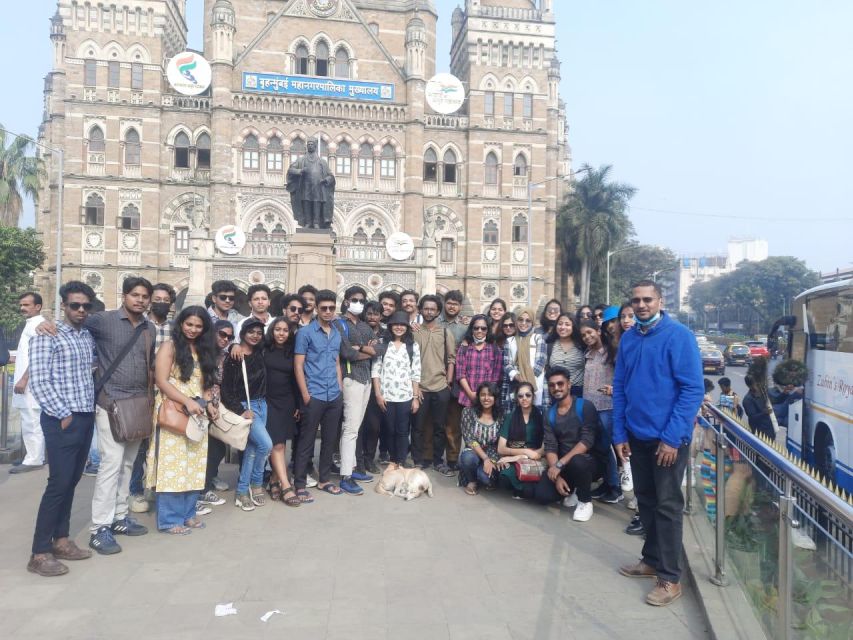
The Bombay High Court is one of Mumbai’s grand Gothic buildings. Designed by Colonel J. A. Fuller, it is marked by large towers and broad staircases.
The most memorable detail is likely to be the statues of Justice and Mercy placed above the building. Their presence gives the façade a moral message that is easy to read, even if you have no interest in legal architecture. The courthouse was built to look serious, durable, and authoritative, and the statues reinforce that purpose.
This is a good example of why a guide helps. Without context, you may photograph the towers and move on. With an explanation of the figures and the building’s role, the façade becomes a statement about how colonial institutions wanted to present law.
The High Court is viewed from outside. That keeps the walk moving, but it also means you should treat this as a street-level interpretation rather than an interior tour.
Rajabai Tower and the story behind Mumbai’s Big Ben
Rajabai Tower rises within the University of Mumbai complex and is often called the Big Ben of Mumbai. It is more than 125 years old and is recognized as a UNESCO heritage site.
The tower is associated with Revival-Gothic architecture, with a blend of Gothic and Art Deco elements described in the tour material. Its height and clock face make it one of the easiest landmarks to notice from a distance, but the human story is what gives this stop particular appeal.
Your guide tells the story of the maternal love connected with Rajabai Tower. The supplied details do not spell out every part of that story, so you should let the guide provide the full version rather than rely on a simplified summary. The important point is that this was not just an institutional clock tower. A family relationship and a personal motive sit behind its name and meaning.
This is one of the places where architecture becomes more than style. You are not only asking who designed the tower or which European influence shaped it. You are also asking who paid for it, why it was built, and what private emotions became part of Mumbai’s public skyline.
David Sassoon Library and Elphinstone College

David Sassoon Library was built in 1862 by Jewish banker David Sassoon. The Gothic building was intended as a reading room and library, and its collection includes about 70,000 rare books.
That makes it one of the more intimate stops on the route. CST and the Gateway of India are huge public statements. The library shows how philanthropy, education, and private wealth also helped shape the city.
The tour includes entrance charges, but the information provided does not promise a full interior visit at every stop. The important practical point is that the library is one of the few places where the walk may offer more than an exterior photograph. Ask your guide what access is available on the day.
Elphinstone College adds another layer to the educational quarter. Established in 1856, it has educated figures including Bal Gangadhar Tilak, Dr. B. R. Ambedkar, and Jamshedji Tata.
The college’s Gothic architecture is impressive, but its alumni list is what gives the building wider significance. Education here was tied to political thought, social reform, business, and the making of modern India. You are seeing a façade, but you are also looking at a place connected to people who helped shape the country.
Regal Cinema and the walk toward the harbor

Regal Cinema was built in 1933 and is described as Mumbai’s first Art Deco cinema hall. Its architect, Charles Stevens, links this later building back to CST through his father, Frederick William Stevens.
That connection gives the route a satisfying thread. The walk does not treat each building as an isolated attraction. Architects, styles, patrons, and institutions overlap across the city.
Regal also helps explain why Art Deco belongs so firmly to Mumbai’s identity. The style arrived in the period between the two world wars and suited a city that was growing, commercial, social, and eager to look modern. Indian merchants and residents adopted it for cinemas and homes, not only for official buildings.
From here, the route continues toward the harbor and the Gateway of India. You will have already seen Gothic monuments, a library, a college, a court, cinemas, homes, and open sporting ground. The final stop brings the colonial story into one powerful frame.
The Gateway of India and the end of British rule
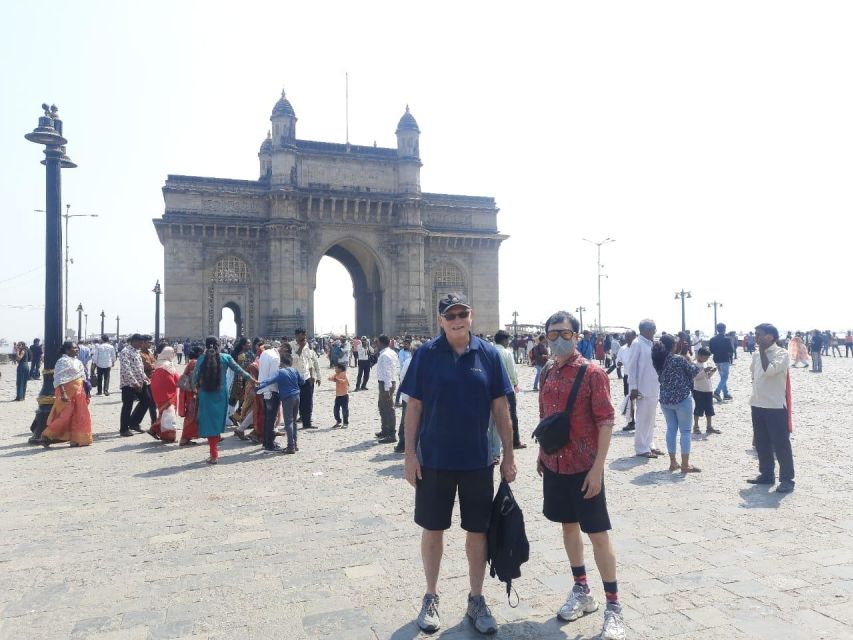
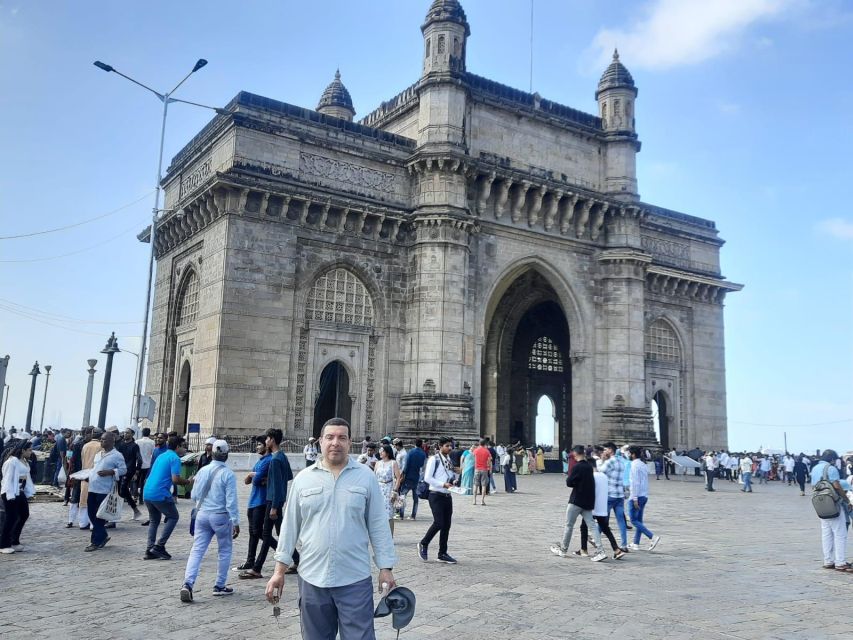
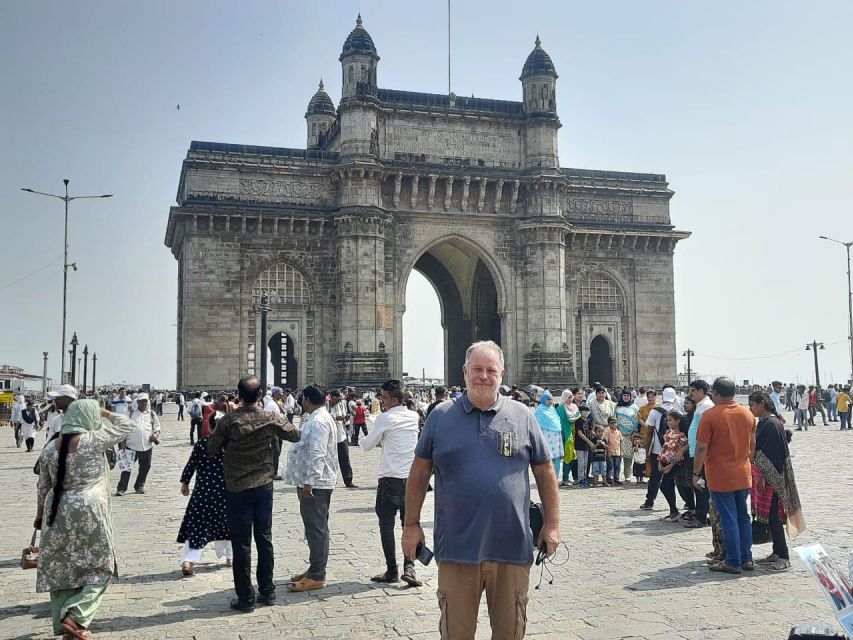
The Gateway of India was built to welcome King George V and Queen Mary during their 1911 visit. Its design is primarily Indo-Saracenic, with Muslim elements incorporated into the triumphal arch.
The building is grand, ceremonial, and designed to make an impression from the water. It also shows how colonial architects borrowed and reshaped Indian forms for imperial occasions.
Yet the Gateway’s later history changed its meaning. On February 28, 1948, the last British troops passed through it in a ceremony marking the end of British rule in India. A structure created to welcome the British monarchy became a setting for their departure.
That reversal gives the tour a strong ending. You begin at a railway station that represents imperial ambition and finish at an arch linked to the close of British rule. In between, you see Indian institutions, patrons, and architectural choices asserting their own place in the city.
The Gateway of India is included as an entrance-charge stop, but the tour still centers on interpretation rather than a long interior visit. You finish at the Gateway area, with two listed drop-off points at the Gateway of India in Mumbai.
Price, pace, and practical value
At $32 per person, this is a fair price if you want a guided introduction to central Mumbai’s architecture. The value comes from the concentration of major buildings within a walkable route and from the stories connecting them.
You are paying for an English-speaking guide, entrance charges, and a 2.5 to 3 hour experience. You are not paying for hotel pickup or drop-off. Transport to the meeting point is your responsibility.
The meeting point is at the entrance of McDonald’s, where the guide meets you. The exact starting location can depend on the option selected, so check your booking details carefully before setting out.
Private and small-group formats are available. A private walk should give you more freedom to ask about specific buildings and adjust the pace, while a small group can keep the cost sensible and still provide personal explanation. The tour is offered in English.
Free cancellation is available up to 24 hours before the start for a full refund, and you can reserve now and pay later. Those terms are useful if your Mumbai plans are still changing, but the main booking decision is simpler: do you want a guided architecture walk, or do you want to enter many buildings?
Who should choose this Mumbai architecture walk
I would choose this experience if you want a clear first look at Fort and the surrounding historic center. It is especially useful if you enjoy architecture but do not want to spend time researching each building before you arrive.
It also suits anyone curious about the relationship between colonial power and Indian identity. The Gothic and Art Deco contrast, the story behind Rajabai Tower, the role of David Sassoon, and the political meaning of the Gateway give you far more than a list of building dates.
You should think twice if interior access is your main goal. Most sites are viewed from outside, and the walk does not include hotel pickup. It also requires walking between stops for up to three hours, so wear practical shoes and keep water with you.
Should you book it?
Book this tour if you want Mumbai’s architecture explained as a connected story rather than seen as a string of façades. CST, the Oval Maidan, Rajabai Tower, Empress Court, and the Gateway of India give you a strong range of styles and subjects in one outing.
The best reason to book is the guide-led interpretation. Pankaj received particular praise for making Gothic and Art Deco buildings feel alive, and for explaining the last 200 years of Mumbai’s colonial-era story in a way that connects to the streets around you.
Skip it if you mainly want private access to historic interiors or prefer exploring without a fixed walking route. For everyone else, $32 is a sensible way to get your bearings and understand why Mumbai’s architecture is one of the city’s most rewarding subjects.
FAQ
How long does the Mumbai architecture tour last?
The walk lasts about 2.5 to 3 hours.
What language is the tour offered in?
The tour is conducted in English with a live guide.
Where is the meeting point?
Meet the guide at the entrance of McDonald’s. The exact starting or pickup location depends on the option selected.
Is hotel pickup included?
No. Pick and drop are not included.
Which major landmarks are included?
The route includes CST, Regal Cinema, the Oval Maidan, David Sassoon Library, the Gateway of India, Rajabai Clock Tower, the Bombay High Court, Flora Fountain, Eros Cinema, Empress Court, and Elphinstone College.
Can I enter all the buildings?
No. Except for Chhatrapati Shivaji Maharaj Terminus and the Gateway of India, the other sites are seen from outside.
Is the Gateway of India the final stop?
Yes. The tour finishes at the Gateway of India, with listed drop-off locations there.
Are entrance charges included?
Yes. Entrance charges are included in the activity price.
Can I cancel the booking?
Yes. You can cancel up to 24 hours in advance for a full refund. You can also reserve now and pay later.
New to the itinerary around India
- New Delhi: Mughal’s architecture tour with transfers★ 4.0 · 7 reviews
- 2 day tour from Mumbai to architectural wonder of Mandu★ 5.0 · 2 reviews
- Goa Walking tour: History, Culture, Art and architecture★ 4.5 · 2 reviews
- South India Tour- Temple Architecture and Backwaters★ 5.0 · 7 reviews
- British Architecture Walk in Chennai by Wonder tours★ 5.0 · 10 reviews
- Day trip from Bangalore to Lepakshi for Temple architecture & paintings★ 5.0 · 15 reviews
- Old & New Delhi Culture & Architecture City Private Tour★ 4.9 · 9 reviews
- Kanchipuram: Temple Architecture & Silk Weaving from Chennai★ 4.8 · 3 reviews
India Architecture Tours, compared.

Delhi Hidden Gems: Mehrauli, Lodhi Art & Sunder Nursery
Read our review →
British Architecture Walk, an immersive walking tour in Chennai
Read our review →
The Hipster Chandigarh Architecture History Tour
Read our review →
Mumbai heritage walk- Story of Gothic and Art Deco buildings
Read our review →
Le Corbusier’s Chandigarh : A Complete Architecture Tour
Read our review →
Day trip from Bangalore to Lepakshi for Temple architecture & paintings
Read our review →
Victorian Gothic Heritage Quarter and Art Deco Walking Tour
Read our review →Other lists with this tour