
Review · TOKYO
Small-Group Architecture Tour in Ginza, Tokyo
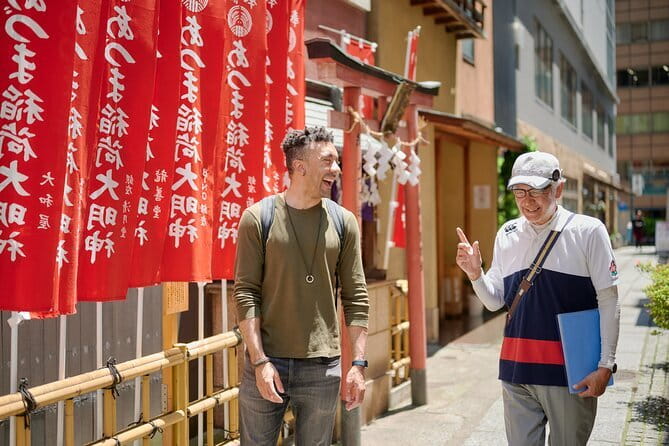
Ginza is more than polished shop windows and luxury labels. This small-group walking tour shows how temples, post-disaster rebuilding, traditional theater, and bold modern design share the same few city blocks. Guides Hal and Taka bring architecture and urban-planning experience, so you get more than a list of famous buildings.
I like the slow pace and the chance to step inside places such as Kabukiza, the Nicolas G. Hayek Center, and Maison Hermes. I also like the group limit of six, which gives you room to ask about details and request suggestions for other buildings. The main drawback is simple: three and a half hours on foot takes some stamina, and the route depends on good weather.
Key points to know before you book
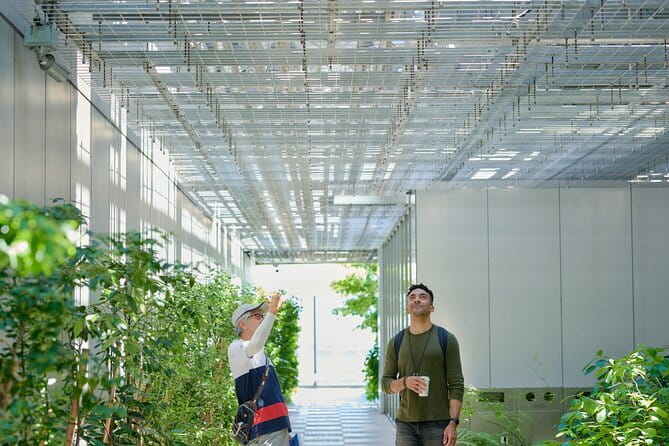
- Small group of six maximum: You get a more personal walk, with time for questions and photographs.
- Architecture beyond luxury storefronts: The route mixes temples, a shrine, theater, boutiques, office buildings, and older structures.
- Guides with design expertise: Hal and Taka bring practical insight from architecture and urban planning.
- Several interior visits: You may enter Kabukiza, the Nicolas G. Hayek Center, Maison Hermes, and Okuno Building.
- A useful Ginza finish: The walk ends at the Ginza 4-chome intersection, in front of Mitsukoshi.
- A moderate physical outing: Expect about 3 hours 30 minutes, with roughly 40 minutes of walking between sites plus time on your feet at stops.
Why Ginza works so well for an architecture walk
Ginza can seem designed for shopping first and sightseeing second. That is exactly why it works as a study in city design. Within a compact area, you can compare old religious buildings, department-store landmarks, luxury boutiques, a theater, a tiny shrine, and an early twentieth-century apartment or office building.
The route also gives you a way to read Tokyo instead of merely looking at it. You learn how the Shogun era and natural disasters helped shape the area’s buildings and rebuilding choices. That context matters. A glass façade is more interesting when you understand why a city repeatedly adapts its streets and structures.
I like that the experience is done on foot. From a car, Ginza becomes a parade of signs and polished façades. Walking lets you stop for photographs, look upward, notice materials, and compare one block with the next. The guide can also respond to your interests. If a less famous building catches your eye, you can ask for other local architecture suggestions.
The group size is a real advantage here. With no more than six people, the guide can point out smaller details without shouting across a crowd. You also have a better chance to ask how a project was designed or why a building looks different from its neighbors.
More Architecture Tours around Japan:
- Private Harajuku Omotesando Architecture Walking Tour
★ 5.0 · 67 reviews - Private Ginza Architecture Walking Tour
★ 5.0 · 50 reviews - Private Harajuku Omotesando Architecture Tour
★ 4.9 · 18 reviews
Starting at Tsukiji Hongwanji Temple
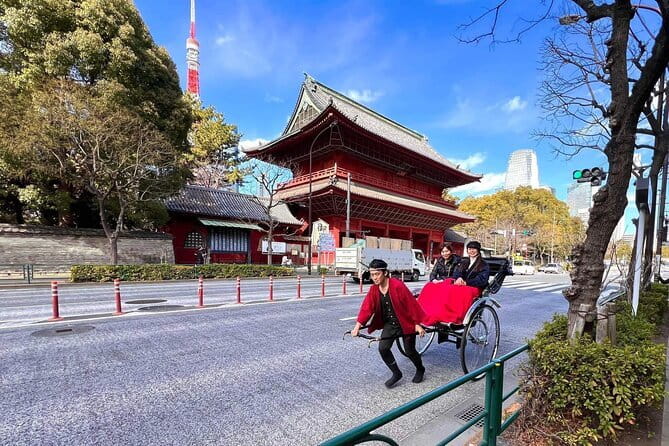
The meeting point is near Exit 1 of Tsukiji Station, at Tsukiji 3-chome 15-1. Starting here gives the tour a useful change of mood. You begin near the Tsukiji area and then work toward Ginza, rather than dropping straight into the district’s most polished retail streets.
Tsukiji Hongwanji Temple is the first named stop. You go inside for about 10 minutes and hear about the temple. It is a good opening because it brings religious architecture into a tour that later focuses heavily on commercial and modern buildings.
The temple also helps frame the larger discussion of Japanese building traditions and change. You are not looking only at new façades. You are comparing different ways Tokyo has expressed identity through buildings.
The stop itself is brief, so do not expect a long temple visit. Its value is as an introduction and a contrast. Afterward, the walking portion begins, with about 40 minutes in total spent moving from site to site.
Kabukiza Theater and the architecture of performance
Kabukiza Theater gets about 20 minutes, and the plan is to go inside and look at its features. That interior access makes this more than an exterior photo stop.
Kabukiza is important because it joins architecture with a living cultural use. A theater has to guide people, frame performances, handle crowds, and create a strong public face. Those practical needs give you a different way to think about design than you get from a boutique or office tower.
You will likely appreciate this stop most if you want buildings explained in terms of how they work, not just how they look. The schedule is still tight, though. Twenty minutes allows a focused visit rather than a full theater tour or performance experience.
Nicolas G. Hayek Center and the smaller details
The Nicolas G. Hayek Center receives about 15 minutes, with an interior visit planned. This is one of the tour’s most useful modern architecture stops because it shows how a commercial building can make design part of its public identity.
A guide with professional experience can help you notice choices that are easy to miss: how the entrance meets the street, how the façade handles light, and how the interior presents a brand without relying only on a large sign. The precise discussion will depend on your guide and the day, but the stop is built around looking closely rather than walking past.
One guide, Taka, worked as an urban planner and architect. That background is particularly useful in Ginza, where buildings must fit a busy commercial district while still making a strong visual mark. Hal is also praised for technical insight and energetic explanations, so the experience may vary slightly depending on who leads your group.
Same streets, read through a different style:
- Tokyo: Shibuya Highlights Walking Tour & Secret View Spot
★ 5.0 · 287 reviews - Tokyo Architecture and Contemporary Art Walking Tour with a local guide
★ 5.0 · 15 reviews - Private Edo-Tokyo Open Air Architectural Museum Tour
★ 4.8 · 15 reviews - Japanese Garden & Western Architecture: Akasaka exploration tour
★ 5.0 · 9 reviews
Toyoiwa Inari Shrine, a five-minute pause
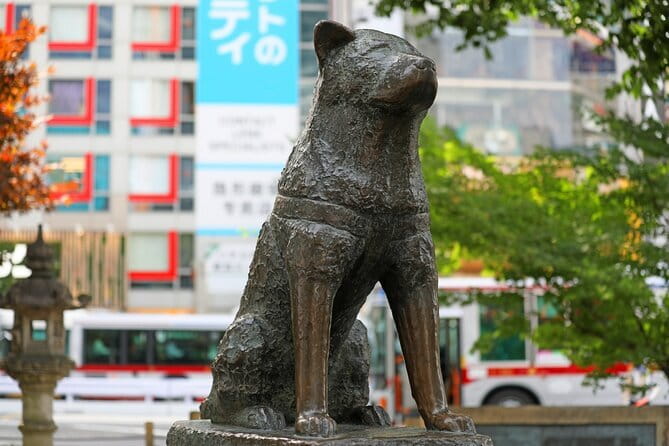
Toyoiwa Inari Shrine is a very short stop, about five minutes. Its small scale is part of the point. After large commercial buildings and a major theater, you encounter a compact religious site tucked into the urban fabric.
Do not judge this stop by its length. A tiny shrine can show how older traditions remain part of a dense modern district. It also gives your eyes a break from glass, stone, and corporate branding.
The visit is quick, so you should not expect an extended explanation or a long period for quiet reflection. Think of it as a sharp contrast within the route, not a full temple visit.
Maison Hermes and Ginza’s polished façades
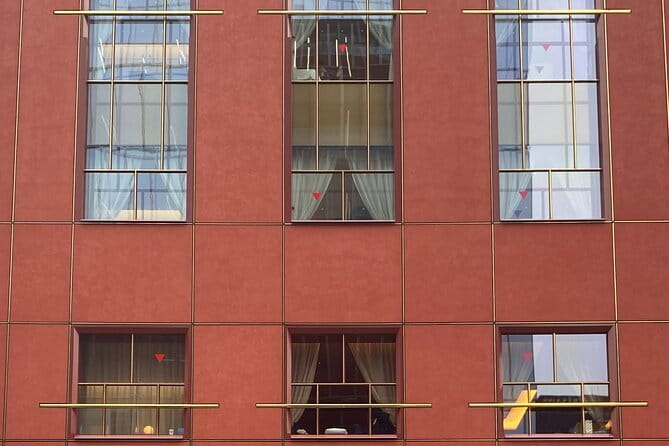
Ginza Maison Hermes Le Forum gets around 15 minutes, with an interior visit planned. This is one of the route’s signature design stops, and it shows why Ginza attracts architects as much as shoppers.
The building is treated as architecture rather than simply as a retail address. You can look at how a luxury brand creates a public building with its own visual language, and how that building contributes to the street around it.
The stop is also practical for photographers. The walking format lets you pause and frame details instead of trying to capture a façade from a moving vehicle. If interiors are open as planned, you get a fuller sense of the design than an outside view alone can provide.
Keep in mind that the tour is not a shopping excursion. You are there to study the building and its features. The guide may also be able to point you toward other design-focused sites nearby, which is helpful if Ginza’s modern architecture becomes a main interest during your stay.
Mikimoto, Uniqlo, and the art of the storefront
The schedule includes two Mikimoto buildings, each offering a different viewing experience. Mikimoto Boutique Ginza 2chome may be entered if time allows, with about five minutes set aside. Mikimoto Ginza 4chome Honten is viewed from outside for about five minutes.
That distinction matters. The first stop is less certain because the guide may need to keep the group moving. The second is an exterior study, so you should not plan on going inside both locations.
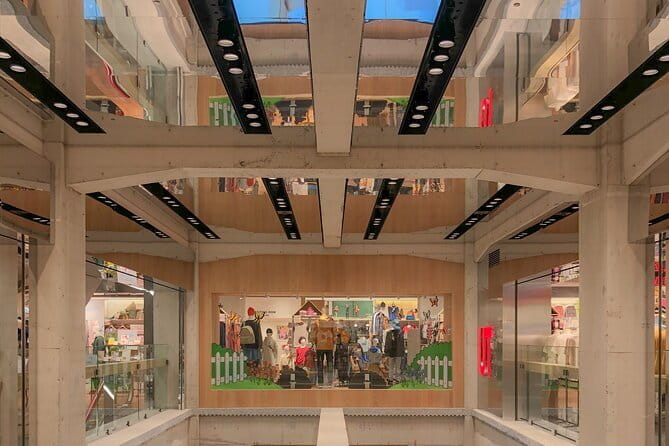
UNIQLO Tokyo is also viewed from outside for roughly 10 minutes. These stops bring retail architecture into focus without turning the walk into a tour of only luxury brands. You can compare how different companies present themselves on the same broad commercial stage.
The time at each site is short, but the sequence is useful. You see that Ginza’s visual character comes from many individual façades working together. Some are quiet and refined. Others use strong shapes, surface patterns, or large displays to claim attention.
Wako Ginza and the district’s best-known clock tower
Wako Ginza receives about 10 minutes from the outside. Its location makes it one of the easiest landmarks to recognize on the route, especially at the Ginza 4-chome intersection.
This is a good place to think about public memory and commercial identity. Wako is not just another shop façade. It is a familiar reference point in Ginza, and its presence helps organize the surrounding streets.
Because you view it from outside, the guide can focus on the building’s appearance, location, and relationship to the intersection. Ten minutes should be enough for photographs and explanation, but not for an interior visit.
The tour finishes nearby, at the Ginza 4-chome intersection in front of Mitsukoshi department store. That is a convenient ending point. You can continue shopping, find lunch, or use public transportation without retracing the route to Tsukiji.
Okuno Building and the value of an older structure
Okuno Building gets about 10 minutes, and the plan includes going inside. This stop adds an older layer to the tour and helps prevent the route from becoming a parade of new commercial projects.
A building like this is valuable because it lets you compare age, scale, and atmosphere with the more polished façades seen earlier. You can consider how an older structure has a different presence from a new boutique or office center, and how Ginza contains several eras within a short walk.
The interior visit is especially helpful. Exteriors tell you about the street, but interiors reveal circulation, proportions, materials, and how a building feels when you enter it. Ten minutes is brief, so the guide will keep the visit focused.
What the guides add to the walk
The guide is the heart of this experience. Hal brings technical knowledge of the projects and an energetic approach to explaining them. Taka’s background as an urban planner and architect gives him a strong base for discussing modern buildings and the way they fit into Ginza.
You should use the small group to ask direct questions. Ask why one façade feels more open than another. Ask how natural disasters affected rebuilding. Ask which buildings to seek out after the tour. The format is suited to conversation, not just a speech delivered while you follow.
The descriptions of the experience highlight recommendations for other local architecture. That is one of the better benefits of booking with a specialist guide. You are not limited to the route. You can leave with a short list of places to explore on your own.
Time, price, and practical value
The price is $84.70 per person for about 3 hours 30 minutes. That is not a cheap orientation walk, but the value depends on how much you want from the guide.
If you only want to see Ginza’s famous façades, you can walk the district yourself for free. The paid experience earns its price through interpretation, planned interior access, a very small group, and a route that connects buildings to Japanese history and city planning.
I think the price makes the most sense for architecture students, design fans, photographers, urbanists, and repeat visitors who want a sharper look at Ginza. It is less compelling if you prefer shopping time, broad sightseeing, or a fast introduction to Tokyo.
A drink pause is included along the way. That small break matters on a walking tour, particularly if you are carrying a camera or visiting in warmer weather. You should still wear comfortable shoes and bring what you need for a moderate physical outing.
The tour starts at 10:00 a.m. near Tsukiji Station and ends near Ginza Mitsukoshi. There is no hotel pickup or drop-off, so you need to make your own way to the starting point and continue independently afterward. A mobile ticket is provided, and confirmation arrives when you book.
Free cancellation is available up to 24 hours before the start time. Changes or cancellations inside that period are not refunded, and poor weather can lead to a different date or a full refund. Since the walk depends on good weather, check the forecast before setting aside the morning.
Who will get the most from this Ginza walk
I would choose this tour if you want to understand why Ginza looks the way it does. It suits you if you enjoy modern buildings, public spaces, storefront design, temples, and the small clues that connect old Tokyo with new Tokyo.
It is also a good fit if you prefer questions and conversation. A group capped at six is much better for that than a large city tour. You can ask for recommendations based on your own interests instead of following a fixed lecture.
You may want to skip it if your main goal is shopping, if you dislike walking, or if your schedule is too tight for a 3.5-hour commitment. Some stops are only five minutes, and several buildings are viewed from outside. The route gives you breadth and comparison, not long visits at every address.
Should you book this architecture tour?
Book it if Ginza’s buildings interest you as more than backdrops for shopping photos. The strongest reasons are the small group, the professional perspective of guides such as Hal and Taka, and the mix of interiors, exteriors, religious sites, and commercial design.
Skip it if you want a general Tokyo highlights tour or a relaxed stroll with little structure. For the right audience, $84.70 buys useful context and access to details you could easily miss on your own. Wear good shoes, arrive near Tsukiji Station before 10:00 a.m., and bring questions.
FAQ
How long is the Ginza architecture tour?
The tour lasts approximately 3 hours and 30 minutes.
What time does the tour start?
It starts at 10:00 a.m.
Where does the tour meet?
The meeting point is near Exit 1 of Tsukiji Station at Tsukiji 3-chome 15-1, Chuo City, Tokyo.
Where does the tour finish?
The tour finishes at the Ginza 4-chome intersection, in front of Mitsukoshi department store.
How many people can join the tour?
The maximum group size is six travelers.
Is hotel pickup included?
No. Hotel pickup and drop-off are not included.
What happens if the weather is poor?
The experience requires good weather. If it is canceled because of poor weather, you will be offered a different date or a full refund.
New to the itinerary around Japan
- Tokyo Architecture and Contemporary Art Walking Tour with a local guide★ 5.0 · 15 reviews
- Private Ueno Park Architecture Walking Tour★ 5.0 · 8 reviews
- Japanese Garden & Western Architecture: Akasaka exploration tour★ 5.0 · 9 reviews
- [Aomori Prefecture] Tour the history and architecture in Towada City, the art city★ 5.0 · 6 reviews
- Private Ueno Park Architecture Tour★ 5.0 · 5 reviews
- Private Ginza Architecture Tour★ 5.0 · 3 reviews
- Kyoto: Nijo Castle & Gardens 2-Hour Guided Tour★ 4.5 · 2 reviews
- Private Edo-Tokyo Open Air Architectural Museum Tour★ 4.8 · 15 reviews
Japan Architecture Tours, compared.
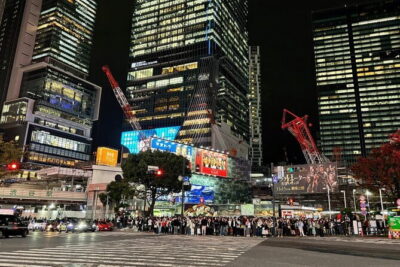
Shibuya Highlights Walking Tour & Secret View Spot
Read our review →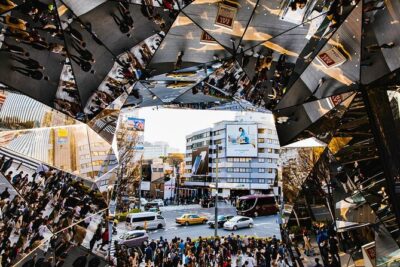
Private Harajuku Omotesando Architecture Walking Tour
Read our review →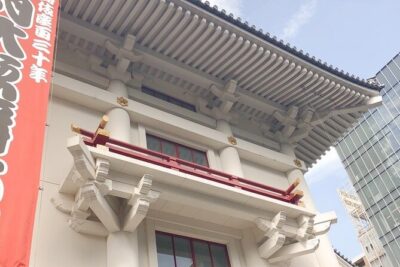
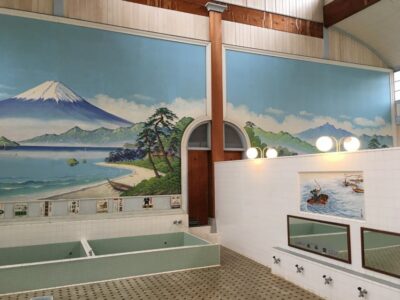
Private Edo-Tokyo Open Air Architectural Museum Tour
Read our review →
Tokyo Architecture and Contemporary Art Walking Tour with a local guide
Read our review →
Japanese Garden & Western Architecture: Akasaka exploration tour
Read our review →
[Aomori Prefecture] Tour the history and architecture in Towada City, the art city
Read our review →Other lists with this tour