
Review · TOKYO
Private Ginza Architecture Walking Tour
Ginza is easiest to understand when you stop staring at the shop windows and start looking up. This private walk connects grand department stores, tiny shrines, postwar buildings, luxury boutiques, and bold modern façades, showing how Tokyo’s most polished shopping district became an architectural showcase.
I like the one-to-one tailoring and the chance to enter buildings you might otherwise pass without noticing. I also like the mix of famous sights and small surprises, from Tsukiji Hongwanji Temple and Kabukiza Theater to Toyoiwa Inari Shrine, a tucked-away place that takes only a few minutes to see.
The main consideration is pace. You cover many stops in about three and a half hours, and some visits last only five or ten minutes. If you want long interior visits or detailed architectural study at every building, you’ll need to tell your guide that before setting out.
Key things to know before walking
- Private groups of up to five: Your guide can adjust the route and level of explanation to your party, rather than following a fixed large-group script.
- Architecture with cultural context: The walk includes a Buddhist temple, a kabuki theater, shrines, department stores, watch boutiques, and contemporary façades.
- Several notable interiors: Tsukiji Hongwanji, Kabukiza, the Nicolas G. Hayek Center, Maison Hermes Le Forum, and Okuno Building are visited from inside when possible.
- A strong guide makes the difference: Yoko, Yoshi, Mari, Haruka, Makoto, Eriko, Yuki, and urban planner Taka Yamamura are among the guides praised for clear, friendly explanations.
- Moderate walking required: The route links many Ginza sights on foot, with about 40 minutes of walking between locations in total.
- A useful finish in central Ginza: The tour ends at the Ginza 4-chome intersection, in front of Mitsukoshi department store.
Why Ginza works so well for an architecture walk
Ginza can look like a glossy shopping district at first. Its streets are lined with major Japanese and international brands, and the most famous buildings often advertise themselves through luxury retail. Yet the area rewards a slower look.
Here, architecture is part of the shopping experience. Watch companies, jewelry houses, department stores, and fashion labels have commissioned striking buildings to give their storefronts a strong identity. A private guide helps you connect those façades to the street around them instead of treating each building as an isolated photo stop.
The walk also gives you a wider view of Tokyo. You are not seeing only new towers and polished showrooms. You move through older religious sites, traditional entertainment spaces, small neighborhood shrines, and buildings that survived or reflect the changing character of Ginza.
That range is the tour’s real strength. It is not a technical architecture lecture for specialists. It is an accessible look at how design, commerce, religion, entertainment, and city life share a few compact blocks.
More Private Architecture Tours in Japan:
- Private Harajuku Omotesando Architecture Walking Tour
★ 5.0 · 67 reviews - Private Harajuku Omotesando Architecture Tour
★ 4.9 · 18 reviews - Private Edo-Tokyo Open Air Architectural Museum Tour
★ 4.8 · 15 reviews
A private guide changes the feel of the walk
The group limit is five people, and the tour is private. That matters in Ginza, where the best observations can be easy to miss if you are trying to keep up with a large group.
Before the walk, it is worth telling the operator what interests you. You might care most about modern design, historic buildings, Japanese religion, shopping architecture, urban planning, photography, or local culture. The guide can then spend more time in the areas that matter to you.
Several guides have been singled out for different strengths. Yoko is praised for explaining Japanese history and architecture in clear English and for adjusting to questions. Yoshi has a patient teaching style that suits people who know little about architecture. Mari is noted for strong English and for shaping the walk around the group’s interests.
Taka Yamamura brings an urban planner’s perspective, which could be especially useful if you want to understand how Ginza’s buildings fit together as a city district. Guides named Haruka, Makoto, Eriko, and Yuki have also been praised for friendly service, cultural context, and local suggestions.
Guide quality can vary from person to person, as it does on any guide-led activity. One account found the English only just adequate and wanted more explanation at the most important buildings. That is a useful reminder to ask questions and state your priorities early.
Starting near Tsukiji and entering Tsukiji Hongwanji
The meeting point is near Exit 1 of Tsukiji Station, at Tsukiji 3-chome 15-1 in Tokyo’s Chuo City. Check the exact meeting instructions carefully, since Ginza and Tsukiji are close but different districts, and a subway exit is a much easier landmark than a broad neighborhood name.
The first part includes about 40 minutes of walking between sites. That gives the guide room to set the scene before the tour reaches the most polished Ginza storefronts.
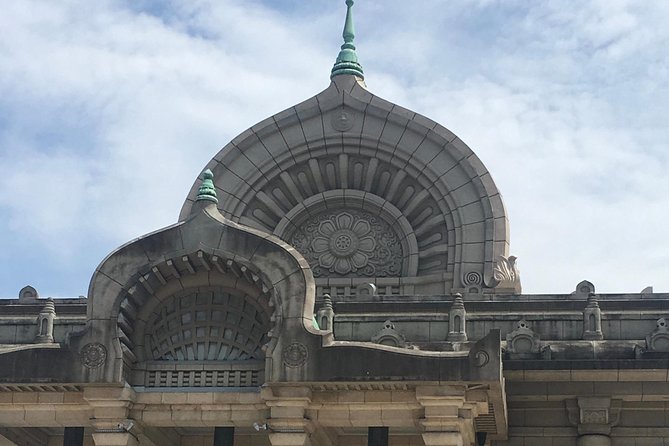
Tsukiji Hongwanji Temple is the first formal stop. You go inside for about ten minutes. The temple adds a religious and historical counterpoint to the commercial buildings that follow, and it helps show that this part of Tokyo is not only about luxury brands.
Ten minutes is enough for an introduction and a look around, but not a long temple visit. If religious architecture matters greatly to you, say so at the start. The route contains several other short stops, so the guide needs to know where you want more time.
Kabukiza Theater and the architecture of performance
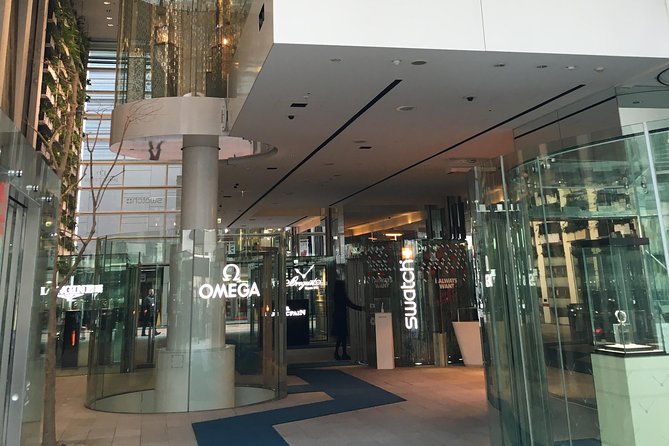
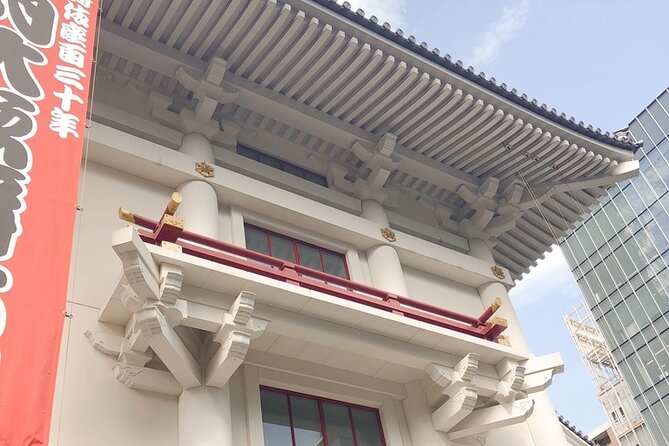
Kabukiza Theater receives about 20 minutes, including time inside to enjoy its features. This is one of the more culturally important stops because kabuki is not simply a building type or a storefront. The theater connects architecture with Japanese performance tradition.
A guide can help you read the building as part of Ginza’s identity, not just as a dramatic façade. You may also find this stop more rewarding if you are interested in how traditional forms and modern city life sit side by side.
The schedule still keeps the visit brief. Do not expect to attend a performance as part of this walk. The point is to see the theater and understand its place in the district.
More Walking Tours in Japan:
- Tokyo: Shibuya Highlights Walking Tour & Secret View Spot
★ 5.0 · 287 reviews - Tokyo Architecture and Contemporary Art Walking Tour with a local guide
★ 5.0 · 15 reviews - Private Ueno Park Architecture Walking Tour
★ 5.0 · 8 reviews - The Official Art Deco Walking Tour by The Miami Design Preservation League
★ 5.0 · 1,580 reviews
Design by major brands at the Nicolas G. Hayek Center
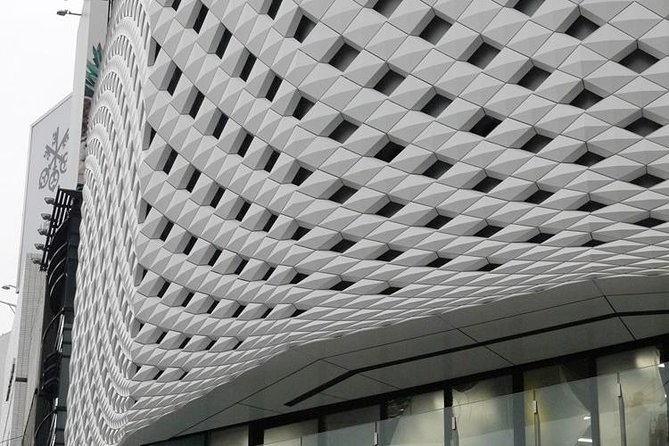
The Nicolas G. Hayek Center is visited inside for around 15 minutes. It represents Ginza’s relationship with luxury watchmaking and branded architecture.
This is the sort of place that can be easy to treat as a shop and walk past. With a guide, you can pay attention to how the building presents a company’s identity through its materials, shape, and interior arrangement.
The stop is particularly useful for visitors who want to see how commercial architecture works. You are not simply looking at decoration. You are considering why a company invests in a distinctive building and how that design changes the experience of the street.
The small scale of Toyoiwa Inari Shrine
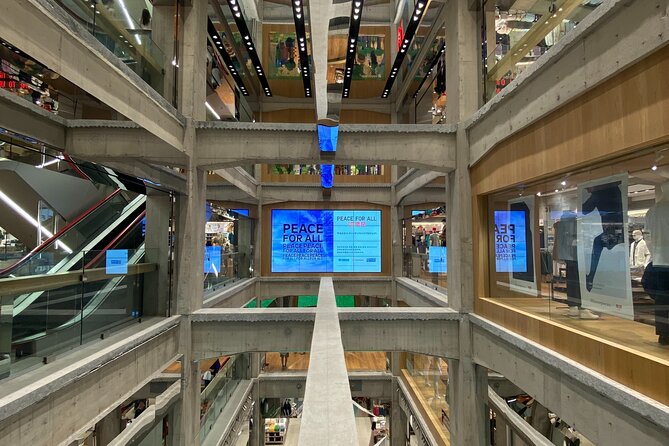
Toyoiwa Inari Shrine is allotted about five minutes. That sounds short, but the compact stop is valuable precisely because it breaks the rhythm of large, polished buildings.
Ginza’s famous avenues can make Tokyo feel grand and expensive. A small shrine brings the scale back down to a neighborhood level. It also shows how religious places can remain part of a dense commercial district.
Do not expect a large temple complex or a long ceremonial visit. Treat this as a quick pause that adds contrast to the route. If you are interested in small shrines and local religious practice, ask the guide for extra context.
Maison Hermes and the art of the luxury façade
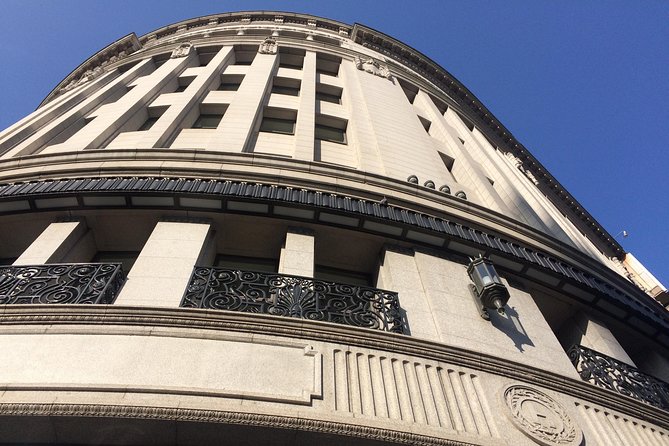
Ginza Maison Hermes Le Forum is visited inside for about 15 minutes. This is another strong stop for people who want to understand how retail companies use architecture to create a public identity.
The building is associated with one of Ginza’s most recognizable luxury names, but the visit is not presented simply as shopping time. The architectural focus lets you consider the relationship between transparency, light, structure, and display.
Interior access is one reason this private walk can be more useful than exploring alone. You might notice the exterior on your own, but a guide helps explain why it matters and directs your attention to features you could overlook.
Mikimoto, Uniqlo, Wako, and Ginza’s visual sequence
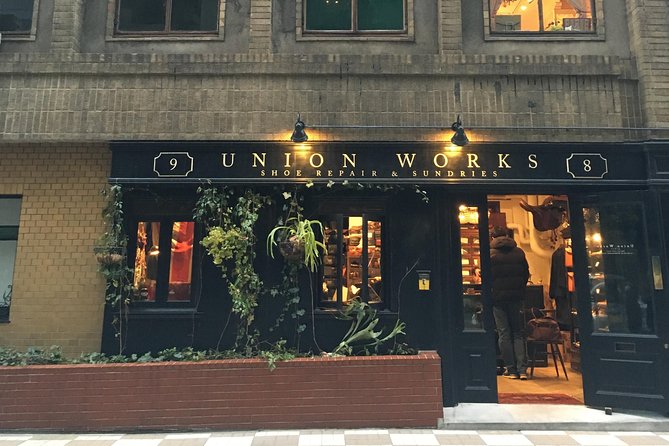
The route continues through several buildings that demonstrate different approaches to commercial design.
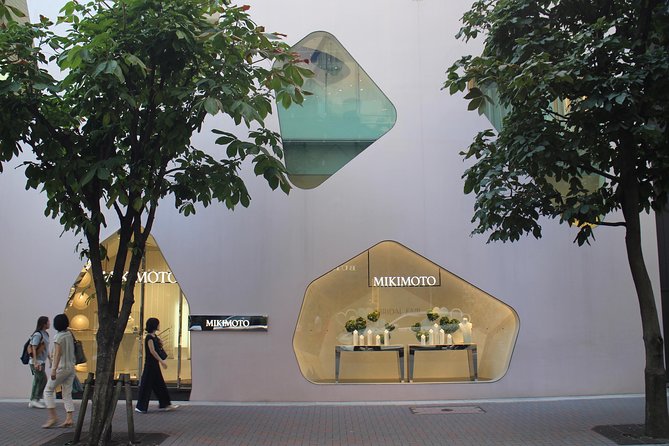
Mikimoto Boutique Ginza 2chome may be visited inside if time allows, for about five minutes. The wording matters: this stop is not guaranteed to receive a full interior visit. Time, access, and the group’s interests may affect it.
UNIQLO Tokyo is viewed from outside for around ten minutes. It offers a useful contrast with the luxury boutiques. The building belongs to a widely known everyday clothing brand, yet it still contributes to Ginza’s carefully controlled visual character.
Mikimoto Ginza 4chome Honten is also viewed from outside for about five minutes. Wako Ginza receives roughly ten minutes from the exterior. Wako is especially important as a Ginza reference point because its clock-topped building is one of the district’s best-known landmarks.
These stops work best as a sequence. Instead of studying one building for a long time, you compare several commercial identities within a short walk. Your guide can help you see why one building feels formal, another theatrical, and another more restrained.
Okuno Building and an older Ginza mood
The final listed stop is Okuno Building, where you go inside for about ten minutes. It gives the tour another change of tone after the sleek luxury boutiques and large commercial façades.
Older buildings often tell you more about how a district changed over time than a new landmark does. Okuno Building helps keep the walk from becoming a parade of famous brand names. It adds a more personal, layered feel to Ginza’s streets.
The route ends at the Ginza 4-chome intersection, in front of Mitsukoshi department store. This is a practical finish, close to major transport and central shopping streets. You can continue exploring, browse Mitsukoshi, or use the area as a simple base for the next part of your day.
What the three-and-a-half-hour schedule really means
The advertised duration is about three hours and 30 minutes. The listed stops add up to less time than that because the remaining time includes walking, conversation, questions, pauses, and transitions between buildings.
The tour is not a race, but it is active. You should have a moderate level of physical fitness, wear comfortable shoes, and expect to spend most of the time outdoors or moving between interiors.
The itinerary includes two departure times, which helps if you are fitting the walk around shopping, a meal, or another Tokyo activity. The exact times are not provided here, so confirm the available options when booking.
A cozy drink pause is included along the way. That small break matters on a walking tour, especially if you plan to ask questions rather than simply follow the guide from stop to stop.
Is $132.10 good value?
At $132.10 per person, this is not a budget sightseeing walk. The price makes the most sense for a small group that wants personal attention, flexible discussion, and access to a guide rather than a basic route map.
For one person or a couple, the cost may feel high compared with walking Ginza alone. Ginza itself is easy to reach and many buildings can be viewed from public streets without paying admission.
The value improves when two to five people share the experience and make use of the private format. You are paying for the guide’s time, English-language explanations, route planning, and ability to adjust the walk to your interests. Group discounts are available, so check the final rate for your party rather than judging the per-person price alone.
I would especially consider the price worthwhile if you have already seen Tokyo’s major temples and want a more focused look at design and city culture. It also suits repeat visitors who have walked Ginza before but never understood why its buildings look the way they do.
The tour does not include hotel pickup or drop-off. You need to reach the Tsukiji meeting point yourself, but the start is near public transportation, and the central finish makes onward travel simple.
Who should book this Ginza walk?
This experience is a good match for you if:
- You want an English-speaking guide who can adjust explanations to your background.
- You like architecture but do not have formal training in the subject.
- You want both famous buildings and less obvious stops.
- You are interested in Japanese history, religion, retail design, or urban planning.
- You prefer a private group rather than a large scheduled tour.
- You are visiting Tokyo with a family or small party of up to five people.
- You have already seen the standard sights and want a different view of the city.
It may be less suitable if you want a long shopping session, a restaurant-focused tour, or a complete architectural survey of every major building in Ginza. The route is broad and varied, so individual stops are often short.
Children must be at least 10 years old, and all participants are charged the adult rate. That makes the walk better suited to older children and adults who can manage several hours on foot and stay engaged with discussion.
Booking advice and cancellation terms
The tour has a high recommendation rate of 98 percent and a five-star rating based on 50 ratings, but the useful detail is what the format promises: private attention and a route that can change around your interests.
It is commonly booked about 44 days in advance. That suggests you should reserve ahead if your Tokyo dates are fixed, especially if you want a particular departure time.
Free cancellation is available if you cancel at least 24 hours before the local start time. Changes or cancellations made inside that window are not accepted for a refund. Keep the cutoff in mind when rearranging a Tokyo itinerary.
Should you book the Private Ginza Architecture Walking Tour?
Book it if you want to look at Ginza with fresh eyes. The best part is not any single building. It is the contrast between Tsukiji Hongwanji Temple, Kabukiza, tiny Toyoiwa Inari Shrine, luxury interiors, famous façades, and the older Okuno Building.
I would choose this walk over exploring alone if architecture, design, or urban culture interests you and you value conversation. Tell the guide what you want before the first step, ask for more time at the buildings that matter most, and accept that some short stops are there to create contrast rather than provide a full tour.
Skip it if you want a cheap, self-guided stroll or a long visit inside each location. For everyone else, the private format offers a thoughtful way to understand the Ginza you might otherwise see only as a polished shopping street.
FAQ
How long is the Private Ginza Architecture Walking Tour?
The tour lasts approximately three hours and 30 minutes.
Where does the tour begin?
It begins near Exit 1 of Tsukiji Station, at Tsukiji 3-chome 15-1, Chuo City, Tokyo 104-0045.
Where does the tour end?
The tour ends at the Ginza 4-chome intersection, in front of Mitsukoshi department store.
How many people can join one booking?
A maximum of five people can join one booking. It is a private activity for your group only.
Is the tour conducted in English?
Yes. The English-language tour includes architectural, cultural, and historical information.
Which buildings and sites are included?
The route includes Ginza streets, Tsukiji Hongwanji Temple, Kabukiza Theater, the Nicolas G. Hayek Center, Toyoiwa Inari Shrine, Ginza Maison Hermes Le Forum, Mikimoto, UNIQLO Tokyo, Wako Ginza, and Okuno Building.
Is hotel transportation included?
No. Hotel pickup and drop-off are not included. You make your own way to the meeting point and continue independently after the tour.
Can I cancel for a full refund?
Yes, if you cancel at least 24 hours before the experience start time. Cancellations or changes made less than 24 hours in advance are not refunded or accepted.
New to the itinerary around Japan
- Tokyo Architecture and Contemporary Art Walking Tour with a local guide★ 5.0 · 15 reviews
- Small-Group Architecture Tour in Ginza, Tokyo★ 5.0 · 6 reviews
- Private Ueno Park Architecture Walking Tour★ 5.0 · 8 reviews
- Japanese Garden & Western Architecture: Akasaka exploration tour★ 5.0 · 9 reviews
- [Aomori Prefecture] Tour the history and architecture in Towada City, the art city★ 5.0 · 6 reviews
- Private Ueno Park Architecture Tour★ 5.0 · 5 reviews
- Private Ginza Architecture Tour★ 5.0 · 3 reviews
- Kyoto: Nijo Castle & Gardens 2-Hour Guided Tour★ 4.5 · 2 reviews
Private Architecture Tours, compared.

Sagrada Familia & Gaudi Tour Private or Small Group with Tickets
Read our review →
Barcelona 1.5h Private Old Town, Gothic & Ramblas Walking Tour
Read our review →
Treasures of Barcelona: Private Gaudi Walking Tour
Read our review →
Sagrada Familia & Gaudi Guided Tour Private or Small Groups
Read our review →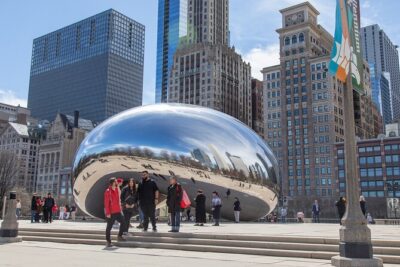
Best of Chicago: Architecture & Highlights City Private Tour
Read our review →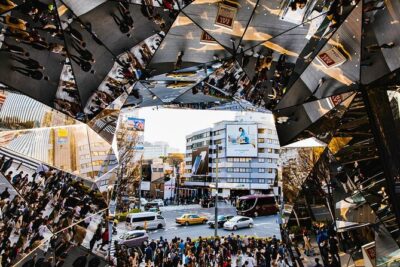
Private Harajuku Omotesando Architecture Walking Tour
Read our review →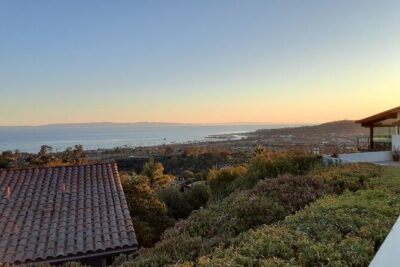
Private Santa Barbara History and Architecture Walking Tour
Read our review →
Private Barcelona Modernism and Gaudí Walking Tour
Read our review →Other lists with this tour