
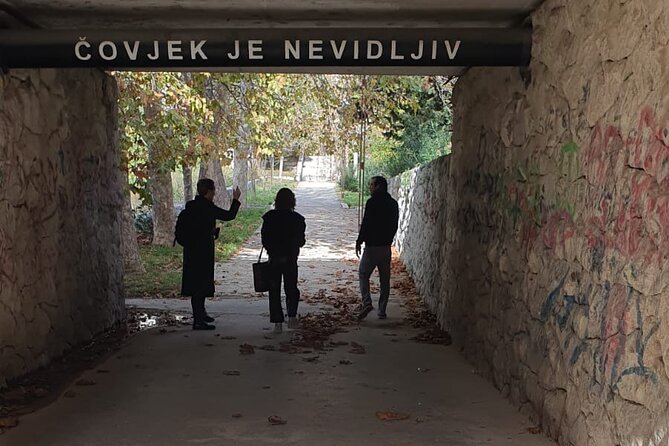
Review · CROATIA
Secret Split: Socialist Architecture & brutalism – Urban Utopia
Split 3 is the surprising heart of this tour. Built in the 1970s as a socialist vision for modern life, it replaced the usual Roman ruins with broad pedestrian paths, raw concrete, bold geometry, and housing planned around community. The project was never fully completed, yet its ideas were important enough to appear in New York’s Museum of Modern Art.
I like the way this walk connects architecture with daily life, rather than treating buildings as isolated objects. I also like the chance to hear from Mirjana, a passionate local guide who can explain how Split 3 still works as a real residential area. The main consideration is simple: if you want palaces, churches, and old stone lanes, this is the wrong tour. The focus is modern Split, and the concrete is unapologetically concrete.
Key points
- Split 3 was built as a socialist urban experiment in response to fast population growth after World War II.
- The pedestrian design is central, with spaces planned for children, neighbors, and everyday routines.
- The architecture appeared in MoMA’s 2018 exhibition Toward a Concrete Utopia.
- Mirjana leads the walk, bringing local knowledge and a clear personal interest in Split’s modern neighborhoods.
- The tour includes a residential area and contact with a local artist or activist, adding a social and political layer.
- It is a private activity, so only your group takes part, with free cancellation up to 24 hours before the start.
Why Split 3 tells a different story about Split
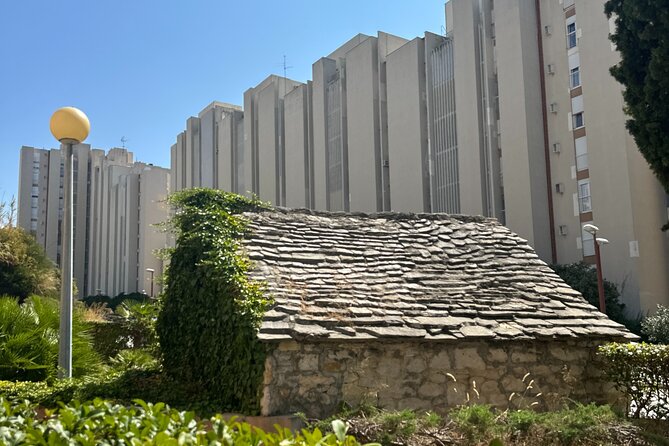
Most people come to Split for Diocletian’s Palace. That makes sense. The Roman core is beautiful, compact, and easy to fit into a first visit.
But the old center tells only one part of the city’s story. Split grew rapidly after World War II, and planners needed housing, roads, schools, open areas, and services for a much larger population. Split 3 was the answer: a major expansion built around a new idea of urban life.
This walk takes you into that later chapter. You are not simply looking at concrete apartment blocks and checking off architectural styles. You are examining a plan for how people might live together. The important questions are practical ones: Where do children play? How do people reach their homes? Can neighbors meet naturally? Can a neighborhood feel like a community rather than a collection of buildings?
That is what gives the tour its value. You see the physical result, then learn what the planners hoped the place would become.
The project was not fully realized, so you should not expect a perfect model city preserved exactly as its designers imagined it. You will see a living neighborhood, with the wear and changes that come from ordinary use. That makes the walk less polished, but more honest.
More Bauhaus and Brutalist Architecture Tours in the world:
- Brutalist Tbilisi: Urban exploration and untold stories
★ 5.0 · 82 reviews - London: Brutalist Architecture & History Walking Tour
★ 4.8 · 42 reviews - Le Corbusier’s Chandigarh : A Complete Architecture Tour
★ 4.7 · 25 reviews
Papandopulova ulica and the MoMA connection
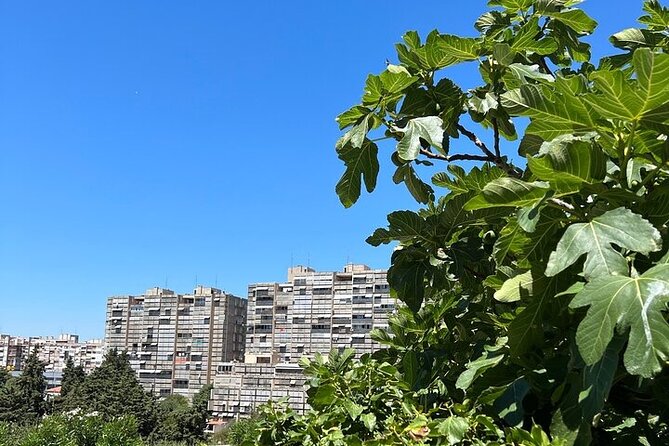
The first major stop is on Papandopulova ulica, where you begin reading Split 3 through its architecture.
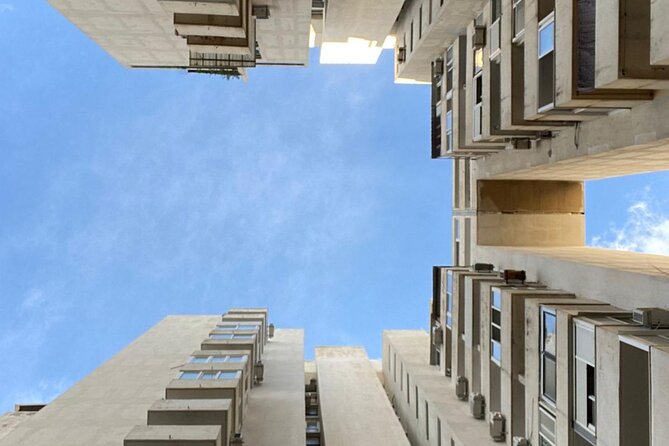
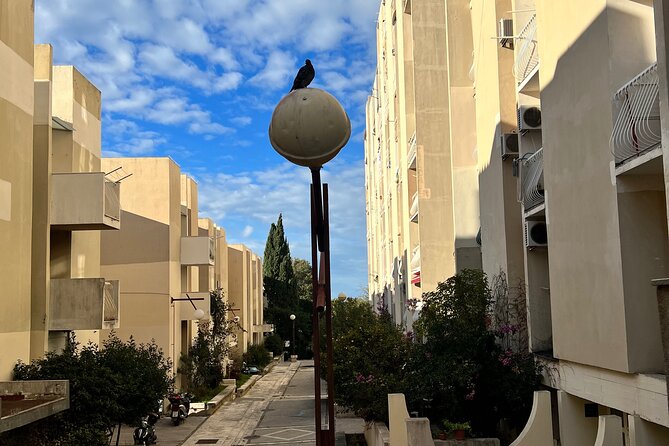
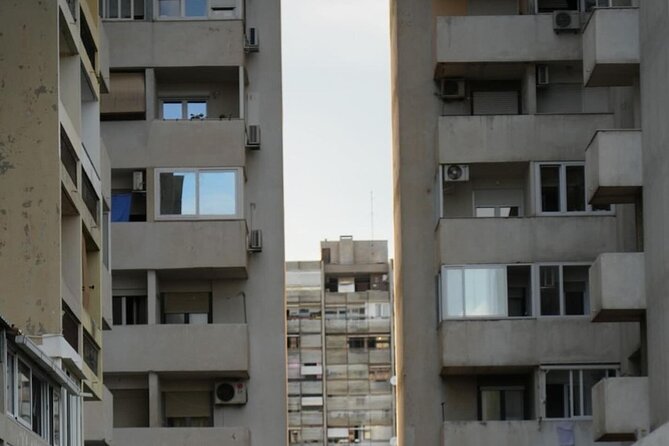
The buildings here are linked to the 1970s expansion and to a major chapter in 20th-century urban planning. Their appearance can be stark: exposed concrete, strong lines, repeated forms, and large spaces that may feel severe beside Split’s older stone buildings.
The style is often called brutalism, but the word can confuse people. It does not mean brutal in the ordinary sense. It comes from the use of raw materials and bold structural forms. Concrete is not hidden behind decoration. The building shows you what it is made of.
The guide helps you see beyond the first impression. Look at how the buildings relate to paths, entrances, open areas, and one another. The point is not only the shape of a single block. It is the way the entire area was arranged.
Split 3 received wider attention through the Museum of Modern Art exhibition Toward a Concrete Utopia in 2018. That recognition matters because it places this part of Split in an international discussion about socialist architecture and large-scale planning.
You do not need to be an architecture specialist to enjoy this stop. If you like cities, housing, design, or social history, you will find plenty to consider. If you prefer decorative detail and old craftsmanship, the first few minutes may require an adjustment.
I would keep an open mind and resist judging the buildings only by whether they look pretty. The better question is what they were trying to do.
A city planned around pedestrians and community
The next part focuses on Split 3 as an urban plan rather than a collection of structures.
The project was created during a period of rapid demographic growth. That meant the designers had to think at a large scale. They were not adding one building at a time to an old street network. They were imagining a whole part of the city and deciding how homes, paths, public areas, and daily movement should fit together.
The pedestrian zones are one of the most important features. You walk through an area designed to give people room away from traffic. Children, families, and neighbors were part of the original thinking. The layout was meant to support ordinary life, not just provide a place to sleep.
This is where the tour moves beyond architecture. You start to see urban planning as a form of social policy. A path can encourage people to meet. A courtyard can give children room to play. The placement of buildings can make a neighborhood feel open or closed.
That does not mean the plan solved every problem. Split 3 was never fully completed, and no urban design can control how people use a place over time. Still, the plan shows clear ambition. It tried to make a complete neighborhood rather than a group of isolated apartment blocks.
I like this section because it gives you a useful way to look at cities after the tour ends. You may find yourself noticing who a public space is designed for, how easily people move through it, and what the buildings say about the society that built them.
The human side of socialist architecture
A common mistake is to treat socialist architecture as a style lesson only. This tour gives it a human side.
The buildings were created during a period when many planners believed architecture could help build a fairer society. Housing was not viewed only as a private investment. It was tied to access, community, and the belief that the city should serve everyday needs.
That vision is part of what makes Split 3 worth seeing. The concrete may look hard, but the planning goals included care. The design was concerned with children, neighbors, open space, and daily routines.
You will also hear about the architects who shaped the project and the ideas behind their work. The supplied details do not identify every architect by name, so I would not book this expecting a full catalog of designers. The strength is the explanation of their shared urban ideas and the way those ideas appear in the neighborhood.
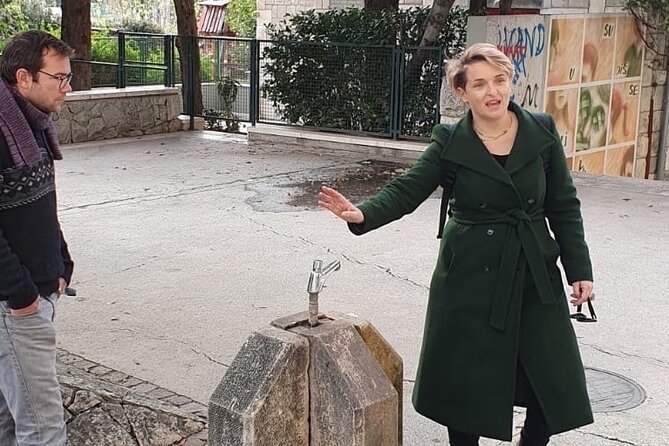
Mirjana is a key part of the experience. She is described as deeply passionate about her city, and that matters on a walk like this. Architecture can feel distant when it is presented only through dates and terminology. A local guide can connect the plan to the place people still live in today.
The tour is not framed as nostalgia for socialism. That distinction is useful. You are encouraged to look at the project honestly, including its ambition, its limits, and its unfinished nature.
More Hidden Gems Architecture Tours in the world:
- Chicago’s Secret Interiors Architectural Walking Tour
★ 5.0 · 635 reviews - Chicago: Secret Interiors Architecture Walking Tour
★ 4.9 · 498 reviews - Miami Beach Art Deco & Hidden Gems Bike Tour with Local Historian
★ 5.0 · 78 reviews - Barcelona: Exploring Gaudí’s Hidden Gem, Bellesguard Tower
★ 4.7 · 37 reviews
Art, activism, and modern Split
The final section adds art activism to the walk.
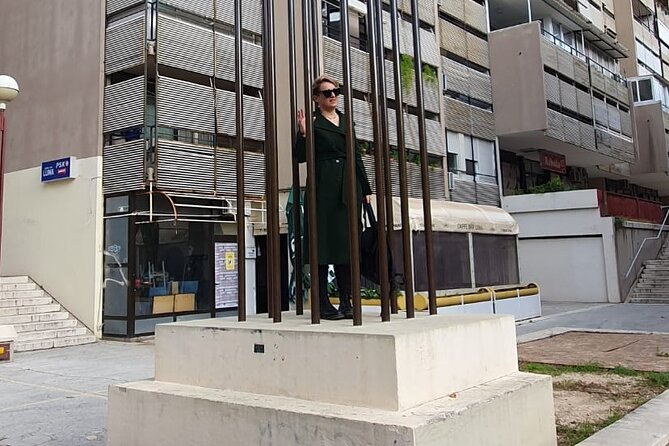
The details describe this as a response to the need for clear critical communication in Split. You may meet a local artist or activist, depending on how the activity is arranged. This gives the tour a present-day voice instead of leaving you with a story that ends when the buildings were completed.
That part can be especially valuable if you want to understand how public spaces carry arguments about society. Art and activism can question who gets heard, how a neighborhood is represented, and what a city chooses to preserve or change.
The meeting is not presented as a separate museum visit or a formal performance. It is part of the walking experience, so keep your expectations flexible. The exact person and format are not specified in the available details.
What is clear is the broader purpose: you see Split 3 not as a frozen architectural exhibit, but as a living area connected to current ideas and local voices.
This also keeps the tour from becoming a simple celebration of brutalism. You get room to consider both the promise and the problems of planned urban life.
What the walking time is really like
The tour is listed as lasting about one to three hours. The three main sections add up to roughly 98 minutes, before any walking between points or time spent speaking with the artist or activist.
That range tells you to allow a little flexibility. It is not a rushed photo stop, but it is also not an all-day outing. For most people, it should fit comfortably into a morning or afternoon.
The route takes you through a residential area rather than a museum. That means the experience depends on looking closely. You may spend time noticing entrances, building forms, paths, open spaces, and the relationship between apartments and shared areas.
Wear comfortable shoes. The tour is a walk, and although the available information does not describe difficult terrain, you should expect to move through an active neighborhood rather than sit in one place.
The meeting point is Ul. Šime Ljubića 3, and the walk returns there. It is near public transportation, which makes it easier to fit into a day based in central Split.
The tour operates Monday through Thursday from 8:00 a.m. to 7:00 p.m. for the stated operating period. Check the time offered when booking, since a morning walk and an evening walk can give the neighborhood a different feel.
Private format and the $113.90 price
The price is $113.90 per person. That is a serious cost for a walk, especially when the individual stops do not charge admission.
The value comes from the format. This is a private activity, so only your group participates. You are paying for a licensed tourist guide, a certified heritage interpreter, an organized route through a part of Split you might not otherwise understand, and access to a local artist or activist.
For one person or a very small group, the price may feel high. It makes more sense when shared by a couple, family, or group using the private format. Group discounts are available, so check how the total changes with more participants.
I would not choose this tour because it is cheap. I would choose it because the guide adds interpretation that you cannot get from simply walking through Split 3 alone.
The private setup is also useful if you have a focused interest in brutalism, socialist planning, housing, community design, or modern Croatian history. You can spend more time on the subjects that matter to you instead of following a large group at a fixed pace.
The tour is typically booked about 12 days ahead. That is a useful planning clue, particularly if you want a specific date or time. Confirmation arrives at booking, and cancellation is free if you cancel at least 24 hours before the start time. Changes or cancellations inside that period are not refunded.
Who will enjoy this walk most
I would recommend Secret Split to you if you like:
- Brutalist and modern architecture
- Urban planning and public spaces
- Social history after World War II
- Local guides with a strong personal connection to their city
- Small, private tours rather than large groups
- Art, activism, and questions about how cities work
It is also a good choice if you have already seen Diocletian’s Palace and want another side of Split.
Families may find the pedestrian planning and children’s spaces interesting, though the tour is not specifically described as a children’s program. Most people can participate, and service animals are allowed.
I would be more cautious if your time in Split is very short and you have not yet seen the historic center. This is a specialist walk, not a replacement for the city’s main Roman and medieval sights.
You should also know your own taste in architecture. Raw concrete and large geometric forms are not for everyone. The tour may change your view, but it cannot guarantee that you will suddenly love brutalism.
What I would ask before booking
I would confirm the exact duration and meeting arrangements, since the stated length ranges from one to three hours. I would also ask whether the local artist or activist will be present on your chosen date, since the details do not promise a specific person or format.
If Mirjana is available, I would be happy to request her. Her passion for Split is one of the strongest features of the experience, and this subject benefits from a guide who can speak about more than surface appearance.
Bring a phone with the mobile ticket ready. There is no admission fee for the stops, but the tour itself requires booking.
The start and end point are the same, which keeps the outing easy to combine with other plans. Since the walk takes place in a residential neighborhood, remember that you are seeing a lived-in part of Split, not a preserved monument.
Should you book Secret Split?
Book it if you want to understand how modern Split was planned and why its socialist architecture matters beyond its concrete surfaces. The combination of Split 3, pedestrian design, MoMA recognition, local guidance, and art activism gives you a thoughtful view of the city’s recent past and present.
Skip it if your main goal is ancient ruins, traditional stone streets, or a low-cost sightseeing walk. At $113.90 per person, the price requires a real interest in the subject.
For the right reader, this is one of the more distinctive ways to see Split. You leave the old center, look at the city through its housing and public spaces, and consider how architecture can express a vision of society.
FAQ
Where does the tour start?
The tour starts at Ul. Šime Ljubića 3, 21000 Split, Croatia.
Where does the tour end?
The activity ends back at the meeting point.
How long does the tour last?
The tour lasts approximately one to three hours. The listed sections total about 98 minutes, with additional time possible for walking and the local artist or activist meeting.
Is this a private tour?
Yes. Only your group participates in the activity.
What is the price?
The listed price is $113.90 per person. Group discounts are available.
What does the tour focus on?
The tour focuses on Split 3, socialist architecture, brutalism, urban planning, pedestrian areas, community design, and modern life in Split.
Does the tour visit a residential area?
Yes. Visiting the residential area of Split is included.
Is a local artist or activist included?
The experience includes meeting a local artist or activist.
Is the tour accessible by public transportation?
The meeting area is near public transportation.
Can I cancel for a full refund?
Yes, if you cancel at least 24 hours before the experience start time. Cancellations or changes made less than 24 hours before the start are not refunded or accepted.
New to the itinerary around the world
- Washington, DC: Georgetown Architecture Walking Tour★ 5.0 · 8 reviews
- Wilmington History and Architecture Tour★ 4.8 · 18 reviews
- Washington DC: Dupont Circle & Embassy Row Architecture Tour★ 5.0 · 6 reviews
- New Orleans : Garden District Architecture Walking tour★ 4.8 · 5 reviews
- Walk & Discover KL’s Architectural and Heritage Gems★ 5.0 · 7 reviews
- Unveiling Brno: History, Culture & Architectural Delights★ 5.0 · 2 reviews
- Vicenza: Palladian Architecture Private Walking Tour★ 3.3 · 3 reviews
- Private Colonial Williamsburg Architectural Tour★ 5.0 · 5 reviews
Bauhaus and Brutalist Architecture Tours, compared.
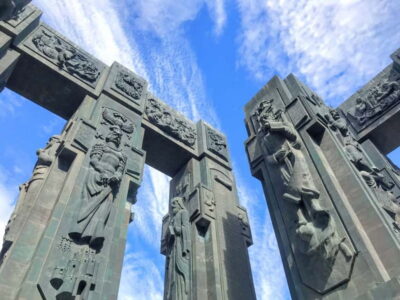
Brutalist Tbilisi: Urban exploration and untold stories
Read our review →
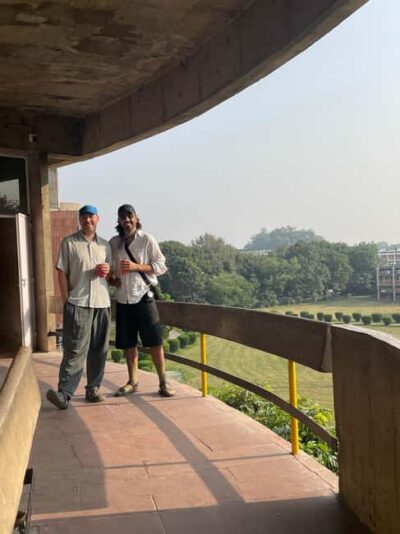
Le Corbusier’s Chandigarh : A Complete Architecture Tour
Read our review →
Architecture of New Belgrade – Brutalism Decoded
Read our review →
Tashkent Soviet Architecture (Modernism) and Subway station tour.
Read our review →
Belgrade: Space architecture tour – brutalist architecture
Read our review →
USSR History, Soviet Architects ,Statues & Mosaics
Read our review →
Brutal Tbilisi — Night Edition: Dark Side of Soviet Architecture
Read our review →Other lists with this tour