
Review · ITALY
Palermo: Art and Architecture Walking Tour
Palermo’s best sights make sense when you see them as layers. Phoenician, Roman, Byzantine, Arab, Norman, Spanish, and modern Sicilian influences all meet in a few walkable streets. This private tour brings those layers together, from the dazzling Cappella Palatina to the grand Teatro Massimo.
I like the small private format, especially if your group includes children or older relatives. I also like the guide flexibility: Francesca adapted a Sunday visit for two guests over 65, while Roberta helped an older couple manage bad weather, lines, elevators, and seating. The main drawback is cost. At $317.20 for up to five people, it makes the most sense when you fill the group and want personal attention.
Key points to know before booking
- Arab-Norman art takes center stage: The Cappella Palatina and Palermo Cathedral show why Palermo is one of Europe’s most interesting architectural cities.
- The route covers major landmarks: You visit Fontana Pretoria, Quattro Canti, Teatro Massimo, Teatro Politeama, and the old center.
- Your guide can shape the visit: Guides such as Maria, Diana, Roberta, and Francesca have handled family needs, bad weather, older guests, and personal interests.
- Monument tickets are extra: Entrance fees are paid directly to the guide before departure, and free-entry visitors still pay a €3 reservation fee.
- Plan for a real walking tour: Wear comfortable shoes, carry sun protection, and leave large bags and backpacks behind.
- The private price rewards a full group: Five people sharing the fee pay far less per person than one or two guests traveling alone.
Why Palermo works best on foot
Palermo can feel confusing at first. Streets change character quickly, grand churches appear beside worn façades, and a short walk may take you from a polished theater to a lively market lane. A guide gives you the thread that ties these sights together.
The route begins at either Teatro Politeama Garibaldi or Villa Bonanno, depending on the option you book. The final stop is Teatro Politeama Garibaldi, so you finish in a central part of the city rather than at an isolated meeting point.
You will hear about Palermo from its Phoenician beginnings through the Roman Republic, Byzantine rule, the Arab-Norman period, and later centuries. That wide time span matters here. The city is not defined by one style or one empire. Its character comes from the collision of many.
The experience is listed as three hours, although the overview describes a four-hour guided visit. Allow at least three hours, and keep your schedule loose if you want to linger at the monuments or deal with entrance lines. The walking itself is manageable, but Palermo’s heat, uneven streets, and crowded historic center can slow you down.
More Walking Tours in Italy
- Lecce: Baroque Architecture and Underground Walking Tour
★ 4.6 · 1,248 reviews - Experience Florence’s Art and Architecture on a Walking Tour
★ 5.0 · 318 reviews - City Walk with Architect: Private walking tour of Rome
★ 5.0 · 22 reviews
Starting with Palermo’s grand theaters
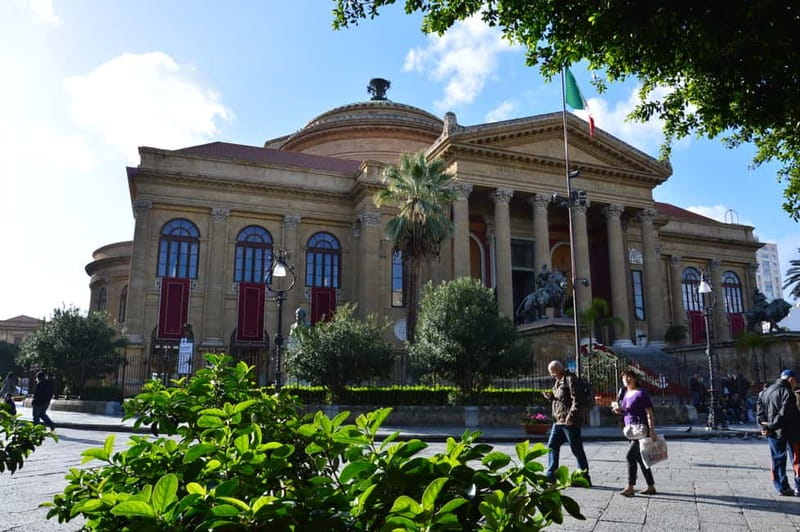
The Teatro Politeama Garibaldi is one possible starting point. Its broad exterior and monumental scale introduce you to Palermo’s 19th-century public face. This is a useful counterpoint to the older religious buildings later in the tour.
The route also includes the Teatro Massimo, one of Europe’s largest opera houses. You get a guided visit and photo stop lasting about 29 minutes. Even if you are not an opera fan, the building helps explain Palermo’s ambitions during the period when grand theaters were major civic symbols.
The Politeama and Massimo are not simply decorative stops. They show how Palermo wanted to present itself as a modern European city while its older streets still carried traces of medieval, Arab, Norman, and Spanish rule.
Your guide can also help you read the city between the official sights. One guide, Francesca, included local streets, markets, cultural details, and small shop stops for her group. That sort of adjustment is one of the strongest reasons to choose a private tour instead of a fixed large-group walk.
Fontana Pretoria and Palermo’s public squares
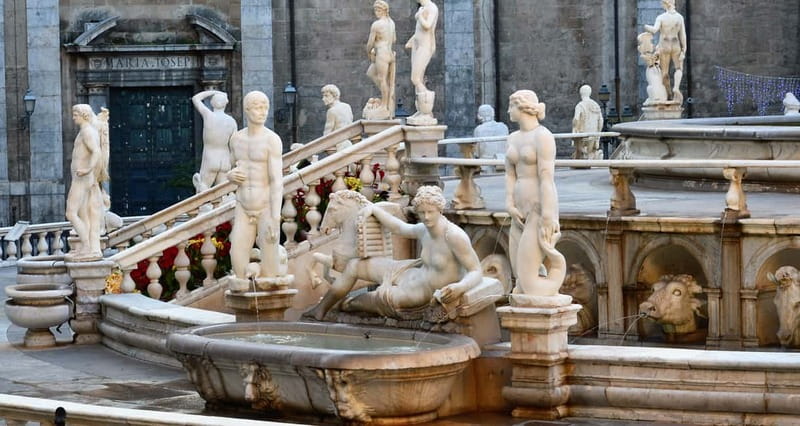
Fontana Pretoria gets about 15 minutes, including a guided visit and time for photographs. The monumental fountain is one of the route’s most striking outdoor stops, with sculpted figures arranged around a broad urban space.
This is a good place to pause and notice how Palermo uses public squares. The fountain is not tucked away inside a museum. It sits in the middle of the city, where daily life continues around a major work of art.
A short stop means you should not expect an extended art-history lecture here. Instead, the guide can explain the fountain’s place in Palermo and connect it to the buildings and streets nearby. If you enjoy taking photos, have your camera ready before the explanation begins.
Because this part of the tour is outdoors, a sun hat, sunglasses, and sunscreen are sensible. Palermo can be hot, and shade is not guaranteed at every stop.
The Cappella Palatina, Palermo’s great interior
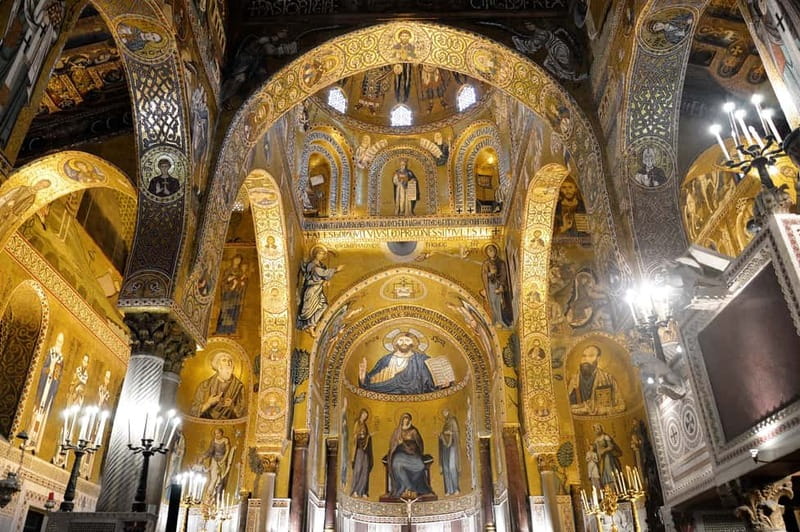
The Cappella Palatina is the artistic high point of the tour. Located in the Palazzo Reale, the 12th-century chapel reflects the Arab-Norman period, when different artistic and religious traditions met in Sicily.
Expect a space where decoration matters as much as structure. The chapel is known for its splendid interior, and the guide helps you understand the religious rites and political setting behind it. This context turns the visit from a quick look at glittering surfaces into a lesson in how medieval rulers used art to express authority and faith.
The chapel is also one of the places where entrance arrangements matter. Monument tickets are not included in the tour price. Fees are paid directly to the guide before departure. If you qualify for free admission, you still pay a €3 per person reservation fee.
Large bags and backpacks are not allowed inside the monuments. Pack lightly for the day, and do not arrive expecting to carry an oversized bag through the chapel. Shorts are also listed among the items not allowed, so dress with religious sites in mind.
The information says the tour can use a separate entrance to skip the line. That can save useful time, though it does not mean every visit will be instant. Lines, security, and entrance rules can still affect the pace.
Same streets, read through a different style:
- Naples: San Gaudioso Catacombs Guided Tour
★ 4.7 · 1,105 reviews - Caprarola: Villa Farnese, masterpiece of Renaissance architecture
★ 4.5 · 28 reviews - Best of Bologna in one day : Food, architecture, art and history
★ 5.0 · 27 reviews - Private Tour: Venice Art and Architecture Walking Tour
★ 4.0 · 22 reviews
Palermo Cathedral and a century-spanning façade
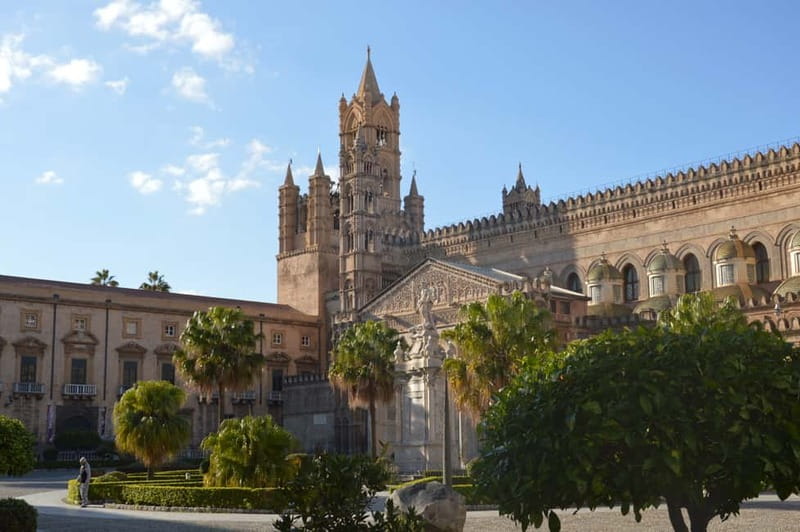
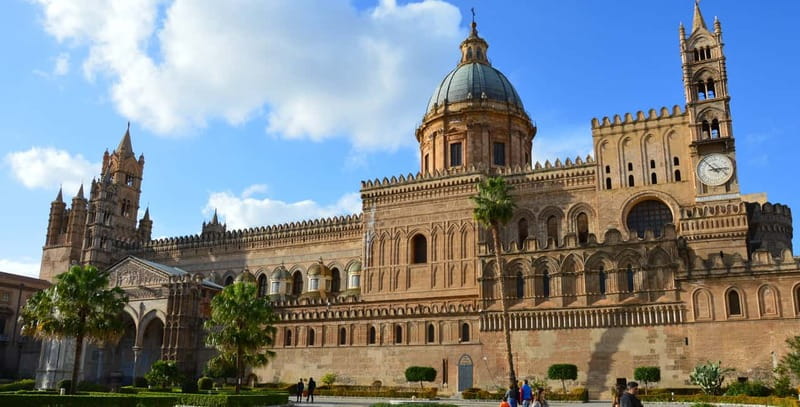
Palermo Cathedral receives about an hour, making it the longest scheduled stop. That extra time is well used. The façade combines different architectural periods, including Gothic, early Renaissance, and Baroque elements.
I like the cathedral portion because it gives you a visual way to understand Palermo’s changing rulers. Instead of trying to memorize a list of dates, you can look at the building and see how additions and changes accumulated over time.
Your guide will point out the cathedral’s exterior details and explain its place in the city. The visit includes a photo stop and guided tour. Entrance tickets are separate, so confirm the current arrangements with your guide before the tour begins.
The cathedral is also a practical stop for mixed-age groups. Roberta helped older parents find elevator access and seating during a difficult-weather visit. That does not guarantee the same arrangements on every departure, but it shows why telling your guide about mobility needs at the start is wise.
The tour is listed as wheelchair accessible. Still, Palermo’s old center can include uneven surfaces and busy streets, so discuss the exact route with the guide if someone in your group uses a wheelchair.
Quattro Canti and Palermo’s crossroads
Quattro Canti receives about 30 minutes. This famous intersection gives you a strong sense of Palermo’s historic center because four curved façades frame the crossing and create a formal urban stage.
It is a compact stop, but it rewards attention. Look upward, not only straight ahead. The layered façades, statues, and balconies make the intersection more than a place to pass through.
Your guide can explain how the crossroads fits into the city’s street plan and connect it with nearby monuments. This is also a useful point for orientation. After the tour, you will have a better sense of how Palermo’s main historic streets relate to one another.
Quattro Canti can be busy, and the center of the intersection is not a quiet place for a long talk. Stay close to your guide, especially if children are with you, and expect the explanation to happen around the flow of city life.
The legend of Saint Rosalie
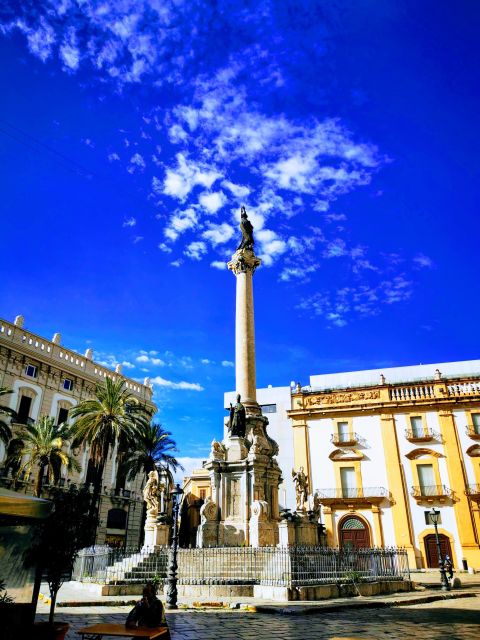
The tour includes the legend of Saint Rosalie, Palermo’s patron saint. This gives the history a personal and local side. Palermo is not only churches, rulers, and architecture. It is also a city shaped by devotion, stories, and traditions that still matter to residents.
Ask your guide how Saint Rosalie fits into Palermo’s identity. The exact emphasis may change with the guide and your group’s interests, which is another benefit of a private booking.
Diana, Maria, Roberta, and Francesca are among the guides associated with especially personal visits. The most useful pattern is not a single scripted performance. It is the ability to explain the city clearly, adjust the pace, and respond to questions.
The available languages are English, Italian, French, Spanish, German, and Russian. Choose carefully when booking, since the right language makes a major difference during an art and architecture tour.
What the private price buys you
The price is $317.20 per group of up to five people. For five guests, that works out to about $63.44 per person before monument tickets. For two people, the same tour costs about $158.60 each, and for one person it is a serious splurge.
The value comes from the format. You are not paying only to walk past Palermo’s sights. You are paying for a licensed guide who can answer questions, adjust the pace, involve children, and help with practical issues at monuments.
That flexibility mattered to guests who needed elevator access, seating, weather adjustments, and help with lines. It also helped Francesca add markets and local streets to a Sunday visit. If your group has a clear interest in architecture, local culture, or family history, private guiding can make the fixed price worthwhile.
The tour is less attractive if you are a solo visitor trying to keep costs low, or if you mainly want exterior photographs. In that case, you could see several of these landmarks independently and skip the guide fee.
Remember to add entrance costs to your budget. Food, drinks, pickup, and drop-off are also not included. The meeting point varies by the option you select, and the activity ends back at the meeting point.
Who will get the most from this walk
This tour suits a family or group of friends that can share the cost. It is also a good match for first-time visitors who want the major monuments explained in one organized visit.
Parents should appreciate that the guide can involve both adults and children. The route includes visual highlights, legends, theaters, fountains, and public squares, so younger visitors do not spend three hours listening to dates alone.
Older guests can also benefit from the private pace. Tell your guide about mobility concerns before setting off. Roberta’s handling of older parents shows the kind of practical help that can make a city walk much easier.
Art and architecture fans will get the most from the Cappella Palatina and cathedral. If your main interest is food, markets, or everyday Palermo, ask for local streets and market time. Francesca’s visit shows that the route can include those interests.
You should not book this expecting hotel pickup. You meet at the selected starting point and walk from there. Large bags are not permitted inside monuments, so travel light.
Practical details that shape the day
Wear comfortable shoes. You will be walking through the historic center, and even a short route can feel tiring in strong sun.
Bring sunglasses, a sun hat, and sunscreen. These are specifically recommended and make the outdoor parts of the visit more comfortable.
The tour is private for up to five people. Headsets are listed for groups larger than 15, which does not normally apply to a private group of five, but the guide will provide the relevant arrangements for your booking.
You can reserve now and pay later, which helps if your Palermo plans are still changing. The activity can be booked up to two days ahead.
Cancellation details need a careful check. The booking information gives free cancellation up to 24 hours before departure, while another condition says cancellations under 48 hours and no-shows are charged in full. Confirm the exact policy shown at checkout before paying.
Should you book this Palermo tour?
Book it if you want the city’s major monuments explained by one guide, your group can share the $317.20 fee, and personal pacing matters. The Cappella Palatina, Cathedral, Quattro Canti, Fontana Pretoria, Teatro Massimo, and Teatro Politeama make a strong first look at Palermo.
I would especially recommend it for families, older couples, and small groups that want to add markets or local streets to the main route. The guide flexibility is the real advantage, and names such as Francesca and Roberta suggest that practical care can be part of the experience.
Skip it if you are traveling alone on a tight budget, dislike scheduled walking, or only want to photograph the exteriors. In that case, the extra ticket costs and private guide fee may not earn their keep.
For the right group, this is a sensible way to get Palermo’s complicated story in order without being herded through the city.
FAQ
How long does the Palermo art and architecture tour last?
The activity is listed as three hours, while the overview describes a four-hour guided visit. Check the selected departure details and allow extra flexibility if you want time at the monuments.
How much does the tour cost?
The price is $317.20 per group of up to five people. Monument entrance fees, food, drinks, pickup, and drop-off are not included.
Is the tour private?
Yes. The group type is private, with space for up to five people.
Which monuments are included in the route?
The route includes the Cappella Palatina, Palermo Cathedral, Fontana Pretoria, Quattro Canti, Teatro Massimo, and Teatro Politeama Garibaldi. The tour also covers Palermo’s historic center and medieval streets.
Are entrance tickets included?
No. Entrance fees are paid directly to the guide before departure. People entitled to free entrance still pay a €3 per person reservation fee.
Is the tour wheelchair accessible?
Yes, the tour is listed as wheelchair accessible. Large bags and backpacks are not permitted inside the monuments.
What languages are available?
The live guide can provide the tour in Russian, English, French, Italian, Spanish, or German.
Where does the tour start and finish?
There are two possible starting locations, Teatro Politeama Garibaldi or Villa Bonanno, depending on the option booked. The activity finishes back at the meeting point.
What should I bring?
Bring comfortable shoes, sunglasses, a sun hat, and sunscreen. Avoid large luggage and backpacks, and note that shorts are not allowed inside the monuments.
Can children join the tour?
Yes. The tour can accommodate all ages, and the guide will involve both parents and children during the visit.
New to the itinerary around Italy
- Vicenza: Palladian Architecture Private Walking Tour★ 3.3 · 3 reviews
- Architectural Milan: Private Tour with a Local Expert★ 4.5 · 2 reviews
- The Architect’s Water★ 4.5 · 11 reviews
- Architectural Florence: Private Tour with a Local Expert★ 5.0 · 3 reviews
- Rione Sanità: tour among street art, architecture, folklore★ 4.5 · 2 reviews
- Palermo Tour: Magnificent Mixture Of Architectural Styles★ 4.2 · 6 reviews
- Discover Coppedè in Rome: Liberty architecture, symbols, and jewels★ 5.0 · 2 reviews
- Bologna: Guided Architecture Walking Tour★ 4.5 · 2 reviews
Italy Architecture Tours, compared.
Lecce: Baroque Architecture and Underground Walking Tour
Read our review →
Experience Florence’s Art and Architecture on a Walking Tour
Read our review →
Caprarola: Villa Farnese, masterpiece of Renaissance architecture
Read our review →
Best of Bologna in one day : Food, architecture, art and history
Read our review →
City Walk with Architect: Private walking tour of Rome
Read our review →
Private Tour: Venice Art and Architecture Walking Tour
Read our review →
Basilica San Marco and the Pala d’Oro with Architect Guide
Read our review →Other lists with this tour