
Review · CHARLESTON
Charleston History and Architecture Walking Tour
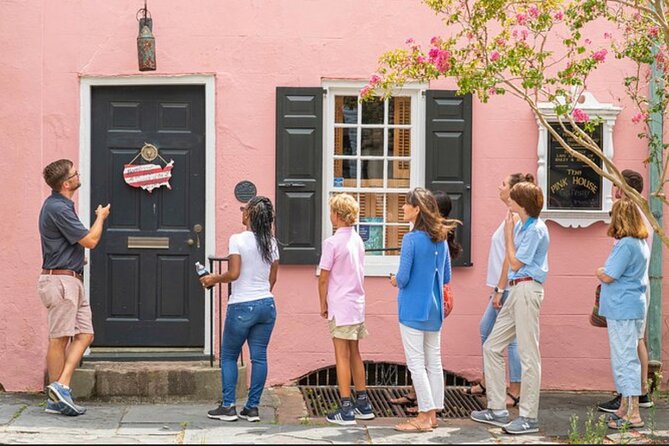
Charleston’s best stories often sit above eye level, behind pastel facades, or along a narrow lane you could easily miss. This two-hour walk connects Rainbow Row, the Unitarian Church, the Old Exchange, and Philadelphia Alley, giving you a useful first look at the city’s architecture and past without the fuss of finding each place yourself.
I like the tour’s compact route, which packs six worthwhile stops into a short morning or afternoon. I also like the guides’ personal style. Emerson is praised for making the past come alive, while Paige brings an upbeat, entertaining approach to the city’s buildings, land, and culture. The main drawback is simple: you are outside for nearly the whole experience, so sun, rain, heat, and cobblestones can affect your comfort.
Key points at a glance
- Six central Charleston stops: The route includes Pineapple Fountain, Rainbow Row, the Unitarian Church, Twenty-one Magazine, the Old Exchange, and Philadelphia Alley.
- A useful first-day orientation: Starting on East Bay Street and ending at Waterfront Park helps you get your bearings in the historic center.
- Architecture with human stories: The guide connects buildings to the people, events, and local culture behind them.
- A small maximum group: The tour accepts no more than 20 people, a manageable size for a walking history talk.
- Possible church access: The walk may include the chance to enter the Unitarian Church, including a look at its striking interior and Tiffany windows.
- Good value at $27: You get about two hours of guided sightseeing, with no separate admission charges listed for the stops.
Why this walk works so well as a first look at Charleston

Charleston can feel easy to explore at first. The historic center is walkable, the streets are lined with handsome buildings, and the major sights are close together. But without some context, you may see a pretty row of houses without understanding why the colors, porches, alleys, churches, and public buildings matter.
That is where this tour earns its price. An architectural historian guide gives you a framework for reading the city. You are not simply moving from one photo stop to the next. You are looking at how Charleston developed, what its buildings reveal, and how the city’s culture shaped its streets.
I would choose this walk early in a Charleston visit. It covers several landmarks you may later pass on your own, but the guide gives them meaning before you start exploring independently. The route also helps you understand the old center’s layout, ending at Waterfront Park near the water.
The small maximum of 20 people is another practical plus. That is not the same as a private tour, but it should be easier to hear the guide than it would be in a large crowd. The best guides on this walk appear to be a big part of the experience. Emerson is praised for his engaging storytelling and clear love of the subject. Paige is described as enthusiastic, entertaining, and good at explaining the type of land Charleston sits on.
More Walking Tours in the USA
- The Official Art Deco Walking Tour by The Miami Design Preservation League
★ 5.0 · 1,580 reviews - Chicago in a Day: Food, History & Architecture Walking Tour
★ 5.0 · 1,153 reviews - Miami South Beach Art Deco Walking Tour
★ 5.0 · 1,039 reviews
Pineapple Fountain: an easy start by the water
The tour begins at 195 East Bay Street, close to the Pineapple Fountain. The fountain is a cheerful Charleston photo stop, with a pineapple shape that has become closely linked with the city’s welcoming image.
You spend about 10 minutes here. That is enough time for an introduction, a few pictures, and a first look at the waterfront setting without using up too much of the tour.
This opening stop is light on formal history compared with the Old Exchange or Twenty-one Magazine. That is a good thing. You begin with a simple landmark and then move into the heavier stories. If you arrive early, the fountain also gives you a clear place to gather before the walking portion begins.
Do not expect the fountain itself to fill a large part of the tour. Its value is as a meeting point, a photo opportunity, and a friendly start to a route that becomes more detailed as it goes.
Rainbow Row: pastel homes with more than postcard appeal
Rainbow Row is one of Charleston’s most recognizable sights. The historic street includes 13 privately owned Antebellum homes, each painted in a different pastel shade.
You have about 20 minutes here, which gives the guide time to explain the row and lets you look carefully at the facades. This is a place where a guide is useful because the visual appeal is immediate, but the reasons behind the buildings and their preservation are less obvious.
The houses are privately owned, so this is an exterior viewing stop rather than a house museum visit. That matters if you are hoping to walk through historic interiors. You will be examining the street from outside, taking pictures, and listening to the guide connect the buildings to Charleston’s architectural character.
I like this stop because it is both photogenic and practical. You get the classic Charleston image, but the tour does not treat it as just a backdrop. The pastel row becomes part of a larger discussion about the city’s design and growth.
The Unitarian Church: architecture and a possible interior visit
The Unitarian Church receives roughly 20 minutes on the route. Here the focus shifts from colorful row houses to religious architecture, design, and the building’s place in Charleston’s story.
You will have time to admire the exterior and take pictures. Depending on access on the day, the tour may also offer a chance to enter. One especially praised part of the experience is seeing the interior and its Tiffany windows, so this can be a memorable stop for anyone interested in church design.
Because the details supplied for the tour do not guarantee entry every time, treat the interior visit as a possible bonus rather than a promise. Church access can depend on conditions at the site.
This stop also shows why the guide matters. A building can be attractive on its own, but the architectural historian’s explanation helps you notice proportions, materials, and design choices you might otherwise pass by. If you enjoy looking closely at historic buildings, this is likely one of the strongest sections of the walk.
Same streets, read through a different style:
- Chicago Architecture River Cruise
★ 5.0 · 15,756 reviews - Chicago River 90-Minute Architecture Tour
★ 4.5 · 9,629 reviews - Chicago River: 1.5-Hour Guided Architecture Cruise
★ 4.8 · 8,046 reviews - Chicago Architecture Center River Cruise aboard First Lady
★ 5.0 · 5,536 reviews
Twenty-one Magazine: stories with a darker edge

At Twenty-one Magazine, the tour spends about 20 minutes on history, architecture, and scary stories. The tone here is more dramatic than at the fountain or Rainbow Row.
That mix can work well for people who find a straight architectural lecture too dry. Stories give you an easier way into the past, especially when they involve unusual events, local legends, or the people connected with a place. The guide’s delivery matters here. Emerson is praised for entertaining descriptions of Charleston’s past, and Paige is noted for presenting facts in an engaging way.
The stop is not described as a ticketed attraction, so you should expect an outdoor explanation rather than a long interior visit. It is best understood as a storytelling point along the route.
If you prefer only documented architectural facts, you may find the scary-story element less central to your interests. If you like a little atmosphere with your history, it adds variety and keeps the two-hour walk from feeling like a string of building lectures.
The Old Exchange and Provost Dungeon: Charleston’s colonial past
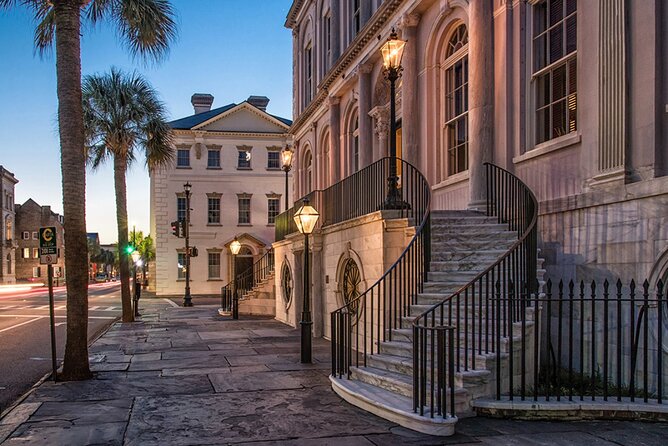
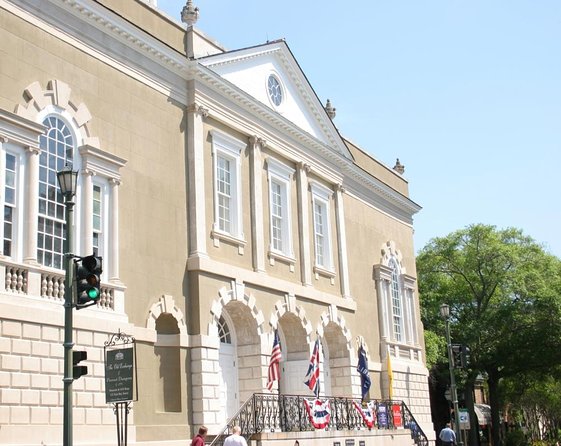
The Old Exchange and Provost Dungeon brings the tour into Charleston’s colonial history. You spend about 20 minutes learning about the building, its architecture, and the city’s early development.
This is one of the stops where the tour’s broad approach becomes clear. You are not only looking at a facade. You are considering the role a major civic building played in the city and how architecture can reflect power, commerce, and public life.
The name Provost Dungeon may catch your attention, but the supplied tour details do not promise a separate dungeon admission or extended interior visit. Plan on a guided explanation at the stop rather than a full museum tour.
For me, this is an important counterweight to the prettiest parts of the route. Rainbow Row and the fountain are easy to photograph, but the Old Exchange helps place Charleston’s beauty within a larger colonial story. The guide’s job is to add that context without letting the tour become too formal.
Philadelphia Alley: a narrow lane with a memorable name
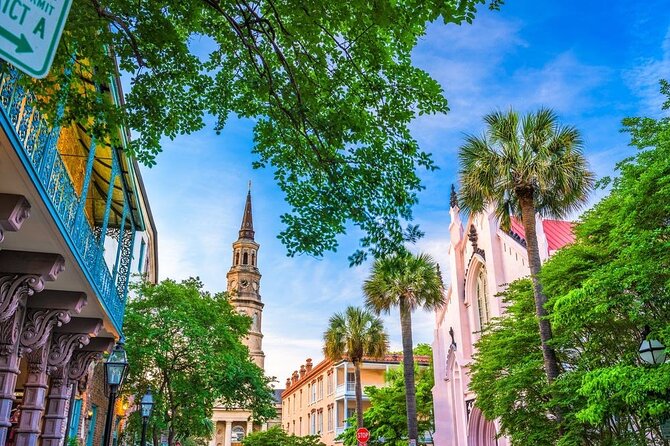
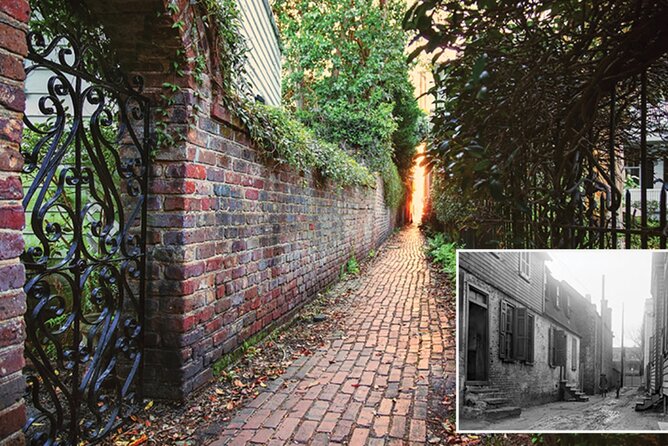
Philadelphia Alley is also known as Duelers Alley. The name alone gives this stop an edge, and the narrow passage offers a sharp change from Charleston’s broad streets and colorful facades.
The tour allows about 20 minutes here. You can take pictures, study the architecture, and hear the stories connected with the alley. It is the kind of place you could walk past without noticing if you were exploring alone.
I like the scale of this stop. A narrow lane makes Charleston feel more personal and less like a list of grand monuments. It also gives the guide a chance to talk about how smaller spaces fit into city life.
The alley is not presented as a separate attraction with an admission fee. Its appeal comes from the setting, the name, and the story. Bring shoes that feel secure on uneven surfaces, since the tour includes historic streets and cobblestones.
The route, pace, and group size
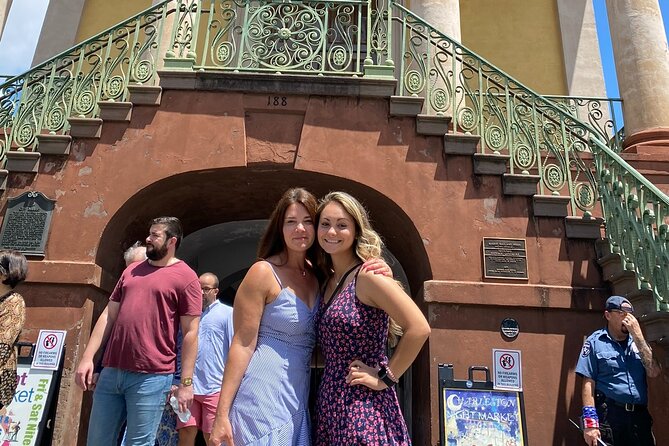
The tour lasts about two hours and ends at Waterfront Park, near Vendue Range and Concord Street. The listed stop times add up to a little under two hours, which leaves room for walking between sites, introductions, questions, and changes in pace.
You should think of this as a steady sightseeing walk, not a strenuous hike. Still, you will be outdoors and on your feet for most of the experience. The itinerary includes six stops, so the guide needs to keep the group moving. If you like lingering for long periods at each building, you may find the schedule brisk.
The route is well suited to new arrivals because it links several central sights in one sweep. Afterward, you will know where Rainbow Row, the Old Exchange, Philadelphia Alley, and Waterfront Park sit in relation to one another.
The group limit of 20 is reasonable for a walking tour. It keeps the experience social but not unwieldy. Your experience will still depend on the guide’s pace and the group’s questions, but the size should make it easier to stay together.
Is $27 a good value?
At $27, this is a fairly easy tour to justify if you want an introduction to Charleston’s architecture and history. The price covers about two hours of guided sightseeing, and the stops themselves do not list separate admission charges.
The value comes mainly from the explanations. You can walk past Rainbow Row or Philadelphia Alley for free, but you may not know what you are seeing or why it matters. A good guide turns a self-guided stroll into a connected story.
This is not the best choice if you want extensive interior access, a museum visit, or a private experience. The listed plan is built around outdoor stops, with possible access to the Unitarian Church. You are paying for interpretation, orientation, and efficient routing rather than entry to multiple paid attractions.
I would call it a particularly good deal for first-time visitors, couples who want a short cultural activity, and anyone with limited time in Charleston. It also works well before choosing which buildings or neighborhoods you want to explore in greater detail.
Practical points before you book
Wear comfortable shoes. The tour is on foot, and cobblestones can slow your pace or make sandals less appealing. The experience requires good weather, so rain or poor conditions can lead to a different date or a full refund.
The meeting point is on East Bay Street, and the route finishes at Waterfront Park. The area is near public transportation, which makes the start and finish easier to reach without a car.
A mobile ticket is provided, and confirmation arrives when you book. Service animals are allowed, and the tour is described as suitable for most people. If you have specific mobility concerns, remember that the route includes historic streets and cobblestones, so it is sensible to ask before booking.
You can cancel for a full refund up to 24 hours before the start time. Cancellations or changes made within 24 hours are not refundable, and weather-related cancellations offer a new date or a full refund.
Who should book this Charleston walk?
I would book this tour if you want a short, guided introduction rather than a full-day history program. It suits first-time visitors, architecture fans, photographers, and anyone who likes learning through stories.
It is also a good match if you want your sightseeing organized but still want time afterward to explore alone. The central route leaves you at Waterfront Park, a useful place to continue walking.
You may want something else if you dislike outdoor tours, need guaranteed indoor access, or prefer to spend a long time inside each historic building. The tour’s strengths are its route, guide, and storytelling, not extensive admission-based sightseeing.
Should you book it?
Yes, if you want an affordable way to get oriented and see several central Charleston landmarks in two hours. The strongest reason to book is the guide’s role. Emerson and Paige are both praised for making the city’s buildings, people, and stories easier to understand.
Book with realistic expectations. You will walk, stand outside, and keep moving between stops. You may get inside the Unitarian Church, but that should not be treated as guaranteed. If that style suits you, $27 buys a useful introduction to Charleston that can shape the rest of your visit.
FAQ
How long does the Charleston History and Architecture Walking Tour last?
The tour lasts approximately two hours.
Where does the tour begin?
It begins at 195 East Bay Street, Charleston, South Carolina 29401.
Where does the tour end?
The tour ends at Waterfront Park, near Vendue Range and Concord Street in Charleston.
What sights are included?
The route includes Pineapple Fountain, Rainbow Row, the Unitarian Church in Charleston, Twenty-one Magazine, the Old Exchange and Provost Dungeon, and Philadelphia Alley.
How many people can join the tour?
The maximum group size is 20 people.
Is the tour suitable for most people?
The activity information says most people can participate. It is a walking tour on historic streets and cobblestones, so consider your comfort with outdoor walking before booking.
Can I cancel for a refund?
Yes. You can cancel at least 24 hours before the start time for a full refund. Cancellations and changes made less than 24 hours before the start time are not refunded. If poor weather cancels the tour, you will be offered another date or a full refund.
More History Walks around the USA
- Charleston’s Best Highlights: History, Culture & Architecture
★ 5.0 · 422 reviews - Palm Springs Modernism Architecture & History Bike Tour
★ 5.0 · 359 reviews - Charleston: History and Architecture Guided Walking Tour
★ 4.8 · 349 reviews - Historic Georgetown: History, Gossip, & Architecture Walking Tour
★ 5.0 · 321 reviews
New to the itinerary around the USA
- Washington, DC: Georgetown Architecture Walking Tour★ 5.0 · 8 reviews
- Wilmington History and Architecture Tour★ 4.8 · 18 reviews
- New Orleans : Garden District Architecture Walking tour★ 4.8 · 5 reviews
- Washington DC: Dupont Circle & Embassy Row Architecture Tour★ 5.0 · 6 reviews
- Private Colonial Williamsburg Architectural Tour★ 5.0 · 5 reviews
- Tulsa: Art Deco Walking Tour of Tulsa★ 5.0 · 8 reviews
- Castle to Capitol: Museums of the National Mall Architecture Tour★ 4.5 · 9 reviews
- Monuments and Memorials Architectural Walking Tour★ 5.0 · 17 reviews
Charleston Architecture Tours, compared.

Charleston’s Best Highlights: History, Culture & Architecture
Read our review →
Charleston: History and Architecture Guided Walking Tour
Read our review →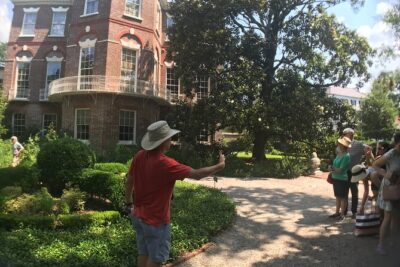
Historic Charleston: The Battery, Rainbow Row, St. Michael Church
Read our review →
Other lists with this tour