
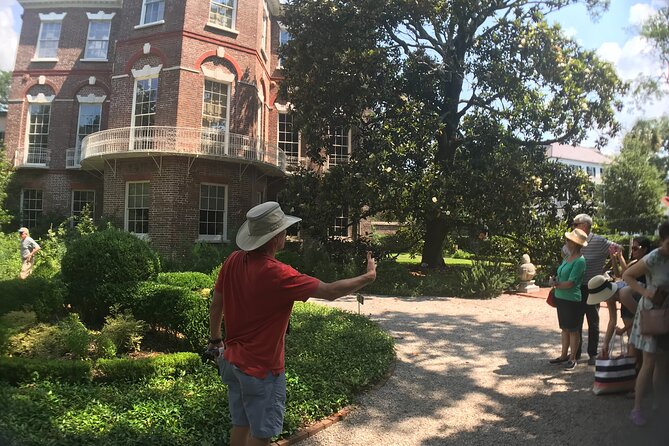
Review · CHARLESTON
Historic Charleston: The Battery, Rainbow Row, St. Michael Church
Charleston’s past comes into focus block by block on this two-hour walk. You move from the grand steeples of St. Philip’s and St. Michael’s to Rainbow Row, Washington Square, and the harbor views along The Battery. The route covers famous sights, but its real strength is the way a good guide connects them.
I like the small-group format, limited to 20 people, and the leisurely pace praised by guests who walked with Eric or Erik. I also like that the route includes places with real weight, from the Four Corners of Law to the Old Slave Mart Museum area, rather than treating Charleston as just a pretty collection of pastel houses.
The main catch is time. Two hours gives you a useful introduction, not a full examination of each site. Church interiors are also subject to availability because St. Philip’s and St. Michael’s remain active churches, so you should think of entry as a welcome possibility, not a guarantee.
Key points at a glance
- A focused two-hour route: Cover major sights in central Charleston without spending half a day on your feet.
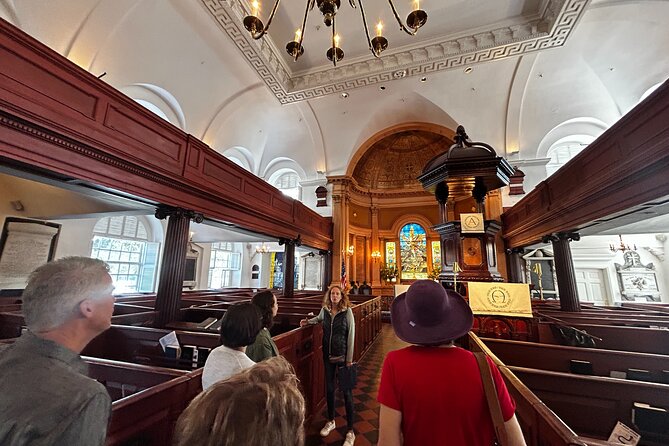
- St. Michael’s and St. Philip’s: See two landmark churches, with interior access dependent on church schedules.
- A small group of up to 20: Easier to hear the guide and ask questions than on a large coach tour.
- Strong storytelling: Guides such as Eric connect architecture, local events, and national figures.
- The Battery finale: Walk beside Charleston Harbor with historic artillery and grand homes in view.
- A serious side of Charleston: The route includes the Old Slave Mart Museum area and places tied to slavery and civic power.
Why this Charleston walking tour works
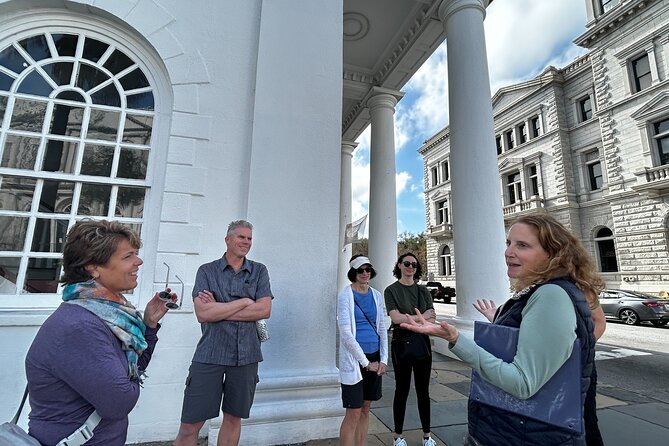
This is a good first look at Charleston because the route gathers several kinds of place into a compact walk. You see churches, civic buildings, private homes, public squares, a theater, and the harbor. That variety keeps the tour from becoming a long procession of façades.
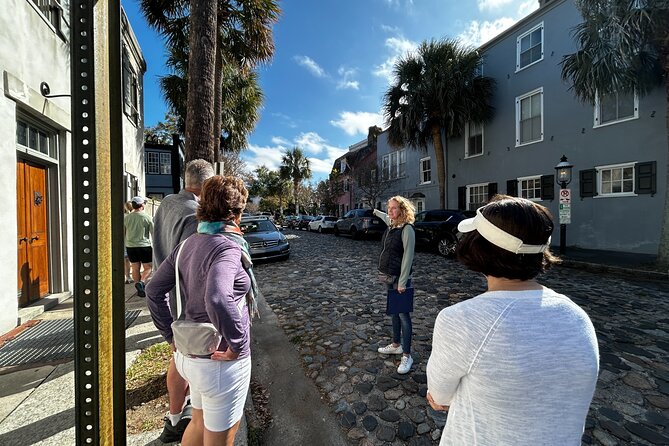
The walk begins at Washington Square at 10:00 a.m. and returns there at the end. That simple arrangement helps you plan the rest of your day. You can arrive by public transportation, meet your licensed guide, and finish where you started rather than figuring out a one-way pickup.
The experience is conducted in English and includes live commentary. Since the group can reach 20 people, you still get the social feel of a shared walk without the scale of a large bus outing. The best use of the format is to ask questions. Previous guests especially valued guides who adjusted explanations to the interests of the group.
Bring comfortable walking shoes. One guest specifically found the tour worthwhile even in rain, but wet weather will make Charleston’s sidewalks and open waterfront less pleasant. The route is outdoors for much of its length, so check the forecast and dress for the conditions.
More History Walks around the USA:
- Chicago in a Day: Food, History & Architecture Walking Tour
★ 5.0 · 1,153 reviews - Charleston’s Best Highlights: History, Culture & Architecture
★ 5.0 · 422 reviews - Palm Springs Modernism Architecture & History Bike Tour
★ 5.0 · 359 reviews
St. Philip’s Church and Charleston’s church-lined streets
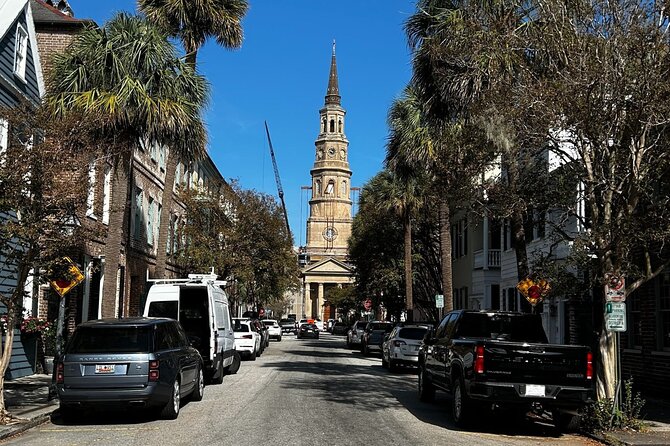
The first stop is St. Philip’s Church on Church Street. Completed in 1836, it is known for its tall steeple, which can be seen from far beyond the immediate block. Even if your visit is brief, the building gives you a quick lesson in Charleston’s architectural character: formal, vertical, and closely tied to the city’s religious and civic life.
Inside, you may see the grand interior and its treasured organ. The adjoining graveyard adds another layer, with notable figures connected to Charleston’s past. The stop is scheduled for about five minutes, so do not expect a full church tour or a long period of quiet reflection.
Access is not automatic. St. Philip’s is an active congregation, and entrances depend on what is happening in the building that day. If the doors are closed, the exterior and the guide’s explanation still make the stop worthwhile, but you should not book this walk solely for guaranteed interior access.
The short visit also shows how this tour is designed. You are not parked at one attraction for an hour. Instead, you get a series of concise introductions, each adding another piece to Charleston’s story.
St. Michael’s Church and the Four Corners of Law
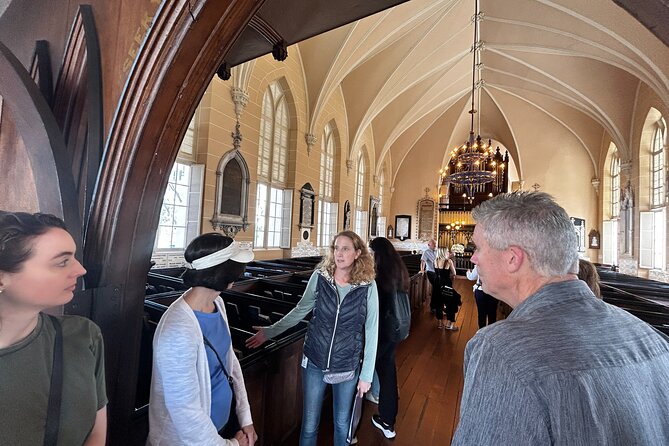
St. Michael’s Church is one of the route’s most important architectural stops. Built in 1752, it is the oldest surviving religious structure in Charleston. Its tall spire is easy to spot, and the interior may include views of its Tiffany stained-glass windows.
The church is also linked with major American figures. George Washington and Robert E. Lee were among those who attended services there. That connection helps place the building within the larger story of the early United States, rather than leaving it as a handsome old church with no context.
Again, entry depends on availability. St. Michael’s remains in use, and services or church activity can limit access. Your guide can still explain the building from the outside, but the interior should be treated as a bonus.
A short walk brings you to the Four Corners of Law, where local, state, federal, and church authority meet around one intersection. It is an efficient stop, but an interesting one. You can see how Charleston’s political and religious institutions occupy the same compact part of town. The point is less about a single monument than about how the city organizes power in physical space.
Rainbow Row and the Dock Street Theater
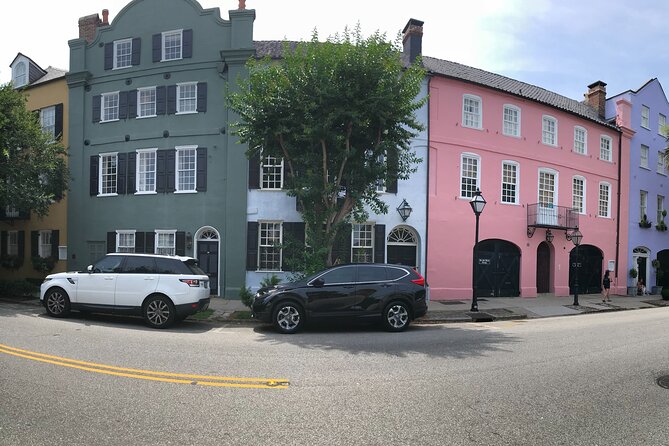
Rainbow Row supplies the bright visual break in the middle of the walk. The pastel-colored historic homes are among Charleston’s most photographed sights, and they make an easy stop for pictures. You will have time to admire the row and hear the basic story behind the houses, but the scheduled five minutes is short.
This is one place where expectations matter. You will not have a long period to compose photographs, study every doorway, or wander through private residences. The value comes from seeing Rainbow Row as part of a larger walk, not from treating it as a stand-alone attraction.
The Dock Street Theater gets more time, about ten minutes. It is described as America’s first building designed specifically for theatrical performances. That distinction gives the stop a different flavor from the churches and civic sites. Here, Charleston’s cultural life takes center stage.
Entrance is included when available, but access can vary. You may view the building from outside and hear the guide explain its importance, or you may get inside if the theater can receive the group. The wording matters: an included admission does not mean guaranteed entry at every departure.
This mix of possible interiors and outdoor interpretation keeps the tour flexible, but it also means you should not expect a fixed museum-style schedule. The guide has to work with active buildings and daily operations.
Same streets, read through a different style:
- Chicago Architecture River Cruise
★ 5.0 · 15,756 reviews - Chicago River 90-Minute Architecture Tour
★ 4.5 · 9,629 reviews - Chicago River: 1.5-Hour Guided Architecture Cruise
★ 4.8 · 8,046 reviews - Chicago Architecture Center River Cruise aboard First Lady
★ 5.0 · 5,536 reviews
Washington Square and the stories in its plaques
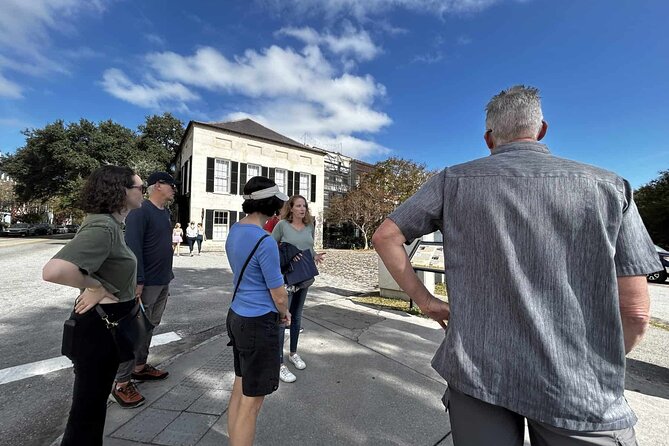
Washington Square offers a calmer stretch of the route. Live oaks shade the space, and statues and plaques point to people and events tied to Charleston. After several historic buildings, the square gives you room to pause and take in the city at a slower pace.
The stop is scheduled for about ten minutes. That is enough to hear an explanation and look around, though probably not enough to read every plaque in detail. If you like public spaces and small historical markers, you may want to return later on your own.
I find stops like this especially useful because they show how Charleston remembers itself in public. A guide can explain why a statue or marker matters, while you also see how the square functions as a real part of the city rather than a sealed historic site.
The tour returns to Washington Square at the end, so you can note anything that deserves a closer look after the guided portion. That is a practical advantage. You do not have to choose between listening to the guide and studying every detail during the walk.
The Battery, harbor views, and grand homes
The Battery is the route’s most scenic stretch. The promenade follows the edge of Charleston Harbor, with historic artillery, stately homes, and open water creating a strong final impression. It is an easy place for photographs, but the guide’s context gives the view more meaning than a quick snapshot would.
The stop lasts about ten minutes. You can expect a walk along the waterfront and an explanation of the defensive history tied to the artillery. You also get a good look at the grand residential architecture that makes this part of Charleston so recognizable.
The Battery is exposed compared with the shaded square and narrow downtown streets. Sun, wind, rain, or heat can shape how comfortable the stop feels. Good shoes remain important, and a small umbrella or weather layer may be sensible depending on the forecast.
I like ending here because the route moves from institutions and streets to the harbor itself. You finish with a sense of Charleston as a port city, not only a preserved downtown. The views also give you a natural pause before you continue with your day.
The Old Slave Mart Museum and Charleston’s harder story
The route also brings attention to the Old Slave Mart Museum, described as a reminder of slavery and the lives of enslaved people. This is an important part of any Charleston history walk. The city’s churches, mansions, public buildings, and commercial success cannot be understood without facing the forced labor and human suffering that helped shape them.
The supplied schedule does not assign a separate timed stop or admission detail for the museum itself, so you should not assume you will receive a full museum visit during the two-hour walk. The route does, however, point you toward a place where you can continue learning after the tour.
This part of the experience matters because it keeps the walk from becoming a parade of architecture without context. Charleston is attractive, but its past is not simple. A guide who connects the Old Slave Mart Museum area with the city’s larger story can help you see the buildings with more honesty.
If this subject is central to your visit, you may want to allow extra time after the tour for a separate visit. The walking tour provides an introduction, while a dedicated museum visit would give you more time with exhibits and interpretation.
The guide makes the difference
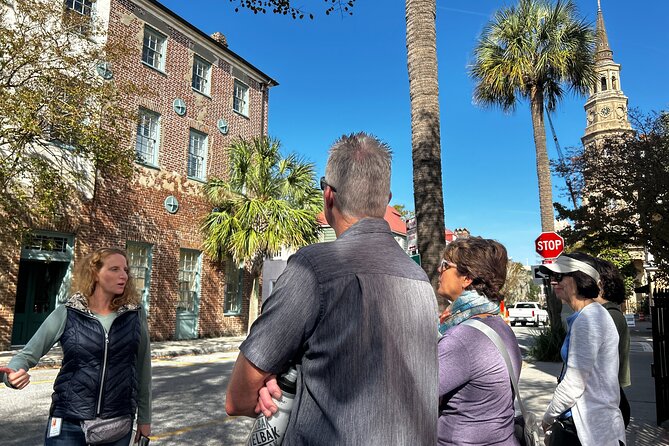
The strongest element here is the live guide. Eric is specifically identified as a guide, and the feedback describes him as friendly, patient, flexible, and able to tie events together. That last point is important. Charleston can easily become a list of dates and names, but good commentary shows how one building or street connects to the next.
A guide can also shape the experience around the group. If you care more about architecture, churches, politics, or local stories, you can ask questions and get more from the walk. The small group helps with that. A maximum of 20 people is not private touring, but it is manageable.
The guide’s tone seems to be another strength. The experience is not only a formal lecture. It includes personal interaction, questions, and a pace that allows people to stay together. Several strong comments focused on the guide’s ability to tell stories in an enjoyable way, not merely recite facts.
Names may vary by departure, so you should not assume Eric will lead every tour. Still, the qualities to look for are clear: a guide who explains the setting, answers questions, and links local events to national history.
Time, value, and who should book
The tour lasts about two hours, includes a licensed guide, and covers a substantial portion of central Charleston. Most stops have no admission charge, while entry to one to three historic sites may be included when access is available. That makes the value depend mainly on the quality of the commentary and the convenience of seeing so much in one organized walk.
I would consider it good value for a first morning in Charleston, especially if you want orientation before exploring alone. You get the key sights, a route that returns to its starting point, and enough historical framing to decide where you want to spend more time later.
It is less suitable if you want long interior visits, extensive museum time, or a slow photography session at every stop. The five-minute church and Rainbow Row visits are introductions. The ten-minute stops at Dock Street Theater, Washington Square, and The Battery give you more breathing room, but none is a full tour of its site.
Most people can participate, service animals are allowed, and the tour operates near public transportation. The group size is capped at 20. Free cancellation is available up to 24 hours before the 10:00 a.m. start time. Inside that window, refunds are not provided, and changes are not accepted.
Should you book this Charleston walking tour?
Book it if you want a compact, well-paced introduction to Charleston with a real guide rather than a recorded narration. It suits first-time visitors, history-minded walkers, and anyone who wants to connect Rainbow Row and The Battery with the city’s churches, government, theater, and difficult past.
Skip it if your top priority is guaranteed entry into St. Michael’s, St. Philip’s, or the Dock Street Theater. Those interiors depend on availability. Also skip it if two hours feels too rushed for your style.
For most people, I would book it early in a Charleston visit. Wear good walking shoes, arrive ready for changing weather, and treat the interiors as an extra rather than the main promise. The route gives you the city’s essential shape, while a strong guide such as Eric can turn a pleasant walk into a useful lesson in how Charleston came to be.
FAQ
How long does the Charleston walking tour last?
The tour lasts approximately two hours.
Where does the tour begin?
It begins at Washington Square, 80 Broad Street, Charleston, South Carolina 29401.
Where does the tour end?
The activity ends back at the Washington Square meeting point.
What time does the tour start?
The scheduled start time is 10:00 a.m.
Is the tour offered in English?
Yes. The tour is offered in English and includes live commentary.
Are church entrances guaranteed?
No. Entry to St. Philip’s Church and St. Michael’s Church depends on availability because both are active churches used by their congregations.
How many people can join the tour?
The tour has a maximum group size of 20 people.
Is the tour suitable for most participants?
Yes. Most people can participate, and service animals are allowed.
Can I cancel for a full refund?
Yes, if you cancel at least 24 hours before the experience start time. Cancellations or changes made less than 24 hours in advance are not refunded or accepted.
New to the itinerary around the USA
- Washington, DC: Georgetown Architecture Walking Tour★ 5.0 · 8 reviews
- Wilmington History and Architecture Tour★ 4.8 · 18 reviews
- Washington DC: Dupont Circle & Embassy Row Architecture Tour★ 5.0 · 6 reviews
- New Orleans : Garden District Architecture Walking tour★ 4.8 · 5 reviews
- Tulsa: Art Deco Walking Tour of Tulsa★ 5.0 · 8 reviews
- Private Colonial Williamsburg Architectural Tour★ 5.0 · 5 reviews
- Castle to Capitol: Museums of the National Mall Architecture Tour★ 4.5 · 9 reviews
- Monuments and Memorials Architectural Walking Tour★ 5.0 · 17 reviews
Charleston Architecture Tours, compared.

Charleston’s Best Highlights: History, Culture & Architecture
Read our review →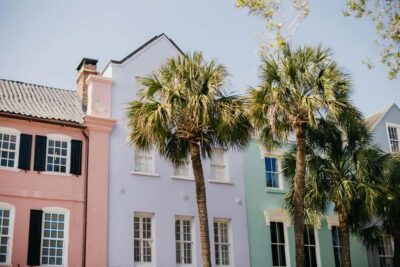
Charleston: History and Architecture Guided Walking Tour
Read our review →
Other lists with this tour