
Review · NORTH MACEDONIA
Brutalist Skopje Architecture Tour
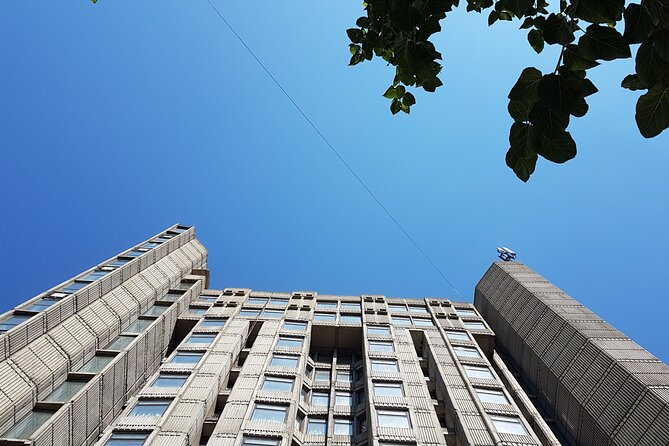
Skopje’s boldest story is written in concrete. This private tour traces the city’s modernist rebuild, from the old GTC shopping center to the unusual Main Post Office and the train station shaped by the earthquake era. Guide Elena adds a personal touch, including her connection to the university she once attended.
I like the small private format, which lets you ask questions and set the pace with your own group. I also like the route’s focus on everyday buildings, not just grand monuments: a post office, dormitory, university, and shopping mall can tell you how a city actually works. The main consideration is that the advertised three hours include several short stops, so this is a focused introduction rather than a long interior tour at every site.
Key points at a glance
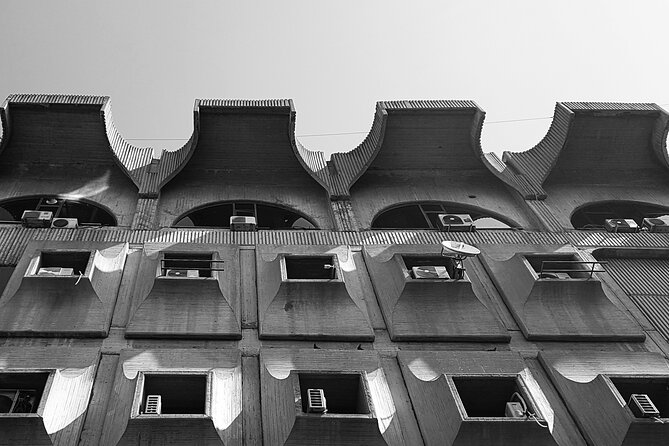
- Skopje’s post-earthquake identity: Follow the city’s modernist rebuilding through public buildings and daily-use spaces.
- A genuinely private outing: The $169.38 rate covers up to three people, with no other group members joining you.
- Elena’s personal connection: She studied at the university included on the route and can connect the building to local experience.
- Seven varied stops: See a shopping center, square, dormitory, post office, train station, university department, and opera house.
- A practical city route: Begin near GTC City Shopping Centre at 9:30 am and finish at the Macedonian Opera and Ballet.
- Useful for architecture fans: Admission is free at each listed stop, so your money goes toward the guide and private format.
Why Skopje’s modernist buildings make a good tour
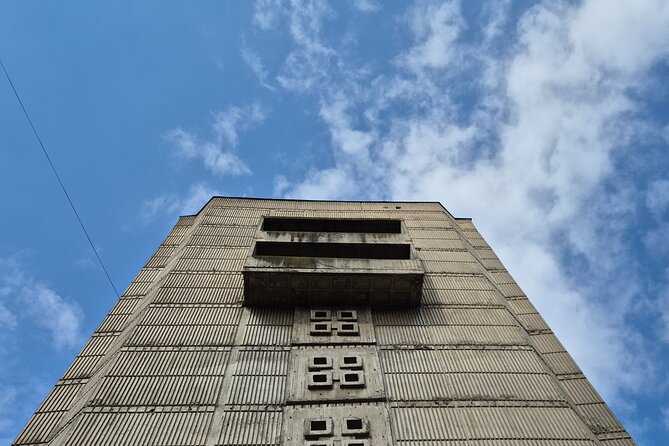
Skopje is a rewarding city for anyone who likes buildings with a story. This route centers on structures connected to the city’s post-earthquake rebuilding, while also including places that survived the disaster. You are not simply ticking off landmarks. You are looking at how shopping, education, transportation, government services, and the arts were given physical form.
I find that approach more useful than a tour limited to famous facades. A city’s identity often appears most clearly in its ordinary buildings. A post office reveals civic ambition. A student dormitory shows how education was planned. A train station connects the city to the wider country. A shopping center tells you how people were expected to meet and spend time.
The route also gives you a useful contrast between buildings that survived and those created as part of the modern rebuilding period. Macedonia Square provides that starting point, while the later stops let you examine the bold architectural choices in greater detail.
More Bauhaus and Brutalist Architecture Tours in the world:
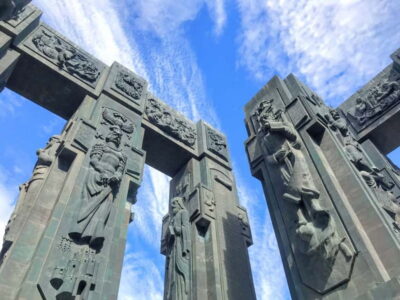
- Brutalist Tbilisi: Urban exploration and untold stories
★ 5.0 · 82 reviews - London: Brutalist Architecture & History Walking Tour
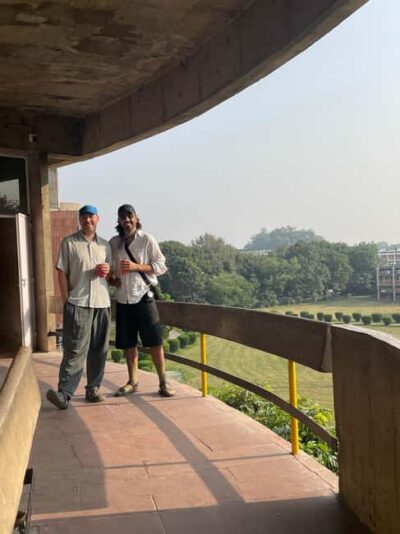
★ 4.8 · 42 reviews - Le Corbusier’s Chandigarh : A Complete Architecture Tour
★ 4.7 · 25 reviews
Meeting at GTC City Shopping Centre at 9:30 am
The tour begins at XCVJ+QXM on 11th October Street, near GTC City Shopping Centre. The start time is 9:30 am, a sensible hour for a three-hour city walk. You should arrive ready to move between stops, since this is a walking-focused route rather than a sightseeing drive.
GTC is introduced as one of Skopje’s oldest shopping malls. That makes it an effective opening stop. Instead of beginning with a grand national monument, the route starts with a building tied to normal city life and commercial activity.
The visit is listed for about 10 minutes, with no admission charge. That is enough time for an introduction and a look at the building, but not enough for a full architectural study. If you like to photograph details or take notes, keep your opening stop efficient and save longer questions for the walking stretches.
Macedonia Square and the buildings that survived
The second stop is Macedonia Square, about 10 minutes from the start. Here, the focus shifts to buildings that survived the earthquake. That gives you an important point of comparison before the route moves toward the city’s modernist public architecture.
A short stop in a large square can sometimes feel thin, but in this tour it serves a clear purpose. You begin to see the city as a mixture of older survivors and newer construction. Ask Elena to point out which structures belong to which period, since that distinction is central to understanding the route.
The square is also a useful place to get your bearings. It links the opening shopping-center visit with the series of civic buildings ahead. Because the stop is brief, you should not expect a lengthy historical lecture here. Its value is in setting up the visual contrast that follows.
Goce Delcev State Student Dormitory
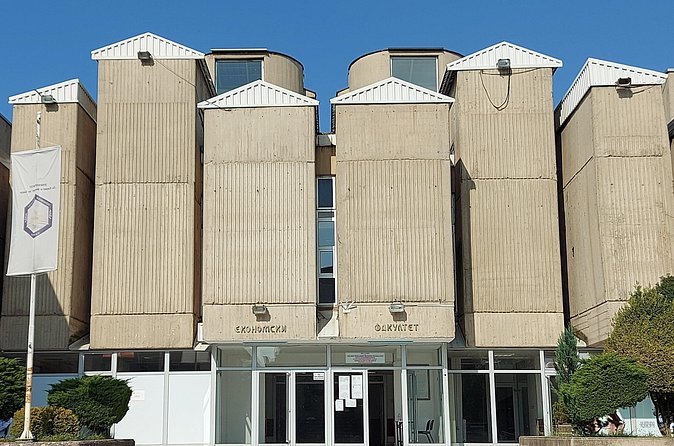
The Goce Delcev State Student Dormitory receives about 20 minutes, the longest listed stop on the tour. That extra time suggests that the building is one of the more important architectural examples on the route.
A student dormitory may sound less exciting than an opera house, but it offers a more grounded view of city planning. It was made for daily life, study, and shared accommodation. Its place on this route shows that post-earthquake architecture was not limited to symbolic public buildings. It also shaped where young people lived and studied.
This is a good stop for questions. You can ask Elena how the dormitory fits into Skopje’s wider university setting and how student life connects with the city’s modernist design. Her own university experience adds a human detail that a standard building survey would miss.
The listed visit is 20 minutes, so you should have time to look carefully rather than only pause for a photograph. The data does not promise a detailed interior visit, so treat this as a guided look at the dormitory and its role in the route.
More Architecture Tours around the world:
- Chicago Architecture River Cruise
★ 5.0 · 15,756 reviews - Chicago River 90-Minute Architecture Tour
★ 4.5 · 9,629 reviews - Chicago River: 1.5-Hour Guided Architecture Cruise
★ 4.8 · 8,046 reviews - Barcelona: Park Güell and Gaudí House Museum Entry Ticket
★ 4.5 · 6,326 reviews
The unusual Post Office of Macedonia
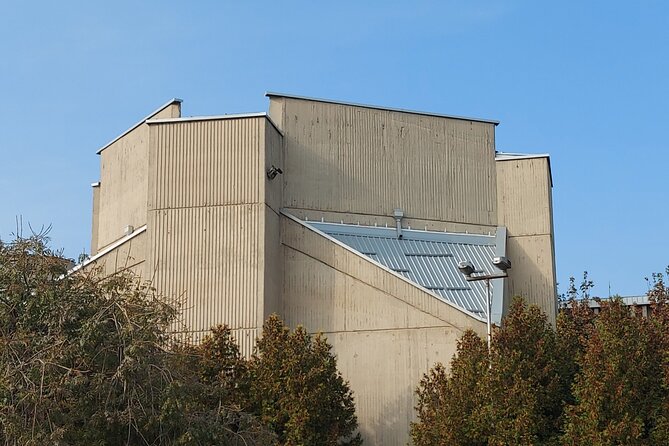
The Main Post Office is one of the tour’s most distinctive stops. The visit lasts about 10 minutes and focuses on the building’s unusual design. Post offices are often overlooked, which is exactly why this stop has appeal.
A post office is a practical building, yet this one is presented as a unique example. That contrast is part of the fun. You get to consider why a basic public service was given such a strong architectural presence, and how the building fits into the city’s post-earthquake rebuilding.
The short time here keeps the tour moving. If this building interests you most, ask about its design before arriving so Elena can give the stop the attention you want. The tour is private, so you have more freedom to shape the conversation than you would on a large scheduled walk.
Skopje Central Train Station and the earthquake story
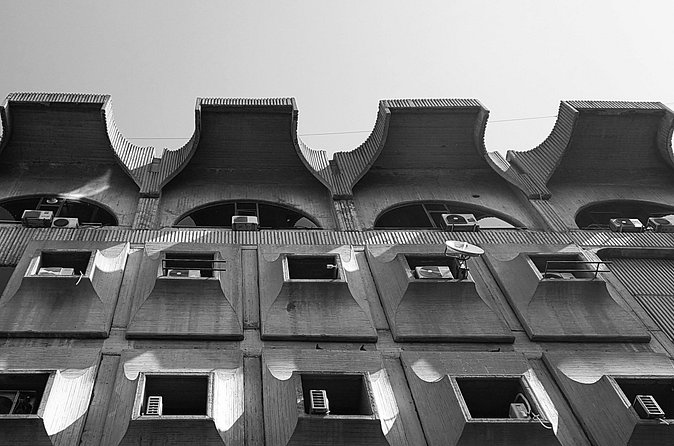
The Central Train Station is the next major transport building, with about 15 minutes set aside. Its inclusion makes sense: transportation infrastructure often carries a city’s most visible connection to rebuilding and change.
This stop should appeal to you if you like architecture that serves a clear public purpose. A station is not just a building to admire. It has to move people, organize arrivals and departures, and express something about the city. The tour gives you a chance to look at those practical demands through a modernist lens.
The station also ties together the route’s themes. GTC represents shopping, the dormitory represents student life, the post office represents public service, and the station represents movement. Taken together, the buildings create a broader picture of Skopje than a tour of monuments alone.
The visit is short, so this is not designed as a full station history. You will get more from it if you focus on what the building communicates and ask Elena to connect it to the city’s earthquake-era development.
UKIM, with a guide who studied there
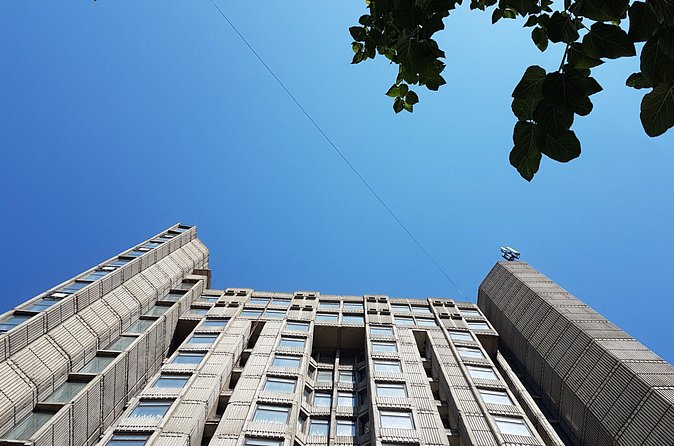
The route continues to Ss. Cyril and Methodius University in Skopje, commonly called UKIM. About 15 minutes are planned for a university department.
This stop has special value because Elena studied at the university. Her personal connection gives you a chance to hear about the place as more than an architectural object. You can ask how the university functions in city life and what it was like for her to study there.
That sort of personal context is one of the strongest reasons to choose a private local guide. A building can be photographed in minutes, but its meaning often comes from the people who use it. Elena is described as willing to answer questions in detail and keen to make the route interesting, so this is likely the place where conversation matters most.
Again, keep the scope in mind. The schedule allows about 15 minutes, and the tour does not promise a long campus visit. It is a compact look at a university building within a larger architectural story.
Finishing at the Macedonian Opera and Ballet
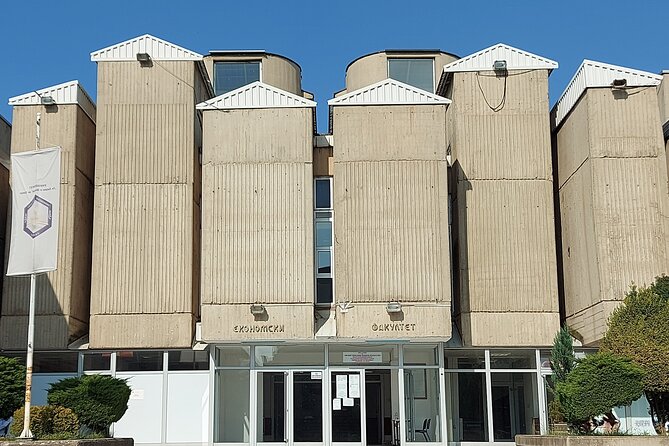
The final stop is the Macedonian Opera and Ballet, also called MOB. The tour ends in front of the building on Boulevard Goce Delcev, after about 10 minutes at the opera house.
Ending here gives the route a fitting cultural finish. After seeing shopping, housing, communications, transport, and education, you arrive at a building devoted to performance and public culture. It rounds out the idea that architecture reflects many sides of city life.
The Opera and Ballet building is also a practical end point. You are not returned to the opening location, so plan the rest of your day from the opera house. The supplied details identify the end point clearly, which is useful if you have another activity planned nearby.
The tour ends outside the building. No admission to a performance or separate attraction is included, and the listed stops have free admission. You should see this as an exterior and architectural visit rather than a ticketed show.
What the three-hour schedule really means
The tour is advertised at approximately three hours, but the seven listed stops add up to about 90 minutes of stop time. The remaining time is naturally useful for walking between locations, introductions, questions, and changes in pace.
That makes the schedule fairly brisk. You will cover a good range of buildings, but you should not expect 20 or 30 minutes inside every site. The route works best if you want a well-organized overview and a chance to ask questions, not if you plan to produce a detailed architectural survey of every facade.
The private setting helps. With only your group of up to three people, you can ask Elena to spend more time on the places that catch your eye. You can also keep moving when a building does not interest you as much. That flexibility matters more on a short architecture walk than on a large group tour.
The activity is offered in English. It is near public transportation, and most people can participate. No special accessibility details are provided, so you should ask the operator directly if you have specific mobility needs.
Is $169.38 fair for up to three people?
The price is $169.38 per group, with a maximum of three people. If three people join, that works out to about $56.46 per person. For two people, it is about $84.69 each, while a solo booking carries the full group price.
Since admission is free at all listed stops, you are paying mainly for Elena’s time, local explanation, and the private format. That can be good value for a small group that wants to ask questions and avoid a fixed large-group pace. It is less compelling if you only want a quick self-guided look at the buildings.
The strongest value comes from the route’s range and the guide’s personal connection to UKIM. You are getting seven stops across different parts of civic life, rather than a short walk focused on one architectural style. For three people, the per-person cost is easier to justify. For one person, compare it with other private walking options in Skopje before booking.
Who should book this Skopje architecture walk?
I would recommend this tour to you if you enjoy modernist buildings, city planning, or the less obvious parts of a destination. It is also a good choice if you want a local guide who can explain how public buildings connect to personal and civic life.
It suits a couple or small family especially well because the private price becomes more reasonable with three people. It can also work for a solo visitor who values conversation, though the cost is harder to spread across a group.
You may want something else if your priority is entering every building, spending a long time at each stop, or visiting major historical monuments from many different eras. This route has a clear focus: Skopje’s modern architecture and the buildings connected to its rebuilding.
Confirmation is sent within 48 hours of booking, subject to availability. Free cancellation is available if you cancel at least 24 hours before the start time. Poor weather or failure to meet the minimum number of participants can lead to a new date, a different experience, or a full refund.
Should you book it?
Book this tour if you want to understand Skopje through its post-earthquake public buildings and prefer a private conversation to a standard sightseeing circuit. Elena’s university connection gives the UKIM stop an unusually personal angle, while the route covers the city’s everyday functions as well as its cultural landmarks.
Skip it if you want a slow interior-focused tour or a low-cost group walk. At $169.38, the price makes the most sense for up to three people. For the right small group, this is a focused, practical way to see a side of Skopje that many first-time visitors miss.
FAQ
Where does the tour begin?
It begins at XCVJ+QXM, 11th October Street, 1000 Skopje, near GTC City Shopping Centre.
What time does the tour start?
The start time is 9:30 am.
Where does the tour end?
The tour ends in front of the Macedonian Opera and Ballet building at Boulevard Goce Delcev 4, Skopje.
How long does the tour last?
The tour lasts approximately three hours.
How many people can join?
This is a private activity for your group only, with a maximum of three people.
What language is offered?
The tour is offered in English.
What buildings are included?
The route includes GTC City Shopping Centre, Macedonia Square, Goce Delcev State Student Dormitory, the Main Post Office, Skopje Central Train Station, Ss. Cyril and Methodius University in Skopje, and the Macedonian Opera and Ballet.
Is admission included?
Admission is free at each listed stop.
Is the tour near public transportation?
Yes. The experience is described as being near public transportation.
Can I cancel for a full refund?
Yes, if you cancel at least 24 hours before the experience start time. Cancellations made less than 24 hours in advance are not refunded.
New to the itinerary around the world
- Wilmington History and Architecture Tour★ 4.8 · 18 reviews
- Washington, DC: Georgetown Architecture Walking Tour★ 5.0 · 8 reviews
- Walk & Discover KL’s Architectural and Heritage Gems★ 5.0 · 7 reviews
- Washington DC: Dupont Circle & Embassy Row Architecture Tour★ 5.0 · 6 reviews
- New Orleans : Garden District Architecture Walking tour★ 4.8 · 5 reviews
- Unveiling Brno: History, Culture & Architectural Delights★ 5.0 · 2 reviews
- Vicenza: Palladian Architecture Private Walking Tour★ 3.3 · 3 reviews
- Private Colonial Williamsburg Architectural Tour★ 5.0 · 5 reviews
Bauhaus and Brutalist Architecture Tours, compared.
Brutalist Tbilisi: Urban exploration and untold stories
Read our review →
Le Corbusier’s Chandigarh : A Complete Architecture Tour
Read our review →
Architecture of New Belgrade – Brutalism Decoded
Read our review →
Secret Split: Socialist Architecture & brutalism – Urban Utopia
Read our review →
Tashkent Soviet Architecture (Modernism) and Subway station tour.
Read our review →
Belgrade: Space architecture tour – brutalist architecture
Read our review →
USSR History, Soviet Architects ,Statues & Mosaics
Read our review →Other lists with this tour