
Review · CHARLESTON
Charleston’s Best Highlights: History, Culture & Architecture
Charleston’s past is packed into a surprisingly walkable stretch of streets. In about two hours, you move from the Old Exchange, where the Declaration of Independence was read in 1776, to the Battery, with Fort Sumter in view and Civil War stories close at hand. Brian and Fin bring a teacher’s eye to the walk, connecting local events to the larger story of the United States.
I like two things here. First, the route mixes famous sights with details you might otherwise miss, from the bright Georgian facades of Rainbow Row to Tiffany glass at St. Michael’s Church. Second, the guides adapt the conversation to the group. Brian is praised for shaping the walk around what people want to see, while Fin draws on decades of teaching and guiding.
The main consideration is pace. The advertised duration is about two hours, but the walk can run longer when questions and stories get going. Several buildings may be viewed only from outside, and entry fees for the Old Exchange and Nathaniel Russell House are not included.
Key points to know before you book
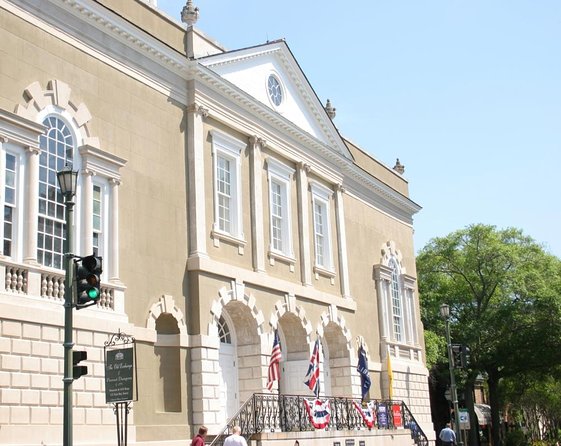
- Nine major stops in a compact historic district: The route covers major civic, religious, commercial, and residential landmarks without bus transportation.
- A guide-led history lesson, not just a photo walk: Brian and Fin explain Charleston’s role in the American Revolution, the Constitution, slavery, religion, and the Civil War.
- A serious look at slavery: The Old Slave Mart stop addresses Charleston’s role in the interstate slave trade, though the museum itself is not entered.
- Good for a first day in town: The broad overview helps you understand Charleston before exploring museums, houses, and churches on your own.
- Small groups, up to 20 people: That keeps the walk more personal than a large sightseeing group, though the actual size can vary.
- Expect possible extra time: Many walks last longer than the stated two hours, especially when the group asks questions.
Why this Charleston walk works so well
I like this tour because it gives Charleston a clear shape. You are not simply ticking off pretty buildings. You are following the city’s story through government, commerce, faith, forced labor, war, and private wealth.
The route also makes good geographic sense. It begins near East Bay Street, moves through the old center, then continues toward the waterfront and Battery. You return to the original meeting point, so you do not need to arrange a pickup or learn a new meeting place at the end.
This is especially useful on your first day. The walk gives you a framework for later visits to historic houses and museums. You will know why the old buildings matter, which subjects deserve more time, and how Charleston’s small streets fit together.
The strongest part is the guide. Brian is described as a former history teacher with a gift for linking Charleston figures to events in other colonies and states. Fin also brings a teaching background, with 30 years in high school history and 15 years guiding in Charleston. Both are praised for clear explanations, humor, and patience with questions.
That does not mean the experience is a theatrical show. It is a walking lesson with personality. If you enjoy asking questions and pausing over details, you may get more from it than someone who wants a quick list of dates.
More History Walks around the USA:
- Chicago in a Day: Food, History & Architecture Walking Tour
★ 5.0 · 1,153 reviews - Palm Springs Modernism Architecture & History Bike Tour
★ 5.0 · 359 reviews - Charleston: History and Architecture Guided Walking Tour
★ 4.8 · 349 reviews
Old Exchange and Provost Dungeon: where the story begins
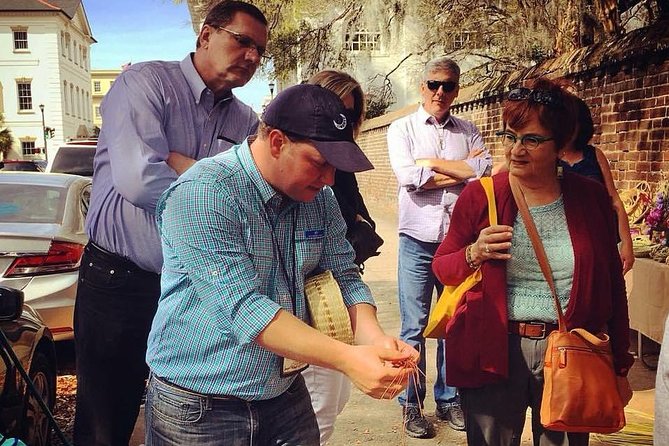
The Old Exchange is a fitting opening stop. Completed around 1771, this handsome building played several roles in South Carolina’s early public life.
The Declaration of Independence was read here in 1776. During the American Revolution, the British used the building as a prison for about two years. South Carolina’s ratification of the United States Constitution took place here in 1788, and George Washington was entertained at the building during his week-long Charleston visit in May 1791.
Those facts give you a quick lesson in the city’s importance. Charleston was not a remote colonial outpost. It was a major port and a political center tied closely to the founding of the nation.
You spend about 15 minutes here. Admission is not included, and the route does not promise an interior visit. That is worth noting if the Provost Dungeon is high on your list. The guide can explain the building’s role, but you should not assume your ticket includes entry.
Rainbow Row and Charleston’s preservation story
Rainbow Row takes only about five minutes, but it is one of the easiest places to understand Charleston’s visual character. The attached Georgian row houses form the longest row of their kind in the country.
In the 18th and 19th centuries, these buildings housed mariner’s stores. Their current bright colors came during restoration work in the 1930s, when Charleston was making a serious effort to preserve its old buildings.
That preservation story matters. The colorful facades are not simply an old waterfront decoration. They reflect a modern decision to save and restore the city’s historic core.
This is a short photo stop, and admission is free. The guide adds value by helping you look past the paint. Notice the narrow attached buildings, their proportion, and their relationship to the street. A quick stop becomes a lesson in how commercial Charleston once worked.
The Old Slave Mart: an essential, serious stop
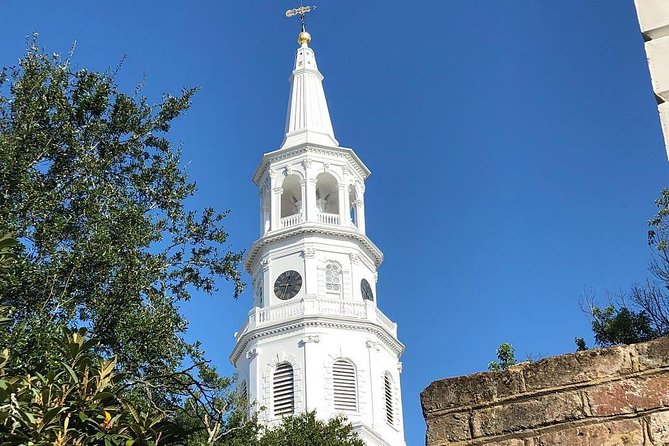
The Old Slave Mart Museum occupies a building known as Ryan’s Slave Mart in the 1850s. It was an auction site connected to the interstate slave trade.
The tour discusses Charleston’s role in that trade, an essential part of understanding the city’s wealth, politics, and social order. This is not treated as a decorative side note to the architecture. It is part of the city’s central story.
You do not enter the museum on this walk. The City of Charleston operates it, and tours are available separately on site. That arrangement gives you a choice. You can use the guide’s explanation as an introduction, then decide if you want to spend more time inside afterward.
The scheduled stop is about 10 minutes. I would treat that as a starting point, not a substitute for a museum visit. If slavery and Charleston’s African American history are a major reason for your trip, plan additional time elsewhere in your schedule.
More Architecture Tours around the USA:
- Chicago Architecture River Cruise
★ 5.0 · 15,756 reviews - Chicago River 90-Minute Architecture Tour
★ 4.5 · 9,629 reviews - Chicago River: 1.5-Hour Guided Architecture Cruise
★ 4.8 · 8,046 reviews - Chicago Architecture Center River Cruise aboard First Lady
★ 5.0 · 5,536 reviews
French Huguenot Church and Charleston’s religious mix
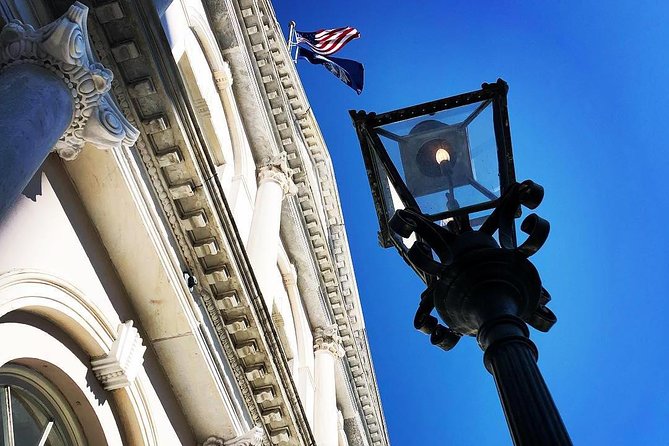
The French Huguenot Church is a five-minute stop with a striking story behind it. The Gothic Revival building dates to 1845 and serves one of the only practicing Huguenot congregations in the country.
The church helps explain Charleston’s religious past and present. French Protestant refugees shaped parts of the city’s early population, and their presence adds another layer to a place often described only through English colonial and American Revolutionary history.
The exterior is free to view. Entry is not promised, so you should see this as an architectural and historical stop rather than a guaranteed church tour.
I like the contrast here. The route moves from the hard facts of commerce and slavery to questions of migration, faith, and identity. Charleston’s character becomes more complicated, which is exactly what a good city walk should do.
Dock Street Theater and the changing city

Dock Street Theater occupies the site of the first theater in the British colonies. The present building dates to about 1937 and was restored from the former Planter’s Hotel, built around 1809.
That layering is the point. You are not looking at one untouched building from one period. You are seeing a place reshaped by changing tastes, uses, and preservation choices.
The Charleston Stage company operates here and presents roughly 120 performances each year. Entry depends on availability, and the scheduled stop is about 10 minutes. The exterior alone still gives you a useful picture of how entertainment and civic life fit into the old city.
If you like historic theaters, check what is available during your stay. The walking tour does not guarantee a performance or an interior visit, but it can help you decide if the theater deserves a return visit.
City Hall and the Four Corners of Law
Charleston City Hall is a brief two-minute stop, but its location gives it extra weight. It sits at one of the Four Corners of Law, a nickname associated with Robert Ripley’s Ripley’s Believe It or Not.
The building was constructed as a bank in 1801 and has served as City Hall since 1818. That makes it one of the oldest continuously operating city halls in the country.
During weekdays, you may enter the council chamber and view the collection at no charge. The wording matters: weekday access is possible, not guaranteed at every moment. If the chamber interests you, ask the guide about timing.
This stop is a reminder that Charleston’s history is not confined to mansions and churchyards. The city’s government still works in the old center, in buildings that have been used for generations.
St. Michael’s Church and the oldest worship site
St. Michael’s Church dates to about 1761 and is described as the oldest house of worship in the city. The stop lasts around 15 minutes, making it one of the longer pauses on the route.
The church retains much of its original woodwork and has Tiffany stained glass windows. Its churchyard includes the graves of John Rutledge and Charles Cotesworth Pinckney, both signers of the United States Constitution.
Entry depends on availability, so do not book this walk solely for an interior tour. Still, the exterior, churchyard, and guide’s explanation provide useful context about Charleston’s religious history.
This is also a good point to slow down. The tour is not only about grand national events. It is about the physical places where political leaders worshiped, where communities gathered, and where the city’s past remains visible in ordinary public spaces.
Nathaniel Russell House and private wealth
At the Nathaniel Russell House, the tour enters the garden of a Federal-style townhouse built in 1808. Nathaniel Russell came from Rhode Island and made his fortune as a merchant involved in shipping.
The garden visit gives you a closer look at the private side of Charleston’s past. The house represents the wealth created through trade and shipping, while the route as a whole asks you to consider who benefited from that economy and who was forced to support it.
Admission is not included. The scheduled stop is about 10 minutes, focused on the garden rather than a full house visit.
This is one place where the separate admission can be worthwhile if you want to see more of Charleston’s domestic architecture. The guided walk helps you decide, rather than requiring you to pay for every interior along the way.
The Battery and the view toward Fort Sumter
The final major stop reaches the High Battery wall and the waterfront mansions. From here, Fort Sumter is visible, and the guide discusses the opening of the Civil War.
The Edmondston-Alston House has remained in the family since 1838. It was also a place where General Beauregard watched the bombardment of Fort Sumter with other onlookers.
That detail brings the national conflict close to street level. The Civil War did not begin as an abstract event in a textbook. It unfolded across this harbor, in view of the houses and streets you have just walked.
The route does not include admission to the Edmondston-Alston House. You get the waterfront setting, the view, and the historical explanation. For many people, this is a satisfying finish because the Battery ties together architecture, geography, and national conflict.
Pace, group size, and practical comfort
The tour is listed at about two hours, but you should allow extra time. Some walks run well beyond that, especially when the group is small or the guide takes questions. One reported experience lasted more than three hours, while another ran well over two hours.
That flexibility is a benefit if you enjoy conversation. It can be a drawback if you have a tight reservation afterward. I would avoid scheduling a meal, museum entry, or carriage ride immediately after the walk.
The maximum group size is 20 people. That is small enough for a more personal exchange, though the exact group size can change. Some departures may feel almost private, while others will have a fuller group.
The walk begins at 122 East Bay Street and ends back at the same point. It is offered in English and uses a mobile ticket. Most people can participate, service animals are allowed, and the meeting point is near public transportation.
You should wear comfortable shoes and prepare for outdoor conditions. The experience requires good weather, and poor conditions can lead to a different date or a full refund. Free cancellation is available up to 24 hours before the start time. Within 24 hours, changes and refunds are not accepted.
Is the tour worth booking?
I would book this walk if you want a strong introduction to Charleston before exploring on your own. It suits first-time visitors, but returning visitors can also benefit from the deeper political and social connections.
The best reason to choose it is the guide-led storytelling. Brian and Fin are not simply pointing out facades. They connect Charleston to the Revolution, the Constitution, slavery, religion, shipping, and the Civil War. That makes the city easier to read for the rest of your trip.
You should choose another option if you want guaranteed interior access, a short photo tour, or a tightly timed two-hour schedule. Several admissions are separate, and the walk can run long.
For most people, the value comes from the context rather than the number of stops. You leave with a clearer sense of why Charleston looks the way it does, how its wealth was built, and which places deserve a closer visit. That is a useful return on your time and admission costs.
FAQ
How long does Charleston’s Best Highlights tour last?
The advertised duration is approximately two hours. The walk may last longer when the guide answers questions or expands on the history.
Where does the tour begin and end?
It begins at 122 East Bay Street in Charleston, South Carolina, and ends back at the same meeting point.
What language is the tour offered in?
The tour is offered in English.
Is admission to the Old Exchange included?
No. Admission to the Old Exchange and Provost Dungeon is not included.
Does the tour enter the Old Slave Mart Museum?
No. The guide discusses Charleston’s role in the slave trade from outside. The City of Charleston operates the museum, and tours are available separately on site.
Are any church interiors guaranteed?
No. Entry to the French Huguenot Church and St. Michael’s Church depends on availability. The tour also may enter Dock Street Theater depending on availability.
How many people can join the tour?
The maximum group size is 20 people.
What is the cancellation policy?
You can cancel at least 24 hours before the start time for a full refund. Cancellations or changes made within 24 hours are not accepted, and no refund is provided. If poor weather cancels the experience, you are offered another date or a full refund.
New to the itinerary around the USA
- Washington, DC: Georgetown Architecture Walking Tour★ 5.0 · 8 reviews
- Wilmington History and Architecture Tour★ 4.8 · 18 reviews
- Washington DC: Dupont Circle & Embassy Row Architecture Tour★ 5.0 · 6 reviews
- New Orleans : Garden District Architecture Walking tour★ 4.8 · 5 reviews
- Private Colonial Williamsburg Architectural Tour★ 5.0 · 5 reviews
- Tulsa: Art Deco Walking Tour of Tulsa★ 5.0 · 8 reviews
- Castle to Capitol: Museums of the National Mall Architecture Tour★ 4.5 · 9 reviews
- Monuments and Memorials Architectural Walking Tour★ 5.0 · 17 reviews
Charleston Architecture Tours, compared.

Charleston: History and Architecture Guided Walking Tour
Read our review →
Historic Charleston: The Battery, Rainbow Row, St. Michael Church
Read our review →
Other lists with this tour