
Review · CHARLESTON
Charleston Architectural Walking Tour
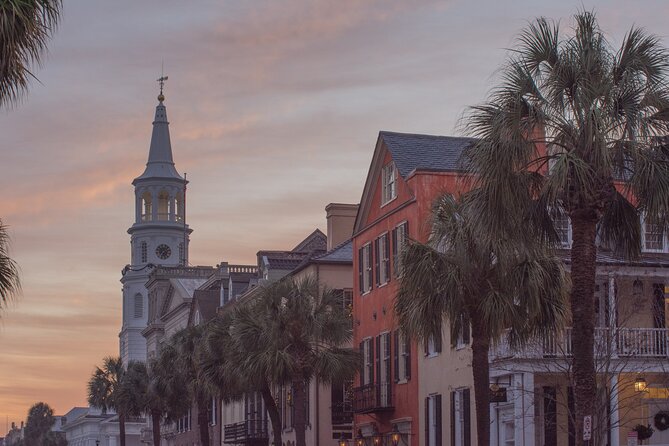
Charleston’s architecture is best understood on foot, where church spires, narrow streets, graveyards, seawalls, and grand homes appear in one steady procession. This two-hour walk links several of the city’s most important sights, from St. Michael’s Church to the Battery and the Four Corners of Law.
I like the small group limit of 10 people, which should make it easier to hear the guide and ask questions. I also like the route’s mix of public spaces and architectural landmarks, especially the unusual details at St. Michael’s and the mansions along South Battery.
The main thing to consider is the pace. Two hours covers a lot, but some stops are brief, including only five minutes at the Nathaniel Russell House. You will get an outdoor introduction rather than a long interior visit.
Key points at a glance
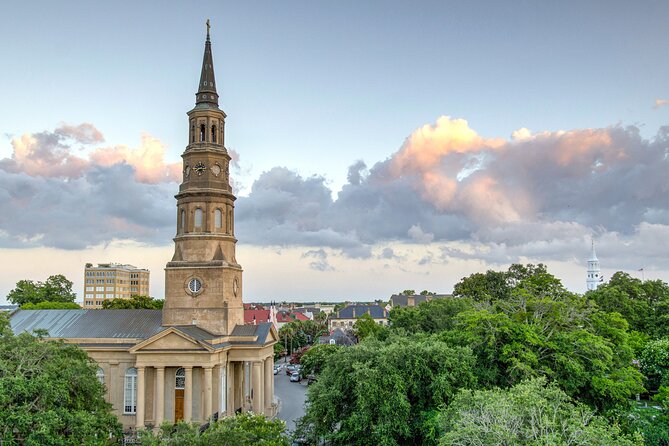
- St. Michael’s Church begins the architectural story: Discuss the church’s design, influence, quirks, and graveyard.
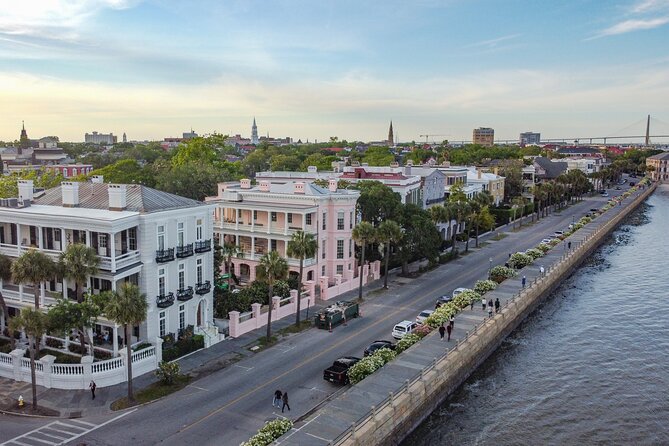
- The Battery provides the strongest scenery: White Point Gardens, the seawall, and South Battery mansions form the visual high point of the walk.
- The route ends at the Four Corners of Law: You finish near Broad and Meeting Streets, a useful central location for continuing your day.
- A maximum of 10 people keeps the walk personal: The guide can respond to questions without managing a large crowd.
- The tour runs in English at 9:30 am: The early start helps place the walk before the middle of the day.
- The price is $50 per person: That is fair if you want interpretation and conversation, but less compelling if you only want to see the exteriors on your own.
Why Charleston architecture works best on foot
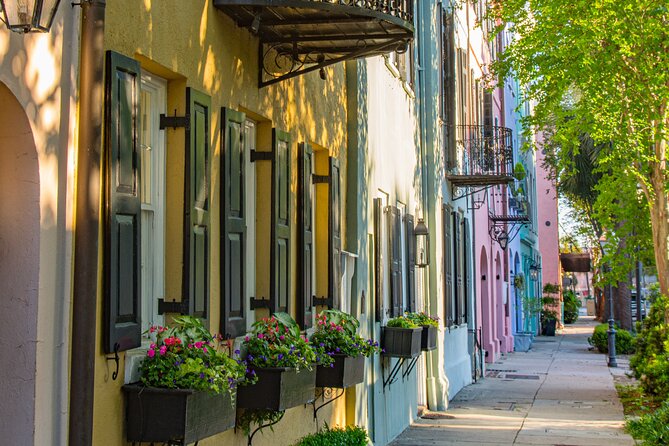
Charleston’s historic center rewards slow looking. A building may seem plain at first, then reveal a narrow side entrance, an unusual roofline, an iron detail, or a carefully preserved façade. A walking tour gives you a reason to pause instead of simply moving from one famous address to the next.
This route also has a sensible shape. It starts at 18 Vendue Range, moves through major historic streets and public spaces, and finishes at Broad Street and Meeting Street. The final stop is the Four Corners of Law, so you end near a recognizable central crossroads rather than somewhere difficult to reach.
The route lasts about two hours. That is long enough for a useful introduction without taking the whole morning, but it also means the guide must keep the group moving. You should expect outdoor explanations, street-level viewing, and short stops rather than extended time inside every building.
The tour is offered in English and accepts mobile tickets. With no admission fees included or required at the listed stops, your $50 is paying mainly for the guide’s interpretation, route planning, and access to a small group setting.
More Walking Tours in the USA
- The Official Art Deco Walking Tour by The Miami Design Preservation League
★ 5.0 · 1,580 reviews - Chicago in a Day: Food, History & Architecture Walking Tour
★ 5.0 · 1,153 reviews - Miami South Beach Art Deco Walking Tour
★ 5.0 · 1,039 reviews
St. Michael’s Church and its unusual details
The walk’s first stop is St. Michael’s Church, where you spend about 10 minutes discussing the building’s design, influence, quirks, and graveyard. That combination makes this more than a quick look at a church façade.
Church architecture often tells you how a city wanted to present itself. Here, the guide can connect the design to Charleston’s wider built character, then point out details that are easy to miss when you pass by alone. The graveyard adds another layer, placing the building in a setting shaped by time rather than treating it as an isolated monument.
Because admission is free and the stop is short, you should not expect a formal interior tour. The value comes from learning what to look for and understanding why the church matters within the city’s architectural story.
This is also a good early test of the tour’s style. If you enjoy asking about small design choices, local influence, and odd details, you should find this part rewarding. The one available rating describes a guide who handled many questions well and returned to the main subject afterward. That matters here, since church history can easily send a conversation in several directions.
White Point Gardens and the South Battery homes
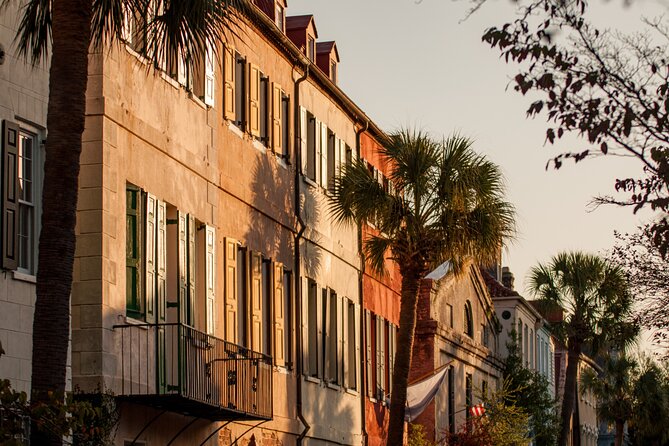
The route then reaches White Point Gardens for about 15 minutes, with attention to the architecture along South Battery. This is where Charleston’s grand residential scale becomes clear.
White Point Gardens gives you room to see the relationship between public space, waterfront defenses, and the homes facing the street. The South Battery buildings are not simply a line of impressive façades. Their placement, proportions, and position beside the open gardens help explain how Charleston’s wealthy residential areas were designed.
I like this stop because it lets you view architecture from a distance. At close range, details can dominate your attention. From the gardens, you can compare several buildings at once and notice how they relate to the street.
The stop is free, but the subject is not shallow. Ask the guide to point out differences between individual homes and to explain which features make one building distinct from another. The small group should help, since you can ask without trying to get the attention of someone leading a crowd of 30 or 40 people.
Nathaniel Russell House in only five minutes
The Nathaniel Russell House receives about five minutes of discussion. That is the shortest stop on the route, and it is important to set your expectations correctly.
The focus is the house’s architecture, preservation, and distinctive features. You will get a concise explanation of why the property is considered unusual, but this itinerary does not provide a long interior tour or a detailed visit through the rooms.
For me, this is the clearest limitation of the experience. If the Nathaniel Russell House is your main reason for booking, five minutes may feel too brief. You may see the building as part of the walk’s larger architectural argument, then decide to return on your own if you want more time.
Still, a short stop can be useful. The guide can give you a visual checklist: look at the shape, the details, and the features that separate this house from the surrounding homes. You then have a better sense of what you are seeing, even if the visit itself is brief.
Same streets, read through a different style:
- Chicago Architecture River Cruise
★ 5.0 · 15,756 reviews - Chicago River 90-Minute Architecture Tour
★ 4.5 · 9,629 reviews - Chicago River: 1.5-Hour Guided Architecture Cruise
★ 4.8 · 8,046 reviews - Chicago Architecture Center River Cruise aboard First Lady
★ 5.0 · 5,536 reviews
The French Huguenot Church and Charleston’s religious variety
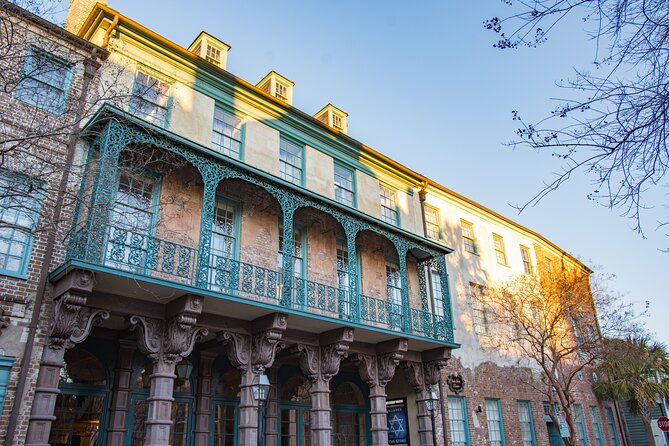
The French Huguenot Church is the fourth listed stop, with about eight minutes devoted to it. It is described as the last active French Huguenot Church in the United States and was built in 1845.
That detail gives the stop a clear focus. You are not simply looking at another historic church. You are considering a building tied to a specific religious tradition and a distinct part of Charleston’s cultural past.
Eight minutes is enough for an outdoor introduction and a discussion of the church’s place in the city. As with St. Michael’s, the visit is best understood as architectural interpretation rather than a full religious-site tour.
The sequence also works well. After seeing one major church and several residential buildings, you encounter a different religious building with its own identity. That variety keeps the walk from becoming a string of similar façades.
The Battery and White Point Gardens at their scenic best
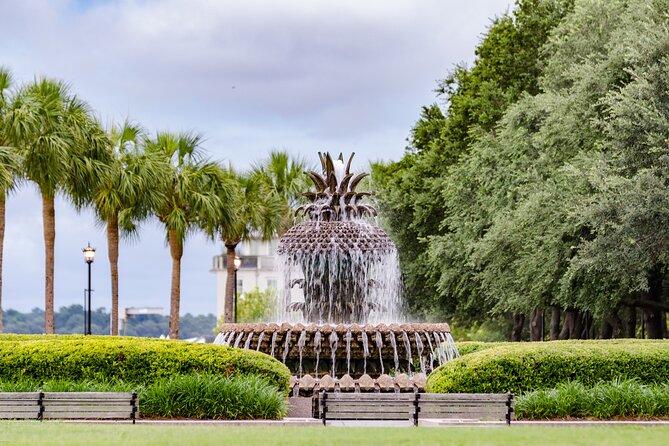
The route returns to the Battery and White Point Gardens for about 20 minutes, making this the longest stop. You will see the seawall and the mansions along it, described as one of the most scenic areas in the United States.
This is likely the walk’s most memorable stretch. The seawall gives the route a strong edge, while the mansions provide the architectural focus. You can take in the broad view, then shift your attention to individual homes and the details that give each one its character.
The second Battery stop may look repetitive on paper, but it serves a different purpose from the earlier 15-minute visit. The first discussion focuses on South Battery architecture from White Point Gardens. The longer stop gives you more time to appreciate the seawall and the mansions as a complete setting.
Allow yourself to look around instead of treating this as a lecture stop. The best use of the time is to listen for the guide’s explanation, then compare what you have learned with the buildings in front of you. If you enjoy taking photographs, this is the part of the route where you will likely want a little extra time.
Finishing at the Four Corners of Law
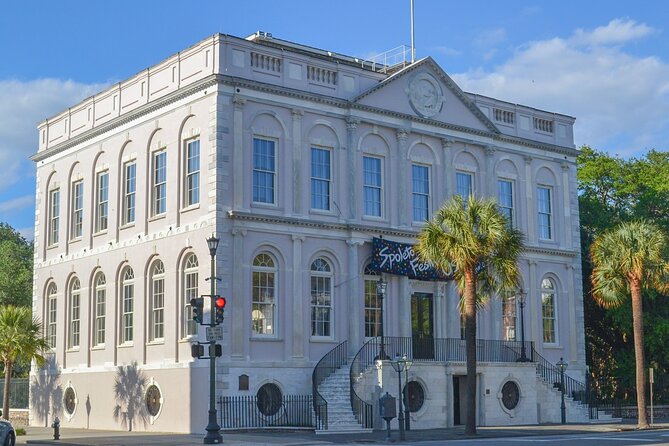
The walk ends at Broad Street and Meeting Street, at Charleston’s Four Corners of Law. This is a convenient finish because you are not left at an isolated endpoint.
The ending gives the tour a final civic dimension. After churches, private homes, gardens, and the waterfront, you finish at a major crossroads connected with Charleston’s public institutions and city life. Even if the tour does not continue beyond that point, the location helps you understand how the historic center is arranged.
You can also use the finish to shape the rest of your day. The tour starts at 9:30 am and lasts about two hours, so you should finish around late morning. That leaves time for lunch, another attraction, or a return visit to a building that received only a short explanation.
What $50 buys you
At $50 per person, this is not the cheapest way to see Charleston’s historic streets. You can walk past many of these buildings without paying for admission. The question is not simply what you can see, but what you will understand without a guide.
The price makes more sense if you want context, a planned route, and the chance to ask questions. The group limit of 10 is a real part of the value. A guide who can hear your question and respond directly offers something a self-guided walk cannot.
The price is harder to justify if you prefer moving at your own pace or want extended time inside historic houses. The Nathaniel Russell House stop lasts about five minutes, and the listed itinerary centers on discussion from public spaces. You are paying for a compact overview, not a full-day architectural study.
The available rating is 5 out of 5 from six published ratings. The strongest praise centers on the guide’s friendly manner and ability to explain the subject while staying with the group’s questions. That is especially useful on an architecture walk, where your own curiosity can shape the experience.
Timing, walking, and weather
The start time is 9:30 am. That is early enough to make the tour your first activity of the day, yet not so early that you need to begin before breakfast. Plan to arrive at 18 Vendue Range with your mobile ticket ready.
This is a walking experience, so wear shoes you can use comfortably for two hours. The supplied details do not give a precise distance, and I would not assume the route is effortless simply because the stops are close together. You will be outdoors for the full itinerary, with time spent in gardens, along streets, and near the seawall.
Weather matters. The experience requires good weather, and a cancellation caused by poor conditions offers you a different date or a full refund. If rain or severe conditions are possible, keep some flexibility in your schedule.
Service animals are allowed, and the tour is near public transportation. Most people can participate, though the supplied information does not specify seating, step-free access, or restroom stops. If those details affect your plans, ask before booking.
Who will get the most from this walk
I would choose this tour if you want an organized first look at Charleston’s architecture and prefer conversation over reading plaques. It fits especially well into a first morning in the city, when a guide can help you recognize the difference between a church, a historic house, a public garden, and a waterfront residential district.
It also suits curious travelers who like to ask questions. The available rating describes a guide who remained friendly and returned to the topic even when the group kept asking questions. That suggests a flexible style rather than a rigid speech, though the guide’s name is not provided.
The tour may be less suitable if you want detailed interior access, a long visit at each house, or a highly specialized architectural lecture. The route covers five main points in about two hours, and some stops are intentionally brief.
Families and mixed-age groups may appreciate the limited length, but the information provided does not state a minimum age or specific child policy. Solo visitors and couples should benefit from the small maximum group, while larger parties should note that the experience caps participation at 10 people.
Booking, cancellation, and practical value
Confirmation is provided at booking, and the experience is offered in English. You can cancel for a full refund up to 24 hours before the start time. Changes or cancellations inside that 24-hour window are not accepted and are not refunded.
The same 24-hour rule applies to the local start time, so check the timing carefully if your plans are changing. If the minimum number of participants is not met, you will be offered another date or experience, or a full refund.
I would book this early if your Charleston schedule is tight. The experience is booked an average of 18 days ahead, which suggests that waiting until the last moment may not be wise, especially if you want the 9:30 am departure.
Should you book the Charleston Architectural Walking Tour?
Book it if you want a short, small-group introduction to Charleston’s historic architecture, with a route that includes St. Michael’s Church, the French Huguenot Church, the Nathaniel Russell House, White Point Gardens, and the Battery.
The $50 price is reasonable when you value a guide’s explanations and the freedom to ask questions. It is less attractive if you mainly want interior visits or prefer to explore independently.
My practical advice is to use this as an orientation walk near the beginning of your stay. Pay close attention at St. Michael’s and the Battery, where the route offers its strongest mix of design, setting, and local context. Treat the Nathaniel Russell House as a short introduction, not a complete visit. If that balance suits you, this is a well-shaped way to meet Charleston on foot.
FAQ
Where does the Charleston Architectural Walking Tour start?
The tour starts at 18 Vendue Range, Charleston, South Carolina 29401.
Where does the tour end?
The tour ends at Broad Street and Meeting Street, at Charleston’s Four Corners of Law.
What time does the tour begin?
The start time is 9:30 am.
How long does the tour last?
The walking tour lasts approximately two hours.
What language is the tour offered in?
The tour is offered in English.
How many people can join the tour?
The maximum group size is 10 travelers.
Are service animals allowed?
Yes, service animals are allowed.
What is the cancellation policy?
You can cancel at least 24 hours before the start time for a full refund. Cancellations or changes made within 24 hours are not accepted and are not refunded. If poor weather or an insufficient minimum number of participants cancels the experience, you will be offered another date or experience, or a full refund.
New to the itinerary around the USA
- Washington, DC: Georgetown Architecture Walking Tour★ 5.0 · 8 reviews
- Wilmington History and Architecture Tour★ 4.8 · 18 reviews
- Washington DC: Dupont Circle & Embassy Row Architecture Tour★ 5.0 · 6 reviews
- New Orleans : Garden District Architecture Walking tour★ 4.8 · 5 reviews
- Tulsa: Art Deco Walking Tour of Tulsa★ 5.0 · 8 reviews
- Private Colonial Williamsburg Architectural Tour★ 5.0 · 5 reviews
- Castle to Capitol: Museums of the National Mall Architecture Tour★ 4.5 · 9 reviews
- Monuments and Memorials Architectural Walking Tour★ 5.0 · 17 reviews
Charleston Architecture Tours, compared.

Charleston’s Best Highlights: History, Culture & Architecture
Read our review →
Charleston: History and Architecture Guided Walking Tour
Read our review →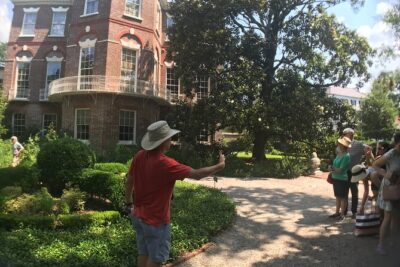
Historic Charleston: The Battery, Rainbow Row, St. Michael Church
Read our review →Other lists with this tour