
Review · ROTTERDAM
Rotterdam: Art and Architecture Highlights Walking Tour
Rotterdam is a city rebuilt with attitude. This 2.5-hour walking tour links its boldest buildings with the public art that helps explain how a bombed city became one of Europe’s most striking modern urban centers. I like that the route begins at Central Station, where the city’s new identity comes into view right away, then moves through museums, street art, housing, and food culture.
I especially like the mix of architecture and open-air art. You are not simply marched from one famous building to the next. You get sculpture, postwar planning, an artsy street, the Cube Houses, and the Markthal in one compact route. The main consideration is pace: you will be on your feet for two and a half hours, outdoors in all weather, with no food, transport, or entry tickets included.
Key points to know before you book
- Central Station sets the scene: Meet under the station clock and begin with Rotterdam’s modern rebuilding story.
- The route covers major icons: See the Calypso building, Theater square, Kunsthal, New Institute, Depot Boijmans Van Beuningen, Cube Houses, and Markthal.
- Public art is part of the lesson: Sculptures and street art connect the city’s wartime destruction with its present-day creative character.
- Witte de Wit adds street life: This popular arts district gives the walk a more informal, local-feeling break from formal architecture.
- The Markthal is the finale: Art and building design come together inside one of Rotterdam’s most recognizable modern spaces.
- Bring practical gear: Wear comfortable shoes and weather-ready clothing. The tour runs rain or shine.
Why Rotterdam makes such a good walking tour city
Rotterdam can feel confusing at first. Amsterdam gives you canals, old brick houses, and a clear historic center. Rotterdam gives you towers, broad roads, strange angles, rebuilt blocks, and buildings that seem to be competing for attention.
That is exactly why a guide helps. You can look at Central Station, the Calypso building, or the Cube Houses and appreciate the shape. A guide adds the reason behind the shape. This tour focuses on the city’s modern architecture and its connection to art, with the rebuilding of Rotterdam after wartime bombing providing an important thread.
I like the route because it does not treat architecture as a string of isolated photo stops. The city’s public art appears along the way, including works linked to the tragedy of the bombarded city and pieces by major artists such as Henry Moore, Rodin, Picasso, and Joep van Lieshout. That gives you something to think about while walking between buildings.
The tour is in English and includes a live guide. If Diana is leading your walk, you may get the same kind of careful explanation that connects the city’s planning, history, and buildings rather than simply naming them. The activity has a 4.9 rating from 10 published ratings, with repeated praise for clear information and a strong first introduction to Rotterdam.
More Walking Tours in Netherlands:
- Rotterdam: Architectural Highlights Guided Walking Tour
★ 4.8 · 215 reviews - Rotterdam: Highlights, Gems, Architecture & History Walk
★ 5.0 · 191 reviews - Rotterdam Walk: Hilights, Gems, Architecture & WWII | 2 or 3hrs
★ 5.0 · 149 reviews
Starting beneath the Central Station clock
Your meeting point is beside Rotterdam Central Station, under the clock at the main entrance. This is a practical place to begin because the station is easy to identify and already gives you a major architectural subject before the walk has properly started.
Central Station represents the city’s newer face. It is a fitting first stop for a tour about postwar Rotterdam because the building is not shy about looking forward. From here, the guide introduces the city’s architectural development and the planning choices that shaped what you are about to see.
The opening explanation matters. Without context, Rotterdam’s modern buildings can look like unrelated experiments. With a guide, you can begin to see the city as a series of choices made after destruction, reconstruction, and a desire to create something different from the old Dutch city center.
Allow a little time to find the meeting point. The instructions are specific, but a large station can still be busy, especially if you arrive with luggage. Oversize luggage is not allowed on the tour, so this is better suited to a day when you have already checked into your accommodation or stored your bags elsewhere.
Calypso and Theater square: modern city life in motion
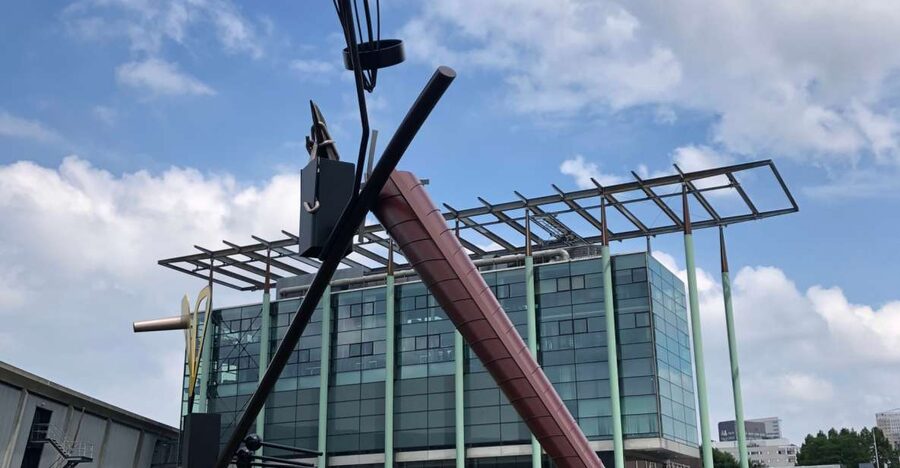
From Central Station, the route follows architectural highlights including the Calypso building and Theater square. These stops help show that Rotterdam’s modern identity is not limited to one grand landmark. It appears in residential buildings, public spaces, cultural venues, and the way the city makes room for movement.
The Calypso building is one of the route’s early visual markers. Its unusual form fits Rotterdam’s taste for buildings that refuse to blend into the background. The guide’s job here is useful because a quick photograph tells you what the building looks like, but not how it fits into the city’s wider rebuilding story.
Theater square shifts the focus toward public space and culture. You get a sense of how Rotterdam uses open urban areas alongside its large buildings. The stop is less about entering a theater and more about reading the square as part of the city’s design.
I like this portion for another reason: it keeps the tour from becoming a museum-only outing. You are seeing the spaces where architecture, daily city life, and cultural activity meet. The drawback is that the route stays outside. If the weather turns wet, you will need to keep going in seasonal clothing rather than ducking into included indoor attractions.
The Museum Quarter and Rotterdam’s art institutions
The walk then reaches the Museum Quarter, with the Kunsthal and the New Institute on the route. These institutions widen the tour beyond architecture for its own sake. They show Rotterdam as a city that uses design, exhibitions, and new ideas to keep its cultural life moving.
The Kunsthal is an important stop because it is part of the city’s modern museum district and is itself connected to Rotterdam’s architectural character. The New Institute adds another angle, bringing design and architecture into the discussion.
You should understand the format here. The tour includes views and explanations from the outside, but entry tickets are not included. You should not expect a museum visit or time to tour an exhibition during the 2.5-hour walk. If you want to go inside, plan that separately and check opening details for the date of your visit.
This is one of the tour’s strengths for a first day in Rotterdam. You get a map in your head of the Museum Quarter, along with a reason to return later if one of the institutions interests you. It also keeps the walking tour focused. You see more of the city instead of spending the whole afternoon in one building.
More Architecture Tours around Netherlands:
- Rotterdam Architecture Highlights Walking Tour
★ 5.0 · 66 reviews - The rise of Haarlem: Culture, History, Art and Architecture Walking Tour
★ 5.0 · 59 reviews - Rotterdam Must Do Tour: Highlights, History, WW2 and Architecture
★ 5.0 · 20 reviews - Rotterdam: Architecture Highlights Tour including the Depot
★ 4.6 · 17 reviews
Depot Boijmans Van Beuningen, a museum building made visible
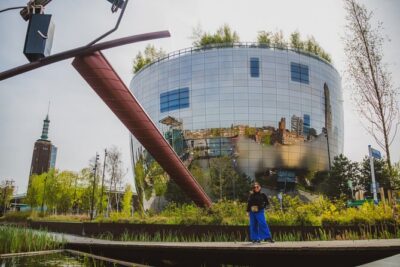
The route includes Depot Boijmans Van Beuningen, described as the first accessible museum depot in the world. Its mirrored, rounded exterior gives Rotterdam another major architectural talking point, but the important idea is what a depot normally does.
Museum storage is usually hidden. Here, the depot turns that behind-the-scenes function into part of the public building. That makes it a particularly good match for this tour, since the experience is interested in how buildings work as much as how they look.
The depot also makes a useful contrast with the Kunsthal and the New Institute. Together, the three stops show different approaches to art and design: exhibition space, design and architecture, and the storage and care of collections.
You will view the building as part of the walking route rather than receive an included visit inside. That distinction is worth keeping in mind when judging the $65 price. You are paying for a guided explanation across a wide part of central Rotterdam, not for admission to several museums.
Public art and the memory of the bombed city
One of the more thoughtful parts of the walk is the series of artworks linked to the drama of Rotterdam’s bombing. These pieces give the city’s modern appearance an emotional layer. New buildings can look exciting, but they also exist because so much of the older city was destroyed.
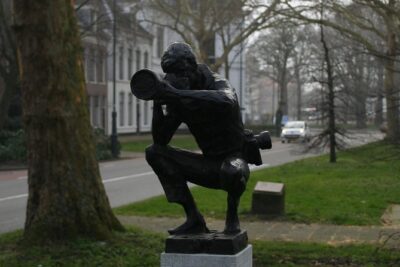
The route includes public works by artists such as Henry Moore, Rodin, Picasso, and Joep van Lieshout. You will not be stopping in a gallery to study each work at length. Instead, the art appears in the streets, where it becomes part of the city’s everyday setting.
I like this approach because it keeps the story grounded. Rotterdam’s architecture is not only about daring forms and clever engineering. It is also about loss, memory, and the decision to rebuild in a new way.
The open-air collection makes the tour rewarding for people who do not want a standard museum circuit. It also gives photographers plenty of changing subjects, although the guide’s explanation is the real value. On your own, you might walk past an important sculpture without understanding why it is there or what it says about the city.
Witte de Wit and Rotterdam’s artsy side
The tour then reaches Witte de Wit, described as Rotterdam’s most vivid and artsy street. This is where the experience moves from formal cultural institutions to a more relaxed street setting.
The street is known for popular art venues and a younger, avant-garde feel. That gives you a useful change of pace after the Museum Quarter and its large architectural subjects. Instead of studying one building from a square, you are looking at a street where art, food, nightlife, and urban culture come together.
The route does not include food or drinks, so do not count on a café stop being part of the experience. Still, Witte de Wit is a good place to note for later. If you like the atmosphere, you can return after the walk for more time in the area.
This stop also helps you compare different sides of Rotterdam. The city is not only grand civic architecture and carefully planned cultural buildings. It also has a looser, more social side. That contrast makes the tour feel like a city introduction rather than a specialist architecture lecture.
Cube Houses and the pleasure of a strange idea
The Cube Houses complex is one of the tour’s most memorable stops. The buildings are instantly recognizable, with homes tilted at unusual angles above a raised pedestrian area. They are the kind of architecture that makes you stop, look again, and wonder how anyone arranges furniture inside.
A guide is especially helpful here. The visual trick is easy to understand, but the larger idea behind the complex is harder to grasp from a photograph. The tour places the Cube Houses within Rotterdam’s habit of trying new answers to urban design problems.
This is also a good point to think about the difference between architecture as sculpture and architecture as daily life. The Cube Houses are famous because they look unusual, but they are also housing. That tension makes them more interesting than a simple landmark photo.
Do not expect a long interior visit as part of the tour. The activity is a walking route, and entry tickets are not included. You will have time to see the complex and hear about it, then continue toward the final stop.
Markthal, where the route ends with color and scale
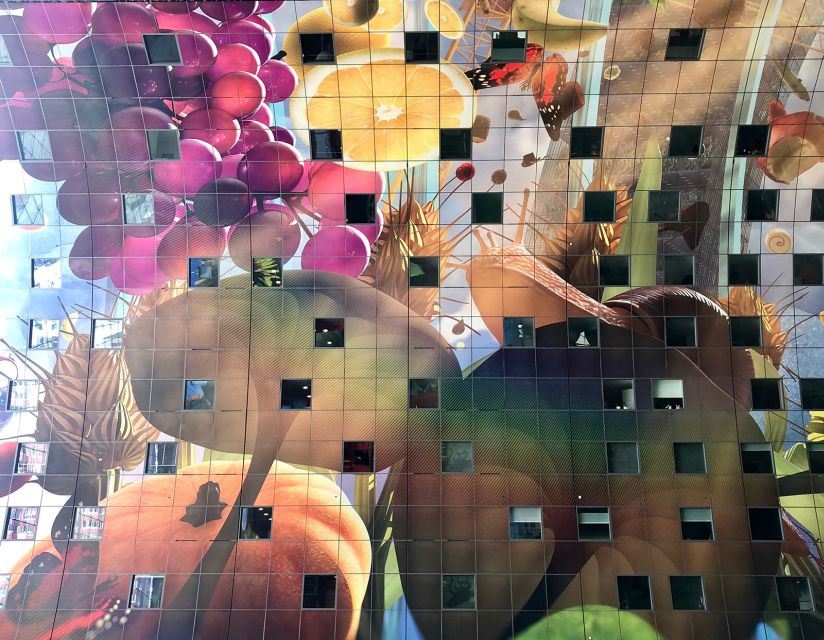
The walk ends at the Markthal, where art and architecture come together in a large indoor market building. Its curved form and huge interior artwork make it a natural finale for a tour that has moved between buildings, public sculpture, museums, and street culture.
The Markthal is a useful final stop because it brings several themes together. It is architecture you can enter, a public gathering place, and a setting where food and art share the same space. Even without buying anything, you can appreciate how different the experience feels from the quiet geometry of the Cube Houses or the formal presence of the Museum Quarter.
Food and drinks are not included. That is not a serious problem at the end of the route, since the Markthal provides the setting for you to make your own plans afterward. Just remember that the tour fee covers the guide, not a meal.
Ending here is convenient. You finish at one of Rotterdam’s major sights rather than returning to Central Station. If you have a restaurant booking or train to catch, check the timing and allow for the walk back or onward transport yourself.
Is $65 a fair price for 2.5 hours?
At $65 per person, this is not the cheapest way to take a walk around Rotterdam. The value depends on how much you want interpretation rather than simple sightseeing.
You are paying for a live English-speaking guide, a planned route across several districts, and the connections between architecture, art, wartime destruction, and modern city planning. The walk covers more ground than a short orientation stroll and includes several of Rotterdam’s best-known modern landmarks.
The price is easier to justify if this is your first time in Rotterdam or if the city’s architecture is a main reason for your visit. It is less attractive if you prefer to wander alone, already know the city well, or want museum interiors included.
The tour does not include transportation, food, drinks, hotel pickup, drop-off, or entry tickets. That keeps the arrangement simple, but you should budget separately for anything you want to do inside the museums or for a meal at the Markthal.
A private group option is available. That may suit families or small groups who want a more personal pace, though the standard price and private-group terms should be checked when booking.
Who will enjoy this walk most?
I would recommend this tour to you if you enjoy modern buildings, public sculpture, urban planning, and the stories behind a city’s rebuilt identity. It is also a good first activity in Rotterdam because the route introduces several areas you may want to explore later.
It suits adults and older children who can manage a 2.5-hour walk. Comfortable shoes matter, and the rain-or-shine policy means you should dress for the season rather than hope for perfect weather.
The activity is wheelchair accessible, which is useful information for many visitors. At the same time, it is listed as unsuitable for people with visual impairments or hearing impairments. The tour does not accept unaccompanied minors, and oversize luggage is not permitted.
You should skip it if you want a slow museum visit, a food tour, or a ride between sights. This is an outdoor walking experience with a strong architecture and art focus.
Should you book the Rotterdam architecture walk?
Book it if you want Rotterdam explained through its buildings, public art, and rebuilding story. The route gives you a strong first look at Central Station, the Museum Quarter, Witte de Wit, the Cube Houses, and the Markthal without wasting time on transport between them.
I especially like the way the walk links the city’s painful past with its adventurous present. The open-air sculptures and the bombing story keep the tour from becoming a collection of shiny building photos. At $65, it is a considered purchase, but the broad route and live guide can make it worthwhile on a first visit.
Choose another activity if you need indoor shelter, included admissions, or a fully accessible format for visual or hearing impairments. For everyone else, bring good shoes, dress for the forecast, and arrive beneath the Central Station clock ready to look up.
FAQ
Where does the Rotterdam architecture tour meet?
The meeting point is next to the main entrance of Rotterdam Central Station, under the station’s clock.
How long does the walking tour last?
The tour lasts 2.5 hours.
What language is the tour conducted in?
The live tour guide speaks English.
Is the tour wheelchair accessible?
Yes, the activity is listed as wheelchair accessible.
Are museum entry tickets included?
No. Entry tickets are not included in the tour price.
Does the tour include food, drinks, or transportation?
No. Food, drinks, and transportation are not included. Hotel pickup and drop-off are also not provided.
What should I bring, and does the tour run in bad weather?
Bring comfortable shoes and weather-appropriate clothing. The tour runs rain or shine.
New to the itinerary around Netherlands
- Escape Room – l’Architecte★ 4.5 · 13 reviews
- Private Rotterdam Walking Tour – guided by Architects★ 5.0 · 2 reviews
- Rotterdam Must Do Tour: Highlights, History, WW2 and Architecture★ 5.0 · 20 reviews
- Rotterdam Architecture and Highlights Walking Tour (TOP RATED)★ 4.5 · 14 reviews
- Maastricht Highlights, Architecture & Heritage Tour★ 5.0 · 7 reviews
- Gouda Private Walking Tour: History, Architecture & Cheese★ 4.5 · 8 reviews
- Amsterdam Walking Tour. All about History, Architecture, Traditions & Anecdotes.★ 5.0 · 2 reviews
- Rotterdam Architecture: Centre and South Bank with watertaxi★ 5.0 · 4 reviews
Netherlands Architecture Tours, compared.
Rotterdam Walk: Hilights, Gems, Architecture & WWII | 2 or 3hrs
Read our review →
The rise of Haarlem: Culture, History, Art and Architecture Walking Tour
Read our review →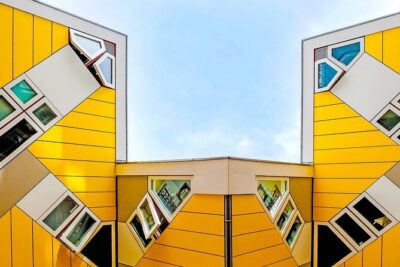
Rotterdam Must Do Tour: Highlights, History, WW2 and Architecture
Read our review →
Walking Tour about Golden Age Architecture, private local guide
Read our review →Other lists with this tour