
Review · ITALY
Martina Franca: Baroque and Rococo Architecture Walking Tour
Martina Franca’s old town is a compact lesson in Baroque and Rococo design, with curled stonework, grand church fronts, elegant courtyards, and narrow lanes that open into handsome squares. This two-hour walk gives you a clear route through the center, from the Santo Stefano gate to the Basilica of St. Martin and several smaller churches.
I like the private format, especially for a group that wants to ask questions or set an easy pace. I also like the guide roster: Lucia is praised for her insight, perspective, and humor, while Silvia is noted for clear English. The main consideration is simple: at $326.26 per group, the price makes the most sense when shared by several people, not by one or two guests.
Key points at a glance
- A focused two-hour route: See the main Baroque and Rococo sights without giving up a full day in Martina Franca.
- A private group of up to 25: You get a guide for your party rather than joining a mixed group.
- Palazzo Ducale and its frescoes: Visit the ducal palace, including its 18th-century frescoes and formal rooms.
- The Basilica of St. Martin: Enter one of the town’s finest Baroque buildings in Piazza del Plebiscito.
- Five guide languages: Tours are available in English, Italian, Spanish, French, and German.
- A smart introduction to the Itria Valley: Use the walk to get your bearings before exploring more of Martina Franca on your own.
Why Martina Franca rewards a walking tour
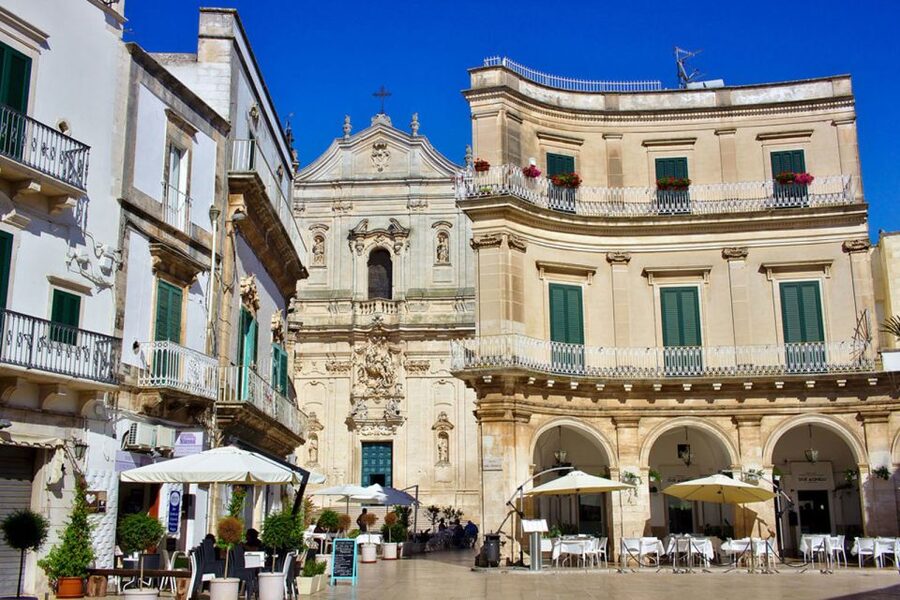
Martina Franca is one of the main towns of the Itria Valley, an area known for whitewashed hill towns and trulli. Its character is different from the simple rural look many people expect from Puglia. Here, local limestone was shaped into theatrical church façades, ornamental doorways, balconies, and palace interiors.
A guide helps you read those details instead of simply passing them by. On your own, you can admire the pale stone and winding lanes. With a licensed guide, you can ask why a building looks the way it does, how the town’s important spaces fit together, and which details deserve a closer look.
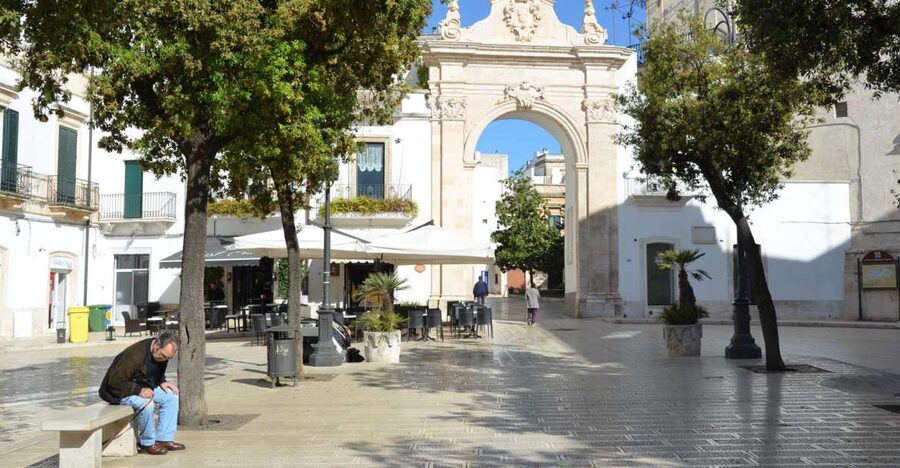
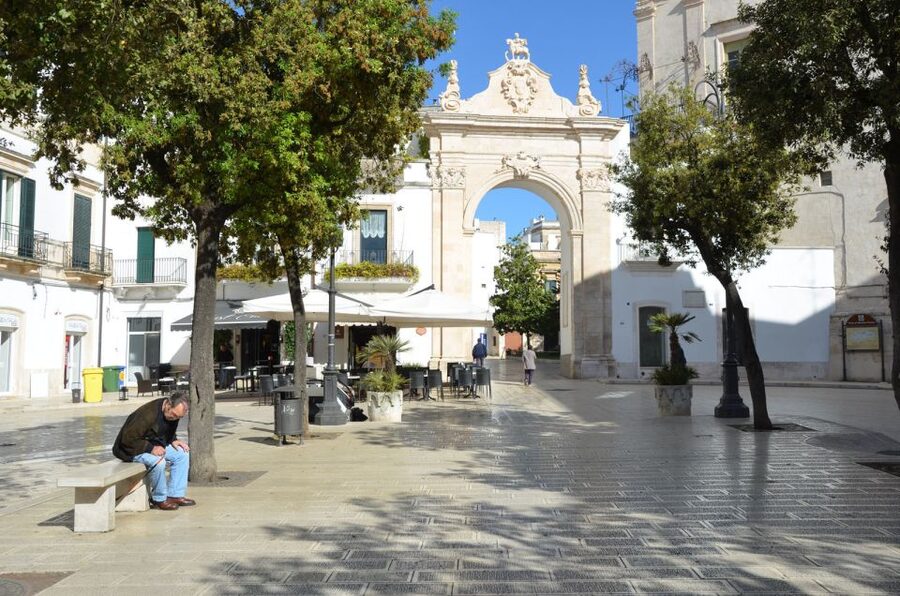
The route is also nicely contained. You begin at Piazza XX Settembre, pass through the Santo Stefano gate, and work toward the historic center. By the end, you have seen several of the town’s major religious and civic buildings without spending hours on buses or transfers.
More Walking Tours in Italy
- Lecce: Baroque Architecture and Underground Walking Tour
★ 4.6 · 1,248 reviews - Experience Florence’s Art and Architecture on a Walking Tour
★ 5.0 · 318 reviews - Palermo: Art and Architecture Walking Tour
★ 4.7 · 136 reviews
Starting at Piazza XX Settembre and Gate Santo Stefano
The meeting point is under the arch at Piazza XX Settembre. This gives you a definite place to meet rather than a vague instruction to wait somewhere in the old town. The walk then heads through Gate Santo Stefano, one of the natural entrances into Martina Franca’s historic core.
The opening section matters because it shifts you from the modern town into the older streets. You begin with a broad public square, then move into a tighter pattern of lanes and historic façades. That change helps you understand Martina Franca as a lived-in town, not just a collection of monuments.
You should arrive ready to walk for two hours. The activity is on foot, and food, drinks, hotel pickup, and hotel drop-off are not included. Since the meeting point and end point are in the town center, you will need to arrange your own way to Piazza XX Settembre.
Piazza Roma and the Fountain of the Dolphins
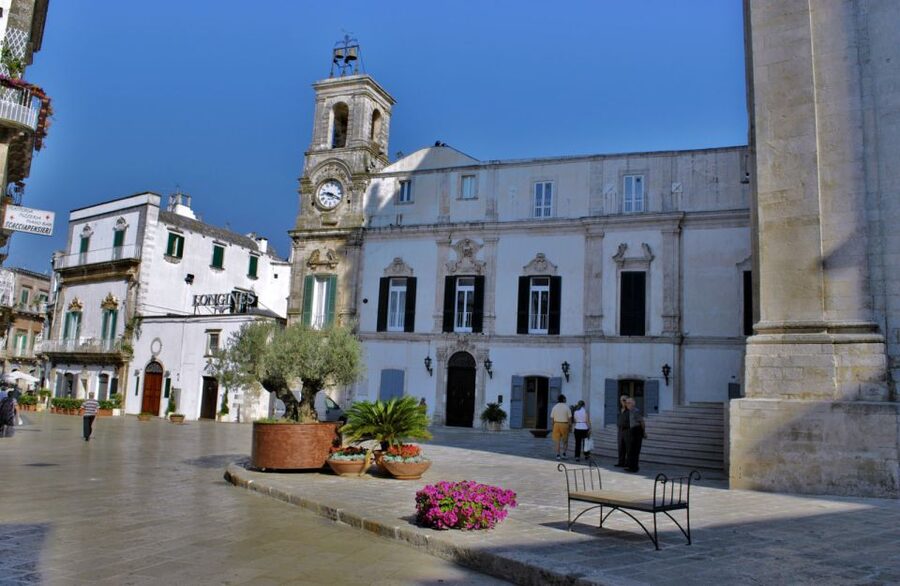
The route continues to Piazza Roma, where you see the Fountain of the Dolphins. Fountains often provide useful clues in an old Italian town. They mark important public spaces, add decoration to the urban setting, and show how civic design worked alongside religious and aristocratic buildings.
This is a good place to pause and look beyond the main attraction. Martina Franca’s appeal comes from the relationship between its squares, lanes, churches, and palaces. The fountain is part of that wider picture, giving the tour a public and civic stop before the more formal palace interiors.
The exact amount of time spent at each point can vary because this is a guided private walk. That is an advantage if your group wants to linger over architecture, but you should not expect a long museum-style visit at every stop. The tour covers a lot in two hours.
Palazzo Ducale and its 18th-century frescoes
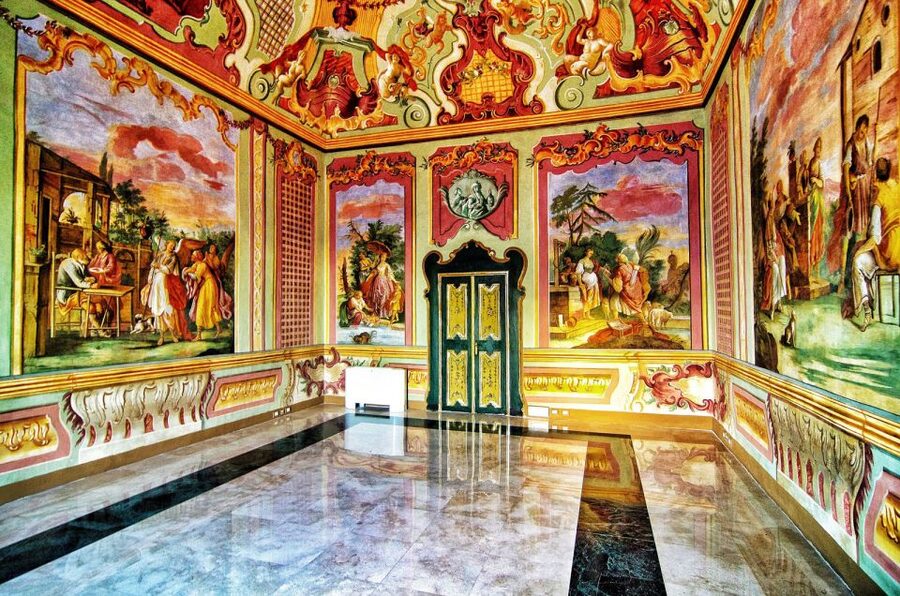
Palazzo Ducale is one of the major stops. You visit the palace’s stately rooms and see 18th-century frescoes, giving you a look at Martina Franca’s civic and aristocratic side.
The palace is valuable because it balances the churches on the route. Religious buildings show the town’s public devotion and theatrical Baroque style. Palazzo Ducale shows how that taste reached into official and residential spaces. Its formal rooms help explain why Martina Franca feels more ornate than a simple village stop.
I would pay close attention to the frescoes rather than treating the palace as a quick photo stop. The guide can add the context that a bare façade cannot provide. If Lucia leads your walk, her reported strengths in perspective and humor should suit a stop that benefits from explanation rather than speed. If Silvia leads, her clear English is useful for guests who want architectural details explained without language strain.
The supplied information does not specify how many rooms are open or how long you remain inside. Keep your expectations focused on the stated visit to the palace, its frescoes, and its stately rooms.
More Baroque Architecture Tours around Italy:
- Noto: Sicilian Baroque Architecture Guided Walking Tour
★ 4.3 · 6 reviews - LECCE: AMONG ARCHITECTURAL TREASURES IN THE LECCE BAROQUE
★ 4.7 · 3 reviews
Old-town lanes leading to Piazza del Plebiscito
After Palazzo Ducale, the walk turns into the alleys of the old town. This is where the tour becomes less about isolated monuments and more about the feel of Martina Franca.
The narrow streets connect the major sights and show how the architecture works at street level. Look for the way doorways, balconies, stone trim, and church façades fit into the lanes. You may find that the smaller details are easier to appreciate here than in a large square.
Piazza del Plebiscito is the next major destination. The square gives you room to take in the Basilica of St. Martin, one of Martina Franca’s most important Baroque buildings. After the close lanes, the open space makes the church front easier to see as a whole.
This portion of the route is also useful for orientation. You are not simply being driven from one sight to another. You are walking through the historic center and seeing how the town’s important spaces connect.
The Basilica of St. Martin in Piazza del Plebiscito
The Basilica dedicated to St. Martin is the architectural centerpiece of the tour. It is described as an exceptional example of Baroque architecture, and its position in Piazza del Plebiscito gives it a strong urban setting.
Baroque design rewards a slow look. Instead of focusing only on the full façade, examine the curves, ornament, entrances, and arrangement of the stonework. A guide can point out what makes the building Baroque and how it differs from the Rococo details found elsewhere in town.
The basilica also gives the itinerary a clear anchor. By this point, you have moved from an entry gate to a fountain and palace, through the lanes, and into the town’s main religious square. The route feels like a progression through Martina Franca’s public identity.
If church interiors matter to you, check the practical details with the guide on the day. The activity specifically includes a visit to the basilica, but the supplied information does not list interior access rules, service schedules, or photography policies.
Immaculate Square and the smaller churches
The final section visits Immaculate Square, the Chapel of St. Nicholas of the Greeks, and the Church of San Domenico. These stops add variety after the large scale of Palazzo Ducale and the Basilica of St. Martin.
The Chapel of St. Nicholas of the Greeks is especially useful for showing that Martina Franca’s religious architecture is not limited to one grand basilica. Smaller chapels can reveal different proportions, decorative choices, and local traditions. The Church of San Domenico completes the religious sequence with another important historic building.
This ending works well for anyone who wants more than the standard postcard view. The main basilica will likely draw the most attention, but the chapel and San Domenico help you see the town as a collection of connected buildings rather than one headline sight.
The tour ends back at the meeting point. That is practical if you have plans afterward, since you are not left at an unfamiliar edge of town. The itinerary does not include a meal or tasting, so you can choose your own café or restaurant after the walk.
What the private price means for your group
The listed price is $326.26 for a group of up to 25 people. That is a group rate, not a per-person charge. If a full group of 25 joins, the cost works out to about $13.05 per person. A group of 10 would pay about $32.63 each, while a couple would carry the full group price between two people.
That makes this tour most appealing for families, friends, or organized groups who want a dedicated guide. The value comes from the private format and the ability to have the walk conducted in your chosen language. It is less attractive for solo visitors or a pair on a tight budget.
You are also paying for a concentrated route. In two hours, the guide covers the town gate, a fountain, a ducal palace, old-town lanes, a major basilica, a chapel, and San Domenico. The price can be reasonable if you want a well-planned introduction and would otherwise spend time piecing together the route yourself.
The tour includes the licensed guide and the two-hour walk. It does not include food, drinks, transportation, or hotel service, so factor those costs into your day.
Guides, languages, and the pace of the walk
You can request or receive a guide in English, Italian, Spanish, French, or German, depending on availability. Language choice can make a major difference on an architecture tour, where much of the value comes from explanation.
The guide names connected with this experience are Lucia and Silvia. Lucia is praised for her knowledge, insight, perspective, and humor. Silvia is noted for clear English. Those details suggest two useful things to look for: a guide who can explain the buildings in a memorable way and one who can make the information easy to follow.
Because the group is private, you have more room to ask questions than you would on a large public walk. Still, two hours is not endless. If you want a detailed discussion at every building, you may need to choose your priorities. Tell the guide early if you care most about churches, palace interiors, or the town’s Baroque and Rococo design.
Who should book this Martina Franca walk
I would recommend this experience to anyone visiting Martina Franca for the first time and wanting a strong introduction before exploring alone. It suits architecture fans, families who prefer a planned route, and groups that want a guide in a particular language.
It is also a good fit if you are combining Martina Franca with other Itria Valley stops. The two-hour duration leaves room in your day for additional sightseeing, meals, or nearby towns. You get the main historic center without committing to a full-day program.
You may want to skip it if you prefer wandering without a schedule, already know Martina Franca well, or are traveling alone and find the group price too high. It also may not suit you if you want a food experience, a trulli-focused excursion, or transportation between towns. This is a focused architecture walk, not a general Puglia day trip.
Booking details worth knowing
You can cancel up to 24 hours before the activity for a full refund. The reserve-now, pay-later option lets you hold a place without paying today, which is useful when your Puglia plans are still changing.
The duration is two hours, but starting times depend on availability. Check the available time before booking, especially if you have dinner reservations or another excursion planned.
The meeting point is under the arch at Piazza XX Settembre. The tour ends back at that meeting point, and hotel pickup and drop-off are not included.
Should you book it?
Book this walk if you want Martina Franca’s architecture explained in a compact, private format. The route covers the town’s main visual themes, from the Baroque basilica and Rococo details to the palace rooms, old-town lanes, chapel, and smaller church.
The strongest reasons to choose it are the private group setup, the licensed guide, the five language options, and the chance to see Palazzo Ducale and the Basilica of St. Martin in one organized outing. Lucia’s thoughtful, humorous style and Silvia’s clear English are useful qualities to keep in mind when selecting your preferred language or guide, if that choice is available.
The price is the deciding factor. It is sensible for a larger group, but harder to justify for one or two people. If you can share the cost and want a reliable first look at Martina Franca, this is a practical choice. If not, explore the old town independently and spend your budget on a longer visit inside the sights that matter most to you.
FAQ
Where does the Martina Franca walking tour start?
The tour starts at Piazza XX Settembre, under the arch.
Where does the tour end?
The activity ends back at the meeting point in Piazza XX Settembre.
How long does the walking tour last?
The walking tour lasts two hours.
What language options are available?
The live guide is available in Spanish, English, French, German, and Italian.
Is this a private tour?
Yes. The activity is arranged as a private group tour.
How many people can join the group?
The listed price covers a group of up to 25 people.
What sights are included?
The route includes Gate Santo Stefano, Piazza Roma and the Fountain of the Dolphins, Palazzo Ducale, the old-town lanes, Piazza del Plebiscito, the Basilica of St. Martin, Immaculate Square, the Chapel of St. Nicholas of the Greeks, and the Church of San Domenico.
Are food and drinks included?
No. Food and drinks are not included.
Can I cancel for a full refund?
Yes. You can cancel up to 24 hours in advance for a full refund.
New to the itinerary around Italy
- Vicenza: Palladian Architecture Private Walking Tour★ 3.3 · 3 reviews
- Architectural Milan: Private Tour with a Local Expert★ 4.5 · 2 reviews
- The Architect’s Water★ 4.5 · 11 reviews
- Architectural Florence: Private Tour with a Local Expert★ 5.0 · 3 reviews
- Rione Sanità: tour among street art, architecture, folklore★ 4.5 · 2 reviews
- Palermo Tour: Magnificent Mixture Of Architectural Styles★ 4.2 · 6 reviews
- Discover Coppedè in Rome: Liberty architecture, symbols, and jewels★ 5.0 · 2 reviews
- Bologna: Guided Architecture Walking Tour★ 4.5 · 2 reviews
Baroque Architecture Tours, compared.
Lecce: Baroque Architecture and Underground Walking Tour
Read our review →
Other lists with this tour