
Review · GEORGIA
Hidden Tbilisi: A Journey Through Modernism & Brutalism
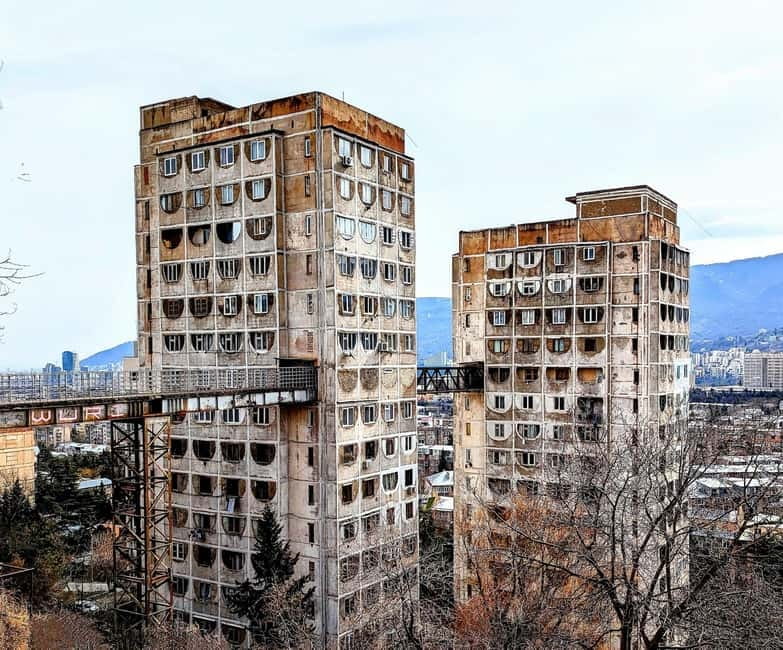
Tbilisi’s most revealing architecture is often away from the old town. This six-hour private tour takes you to Soviet-era modernist and brutalist buildings, including the Skybridge, Ministry of Roads, crematorium, archaeological museum, and Wedding Palace. You get the stories behind the concrete, not just a quick photo stop.
I like the private format and the chance to see places you would struggle to reach alone. I also like the human side of the tour: guides such as Alex, Khato, and Khatuna bring in local memories, city planning, and everyday Georgian life. The main drawback is that the Wedding Palace can only be viewed from outside, and some sites may be replaced if access changes.
Key points at a glance
- Six hours of unusual Tbilisi: Spend half a day beyond the familiar old-town route.
- Private group for up to two: The $176 price covers the group, not each person.
- Architecture with personal stories: Guides connect buildings to local life, politics, design, and memory.
- Major stops include the Skybridge and Ministry of Roads: These are strong picks for anyone interested in bold twentieth-century design.
- Some access is limited: The Wedding Palace interior is not part of the visit, and alternate sites may be used.
- Come ready for rough conditions: Comfortable shoes, weather-appropriate clothes, and clothing that can get dirty are sensible.
Why Tbilisi’s concrete deserves your time
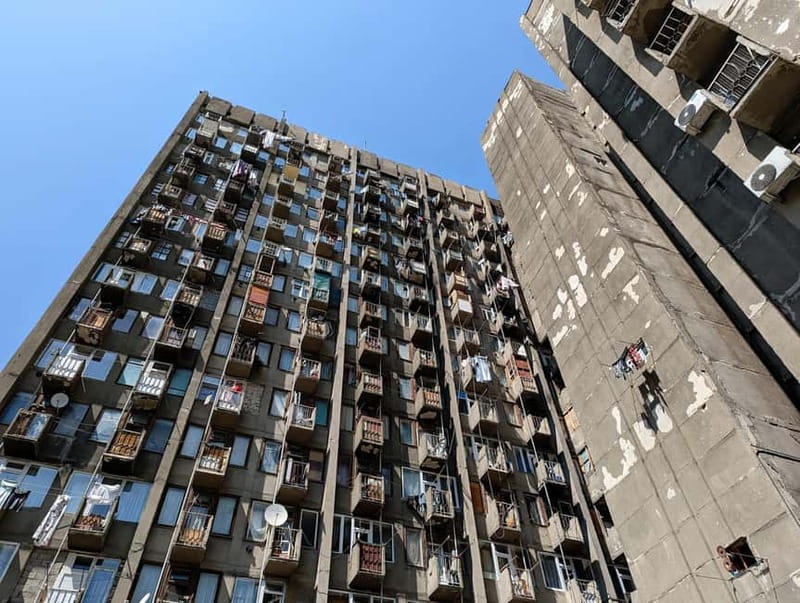
Most first visits to Tbilisi begin with the old town, its balconies, churches, courtyards, and narrow streets. That is a good start, but it can leave you with only one slice of the city. This tour shifts your attention to the twentieth century, when architects worked with concrete, dramatic angles, large public buildings, and ambitious plans for urban life.
You are not simply taken around to admire unusual shapes. The guide explains how these buildings fit into Georgia’s past and present. That matters because modernism and brutalism can look cold when reduced to photographs. In person, their scale, materials, and setting tell a more complicated story.
I especially like that the experience treats buildings as records of human decisions. You hear about the architects, the intended purpose of each site, and the forces that threaten some of these structures today. The result is less a standard sightseeing drive and more an architectural reading of Tbilisi.
The tour also suits people who have already seen the city’s best-known sights. If you are visiting for the first time and have only a day or two, you may prefer Tbilisi’s classic attractions. If you have more time, or if concrete, city planning, and overlooked places catch your eye, this is a smart way to use six hours.
More Bauhaus and Brutalist Architecture Tours in the world:
- Brutalist Tbilisi: Urban exploration and untold stories
★ 5.0 · 82 reviews - London: Brutalist Architecture & History Walking Tour
★ 4.8 · 42 reviews - Le Corbusier’s Chandigarh : A Complete Architecture Tour
★ 4.7 · 25 reviews
The Skybridge and the thrill of unusual design
The Skybridge is one of the tour’s headline stops. Its name alone suggests the kind of architecture you will encounter: bold, practical, and shaped by a belief that public buildings could also be dramatic visual statements.
Your guide uses the structure to talk about aspiration and connection. That gives the stop more weight than a simple look at an unusual bridge or building. You begin to consider how architecture can express a city’s hopes, not just solve a functional problem.
Bring a camera, but give yourself time to listen. The interesting part is not only the form of the Skybridge. It is the explanation of why a project like this mattered and how it fits into Tbilisi’s changing urban story.
The private setup helps here. With only your own group, you can ask questions about materials, design, preservation, or how locals view these buildings today. The guides praised for this experience, including Alex and Khato, are described as warm, humorous, and ready to connect architecture with personal and local stories.
Georgia’s own bold architectural voices
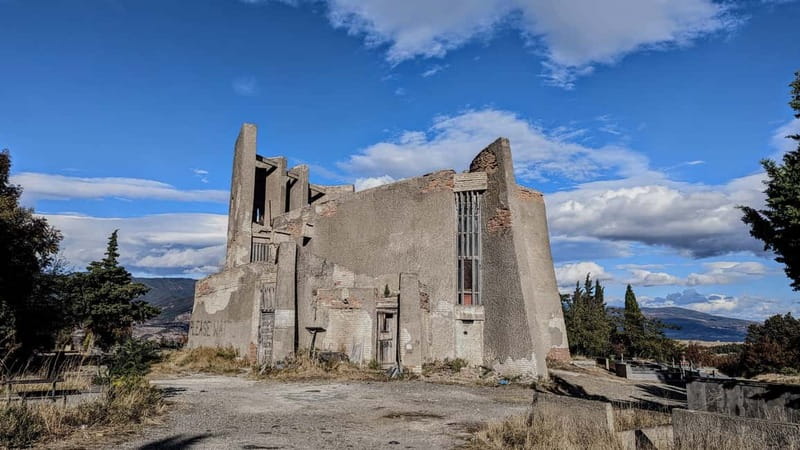
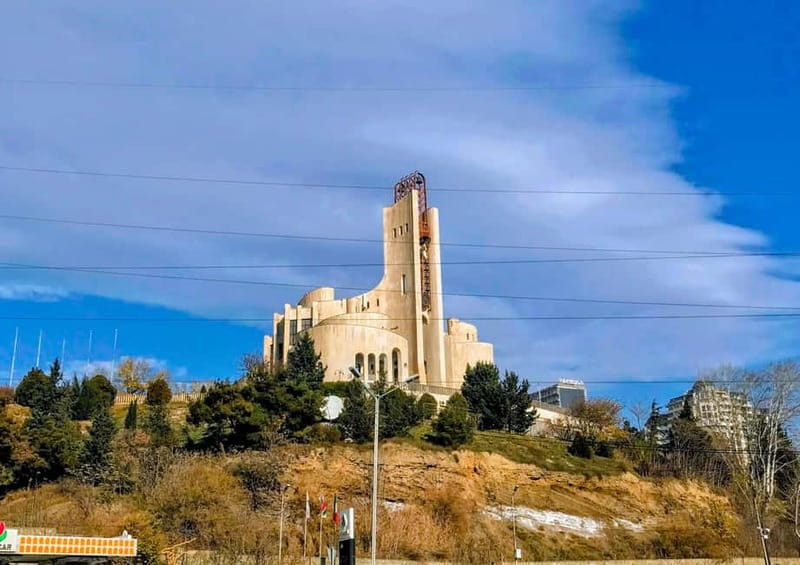
The tour presents Georgian architects as creative figures who deserve more attention. One part of the route focuses on work compared with the inventive approach of Le Corbusier, particularly the crematorium and Wedding Palace.
That comparison is useful as long as you approach it as a way to discuss ideas rather than a claim that the buildings are copies. You will look at how form, movement, ceremony, and public use can shape a building. The guide helps you read the design instead of simply deciding if you like its appearance.
The crematorium is located at a cemetery, which may surprise you if you expect a tidy architectural route. That setting is part of the point. The building’s purpose, location, and unusual design bring together questions about ritual, public life, and changing attitudes toward death.
The Wedding Palace is another major stop, but there is an important limit. You cannot enter its grounds or interior during this tour. You view it from outside while the guide explains its architectural significance. If interior access is essential to you, this may feel like an incomplete visit. If you are happy to study the exterior and hear the story, it remains one of the more distinctive stops.
The Ministry of Roads and Soviet ambition
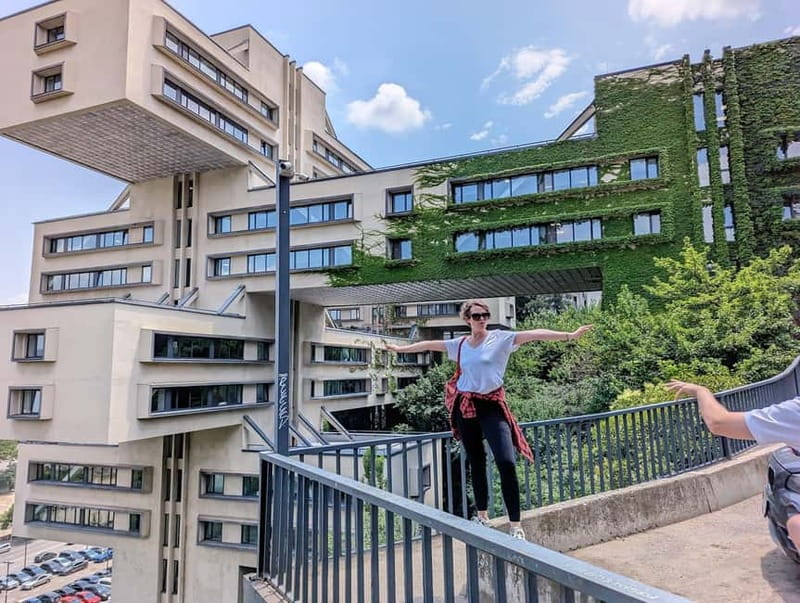
The Ministry of Roads is presented as a futuristic building from a different era. Its design reflects the confidence of a time when public architecture could be large, experimental, and closely tied to state ambition.
You will probably find this stop most rewarding if you like buildings that make you ask practical questions. How did people use the structure? Why did its designers choose such a striking form? What does the building say about the period in which it was created? Those are the kinds of questions that turn a photo stop into a useful lesson in city planning.
The guide adds context that you would not get from walking or driving past on your own. That is one of the strongest reasons to book this experience. Tbilisi’s modernist buildings are not always explained in the usual guidebooks, and their meaning can be hard to grasp from an exterior alone.
Do not expect every stop to feel polished or visitor-ready. Part of the appeal is seeing architecture that may be overlooked, altered, or at risk of disappearance. That also means the experience has an element of uncertainty. Access can change, and an alternative site of similar interest may replace a planned stop.
More Architecture Tours around the world:
- Chicago Architecture River Cruise
★ 5.0 · 15,756 reviews - Chicago River 90-Minute Architecture Tour
★ 4.5 · 9,629 reviews - Chicago River: 1.5-Hour Guided Architecture Cruise
★ 4.8 · 8,046 reviews - Barcelona: Park Güell and Gaudí House Museum Entry Ticket
★ 4.5 · 6,326 reviews
The archaeological museum and its strange lower level
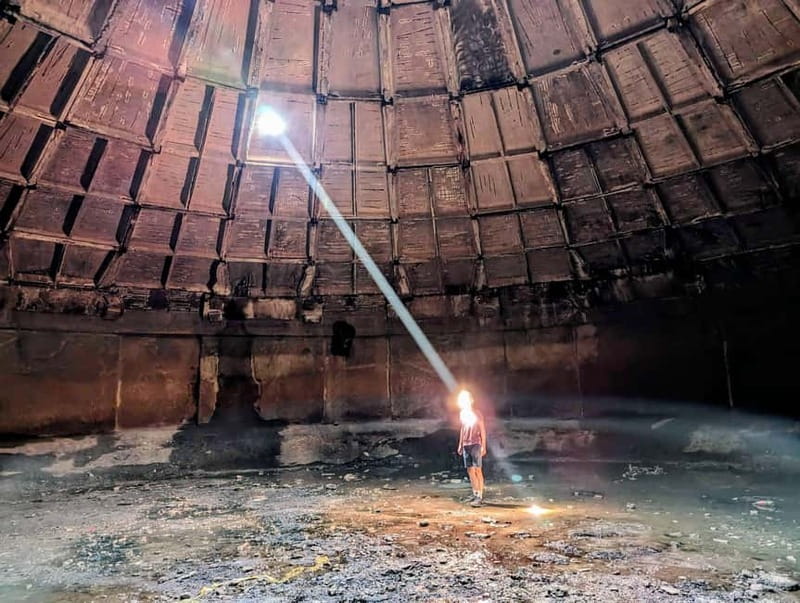
The archaeological museum adds another layer to the day. Here, the tour moves from bold twentieth-century design toward older traces and the less obvious spaces connected with the site.
The museum’s enigmatic dungeon is a particular draw for people who enjoy places with a touch of mystery. The information provided does not promise a full museum visit or specify every exhibit, so you should treat this as a guided stop rather than a guaranteed long indoor visit. Your guide explains what you are seeing and places it in the wider story of Tbilisi.
This combination is one of the tour’s strengths. You are not spending six hours looking at one architectural style in isolation. The route connects buildings, archaeology, ceremonies, state projects, cemeteries, and ordinary local life. That variety keeps the day from becoming a technical lecture.
It also gives you a better sense of how many different periods overlap in Georgia. The tour is not built around a single postcard view. It asks you to notice the layers that are easier to miss when you stay in the central sightseeing zone.
A local bakery stop adds welcome balance
One memorable feature of the route is a snack stop at a local bakery known for khachapuri. It is a small addition, but a useful one. Six hours of looking at concrete and discussing urban design can become heavy, and a familiar Georgian snack brings the experience back to everyday life.
I like that this is not presented as a formal food tour. The bakery stop works as a local pause, a chance to eat something typical, and an opening for more conversation. One guide, Alex, used the break to connect the architecture tour with daily life in Georgia.
Do not book the experience expecting a meal itinerary or a long tasting session. The focus remains architecture and city history. Still, this kind of unscripted-feeling pause can make a private tour more personal than a strict list of monuments.
What the guide adds to the buildings
The guide is the key part of this experience. The buildings are unusual, but without explanation you may only see large slabs of concrete, odd angles, and aging surfaces. A good guide gives those forms a purpose.
Alex has been praised for his passion for Tbilisi and for explaining how cities grow and change. Khato has been described as friendly, funny, and able to balance architecture with local and personal stories. Khatuna has also been praised for sharing her experiences and giving a broader picture of daily life in Georgia.
Because the tour is private, you can shape the conversation. Ask about preservation, design, Soviet life, local attitudes, or the way a building is used today. You are not locked into a large group’s pace or limited to a prepared speech.
That said, your experience may vary depending on the guide assigned and the exact sites available that day. The strong guide feedback is encouraging, but it is wise to book this for the subject itself, not only for one named person.
Why the private price can make sense
The listed cost is $176 per group of up to two people, with hotel pickup, drop-off, and transport included. For two people, that works out to $88 each. For one person, it is a much bigger spend, but you still receive a private experience rather than joining a shared group.
The value comes from access and interpretation. You are visiting places that would be difficult to connect into one route by yourself, and you have a guide who can explain why they matter. Transport also saves time, which is important in a six-hour program covering sites spread around Tbilisi.
This is not the right purchase if you want a cheap orientation tour or a relaxed stroll. It is better suited to someone who has a clear interest in architecture, Soviet-era history, city planning, or unusual urban places. The price becomes easier to justify when you are sharing it with one other person and would otherwise need to arrange transport and research the stops yourself.
Hotel pickup from your Tbilisi address is included. The tour is offered in English, and you can reserve now and pay later. Cancellation is free up to 24 hours before the experience, which gives you some flexibility if your plans change.
Practical details that affect your day
Wear comfortable shoes and clothes suitable for changing weather. Clothing that can get dirty is recommended, which tells you to expect some less polished settings rather than a purely formal museum route.
Bring a camera, but do not plan the whole day around photographs. Some of the best value comes from the explanations and the chance to ask questions. A small bag is sensible, but large bags and luggage are not allowed.
The experience is not suitable for wheelchair users or people with mobility impairments. It is also not intended for children under 12, people without experience, or anyone with a cold. The stated restrictions include no pets, strollers, baby carriages, smoking in the vehicle, alcohol, drugs, intoxication, or party groups.
Access can change for reasons outside the operator’s control. If a planned site is closed or unavailable, another site of equal interest may be included. The Wedding Palace restriction is more specific: you view and discuss it from outside, without entering its grounds or interior.
Who should book Hidden Tbilisi
I would choose this tour if you are curious about the parts of Tbilisi that do not appear on the usual first-day route. It is especially good for architecture students, photographers, urbanists, historians, and anyone who enjoys asking why a city looks the way it does.
It also suits repeat visitors who have already explored the old town. You get a fresh way to understand Georgia, with architecture linked to social memory and ordinary life rather than treated as isolated objects.
I would think twice if you need guaranteed interior access at every stop, dislike rough or uncertain settings, or prefer a tour with a strong food focus. The Wedding Palace is exterior only, some locations can change, and the subject is serious as well as visually striking.
Should you book it?
Book it if you want a private, English-language look at Tbilisi’s modernist and brutalist buildings, and if you value a guide who can connect design with local stories. The Skybridge, Ministry of Roads, crematorium, Wedding Palace exterior, archaeological museum, and dungeon offer a much different view of the city.
The best reason to go is not simply that the buildings look strange. It is that the tour helps you understand what those forms reveal about ambition, ceremony, public life, and a past that is not safely sealed away. At $176 for up to two people, it is a serious half-day expense, but the included transport, private format, and specialist focus give it solid value for the right audience.
FAQ
How long does the tour last?
The tour lasts six hours.
What is the price?
The price is $176 for a private group of up to two people.
Is hotel pickup included?
Yes. Pickup and drop-off are included from your address in Tbilisi.
What language is the tour offered in?
The tour is offered in English with a live guide.
Is this a private tour?
Yes. It is a private group experience.
Which architectural sites are included?
The experience includes the Skybridge, the crematorium, the Wedding Palace viewed from outside, the Ministry of Roads, the archaeological museum, and its dungeon. Some locations may be replaced with an alternative site if access changes.
Can I enter the Wedding Palace?
No. Entry to the Wedding Palace grounds and interior is not possible during this tour. You view and discuss its architecture from outside.
What should I bring?
Bring comfortable shoes, comfortable clothes, weather-appropriate clothing, a camera, and clothing that can get dirty.
Is the tour suitable for children?
No. It is not suitable for children under 12.
Can I cancel the booking?
Yes. You can cancel up to 24 hours in advance for a full refund. You can also reserve now and pay later.
New to the itinerary around the world
- Washington, DC: Georgetown Architecture Walking Tour★ 5.0 · 8 reviews
- Wilmington History and Architecture Tour★ 4.8 · 18 reviews
- Washington DC: Dupont Circle & Embassy Row Architecture Tour★ 5.0 · 6 reviews
- New Orleans : Garden District Architecture Walking tour★ 4.8 · 5 reviews
- Walk & Discover KL’s Architectural and Heritage Gems★ 5.0 · 7 reviews
- Unveiling Brno: History, Culture & Architectural Delights★ 5.0 · 2 reviews
- Vicenza: Palladian Architecture Private Walking Tour★ 3.3 · 3 reviews
- Private Colonial Williamsburg Architectural Tour★ 5.0 · 5 reviews
Bauhaus and Brutalist Architecture Tours, compared.
Brutalist Tbilisi: Urban exploration and untold stories
Read our review →
Le Corbusier’s Chandigarh : A Complete Architecture Tour
Read our review →
Architecture of New Belgrade – Brutalism Decoded
Read our review →
Secret Split: Socialist Architecture & brutalism – Urban Utopia
Read our review →
Tashkent Soviet Architecture (Modernism) and Subway station tour.
Read our review →
Belgrade: Space architecture tour – brutalist architecture
Read our review →
USSR History, Soviet Architects ,Statues & Mosaics
Read our review →Other lists with this tour