
Review · GERMANY
Düsseldorf: Guided City Architecture Walking Tour
Düsseldorf’s architecture tour is less about ticking off pretty buildings and more about learning why the city looks the way it does. In two hours, you move from grand Königsallee to the Old Town and finish at Ehrenhof, with attention to Expressionism, Brutalism, postwar design, and modern showpieces such as Kö-Bogen and the Dreischeibenhaus.
I like the sharp mix of famous names and local detail. I also like that the tour includes the City Museum, giving you a useful next step after the walk. The main drawback is pace: there is a lot to absorb, and one recent participant described it as a fast march, so it suits you best if you enjoy listening while walking.
Key points at a glance
- Kö-Bogen and Libeskind: See how Daniel Libeskind gave a modern face to one of Düsseldorf’s best-known shopping areas.
- Three major districts in two hours: The route links Königsallee, the Old Town, and Ehrenhof without wasting time on long transfers.
- A wide architectural range: The discussion reaches from Expressionism in the 1920s to postwar Brutalism and newer city projects.
- German-speaking guidance: The tour is conducted in German, with guide Dietmar Schönhoff praised for clear explanations, humor, and historical context.
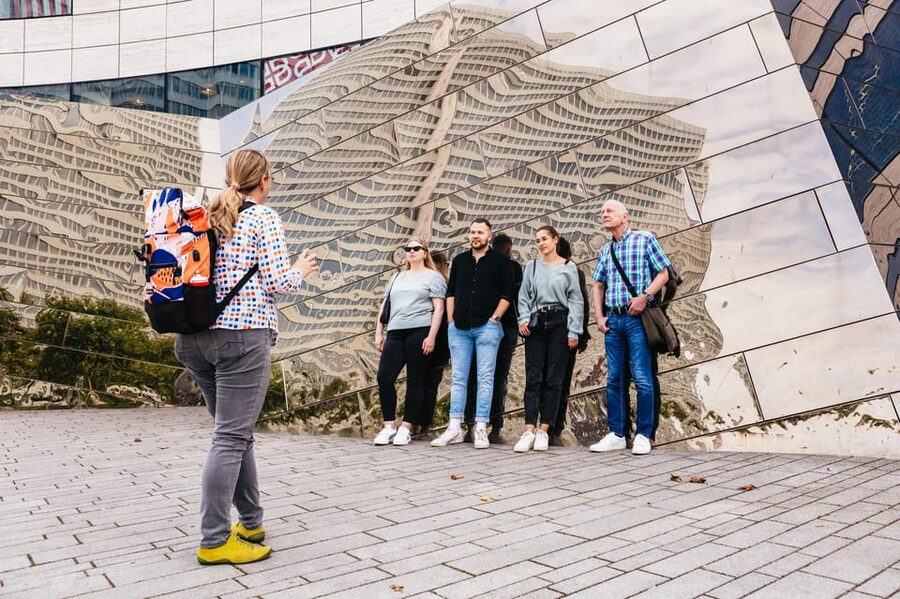
- Photo stops with a purpose: You have time to photograph facades while hearing the stories behind them.
- City Museum entry included: The museum ticket adds value for anyone who wants to continue exploring Düsseldorf’s past.
Why this walk reveals a different Düsseldorf
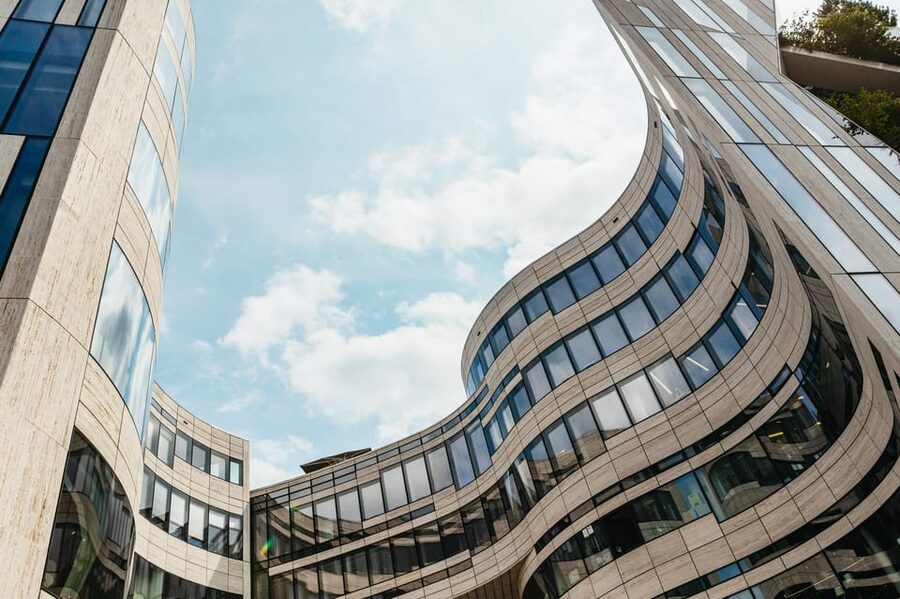
Many people first meet Düsseldorf through its shopping street, riverfront, and Old Town bars. Those are useful introductions, but they do not explain the city’s unusual architectural range. Within a fairly small area, you can see early twentieth-century Expressionism, severe postwar office design, historic references, and ambitious contemporary buildings.
That mix is the real reason to book this tour. You are not simply being shown buildings. You are given a way to read them. The guide points out the architects, the period they worked in, and the ideas that shaped the city around them.
The focus includes Wilhelm Kreis, Daniel Libeskind, Karl Friedrich Schinkel, Bernhard Pfau, and Helmut Hentrich. These names cover very different approaches. Some buildings aim for order and monumentality. Others are deliberately stark, experimental, or controversial.
I especially like this kind of tour early in a Düsseldorf visit. Once you understand the city’s building styles, an ordinary walk becomes more interesting. A large office block is no longer just a place where people work. It becomes evidence of postwar ambition, changing taste, or a debate about how a city should present itself.
More Walking Tours in Germany:
- Potsdam: Guided Walking Tour of UNESCO Site and Architecture
★ 4.7 · 49 reviews - Private walking Tour: Berlin Architecture Tour
★ 5.0 · 14 reviews - Lübeck: Private Historical and Architectural Walking Tour
★ 4.5 · 6 reviews
Starting at Mannesmannufer and moving toward Königsallee
The stated meeting point is Mannesmannufer 2, with other starting references also given for Alter Stahlhof and Breite Str. 69. Check the exact meeting instructions on your booking before setting out, since the activity information lists three possible starting locations but identifies Mannesmannufer 2 as the main meeting point.
From there, the walk heads toward Königsallee. The route is practical for a city tour because it quickly brings you into one of Düsseldorf’s most recognizable urban spaces. Königsallee is known for its elegant shopping frontage and broad central canal, but the architectural story is more layered than its polished appearance suggests.
This is where the guide can help you look beyond shop windows and expensive facades. Pay attention to the way older buildings relate to newer interventions, and to how the street balances prestige, movement, and public space. You will have opportunities to stop for photos, though the pace means you should be ready to listen and walk rather than linger at every building.
Reading Kö-Bogen through Daniel Libeskind’s design
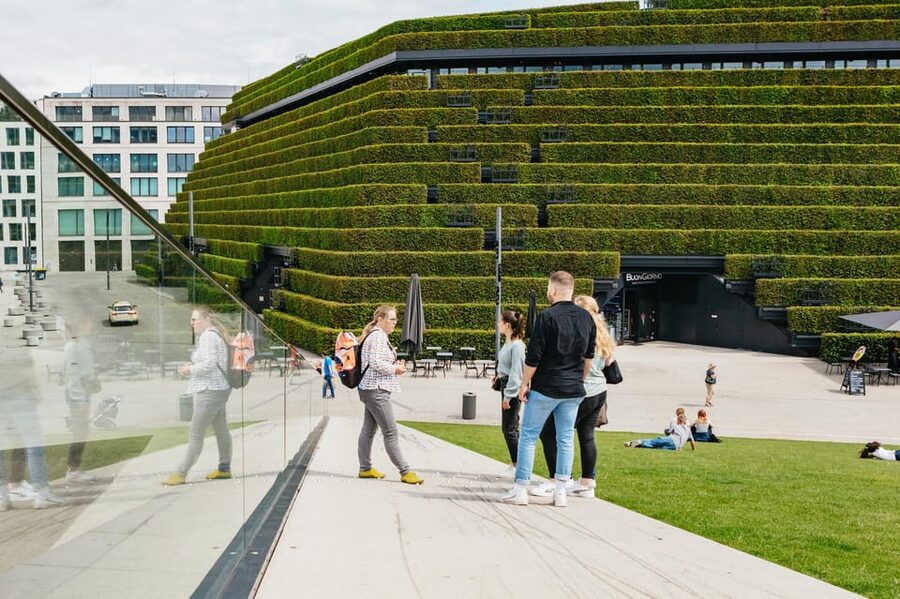
Kö-Bogen is one of the tour’s clearest modern landmarks. The project is associated with New York architect Daniel Libeskind, whose work often uses sharp angles, strong cuts, and dramatic relationships between solid walls and open space.
On this walk, you pass by rather than enter the building. That is important to understand before booking. The value comes from seeing how the structure changes the experience of Königsallee and hearing the story behind its design, not from an interior visit.
Kö-Bogen also gives the tour a useful point of contrast. Its bold, contemporary form looks very different from the older buildings nearby. A good guide can use that contrast to explain how Düsseldorf has repeatedly revised its public image through architecture.
This is a strong photo stop, especially if you enjoy modern design. It is also a place where the guide’s personal angle matters. Architectural interpretation is never just a list of dates and materials. The most useful explanations connect the building to the surrounding street and to the decisions that allowed such a distinctive project to take shape.
The Dreischeibenhaus and the postwar city
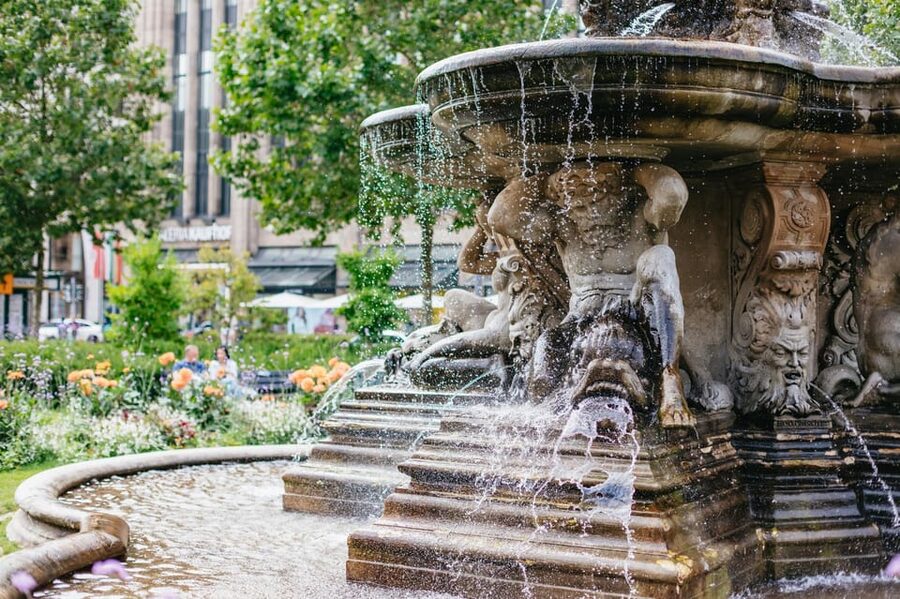
The 96-meter Dreischeibenhaus is another major stop on Königsallee. Its tall, clean-lined form belongs to a different architectural moment from Kö-Bogen, and that difference gives the walk much of its energy.
The building is closely linked with postwar Düsseldorf and the rise of modern office architecture. Its design is direct and disciplined, with a strong vertical presence. From the street, you can consider how a building made for business became one of the city’s visual landmarks.
The tour also passes the Schauspielhaus, Düsseldorf’s major theater building. Together, the Dreischeibenhaus and Schauspielhaus help show how one area can bring together office work, performance, civic life, and public space.
You should not expect an extended interior tour of either building. The walk is about the exterior setting and the ideas behind it. Still, that can be enough. Architecture often makes more sense when you see how a building meets the pavement, frames a plaza, or competes with its neighbors.
More Guided Tours around Germany:
- Lübeck: Architecture and Local Craft Private Guided Tour
★ 4.0 · 6 reviews - Berlin: Guided Architectural Walking Tour of Hansaviertel
★ 4.9 · 5 reviews - Munich Your Way: Private Tour with Architect & Guide
★ 5.0 · 2 reviews - Chicago River: 1.5-Hour Guided Architecture Cruise
★ 4.8 · 8,046 reviews
Through the Old Town, beyond the nightlife
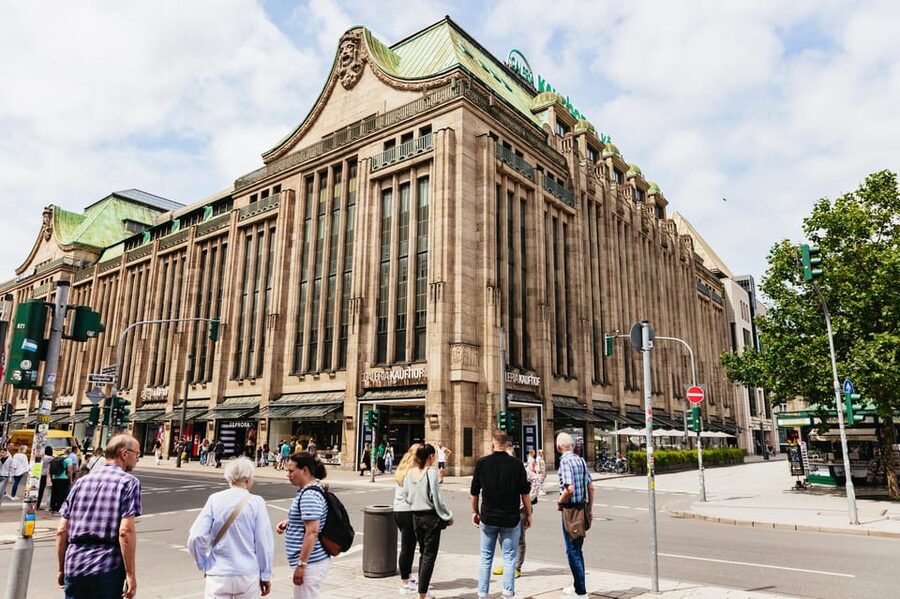
The route continues through Düsseldorf’s Altstadt, or Old Town. Many people know this quarter for its pubs, restaurants, and dense streets. The architecture walk gives you a different reason to look up.
Here, the guide can connect the Old Town’s familiar facades with wider changes in Düsseldorf. You may notice how historic-looking streets sit close to major modern projects, and how the city’s identity is built from several periods rather than one neat style.
This portion is especially useful if you already know the Old Town as a place for an evening out. The same streets can look different when someone explains their design, construction, and place in the city’s development.
The Old Town section also keeps the tour from becoming a procession of isolated office buildings. You get a sense of how architecture works at street level, where people shop, meet, walk, and live. That human scale is a useful balance to the grander buildings on Königsallee.
Ending at Ehrenhof and the city’s cultural face
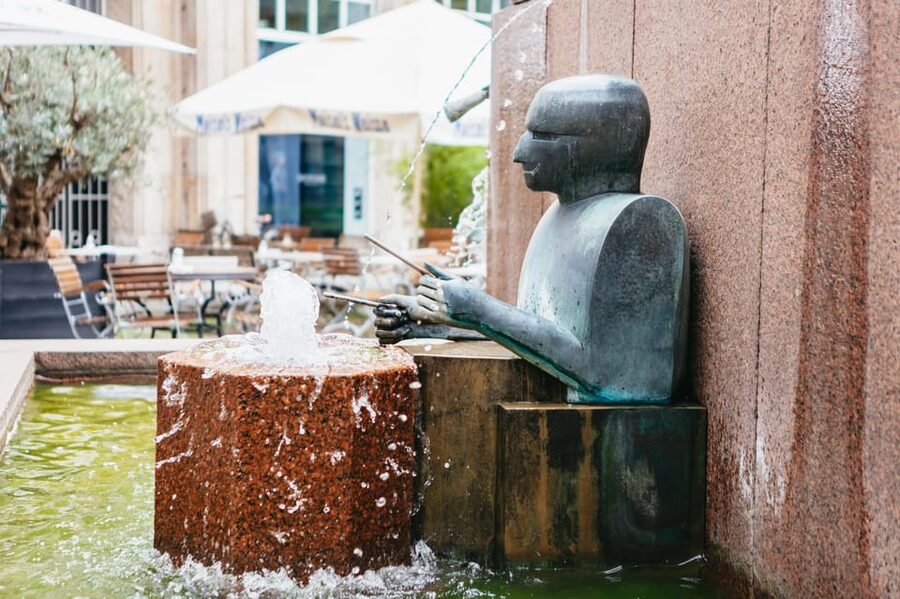
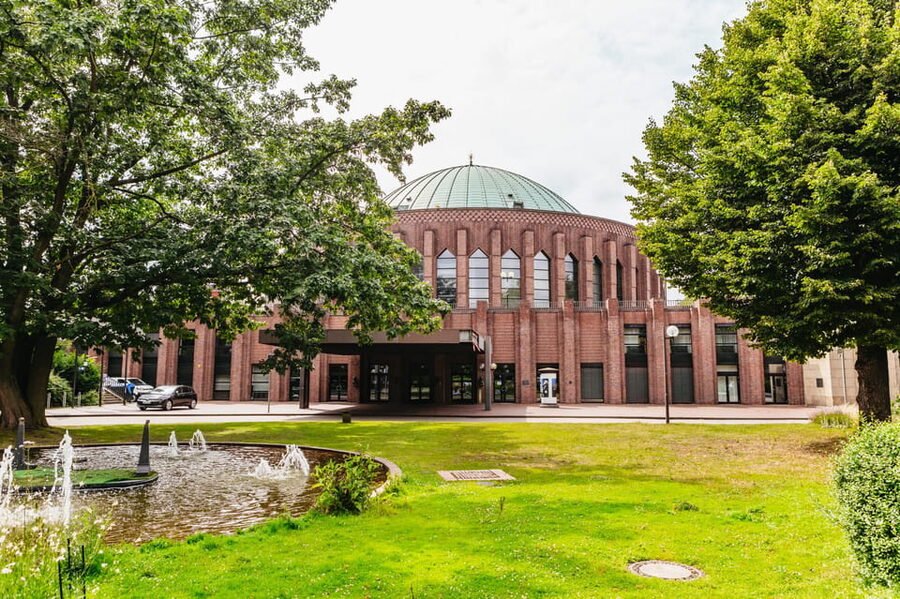
The walk ends at Ehrenhof, a major cultural and architectural area in Düsseldorf. This gives the tour a clear finish rather than sending you back to the starting point.
Ehrenhof is a fitting final stop because it broadens the discussion beyond commercial streets and office towers. The guide can place the area within Düsseldorf’s cultural and architectural story, including the work of designers connected with the city and the wider German building tradition.
The itinerary identifies Ehrenhof as the drop-off point, with two listed drop-off references within the same area. Plan your next activity from there rather than assuming you will return to Königsallee or Mannesmannufer.
I like ending here because it leaves you in a part of Düsseldorf that rewards further walking. You can use the tour’s final explanations as a framework for looking around on your own. If your interest is mainly shopping or Old Town nightlife, the finish may feel less convenient. If you want museums, public buildings, and design, it is a sensible endpoint.
What the guide adds to the buildings
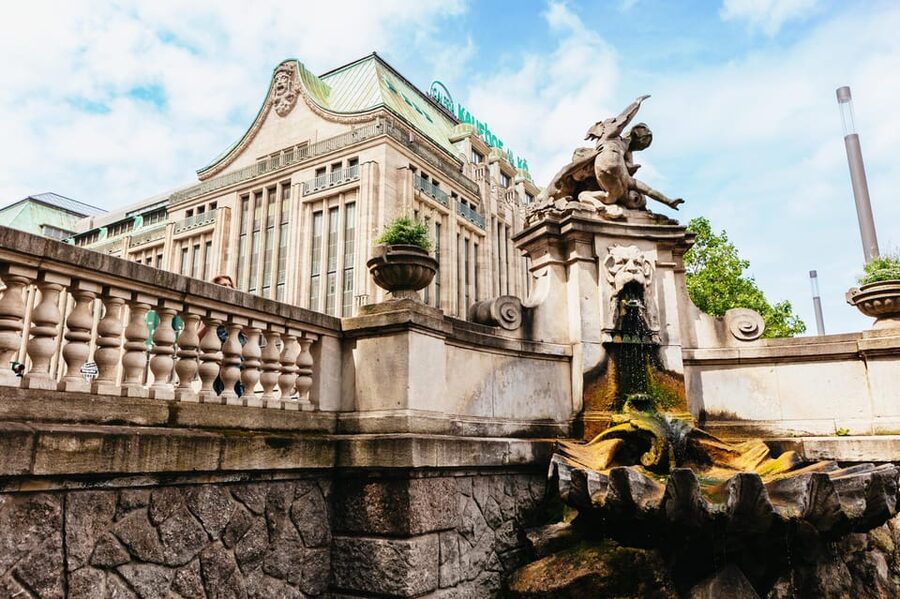
The guide makes or breaks an architecture walk. Here, the strongest feedback centers on the quality of the explanations, the historical background, and the ability to answer questions.
Dietmar Schönhoff is specifically praised for combining architectural information with humor and anecdotes. That matters because a two-hour talk about facades, architects, and building periods could easily become dry. Good stories give the facts a shape you can remember.
The tour is conducted in German. You should book it only if you can follow a live explanation in German, since the supplied information lists German as the tour language and does not offer an English option.
Expect a guide-led experience rather than a self-guided audio walk. You can ask questions, and the available feedback indicates that questions receive detailed answers. That makes the tour more useful for residents, repeat visitors, and anyone with a real interest in design.
At the same time, the amount of information can be demanding. One participant felt the tour contained so much material that it could have filled days or weeks, and described the pace as a forceful march. That is a fair warning. Wear comfortable shoes, stay close to the group, and save detailed note-taking for later.
A close look at the architectural themes
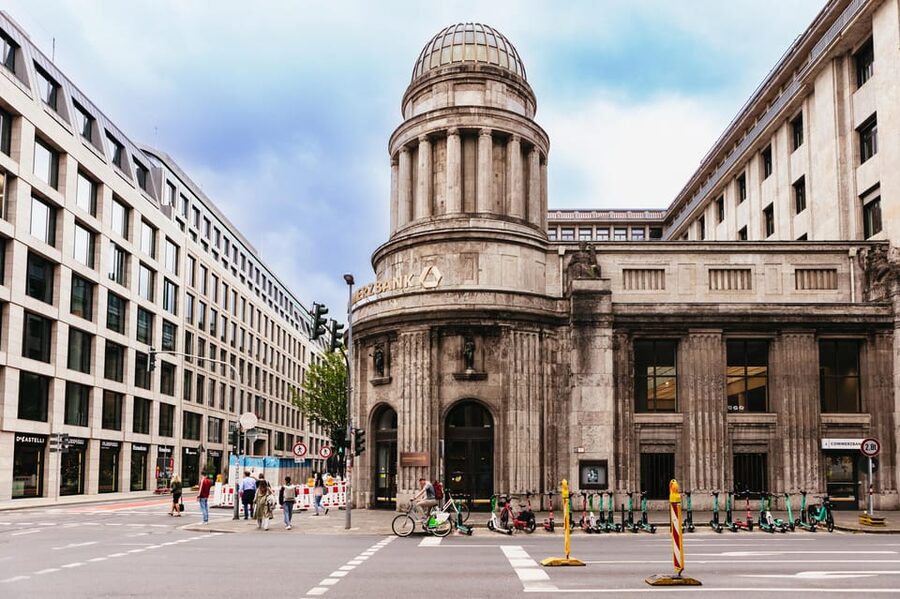
The tour’s strongest subject is the contrast between periods. Düsseldorf lets you compare very different ideas without traveling across the whole city.
Expressionism from the 1920s brings attention to emotion, unusual forms, and the desire to break away from plain historical copying. Brutalism, by contrast, is often associated with exposed structure, heavy materials, and a more forceful visual character. The tour presents both as part of Düsseldorf’s built environment.
You also hear about regional constructors and international architects. That distinction is useful. Cities are shaped not only by famous designers but also by local building traditions, contractors, political decisions, and the people who use the finished spaces.
The route can also prompt bigger questions about architecture and power. Who gets to decide what a city should look like? Why do some buildings become beloved while others attract criticism? How do beauty, function, status, and public reaction affect a project’s future?
The information provided about the tour does not promise a formal debate on each issue. Still, these are the questions you can bring with you. They help you get more from the walk than a list of architect names.
Price, pace, and practical value
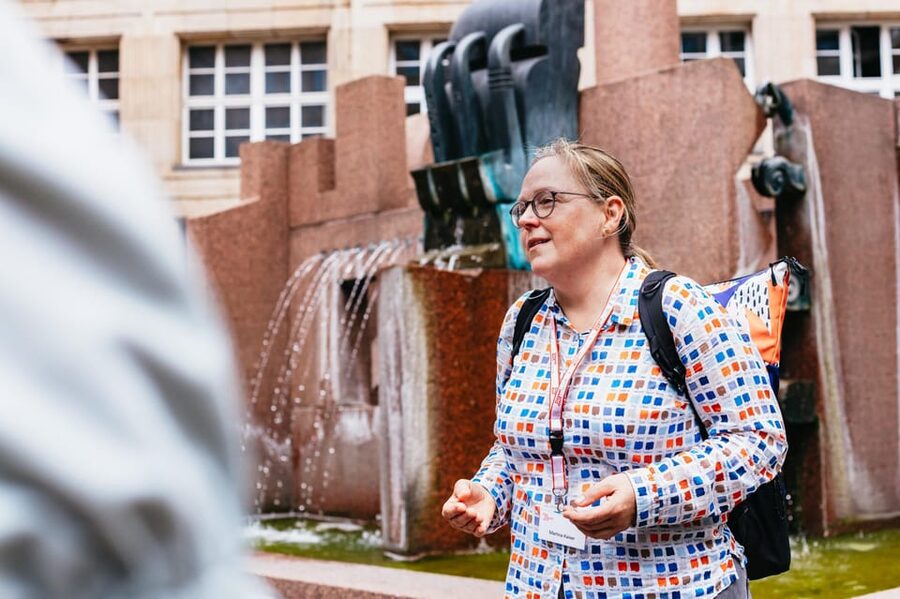
At $23 per person, the tour is reasonably priced for two hours with a live guide and entry to the City Museum at Bergerallee 2. The museum admission is important when judging value. You are not paying only for the walk, although the museum visit is not described as a guided part of the route.
The price makes the most sense if you plan to use the museum ticket. It gives you a chance to continue the city story after the guide has finished, especially if you want more background on Düsseldorf beyond individual buildings.
You can choose between a shared group tour and a private guided walk. A shared tour should suit most people who want a structured introduction at the lower listed price. A private option may be better if you want more control over questions and pace, though the supplied information does not give a separate private-tour price.
The activity lasts two hours. That is long enough to cover three important areas but short enough to fit into a morning or afternoon. The tradeoff is density. You will cover plenty of ground and hear many names, but you will not have time for long interior visits or extended stops at every building.
Free cancellation is available up to 24 hours before the tour for a full refund. You can also reserve now and pay later, which helps if your Düsseldorf schedule is still shifting. The tour has a rating of 4.6 from 61 reviews, though one serious service failure was recorded when a scheduled tour did not take place and the group received notice only later. That incident appears to be an exception, but it is worth checking your confirmation and meeting details before you leave.
Who should book this architecture walk?
I would recommend it to you if you enjoy cities through their buildings rather than only through food, shopping, or museums. It is also a good match for anyone who already knows Düsseldorf and wants a new way to see familiar streets.
Students of architecture, design, urban planning, and modern German history should find plenty to work with. So should residents who have passed the Dreischeibenhaus, Schauspielhaus, or Kö-Bogen many times without knowing the stories behind them.
The tour is less suitable if you want a relaxed stroll with long breaks. It is also not the right choice if you need English guidance, since the live tour is in German. Families and casual sightseers may enjoy it if they like buildings and can manage a steady two-hour walk, but the amount of information may be more than young children want.
Should you book it?
Book this tour if you want architectural context, a German-speaking guide who can answer questions, and a route that links Königsallee, the Old Town, and Ehrenhof in one compact outing. The best reason to go is the range: Libeskind’s Kö-Bogen, the Dreischeibenhaus, the Schauspielhaus, older city streets, and cultural buildings all appear within a short walk.
Skip it if you prefer slow sightseeing, English commentary, or interior access to major buildings. For everyone else, $23 is a fair price, especially when you use the included City Museum entry. Go prepared for a brisk pace, comfortable shoes, and a lot of information. You will leave with a more alert eye for Düsseldorf’s facades.
FAQ
Where does the Düsseldorf architecture tour meet?
The listed meeting point is Mannesmannufer 2. The activity information also refers to Alter Stahlhof and Breite Str. 69 as starting locations, so check your booking details for the exact start point.
How long does the architecture walk last?
The tour lasts two hours.
Which areas does the tour visit?
The route includes Königsallee, Düsseldorf’s Old Town, and Ehrenhof.
Which buildings are covered on the route?
The tour passes Kö-Bogen, the Dreischeibenhaus, and the Schauspielhaus, along with architectural highlights in Königsallee, the Old Town, and Ehrenhof.
Is the tour offered in English?
No. The listed live tour language is German.
Is entry to a museum included?
Yes. Entry to the City Museum at Bergerallee 2 is included.
Can I choose a private tour?
Yes. The activity offers a choice between a shared group walking tour and a private guided walking tour.
What is the cancellation policy?
You can cancel up to 24 hours before the tour for a full refund. You can also reserve now and pay later.
New to the itinerary around Germany
- Munich Your Way: Private Tour with Architect & Guide★ 5.0 · 2 reviews
- Hidden Architectural Gems of Munich (Max. 16 guests)★ 5.0 · 2 reviews
- Architectural Frankfurt: Private Tour with a Local Expert★ 5.0 · 2 reviews
- Berlin Architecture/River Spree Full Day Photography Tour★ 5.0 · 2 reviews
- Private Taxi Tour of City East History and Architecture 2-3h★ 5.0 · 2 reviews
- Architectural Berlin: Private Tour with a Local Expert★ 4.0 · 3 reviews
- Lübeck: Architecture and Local Craft Private Guided Tour★ 4.0 · 6 reviews
- Lübeck: Private Historical and Architectural Walking Tour★ 4.5 · 6 reviews
Germany Architecture Tours, compared.

Munich 3-Hour Segway Tour: Nazi Munich & Royal Architecture
Read our review →
Hidden Architectural Gems of Munich (Max. 16 guests)
Read our review →
Potsdam: Guided Walking Tour of UNESCO Site and Architecture
Read our review →
Private Taxi Tour City East & West History and Architecture 3-4h
Read our review →
Karl-Marx-Allee Tour: Life and Architecture in East Berlin
Read our review →
500 Years of Munich Architecture (Max. 16 Guests)
Read our review →Other lists with this tour