
Review · BERLIN
Architectural Berlin: Private Tour with a Local Expert
Berlin’s architectural story makes more sense when you see its old stone buildings and daring modern designs in one short route. This private tour links Museum Island, the Reichstag, and the Philharmonie, while explaining how the Fernsehturm changed Berlin’s skyline.
I like the one-to-one format, which lets you ask why a building looks the way it does instead of following a fixed script. I also like the tailored pace and the chance to see both grand landmarks and less familiar modern work. The main caution is guide consistency: Georg and Rüdiger received warm praise, but one booking produced a guide with little architecture background.
Key points to know before booking
- A private two-hour route: Only your group of up to two people takes part, with the path adapted to your interests and walking pace.
- Old and new Berlin together: Expect neoclassical art, a domed cathedral, parliament, sustainable office design, and the tent-like Philharmonie.
- The Fernsehturm gets useful context: You learn how East Berlin’s TV Tower helped shape the city’s skyline.
- A strong guide matters: Georg was praised for being personable and well prepared, while another guide was criticized for weak site knowledge.
- The price is high for two hours: At $639.96 per group, the value depends on how much you want personal attention.
- Tickets are extra: Transportation, museums, monuments, and personal expenses are not included.
Berlin architecture in a compact private format
This experience is built for people who want more than a quick list of famous buildings. In two hours, you move through central Berlin’s architectural contrasts, from 19th-century neoclassicism to postwar experimentation and modern political design.
You receive a private Local Expert guide and a route shaped around your interests. That matters in Berlin, where the same building can be read through art, religion, politics, engineering, or the city’s difficult 20th-century past. You can ask for more design detail, more historical context, or a broader look at how Berlin has grown.
The tour starts at Bodestraße 1, beside Museum Island, and ends at Herbert-von-Karajan-Straße 1, near the Berlin Philharmonie. The route is not simply a return to the starting point, so you should plan your next activity from the western end rather than from Museum Island.
Because the tour lasts about two hours, it works best as a focused introduction. You will not have time to enter every building or study every facade. The real value lies in having someone connect the buildings into one story.
More Private Architecture Tours in Germany:
- Private Taxi Tour City East & West History and Architecture 3-4h
★ 5.0 · 42 reviews - Private walking Tour: Berlin Architecture Tour
★ 5.0 · 14 reviews - Lübeck: Architecture and Local Craft Private Guided Tour
★ 4.0 · 6 reviews
Museum Island and the neoclassical opening
The first stop is a gallery on Museum Island with neoclassical architecture and a collection of 19th-century art. Its design gives your guide a useful starting point: symmetry, classical forms, and the way Berlin used monumental buildings to express cultural ambition.
You can expect the discussion to focus on the relationship between the building and its collection. That is more useful than simply hearing dates. The architecture was designed to give art a formal home, and the setting on Museum Island makes the gallery part of a larger group of museums and civic spaces.
The drawback is simple: the tour does not include museum admission. You can see and discuss the exterior, but entering the gallery would require your own ticket and additional time. If the art collection is your main reason for coming, plan a separate visit.
For an architecture-focused outing, this opening stop is effective because it gives you a visual standard for what follows. Berlin soon shifts from classical order to religious grandeur, political symbolism, and modern engineering.
Berliner Dom and the power of the dome
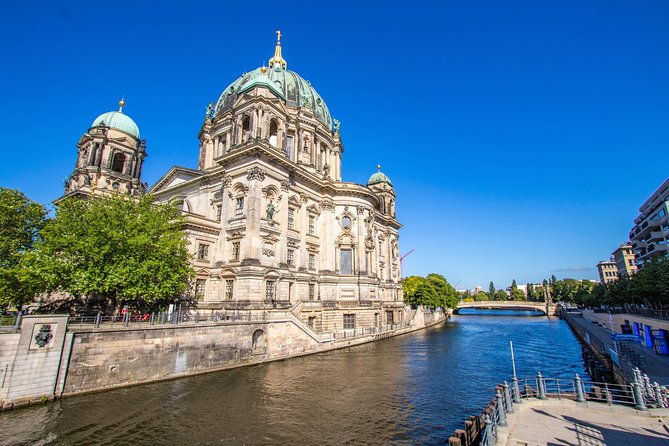
Near Lustgarten, the tour turns to Berlin’s grand historic church, known for its Renaissance and Baroque elements and its large dome. This is one of the city’s clearest examples of architecture designed to impress from a distance.
Here, I would ask your guide to explain how the dome changes the surrounding space. The church is not a small neighborhood building. Its scale, decoration, and position near Museum Island make it part of Berlin’s ceremonial center.
The stop also offers a useful contrast with the first gallery. The gallery presents culture through a controlled neoclassical setting, while the church uses height, decoration, and religious form to create a stronger sense of spectacle.
Entry is not included, so the time is likely centered on the exterior and the setting around Lustgarten. If you want to see the interior, ask whether the schedule can accommodate it, but do not assume that it will. Weather can also change the exact route and stops.
The unnamed eco-friendly office building
One stop focuses on a modern office building praised for innovative and environmentally friendly design. The building is not identified by name in the tour details, so you should ask your guide for its exact name at the beginning.
That missing name is a small practical weakness. Architecture fans often like to read about a building before arrival, and you cannot easily prepare for this stop without more information. Still, the subject itself adds range to the tour.
Berlin’s contemporary architecture is not only about dramatic museums and government buildings. Office design, energy use, public space, and new construction also shape the city. This stop gives you a chance to ask how modern buildings fit beside older structures, and whether sustainability affects appearance, materials, or the way the building functions.
The value here depends heavily on your guide. A guide who can explain the building’s design choices will make the stop worthwhile. A guide who simply points out that it is modern and eco-friendly will leave you wanting more.
More Architecture Tours around Germany:
- Munich 3-Hour Segway Tour: Nazi Munich & Royal Architecture
★ 4.9 · 194 reviews - Düsseldorf: Guided City Architecture Walking Tour
★ 4.6 · 61 reviews - Hidden Architectural Gems of Munich (Max. 16 guests)
★ 4.9 · 52 reviews - Potsdam: Guided Walking Tour of UNESCO Site and Architecture
★ 4.7 · 49 reviews
The Reichstag’s old walls and glass dome
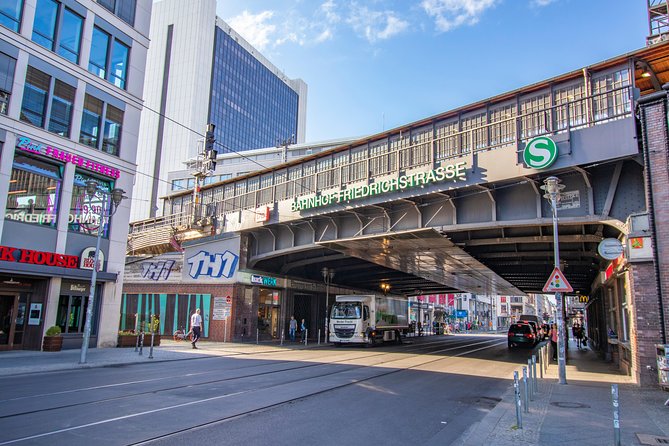
The Reichstag is the tour’s strongest lesson in Berlin’s habit of joining the past with the present. It is a historic parliament building, but its most famous modern feature is Norman Foster’s glass dome.
The dome is not just a striking object on the roof. It presents a clear idea of political transparency, allowing visitors to look down toward the parliamentary chamber while also looking out across the city. That makes the building useful for discussing both architecture and German political identity.
You should ask whether your tour includes only an exterior explanation or whether entry is possible. The supplied details make clear that monument entry tickets are not included. Do not count on going inside during the two-hour route.
Even from outside, the Reichstag helps explain Berlin’s architectural character. The old building was not discarded when the city adopted modern political and technical ideas. Instead, the newer glass work was placed in conversation with the historic structure.
That approach repeats across Berlin. The city often preserves traces of earlier eras while adding new layers around them. A private guide can help you notice those connections instead of seeing each building as a separate photo stop.
A modern building beside historic Berlin
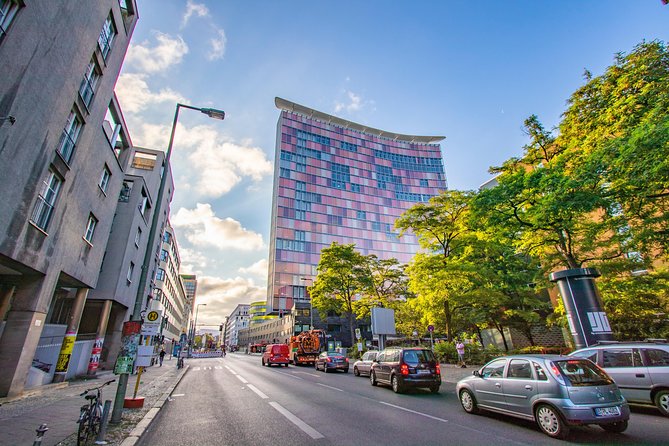
Another stop covers a building that mixes contemporary architecture with the historic setting around it. The building is not named in the supplied details, so this part of the route will depend on your guide’s local knowledge and the day’s conditions.
This is potentially one of the most useful stops for an architecture enthusiast. Famous landmarks are easy to identify, but Berlin’s real character often appears where new construction meets older streets, monuments, or government buildings.
You can use this moment to ask direct questions:
- Why was this design chosen for this particular site?
- Which older features did the architects keep or echo?
- Does the new building blend in, contrast with its surroundings, or do both?
- How has the area changed as Berlin has grown?
The tour promises a tailored itinerary, so these questions can help steer the discussion. If you care more about urban planning than church interiors, say so early. If you prefer landmark architecture, ask the guide to spend more time on the Reichstag and Philharmonie.
The Philharmonie’s tent-like concert hall
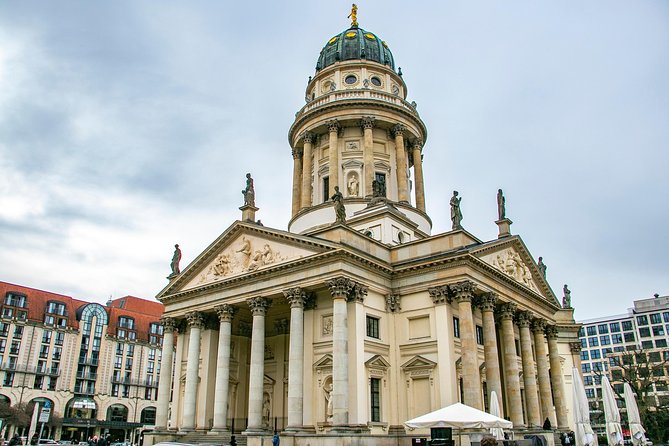
The route ends at the Berlin Philharmonie on Herbert-von-Karajan-Straße. Its distinctive tent-like form and celebrated acoustics make it a fitting final stop for a tour about modern design.
The Philharmonie is not designed to disappear into its surroundings. Its unusual profile makes it instantly recognizable, and the building’s purpose shaped its interior and exterior. The music hall is home to the Berlin Philharmonic, linking architectural form with the city’s musical life.
You may hear how the building’s shape supports the concert experience, though the tour details do not promise entry or a concert. Tickets for monuments and other admissions are excluded, so treat this as an architectural stop rather than a performance booking.
Ending here gives the tour a clear arc. You begin with formal 19th-century buildings and finish with a modern structure whose shape reflects performance, sound, and public gathering. You also finish in a different part of central Berlin, which may be convenient if you plan to continue sightseeing in that area.
How the Fernsehturm fits the story
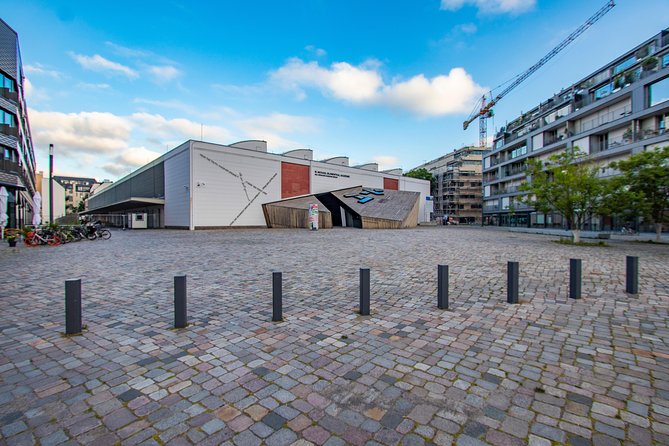
The Berliner Fernsehturm, or TV Tower, is highlighted as part of the skyline discussion. It may not function as a full itinerary stop, but it gives the guide a strong visual reference when explaining Berlin’s changing horizon.
The tower is especially useful in a conversation about the city’s division and growth. From street level, you can see how a tall structure changes the sense of scale around it. It also helps connect the historic center with the modern city beyond the older monuments.
Ask your guide when the TV Tower was most useful to look at from the route and how it relates to the buildings you are seeing. Since the tour is private, you have a better chance of getting a real explanation instead of a brief fact.
The tour does not include a ticket to the tower. If you want to go up, that would be a separate plan and expense.
What the private format is really worth
The price is $639.96 per group of up to two people. That works out to about $320 per person if two people share the booking, before any admission or transportation costs.
That is a serious price for a two-hour experience. You are not paying for a long list of included tickets or a full-day program. You are paying for privacy, flexibility, and direct access to a guide who can shape the conversation around you.
I see the value most clearly for a couple or pair of friends with a focused interest in architecture. You can spend your short time on design questions that matter to you, rather than waiting while a large group gathers or listening to a general script.
The price is harder to justify if you want simple sightseeing or a low-cost introduction to Berlin. The public spaces around many of these buildings can be visited independently. You may get better value from this booking if you prepare a short list of questions and make full use of the private format.
Guide quality is central. Georg was described as interesting, personable, well prepared, and easy to like. Rüdiger was praised for arranging a varied route after discussing the guest’s preferences, including creative areas and quieter buildings. Those are exactly the qualities you want from a private architecture guide.
At the same time, one experience involved a pleasant guide who lacked architecture knowledge and had not checked whether sites were open. That is not a small issue on a tour built around buildings. Confirm at the start that your guide understands your interest in architecture and knows which stops are practical that day.
Walking pace, weather, and practical planning
The route is adapted to your walking pace, and most people can participate. The tour is near public transportation, but transport tickets are not included. You should be ready for movement between stops and choose comfortable shoes.
The starting point is Bodestraße 1, 10178 Berlin. The finish is Herbert-von-Karajan-Straße 1, 10785 Berlin. Since you do not end where you began, avoid booking a tight appointment back on Museum Island.
Stops may change because of weather. That matters in Berlin, where an outdoor architecture tour can feel very different in cold rain than in dry weather. Ask your guide at the beginning which buildings can be discussed from indoors and which parts of the route are most exposed.
The experience is private, and only your group takes part. Service animals are allowed. Most people can participate, but the available information does not give a detailed step-free route or specific arrangements for every mobility need. If you have impaired mobility, contact the provider before booking and explain what you require.
Confirmation is provided when you book, and free cancellation is available up to 24 hours before the local start time. Changes or cancellations inside that 24-hour window are not accepted for a refund.
Who will get the most from this tour
This suits you if you enjoy looking at buildings and want someone to explain why they matter. It is also a good choice if you have already seen Berlin’s main sights and want a more focused way to connect them.
It works especially well for:
- Couples who want a private, flexible outing
- First-time visitors who want a short orientation to central Berlin
- Architecture students and design-minded visitors
- People interested in the contrast between historic buildings and modern construction
- Anyone who prefers questions and conversation over a large group lecture
It is less suitable if you want extensive interior access, a full-day architectural survey, or a low-cost walking tour. The two-hour length keeps the route manageable, but it also limits detail.
You should also be comfortable with some uncertainty. The exact stops can vary, and the modern buildings are not all named in advance. That flexibility can be helpful, but it places more responsibility on you to tell the guide what you want.
Should you book Architectural Berlin?
Book it if privacy and tailored discussion matter more to you than included admissions or a long schedule. The route gives you a smart cross-section of Berlin, from neoclassical Museum Island and Berliner Dom to the Reichstag, the TV Tower’s skyline role, and the Philharmonie.
I would book with two conditions. First, message or speak with the guide at the start about your architecture interests. Second, confirm which sites are open and which stops are possible that day.
The experience has clear promise, and Georg and Rüdiger sound like the sort of guides who can turn a short walk into a thoughtful city lesson. But the uneven guide experience means you should not assume every guide will offer the same depth. At $639.96 for up to two people, this is a specialized splurge, not a casual sightseeing purchase.
FAQ
Where does the tour start?
The tour starts at Bodestraße 1, 10178 Berlin, Germany.
Where does the tour end?
The tour ends at Herbert-von-Karajan-Straße 1, 10785 Berlin, Germany.
How long does the tour last?
The tour lasts approximately two hours.
How many people can join the private tour?
The private booking is for a group of up to two people, and only your group participates.
Is the tour price charged per person?
No. The listed price is $639.96 per group of up to two people.
Are museum, monument, or transportation tickets included?
No. Entry tickets for transportation, museums, and monuments are excluded.
Can the itinerary be tailored?
Yes. The itinerary adapts to your interests and walking pace.
Can the stops change?
Yes. Stops may vary depending on weather conditions.
What is the cancellation policy?
You can cancel up to 24 hours before the experience start time for a full refund. Cancellations or changes made less than 24 hours before the start are not accepted for a refund.
New to the itinerary around Germany
- Munich Your Way: Private Tour with Architect & Guide★ 5.0 · 2 reviews
- Hidden Architectural Gems of Munich (Max. 16 guests)★ 5.0 · 2 reviews
- Architectural Frankfurt: Private Tour with a Local Expert★ 5.0 · 2 reviews
- Berlin Architecture/River Spree Full Day Photography Tour★ 5.0 · 2 reviews
- Private Taxi Tour of City East History and Architecture 2-3h★ 5.0 · 2 reviews
- Lübeck: Private Historical and Architectural Walking Tour★ 4.5 · 6 reviews
- Lübeck: Architecture and Local Craft Private Guided Tour★ 4.0 · 6 reviews
- Dessau: Bauhausbauten Radtour★ 5.0 · 2 reviews
Private Architecture Tours, compared.

Sagrada Familia & Gaudi Tour Private or Small Group with Tickets
Read our review →
Barcelona 1.5h Private Old Town, Gothic & Ramblas Walking Tour
Read our review →
Treasures of Barcelona: Private Gaudi Walking Tour
Read our review →
Sagrada Familia & Gaudi Guided Tour Private or Small Groups
Read our review →
Best of Chicago: Architecture & Highlights City Private Tour
Read our review →
Private Harajuku Omotesando Architecture Walking Tour
Read our review →
Private Santa Barbara History and Architecture Walking Tour
Read our review →
Private Barcelona Modernism and Gaudí Walking Tour
Read our review →Other lists with this tour