
Review · MUNICH
500 Years of Munich Architecture (Max. 16 Guests)
Munich’s architecture tells a lively story of power, faith, war, taste, and social change. This tour connects that story across 500 years, moving from the Gothic Frauenkirche and Baroque churches to Art Nouveau, street art, and a modern museum by the Isar. I like the unusual range, and I like that Philipp is both an architect and a certified official city guide. You get more than dates and building names: you learn why Munich changed its look.
The small maximum of 16 people should make it easier to ask questions, and Philipp’s warm, patient style comes through in the feedback. The main drawback is practical: this is a long walking tour with uneven city routes and is not suitable for wheelchair users or people with mobility impairments. The rooftop finish also depends on the weather.
Key points to know before booking
- Architecture across six major styles: Follow Munich from Romanesque and Gothic buildings through Baroque, Rococo, Neoclassical, Historicism, Art Nouveau, street art, and modern design.
- Philipp leads the tour: Your guide is an architect and certified official Munich city guide who speaks English, German, and Spanish.
- A small group of no more than 16: The size suits travelers who want room for questions without paying for a fully private tour.
- The route reaches the Isar River: The second half adds nature, Art Nouveau, street art, and contemporary architecture to the old-town churches.
- A rooftop ending: Finish at the Gasteig rooftop terrace for wide views over Munich, weather permitting.
- Good value at $30: The 150-minute experience covers major landmarks and less familiar stops at a modest price, though food, drinks, transport, and entrance costs are not included.
Why this tour works for architecture fans
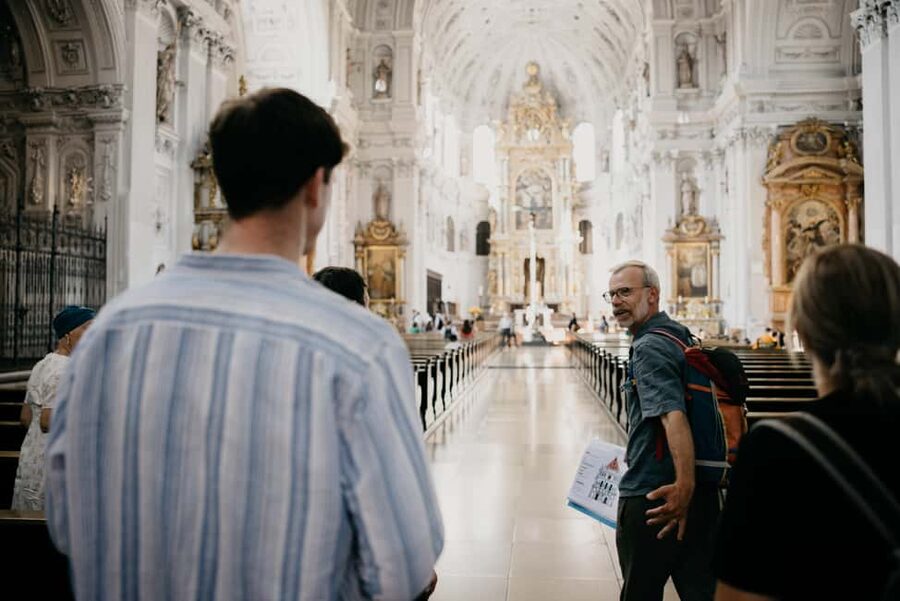
Many Munich tours focus on royal squares, beer halls, and the old town. This one uses architecture as the organizing idea, which gives the city a clearer shape. You see how religious buildings, royal ambition, civic pride, industrial growth, and modern urban life left their mark on the streets.
Philipp’s background matters here. An architect can point out form, materials, proportion, and changes in style. As an official city guide, he can also place the buildings in Munich’s wider story. The combination should help you see familiar places differently, especially if you already plan to visit Marienplatz and the city center.
The tour is also unusual because it does not stop with the historic core. After the churches, opera house, and Maximilianstraße, the route moves toward the Isar. That change gives you a fuller picture of Munich. The city is not just a preserved old center. It also has Art Nouveau buildings, public art, a modern museum, and new viewing points.
At $30 per person, the price is sensible for two and a half hours with a specialist guide. It is especially good value if you care about buildings and want explanations rather than a quick photo stop. The calculation changes if your plan requires paid public transport or entry to places that are not covered. Food and drinks are not included, and transport to and from the meeting point is your responsibility.
More Architecture Tours around Germany:
- Munich 3-Hour Segway Tour: Nazi Munich & Royal Architecture
★ 4.9 · 194 reviews - Düsseldorf: Guided City Architecture Walking Tour
★ 4.6 · 61 reviews - Hidden Architectural Gems of Munich (Max. 16 guests)
★ 4.9 · 52 reviews
Starting at the Frauenkirche
Meet Philipp outside the main entrance of the Frauenkirche at Frauenplatz 1. He carries a tablet over his shoulder, which should make him easy to identify. From Marienplatz station, the walk takes about 10 minutes. You can reach Marienplatz by S-Bahn or by the U3 and U6 subway lines.
The Frauenkirche is a fitting starting point. Its twin towers and broad Gothic form are among Munich’s clearest visual symbols, but the building also gives Philipp a way to explain how medieval religious architecture shaped the city. You can expect the opening discussion to set up the larger theme: buildings reflect the people and institutions that paid for them, used them, and wanted to be remembered.
The exact balance between exterior explanation and interior access can vary, so do not assume that every church visit means a full guided interior tour. Church services, opening hours, or local rules may affect what you see. The church itself remains an important first stop because it gives you an immediate sense of Munich’s Gothic identity.
St. Michael’s and the power of the Renaissance
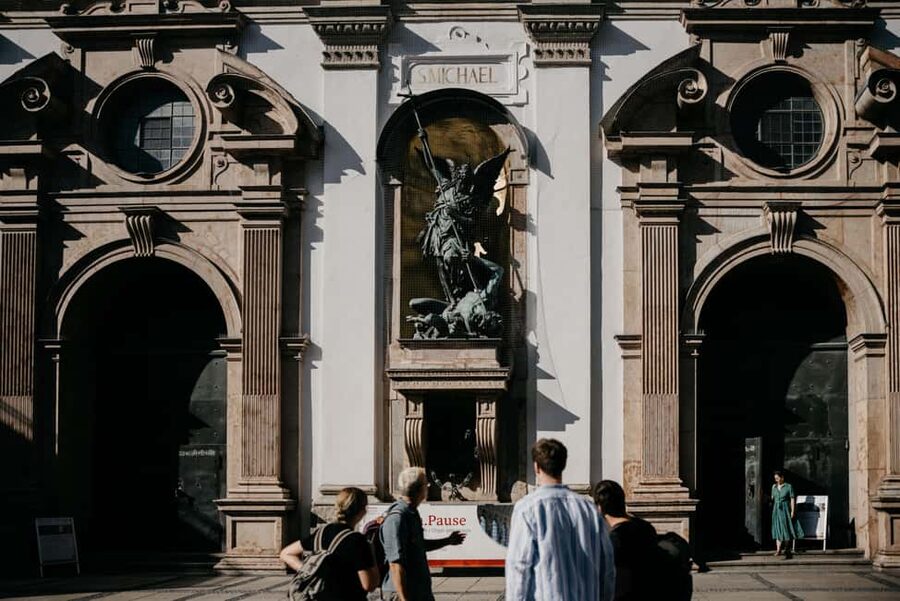
From the Frauenkirche, the route continues to St. Michael’s Church. This church is one of the city’s major historic landmarks, and its scale helps show how Munich’s rulers used architecture to signal influence and religious purpose.
Here, the story moves beyond the medieval Gothic style. Philipp can compare the building’s shape, decoration, and sense of order with the Frauenkirche. That comparison is one of the strongest reasons to take this tour rather than simply walk between the churches on your own. You are not only seeing separate monuments. You are following the changes in taste and political purpose from one period to another.
The church is also close to several central sights, so the walking between stops should feel efficient during this early part of the route. Keep your shoes comfortable. The tour lasts 150 minutes, and the pavement, standing time, and frequent stops can be more tiring than the distance alone suggests.
Trinity Church and Munich’s Baroque turn
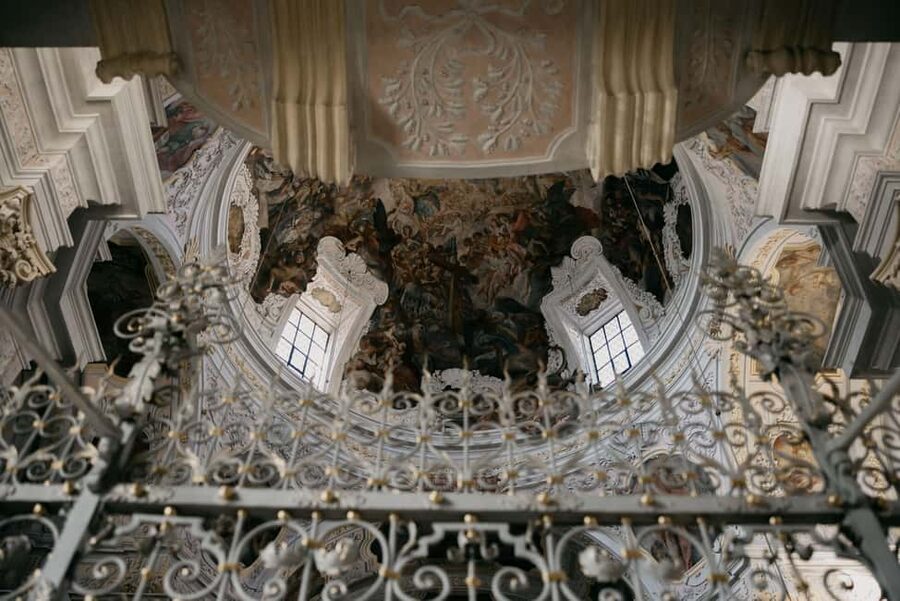
The Trinity Church adds a smaller, more intimate note to the old-town section. Its Baroque design offers a useful contrast to the larger and more formal churches earlier in the route.
This is the kind of stop that benefits from an architect’s eye. A casual visitor might register an ornate church and move on. Philipp can explain how the decoration, layout, and mood fit the Baroque period, when architecture often aimed to impress the senses and reinforce religious feeling.
The tour description also calls attention to lesser-seen architectural details throughout the route, including Munich’s first Rococo palais. That detail suggests the experience is not limited to the city’s most famous postcard buildings. You will still see major sights, but the aim is to notice quieter examples and stylistic changes along the way.
Same streets, read through a different style:
- Potsdam: Guided Walking Tour of UNESCO Site and Architecture
★ 4.7 · 49 reviews - Private Taxi Tour City East & West History and Architecture 3-4h
★ 5.0 · 42 reviews - Stuttgart city library – an architectural tour
★ 4.4 · 27 reviews - Karl-Marx-Allee Tour: Life and Architecture in East Berlin
★ 5.0 · 19 reviews
Theatine Church and the royal city
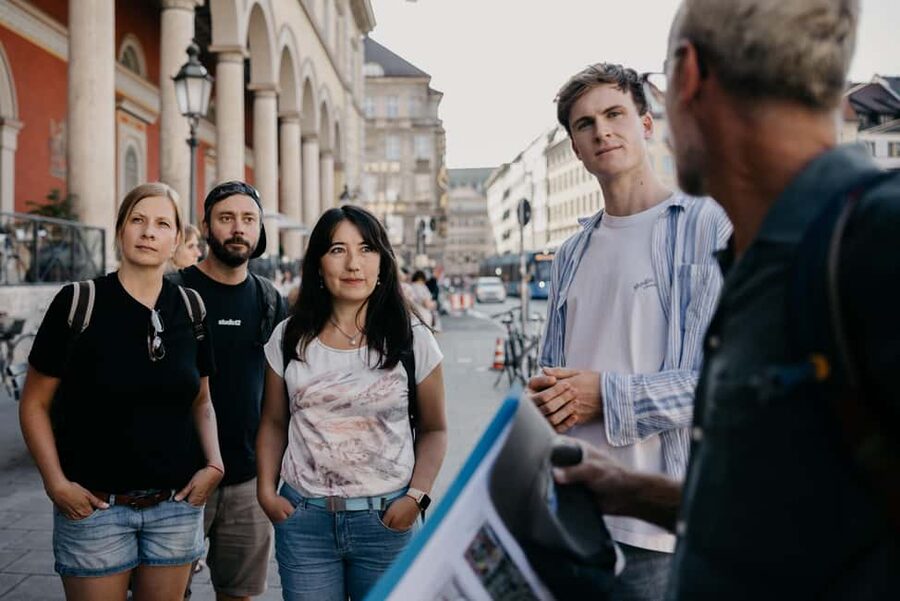
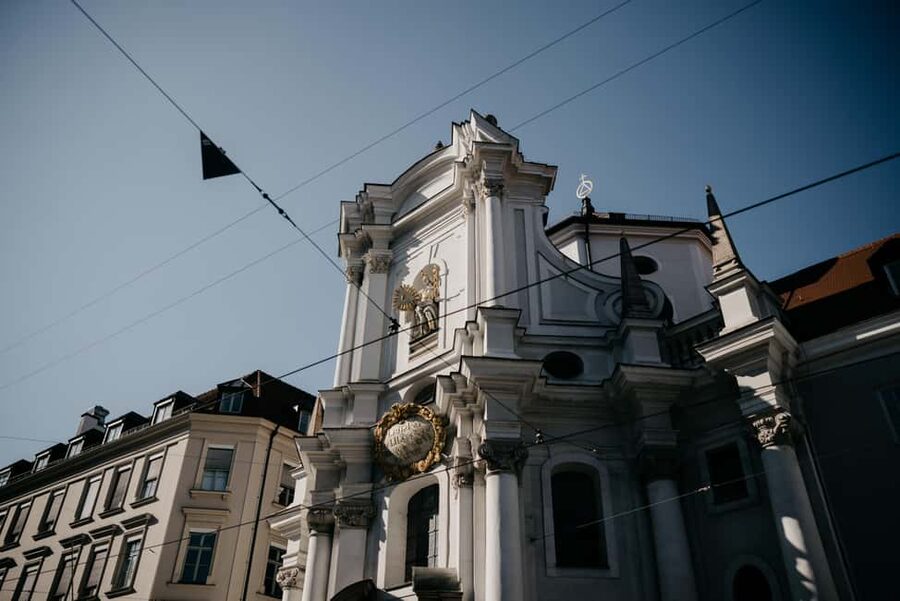
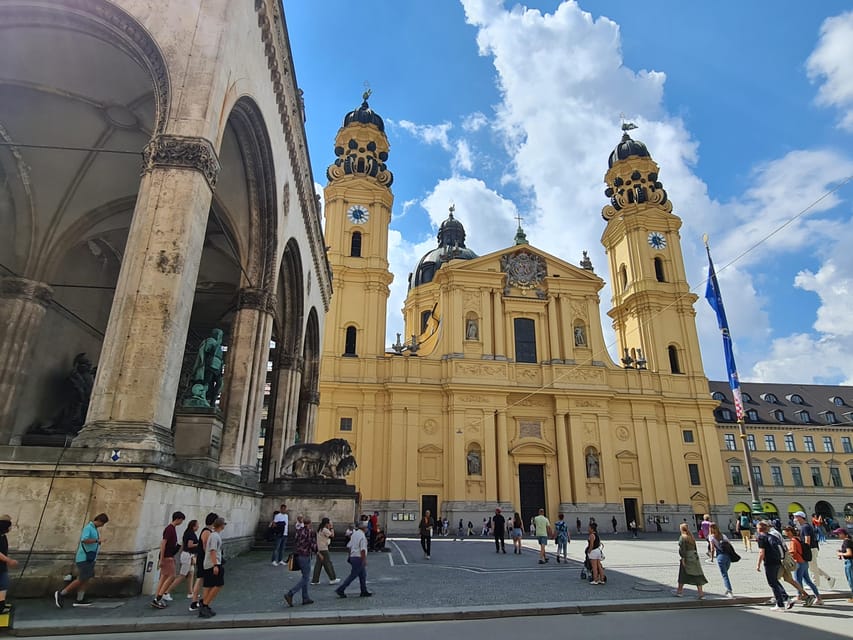
The Theatine Church continues the Baroque thread and shows how Munich’s historic center was shaped by courtly and religious ambition. Its pale exterior is hard to miss, and its setting near Odeonsplatz makes it one of the city’s most impressive urban compositions.
Philipp’s approach is strongest when he links a building to the people and conditions behind it. The central question is not just what style you are looking at, but why that style appeared in Munich at that time. Social and political conditions are part of the tour’s central theme, so expect more context than a simple list of construction dates.
The church also helps you compare different kinds of Baroque expression. Trinity Church feels different from the Theatine Church, even though both belong to the same broad period. That kind of side-by-side comparison makes architectural history easier to remember.
Bavarian State Opera and Maximilianstraße
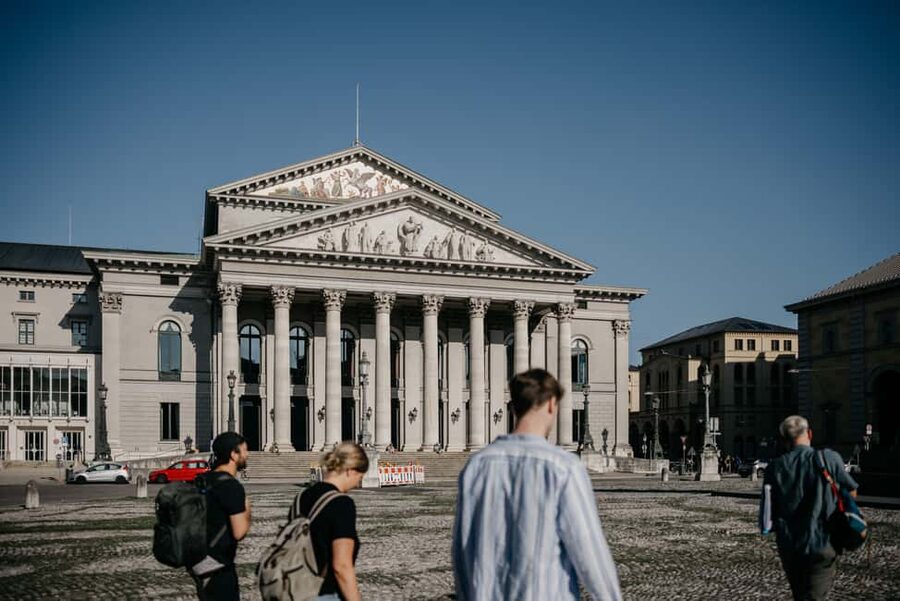
The Bavarian State Opera shifts the focus from churches to public culture and royal display. Opera houses are not only performance spaces. They are civic statements, and the building’s position in Munich’s ceremonial center makes it a useful stop in the story of power and public life.
The route then reaches Maximilianstraße, one of Munich’s best-known grand avenues. Here the architectural language changes again. The street represents a later phase of urban ambition, with a style and scale that differ from the older religious buildings.
This is a good point to pay attention to the relationship between individual buildings and the street around them. A city’s architecture is not just a collection of façades. Width, sight lines, public squares, and the movement of people all affect how a building is experienced.
The old-town portion packs in many landmarks. That is useful if your Munich visit is short, but it also means the pace may feel brisk. You will stop often, listen, take photographs, and move on. If you prefer long interior visits at one or two monuments, this is not that sort of tour.
Crossing toward the Isar
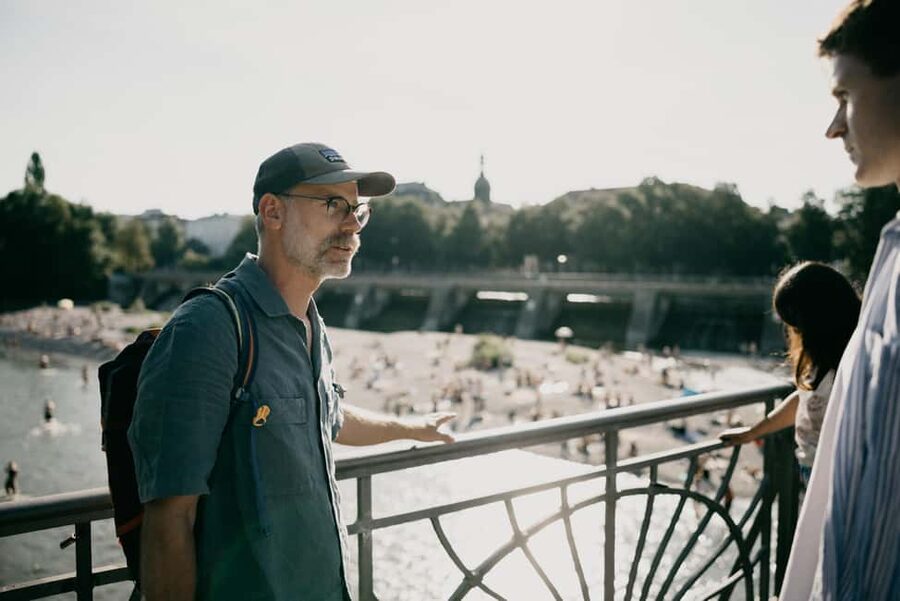
The route later reaches St. Lukas, the Müllersche Volksbad, the Sudetendeutsches Museum, and the Isar area. This is where the tour becomes more varied. Instead of moving from one grand historic building to another, you begin to see how architecture relates to daily life, public recreation, museums, and the river.
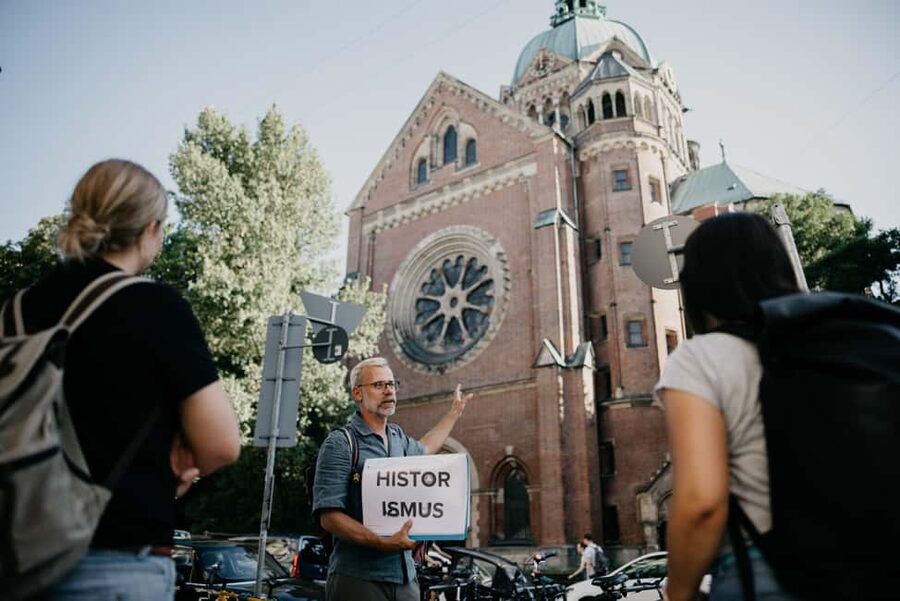
St. Lukas brings another religious building into the conversation, but the setting helps broaden the tour beyond the old center. The Müllersche Volksbad is especially important for understanding Munich’s Art Nouveau side. It shows how design shaped public institutions, not only churches and palaces.
The Isar section also adds a welcome change of pace. You get some nature along the river, and the setting gives you a different view of the city. The route is not an architecture lecture sealed inside the historic center. It connects buildings to public space and the river corridor.
One piece of practical advice: ask Philipp at the beginning how the group will move between the old town and the Isar section. A previous tour description refers to taking a tram out toward the river, while the supplied meeting information does not include transport in the price. If public transport is needed, you should be ready to handle your own fare.
Art Nouveau, street art, and the modern city
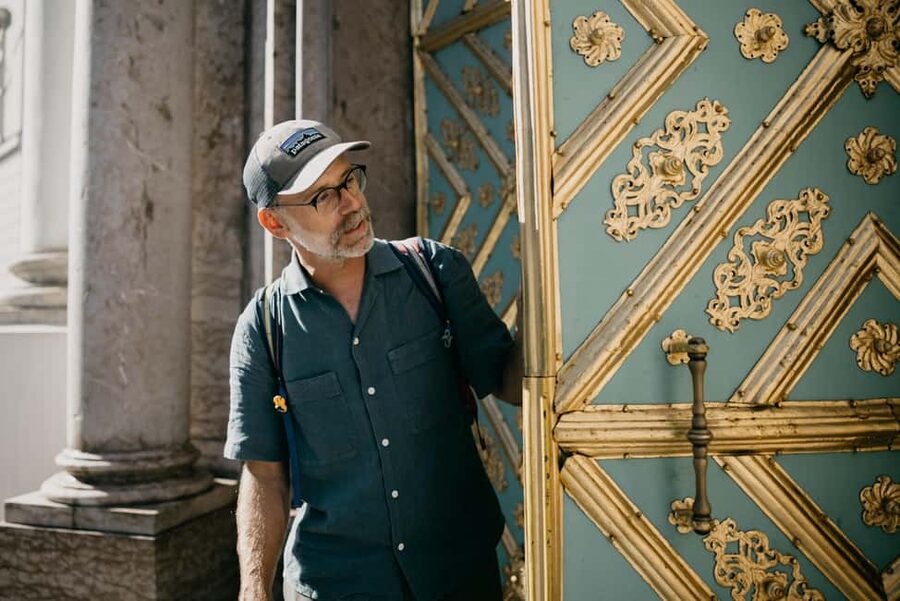
The latter part of the tour brings together Art Nouveau, street art, and a modern museum. That mix may be the most memorable part for anyone who thinks Munich is mainly a city of old churches and royal buildings.
Art Nouveau introduces a more decorative and organic style, while street art brings temporary and informal expression into the city. The modern museum adds another layer, showing how Munich continues to build and reinterpret its public spaces.
This part is valuable because it prevents the tour from treating architecture as something finished centuries ago. You see older forms alongside newer ones and get a chance to consider how the city changes. The contrast between historic structures, painted walls, and contemporary design should keep the final third from feeling repetitive.
The modern stop is identified as the Sudetendeutsches Museum, but the route information also refers to a modern museum more generally. If a particular building or exhibition matters to you, ask Philipp what access is planned on your date. The tour’s main purpose is architectural interpretation, not a full museum visit.
Ending above Munich at Gasteig
The final stop is the Dachgarten rooftop terrace at Gasteig. Weather permitting, you get an open view over Munich’s skyline. After spending the tour looking closely at façades, towers, streets, and details, the rooftop gives you a chance to see the city as a whole.
This is a smart ending. You can connect the churches of the center with the newer buildings and the river district you have just visited. The view also gives the tour a natural finish rather than ending beside an ordinary street corner.
Do not treat the rooftop view as guaranteed. Bad weather can affect the final experience, and the tour description clearly makes the view weather dependent. Even so, the route has enough architectural content before the final stop that the tour does not rely on the terrace alone.
Philipp’s guiding style and group size
Philipp is described as an architect and certified official Munich guide, with membership in the Munich guide association and the German Federal Association of Tourist Guides. His strongest qualities are patience, clear explanations, and a willingness to handle questions beyond the narrow topic of architecture.
The available ratings are uniformly positive, with 15 ratings at five out of five. The comments repeatedly praise Philipp’s friendly manner, humor, and ability to make the subject memorable. One German-language comment says he gives people time to ask questions, while another describes the tour as interesting, educational, funny, and useful even for people who already live in Munich.
That does not mean the tour will suit every personality. If you want a fast list of famous sights with little discussion, Philipp’s question-friendly style may feel slower. If you enjoy asking why a building looks the way it does, the small group and his background should work in your favor.
The group limit is 16, which is a useful middle ground. You avoid the impersonal feel of a large city tour, but you do not pay the higher price of a private guide. A private group is also available if you want a more tailored outing.
Who should book this Munich architecture tour?
I would choose this tour if you want to understand Munich rather than simply photograph it. It suits architecture students, design fans, history lovers, and curious first-time visitors who want a strong framework for exploring the city afterward.
It also works for repeat visitors. The route includes famous churches, but the combination of the Isar, Art Nouveau, street art, a modern museum, and the Gasteig rooftop gives you material beyond the standard old-town circuit. The gift postcard and digital map of Philipp’s favorite Munich places are useful extras, especially if you want ideas for independent exploring after the tour.
Families can join, but remember that the experience lasts two and a half hours and includes standing and walking. Young children who need constant movement may not enjoy a style-focused tour as much as older children or teenagers.
Bring comfortable shoes and prepare for changing conditions outdoors. Smoking is not allowed, and participation is at your own risk. Because the tour is not suitable for wheelchair users or people with mobility impairments, contact Philipp before booking if you have any concern about the route.
Should you book it?
Book this tour if Munich’s buildings interest you and you want a guide who can connect style with politics, religion, public life, and urban change. The $30 price is fair for 150 minutes with an architect and official city guide, especially with a maximum of 16 people.
Skip it if you want long, unhurried interior visits, a food-focused outing, or a fully accessible route. For everyone else, the route’s best feature is its variety: Gothic churches in the center, Baroque and Rococo details, grand avenues, Art Nouveau, the Isar, street art, modern architecture, and a weather-dependent rooftop view.
FAQ
How long does the Munich architecture tour last?
The tour lasts 150 minutes, or two and a half hours.
How much does the tour cost?
The listed price is $30 per person.
Where does the tour begin?
The meeting point is outside the entrance to the Frauenkirche at Frauenplatz 1.
How do I reach the meeting point?
The easiest route is by S-Bahn or the U3 or U6 subway to Marienplatz, followed by a walk of about 10 minutes.
How will I identify Philipp?
Philipp will have a tablet slung over his shoulder.
What languages are available?
The live tour is offered in English, German, and Spanish.
How large is the group?
The small-group tour has a maximum of 16 participants. A private group option is also available.
What places are included on the route?
The route includes the Frauenkirche, St. Michael’s Church, Trinity Church, the Theatine Church, the Bavarian State Opera, Maximilianstraße, St. Lukas, Müllersche Volksbad, the Sudetendeutsches Museum, the Isar area, and the Gasteig rooftop terrace.
Is the rooftop view guaranteed?
No. The view from the Gasteig rooftop terrace depends on the weather.
Is the tour suitable for wheelchair users?
No. The experience is not suitable for wheelchair users or people with mobility impairments.
What should I bring?
Wear comfortable shoes. Food, drinks, and transport to and from the meeting point are not included.
New to the itinerary around Germany
- Munich Your Way: Private Tour with Architect & Guide★ 5.0 · 2 reviews
- Hidden Architectural Gems of Munich (Max. 16 guests)★ 5.0 · 2 reviews
- Architectural Frankfurt: Private Tour with a Local Expert★ 5.0 · 2 reviews
- Berlin Architecture/River Spree Full Day Photography Tour★ 5.0 · 2 reviews
- Private Taxi Tour of City East History and Architecture 2-3h★ 5.0 · 2 reviews
- Architectural Berlin: Private Tour with a Local Expert★ 4.0 · 3 reviews
- Lübeck: Architecture and Local Craft Private Guided Tour★ 4.0 · 6 reviews
- Lübeck: Private Historical and Architectural Walking Tour★ 4.5 · 6 reviews
Germany Architecture Tours, compared.
Munich 3-Hour Segway Tour: Nazi Munich & Royal Architecture
Read our review →
Düsseldorf: Guided City Architecture Walking Tour
Read our review →
Hidden Architectural Gems of Munich (Max. 16 guests)
Read our review →
Potsdam: Guided Walking Tour of UNESCO Site and Architecture
Read our review →
Private Taxi Tour City East & West History and Architecture 3-4h
Read our review →
Karl-Marx-Allee Tour: Life and Architecture in East Berlin
Read our review →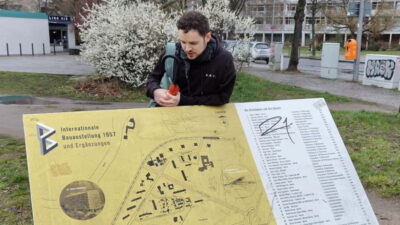
Other lists with this tour