
Review · BERLIN
Berlin: Hansaviertel Modernist Architecture Tour
Hansaviertel is where Berlin’s Cold War arguments became concrete. In a leafy district between the Spree and Tiergarten, you’ll see how West Berlin used architecture to present a new kind of city after the war. I especially like the way the walk connects 19th-century elegance with postwar experimentation, rather than treating the buildings as isolated design objects. The stop recalling Jewish life lost under Nazism gives the route needed human weight.
I also like the tour’s clear structure and modest price. At $29, you get two hours with a live guide, and the content is substantial enough for architecture fans without requiring a full museum visit. One consideration: this is a serious history walk, best suited to ages 14 and up, and some of the most interesting discussion comes during extended periods of walking and standing.
Key points at a glance
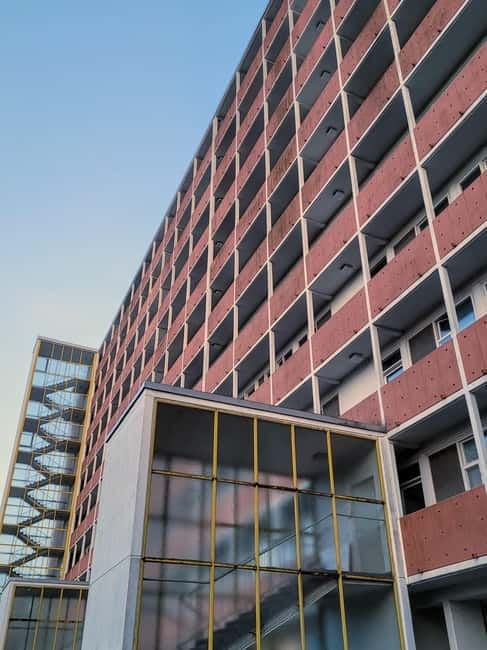
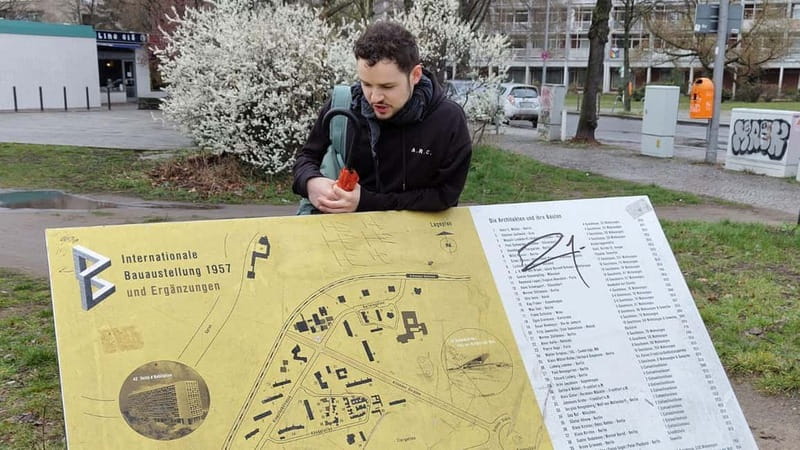
- Interbau 1957 in real streets: See how West Berlin turned a bomb-damaged district into an international showcase of modern housing.
- Famous architects all around you: Look for work connected with Walter Gropius, Oscar Niemeyer, Alvar Aalto, and other major modernists.
- A broader Berlin story: The route moves from 19th-century villas to Jewish life, Nazi persecution, wartime destruction, and Cold War rivalry.
- A calm setting: Hansaviertel’s position beside the Spree and Tiergarten gives the walk a quieter feel than central Berlin’s main sights.
- A well-paced presentation: The opening overview helps you follow the ideas behind each stop without being buried in facts.
- Useful practical setup: Meet by Berlin-Tiergarten S-Bahn, look for the orange umbrella, and finish at Hansaplatz.
Why Hansaviertel makes such a good Berlin walk
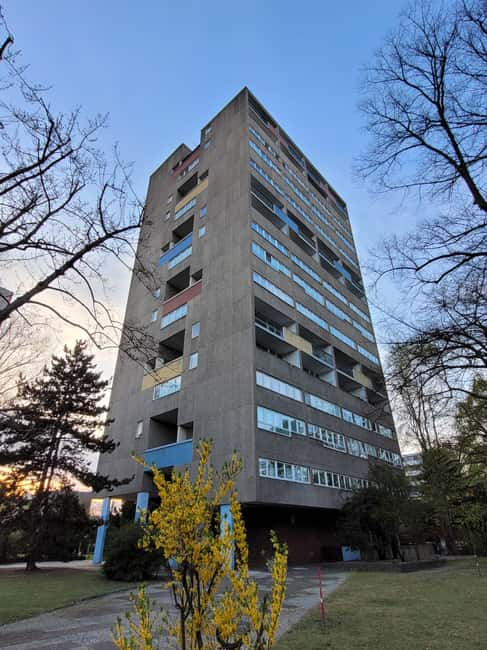
Berlin has no shortage of grand landmarks, but Hansaviertel rewards you for looking at how ordinary urban life was planned. This was not built as a palace district or a ceremonial avenue. It was meant to be a place where people lived, moved, and looked out from their windows.
Its position helps. The district lies between the Spree and the Tiergarten, close to central Berlin but removed from the heaviest sightseeing traffic. That gives the tour room to consider gardens, apartment blocks, public space, and daily life. You are not simply ticking off famous buildings. You are asking a more useful question: what did these architects think a modern home and neighborhood should be?
I find that question especially useful in Berlin, where political ideas often appear in the shape of streets and buildings. Hansaviertel was shaped first by the growth of 19th-century Berlin, then by persecution and war, and finally by the Cold War contest between East and West. A two-hour walk cannot explain every part of that story, but this route gives you a clear thread to follow.
The tone also appears carefully controlled. One German-language account praised the way the guide began with an overview, then introduced each stop without overloading the group. That is important here. Modernist architecture can quickly turn into a parade of names, dates, and technical terms. A good introduction lets you understand why a building matters before you move on to the next one.
More Architecture Tours around Germany:
- Munich 3-Hour Segway Tour: Nazi Munich & Royal Architecture
★ 4.9 · 194 reviews - Düsseldorf: Guided City Architecture Walking Tour
★ 4.6 · 61 reviews - Hidden Architectural Gems of Munich (Max. 16 guests)
★ 4.9 · 52 reviews
Starting beside Tiergarten S-Bahn
The meeting point is in front of Berlin-Tiergarten S-Bahn station, at the Siegmunds Hof and Bachstraße exit. The guide waits beside the beer garden called Biergarten der Tiergartenquelle, also referred to in the meeting information as Biergartenquelle. Look for the orange umbrella, which is the clearest identifying sign.
This is a practical starting point. You do not need to search for a hidden doorway or a particular museum entrance. Still, give yourself enough time to find the correct station exit, since Berlin’s transit stations can have several ways out. The tour ends at Hansaplatz, so you will not return to the starting point.
The listed duration is two hours, with the guided Hansaviertel portion described as about an hour and a half. In practical terms, plan on being out for the full two hours. You will be walking and standing, so wear comfortable shoes and bring water. Food and drinks are not included, though starting beside a beer garden may make a pre-tour or post-tour pause convenient.
The district before the modernist experiment
The first part of the route looks back to Hansaviertel before its postwar rebuilding. In the late 19th century, Berlin’s population was rising quickly, and this area developed as a middle- and upper-class enclave with villas, gardens, and carefully designed façades.
That early identity matters because it keeps the story from beginning with concrete apartment blocks. Hansaviertel was not an empty plot waiting for a modernist plan. It had a social character, an architectural character, and residents with their own stories.
The guide also introduces figures associated with the district, including Rosa Luxemburg, Nelly Sachs, and Käthe Kollwitz. Their presence widens the tour beyond building design. You begin to see Hansaviertel as a place connected to literature, politics, art, and the complex life of Berlin’s educated urban class.
Do not expect every former villa or 19th-century detail to survive unchanged. The district was heavily affected by war and later reconstruction. That contrast is part of the point. The early Hansaviertel helps you measure how much Berlin lost, and how deliberately the postwar planners tried to create something new.
Remembering Jewish life and its destruction

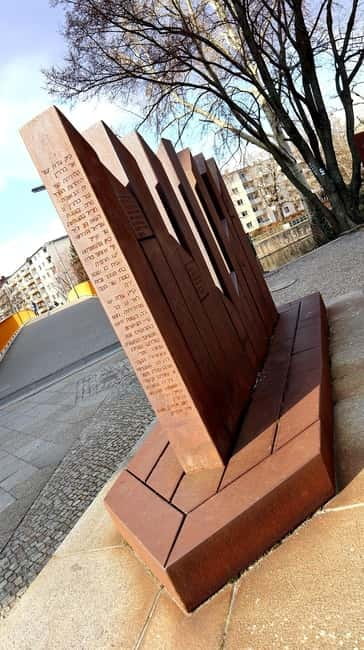
One of the quieter stops recalls a significant Jewish community that once lived in the area. The community was destroyed socially and physically by Nazi persecution and the Allied bombing raids that followed.
This part of the walk may be less visually dramatic than the modernist buildings, but it is one of the most important. Without it, the story could become a tidy tale of clever architects rebuilding a damaged neighborhood. Instead, you are reminded that the rubble had a human past, and that wartime destruction was not the only force that erased local life.
The stop also gives the later architecture a more complicated meaning. Interbau 1957 was presented as a fresh start and a sign of West Berlin’s future. Yet a fresh start can never fully erase what came before. I appreciate that this tour places Jewish history and the memory of persecution within the same walk as the celebratory architecture.
Expect the guide to treat this section with more seriousness than spectacle. The subject suits a thoughtful pace, and the tour’s recommended minimum age of 14 makes sense. Younger children may find two hours of architectural and political history demanding, while teenagers and adults can better follow the connections.
Same streets, read through a different style:
- Potsdam: Guided Walking Tour of UNESCO Site and Architecture
★ 4.7 · 49 reviews - Private Taxi Tour City East & West History and Architecture 3-4h
★ 5.0 · 42 reviews - Stuttgart city library – an architectural tour
★ 4.4 · 27 reviews - Karl-Marx-Allee Tour: Life and Architecture in East Berlin
★ 5.0 · 19 reviews
Interbau 1957 and the Cold War message
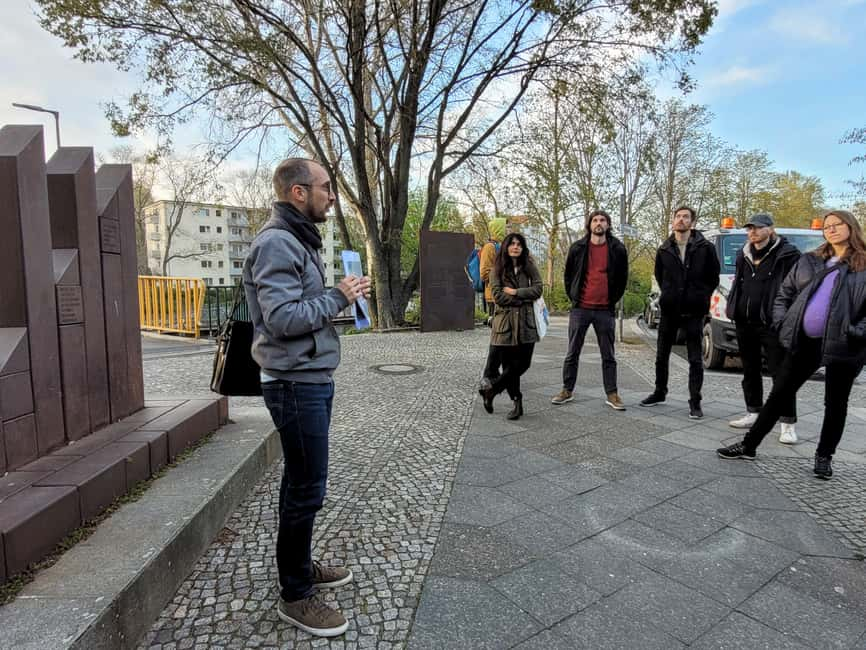
The major turn comes with Interbau 1957, the international architecture exhibition that reshaped Hansaviertel. West Berlin used the project to show how a modern democratic city might rebuild itself after World War II.
This was architecture with a political purpose. During the Cold War, buildings were part of the argument between competing systems. Hansaviertel offered a vision of open, forward-looking urban life, with new housing, fresh planning ideas, and designs by internationally known architects.
That does not mean every building was created simply as propaganda. The project also addressed practical questions about housing and urban form. How should apartment buildings relate to gardens? How much light and air should residents have? Could a large housing district feel humane rather than cramped? What should a modern city look like after the old one had been damaged so badly?
These questions give the tour its lasting value. You are not asked merely to admire unusual façades. You are encouraged to consider what the buildings promised to their residents. The guide asks whether the architecture still feels modern, and whether its original hopes have held up.
The answer will vary from building to building. Some designs may still feel bold and experimental. Others may reveal the age of their materials or planning assumptions. That mix is more interesting than a simple claim that everything remains visionary.
Meeting Gropius, Niemeyer, Aalto, and their peers
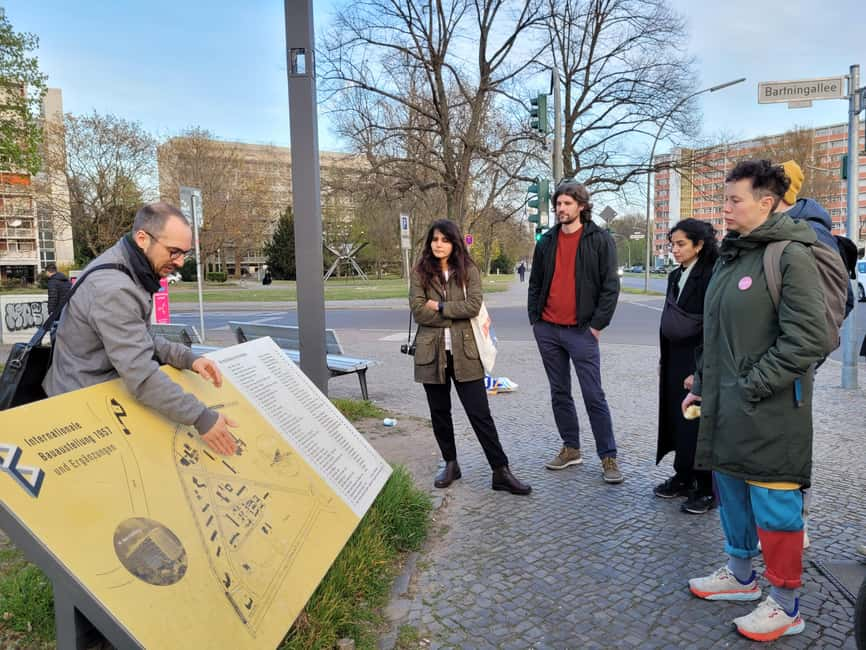
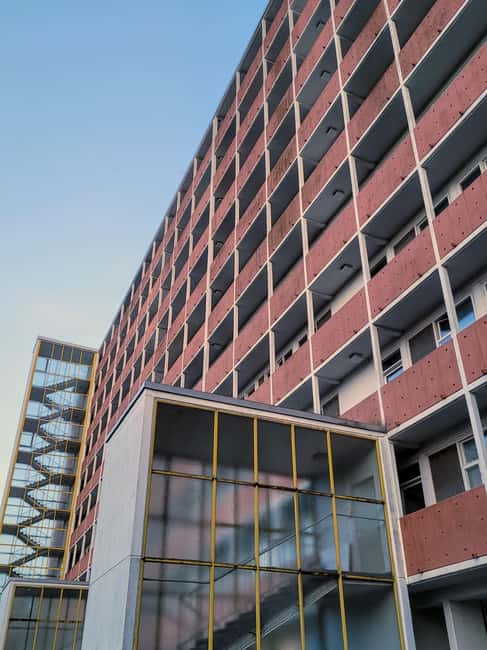
The architectural highlight is the range of major names attached to Hansaviertel. Walter Gropius, Oscar Niemeyer, and Alvar Aalto are among the figures connected with the district, alongside other influential modernists.
For you, the benefit of a guided walk is scale. A book can show a photograph of a building, but walking between several designs helps you compare their choices. You can look at how each architect handled height, shape, balconies, windows, open space, and the relationship between a building and its neighbors.
Gropius brings the authority of the Bauhaus tradition. Niemeyer is associated with a more expressive approach to form. Aalto’s work often encourages closer attention to how people experience a building, not just how it looks from a distance. The tour does not need to turn these names into a lecture. Their contrasting approaches make more sense when you see them in the same district.
You may also notice that Hansaviertel is not one neat architectural style. The buildings share a modernist setting, but they do not all speak with one voice. That variety was part of the international exhibition concept. The district functioned as a collection of proposals for modern living.
One of the strongest features of the experience is that the guide discusses residents as well as architects. That keeps the tour grounded. A building is not only a famous designer’s statement. It is also a home, with people dealing with its spaces, views, shared areas, and practical limits.
What the walk feels like on the ground
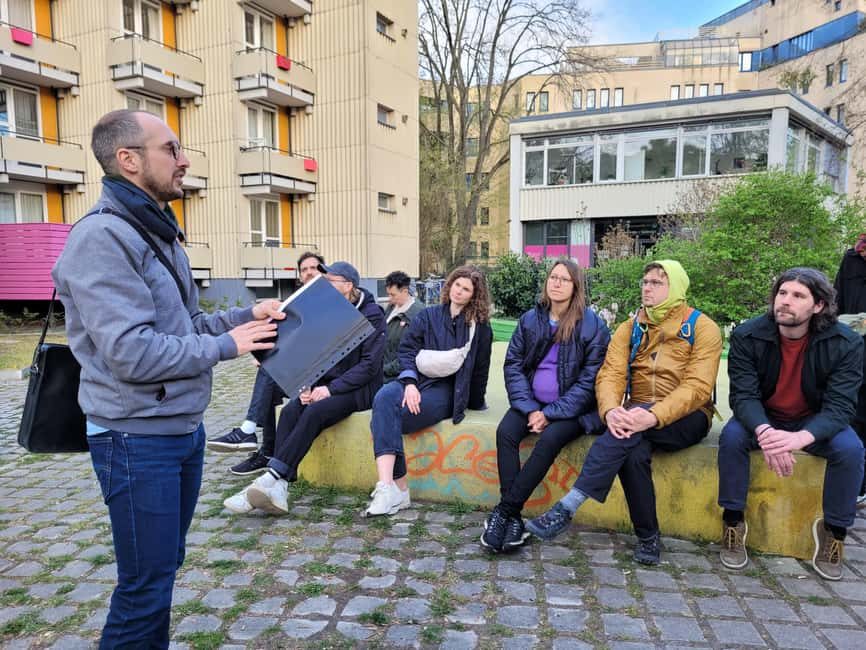
This is a neighborhood walk, not a sequence of indoor visits. You should expect to study buildings from outside and listen as the guide explains their purpose, setting, and historical context.
The route is described as wheelchair accessible, though all participants should be comfortable walking and standing for approximately two hours. If you use a wheelchair or have mobility concerns, the accessibility information is encouraging, but you may still wish to confirm current route conditions before booking because outdoor paths and temporary obstacles can change.
The calm setting is another advantage. Hansaviertel’s trees, open spaces, and proximity to the river make the architecture easier to consider than it might be on a noisy central avenue. You get a sense of the intended relationship between housing and open space.
The drawback is that the route may be less immediately thrilling than Berlin’s most famous sights. There is no promise of entering a landmark, climbing a tower, or seeing a spectacular interior. The reward comes from close observation and explanation. If you enjoy cities as living places, that is a fair trade. If you need constant visual drama, the pace may feel measured.
The guide and the level of detail
The tour is offered in English or German with a live guide. A particularly useful detail is that one guide from Texas has been praised for speaking excellent German, suggesting the tour can work well for mixed-language groups. No guide’s personal name is provided, so you should not book expecting a specific named guide.
The best evidence of the tour’s teaching style is its structure. The guide begins by laying out the subject, then moves through the district in a way that lets each stop add to the last. That approach matters more here than a long list of architectural facts.
The tour also leaves room for questions. One account describes the guide staying afterward to continue the discussion, which is helpful if you want to ask about a particular building, architect, or historical point. You should not assume an extended session is guaranteed, but the format appears friendly to curious participants.
Some people may want more access to the buildings themselves. One suggestion was to arrange a visit inside one of the apartments in the newer Interbau area. That is not part of the current experience. You will view the architecture from public areas, so anyone hoping to inspect interiors should choose this tour with that limit in mind.
Is $29 a fair price?
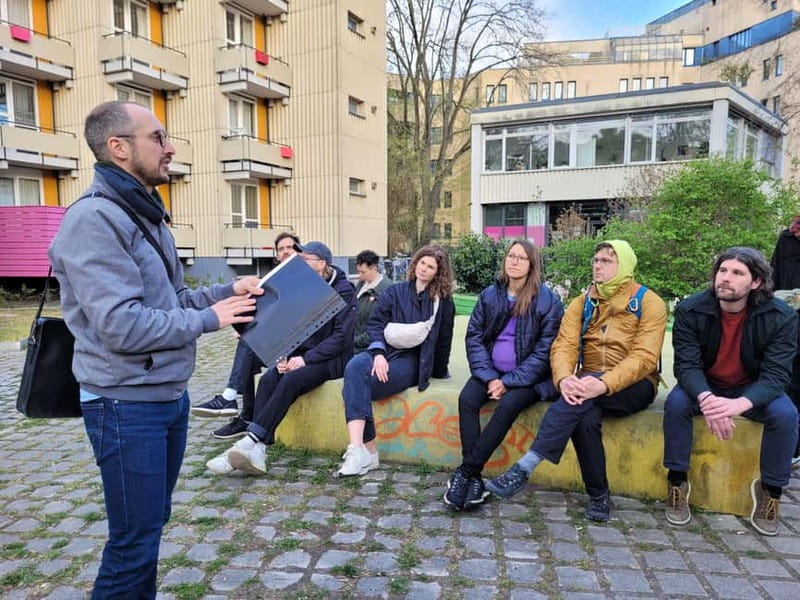
At $29 per person, the tour offers a reasonable value if you want context rather than a quick neighborhood stroll. The price covers the live expert guide, the two-hour format, and a subject that is difficult to grasp from casual sightseeing alone.
The value is strongest for visitors who would otherwise walk through Hansaviertel without knowing why the buildings look so different. A guide helps connect the visible architecture to 19th-century Berlin, Jewish life, Nazi persecution, World War II destruction, Interbau, and Cold War competition.
It is less compelling if you already know Hansaviertel well or mainly want a relaxed walk with little explanation. One German participant considered it worthwhile even as a local, which suggests the content can work for Berlin residents as well as first-time visitors. Still, architecture students and serious modernism enthusiasts may want a longer or more specialized experience.
There are no museum or monument admissions included, but none are specified as part of the route. Food and drinks are also extra. The simple pricing makes the decision easy: you are paying for interpretation and company on foot, not for a bundle of admissions.
Who should book this Hansaviertel walk?
I would choose this tour if you like architecture, urban planning, Berlin’s 20th-century politics, or the way private homes reflect public ideas. It is especially good for visitors who have already seen the central landmarks and want a quieter district with a strong story.
It also suits locals and repeat visitors. You do not need to be an architecture expert. The guide’s opening overview and clear progression should give you enough background to follow the discussion.
The tour is recommended for ages 14 and up, and all minors must be with an adult. It is not suitable for children under 14. Anyone who dislikes walking and standing should also think twice, even though the activity is listed as wheelchair accessible.
You can cancel up to 24 hours ahead for a full refund, and the reserve-now, pay-later option keeps the booking flexible. Those policies are useful, but the main booking question is whether you want a thoughtful neighborhood walk rather than a headline attraction.
Final verdict: a smart choice for curious Berlin visitors
Book it if you want to understand why Hansaviertel matters. The route combines the district’s 19th-century beginnings, the loss of Jewish life, wartime destruction, and the ambitious modernism of Interbau 1957 in a compact two-hour walk.
I especially value the balance between famous architects and ordinary residents. Gropius, Niemeyer, and Aalto provide the visual draw, but the deeper reward is seeing how architecture was asked to shape a new kind of life in postwar West Berlin.
Skip it if you need indoor attractions, dramatic views, or a very short introduction to Berlin. For everyone else, $29 buys a focused and well-organized way to read one of the city’s most unusual neighborhoods.
FAQ
Where does the Hansaviertel tour begin?
It begins in front of Berlin-Tiergarten S-Bahn station at the Siegmunds Hof and Bachstraße exit, beside the beer garden Biergarten der Tiergartenquelle, also identified as Biergartenquelle.
How will I find the guide?
Look for the guide with the orange umbrella near the beer garden.
Where does the tour finish?
The walk finishes at Hansaplatz.
How long does the experience last?
The activity lasts two hours. The guided Hansaviertel portion is described as approximately one and a half hours.
Which languages are available?
The live tour guide is available in German and English.
Is the tour wheelchair accessible?
Yes, the activity is listed as wheelchair accessible. All participants should still be comfortable walking and standing for approximately two hours.
What should I bring?
Bring comfortable shoes and water.
Is the tour suitable for children?
The tour is recommended for ages 14 and up. Children under 14 are not considered suitable, and all minors must be accompanied by an adult.
New to the itinerary around Germany
- Munich Your Way: Private Tour with Architect & Guide★ 5.0 · 2 reviews
- Hidden Architectural Gems of Munich (Max. 16 guests)★ 5.0 · 2 reviews
- Architectural Frankfurt: Private Tour with a Local Expert★ 5.0 · 2 reviews
- Berlin Architecture/River Spree Full Day Photography Tour★ 5.0 · 2 reviews
- Private Taxi Tour of City East History and Architecture 2-3h★ 5.0 · 2 reviews
- Architectural Berlin: Private Tour with a Local Expert★ 4.0 · 3 reviews
- Lübeck: Architecture and Local Craft Private Guided Tour★ 4.0 · 6 reviews
- Lübeck: Private Historical and Architectural Walking Tour★ 4.5 · 6 reviews
Berlin Architecture Tours, compared.
Private Taxi Tour City East & West History and Architecture 3-4h
Read our review →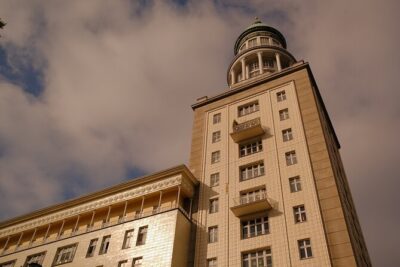
Karl-Marx-Allee Tour: Life and Architecture in East Berlin
Read our review →

Karl-Marx-Allee Tour of Life and Architecture in GDR
Read our review →
Guided Architectural Walking Tour of Hansaviertel
Read our review →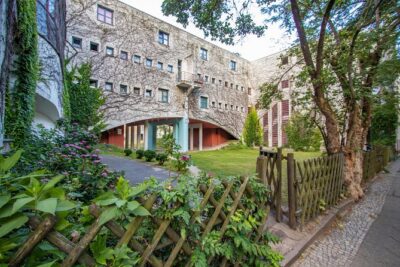
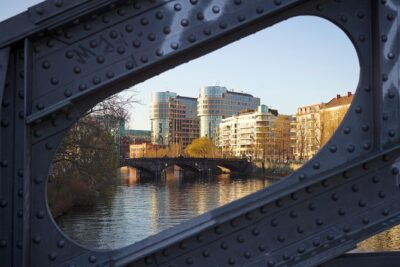
Berlin Architecture/River Spree Full Day Photography Tour
Read our review →Other lists with this tour