
Review · MUNICH
Hidden Architectural Gems of Munich (Max. 16 guests)
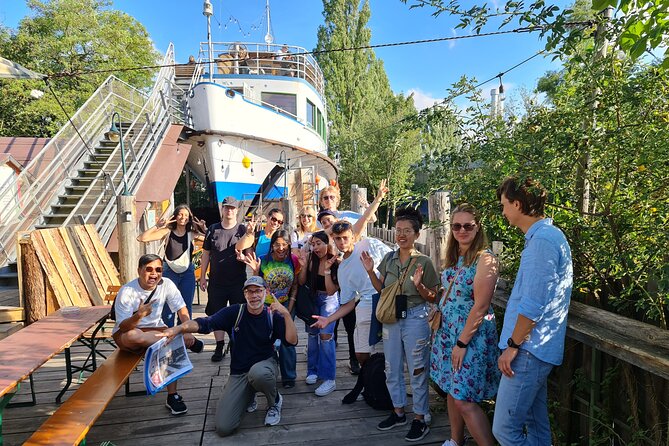
Munich’s most interesting architecture is not all gathered around Marienplatz. This 150-minute walk heads south, linking the street art at Beginner’s Wall, the creative Bahnwärter Thiel, the Alte Utting steamboat, and the quieter corners near the Isar. It is a useful change of pace from the city’s grand central buildings.
I like the small group, capped at 16, and I like having Philipp lead it. He is both an official Munich guide and an architect, so the tour connects design, local history, and everyday city life. The main consideration is that this is a walking tour through several districts, with no food or drinks included and limited suitability for visitors who use wheelchairs.
Key points at a glance
- Architect-led perspective: Philipp brings professional architectural training and official city-guide credentials to the walk.
- Creative Munich: See Beginner’s Wall, Bahnwärter Thiel, and other artistic spaces beyond the usual sightseeing circuit.
- Alte Utting: Visit a beer garden set on a steamboat, with Munich’s water history woven into the tour.
- Isar-side neighborhoods: Walk through Scherbenviertel, Little Venice, and parts of Untergiesing.
- Small-group format: With no more than 16 people, it is easier to hear the guide and ask questions.
- Useful follow-up: Your booking includes a digital map with Philipp’s favorite places to visit in Munich.
Why Munich’s south makes a good walking tour
This experience focuses on Munich as a living city rather than a collection of famous facades. You begin at Piazza Zenetti and move through places where art, old infrastructure, neighborhood life, and informal cultural venues meet.
That mix matters. A standard city tour can explain Munich’s famous churches and royal buildings, but this walk helps you notice how the city changes away from the center. You will see creative spaces, riverside areas, repurposed structures, and small districts that many first-time visitors would not reach on their own.
Philipp’s background is a strong reason to book this particular walk. As an architect and official Munich guide, he can discuss both the look of a building and the wider story of how a place is used. The available feedback repeatedly points to his clear speaking style, careful explanations, and ability to answer questions. One useful detail is that even people who had lived in Munich for many years found new places and new ways to view their city.
The pace is likely best for people who enjoy stopping often to look and listen. This is not a quick transfer between major attractions. You should expect a steady walk with several guided stops, so comfortable shoes are essential.
More Architecture Tours around Germany:
- Munich 3-Hour Segway Tour: Nazi Munich & Royal Architecture
★ 4.9 · 194 reviews - Düsseldorf: Guided City Architecture Walking Tour
★ 4.6 · 61 reviews - Potsdam: Guided Walking Tour of UNESCO Site and Architecture
★ 4.7 · 49 reviews
Starting at Piazza Zenetti and the Munich Volkstheater
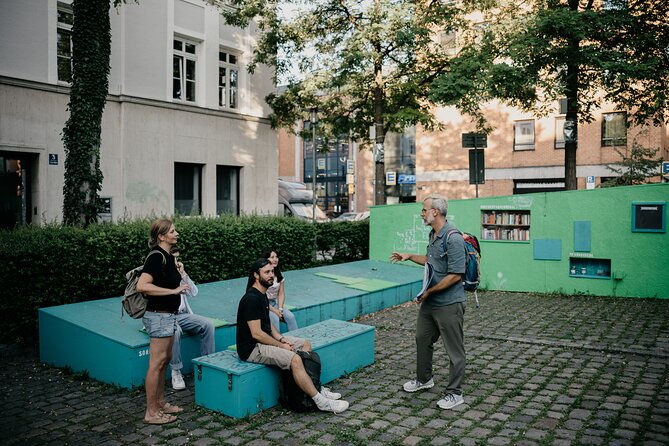
The meeting point is Piazza Zenetti Square, marked by distinctive gray and turquoise street furniture. Philipp will be carrying a tablet over his shoulder, making him easier to identify in a busy city setting.
The simplest public transport route is the U3 or U6 subway to Poccistrasse station, followed by a walk of about 10 minutes. Build that approach time into your plans. The tour does not include transport to or from the starting point, so you will need to arrange your own route.
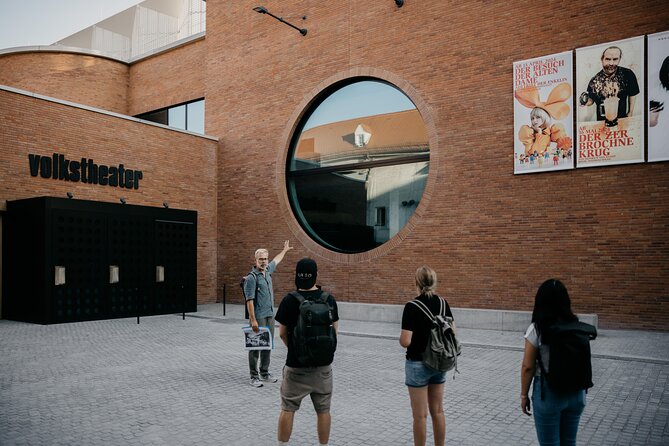
From Piazza Zenetti, the tour visits the Münchner Volkstheater. This gives the walk an early cultural anchor before it shifts toward street art and alternative creative venues. You will receive a guided introduction rather than simply passing by, which is useful if you want context for how the city’s cultural life extends beyond its major museums.
The route then moves toward the south of Munich. Since the experience lasts two and a half hours, the Volkstheater is one part of a larger story rather than the main attraction. If your main goal is an extended theater visit, this is not the right format. If you want to see how formal cultural institutions connect with more informal spaces, it fits well.
Beginner’s Wall and Bahnwärter Thiel
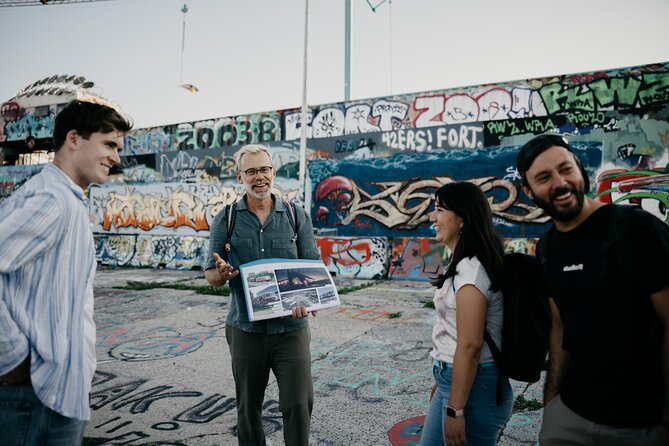
The street art at Beginner’s Wall is one of the clearest signs that this tour is not following Munich’s standard postcard route. You can expect Philipp to explain what makes the area important and help you look at the artwork as part of the city rather than as random decoration.
That architectural and cultural framing is where the tour earns much of its value. You are not only being shown a colorful wall. You are being encouraged to notice how public art changes the feel of a neighborhood and how creative activity can occupy spaces outside traditional galleries.
Next comes Bahnwärter Thiel, a creative cultural hub known for its eclectic character. The stop adds a different mood to the Volkstheater. Instead of a formal venue, you encounter a place associated with experimentation, art, and informal public life.
The attraction here is the contrast. Munich is often presented through its polished center, but Bahnwärter Thiel gives you a look at a more playful and unconventional side of the city. You should not expect a long independent visit or a full event program as part of the tour. The stop is included as a guided part of the walking route, so the value comes from Philipp’s explanation and from seeing the setting in context.
Alte Utting and Munich’s water story
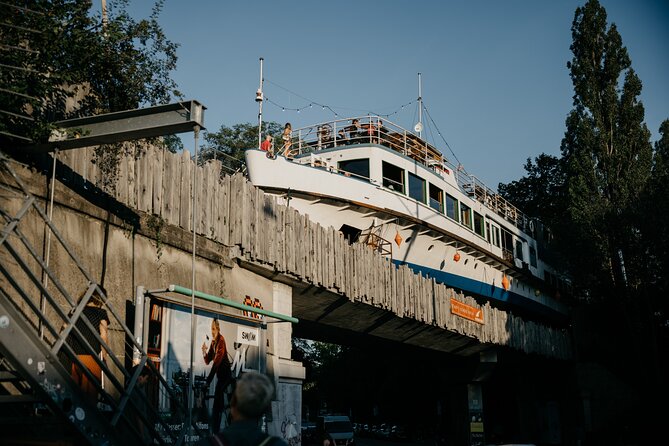
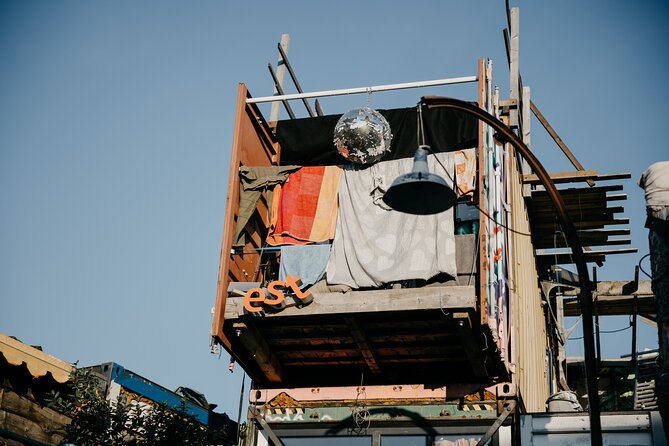
The visit to Alte Utting is probably the tour’s most memorable physical setting. This beer garden sits on a steamboat, creating an unusual meeting point between Munich’s transport past, social life, and creative reuse of space.
You will find the boat on the bridge at Lagerhausstrasse. Philipp uses the stop to discuss Munich’s water history, giving the experience more substance than a simple beer garden visit. The setting is appealing even if you are not planning to eat or drink, although food and drinks are not included in the $30 price.
This is also a practical point to understand before booking. The tour is designed to show you places, not to provide a meal break. If you want to order something at Alte Utting, you should treat that as an optional personal purchase and allow time in your wider Munich schedule.
I like this part of the route because it links an unusual venue to a larger local story. You get an entertaining place to see, but also a reason to think about Munich’s relationship with water, bridges, transport, and public gathering spaces.
Same streets, read through a different style:
- Private Taxi Tour City East & West History and Architecture 3-4h
★ 5.0 · 42 reviews - Stuttgart city library – an architectural tour
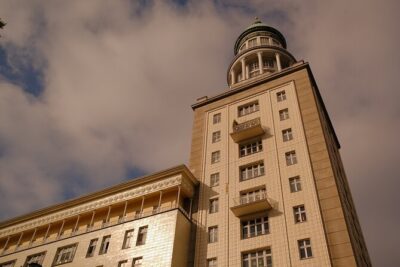
★ 4.4 · 27 reviews - Karl-Marx-Allee Tour: Life and Architecture in East Berlin
★ 5.0 · 19 reviews - Berlin: Hansaviertel Modernist Architecture Tour
★ 4.9 · 16 reviews
Scherbenviertel, the Isar, and Untergiesing
After Alte Utting, the walk continues through Dreimühlenstraße and toward the Isar. The route includes Scherbenviertel and parts of the lesser-known district of Untergiesing, giving you a feel for Munich away from the central monuments.
The appeal here is gradual rather than dramatic. You move through ordinary city spaces and receive help noticing details that can be easy to miss when walking alone. This is one reason the architect-guide format works well. Philipp’s professional eye can point out small design choices and neighborhood character, while his city-guide role supplies historical and cultural context.
The Isar section adds breathing room to the tour. Munich’s river is an important part of the city’s identity, and the route gives you time to connect the built environment with the water nearby. The experience does not promise a long riverside stop or a dedicated nature walk, so keep your expectations focused on interpretation and neighborhood discovery.
At Wittelsbacherbrücke, the route continues to connect the river with Munich’s urban structure. You will not need to arrange separate transport between the stops. The tour is built as a continuous walk, which makes it simple for you but means the full route may feel demanding if you are not comfortable walking for 150 minutes.
Claude-Lorrain-Straße and Little Venice
Claude-Lorrain-Straße is another point where the tour leaves the standard central route. The stop helps build a picture of southern Munich as a collection of distinct areas, each with its own mood and visual details.
Little Venice adds a more playful name and setting to the walk. It is included as a guided stop rather than a separate attraction requiring an entrance ticket. Philipp’s role is especially useful here because named places can be confusing without context. He can explain why the area is called Little Venice and show you what to look for as you move through it.
Do not book this expecting a parade of grand interiors or formal museum displays. The experience is stronger for people who enjoy urban observation: street art, adapted spaces, riverside routes, unusual gathering places, and neighborhood design. If you prefer famous landmarks with clear admission points, the tour may feel less direct.
For families, the variety should help keep the walk interesting. The activity is described as family-friendly, though adults should still judge the route based on their children’s walking stamina. Warm clothing is a smart choice, especially in colder months or when the route brings you near the river.
Finishing at Gans Woanders
The final stop is Gans Woanders, a whimsical beer garden with artistic flair. Ending here gives the tour a social and creative finish rather than returning you to a major central square.
Because the tour ends at a venue rather than the original meeting point, check your onward route before you start. The provided information does not specify a return transfer, so you should plan to continue from Gans Woanders on your own.
The finish also makes sense as a place to continue your evening. Food and drinks are not part of the booking, but you may choose to stay or make other plans afterward. That flexibility is useful, particularly if you want the walk to serve as an introduction to Munich’s south rather than as a complete evening program.
The included digital map adds practical value here. You receive Philipp’s favorite places to visit in Munich, which can help you turn the tour into a wider self-guided exploration. It is a useful extra if you want recommendations beyond the route itself.
How the $30 price holds up
At $30 per person, this is a reasonable price for a 150-minute small-group tour led by a guide who is both an official Munich city guide and an architect. The cost works best when you value interpretation, local orientation, and access to places you may not find easily by following a central sightseeing map.
You are paying for Philipp’s time and knowledge, not for meals, drinks, attraction tickets, or transportation. That makes the value depend on your interests. If you enjoy architecture, street art, urban culture, and neighborhood history, the price is easy to justify. If you mainly want entry to famous buildings or a tasting experience, your money may be better spent elsewhere.
The group limit of 16 is another part of the calculation. It is not a private tour by default, but it is small enough to make questions practical and keep the guide’s explanations audible. A private group is available if you want more control over the pace or are arranging the experience for your own party.
The tour also offers free cancellation up to 24 hours before the start and a reserve-now, pay-later option. Those policies make it easier to fit into a changing Munich schedule.
Who will enjoy this walk most
I would recommend this tour to:
- First-time visitors who have already seen, or plan to see, Munich’s central sights
- Architecture students and design-minded visitors
- People who prefer local districts to standard sightseeing routes
- Families comfortable with a 150-minute city walk
- Munich residents who want fresh ideas for exploring their own city
- Visitors interested in street art, creative venues, and the Isar area
It is less suitable if you need step-free access. The experience is listed as unsuitable for wheelchair users, and the route involves walking through several urban areas. Anyone with limited walking stamina should also consider the duration and bring comfortable shoes.
The tour is offered in English, German, and Spanish. Smoking is not allowed. You should bring warm clothing, since the route is outdoors and includes riverside areas.
My verdict on Philipp’s Munich tour
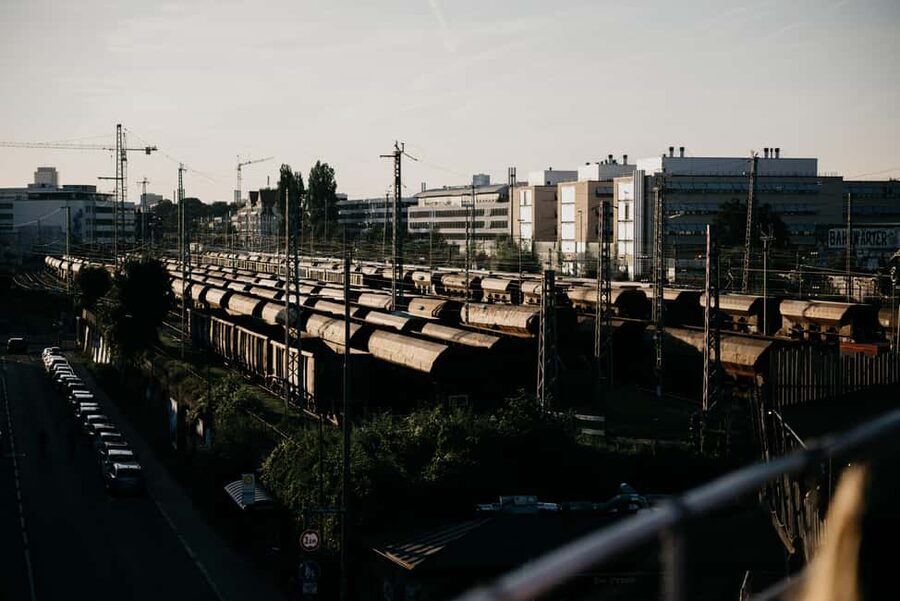
Book this if you want to see a less polished, more creative side of Munich and prefer an expert-led walk to a checklist of famous monuments. The strongest reasons are Philipp’s combined architecture and guide background, the small group, and the unusual sequence from the Volkstheater to street art, Bahnwärter Thiel, Alte Utting, the Isar, Little Venice, and Gans Woanders.
Skip it if you want a food tour, a museum-heavy outing, or a short route with little walking. For everyone else, $30 buys a useful introduction to southern Munich, plus a digital map that can keep your exploring going after the 150 minutes are over.
FAQ
How long does the tour last?
The tour lasts 150 minutes, or two and a half hours.
Where does the tour begin?
It begins at Piazza Zenetti Square, identified by its gray and turquoise street furniture.
How do I reach Piazza Zenetti?
The easiest route is the U3 or U6 subway to Poccistrasse station, followed by a walk of about 10 minutes.
Where does the tour finish?
The tour finishes at Gans Woanders.
Who leads the experience?
Philipp leads the tour. He is an official Munich city guide and an architect.
Which languages are available?
The tour is available in English, German, and Spanish.
Are food and drinks included?
No. Food and drinks are not included in the price.
Is the tour suitable for wheelchair users?
No. The activity is listed as unsuitable for wheelchair users.
New to the itinerary around Germany
- Munich Your Way: Private Tour with Architect & Guide★ 5.0 · 2 reviews
- Hidden Architectural Gems of Munich (Max. 16 guests)★ 5.0 · 2 reviews
- Architectural Frankfurt: Private Tour with a Local Expert★ 5.0 · 2 reviews
- Berlin Architecture/River Spree Full Day Photography Tour★ 5.0 · 2 reviews
- Private Taxi Tour of City East History and Architecture 2-3h★ 5.0 · 2 reviews
- Architectural Berlin: Private Tour with a Local Expert★ 4.0 · 3 reviews
- Lübeck: Architecture and Local Craft Private Guided Tour★ 4.0 · 6 reviews
- Lübeck: Private Historical and Architectural Walking Tour★ 4.5 · 6 reviews
Germany Architecture Tours, compared.

Munich 3-Hour Segway Tour: Nazi Munich & Royal Architecture
Read our review →
Düsseldorf: Guided City Architecture Walking Tour
Read our review →
Potsdam: Guided Walking Tour of UNESCO Site and Architecture
Read our review →
Private Taxi Tour City East & West History and Architecture 3-4h
Read our review →
Karl-Marx-Allee Tour: Life and Architecture in East Berlin
Read our review →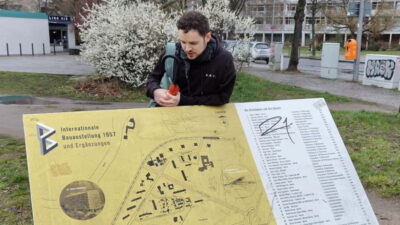
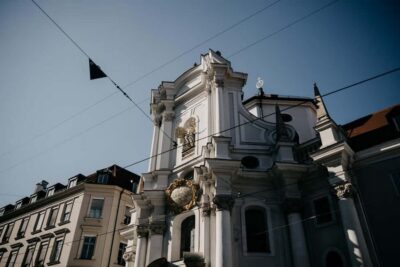
500 Years of Munich Architecture (Max. 16 Guests)
Read our review →Other lists with this tour