
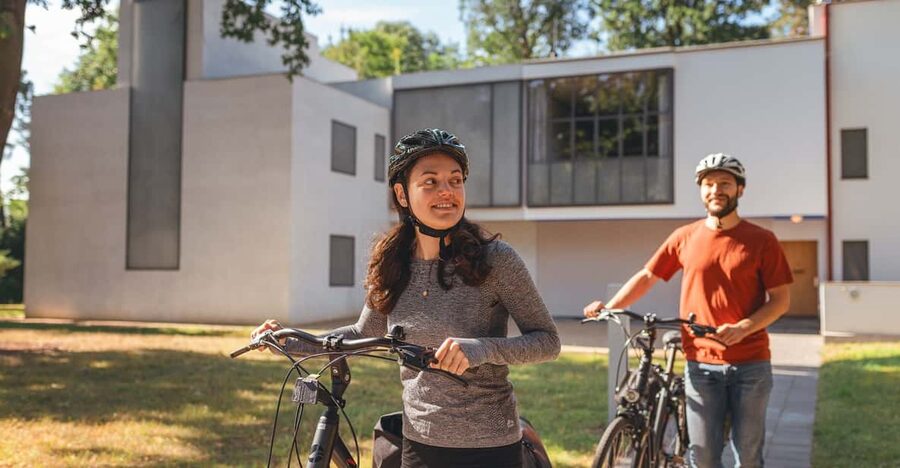
Review · GERMANY
Dessau: Radtour Bauhaus – Junkers – Gartenreich
Dessau’s story makes more sense on two wheels. Garden design, aircraft engineering, and Bauhaus architecture may sound like separate subjects, but this 2.5-hour ride shows how they grew from one local belief: progress should improve daily life. You follow that idea through the city and its surrounding Garden Kingdom, with a guide adding the human stories.
I like the broad route and the personal feel. The bicycle gives you a wider reach than a walking tour, while the guide can connect places that sit apart from one another. I also like the mix of grand ideas and small anecdotes, from Prince Franz of Anhalt-Dessau’s reforms to the work of Hugo Junkers and Walter Gropius.
The main drawback is simple: the tour is conducted in German, and the €23 price does not include a bicycle. You can rent one for €10 per bike per day, but that extra cost matters when you are comparing this tour with a standard city walk.
Key points to know before you book
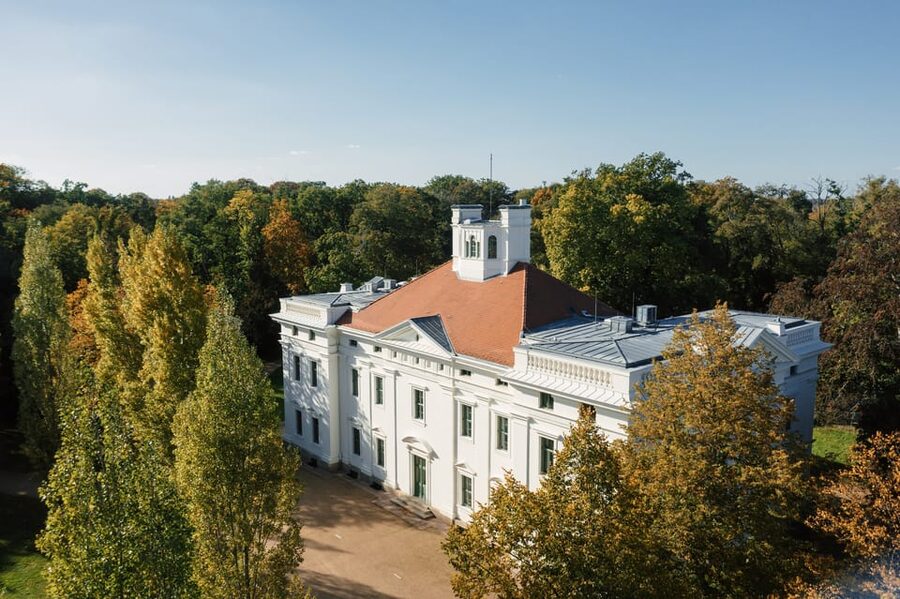
- Three reformers shape the story: Prince Franz, Hugo Junkers, and Walter Gropius all believed in progress, though they worked in very different fields.
- The route covers more ground by bike: You travel from the Tourist Information to the Historic Employment Office rather than staying in one compact central area.
- Nature is part of the tour: The Dessau-Wörlitz Garden Kingdom is not just a pretty backdrop. It helps explain how Dessau’s industrial growth began.
- The route can feel personal: One booking specifically praised the individual route planning and friendly, capable guest service.
- Bike rental costs extra: Bring your own bicycle or budget €10 for a rental bike for the day.
- The language is German only: This tour works best if you can follow spoken German comfortably.
How Dessau’s gardens lead to factories and modern design
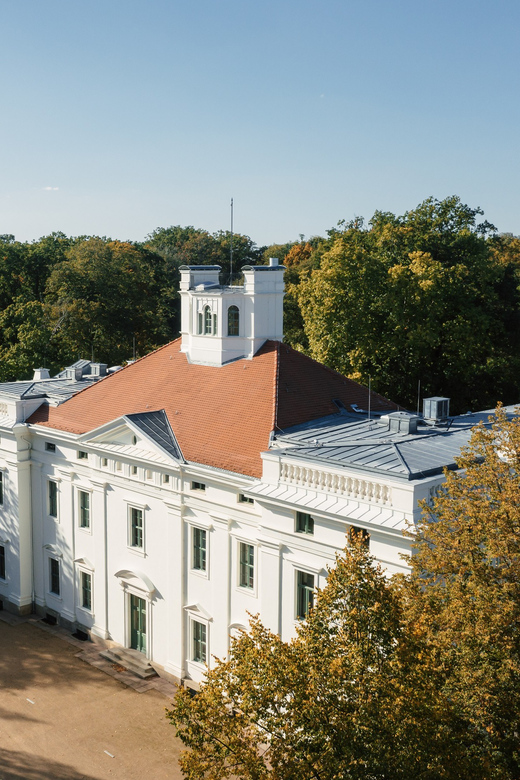
The clever idea behind this ride is that Dessau’s major attractions are not treated as isolated sights. The Garden Kingdom, Junkers’ industrial work, and the Bauhaus are presented as parts of one changing city.
Prince Franz of Anhalt-Dessau used the plants and spaces of the Dessau-Wörlitz Garden Kingdom as part of a wider reform program. That program helped prepare the city for industrial development. In other words, the gardens are linked to the city’s later growth in a practical way, not just a decorative one.
That connection gives the tour more depth than a quick ride past famous buildings. You see how ideas about public improvement, technology, and design can overlap. The route also gives you a useful way to remember Dessau: first reform and planned surroundings, then industry, then a new approach to architecture and everyday life.
I find this kind of structure helpful because it avoids the usual city-tour problem, where each sight gets a short explanation and then disappears. Here, the guide has a clear thread to follow. You are not simply collecting names. You are tracing a local argument about how society should move forward.
More Bauhaus and Brutalist Architecture Tours in Germany:
- Dessau: Bauhausbauten Radtour
★ 5.0 · 2 reviews - Brutalist Tbilisi: Urban exploration and untold stories
★ 5.0 · 82 reviews - London: Brutalist Architecture & History Walking Tour
★ 4.8 · 42 reviews
Starting at Tourist Information with a bicycle
The guide meets you in front of the Tourist Information. This is also the place where you can pick up your rental bicycle if you need one.
That meeting point keeps the start straightforward. You do not need to find a remote neighborhood or a separate bike shop before the tour begins. Still, plan for the rental cost if you do not bring your own bicycle. The tour price is $23 per person, while bike hire is listed separately at €10 per bike per day.
The bicycle matters because the route is designed to cover a wider area. One of the strongest practical advantages is the larger action radius, meaning you can move between nature, city history, and architecture without spending the whole outing walking from one place to the next.
The experience is not presented as a race. The point is to stop, listen, and connect the setting to the story. You should still be comfortable riding for 2.5 hours, with time spent both in the saddle and at points of interest.
Following Prince Franz and the Garden Kingdom
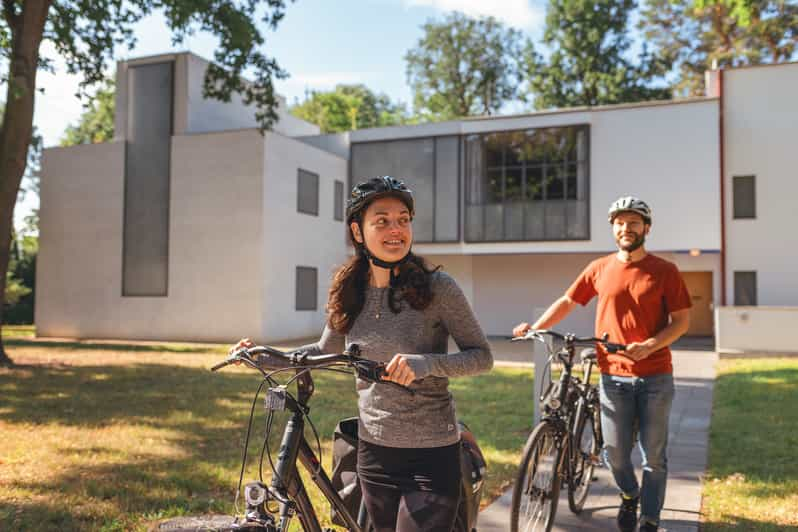
The first major theme is the Garden Kingdom created under Prince Franz of Anhalt-Dessau. The supplied route description does not promise a full tour of every garden or palace, so you should not book this expecting an exhaustive garden visit. Instead, the gardens form one part of a larger historical route.
That distinction is useful. You get the gardens as evidence of a reform-minded city, not simply as scenery for a pleasant ride. Plants, open spaces, and planned surroundings helped express a new view of public life and improvement.
The nature portion also provides a welcome change from the harder lines of Bauhaus architecture and industrial history. You can expect the tour to move between quieter green areas and the city’s built environment, giving the ride a varied rhythm.
A verified booking praised the combination of the charming nature of the Garden Kingdom, history, and the simple architecture of the Bauhaus. That mix is central to the experience. If you want only Bauhaus buildings, this tour may feel too broad. If you want to understand why Dessau became a place of experimentation, the broader approach is the point.
Connecting Hugo Junkers with Dessau’s industrial rise
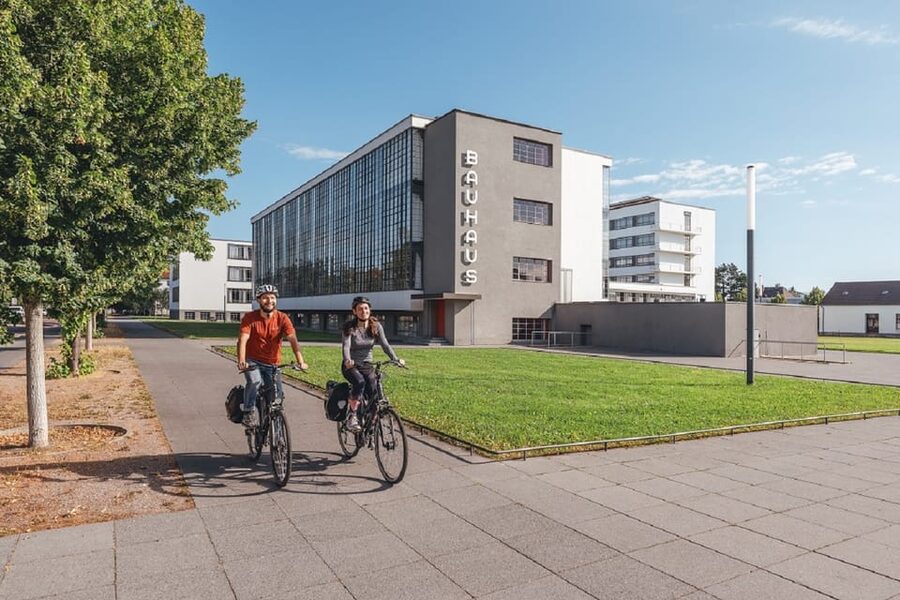
Hugo Junkers represents the industrial side of the tour. His presence helps explain what happened after Dessau’s reform program created conditions for growth.
The important idea is not only that Junkers worked in Dessau. The guide places his work beside the earlier garden and civic reforms, showing how the city’s identity changed over time. The same broad faith in improvement appears in a different form: technology, engineering, and industrial production.
You should expect anecdotes here rather than a technical lecture. The experience promises numerous stories, and that is valuable because industrial history can become dry when reduced to dates and machinery. A good guide can make the subject easier to grasp by showing how one person’s work affected the city around him.
The route also gives you a better sense of scale. On foot, you might treat the industrial story as one stop among many. By bicycle, you travel through the spaces that connect the city’s different eras. That movement is part of the lesson.
More Architecture Tours by Bike and Segway in Germany:
- Munich 3-Hour Segway Tour: Nazi Munich & Royal Architecture
★ 4.9 · 194 reviews - Barcelona e-Bike Tour: Gaudí & Old Town Small Group
★ 5.0 · 769 reviews - Palm Springs Modernism Architecture & History Bike Tour
★ 5.0 · 359 reviews - Historical and Modernist Bike Tour Barcelona
★ 5.0 · 262 reviews
Seeing Walter Gropius and the Bauhaus in context
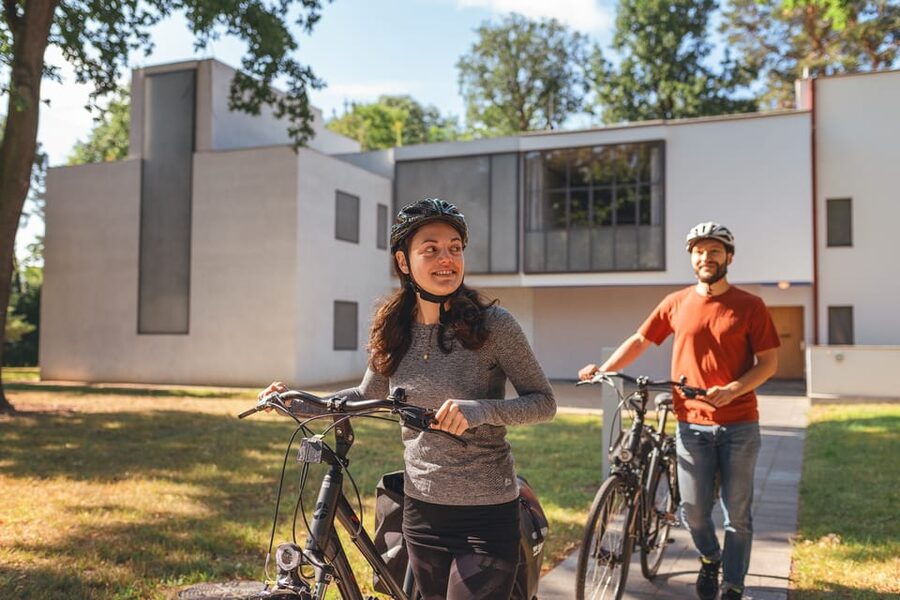
Walter Gropius brings the route to the Bauhaus. The tour places Gropius beside Prince Franz and Junkers because all three were united by a belief in progress.
Their methods differed sharply. Prince Franz worked through gardens and reforms. Junkers worked through industry and engineering. Gropius helped shape a new relationship between art, architecture, and technology. The guide’s job is to show the link without pretending that these men did the same thing.
The Bauhaus portion is described as simple architecture, which is an important clue about the tone. You are not promised a long architectural seminar or a detailed interior visit. Instead, you see how design became part of Dessau’s larger story about useful, modern living.
I like that the tour connects art and technology rather than treating the Bauhaus as a stand-alone style. The phrase can mean different things to different people, but here it points back to a local history of practical reform. That makes the buildings easier to understand, especially if you are new to Bauhaus.
Why the anecdotes matter on a moving tour
A bicycle tour can cover plenty of ground, but it can also become a string of quick stops. The guide’s anecdotes are what give the route a human scale.
You are promised numerous stories about Dessau-Roßlau and the people who shaped it. These details can help turn a broad theme into something memorable. Instead of hearing only that the city changed, you get examples of how its thinkers and workers approached change.
The best feature here may be the guide’s flexibility. A verified booking praised the individual route design and friendly, capable guest service. That suggests the ride is not locked into a rigid script at every turn, though the exact amount of customization is not specified.
You should still keep expectations realistic. The tour is in German, and the information provided does not name individual guides. The quality of your experience will depend partly on how comfortably you understand spoken German and how actively you engage with the guide’s stories.
The finish at the Historic Employment Office
The ride ends at the Historic Employment Office. This gives the tour a clear endpoint and keeps it from simply circling back to the starting point.
An ending at a historic civic building fits the route’s focus on reform, work, and modern society. It also adds a useful final chapter after the gardens, industry, and Bauhaus. The finish is not just a convenient place to stop. It reinforces the idea that Dessau’s history concerns how people live and work, not only how buildings look.
Because the tour ends away from the Tourist Information, you should think ahead about what comes next. The provided information does not state that the guide returns you to the start, so plan on finishing at the Historic Employment Office. That is a small but important practical detail if you have another booking immediately afterward.
Is $23 a fair price for 2.5 hours?
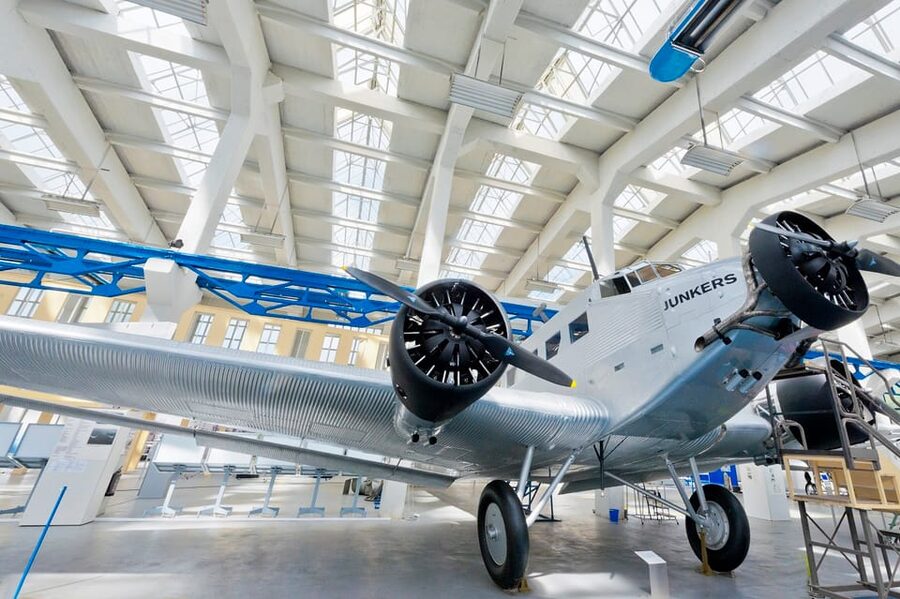
At $23 per person, the tour offers good value if you want a guided introduction to several sides of Dessau rather than one narrow subject. You are paying for a trained guide, a route through the city and its surrounding historical setting, and a connected explanation of gardens, industry, and design.
The price looks less attractive if you already know Dessau well or only want to reach one Bauhaus site. In that case, a self-guided ride may give you more freedom and cost less, especially if you own a bicycle.
Remember to add €10 per rental bike per day if needed. That brings the practical cost above the advertised tour price, though the rental covers the full day rather than only the 2.5-hour outing.
The booking also allows cancellation up to 24 hours before the tour for a full refund, and you can reserve now and pay later. Those terms are useful if your schedule in northern Germany is still shifting.
Who will enjoy this ride most?
I would choose this tour if you like history told through places rather than in a museum room. It suits anyone curious about how a city’s gardens, factories, and buildings can grow from related ideas.
It is also a good choice for cyclists who want more than a short downtown loop. The bicycle lets you reach a wider selection of sites, while the guide keeps the ride from becoming a simple exercise outing.
The tour works best for German speakers. The guide language is German, and no other language option is provided. If you understand only a little German, you may miss the anecdotes that make the route worthwhile.
I would be more cautious about booking it if you need a fully English-language tour, a detailed specialist tour of Bauhaus interiors, or a route that returns to the starting point. Those features are not included in the information provided.
Should you book the Dessau Bauhaus, Junkers, and Garden Kingdom ride?
Book it if you want a compact but wide-ranging look at Dessau’s character. The strongest reason to go is the connection between Prince Franz’s reforms, Junkers’ industry, and Gropius’s Bauhaus ideas. The second is the bicycle format, which lets you see more while still hearing local stories from a guide.
Bring your own bike if possible, or budget the extra €10 rental fee. Confirm that German suits you, allow for the finish at the Historic Employment Office, and keep the 2.5-hour duration in mind.
For a German-speaking cyclist who values context, personal stories, and a route that links nature with modern design, this is a sensible and fairly priced introduction to Dessau.
FAQ
Where does the bicycle tour begin?
The guide meets you in front of the Tourist Information in Dessau. You can also pick up a rental bicycle there if needed.
Where does the tour end?
The tour ends at the Historic Employment Office.
How long does the experience last?
The guided bicycle tour lasts 2.5 hours.
What language is the tour conducted in?
The live tour guide conducts the experience in German.
Is bicycle rental included in the tour price?
No. Bicycle rental is not included. A rental bicycle is available for €10 per bike per day.
What is included in the activity?
The activity includes a bicycle tour through the changing history of Dessau-Roßlau with a trained guide.
What historical subjects does the route cover?
The route connects the Dessau-Wörlitz Garden Kingdom, Prince Franz of Anhalt-Dessau’s reform program, Hugo Junkers and industrial development, and Walter Gropius and the Bauhaus.
Can I cancel for a full refund?
Yes. You can cancel up to 24 hours in advance for a full refund.
Do I have to pay when I reserve?
No. The reserve-now, pay-later option lets you reserve your place without paying at the time of booking.
New to the itinerary around Germany
- Munich Your Way: Private Tour with Architect & Guide★ 5.0 · 2 reviews
- Hidden Architectural Gems of Munich (Max. 16 guests)★ 5.0 · 2 reviews
- Architectural Frankfurt: Private Tour with a Local Expert★ 5.0 · 2 reviews
- Private Taxi Tour of City East History and Architecture 2-3h★ 5.0 · 2 reviews
- Berlin Architecture/River Spree Full Day Photography Tour★ 5.0 · 2 reviews
- Architectural Berlin: Private Tour with a Local Expert★ 4.0 · 3 reviews
- Lübeck: Architecture and Local Craft Private Guided Tour★ 4.0 · 6 reviews
- Lübeck: Private Historical and Architectural Walking Tour★ 4.5 · 6 reviews
Bauhaus and Brutalist Architecture Tours, compared.
Brutalist Tbilisi: Urban exploration and untold stories
Read our review →
Le Corbusier’s Chandigarh : A Complete Architecture Tour
Read our review →
Architecture of New Belgrade – Brutalism Decoded
Read our review →
Secret Split: Socialist Architecture & brutalism – Urban Utopia
Read our review →
Tashkent Soviet Architecture (Modernism) and Subway station tour.
Read our review →
Belgrade: Space architecture tour – brutalist architecture
Read our review →
USSR History, Soviet Architects ,Statues & Mosaics
Read our review →Other lists with this tour