
Review · GEORGIA
Brutalist Tbilisi: Urban exploration and untold stories
Tbilisi’s most revealing architecture is often far from the old town’s balconies and sulfur baths. This four-hour drive takes you to monumental Soviet buildings, a suspended residential bridge, an abandoned museum, and the huge stone figures of the Chronicle of Georgia. It shows you a city shaped by grand plans, ordinary residents, and a past that has not quite left.
I like the car-based route, which lets you cover distant parts of Tbilisi without spending half the day on steep streets or long transfers. I also like the human focus: guides such as Khatuna, Khato, Jonah, Alex, and Aleksi explain how people used these buildings, not just when they were built. The main drawback is clear: abandoned sites, stark concrete, and the darker story behind Suicide Bridge will not suit anyone seeking a gentle sightseeing trip.
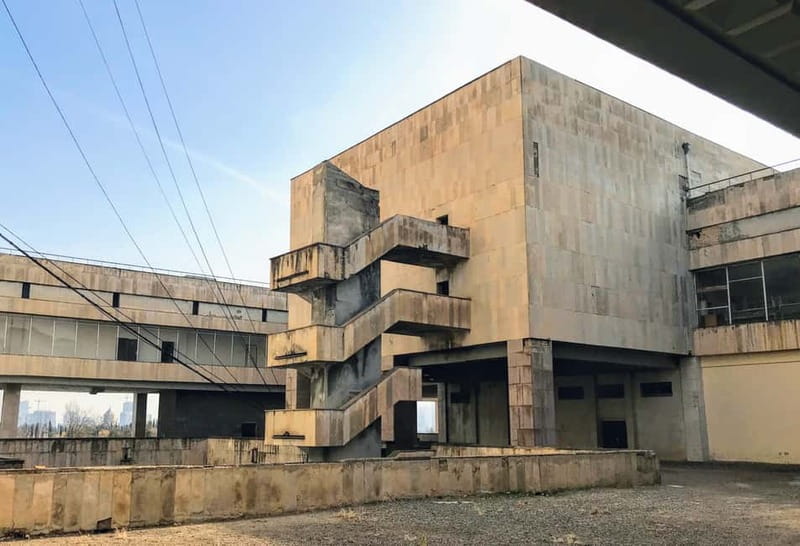
- Ministry of Highways: See one of Eastern Europe’s best-known Brutalist buildings, a bold stack of concrete forms that seems to float above the road.
- Nutsubidze Skybridge: Enter a 1970s housing complex where elevated bridges connect apartment blocks high above the ground.
- Bagebi cable road: Take an old Soviet-era cable car and see Tbilisi’s past in motion.
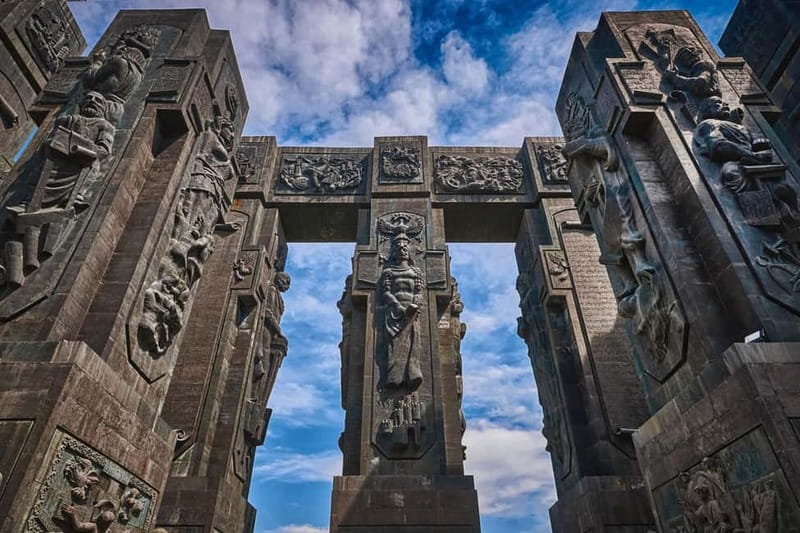
- Chronicle of Georgia: Look across the Tbilisi Sea from a vast hilltop monument carved with Georgian scenes and figures.
- Human stories first: Learn how ambitious architecture affected residents, workers, and families living with the Soviet legacy.
- A useful half-day format: The car, bottled water, entrance fees, and central pickup are included, while lunch is not.
Why this is not a standard Tbilisi sightseeing tour
This experience is for the part of Tbilisi that most first-time visitors miss. You will not spend the morning moving between postcard views in the old center. Instead, you will drive through outer districts where apartment blocks, monumental institutions, and unfinished or neglected structures reveal how the city was planned and rebuilt during the Soviet period.
That change of focus matters. Tbilisi can look charmingly improvised in the center, with wooden balconies and narrow lanes. Outside the old town, the scale changes. Roads widen, housing estates spread across hillsides, and public buildings take on a forceful, almost theatrical shape.
Your guide gives these places a human frame. You hear about daily life around the buildings, the way residents used shared spaces, and what happened to grand Soviet projects after Georgia became independent. That makes the architecture easier to read. Concrete is not simply concrete here. It tells you who had power, what the state wanted to project, and how people adapted the result to ordinary life.
The tour has a perfect 5.0 rating from 82 bookings, and the praise is remarkably consistent about the guides. Khatuna and Khato are repeatedly singled out for clear explanations and warm conversation. Jonah is praised for detailed architectural discussion, while Alex, Aleksi, and Oksana are also noted for making the trip relaxed and engaging.
A comfortable car ride across far-flung neighborhoods
The route is done by car, with pickup at your accommodation or another central Tbilisi location when you choose the private option. That is more important than it may sound. These sites are spread across the city, and reaching them independently would mean working out several separate taxi rides or public transport connections.
The vehicle also gives you a break between stops. You can look out at changing neighborhoods rather than walk long distances between large roads and isolated buildings. A family described riding in a comfortable Mercedes van, while other bookings praised the driver and the smooth transport.
The tour lasts about four hours, but allow extra time. Tbilisi traffic can be slow, and the route may change with weather, road conditions, or access. This is not a rigid clockwork trip. A surprise activity has been added on some departures, and one guest received an extra visit to the Palace of Rituals after asking the guide.
The group is private, which gives you more room to ask questions or adjust the pace. It also makes this a better choice for people who want a conversation rather than a rehearsed speech delivered to a large bus.
More Bauhaus and Brutalist Architecture Tours in the world:
- London: Brutalist Architecture & History Walking Tour
★ 4.8 · 42 reviews - Le Corbusier’s Chandigarh : A Complete Architecture Tour
★ 4.7 · 25 reviews - Architecture of New Belgrade – Brutalism Decoded
★ 4.5 · 24 reviews
The student district and the first look at Soviet Tbilisi
The opening stop, called the City of Students, sets the tone. Expect a photo stop and guided visit of about 45 minutes. The name points to the role of housing and institutional buildings in Soviet urban planning, when large residential complexes were built to serve workers, students, and state-run organizations.
This is a useful first stop because it introduces the scale of the city beyond the center. You begin to see how Tbilisi grew across its hills and valleys, and how architecture had to respond to steep ground, dense housing needs, and a government fond of grand public statements.
Do not expect a polished museum setting. The value is in looking carefully at the buildings, their concrete lines, and their relationship to the surrounding neighborhood. Wear shoes you can walk in, even though this is not a strenuous walking tour. Some photo stops may involve uneven ground or short walks around large structures.
Riding the old Bagebi cable road
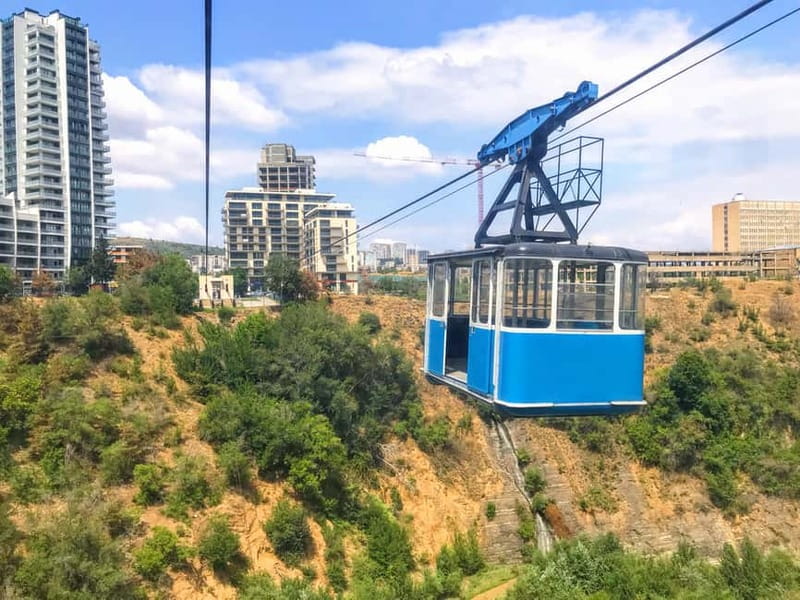
The Bagebi Cable Road brings a rare hands-on element to the tour. You do not just look at Soviet infrastructure. You ride it. The cable car section takes about 25 minutes, including the guided visit and photo stop.
Cable transport makes sense in a hilly city such as Tbilisi, where direct roads are not always practical. The old system also gives you a view of how residents once moved through the city and how public infrastructure shaped daily routines.
You should know that this part may not feel polished or modern. That is exactly the point, but anyone who expects a sleek new attraction may find it modest. People afraid of heights should skip this tour altogether, since the cable ride and the skybridge later in the route both involve elevated spaces.
Nutsubidze Skybridge and high-rise daily life
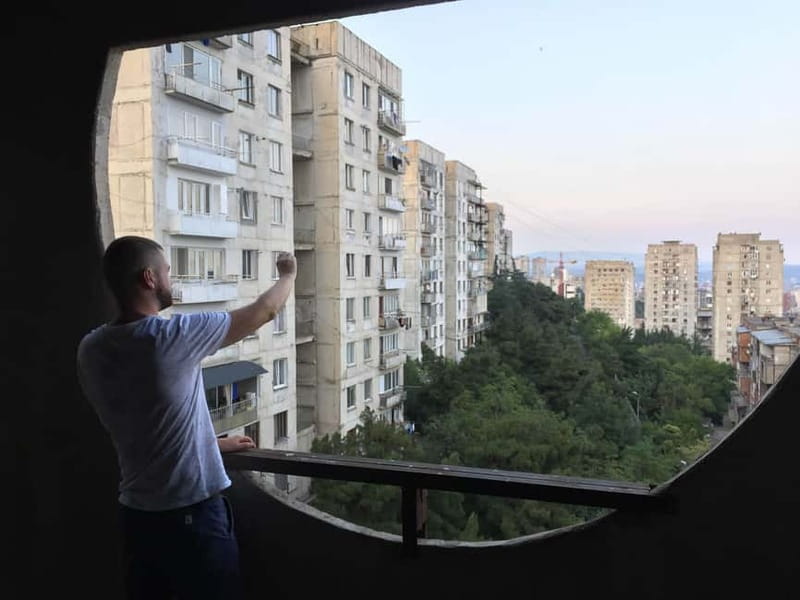
The Nutsubidze Skybridge is one of the tour’s strongest stops. Plan on about 40 minutes here, including the guided visit, photographs, and views along the way.
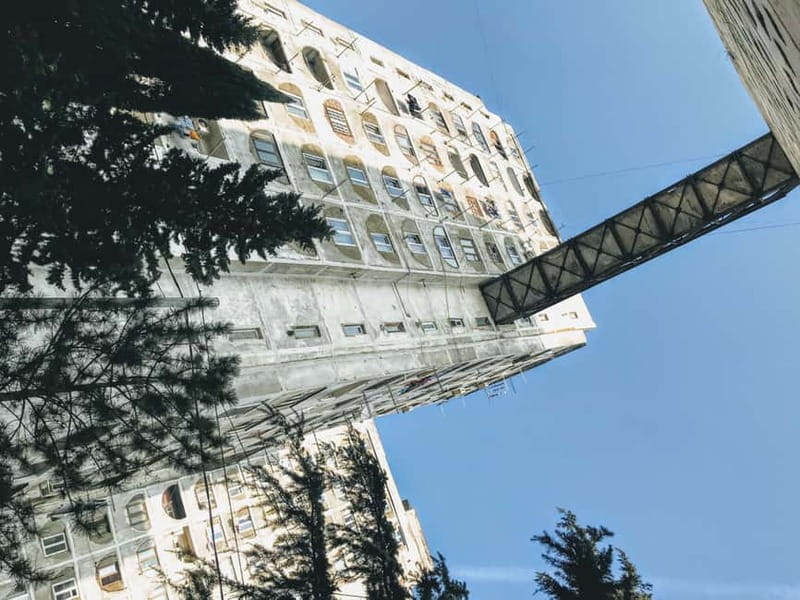
This 1970s residential complex is known for its suspended bridges, which connect apartment blocks high above the ground. The design is practical and dramatic at the same time. Instead of treating each building as a separate tower, the complex links them through the air, creating an unusual second level of movement.
The guide’s explanation is especially useful here. Without context, you might see only an unusual concrete structure. With context, you can think about the people who lived in these apartments, how they reached their homes, and how a bold architectural idea became part of everyday life.
The Skybridge is also a good reminder that Brutalism was not only about imposing government buildings. It entered housing, schools, transport systems, and ordinary routines. Bring a phone or camera, but keep your attention on the surroundings. This is still a residential area, not a museum set aside for visitors.
More Architecture Tours around the world:
- Chicago Architecture River Cruise
★ 5.0 · 15,756 reviews - Chicago River 90-Minute Architecture Tour
★ 4.5 · 9,629 reviews - Chicago River: 1.5-Hour Guided Architecture Cruise
★ 4.8 · 8,046 reviews - Barcelona: Park Güell and Gaudí House Museum Entry Ticket
★ 4.5 · 6,326 reviews
The Bank of Georgia building and the power of the unusual
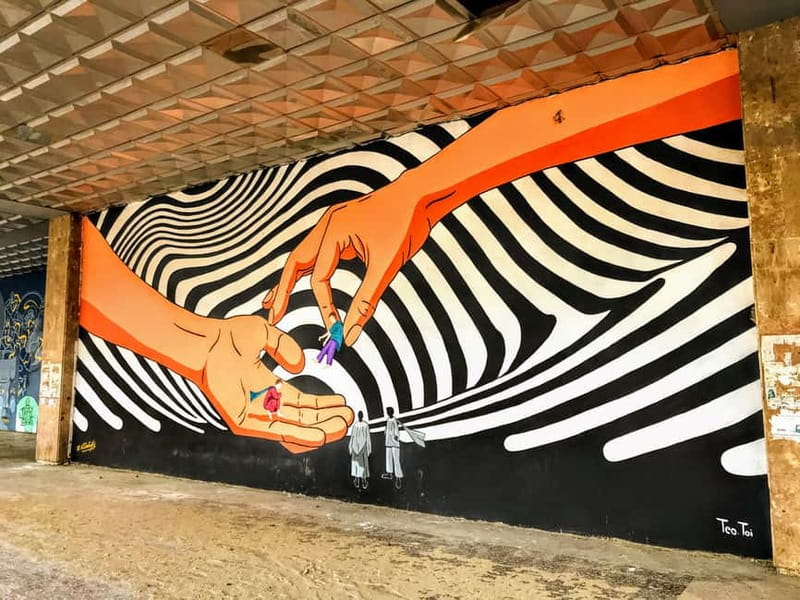
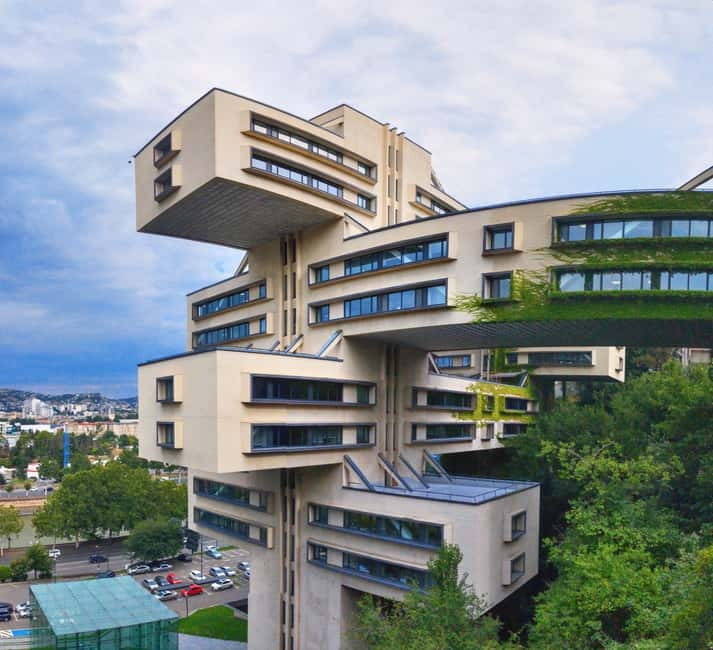
The Bank of Georgia stop lasts around 20 minutes and focuses on one of Tbilisi’s best-known modernist buildings. Its stacked, interlocking forms give it a sculptural look that seems almost impossible to balance.
This is a quick stop, but it adds an important contrast to the route. You see how ambitious Soviet-era design continued to influence the city after independence, when the building took on a new institutional role. The structure is not frozen in the past. It remains part of working Tbilisi.
Your guide can help you notice the details that a quick photograph misses: the way the blocks overlap, how the building fills its site, and how its appearance changes as you move around it. If you enjoy architecture, this is one of the places where a short explanation adds real value.
A local bakery stop keeps the tour grounded
After the large buildings and monumental spaces, the local bakery offers a welcome change. The stop lasts about 15 minutes and includes street food or local snacks. Lunch is not included, so think of this as a taste and a pause, not a full meal.
This small break helps balance the tour. Soviet architecture can feel abstract when discussed only through dates and design terms. Food brings the city back to daily life. Ask your guide for suggestions if you want to try more Georgian dishes afterward. Khatuna has also been praised for recommending local places to eat and for pointing people toward chimney cake.
The bakery visit may vary in exact food or timing, but it is one of the details that makes the route feel connected to present-day Tbilisi rather than locked in a history lesson.
Suicide Bridge and the city’s darker memory
One of the route’s more difficult stops is Suicide Bridge. The name alone signals a darker story, and the site is not treated as a light photo opportunity. Your guide explains the human history connected with it and the place it holds in the city’s memory.
This is where the tour asks for a little emotional maturity. You may find the stop unsettling, particularly when set beside the more playful shapes of the Skybridge or the grand scale of the Chronicle of Georgia. That contrast is useful, though. It shows that Tbilisi’s built environment carries pain as well as ambition.
This stop also explains why the tour is not suitable for every child or every mood. The experience is aimed at people aged 12 and older, and it is best for anyone prepared to discuss difficult subjects respectfully.
The former Museum of Archaeology, beauty after abandonment
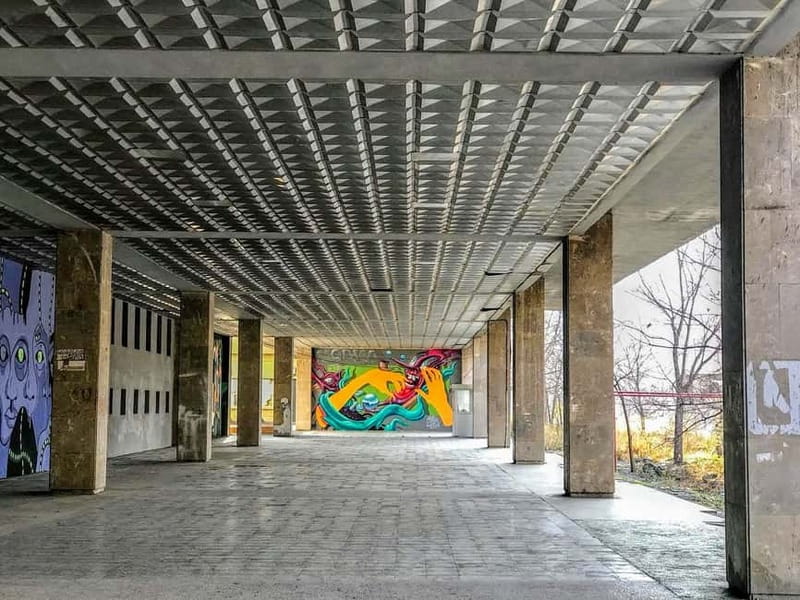
The former Museum of Archaeology is another major architectural stop. Once designed as a statement of modernist confidence, it is now abandoned, yet its form remains powerful.
Abandoned buildings can be tempting to photograph, but they need care. The appeal here comes from seeing how an institution changes when its original purpose disappears. The building’s design still communicates order and authority, while its current condition raises questions about preservation, neglect, and the costs of changing political priorities.
Do not expect a fully open museum or a restored interior. The experience is about the exterior, the surrounding space, and the stories your guide can tell about what the building represented. For anyone interested in post-Soviet cities, this may be more thought-provoking than a polished exhibit.
Chronicle of Georgia above the Tbilisi Sea
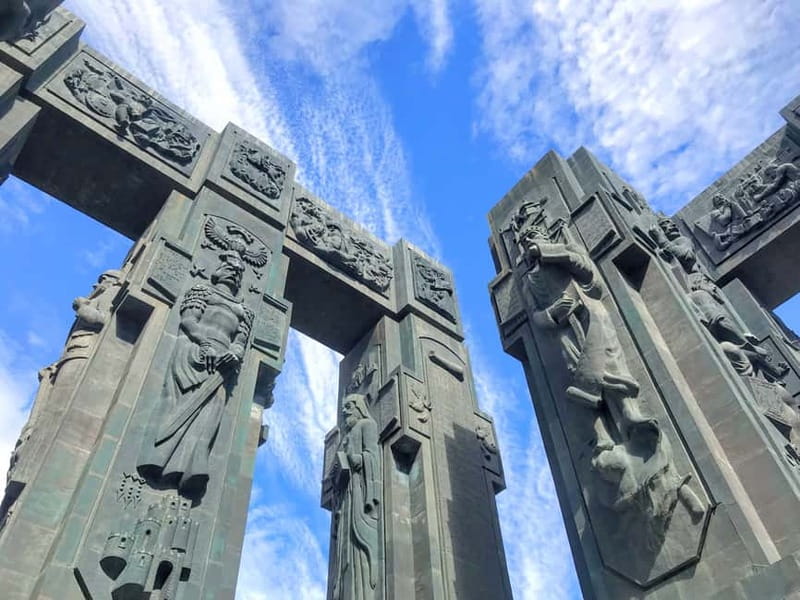
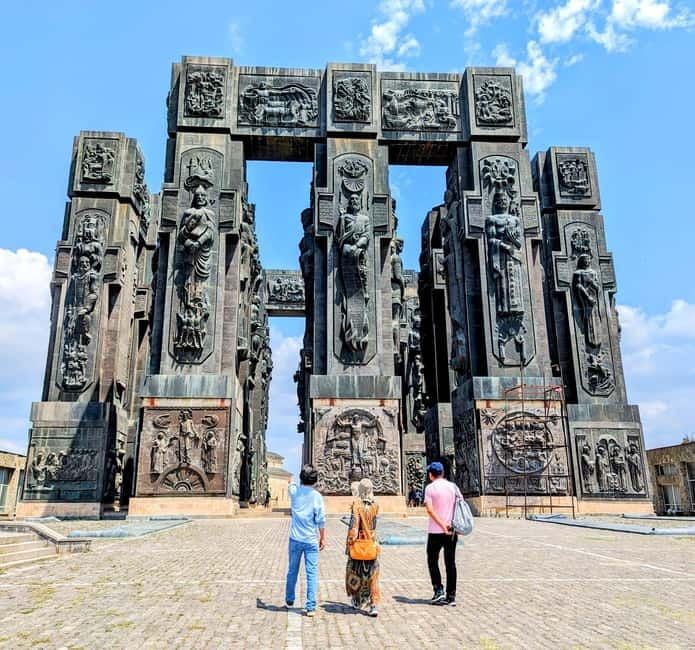
The final major stop is the Chronicle of Georgia, often called the Georgian Stonehenge. Allow around 45 minutes for the guided visit, photographs, free time, and wide views across the Tbilisi Sea.
Huge stone columns and carved figures rise on a hilltop, giving the site a ceremonial scale. It is one of the few places on this route where the view matters as much as the architecture. From above, you can see the water and the broad reach of Tbilisi, gaining a better sense of how the city’s districts fit together.
The monument is not ancient, despite the nickname. Its grand scale and carved panels reflect a modern national story told through monumental art. Your guide can explain the imagery and place it within Georgia’s political and cultural setting.
Take your time here. The 45-minute visit gives you room to listen, photograph, and look outward. Wind and weather may affect the stop, so bring a layer even in mild conditions. The site also involves open, exposed ground and some walking, so comfortable shoes are still a sensible choice.
What the $75 price really covers
At $75 per person, this is not the cheapest way to see Tbilisi. It is also not a simple transfer with a few photo stops. The price includes a local guide, entrance fees, bottled water, and door-to-door service when you book the private option.
The value comes from combining distant places that would be awkward to connect on your own. You are paying for the vehicle, route planning, interpretation, and access to an unusual side of the city. The private format adds value if you are traveling with friends or family, especially since you can ask more questions and avoid a large group.
I would not choose this tour mainly for food or shopping. Lunch is not included, and the bakery stop is brief. I would choose it for architecture, transport history, Soviet-era urban planning, and the chance to hear how these places affected real lives.
A 95 percent perfect score for transport also matters here. The comfort of the car is part of the product, not an afterthought. You cover much more ground without exhausting yourself.
Who should book this experience
You should book it if you have already seen central Tbilisi and want a sharper, less familiar view of the city. It suits architecture fans, photographers, people interested in Soviet history, and anyone who prefers local neighborhoods to standard sightseeing routes.
It is also a good pick for a short stay. Four hours gives you a concentrated look at several distant sites, leaving the rest of the day free for the old town, a meal, or a museum.
You should think twice if you want only famous landmarks, polished interiors, or easy access at every stop. The route includes abandoned and neglected buildings, a serious subject at Suicide Bridge, elevated spaces, and some walking over uneven ground. It is not suitable for children under 12, people with mobility impairments, or anyone afraid of heights.
The tour runs in English or Russian. Cancellation is free up to 24 hours before departure, and you can reserve now and pay later, which helps if your Tbilisi schedule is still shifting.
My verdict on Brutalist Tbilisi
This is one of the better ways to understand Tbilisi beyond its charming center. The buildings are unusual, but the best part is the explanation of how people lived with them. Guides including Khatuna, Khato, Jonah, Alex, Aleksi, and Oksana have made the experience personal, clear, and good-humored.
Book it if concrete megastructures, Soviet memory, and overlooked neighborhoods sound more appealing than another circuit of balconies and viewpoints. Skip it if you want a relaxed old-town stroll. For the right audience, the $75 fee buys a comfortable route, strong local interpretation, and a side of Tbilisi you would be unlikely to piece together alone.
FAQ
How long does the Brutalist Tbilisi tour last?
The tour lasts about four hours. Traffic, weather, and other conditions can make the total time longer or alter the sightseeing route.
Is hotel pickup included?
Pickup is included at your accommodation or another central Tbilisi location when the private option is selected. The experience also has two drop-off locations in Tbilisi.
Which languages are available?
You can take the tour with a live guide speaking English or Russian.
Does the price include entrance fees and food?
The $75 price includes entrance fees and bottled water. A local bakery snack is included as part of the route, but lunch is not included.
Is the cable car ride part of the tour?
Yes. The itinerary includes a cable car ride on the Bagebi Cable Road, with about 25 minutes for the visit, ride, guiding, and photographs.
Who should not take this tour?
The tour is not suitable for children under 12, people with mobility impairments, or people afraid of heights. Pets, large bags, oversize luggage, baby strollers, and electric wheelchairs are not allowed.
New to the itinerary around the world
- Washington, DC: Georgetown Architecture Walking Tour★ 5.0 · 8 reviews
- Wilmington History and Architecture Tour★ 4.8 · 18 reviews
- Washington DC: Dupont Circle & Embassy Row Architecture Tour★ 5.0 · 6 reviews
- New Orleans : Garden District Architecture Walking tour★ 4.8 · 5 reviews
- Walk & Discover KL’s Architectural and Heritage Gems★ 5.0 · 7 reviews
- Unveiling Brno: History, Culture & Architectural Delights★ 5.0 · 2 reviews
- Vicenza: Palladian Architecture Private Walking Tour★ 3.3 · 3 reviews
- Private Colonial Williamsburg Architectural Tour★ 5.0 · 5 reviews
Bauhaus and Brutalist Architecture Tours, compared.
Le Corbusier’s Chandigarh : A Complete Architecture Tour
Read our review →
Architecture of New Belgrade – Brutalism Decoded
Read our review →
Secret Split: Socialist Architecture & brutalism – Urban Utopia
Read our review →
Tashkent Soviet Architecture (Modernism) and Subway station tour.
Read our review →
Belgrade: Space architecture tour – brutalist architecture
Read our review →
USSR History, Soviet Architects ,Statues & Mosaics
Read our review →
Brutal Tbilisi — Night Edition: Dark Side of Soviet Architecture
Read our review →Other lists with this tour