
Review · UZBEKISTAN
Tashkent Soviet Architecture (Modernism) and Subway station tour.
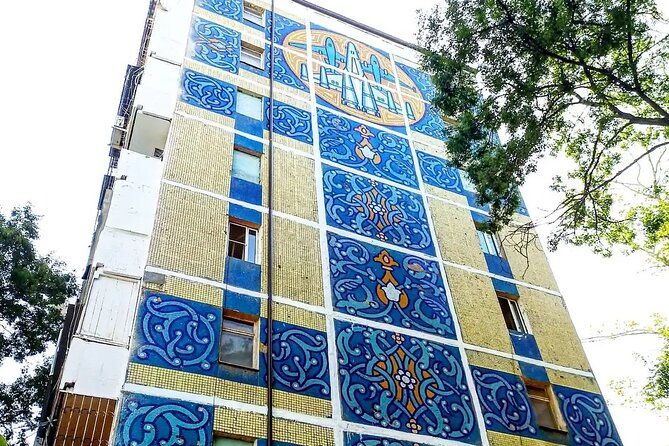
The most unusual part of this Tashkent tour is the way it links the city above ground with the city below it. In one short walk, you move from Soviet modernist buildings and earthquake memorials to the grand marble halls of the Tashkent Metro, one of the capital’s most distinctive sights.
I like two things in particular: the private format lets your guide adjust the pace and focus, and the metro ride gives you a useful look at Tashkent beyond its grand squares. Guides including Aziza, Waheed, Mirwaheed, and Mirvoxid are praised for explaining both the past and present city clearly. The main consideration is that the tour lasts about 2 hours and 15 minutes, so the itinerary is selective rather than a full city tour.
Key points at a glance
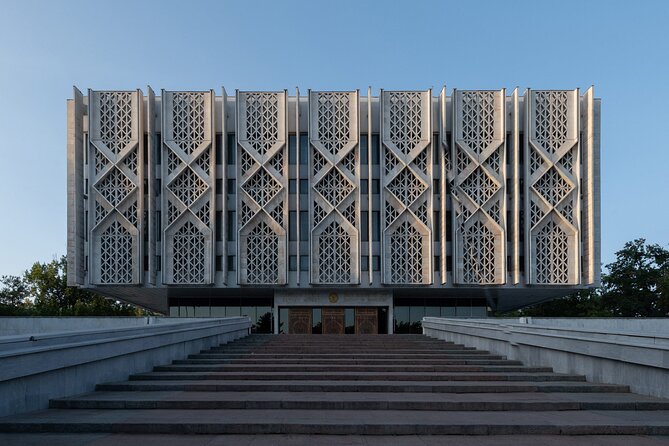
- Ride through several decorated metro stations: The tour normally includes three or four especially attractive stations, with some outings visiting five or six.
- See Tashkent’s Soviet modernism up close: Buildings, squares, and memorials help explain how the capital changed during the Soviet period.
- Learn about the 1966 earthquake: The Monument of Courage gives the tour a strong link to the rebuilding of modern Tashkent.
- Travel privately with one group: Your party can include from one to 20 people, with no unrelated passengers joining your walking tour.
- Start at an easy central landmark: The meeting point is Hotel Uzbekistan, and the walk usually finishes there as well.
Why the Tashkent Metro gives this walk its character
Many city walks stay on the surface. This one uses the metro as part of the sightseeing, and that makes the experience more memorable.
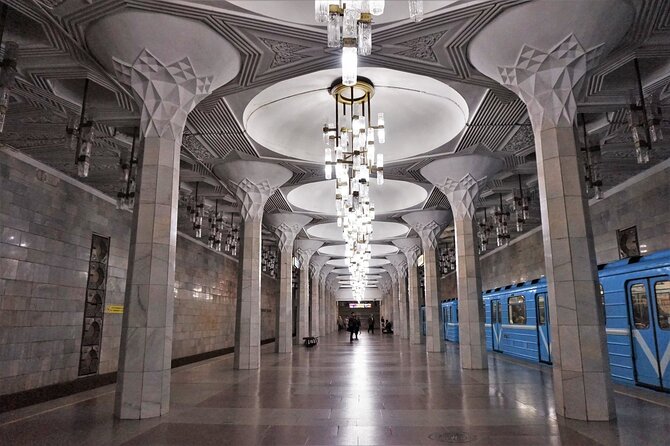
Tashkent’s subway stations were built and decorated during the Soviet era, but they do not all look alike. Some use marble, geometric forms, chandeliers, mosaics, or grand columns. The stations were designed as public architecture, not simply as places to wait for a train. A guide helps you notice the symbols and design choices instead of rushing through them on your way to another stop.
The plan calls for a look at three or four of the most attractive stations, although some groups have seen five or six. Cosmonaut Station is a particular draw for visitors interested in Soviet design and space history. The exact stations can vary, so if one is high on your list, ask your guide about it at the start.
The metro section also gives your feet a break. Most of the tour is a walking route through central Tashkent, while the subway ride adds a practical local experience without requiring a separate transport plan. The metro admission is included, but general transport costs outside the guided route are not.
More Bauhaus and Brutalist Architecture Tours in the world:
- Brutalist Tbilisi: Urban exploration and untold stories
★ 5.0 · 82 reviews - London: Brutalist Architecture & History Walking Tour
★ 4.8 · 42 reviews - Le Corbusier’s Chandigarh : A Complete Architecture Tour
★ 4.7 · 25 reviews
Starting at Hotel Uzbekistan and Amir Temur Square
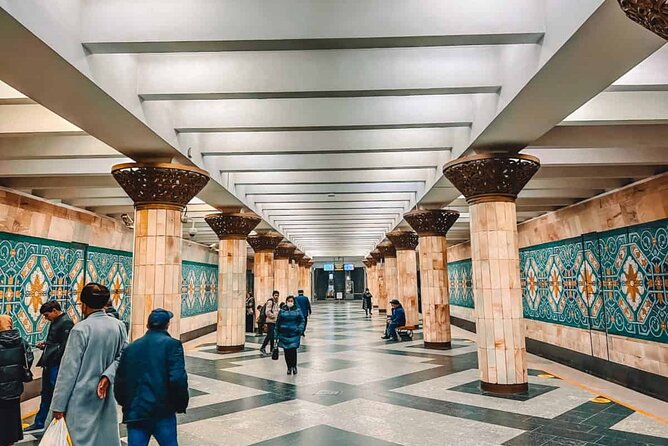
The walk begins at Hotel Uzbekistan on Mirzamakhmud Musakhanov Street. This is a useful meeting point because the hotel is a major central landmark and easy to identify.
The first section focuses on Amir Temur Square and the surrounding architecture. You can expect about 35 minutes here, including an explanation of the square and the nearby Uzbekistan Hotel. The hotel is a large Soviet-era building with the monumental scale typical of its period. It gives you an immediate sense of how Tashkent was planned as an important regional capital.
Amir Temur Square also helps set up the city’s changing identity. Tashkent is not made up of one architectural style. Soviet planning, Uzbek national symbols, later civic buildings, and older local traditions all appear close together. A guide can point out those shifts without turning the walk into a dry list of construction dates.
This is one of the best parts for first-time visitors because it helps you get your bearings quickly. You are not only looking at a square. You are learning how central Tashkent was designed and why its broad spaces and large buildings feel so different from the compact historic centers found in many European cities.
Admission here is free. The stop is mostly outdoors, so weather matters. Comfortable shoes and protection from strong sun are sensible choices.
Independence Square and the traces of imperial Tashkent
The next stop is Independence Square, also called Mustakillik Square. The scheduled visit is shorter, around 15 minutes, so expect a focused introduction rather than a long museum visit.
The Palace of Duke Romanov adds a different layer to the city’s story. Its presence reminds you that Tashkent’s past is not only Soviet. The area also connects to the Museum of History of Uzbekistan, which can be useful if you want more context on the country’s long political and cultural story.
The tour does not include a museum admission ticket, and the stop does not appear to be built around an extended museum visit. Think of this section as an exterior and historical orientation. If the museum is important to you, ask the guide how much time is available and consider returning later on your own.
Independence Square is also a good place to compare the public image of different periods. Amir Temur Square reflects one idea of national memory, while Soviet architecture and the Romanov palace point to other chapters. The value here comes from the comparison, not from any single building.
The Monument of Courage and the 1966 earthquake
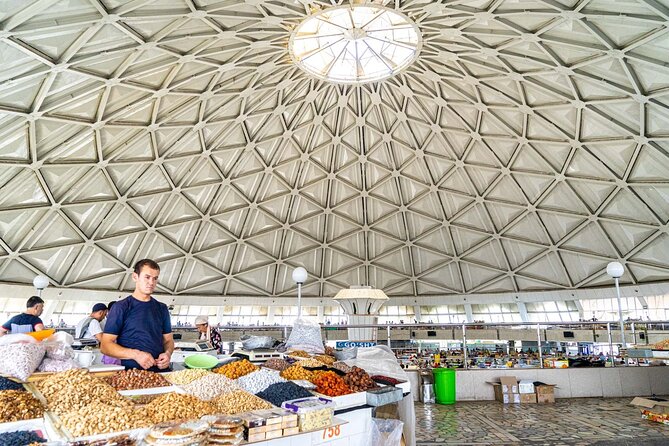
The route also includes the Monument of Courage and Soviet architecture connected with the earthquake that struck Tashkent in 1966. This stop is important because it explains why so much of the central city has a planned, modern appearance.
The earthquake caused major destruction, and the rebuilding that followed changed Tashkent on a large scale. The Monument of Courage gives that event a physical point on the map. Instead of seeing wide avenues and large Soviet buildings as random planning choices, you begin to understand them as part of a city rebuilt after disaster.
This is where the tour’s subject becomes more than a style exercise. Soviet modernism can be easy to treat as a collection of unusual facades. The earthquake story gives those buildings human and civic meaning. It also helps explain the mix of memorials, public institutions, and large open spaces found in the center.
The stop is brief, so do not expect a full lecture on the earthquake or an extended museum presentation. Still, it adds some of the most useful context on the route.
More Architecture Tours around the world:
- Chicago Architecture River Cruise
★ 5.0 · 15,756 reviews - Chicago River 90-Minute Architecture Tour
★ 4.5 · 9,629 reviews - Chicago River: 1.5-Hour Guided Architecture Cruise
★ 4.8 · 8,046 reviews - Barcelona: Park Güell and Gaudí House Museum Entry Ticket
★ 4.5 · 6,326 reviews
Friendship of Nations Square and Palace

The walk continues to Friendship of Nations Square and the Friendship of Nations Palace, with about 20 minutes set aside for this area.
The name reflects the Soviet idea of cooperation among the republics and peoples of the union. The architecture and public setting were designed to express that political message. Today, the site is useful for understanding how public buildings once communicated ideology through scale, decoration, and ceremonial space.
Your guide can also help separate the Soviet message from the way the area functions in modern Tashkent. That contrast is one reason a private guide is useful here. You can ask direct questions about what has changed, what remains, and how the city presents its past today.
The palace and square also give the tour a strong architectural finish. You have seen a hotel, formal squares, a metro system, an earthquake memorial, and a major public building. Together, they form a compact introduction to the city’s modern central core.
What the private format changes
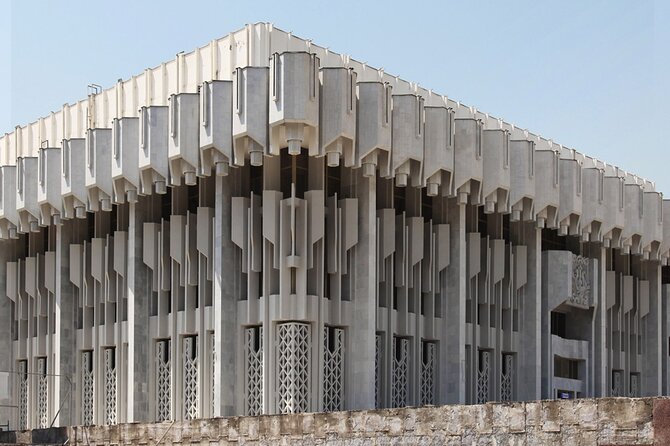
This is a private activity, not a shared walking group. Only your party participates, with groups accepted from one to 20 people. That matters most when your interests are specific.
If you care mainly about Soviet modernism, tell the guide before the walk begins. One group requested that exact focus, and the route was adjusted to include more Soviet remains. Another group had the walk shaped around its interests while still adding key sights along the way.
A private format also lets you ask for a slower pace. The tour includes walking, outdoor stops, and a metro ride. You may want more time for photographs at a station, or you may prefer to keep moving through the central sights. Guides such as Aziza have been praised for adjusting the pace and offering suggestions for other places to see in Tashkent after the tour.
The guide assigned to your booking may not be the same person named in every account. Aziza is frequently praised for her warm manner and clear explanations, while Waheed, Mirwaheed, and Mirvoxid are also mentioned positively for their command of local history and architecture. The practical point is simple: the experience depends partly on the guide you receive, so use the private setting to ask questions and state your interests early.
What the $50 price is buying
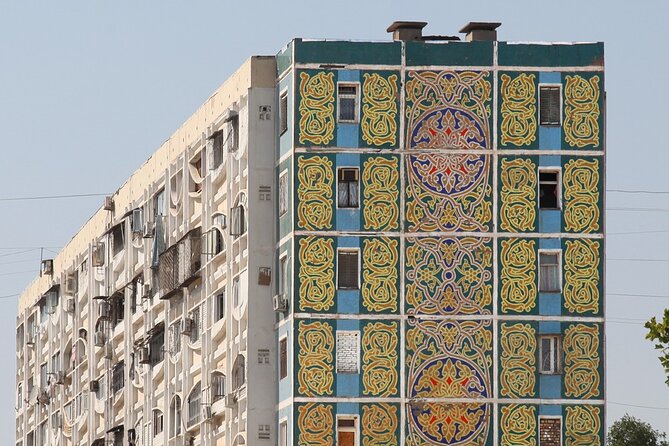
At $50 per person, this is not the cheapest way to walk around central Tashkent. The value comes from having a private guide connect several subjects that can otherwise feel scattered: Soviet architecture, the earthquake, major squares, the hotel, and the metro.
For a solo visitor, the price buys personal attention and a ready-made route. For a small group, the cost can feel more reasonable because you share the private guide fee across several people. Group discounts are available, though the exact reduction is not specified, so check the price for your party before booking.
The metro admission is included, but all fees and taxes and transport fees are listed as excluded. The wording is worth checking carefully if you expect transfers beyond the walking route. The normal meeting point is Hotel Uzbekistan, and the tour usually ends there, which keeps the logistics fairly simple.
You are also paying for interpretation, not just access. You can visit a metro station on your own, but it is harder to understand why the station looks the way it does, how the city was rebuilt, or how Soviet public design fits into present-day Uzbekistan without some explanation.
The Chorsu Bazaar question
The wider tour description includes Chorsu Bazaar and its food stalls as a place where you can see local daily life. The detailed route provided for this experience lists Amir Temur Square, Independence Square, the metro, the Monument of Courage, and Friendship of Nations Square, but does not clearly assign Chorsu Bazaar a stop or duration.
That means you should confirm the current route if Chorsu is a priority. It may be included as part of a flexible version of the walk, or it may belong to a broader city tour description. Do not assume you will have time for the bazaar unless the guide confirms it.
This is also a good example of why the private format helps. If you want food stalls and market life more than formal squares, say so before the tour begins. If Soviet architecture is your main goal, ask for the route to stay focused on buildings and metro stations.
Pace, weather, and practical comfort
The tour lasts approximately 2 hours and 15 minutes, close to the advertised two-and-a-half-hour format. That is long enough for a useful introduction but short enough to fit into a busy day in Tashkent.
You should expect a mixture of walking outdoors and riding the metro. The itinerary includes several stops with different time allocations, so the pace is purposeful. It is not a leisurely café-to-café stroll, nor is it a long architectural survey.
The experience requires good weather. If poor weather forces cancellation, you can be offered another date or a full refund. Most people can participate, service animals are allowed, and the starting point is near public transportation.
One booking had confusion around the meeting point and started late. To avoid that problem, confirm the exact meeting location and start time in advance. The stated meeting point is Hotel Uzbekistan, and the tour generally returns there, but clear communication is still worthwhile.
Who will get the most from this tour
I would choose this walk if you are visiting Tashkent for the first time and want a quick framework for the city. It covers enough ground to show how the capital fits together without taking over your entire day.
It is especially suited to:
- People interested in Soviet modernism and public architecture
- Visitors who want to ride the Tashkent Metro with context
- Small groups seeking a private, adjustable route
- First-time visitors who want suggestions for the rest of their stay
- People who prefer a focused introduction rather than a full-day tour
It may be less suitable if you want a long museum visit, an extensive food tour, or a deep architectural survey of every major Soviet building. The route is selective, and the 2-hour-15-minute duration places a limit on how much can be covered.
Should you book the Tashkent Soviet architecture and subway tour?
Book it if you want to understand why Tashkent looks the way it does, not simply photograph a few large buildings. The combination of central squares, the 1966 earthquake story, and several metro stations gives you a clear introduction to the city’s modern character.
The strongest reasons to choose it are the private format, the flexible focus, and the metro ride. Ask about Chorsu Bazaar if you want market life included, confirm which stations are planned, and make sure the meeting point is clear.
At $50 per person, the tour is best value for solo visitors and small groups who want personal explanation. If your group is larger, the price may work better with the available group discount. For a first look at Tashkent’s Soviet-era core, it is a compact and useful choice.
FAQ
How long does the Tashkent Soviet architecture tour last?
The tour lasts approximately 2 hours and 15 minutes. It is also described as a private two-and-a-half-hour walking tour.
Where does the tour begin?
The meeting point is Hotel Uzbekistan at Mirzamakhmud Musakhanov Street 45 in Tashkent.
Where does the tour end?
The tour usually ends at Hotel Uzbekistan, the same place where it begins.
Is the Tashkent Metro ride included?
Yes. The guided metro tour and admission to the subway portion are included.
How many people can join a private tour?
Private groups can include from one to 20 people. Only your group participates.
Does the tour include Chorsu Bazaar?
Chorsu Bazaar is included in the broader description of the experience, but it is not clearly listed as a timed stop in the detailed route. Confirm with the guide if the bazaar is important to you.
Can I cancel for a full refund?
Yes. You can cancel at least 24 hours before the start time for a full refund. Changes or cancellations made less than 24 hours before the start time are not accepted for a refund.
New to the itinerary around the world
- Washington, DC: Georgetown Architecture Walking Tour★ 5.0 · 8 reviews
- Wilmington History and Architecture Tour★ 4.8 · 18 reviews
- Washington DC: Dupont Circle & Embassy Row Architecture Tour★ 5.0 · 6 reviews
- New Orleans : Garden District Architecture Walking tour★ 4.8 · 5 reviews
- Walk & Discover KL’s Architectural and Heritage Gems★ 5.0 · 7 reviews
- Unveiling Brno: History, Culture & Architectural Delights★ 5.0 · 2 reviews
- Vicenza: Palladian Architecture Private Walking Tour★ 3.3 · 3 reviews
- Private Colonial Williamsburg Architectural Tour★ 5.0 · 5 reviews
Bauhaus and Brutalist Architecture Tours, compared.
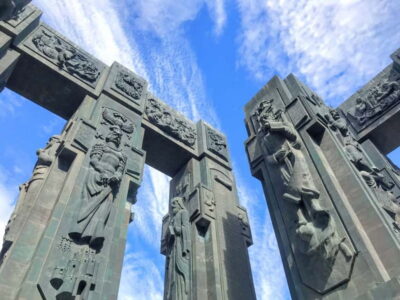
Brutalist Tbilisi: Urban exploration and untold stories
Read our review →
Le Corbusier’s Chandigarh : A Complete Architecture Tour
Read our review →
Architecture of New Belgrade – Brutalism Decoded
Read our review →
Secret Split: Socialist Architecture & brutalism – Urban Utopia
Read our review →
Belgrade: Space architecture tour – brutalist architecture
Read our review →
USSR History, Soviet Architects ,Statues & Mosaics
Read our review →
Brutal Tbilisi — Night Edition: Dark Side of Soviet Architecture
Read our review →Other lists with this tour