
Review · SERBIA
Belgrade: Space architecture tour – brutalist architecture
Belgrade’s brutalist buildings tell the story of a country trying to look modern, strong, and united. This four-hour tour links Avala Tower with the giant concrete forms of New Belgrade, giving you both a mountain view and a close look at Yugoslavia’s bold civic architecture.
I like the mix of mountain scenery and city design, and I like that the guide explains why these buildings mattered instead of treating them as photo props. The main drawback is simple: you mostly see buildings from outside, since several are government offices or residential blocks.
Key points at a glance
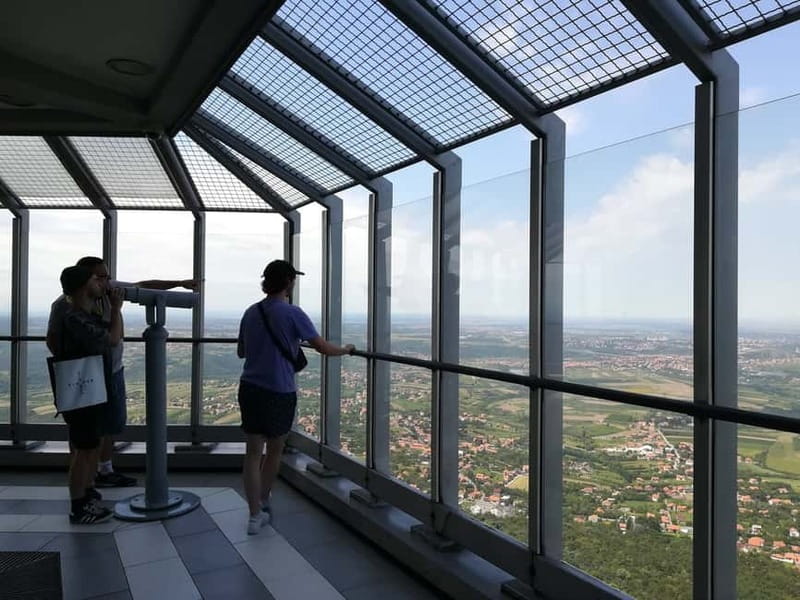
- Avala Tower viewpoint: Ride up for views over Belgrade, with visibility dependent on the weather.
- Yugoslav design in context: Learn how brutalism and structuralism expressed the ideals of socialist Yugoslavia.
- New Belgrade’s monumental scale: See the Palace of Serbia, Sava Center, and the city’s western and eastern gateways.
- A varied route: The tour combines a private van ride, short walks, photo stops, and scenic drives.
- Small-group format: The group is limited to 10 people, with hotel pickup and drop-off included.
- Strong guide element: Nemanja is specifically praised for warm, clear explanations of architecture and Yugoslav history.
Why this Belgrade architecture tour is different
Many city tours focus on Belgrade’s fortress, cafés, and older streets. This one heads straight for the architecture of the 20th century, when Yugoslavia used concrete, glass, steel, and huge public buildings to make a political statement.
That makes the tour a good fit for you if a large office block can be as interesting as a medieval church. The buildings here were not designed to blend into their surroundings. They were designed to project confidence, progress, and the power of a new federal state.
The route also gives you two very different views of Belgrade. On Avala Mountain, you look down over the city from a landmark tower. In New Belgrade, you move through broad spaces shaped by postwar planning, with monumental structures set apart from older urban neighborhoods.
You will not spend four hours walking from building to building. A private van does much of the work, which matters because the sites are spread across Belgrade and Avala. Expect a mix of guided stops, short walks, photo breaks, and views from the vehicle.
More Bauhaus and Brutalist Architecture Tours in the world:
- Brutalist Tbilisi: Urban exploration and untold stories
★ 5.0 · 82 reviews - London: Brutalist Architecture & History Walking Tour
★ 4.8 · 42 reviews - Le Corbusier’s Chandigarh : A Complete Architecture Tour
★ 4.7 · 25 reviews
Avala Mountain and the Unknown Hero
The tour begins with a drive of about 30 minutes from Belgrade to Avala Mountain. Your first stop is the Monument to the Unknown Hero, where you have about 30 minutes for a visit, guided talk, sightseeing, and walking.
The monument gives the tour an early historical anchor. It is not just a quick roadside photo stop. The guide has time to explain the setting and the role of the memorial before you continue to the tower.
Avala is described as Belgrade’s tallest mountain, and it offers a useful change of pace from the dense city. You get open air, a higher viewpoint, and a sense of how Belgrade sits within its wider surroundings. If you have spent several days among city streets, this short excursion can refresh the whole day.
The walking here is manageable for most people who are comfortable with a partly walking tour, but you should wear sensible shoes. The experience takes place rain or shine, so a damp day can change the comfort of the outdoor stops.
Avala Tower and the view from above
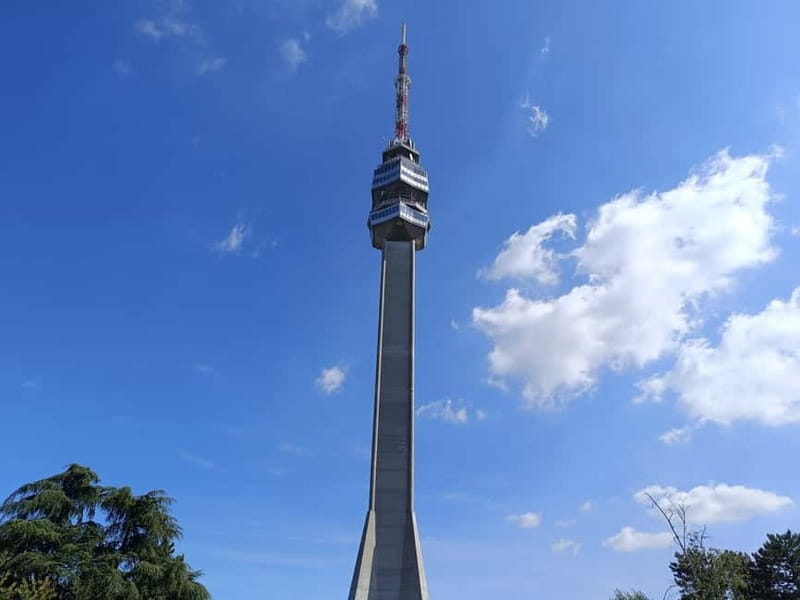
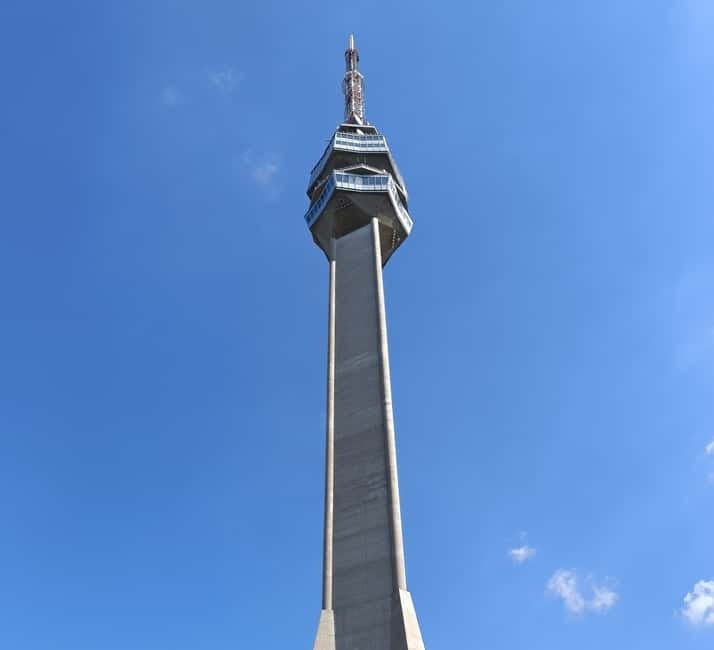
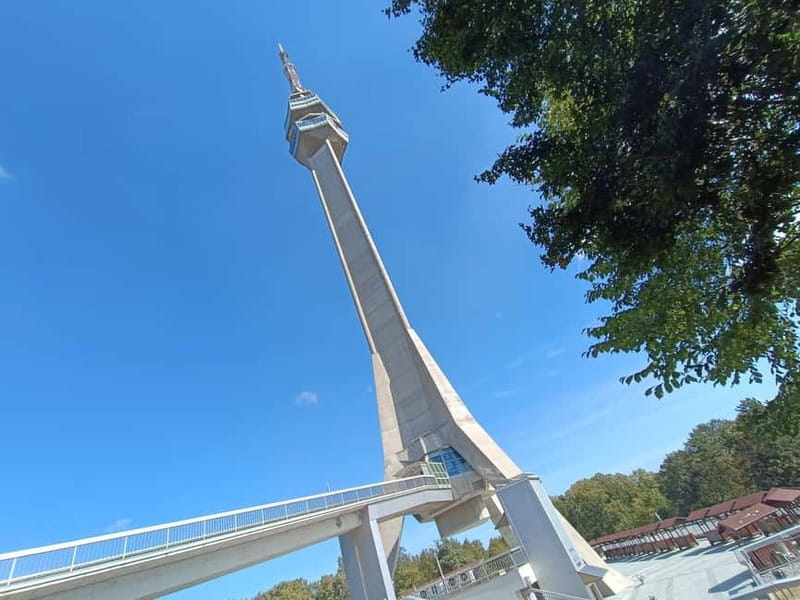
Avala Tower is the visual centerpiece of the first half of the tour. You receive the entry ticket, and the visit lasts about 30 minutes, including a guided explanation, sightseeing, and photographs.
The tower was destroyed during the NATO bombing in 1999 and rebuilt in 2010. That fact gives the structure a powerful place in modern Serbian memory. You are not simply looking at a communications tower. You are seeing a rebuilt national landmark, one that carries both architectural and political meaning.
The observation deck is the practical payoff. From above, you can look across Belgrade and the surrounding area, though the view depends on the weather. On a clear day, this helps you understand the scale of the city before the van takes you into New Belgrade’s more concentrated architectural zone.
Cloud, rain, or haze can limit the view, so keep your expectations realistic. The tower visit is still worthwhile for its design and story, but you should not book this tour only for a perfect panorama. The tour operator clearly notes that visibility is weather-dependent.
The Eastern Gate and Yugoslav brutalism
After Avala, the van returns toward the city, with about 20 minutes of driving before reaching the Eastern Gate, known locally as Istočna kapija. You have around 20 minutes for photographs and a guided explanation.
The Eastern Gate is formed by the Rudo buildings, a group of tall residential towers associated with brutalist design. Their repeated vertical forms create a strong entrance marker for Belgrade. They are not polished monuments in the traditional sense. They are working residential buildings, which is part of what makes the stop useful.
Here you see how Yugoslav architecture shaped everyday housing as well as state institutions. The scale is imposing, but these are also places where people live. That contrast helps keep the tour from becoming an abstract lesson in concrete and geometry.
You should expect to view the buildings from outside. This is one of the drawbacks of the route, not a flaw in the planning. Residential towers are not museums, and access inside is not promised. Bring a camera with a wide lens if you use one, since the buildings are difficult to capture from close range.
More Architecture Tours around the world:
- Chicago Architecture River Cruise
★ 5.0 · 15,756 reviews - Chicago River 90-Minute Architecture Tour
★ 4.5 · 9,629 reviews - Chicago River: 1.5-Hour Guided Architecture Cruise
★ 4.8 · 8,046 reviews - Barcelona: Park Güell and Gaudí House Museum Entry Ticket
★ 4.5 · 6,326 reviews
Ada Bridge and the Sava River
A further 20-minute drive takes you to Ada Bridge for a short photo stop of about 10 minutes. The bridge crosses the Sava River and is described as the largest single-pylon bridge in Europe. Its construction was also featured on the Discovery Channel.
The bridge gives the tour a welcome change in shape and material. After the heavy vertical forms of the Eastern Gate, Ada Bridge is about cables, suspension, and engineering. Its tall central pylon creates a clear focal point above the river, while the roadway connects different parts of the city.
This is a short stop, so think of it as a view and explanation rather than a bridge walk. You will have time for photographs, but not an extended visit along the river. The quick pace works because the bridge is one part of a larger architectural story.
Sava Center and the spaces of New Belgrade
The next stop is Sava Center, with about 10 minutes for photographs. The complex was built for the Conference on European Security and Cooperation held in Belgrade in 1977. It was the first and largest conference center in former Yugoslavia.
The building is especially useful for understanding structural design. Its large polyhedral forms give the complex a faceted, almost mechanical appearance. You can examine how the shapes work together, rather than seeing the building as a simple rectangular hall.
The short time here means you should focus your attention quickly. You may not go inside, and the tour does not promise an event or exhibition. Still, the exterior tells you a great deal about the ambition of late socialist Yugoslavia. A conference center of this size was meant to show that Belgrade could host major international meetings and operate on a global stage.
The van then takes you through New Belgrade on a scenic drive of about 10 minutes. This is where the city’s planning becomes easier to read. The wide scale, separated buildings, and monumental public structures reflect a postwar effort to create a new capital district rather than simply extend the old city.
The Western Gate and Geneks Towers
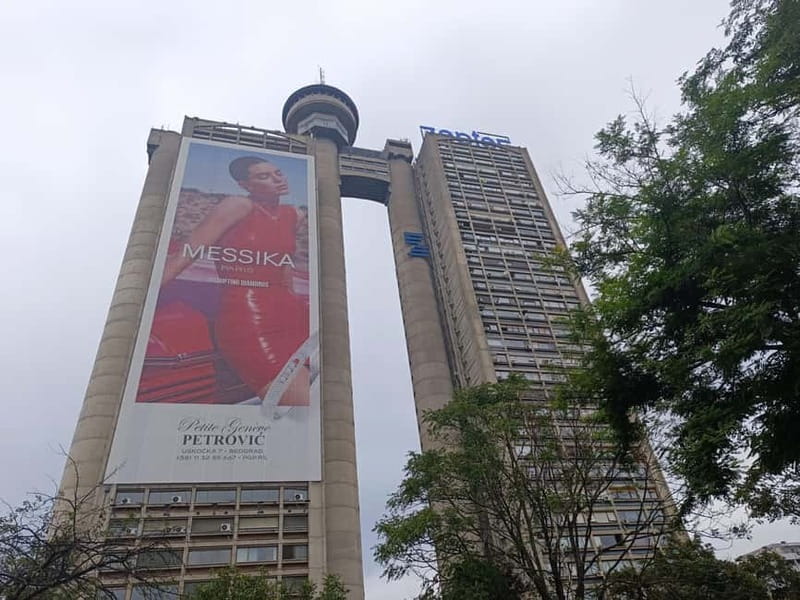
The Belgrade Western Gate is one of the tour’s most memorable stops. You have about 30 minutes here for photographs, sightseeing, and a guided talk.
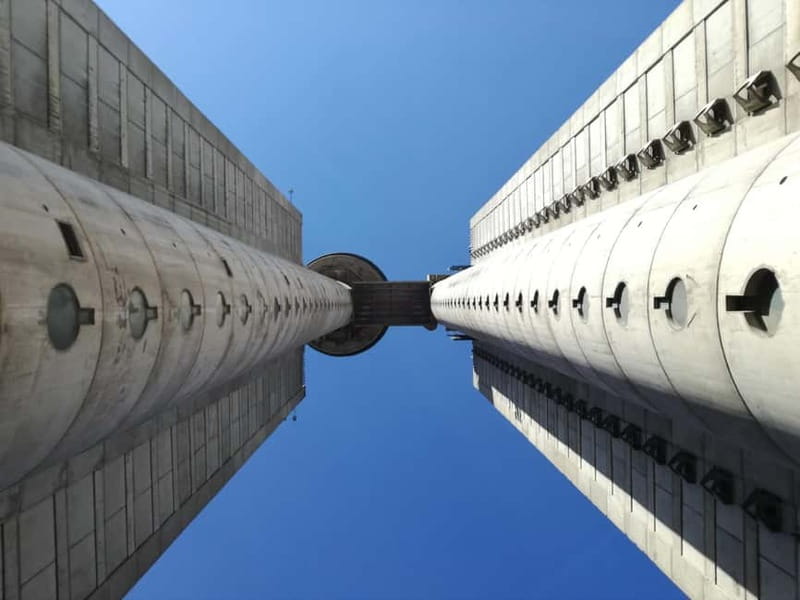
The complex is made up of the Geneks twin towers, connected by a bridge on the 26th floor. The pair functioned as a dramatic entrance to Belgrade from the west, and their height gives them a presence far beyond an ordinary office block.
The connection between the towers is the detail to watch for. It turns two high-rise buildings into a single gateway, an architectural gesture that feels almost cinematic. At the same time, the towers show the practical side of Yugoslav modernism: offices, commercial activity, and urban identity combined in one large structure.
This is a good place to ask your guide about the difference between brutalism and late modernism. The tour is not limited to one strict style label. It looks at the wider architectural culture of socialist Yugoslavia, including structural ideas and the way buildings communicated authority.
Again, plan on an exterior visit. You are there to understand the form, position, and public meaning of the towers, not to tour private offices or climb through the building. The longer stop gives you enough time to study the structure and take several photographs.
The Palace of Serbia and political architecture
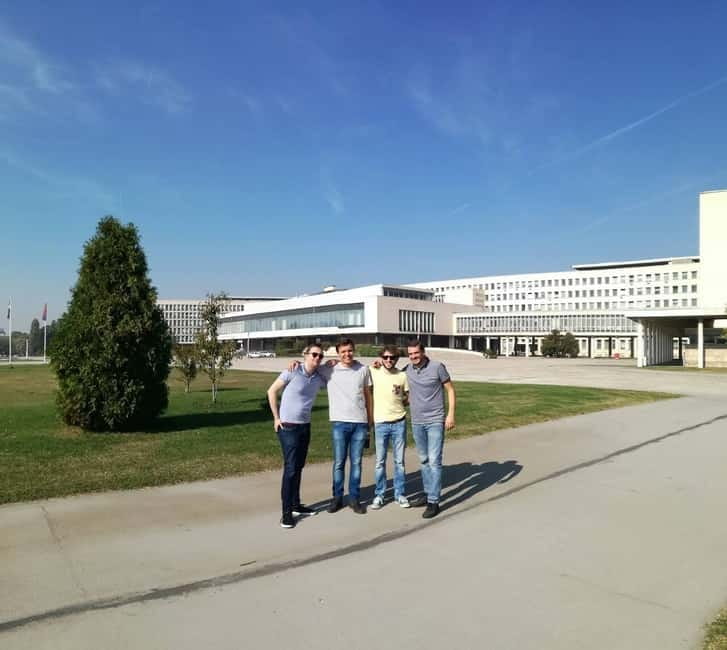
The final major stop is the Palace of Serbia, formerly the Federal Executive Council. You have about 20 minutes for a guided visit from the outside and photographs.
This is one of the clearest examples of architecture being used to express government power. The building is an enormous but controlled piece of late modernism, and it was the first major New Belgrade project after the Second World War.
The Palace of Serbia was not designed to feel intimate. Its size and formal lines present the state as orderly, serious, and permanent. That is exactly why it matters on this tour. You are learning to read a building as political communication, not only as a shelter or workplace.
The stop also ties together the route. At Avala, the tower represents communications and national identity. In New Belgrade, the Palace represents federal government. The Eastern and Western Gates show how architecture shaped residential life and the city’s entrances. Each building gives you another piece of Yugoslavia’s public image.
What the four-hour format feels like
The tour lasts four hours, and the timing is fairly active without being a full-day commitment. The van rides connect the scattered sites, while most stops last between 10 and 30 minutes.
I like this balance for Belgrade because the architecture is spread out. Walking between every location would take too long and leave little time for explanations. Private transportation lets you cover Avala, the river, and New Belgrade in one outing.
The small group is limited to 10 people. That should make it easier to hear the guide and ask questions than on a large coach tour. Hotel pickup and drop-off are included, and you are asked to wait in your hotel lobby five minutes before departure.
The tour is in English and led by a professional guide. Nemanja is one guide singled out for his warm manner and strong explanations of history and architecture. Other guide assignments may vary, so treat his name as useful information, not a guarantee that he will lead every departure.
There is no food or drink included. Four hours is short enough that this should not be a major issue, but you may want water with you, especially for the outdoor stops at Avala and the monument.
Is $88 a fair price?
At $88 per person, the tour is not the cheapest way to see Belgrade’s modern architecture. The value comes from the combination of private transport, hotel pickup and drop-off, a professional English-speaking guide, a small group, and the entry ticket for Avala Tower.
You are also covering sites that are awkward to connect on your own in a short time. Avala Mountain is outside the central sightseeing zone, and the Eastern Gate, Ada Bridge, Sava Center, Western Gate, and Palace of Serbia are spread across the city.
The price makes the most sense if you value interpretation. Without a guide, you can photograph the buildings, but you may miss why they were built, how they relate to Yugoslavia’s political ideals, and how brutalism fits beside late modernism and structural design.
If you only want quick exterior photographs, the cost may feel high. If you want the history and planning explained while someone else handles the driving, the price is reasonable for a half-day private-transport experience.
Who should book this tour?
I would choose this tour if you are interested in architecture, Cold War-era politics, socialist history, urban planning, or photography. It also suits you if you have already seen Belgrade’s older center and want a different view of the city.
The route works well for first-time visitors who want orientation beyond the usual central sights. It also suits repeat visitors who have noticed New Belgrade’s concrete towers but want to understand what they represent.
You should think twice if you want to enter several buildings or spend long periods inside museums. The tour is mainly an exterior study, with guided explanations and photo stops. It is partly on foot, and it runs in all weather.
The strongest part is the guide’s role. A good explanation turns a large concrete block into evidence of a country’s ambitions. The high overall rating of 4.9 from 14 ratings reflects that the experience depends heavily on clear, engaging storytelling, and the comments specifically praise Nemanja and the guides’ background in architecture and history.
FAQ
How long does the Belgrade brutalist architecture tour last?
The tour lasts four hours, including transportation between Avala Mountain, Belgrade, and New Belgrade.
Is hotel pickup and drop-off included?
Yes. Hotel pickup and drop-off in Belgrade are included. You should wait in your hotel lobby five minutes before the scheduled pickup time.
Is the tour conducted in English?
Yes. The tour includes a live English-speaking guide.
What is included in the price?
Private transportation, a professional tour guide, hotel pickup and drop-off, and the entry ticket to Avala Tower are included.
Is food or drink included?
No. Food and drinks are not included.
Can I see Belgrade from the top of Avala Tower?
Yes. The tour includes entry to the Avala Tower observation deck. The quality of the view depends on weather conditions.
Does the tour run in bad weather?
Yes. The tour takes place rain or shine. Since part of the experience is outdoors and partly on foot, dress for the forecast.
Should you book it?
Book this tour if you want Belgrade explained through its 20th-century buildings rather than only its old streets. The Avala Tower viewpoint, the rebuilt communications landmark, and the monumental New Belgrade structures give you a clear sense of Yugoslavia’s scale and ambition.
Skip it if you need extensive interior access or prefer a slow walking tour focused on one neighborhood. For architecture fans, history-minded visitors, and curious first-time guests, the four-hour route offers a smart way to see a side of Belgrade that is easy to miss on your own.
New to the itinerary around the world
- Wilmington History and Architecture Tour★ 4.8 · 18 reviews
- Washington, DC: Georgetown Architecture Walking Tour★ 5.0 · 8 reviews
- Walk & Discover KL’s Architectural and Heritage Gems★ 5.0 · 7 reviews
- Washington DC: Dupont Circle & Embassy Row Architecture Tour★ 5.0 · 6 reviews
- New Orleans : Garden District Architecture Walking tour★ 4.8 · 5 reviews
- Unveiling Brno: History, Culture & Architectural Delights★ 5.0 · 2 reviews
- Vicenza: Palladian Architecture Private Walking Tour★ 3.3 · 3 reviews
- Private Colonial Williamsburg Architectural Tour★ 5.0 · 5 reviews
Bauhaus and Brutalist Architecture Tours, compared.
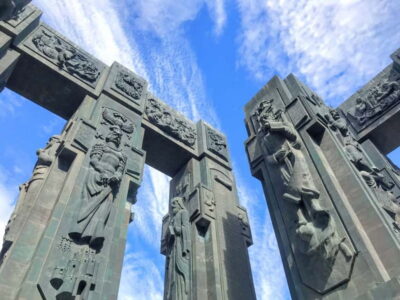
Brutalist Tbilisi: Urban exploration and untold stories
Read our review →
Le Corbusier’s Chandigarh : A Complete Architecture Tour
Read our review →
Architecture of New Belgrade – Brutalism Decoded
Read our review →
Secret Split: Socialist Architecture & brutalism – Urban Utopia
Read our review →
Tashkent Soviet Architecture (Modernism) and Subway station tour.
Read our review →
USSR History, Soviet Architects ,Statues & Mosaics
Read our review →
Brutal Tbilisi — Night Edition: Dark Side of Soviet Architecture
Read our review →Other lists with this tour