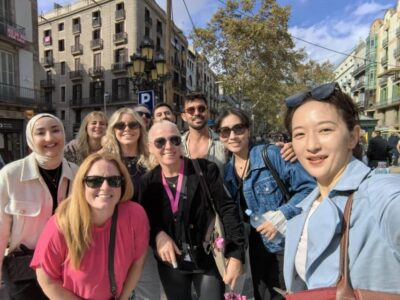
Review · PARIS
Neoclassical Paris Architecture 2-Hour Private Walking Tour
Paris often gets praised for its grand boulevards and Gothic churches, but its Neoclassical architecture tells a sharper story about power, order, commerce, and public life. This private two-hour walk links those ideas through the Palais Brongniart, Place des Victoires, Galerie Vivienne, the Tuileries, and Palais-Royal.
I like the small private format, which lets you ask questions instead of trailing behind a large group. I also like the art historian approach: guides such as Boris, Mila, Melissa, Dunya, and Milica connect buildings with art, politics, and culture. The main consideration is pace. Two hours covers several locations, so this is an introduction rather than a full architectural course.
Key points to know
- Palais Brongniart begins the story: The former stock exchange gives you a clear example of architecture tied to commerce and civic power.
- A private group of up to six: You get direct conversation with the guide and can request more focus on art, design, or history.
- Five major stops in two hours: Expect a focused route, not long interior visits or extended time at every site.
- The route ends near the Louvre: The walk finishes at the Arc de Triomphe du Carrousel, a useful point for continuing your Paris sightseeing.
- Art history is central: Guides explain ideas and context, not just dates and building names.
- Good for curious families and architecture fans: One review describes Boris asking questions that helped both a parent and daughter think about the buildings.
Why Neoclassical Paris is worth two hours
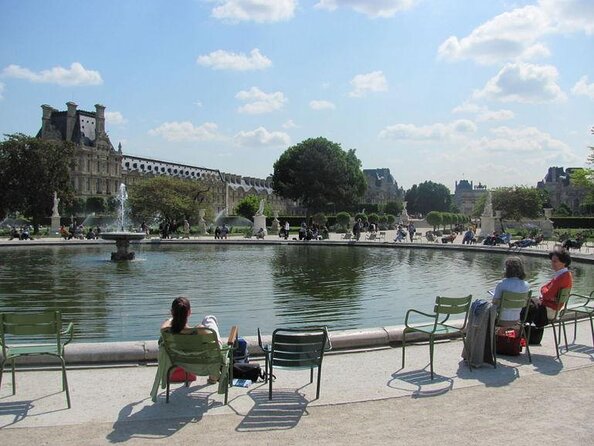
Neoclassicism can sound like a dry subject. In Paris, it is anything but. The style revived the visual language of ancient Greece and Rome, favoring balance, columns, clear proportions, and an orderly appearance. Those choices were not just decoration. They communicated ideas about authority, reason, civic duty, wealth, and public life.
That is where this walk earns its place. You are not simply looking at handsome façades. You are being shown how a royal square, a former exchange, a covered arcade, and a royal garden fit into a wider change in Parisian culture.
The route also moves through different kinds of places. You see a financial building, a ceremonial square, a shopping arcade, a garden, and a palace complex. That variety helps you understand how classical design reached beyond monuments and into ordinary city life.
The tour is offered in English, though a multilingual guide may lead it. Since it is private, the guide can adjust the conversation to your interests. If you care most about architectural details, you can stay with columns, façades, symmetry, and materials. If you prefer politics and culture, the same buildings open a discussion about royal power, commerce, and the changing city.
More Private Architecture Tours in France:
- Private Art Nouveau and Art Deco tour near Opera
★ 5.0 · 15 reviews - Architectural Strasbourg: Private Tour with a Local Expert
★ 5.0 · 2 reviews - Architectural Paris: Private Tour with a Local Expert
★ 5.0 · 2 reviews
Starting at Palais Brongniart and the old stock exchange
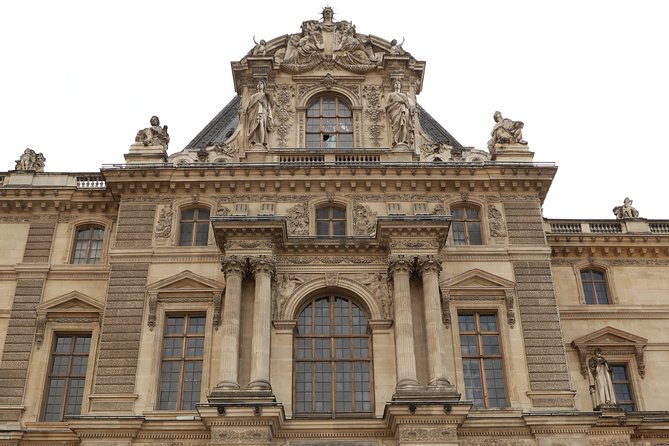
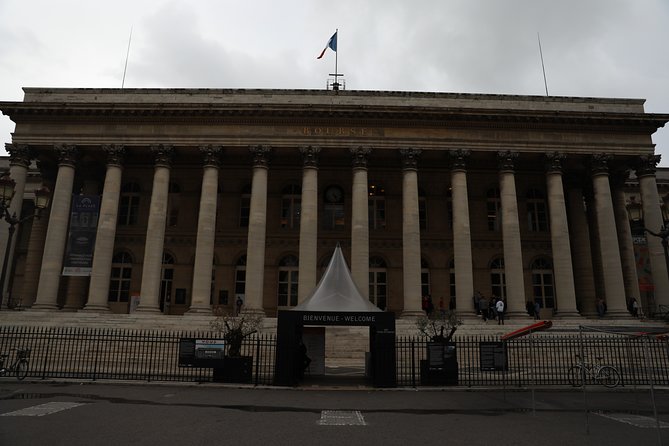
The walk begins at Bourse, in front of Palais Brongniart. Allow yourself a little extra time to find the meeting point at Bourse, 75002 Paris, since the tour starts in the city rather than at a major museum entrance.
Palais Brongniart makes a strong first stop because it ties Neoclassical form to money and government. This was the former stock exchange building, and its design reflects the public image that financial institutions wanted to project: stability, order, seriousness, and control.
Your guide can help you read the building as more than an attractive classical shell. Look for the way a large civic structure presents itself to the street. The formal composition and classical language make commerce appear respectable and permanent. That is a useful lens for the rest of the walk.
The planned time here is about 30 minutes, the longest stop on the route. That makes sense. A building connected with finance and public power gives the guide room to explain the period before you move into squares, arcades, and gardens.
This is also where the quality of the guide matters most. Boris has been praised for making architectural information easy to understand and for asking questions rather than giving a one-way lecture. That style can make a complex subject much easier to follow, especially if you are new to architectural history.
Place des Victoires and the royal square
From the former exchange, the route continues to Place des Victoires, one of Paris’s four royal squares. The scheduled visit lasts about 15 minutes, so expect a compact explanation rather than a long pause.
The square is important because it helps explain the classical ideas that came before full Neoclassicism. Its ordered layout and royal purpose offer a model for the controlled, ceremonial spaces that later designers admired and adapted.
This is a good point to ask your guide how a royal square differs from a later public space. You can also ask how design communicates hierarchy. The value of the stop is not simply the square itself. It gives you a visual reference for the rules of symmetry and proportion that recur throughout the tour.
Because the stop is short, you may not get every detail. That is one of the tradeoffs of the two-hour format. The guide must keep the walk moving, and you will need to decide which questions matter most to you.
Galerie Vivienne and Parisian shopping culture
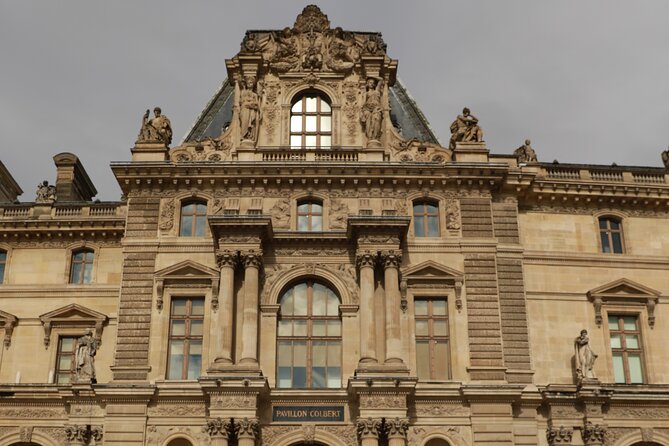
Galerie Vivienne provides a welcome change of scale. Instead of a grand open square or monumental civic building, you enter a covered passage associated with the first half of the 19th century.
The arcade is treated as an ancestor of the modern shopping mall. That comparison gives the stop immediate relevance. You are looking at an early form of commercial space designed to make shopping more comfortable, social, and visually appealing.
The planned time is about 20 minutes. Use it to notice how the arcade changes the experience of the city. A covered passage creates a distinct interior world while remaining part of the public street network. It links commerce with architecture in a more intimate way than Palais Brongniart does.
Galerie Vivienne also keeps the tour from becoming a parade of monumental façades. You see that classical design could appear in a commercial setting, not only in buildings built for rulers or institutions.
The stop may be especially useful if you enjoy urban design. You can ask how arcades shaped later retail spaces and why covered shopping areas became such an important feature of 19th-century Paris. Since the tour is private, this is a natural place to steer the conversation toward modern city planning or the history of shopping.
More Walking Tours in France:
- Bastille’s Architecture & Artisans Self-Guided Walking Tour
★ 4.5 · 18 reviews - Strasbourg : Neustadt Architecture Walking Tour
★ 5.0 · 14 reviews - The Official Art Deco Walking Tour by The Miami Design Preservation League
★ 5.0 · 1,580 reviews - Lecce: Baroque Architecture and Underground Walking Tour
★ 4.6 · 1,248 reviews
The Tuileries as a designed royal garden
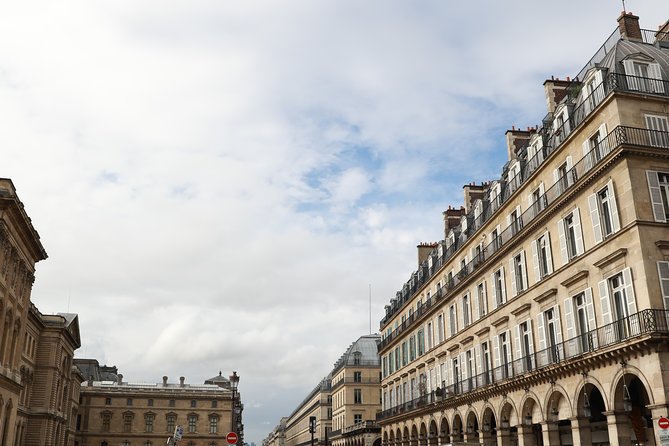
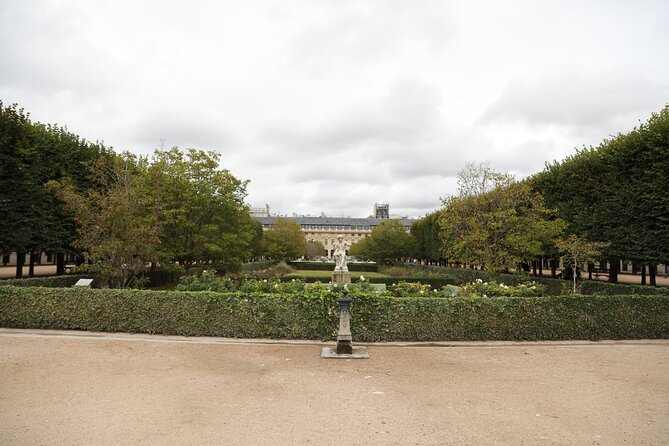
The walk then reaches the Jardin des Tuileries, the former royal garden. The planned time is about 20 minutes.
The garden is viewed through the lens of Neoclassical thought and design. Here, the discussion shifts from buildings to space itself. Formal paths, controlled views, and carefully arranged geometry show how classical order can guide movement through an outdoor setting.
You may find this stop especially helpful after the tighter setting of Galerie Vivienne. A garden lets you see how ideas about balance and proportion work across a much larger area. The guide can connect the layout to royal power and to the way designed open space shaped public life.
Do not expect a long garden stroll in every direction. With only two hours and several stops, this is a focused architectural visit. Wear comfortable shoes and be ready to keep walking. The physical demand is moderate, but you should be comfortable on foot for the full tour.
The Tuileries also gives you a chance to ask broader questions. How does a garden direct attention? How does a royal garden become a public urban space? How do views and axes shape the way you see nearby monuments? The answers can make the rest of your Paris sightseeing more meaningful.
Palais-Royal and the city as a commercial center
The route includes the Domaine National du Palais-Royal, where the former royal complex is considered as a commercial center. This stop lasts about 20 minutes.
Palais-Royal is a useful final major stop because it brings together royal identity, urban commerce, and public gathering. The complex was converted into a place for commercial activity, which gives the guide another chance to show how old power structures adapted to changing city life.
That shift is one of the most interesting threads in the tour. Parisian architecture was not frozen in a royal past. Buildings and spaces changed use, and their meaning changed with them. A palace could become part of daily urban life rather than remain only a symbol of the monarchy.
The private format works well here. You can ask the guide to compare Palais-Royal with Galerie Vivienne, or to return to the difference between royal planning and commercial planning. Melissa has been praised for bringing architecture together with art and historical context, while Dunya has been described as an especially strong guide in both history and architecture.
The tour’s stated highlights also include the Cour Carré, the Louvre’s square courtyard. The walk finishes at the Arc de Triomphe du Carrousel on Place du Carrousel, 75001 Paris. Because the stop schedule does not assign a separate visit time to the Cour Carré, ask your guide at the start how it fits into the route and how much time you will have there.
What the private format changes
The tour costs $360.48 per group of up to six people. That is a serious price for two hours, but the comparison should be with a private guide rather than with a standard group walk.
At the maximum group size, the cost works out to about $60 per person. For two people, it becomes a much higher per-person expense. The value is strongest when a family or group of friends can share the fee and wants a tailored lesson rather than a general introduction.
You are paying for a private activity and a professional art historian guide. Food and drinks are not included, but that is not a major issue for a two-hour city walk. You can eat before or after, and the end point near the Louvre puts you in a convenient area for continuing your day.
The private setup also protects you from a common problem on architecture walks: a guide pitching every explanation to the middle of a mixed group. If your group has one person who wants design details and another who wants political context, you can ask the guide to balance both.
The tour has an average booking lead time of 41 days, so it is sensible to reserve ahead, particularly if you need a certain date. Confirmation is normally provided at booking. If you book within seven days of the experience, confirmation may arrive within 48 hours and depends on availability.
The guides and the teaching style
Several guide names appear in the experience’s feedback, including Boris, Mila, Melissa, Dunya, and Milica. Your guide may be different, and the activity notes allow for a multilingual guide, so check the language arrangement when booking if English instruction is important to you.
The strongest pattern is the teaching style. Mila is described as clear, friendly, and good at linking art, architecture, history, and culture. Melissa is praised for explaining not only the buildings but also the wider setting around them.
Boris is noted for making difficult information easy to understand and for asking questions that encourage you to think. That matters on a subject where a long list of dates and names can quickly become tiring.
This is not the right choice if you want a fast photo walk with little explanation. The point is to learn how to look. You should expect discussion, interpretation, and questions. Bring your own curiosity, even if you know little about architecture.
Families can make good use of the format. A parent and daughter enjoyed the tour together, and the guide’s questions helped make the subject accessible. Adults who already know Paris may also appreciate the fresh angle, since Neoclassical design is less commonly covered than the Eiffel Tower, Notre-Dame, or the Louvre’s art collection.
Timing, walking, and practical details
The activity lasts about two hours and includes five principal stops. The listed stop times total about 105 minutes, leaving the rest for walking and transitions. That tells you the rhythm: short movements between sites, focused explanations, and little spare time.
A moderate level of physical fitness is recommended. You should be comfortable walking through central Paris for two hours. Service animals are allowed, and the route is near public transportation.
The activity begins at Bourse and ends at the Arc de Triomphe du Carrousel. This point is useful for extending your day toward the Louvre area, though admission to museums, food, and drinks are not included.
Free cancellation is available if you cancel at least 24 hours before the start time. Changes made less than 24 hours before the start are not accepted, and the amount paid is not refunded for a late cancellation.
Who should book this Paris architecture walk
I would choose this tour if you want a focused introduction to Parisian design and prefer conversation to a large group lecture. It is also a good match for people who enjoy art, civic buildings, urban planning, royal spaces, or the way commerce shapes cities.
You will get the most from it if you are willing to ask questions. The private setup gives you that chance, and the guides have been praised for responding well to curiosity.
I would be more cautious if your main goal is to enter major museums, see lavish interiors, or cover a large number of famous landmarks. This is an outdoor walking lesson, and two hours is not enough for lengthy visits inside every site.
Should you book it?
Book this walk if you want to understand why Paris looks the way it does, not just take pictures of it. The route links finance, royal planning, shopping, gardens, and palace life in a compact way, while the private art historian guide gives you room to shape the discussion.
At $360.48, it makes the most sense for a group of up to six, or for architecture fans who place a high value on personal instruction. If that sounds like your kind of Paris, this is a thoughtful way to spend two hours and finish near the Louvre with a better eye for the city around you.
FAQ
How long is the Neoclassical Paris architecture tour?
The walking tour lasts approximately two hours.
How many people can join the private tour?
The private tour is available for a group of up to six people, and only your group participates.
What language is the tour offered in?
The tour is offered in English. A multilingual guide may operate the activity.
Where does the tour begin and end?
It begins at Bourse, 75002 Paris, France, and ends at the Arc de Triomphe du Carrousel on Place du Carrousel, 75001 Paris.
What locations are included?
The route includes Palais Brongniart, Place des Victoires, Galerie Vivienne, the Jardin des Tuileries, and the Domaine National du Palais-Royal. The tour highlights also refer to the Cour Carré.
Is cancellation free?
Yes. You can cancel for a full refund up to 24 hours before the experience starts. Cancellations made less than 24 hours before the start time are not refunded.
More Two-Hour Tours around France
- Guided Gaudí Trencadís Mosaic Workshop in Barcelona 2 Hours
★ 5.0 · 176 reviews - Miami: 2-Hour Art Deco Bike Tour
★ 4.6 · 155 reviews - Gaudi’s Barcelona 2-Hour Segway Tour with a Live Guide
★ 4.9 · 67 reviews - 2 Hours Savannah Architectural Tour
★ 5.0 · 53 reviews
New to the itinerary around France
- Architectural Strasbourg: Private Tour with a Local Expert★ 5.0 · 2 reviews
- Architectural Paris: Private Tour with a Local Expert★ 5.0 · 2 reviews
- Architectural Bourgeois Paris 19th Century★ 4.0 · 4 reviews
- Discovery Tour of Château Haut Breton Larigaudière★ 5.0 · 2 reviews
- Strasbourg : Neustadt Architecture Walking Tour★ 5.0 · 14 reviews
- Marseille Belvedere: The city through architecture★ 5.0 · 3 reviews
- Contemporary Architecture in Bordeaux city center!★ 5.0 · 2 reviews
- Paris: Discover the hidden architecture gems of Le Marais★ 3.8 · 4 reviews
Private Architecture Tours, compared.

Sagrada Familia & Gaudi Tour Private or Small Group with Tickets
Read our review →
Barcelona 1.5h Private Old Town, Gothic & Ramblas Walking Tour
Read our review →
Treasures of Barcelona: Private Gaudi Walking Tour
Read our review →
Sagrada Familia & Gaudi Guided Tour Private or Small Groups
Read our review →
Best of Chicago: Architecture & Highlights City Private Tour
Read our review →
Private Harajuku Omotesando Architecture Walking Tour
Read our review →
Private Santa Barbara History and Architecture Walking Tour
Read our review →