
Review · FRANCE
Contemporary Architecture in Bordeaux city center!
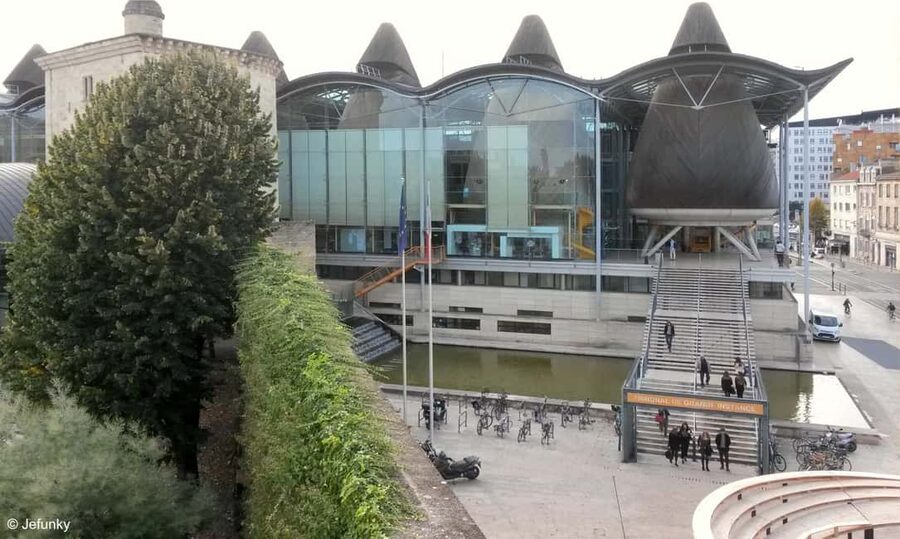
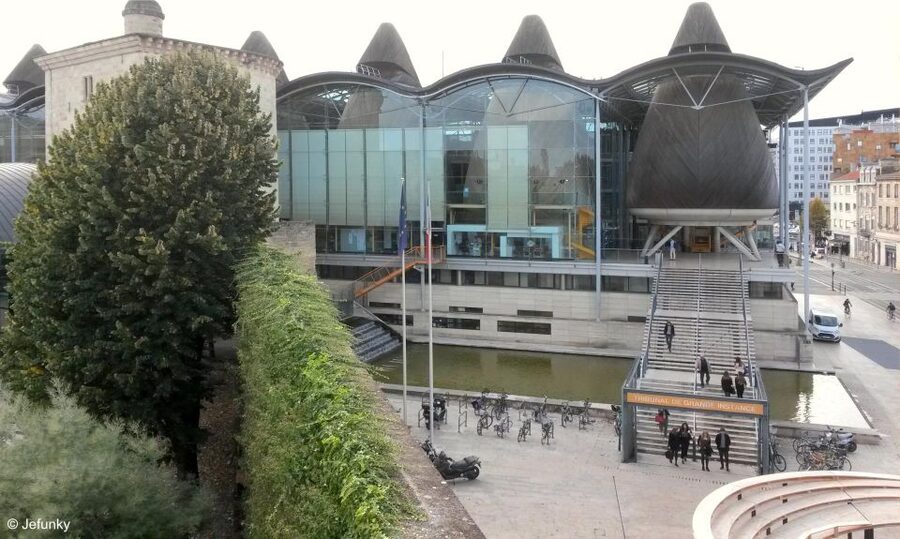
Bordeaux’s most revealing building may be its glass Law Courts, where Richard Rogers replaced the usual heavy courthouse with a row of huge wooden egg-shaped rooms. This two-hour walk uses that striking building, the Water Mirror, Square Vinet, and several historic monuments to explain how Bordeaux changed from a tired port city into one of France’s most sought-after regional capitals.
I especially like the mix of serious architecture and everyday city life. You see major public projects, a former office block turned Mama Shelter hotel, a tiny green square, and the grand old center in one compact walk. I also like the chance to talk over a drink at several possible stops, since good architecture makes more sense when you can pause and ask questions.
The main drawback is its pace. Two hours is enough for a sharp introduction, not a full architectural survey, and the route is not suitable for children under 10 or people with mobility impairments. The final focus on Euratlantique and MECA may also depend on the exact route and available time.
Key points about Bordeaux Architecture Tours
- Richard Rogers’ Law Courts: Enter one of Bordeaux’s most unusual public buildings and see how courtroom design can break from tradition.
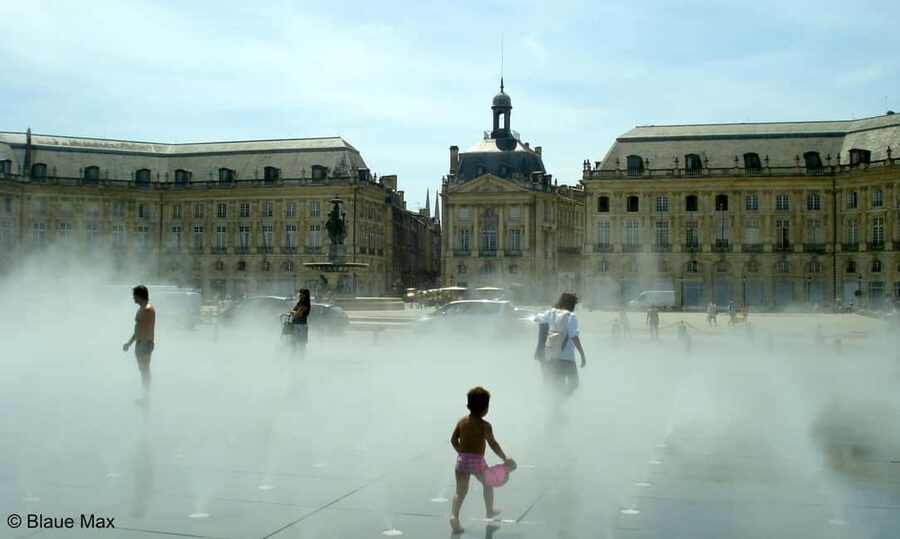
- Water Mirror and river quays: Learn why Michel Corajoud’s public-space project helped drive Bordeaux’s renewal.
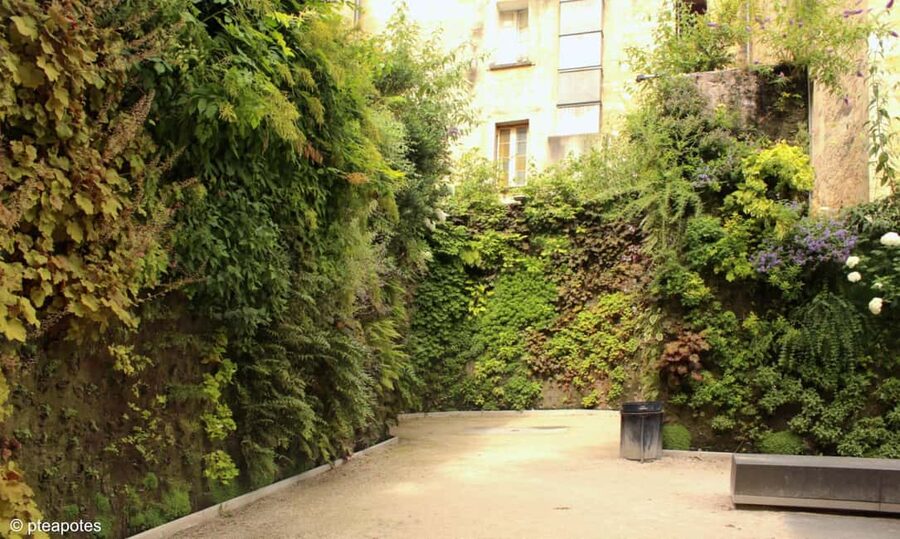
- Square Vinet: Find a tiny urban playground with vertical planting by Patrick Blanc.
- Mama Shelter: See how a 1934 office building became a playful Philippe Starck hotel.
- History beside new design: Pass the Grand Théâtre, Rohan Palace, and Place Pey-Berland while discussing modern interventions.
- English or French guide: The walk lasts two hours and costs $40 per person, with architect-led commentary.
Why this short walk explains Bordeaux so well
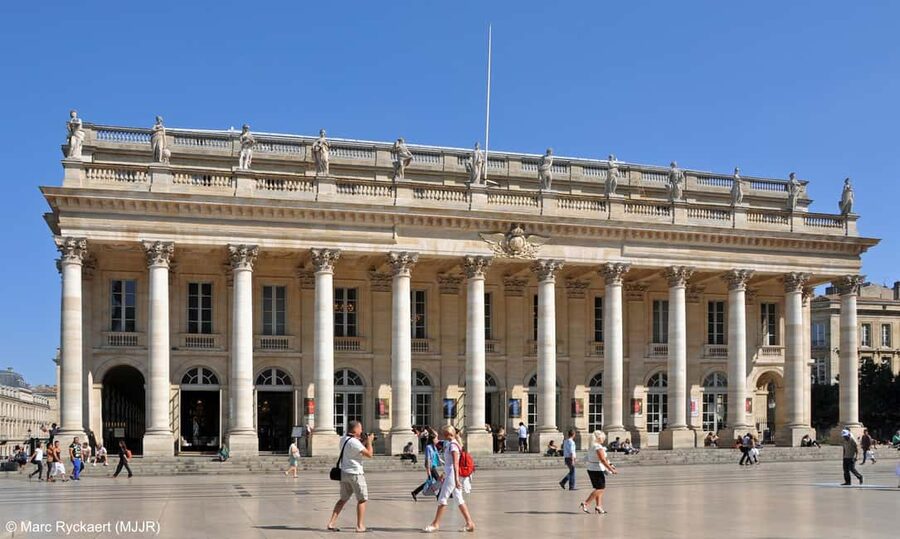
Bordeaux is often introduced through its grand 18th-century riverfront. The pale stone façades along the Garonne, the formal Place de la Bourse, and the symmetry of the Grand Théâtre tell the story of a wealthy port city.
That story is important, but it is only half the picture. Bordeaux later became known as a dark, neglected city with less energy than its elegant façades suggested. During the last 25 years, the city has worked hard to change that image and its daily reality.
This tour gives you a way to see both periods at once. You move through a center shaped by classical planning, then stop at buildings and public spaces that speak to Bordeaux’s current ambitions. The point is not simply to collect impressive façades. You learn how public investment, new architecture, restored streets, and riverfront improvements work together.
Bordeaux joined the UNESCO World Heritage list in 2007. That designation helped confirm the importance of its older center, but the city did not freeze itself in the past. It continued to add contemporary buildings and plan for major population growth, with an expected population of one million in the wider city area by 2030.
You will get more from the walk if you treat it as a lesson in city planning rather than a parade of famous buildings. Your guide can explain why one project belongs beside an old monument, why a small planted square matters, and how the Garonne quays became the backbone of the city’s renewal.
More Architecture Tours around France:
- Reims Art Deco guided tour
★ 4.5 · 26 reviews - Bastille’s Architecture & Artisans Self-Guided Walking Tour
★ 4.5 · 18 reviews - Private Art Nouveau and Art Deco tour near Opera
★ 5.0 · 15 reviews
Begin at the glass Law Courts by Richard Rogers
The meeting point is at the foot of the entrance stairs of the Law Courts building. That makes arrival simple, but give yourself enough time to locate the stairs before the tour begins. You start with one of Bordeaux’s boldest modern buildings, designed by Richard Rogers.
The building is memorable because it does not look like a traditional courthouse. Instead of presenting an imposing stone façade, it uses large glass forms and unusual wooden courtroom shells. The design lets the legal process feel less sealed off from the city, at least in architectural terms.
Your guide can help you look past the first visual surprise. Pay attention to the contrast between the transparent outer structure and the rounded wooden courtroom volumes. The building turns a courthouse into a study in scale, light, security, and public access.
This is a strong opening because it gives you something concrete to discuss right away. You are not staring at an abstract plan or hearing a long lecture about architectural theory. You are standing in front of a working civic building that challenges your expectations.
The Law Courts are also a useful counterpoint to Bordeaux’s older monuments. A city famous for disciplined classical streets suddenly offers a building with curved forms and exposed modern materials. That tension captures the broader character of the tour.
The building is still a functioning court complex, so the visit should be understood as an architectural stop rather than a promise of unrestricted access to every interior area. The supplied tour details specifically highlight entering the building, but exact access can depend on the day and the building’s operations.
Place Pey-Berland and the art of putting new work beside old
From the Law Courts, the walk continues through the central city toward Place Pey-Berland. This square brings together major historic buildings and a more recent urban plan.
Place Pey-Berland is useful for understanding Bordeaux’s approach to renewal. The city has not simply built a new district away from its old center. Instead, it has introduced contemporary design into spaces framed by important monuments.
You will pass essential landmarks such as Rohan Palace and the Grand Théâtre during the urban stroll. Their presence keeps the discussion grounded. The guide can compare the proportions, materials, and public purpose of older buildings with the newer projects along the route.
I like this part of the walk because it helps you read Bordeaux at street level. A city plan is not only about individual buildings. It is also about where people walk, where a square opens up, how a view is framed, and how new construction affects an older setting.
The square’s high-end contemporary masterplan may appeal to you if you enjoy the quieter side of architecture. It is not a single dramatic building like the Law Courts. Instead, it is about how several elements fit together and how public space can make a historic center feel current without wiping away its identity.
Square Vinet, Bordeaux’s small-scale surprise
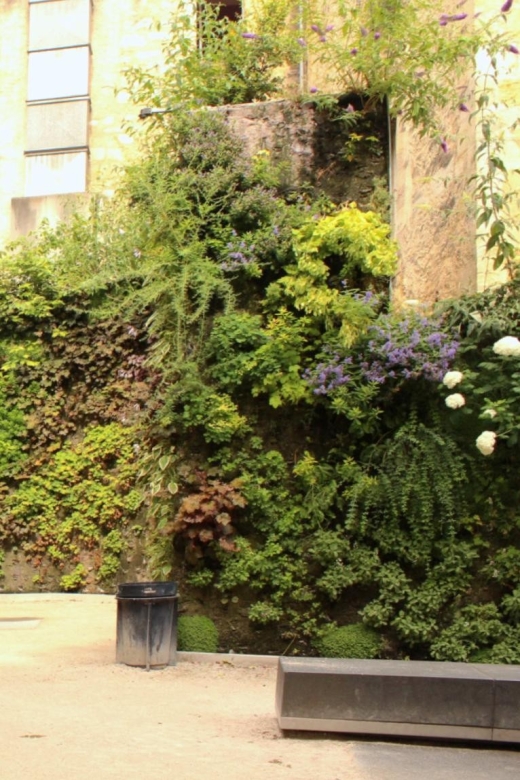
Square Vinet is one of the tour’s more unusual stops. It is a tiny, tucked-away playground with vertical green walls created through the work of Michel Desvigne and Patrick Blanc.
This is a good reminder that urban design is not only about grand public buildings and large redevelopment schemes. A small square can change how a neighborhood feels. Green walls bring planting into a tight city site, while the playground gives the space a practical purpose for local families.
The contrast with the monumental center makes Square Vinet especially useful. You have already seen the formal scale of Bordeaux’s old streets and the technical drama of the Law Courts. Here, the focus shifts to a little pocket of space that people can use every day.
The vertical planting is also worth examining closely. Rather than spreading greenery across a broad park, the design uses walls to add plant life where ground space is limited. Your guide can connect that detail to wider questions about density, comfort, and the future of city centers.
Do not expect a large park or a long stop. The appeal is its size and its tucked-away character. If you like small design choices that quietly improve a city, this may be one of the most rewarding parts of the route.
Same streets, read through a different style:
- Tasting of 6 wines at Château Haut Breton Larigaudière
★ 4.5 · 17 reviews - Strasbourg : Neustadt Architecture Walking Tour
★ 5.0 · 14 reviews - Neoclassical Paris Architecture 2-Hour Private Walking Tour
★ 5.0 · 7 reviews - Architectural Bourgeois Paris 19th Century
★ 4.0 · 4 reviews
Mama Shelter and a 1934 building with a new personality
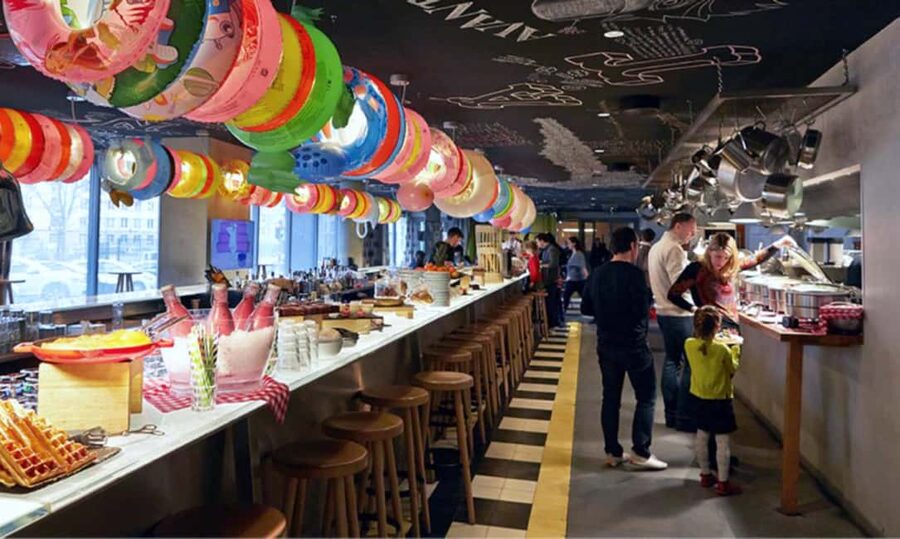
The walk also takes a look at Mama Shelter, a funky hotel created inside a 1934 office building. Philippe Starck worked on the design, and the result offers another angle on Bordeaux’s renewal.
The important point here is adaptation. The city did not need to erase an older structure to create a modern hotel. Instead, an office building from the 1930s received a new use and a more playful public identity.
You may find this stop more accessible than a discussion of planning policy because the change is easy to understand. One building can pass through several lives. Its original function may disappear, but the structure can remain part of the city while serving a new audience.
Mama Shelter also brings a different mood to the walk. The Law Courts are formal and civic. Square Vinet is compact and green. The hotel is social, colorful, and designed to attract people who want food, drinks, and a less solemn city experience.
The tour allows for several possible drink stops. That does not mean a fixed tasting menu or a guaranteed break at every location, but it does give the guide room to pause and discuss a building in a more relaxed setting. Ask at the start how much time is likely to be available if a drink stop matters to you.
The Water Mirror and Bordeaux’s great public-space project
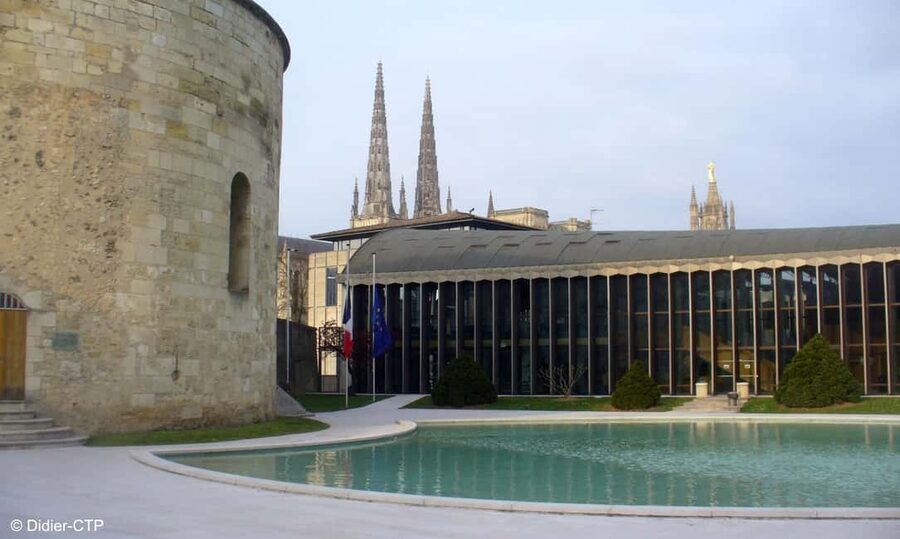
The first part of the tour begins around the Garonne River quays and the Water Mirror, designed by Michel Corajoud. This is the place to understand the wider strategy behind Bordeaux’s transformation.
The Water Mirror is more than a popular photo stop. Its shallow water surface and mist create changing reflections opposite the Place de la Bourse. The project helped turn the riverfront into a place for walking, pausing, and looking across the water rather than simply passing through a working port zone.
Your guide will use the quays to explain the major ideas that shaped Bordeaux’s renewal from 1995 onward. The discussion can cover how public space, river access, heritage, and new development support one another.
This is one of the tour’s strongest sections because the setting makes the planning story visible. You can see the river, the historic façades, the open public space, and the steady movement of the city around you. The Water Mirror gives the discussion a clear focus.
Timing matters here. The Water Mirror’s appearance can change with its water and mist cycles, and its exact condition is not promised by the tour details. Still, even without a perfect reflection, the quays remain important for understanding Bordeaux’s new public face.
Use this stop to ask direct questions. What changed after the quays were redesigned? How did Bordeaux balance heritage protection with new construction? Which projects served residents, and which were aimed more at visitors or investment? Those questions will make the rest of the walk easier to interpret.
From the historic center to Euratlantique and MECA
The tour’s later discussion turns toward current development operations, especially the Euratlantique project. This is where Bordeaux’s future comes into view.
Euratlantique is presented as a major development area connected with the city’s growth and changing regional role. The tour may include some of its most emblematic buildings, with the MECA as a key example. MECA was designed by the Danish firm BIG.
Because the experience lasts only two hours, you should think of this portion as an introduction rather than a complete tour of Euratlantique. The route and available time may determine how much you see directly. The supplied details describe the possibility of discovering MECA and other projects, so confirm the intended route if this is your main reason for booking.
MECA gives the discussion a contemporary endpoint. After seeing Bordeaux’s 18th-century façades, a 1934 office building, and a Rogers courthouse, you can consider what the city wants its next chapter to look like.
This connection between old and new is more useful than a simple list of famous architects. You see Bordeaux as a city making choices about housing, culture, public space, business, and identity. The guide’s job is to connect those choices rather than treat each building as an isolated object.
If Euratlantique interests you most, you may want to ask whether the walk includes an extended visit there or mainly discusses the project from the central route. The available information does not promise a fixed amount of time in the district.
The guide makes the difference
The experience is led by a guide and architect, in English or French. David led the April 2024 tour and was described as relaxed, kind, and friendly, with a well-judged balance between detail and unusual places.
That balance is important. Architecture tours can go wrong in two ways: they can become a dry lecture, or they can reduce every building to a quick photo and a famous name. The best moments here should come from the connection between technical design and the layered past of each site.
You do not need a professional background in architecture. You only need curiosity about why Bordeaux looks the way it does and how its newer projects fit into the older city.
A drink stop can also help keep the two-hour route from feeling too formal. Several stops are possible, but they are not listed as included drinks, so plan to pay for your own order if you choose to stop.
Is $40 a fair price for two hours?
At $40 per person, this is not the cheapest way to walk around Bordeaux. You can see the Water Mirror, Place Pey-Berland, and many historic streets without paying anything.
The value comes from interpretation and access. You are paying for an architect-led explanation of projects that are easy to admire but harder to understand on your own. The Law Courts, Square Vinet, Mama Shelter, and Euratlantique each raise different questions about design and city planning.
The price makes the most sense if you would otherwise spend time reading about Bordeaux’s redevelopment or visiting architecture sites without much context. It is less compelling if you only want a standard old-town introduction or a general sightseeing walk.
The small review base gives this experience a perfect 5 rating, and the strongest praise focused on the mixture of building types, layered stories, and the balance between detail and unusual locations. That matches the tour’s central strength: it does not stay in one architectural period or one part of city life.
Who should book this walk?
I would recommend it to adults and older teenagers who enjoy cities as working places, not just collections of monuments. It is particularly suited to architecture students, designers, urban-planning fans, photographers, and repeat visitors who have already seen Bordeaux’s famous 18th-century center.
It also suits first-time visitors who want a useful introduction to the city’s recent changes. You will come away with a clearer sense of why the riverfront matters and why Bordeaux now has contemporary buildings in a center known for classical stone.
You should think twice if you want a relaxed, slow-paced outing. The walk covers several locations and ideas in two hours, so there is not much time for long personal exploration at each stop. It is also not suitable for children under 10 or people with mobility impairments.
Book it if you want to understand how Bordeaux moved beyond its Sleeping Beauty image and if the chance to enter the Law Courts appeals to you. Skip it if your priority is wine tasting, food, or a conventional monument tour. For curious city visitors, this is a focused way to see the old Bordeaux and the newer Bordeaux in the same conversation.
FAQ
How long does the Contemporary Architecture in Bordeaux tour last?
The tour lasts two hours.
How much does the tour cost?
The price is $40 per person.
Where does the tour meet?
You meet at the foot of the entrance stairs of the Law Courts building.
Which languages are available?
The live guide leads the tour in English or French.
Who guides the experience?
The tour is led by a guide and architect. David led the April 2024 tour.
Does the tour enter the Bordeaux Law Courts?
Entering Richard Rogers’ Bordeaux Law Courts is one of the highlighted parts of the experience. Exact access within the functioning building can depend on conditions on the day.
Which contemporary buildings and places are covered?
The route includes the Law Courts, Place Pey-Berland, Mama Shelter, Square Vinet, and the Water Mirror. The later discussion focuses on Euratlantique, with the possibility of seeing projects such as MECA.
Are drinks included?
The tour offers several possible stops for drinks, but the supplied information does not state that drinks are included in the $40 price.
Is the tour suitable for children and people with mobility impairments?
The tour is not suitable for children under 10 or people with mobility impairments.
New to the itinerary around France
- Architectural Strasbourg: Private Tour with a Local Expert★ 5.0 · 2 reviews
- Architectural Paris: Private Tour with a Local Expert★ 5.0 · 2 reviews
- Architectural Bourgeois Paris 19th Century★ 4.0 · 4 reviews
- Discovery Tour of Château Haut Breton Larigaudière★ 5.0 · 2 reviews
- Strasbourg : Neustadt Architecture Walking Tour★ 5.0 · 14 reviews
- Marseille Belvedere: The city through architecture★ 5.0 · 3 reviews
- Neoclassical Paris Architecture 2-Hour Private Walking Tour★ 5.0 · 7 reviews
- Paris: Discover the hidden architecture gems of Le Marais★ 3.8 · 4 reviews
France Architecture Tours, compared.
Bastille’s Architecture & Artisans Self-Guided Walking Tour
Read our review →
Tasting of 6 wines at Château Haut Breton Larigaudière
Read our review →
Private Art Nouveau and Art Deco tour near Opera
Read our review →

Neoclassical Paris Architecture 2-Hour Private Walking Tour
Read our review →
Discover the hidden architecture gems of Le Marais
Read our review →
Other lists with this tour