
Review · FRANCE
Discovery Tour of Château Haut Breton Larigaudière
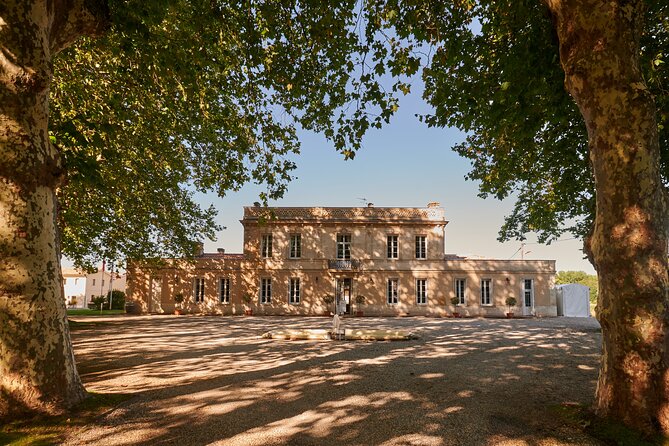
Château Haut Breton Larigaudière gives you a close look at how a Margaux wine is made, from the character of the soil to the rows of barrels where the wine rests. The one-hour visit covers the estate, vat room, and barrel cellar before ending with four wines.
I like the small group limit of 10 and the clear focus on winemaking rather than grand ceremony. I also like the guide-led tasting, where each wine comes with an explanation instead of being served without context.
The main drawback is the short length. You get a useful introduction, but this is not a long estate visit or a full-day Médoc wine program. You should also allow some flexibility, since the visit time may occasionally change, although advance notice is given.
Key points at a glance
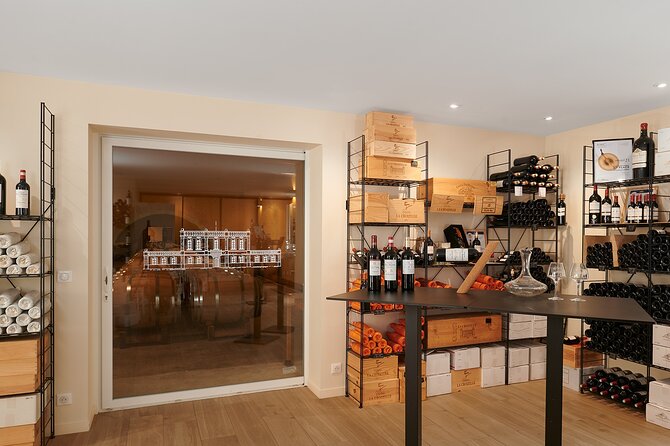
- Four wines at the finish: Your tasting includes four glasses of wine, with comments from an expert guide.
- A real look at production: The visit takes you through the traditional vat room and barrel cellar.
- Margaux in plain terms: You learn how soil and grape varieties shape the wines made here.
- Three generations of family ownership: The De Schepper family story adds a personal thread to the estate visit.
- Small groups: The maximum group size is 10, making it easier to hear explanations and ask questions.
- Low-cost introduction: At $17.35 per person, this is a modest way to add a Bordeaux wine stop to your day.
Starting at Château Haut Breton Larigaudière in Soussans
You begin at 3 Rue des Anciens Combattants in Soussans, France. The activity also finishes at this same meeting point, so you do not need to arrange a separate end location.
That simple setup matters in the Médoc, where wine estates are spread across several villages. If you are building your own route, the fixed start and finish make this visit easy to place between other stops. The supplied information does not include transport, so you need to reach the château on your own.
The experience lasts about one hour. That makes it a good fit for a day of several wine-related visits, or for anyone who wants a focused introduction without giving up half a day. You will need to arrive with enough time to find the meeting point and settle in, since the tour itself is fairly compact.
The group can contain no more than 10 people. I consider that a useful limit for a cellar visit. You are less likely to lose the guide’s explanation in a crowd, and questions should be easier to ask during the tour and tasting.
More facades, interiors and skylines to see around France:
- Reims Art Deco guided tour
★ 4.5 · 26 reviews - Bastille’s Architecture & Artisans Self-Guided Walking Tour
★ 4.5 · 18 reviews - Tasting of 6 wines at Château Haut Breton Larigaudière
★ 4.5 · 17 reviews
The De Schepper family and three generations of ownership
The visit begins with the story of the De Schepper family, who have owned Château Haut Breton Larigaudière for three generations. This gives the tour a human starting point before it moves into technical details.
Family ownership does not automatically make a wine better, of course. What it does provide is a way to understand the estate as an ongoing project rather than just a name on a bottle. Three generations suggest continuity, changing methods, and a long relationship with the property.
You should expect the guide to connect the family story with the way the estate works today. The supplied details do not give a precise founding date or a list of family members, so you should not expect a full genealogy. Instead, this part provides context for the estate and the wines you taste later.
That balance suits the length of the experience. You get enough background to place the château in its setting, then move on to the parts many wine drinkers most want to see: the soils, grapes, tanks, barrels, and finished wines.
Understanding Margaux soils and grape varieties
A central part of the visit is the character of the estate’s soils and the grape varieties used there. For a newcomer to Bordeaux wine, this is one of the most useful parts of the hour.
Wine labels can make soil and grape names feel abstract. Here, the guide ties those ideas to the estate itself. You learn that the wine’s identity is not only a matter of a recipe in the cellar. The ground where the vines grow and the varieties selected by the producer also shape the final result.
The tour is specifically framed around Margaux wines, known for elegance and finesse. Those are broad terms, so the guide’s explanations matter. A good explanation helps you connect the language of the region with what you smell and taste in the glass.
You should listen for how the guide describes the relationship between the soil, the grapes, and the wine style. This is also a good moment to ask questions if you are unsure about Bordeaux terminology. The small group size gives you a better chance of getting a direct answer than you would on a large bus tour.
The available information does not identify every grape variety grown at the château or describe the soil in technical detail. That is worth keeping in mind. You will receive an introduction to these subjects, not a vineyard science class.
Inside the traditional vat room
The tour then moves into the traditional vat room, where you get a look at one of the working areas used in wine production. This is where the visit becomes more concrete. Instead of only hearing about winemaking, you see part of the equipment and working space connected to it.
A vat room is important because it is where grape juice begins its transformation into wine. The guide can explain how the room fits into the larger process and how the estate turns harvested grapes into a drinkable, age-worthy wine.
For someone who has only visited tasting rooms, this stop adds useful depth. You start to see that the polished bottle on a shelf comes from a chain of practical decisions. The room also helps separate the estate’s work from the romantic image of wine as something that simply appears after harvest.
The phrase traditional vat room does not mean you should expect an old-fashioned display frozen in time. It describes the character of the production space, but the supplied details do not specify the exact tanks, equipment, or techniques used. The guide is your best source for those specifics during the visit.
Because the tour is only about an hour, this is likely an explanatory stop rather than a long technical demonstration. You will see the facility and learn how it contributes to the wine, but you should not expect a full harvest-day simulation.
Same streets, read through a different style:
- Private Art Nouveau and Art Deco tour near Opera
★ 5.0 · 15 reviews - Strasbourg : Neustadt Architecture Walking Tour
★ 5.0 · 14 reviews - Neoclassical Paris Architecture 2-Hour Private Walking Tour
★ 5.0 · 7 reviews - Architectural Bourgeois Paris 19th Century
★ 4.0 · 4 reviews
The barrel cellar and the patient part of winemaking
The barrel cellar brings you to the next stage of the story. After the vat room, you see where wine rests and develops in barrels. This change of setting helps you understand that winemaking is not finished when fermentation ends.
For me, the barrel cellar is often where a wine estate visit gains atmosphere, but its real value is practical. Barrels show the patient side of production. The wine must be stored, monitored, and prepared before it reaches the bottle and finally your table.
Your guide can explain how the cellar supports the style associated with the estate. Since the tour presents Château Haut Breton Larigaudière as a producer of elegant and fine Margaux wines, the cellar offers a useful link between the estate’s stated character and its methods.
Do not expect the tour details to answer every barrel-related question in advance. The information does not specify the barrel material, age, or length of aging. If those points matter to you, ask during the visit. The guide’s role is to explain how the facilities and decisions shape an authentic wine.
The vat room and barrel cellar work well together as a pair. One shows the active production stage. The other shows the quieter period that follows. In one short visit, you get a basic but sensible picture of the route from grapes to finished wine.
The four-wine tasting
The visit ends with a guided tasting of four wines. Four glasses are included in the price, and an expert guide comments on them as you taste.
This is more useful than an unstructured pour. You can compare the wines while the guide points out differences and explains what you are drinking. The tasting also puts the earlier parts of the tour to work. After hearing about soils, grape varieties, tanks, and barrels, you have a chance to look for those ideas in the glass.
If you are new to wine tasting, you do not need to arrive with special vocabulary. Pay attention to the guide’s descriptions, then focus on what you notice yourself. You can compare color, aroma, texture, and finish without trying to sound like a professional.
The tasting is also where the guide can answer practical questions about the wines. You may want to ask how the four selections differ, which one best shows the Margaux style, or how the estate’s production choices appear in the glass.
One guide connected with the experience is Bruna, a Portuguese native who leads the visit in clear English and explains the château well. The information does not guarantee that Bruna will lead every scheduled tour, but her presence gives you a useful indication of the language support available.
The tasting receives particularly strong praise for its quality and clarity. The guide is described as pedagogical, meaning the explanations are structured to teach rather than simply impress. That is a good sign for anyone who wants to understand the wine, not just sample it.
Alcoholic drinks are included as part of the four tastings. Additional purchases are not included, so bottles or other items you choose to buy would cost extra.
What $17.35 gets you
At $17.35 per person, this is priced as an accessible introduction to the estate. You receive a guided tour of the property and technical facilities, plus four tasting glasses. For a one-hour activity, the value depends on what you want from a wine visit.
I think the price works well if you want three things: a look at production spaces, a short explanation of Margaux wine, and a structured tasting. You are paying for direct interpretation, not just entry to a building and a few pours.
The value is less clear if you want a long, slow estate experience with extensive vineyard time, a full meal, or a large selection of wines. None of those are listed as part of the activity. This is a compact visit, and its strength is focus.
The small group limit improves the value. A low price can feel disappointing when a group is too large to hear the guide, but a maximum of 10 helps protect the teaching part of the tour.
You also need to remember that additional purchases are not covered. If you plan to buy wine, treat that as a separate expense rather than part of the admission price.
Language, timing, and practical planning
The tour information confirms that an expert guide leads the experience. Bruna has been specifically associated with clear English explanations, and her Portuguese background may also be useful for some visitors. The available details do not promise a particular guide or list every language offered, so check the confirmed booking details if language is important to you.
Confirmation arrives within 48 hours of booking, subject to availability. Since the experience is commonly booked about 16 days ahead, I would avoid leaving it until the last minute if your schedule is fixed.
The time may occasionally be changed by the château. In one case, the new time was communicated early enough to cause no problem. Still, do not place this activity between two reservations with no room to adjust. A little flexibility will make the day easier.
The activity accepts service animals. The maximum group size is 10. No other accessibility details are provided, so you should contact the provider before booking if you need information about physical access or specific support.
Free cancellation is available when you cancel at least 24 hours before the local start time. A cancellation made less than 24 hours ahead is not refunded, and changes inside that window are not accepted.
Who will enjoy this one-hour Margaux visit
I would choose this experience if you are staying in or touring the Médoc and want a short, affordable introduction to château winemaking. It suits curious beginners, couples building a flexible wine day, and anyone who values an explanation with the tasting.
It is also a good match for wine drinkers who want to connect regional terms with real production spaces. The tour takes you beyond the glass without asking you to commit to a long program.
You may want something else if your priority is a broad comparison of many estates, a vineyard walk, a meal, or a full day of technical instruction. Those features are not part of the stated experience.
Families and mixed-interest groups may find the one-hour format manageable, though the tasting includes alcohol and the main subject is wine production. The small group size should help anyone who prefers a quieter setting.
Should you book Château Haut Breton Larigaudière?
I would book it if you want a focused Margaux introduction at a reasonable price. The combination of family background, soil and grape explanations, a vat room, a barrel cellar, and four guided wines gives you a clear story in about an hour.
The best reason to choose it is the teaching. The guide does not simply hand you a glass. You learn how the estate connects its ground, grapes, facilities, and finished wine. Bruna’s clear English explanations are another useful point for English-speaking visitors, though guide assignments can vary.
Skip it if you want a long estate day or a wide tasting lineup. For everyone else, this is a tidy, low-cost way to add a serious wine stop to a visit around Margaux and Soussans.
FAQ
How long does the Château Haut Breton Larigaudière tour last?
The tour lasts approximately one hour.
What is the price of the experience?
The listed price is $17.35 per person.
Where does the tour begin?
It begins at 3 Rue des Anciens Combattants, 33460 Soussans, France.
Where does the activity finish?
The activity ends back at the meeting point.
How many wines are included in the tasting?
The experience includes a guided tasting of four wines and four tasting glasses.
What parts of the estate will I see?
You will tour the estate and technical facilities, including the traditional vat room and barrel cellar.
Is the guide available in English?
Bruna has led the visit with clear English explanations. The supplied information does not guarantee that she will lead every tour or list all available languages.
How large can the group be?
The activity has a maximum of 10 travelers.
Are additional purchases included?
No. Additional purchases are not included in the price.
Can I cancel for a full refund?
Yes, if you cancel at least 24 hours before the experience’s local start time. Cancellations made less than 24 hours before the start are not refunded.
New to the itinerary around France
- Architectural Strasbourg: Private Tour with a Local Expert★ 5.0 · 2 reviews
- Architectural Paris: Private Tour with a Local Expert★ 5.0 · 2 reviews
- Architectural Bourgeois Paris 19th Century★ 4.0 · 4 reviews
- Strasbourg : Neustadt Architecture Walking Tour★ 5.0 · 14 reviews
- Marseille Belvedere: The city through architecture★ 5.0 · 3 reviews
- Contemporary Architecture in Bordeaux city center!★ 5.0 · 2 reviews
- Paris: Discover the hidden architecture gems of Le Marais★ 3.8 · 4 reviews
- Neoclassical Paris Architecture 2-Hour Private Walking Tour★ 5.0 · 7 reviews
France Architecture Tours, compared.
Bastille’s Architecture & Artisans Self-Guided Walking Tour
Read our review →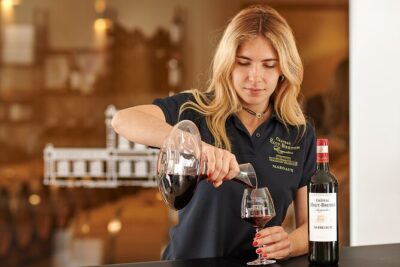
Tasting of 6 wines at Château Haut Breton Larigaudière
Read our review →
Private Art Nouveau and Art Deco tour near Opera
Read our review →
Neoclassical Paris Architecture 2-Hour Private Walking Tour
Read our review →
Discover the hidden architecture gems of Le Marais
Read our review →
Other lists with this tour