
Review · FRANCE
Marseille Belvedere: The city through architecture
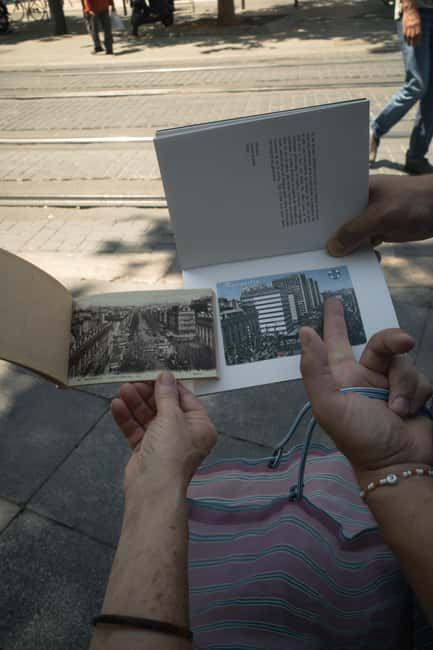
Marseille comes into focus on this walk through old photographs, postcards, and short readings chosen by architect Louis Leroy. Instead of simply naming monuments, Louis asks you to notice how streets, buildings, topography, and public spaces reveal the city’s changes over time.
I especially like the way the tour joins architecture with literature, and the small group limit of eight gives you room to ask questions and follow your curiosity. The main consideration is pace: three hours on foot, with many stops, suits people who enjoy looking closely more than those who want a fast checklist of sights.
Key points
- An architect’s view of Marseille: Louis Leroy explains the city through buildings, street plans, topography, and urban change.
- Archive images at the exact places they depict: Old postcards and photographs help you compare Marseille then and now.
- A route from the Old Port to Cours Belsunce: See La Canebière, City Hall, Saint-Laurent Church, Fort Saint-Jean, La Major, Le Panier, and Rue de la République.
- Readings that add another voice: Texts by researchers, sociologists, historians, and novelists bring social life and memory into the walk.
- A very small group: With no more than eight participants, the format allows for questions and discussion.
- Useful for repeat visitors: The tour trains your eye, so familiar streets can look different after Louis points out their clues.
Why Marseille Looks Different Through an Architect’s Eyes
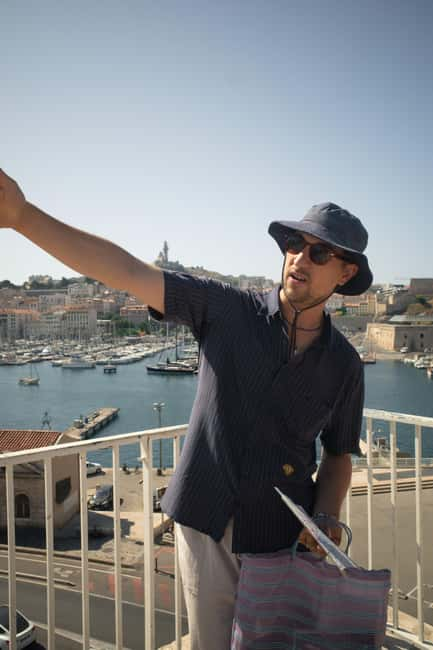
Many city walks move from monument to monument. This one works differently. Louis Leroy uses each stop to connect what you see with a piece of writing and an image from another period.
That method matters in Marseille, a city whose appearance has shifted through redevelopment, changing transport routes, new buildings, and the steady pressure of daily life. You are not asked to memorize dates or architectural terms. Instead, you look at a doorway, a street line, a change in elevation, or the way one building meets another, then ask what that detail says about the city.
The title refers to belvedere, from the Italian bello da vedere, or something beautiful to see. Here, a belvedere is not limited to one grand lookout. It becomes a way of seeing. A port, a church, a street, and a neighborhood can all offer a different view of Marseille if you know what to look for.
I like this approach because it keeps the city from becoming a museum display. Louis presents Marseille as a place still moving and changing. His selected readings also prevent the walk from becoming only a lesson in façades. You get social, historical, and literary points of view alongside the physical city.
More Architecture Tours around France:
- Reims Art Deco guided tour
★ 4.5 · 26 reviews - Bastille’s Architecture & Artisans Self-Guided Walking Tour
★ 4.5 · 18 reviews - Private Art Nouveau and Art Deco tour near Opera
★ 5.0 · 15 reviews
Starting at the Marché aux Poissons and the Old Port
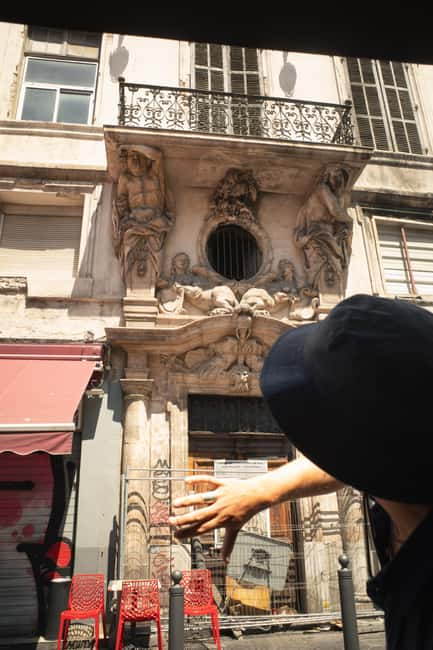
The meeting point is at the Vieux-Port metro exit by the platform. Look for Louis wearing a navy blue hat. The walk begins near the Marché aux Poissons, a practical starting point because the Old Port is one of Marseille’s clearest reference points.
From here, you begin thinking about the relationship between the city and the water. Louis uses the setting to introduce the idea of change, asking you to compare the present-day port with earlier images and descriptions. The Old Port is familiar to almost everyone who comes to Marseille, but the tour encourages you to notice its edges, proportions, surrounding buildings, and the way people move through it.
The route includes a stop at the Port Antique, reached after a walk of about 20 minutes. The ancient port gives the tour a strong sense of time without turning into a conventional archaeology visit. You see how today’s city occupies ground shaped by much older activity.
This part is best for people who like connections. A postcard may show one view, a text may describe another, and the street in front of you supplies a third. The value is in lining them up.
La Canebière and the Streets Around City Hall
From the Old Port, the route follows the area around La Canebière and City Hall. These streets help show how Marseille links grand public spaces with ordinary urban movement.
La Canebière is more than a famous name on a map. On this walk, you consider how its role and appearance have developed, and how surrounding architecture reflects different periods of the city. Louis’s architectural training helps him point out details that are easy to pass without a second look.
At City Hall, the focus shifts to the civic face of Marseille. You may look at the building itself, its position beside the port, and the way the public center connects to the older parts of the city. The stop is not just about taking a photograph. It is about understanding why the building occupies that place and what the surrounding streets tell you.
The walk includes repeated sections of roughly 20 minutes. That gives the route a steady rhythm, but you should wear comfortable shoes and expect to remain on foot for most of the three hours. The experience is active rather than seated, though a break is scheduled in Le Panier.
Saint-Laurent Church, Fort Saint-Jean, and the Water’s Edge
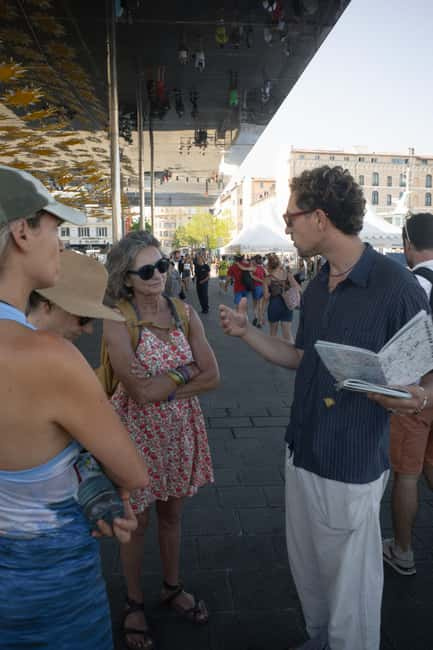
The route continues toward Saint-Laurent Church and Fort Saint-Jean. This section brings architecture, defense, religion, and the port together in one compact area.
The church offers a chance to think about how a religious building relates to its setting. Fort Saint-Jean adds a different kind of structure, with its strategic position and strong connection to the waterfront. Louis’s method is useful here because he encourages you to read the relationship between separate buildings instead of treating each one as an isolated attraction.
The surrounding water and open views also help you understand Marseille’s physical setting. This is one of the tour’s literal belvedere moments, but Louis is interested in more than a pretty outlook. He asks you to consider what the position reveals about movement, access, protection, and the city’s long connection to the sea.
The route then brings you to Marseille Cathedral, often called La Major or Sainte-Marie-Majeure. Its scale and style make it one of the most visually striking stops, but the tour keeps your attention on context. You look at how the cathedral meets the surrounding city and how its position affects the view from nearby streets.
If you have already seen La Major from the outside, this stop can still add something useful. The point is not simply to admire its size. It is to understand how the cathedral participates in the larger arrangement of the port and northern Old Port area.
Same streets, read through a different style:
- Tasting of 6 wines at Château Haut Breton Larigaudière
★ 4.5 · 17 reviews - Strasbourg : Neustadt Architecture Walking Tour
★ 5.0 · 14 reviews - Neoclassical Paris Architecture 2-Hour Private Walking Tour
★ 5.0 · 7 reviews - Architectural Bourgeois Paris 19th Century
★ 4.0 · 4 reviews
La Vieille Charité and the Slopes of Le Panier
Next comes La Vieille Charité and the Le Panier neighborhood. This is one of the strongest sections for reading the city through small details.
Le Panier’s streets invite a slower look. The route helps you pay attention to changes in level, street width, building fronts, and the way the neighborhood fits into the older structure of Marseille. Louis does not freeze the area in the past. His focus is on the movements that shaped it and the changes still taking place.
La Vieille Charité gives you a major architectural point within that setting. Rather than presenting it as a single photo stop, Louis uses it to discuss how a building functions within a neighborhood and how its meaning can change across time.
A break of about 20 minutes is scheduled in Le Panier. That is welcome after the steady walking and gives you time to pause before the final part of the route. The exact character of the break is not specified, so do not assume that food, drinks, or an organized café visit are included.
This neighborhood section may be especially rewarding if you have already wandered through Le Panier on your own. The tour gives you a framework for returning to the same streets and noticing details you might otherwise miss.
Rue de la République and the Evidence of Urban Change
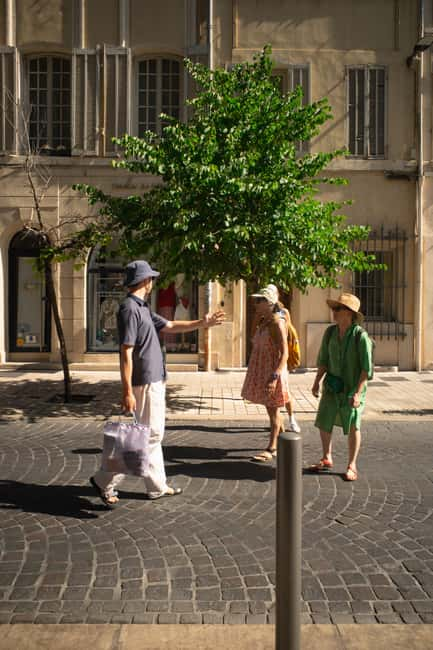
After Le Panier, the walk continues toward Rue de la République. This part makes the idea of urban evolution especially clear.
A street can look unified at first glance, yet its scale, façades, entrances, and connections often reveal several layers of planning. Through photographs and selected writing, Louis helps you compare the street’s current appearance with earlier versions and consider what was altered, preserved, or lost.
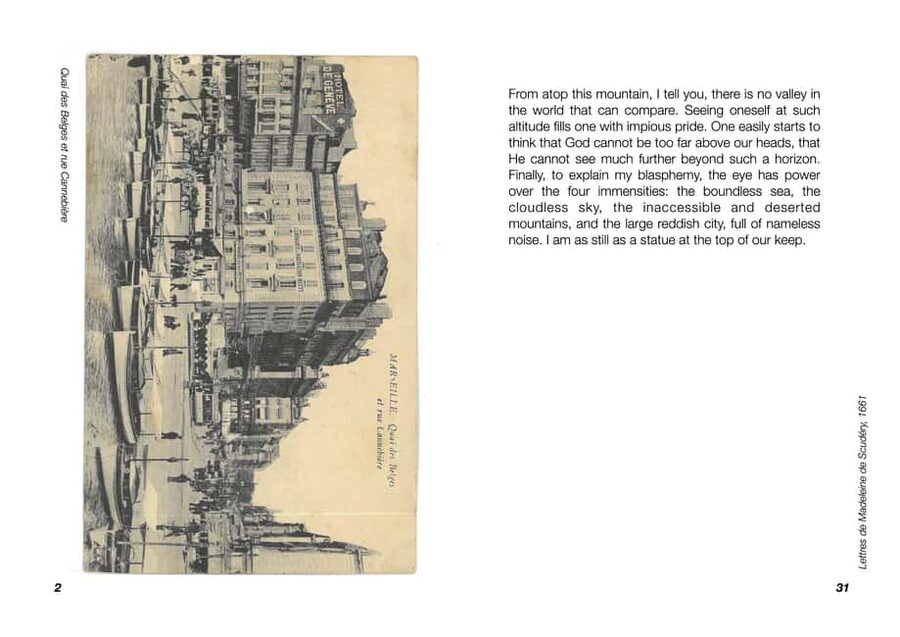
This is where the illustrated booklet becomes useful. You receive it as a guide to the urban walk, and it supports the visual comparisons made along the way. You can follow the material as Louis speaks instead of trying to remember every detail.
The archive images are not decoration. They give you a direct way to test your assumptions. You may recognize a corner but see that its surroundings once worked differently, or notice that a familiar building has gained a new meaning in its present setting.
I find this kind of comparison more useful than a long list of dates. It teaches you a method you can use in other parts of Marseille: look at the older image, locate the fixed elements, then identify what changed around them.
Finishing at Cours Belsunce
The walk ends at Cours Belsunce. This is a fitting finish because the route has moved from the port through historic streets and neighborhoods toward a major urban space.
By this stage, you have seen Marseille as a collection of connected systems: waterfront, civic center, religious buildings, defensive structures, residential streets, and public routes. The final stop gives Louis a chance to bring those threads together.
Do not expect the tour to finish with a formal lecture or a long list of recommendations unless the conversation leads there. Its strength is observation. You leave with a different set of questions about the city, and that can be more useful than a stack of facts.
The endpoint is not the original meeting point, so plan your onward route from Cours Belsunce. The provided information does not specify a return transfer or a final drop-off at the Vieux-Port metro.
What the $76 Price Really Buys You
At $76 per person, this is not the cheapest way to see Marseille’s headline sights. You are paying for a three-hour guided walk, a small group capped at eight, Louis’s architectural training, the illustrated booklet, and the time spent selecting and explaining archive material.
That price makes more sense if you value interpretation. You could pass the Old Port, La Major, Le Panier, and Rue de la République without paying anything, but you would not automatically see the connections between them. The tour’s product is not entry to a monument. It is a trained way of looking.
The small group is important to the value. Eight people is small enough for questions and conversation, and the format can adapt to the group’s curiosity. A larger group would make the readings and image comparisons harder to follow.
I would consider the price fair for visitors who enjoy architecture, urban history, photography, or literature. It is less compelling if you only want quick introductions to the main sights or prefer to explore at your own pace.
Who Will Get the Most From This Walk
I would choose this experience if you enjoy asking why a city looks the way it does. It is a good fit for architecture students, design-minded visitors, photographers, writers, history fans, and anyone who has already seen Marseille’s main sights but wants a more thoughtful second look.
It also suits curious first-time visitors who are comfortable with a walking tour that asks them to observe rather than simply listen. Louis speaks French, English, and Italian, so you can choose among those languages when booking.
The tour is less suited to anyone wanting a relaxed sightseeing ride, a food-focused outing, or a short route with few stops. You will spend three hours moving through the city and pausing to read, compare, and discuss.
The activity is listed as wheelchair accessible. Since the route passes through several historic areas, confirm the current practical details when booking if you need specific access arrangements. The supplied information does not describe surfaces, slopes, or restroom access.
Booking Details That Matter
The experience lasts three hours, and starting times depend on availability. Free cancellation is available up to 24 hours in advance for a full refund, and you can reserve now while paying later.
Meet at the Vieux-Port metro exit by the platform. Louis wears a navy blue hat, which should make the meeting point easier to identify.
Some material is presented in its original language. That matters because the tour uses texts by researchers, sociologists, historians, and novelists. If you are joining in a language other than the original text, ask Louis how the readings will be handled.
The route has a scheduled 20-minute break in Le Panier. Bring comfortable footwear and allow enough time for a steady urban walk. The exact distance is not given, so I would not plan a tight appointment immediately after the finish at Cours Belsunce.
Should You Book Marseille Belvedere?
Book it if you want Marseille explained through connections between buildings, images, and words, rather than through a standard list of attractions. Louis Leroy’s strongest tool is his ability to make you look again, and the old photographs and readings give the walk a clear point of view.
Skip it if you want a fast overview, a food tour, or a visit focused on going inside major monuments. At $76, the value depends on your interest in architecture and urban change.
For the right person, this is a thoughtful way to spend three hours in Marseille. You see well-known places, but the real reward is learning how to read the less obvious clues between them.
FAQ
How long does the Marseille Belvedere tour last?
The tour lasts three hours.
Where does the tour meet?
Meet at the Vieux-Port metro exit by the platform. The guide wears a navy blue hat.
Where does the tour finish?
The walk finishes at Cours Belsunce.
Which places are included on the route?
The route includes the Old Port, La Canebière, City Hall, Saint-Laurent Church, Fort Saint-Jean, Marseille Cathedral, La Vieille Charité, Le Panier, Rue de la République, and Cours Belsunce.
What languages are available?
The live tour is offered in French, English, and Italian.
How many people can join?
The tour is limited to eight participants.
Is the tour wheelchair accessible?
Yes, the activity is listed as wheelchair accessible.
Is anything provided during the walk?
You receive an illustrated booklet to follow the urban walk. A 20-minute break is scheduled in Le Panier.
New to the itinerary around France
- Architectural Strasbourg: Private Tour with a Local Expert★ 5.0 · 2 reviews
- Architectural Paris: Private Tour with a Local Expert★ 5.0 · 2 reviews
- Architectural Bourgeois Paris 19th Century★ 4.0 · 4 reviews
- Discovery Tour of Château Haut Breton Larigaudière★ 5.0 · 2 reviews
- Strasbourg : Neustadt Architecture Walking Tour★ 5.0 · 14 reviews
- Contemporary Architecture in Bordeaux city center!★ 5.0 · 2 reviews
- Paris: Discover the hidden architecture gems of Le Marais★ 3.8 · 4 reviews
- Neoclassical Paris Architecture 2-Hour Private Walking Tour★ 5.0 · 7 reviews
France Architecture Tours, compared.
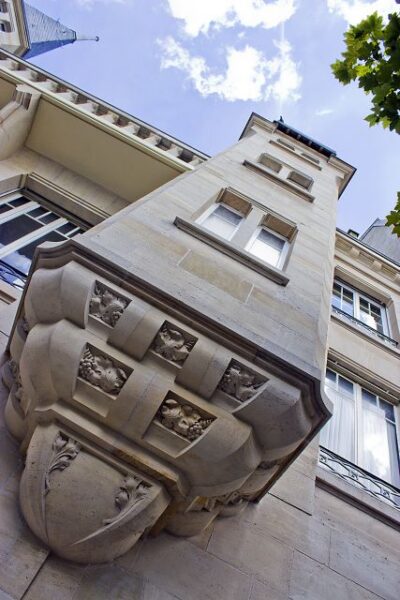
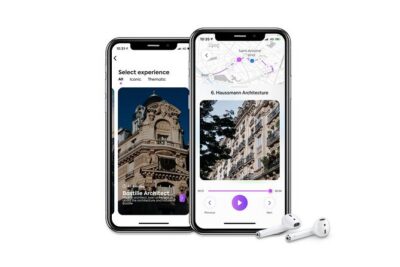
Bastille’s Architecture & Artisans Self-Guided Walking Tour
Read our review →
Tasting of 6 wines at Château Haut Breton Larigaudière
Read our review →
Private Art Nouveau and Art Deco tour near Opera
Read our review →

Neoclassical Paris Architecture 2-Hour Private Walking Tour
Read our review →
Discover the hidden architecture gems of Le Marais
Read our review →
Other lists with this tour