Review · PARIS
Private Art Nouveau and Art Deco tour near Opera
The best surprise here is how much Parisian beauty sits above eye level. Around Gare Saint-Lazare, Galeries Lafayette, and Printemps, you’ll find glass domes, tilework, iron details, and grand interiors that many shoppers and commuters pass without seeing. A private guide such as Solène points out the details and links them to the growth of modern Paris.
I like the small private format, since you can ask questions and adjust the pace. I also like the stop at Mollard, a traditional brasserie where one included drink gives the architecture a social setting instead of turning the tour into a string of facades. The main consideration is time: two hours gives you a lively introduction, but not a full course in Art Nouveau or Art Deco.
Key points to know before booking
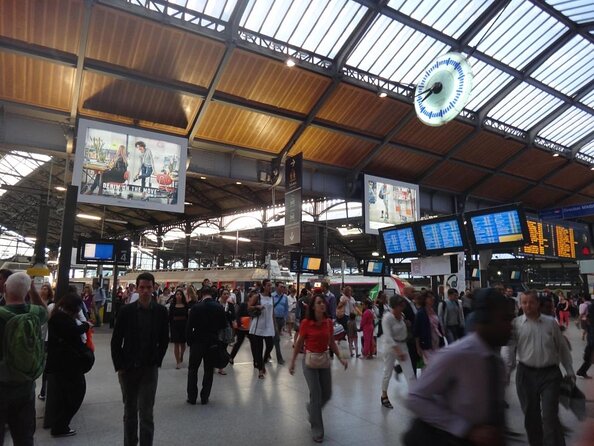
- Start at Gare Saint-Lazare: The station is both a transport hub and the opening lesson in how Paris grew during the railway age.
- See the interiors most people miss: Galeries Lafayette and Printemps reveal glass domes, balconies, and upper-level views that are easy to overlook.
- Pause at Mollard: One drink is included at this traditional Art Nouveau brasserie near the station.
- Reach rooftop viewing areas: The route includes upper-level viewpoints connected with the department stores, weather and access permitting.
- Finish near Palais Garnier: The opera house is admired from the outside, with its ornate stonework and grand setting on Place de l’Opéra.
- Expect an introduction, not a survey course: The focus is the architecture around the 8th and 9th arrondissements, not every Art Nouveau and Art Deco site in Paris.
Why this short walk changes how you see Paris
This private Paris architecture tour focuses on the area around Boulevard Haussmann, where shopping, rail travel, finance, entertainment, and new building methods came together. You begin at Saint-Lazare and finish near Palais Garnier, covering a compact part of the city that rewards a closer look.
I like this route because it makes ordinary Parisian errands part of the subject. A train station is not just somewhere to catch a train. A department store is not only a place to shop. A brasserie is not merely a place for coffee. Each one shows how Paris used decoration, engineering, commerce, and public life to create a new kind of city.
The tour is sold as an Art Nouveau and Art Deco experience, but the supplied route and commentary center mainly on Art Nouveau. You’ll see late 19th and early 20th-century design, grand glasswork, mosaic decoration, curved forms, ornamental iron, and the architectural confidence of the Haussmann area. If you want a detailed study of Art Deco interiors across Paris, this two-hour walk may feel too narrow.
More Art Nouveau Tours around France:
- Barcelona: Art Nouveau & Gaudí Tour
★ 5.0 · 39 reviews - Walking Tour of Riga’s Beautiful Art Nouveau Architecture
★ 4.8 · 20 reviews - Riga’s Architecture: A self-guided audio tour of the city’s art nouveau history
★ 5.0 · 3 reviews
Gare Saint-Lazare, where the railway shaped the neighborhood
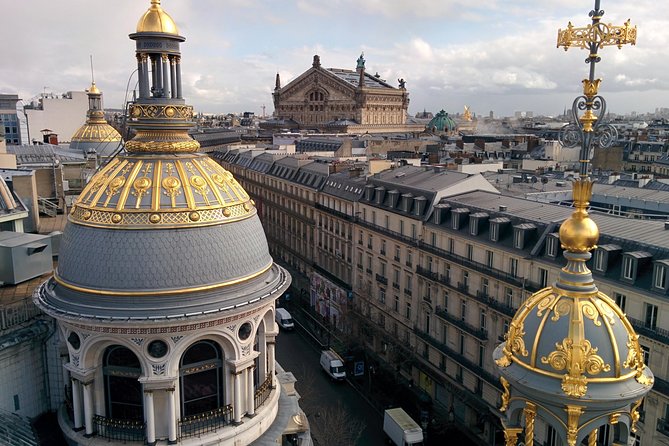
Meet at 3 p.m. outside Gare Saint-Lazare at 13 Rue d’Amsterdam. The station is a sensible starting point because it shows how transportation helped reshape Paris and the districts around it.
Your guide explains the station’s special features and its influence on nearby architecture. That context matters. Instead of treating the buildings as isolated pretty objects, you begin to see the link between new rail connections, large commercial streets, and the growth of department stores and offices.
Allow about 30 minutes here. The station is free to enter, and the subject is more than the visible facade. Look up and around as you move through the building. The point is to notice structure and decoration working together in a place built for movement.
Gare Saint-Lazare can be crowded and active, so this is not a quiet museum visit. That is part of its value. You’re looking at design in a building that still serves its original public purpose, surrounded by commuters and daily Paris life.
A private guide is especially useful here. In a larger group, it can be difficult to hear or pause in the right place. With only your party, you can ask why a feature matters, compare it with later buildings, or spend a little longer on a detail that catches your eye.
Mollard brasserie, architecture with a cup in hand
Near the station, the route pauses at Mollard, a traditional Parisian brasserie. One drink is included, although the supplied details do not specify whether that will be coffee, tea, hot chocolate, or another drink. Food and additional drinks are not included.
This stop lasts about 30 minutes. It gives the tour a welcome change of rhythm. Rather than rushing from one exterior to another, you can sit down and examine a preserved Art Nouveau setting while your guide explains the decorative choices around you.
The brasserie’s mosaics and interior decoration are a major highlight. The appeal is not only visual. A brasserie lets you see how Art Nouveau entered everyday public life, where people met for meals, coffee, and conversation. The style was not reserved for grand monuments. It also shaped the places Parisians used every day.
I would pay close attention here. It is easy to focus on the drink and miss the walls, floor, lettering, and decorative details around the room. This is also a useful moment to ask your guide for a simple explanation of Art Nouveau itself, especially if your interest is general rather than specialized.
One practical point: the tour description says you receive one drink, while the general inclusions also note that food and drinks are excluded unless specified. Read that as one included drink only, with anything extra at your own cost.
Galeries Lafayette, where shopping became theater
From the station, you continue toward Boulevard Haussmann and Galeries Lafayette. The department store is one of the major stops, with about 30 minutes devoted to its architecture.
The building’s interior is the reason to come inside. Its soaring stained-glass dome and gilded balconies turn shopping into a grand visual experience. The design draws your eyes upward, and the guide helps you see the building as a carefully staged composition rather than a beautiful backdrop.
You may also reach upper levels and viewing areas connected with the store. From there, you can gain a broader view over Paris and look back at the city through an architectural lens. The route includes access to parts of the building that many shoppers miss, including the way the dome is supported and viewed from different levels.
Access to upper areas can depend on the store’s operating conditions, so you should treat rooftop or behind-the-scenes viewing as a central possibility rather than a guaranteed private room or exclusive opening. The supplied experience specifically includes rooftop viewing areas in the department stores, and the strongest descriptions of the tour highlight these elevated views.
Galeries Lafayette is also a good place to understand the relationship between Art Nouveau and modern consumer culture. New materials and bold decoration helped stores attract large crowds. The architecture had to be memorable from the street, impressive inside, and practical enough to hold a major retail operation.
That mix is what makes this stop valuable. You are not looking at a palace built only for ceremony. You are looking at commercial architecture designed to make shopping feel special.
More Art Deco Tours in France:
- Reims Art Deco guided tour
★ 4.5 · 26 reviews - The Official Art Deco Walking Tour by The Miami Design Preservation League
★ 5.0 · 1,580 reviews - Miami South Beach Art Deco Walking Tour
★ 5.0 · 1,039 reviews - Miami Beach Food and Art Deco Walking Tour
★ 4.5 · 245 reviews
Printemps, a second look at department-store design
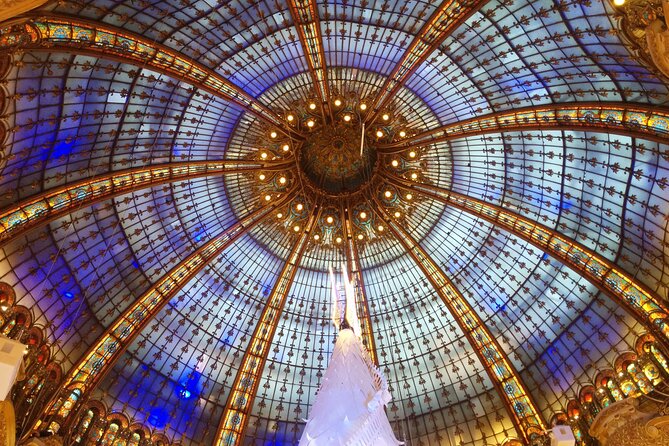
Printemps provides a useful comparison with Galeries Lafayette. The stop lasts about 30 minutes and focuses on its Art Nouveau features and architectural details.
Seeing both department stores keeps the tour from reducing Parisian design to one famous dome. You can compare how each store handles glass, iron, ornament, and open interior space. The buildings occupy the same broad Boulevard Haussmann setting, yet each offers its own visual experience.
The route may include a glass dome and rooftop viewing area at Printemps. These upper-level spaces are among the details you would be unlikely to seek out on your own, especially if you came only to shop. The guide’s role is to show you where to look and explain why a structure that appears decorative also reflects the technology and commercial ambitions of its time.
I would keep your expectations measured. This is still a working department store, not a dedicated museum. You may encounter normal shopping activity, changing access, and limited time. That said, the everyday setting is an advantage. It lets you see historic design still serving a modern purpose.
The department stores are likely the strongest section for visitors who want photographs, interior views, and a clear sense of scale. They also make the walk appealing to companions who are not architecture specialists. You can enjoy the light, color, and city views without needing to memorize architects or dates.
Palais Garnier, a grand finish from the outside
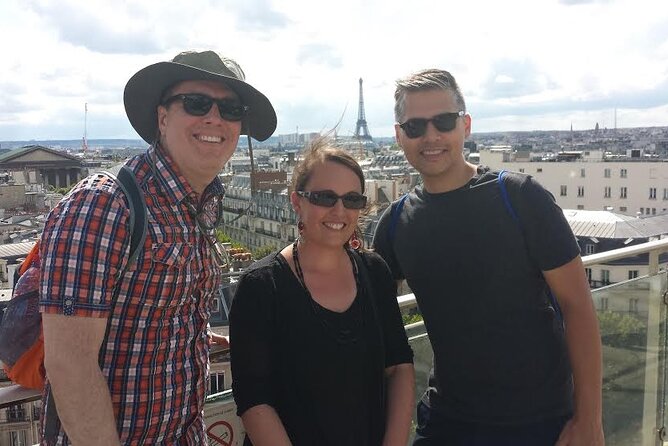
The tour ends at Palais Garnier on Place de l’Opéra, near Boulevard Haussmann. The opera house is admired from outside only. Admission to the interior is not included.
That limitation is important. Palais Garnier is one of Paris’s major architectural landmarks, and you should not book this tour expecting a full visit to the opera house. Instead, your guide uses the exterior and surrounding streets to explain the building’s place in Paris and its relationship to the grand planning of the 8th and 9th arrondissements.
The ornate stonework and imposing structure make a strong final stop. Built in the late 19th century, the opera house represents the formal, monumental side of the city, while the department stores show a more commercial and modern form of display. Placing the two ideas in one walk helps you understand the area as a connected architectural district.
Ending near Palais Garnier is also practical. You can continue into the Opera neighborhood afterward, return by public transport, or arrange another activity nearby. The tour does not include hotel pickup or drop-off, so you should plan your own route to and from the meeting and ending points.
What the private format adds
This is a private activity for your group only. That makes a real difference on a two-hour architecture walk.
You can ask for more explanation at the station, slow down inside the brasserie, or ask your guide about places to eat and quieter parts of Paris. Solène is identified as the tour’s founder and as a multilingual Paris resident who has traveled widely in France. Her approach, based on the information provided, combines architecture with practical local advice.
Several strong comments center on the guide’s ability to make overlooked details visible. That is the core service here. You are not simply being led between famous buildings. You are shown mosaics, glass structures, interior features, and upper-level views that you might otherwise pass without noticing.
The private format also means the price needs to be judged differently from a large group walking tour. At $180.23 per person, it is not a low-cost introduction, especially for one person. For a couple or small group sharing the private guide, the value improves because the price buys personal attention, one included drink, and a route built around places that are not always obvious to find.
The main tradeoff is scope. You pay for access, interpretation, and flexibility, not a long itinerary. If you prefer a broad survey of Paris monuments, a standard city tour may cover more ground. If you prefer careful looking and direct conversation, this format makes better sense.
Timing, walking, and practical planning
The tour starts at 3 p.m. and lasts about two hours. That afternoon timing gives you a useful way to fit architecture into a Paris day, perhaps after a morning museum visit or before dinner near the Opera district.
You should be comfortable walking and standing for a moderate period. The tour requires a moderate physical fitness level, and the department-store sections may include stairs or movement between levels. The route also passes through active public places, so keep your group together and allow time for normal city crowds.
Public transportation is nearby. The start at Saint-Lazare is easy to connect with, and the finish at Palais Garnier places you close to the Opera area. Since there is no hotel pickup, check your route before the start time and arrive with a little spare time.
The tour is offered in English and uses a mobile ticket. Confirmation is provided at booking. Free cancellation is available until 24 hours before the start time. If you cancel later, the amount paid is not refunded, and changes made within that final 24-hour period are not accepted.
The activity requires a minimum number of participants. If the operator cancels because that minimum is not reached, you will be offered another date or experience, or a full refund.
Who will get the most from this Paris architecture tour
I would recommend this walk to you if you enjoy looking closely at buildings, interiors, and design details rather than simply collecting famous sights. It also suits first-time visitors who want a clear introduction to the Opera and Boulevard Haussmann area.
You do not need formal architectural training. The strongest parts of the experience are visual and easy to appreciate: the stained-glass dome at Galeries Lafayette, the gilded balconies, the brasserie mosaics, Printemps, and the views from upper levels.
The tour may also suit you if you have already seen the Eiffel Tower, Notre-Dame area, and Louvre and want a different side of Paris. The focus here is commercial and civic architecture, with a closer look at places used by commuters, shoppers, and café patrons.
I would hesitate if your main goal is a full Art Deco study, a guided visit inside Palais Garnier, or a long historical lecture. The guide can offer context, but two hours is short. One direct assessment from the available feedback is fair: the route brings you to remarkable places, yet it cannot explain the entire Art Nouveau movement in Paris.
Should you book it?
Book this tour if you want a private, visually focused walk through Paris’s Opera district and prefer seeing details you might miss alone. The best reasons are the brasserie stop, the department-store interiors, the upper-level views, and Solène’s personal approach to architecture and local life.
Think twice if $180.23 per person feels high for a two-hour activity or if you need entry to Palais Garnier. The price is easiest to justify for a small group that values a private guide and a focused route.
For most architecture fans, design lovers, and curious first-time visitors, this is a smart way to spend an afternoon. Go in expecting an engaging introduction to Art Nouveau around Saint-Lazare and Boulevard Haussmann, not a complete survey of Paris architecture. That expectation will put the tour on solid footing.
FAQ
Where does the tour begin?
The tour begins outside Gare Saint-Lazare at 13 Rue d’Amsterdam, 75008 Paris, France.
Where does the tour end?
The tour ends at Palais Garnier, also called Opéra Garnier, at Place de l’Opéra, 75009 Paris.
What time does the tour start?
The scheduled start time is 3 p.m.
How long does the tour last?
The experience lasts approximately two hours.
Is the tour private?
Yes. Only your group participates in the private activity.
Is the tour offered in English?
Yes. English is one of the available languages listed for the experience.
Is a drink included?
Yes. One drink at a traditional brasserie is included.
Is entry to Palais Garnier included?
No. The tour visits the exterior of Palais Garnier only, and entry is not included.
Does the tour include hotel pickup and drop-off?
No. Hotel pickup and drop-off are not included.
Can you cancel for a full refund?
Yes. You can cancel at least 24 hours before the local start time for a full refund. Cancellations or changes made less than 24 hours before the start are not accepted for a refund.
More Private Architecture Tours in France
- Neoclassical Paris Architecture 2-Hour Private Walking Tour
★ 5.0 · 7 reviews - Architectural Strasbourg: Private Tour with a Local Expert
★ 5.0 · 2 reviews - Architectural Paris: Private Tour with a Local Expert
★ 5.0 · 2 reviews - Sagrada Familia & Gaudi Tour Private or Small Group with Tickets
★ 4.5 · 1,188 reviews
New to the itinerary around France
- Architectural Strasbourg: Private Tour with a Local Expert★ 5.0 · 2 reviews
- Architectural Paris: Private Tour with a Local Expert★ 5.0 · 2 reviews
- Architectural Bourgeois Paris 19th Century★ 4.0 · 4 reviews
- Discovery Tour of Château Haut Breton Larigaudière★ 5.0 · 2 reviews
- Strasbourg : Neustadt Architecture Walking Tour★ 5.0 · 14 reviews
- Marseille Belvedere: The city through architecture★ 5.0 · 3 reviews
- Contemporary Architecture in Bordeaux city center!★ 5.0 · 2 reviews
- Paris: Discover the hidden architecture gems of Le Marais★ 3.8 · 4 reviews
Art Deco Tours, compared.

The Official Art Deco Walking Tour by The Miami Design Preservation League
Read our review →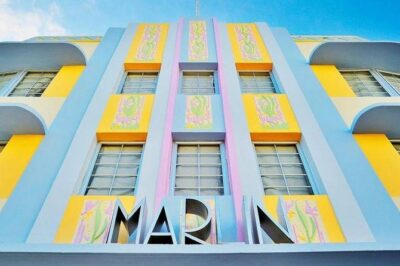
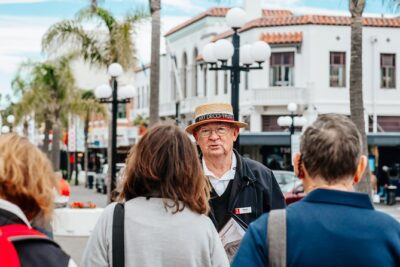
Guided 10am Morning Art Deco Walk From Napier Art Deco Trust
Read our review →
Award-winning Art Deco & Neon Lights Walking Tour in Miami Beach
Read our review →